Nose in a book

Reviews and other ramblings

  • Home
  • Reviews archive
    • Book reviews
    • TV reviews
    • Theatre reviews
  • TBR
  • Challenges
    • The Classics Club
    • 2014 Popular-Science Reading Challenge
    • Cookery challenge
    • The Gilmore Girls Reading Challenge
    • 2013 TBR Pile Challenge
    • 2013 Translation Challenge
    • Crime and Punishment read-a-long
  • About
    • Cookie legal stuff

Category: Reviews

Twists and turns

October 23, 2011March 11, 2012 2 Comments

Don’t Look Now and other stories
by Daphne du Maurier

Though I’ve read quite a few du Maurier novels and even a guidebook to Cornwall that she once wrote, I hadn’t tried her short stories before this week. Thanks to Discovering Daphne, an event/readalong run by Savidge Reads and Novel Insights, I have now, and I’m glad.

The title story was of course made into a successful and critically acclaimed film of 1973, a film I have never seen and only had a rough idea of the storyline to, so I was able to come to it without foreknowledge. I think this greatly helped with my enjoyment of the story so I won’t reveal more of the plot than I knew beforehand: it’s a horror/thriller about a couple who travel to Venice following the death of their child. That’s all I knew (well, okay, I knew there was also something to do with a red coat, but then that’s really it).

As always, du Maurier is greatly skilled at creating complex, believable characters. All of these stories have some element of horror, but for the most part that horror comes from within, from the very human flaw of misreading a situation or other people, from imagining something that isn’t real. When there are “real” horrors, they tend to be somewhat banal, nothing like the troubled or possibly disturbed minds of the characters.

Another great skill of du Maurier’s that is evident here is her ability to describe diverse locations, imbuing them with real atmosphere. (This must be a skill she developed over time because it was something I found specifically lacking in scenes set outside of Cornwall in The Loving Spirit.) This book ranges from Venice to Crete to Ireland to Jerusalem to East Anglia, each time taking a character away from their home in England to a strange new location. There’s the schoolmaster on holiday who gets caught up with a strange American couple. There’s the young actress who decides, following her father’s death, to track down his former best friend. There’s the working class vicar who reluctantly agrees to guide a group of rich strangers around holy sites. And there’s the electronics engineer whose boss seconds him to work on a secret project that combines science fiction and spirituality.

All these stories have a certain tendency to mislead the reader, or at least I personally felt many times that I had been led down one path and was then blindsided by the story’s very different conclusion. As horror goes, there is none of the gore or violence you might expect. Or if there is it’s not described in any detail. These stories are all about the psychological, and even when it gets a bit supernatural or spiritual, the emphasis is on its effect on people rather than whether or not the apparently supernatural is real.

I think “Don’t look now” in particular will bear repeated readings, if only to hunt for the clues to how things turn out that I missed first time around. I think it is the best written and cleverest story in the collection, though none of them was by any means bad. They all share the same fish-out-of-water, sinister atmosphere, yet they are very different. I’m looking forward now to reading the other du Maurier short story collection I have, The Breaking Point.

This collection first published 1971 by Victor Gollancz.
Kate Gardner Reviews

Categories aren’t always helpful

October 21, 2011

A History of the Twentieth Century, with Illustrations
a novelette by Kim Stanley Robinson

In preparation for tomorrow’s jaunt to BristolCon, I have been reading some sci-fi short stories this week. Tim recommended this one, which has stuck with him for years (though it may not quite count as sci-fi). You can read it online here.

It’s the story of Frank Churchill (no idea if the Austen reference is deliberate), a writer of history books who is living in New York and taking “light therapy” in an attempt to alleviate his depression. It doesn’t seem to be working so he reluctantly accepts an offer to travel to London to write a complete history of the 20th century, figuring that the UK’s longer hours of daylight in summer will save him having to attend therapy.

The bulk of the story is about his research, with daily trips to the reading room at the British Museum. His findings form part of the story, a sorry litany of war after war after war. Obviously that’s a limited view of the century but it’s certainly believable that in future it’s all that will be remembered.

As with my previous experience of Robinson (or “Stan”, as I believe his friends know him), it’s all about the main character. In the background lurks a vague sense of apocalypse, of things unexplained, but at the forefront is an everyday, relatable human being. Frank is deftly created, a few words rustling up a lifetime of backstory. Every location is described with what feels like insider knowledge, without it becoming a list of buildings and street names (believe me, it happens). I often find that a short story isn’t long enough for me to really care about the outcome but I definitely cared about Frank.

I greatly enjoyed this story and it reminded me that I really should go back and finish Robinson’s Science in the Capital trilogy.

First published in Isaac Asimov’s Science Fiction Magazine in 1991. Reprinted in Remaking History and other stories (Orb, 1994).

Kate Gardner Reviews

It’s Hell in here

October 19, 2011March 11, 2012

Damned
by Chuck Palahniuk

This, Palahniuk’s latest offering, is every bit as crazy, vitriolic, scathingly sarcastic and darkly comic as you might expect if you’ve read any of his previous work. It might actually be lighter than usual and more funny, but it’s been a few years so maybe I’m mis-remembering.

I throw out words like “light” and “comic” and then have to tell you that this book is set in Hell. A really nasty, gruesome Hell to boot. But it’s narrated by a chirpy 13-year-old American girl whose view of both the world above and the one below is hilarious.

Each chapter begins, “Are you there, Satan? It’s me, Madison,” in a riff on just one of the many literary influences in this story. In life, Madison, slightly chubby and hopelessly naïve daughter of rich, famous parents, liked to read romantic novels and watch feel-good films. In death she raves about how she managed to die in an outfit particularly practical for Hell and tries to make friends with fellow damned souls. We gradually hear her life story, told in-between descriptions of Hell and her attempts to get on with spending eternity there.

Initially I found Madison irritating, though the concept was funny. She repeats the same phrases, harks back to the same references and makes the same jokes over and over. Which is realistic, I don’t doubt, but not the makings of a sympathetic character. However, death forces her to examine and analyse herself, remember details she’d rather forget and question the identity she clings to, so that she gradually becomes more likeable. Perhaps it says something about me that I vastly prefer her once she has lost her innocent guilelessness!

The depiction of Hell plays on preconceptions, twisting and turning them around. There are demons, sure; in fact every demon ever invented by any culture or religion. There are fires and pits of torment and endless methods of torture, but there are also the very gruesome indeed Great Ocean of Wasted Sperm, Swamp of Rancid Perspiration, Dandruff Desert and many more of that ilk. Thankfully they are not all described in detail but, well, some are. And there are strict rules. Many, many rules. In fact, it becomes a running joke. At first it seems to Madison that perhaps the Christian right had all the answers, but she slowly discovers that the rules of Hell are petty, almost arbitrary, and can trap anyone. But the fact that there are rules means that you can learn them, and play them.

From the cell in which she first finds herself installed in Hell, Madison makes the acquaintance of a cheerleader (Babette), a jock (Patterson), a nerd (Leonard) and a punk (Archer). Adding her goody-two-shoes self, that makes her very own Breakfast Club and she determines to befriend them all. When Archer uses the safety pin from his cheek to spring them all from their cells, the motley crew journey across Hell together. Patterson just tries to get off with Babette while Leonard drones on about all the different demons encountered (he’s more of a history nerd than your typical science nerd) but Archer and Babette prove themselves surprisingly useful friends to have around.

I found this book genuinely funny, but also disturbing (it is Palahniuk, after all) and even sad. I grew to like Madison’s style of chatter, though the obviousness of her references never failed to grate. With her uber-bohemian parents and Swiss boarding school, surely she could have some less mainstream books or films to refer to occasionally? And while I accept that in the parents Palahniuk is mocking a certain kind of hypocritical celebrity, I did find some of his attacks a little too broad-ranging.

I think I will continue to look out all Palahniuk’s new releases, but so far his Diary: a novel has not been ousted from the favourite spot.

Copy kindly sent to me by the publisher in return for an honest review.
Published October 2011 by Doubleday.

Kate Gardner Reviews

Time-travelling horrors

October 16, 2011March 11, 2012 2 Comments

The House on the Strand
by Daphne du Maurier

I read this book as part of Discovering Daphne, an event/readalong run by Savidge Reads and Novel Insights. I seem to have skipped the book that they both raved about (Mary Anne) and chosen to join in with another that didn’t entirely bowl me over.

This is one of du Maurier’s stabs at science fiction (though Tim and I are still debating whether Rule Britannia counts as SF or even speculative fiction). In this instance she’s looking at time travel, but with a curious twist, and really it’s a book about a marriage in trouble and the effects of addiction. Intrigued? I was.

First off, I was thrown to have a male narrator. I don’t think du Maurier does a bad job of giving Dick Young a realistic male voice, but I never warmed to him. He’s middle aged, has just quit a publishing job he disliked in London and is trying to find an alternative to the future his American wife has planned, which is to work for her brother’s publishing firm in New York. To give him some breathing space, his good friend Magnus (or, “the Professor”) has loaned Dick his cottage in Cornwall for the summer rent-free. The only catch is that Magnus has persuaded Dick to try an experimental drug he has produced – a drug that takes the mind back six centuries in time while the body remains in the present.

It’s an unusual idea and du Maurier has thought through the practicalities. Each “trip” lasts a few hours so Dick can sneak them in when his wife and stepsons are not around, though he cannot hide the side-effects from them. It being a small community – and indeed an even smaller one in the 14th century – Dick quickly gets to know the characters that he sees on his trips and is increasingly fascinated by their lives – who is sleeping with who, who is loyal to who – in a way that he would never care about gossip in his own world. He is particularly intrigued by the beautiful Isolda, who he learns early on is married but does not care for her husband.

There are drawbacks to this method of escaping from reality. Dick is seen wandering aimlessly through field and marsh after his invisible cast. He starts to conflate past and present, confused about what has happened in reality. He gets bad tempered with his family and his wife’s friends, constantly distracted by where this or that particular manor house from the 14th century must have stood. He looks up the people from the past in local archives, obsessing about every detail of their lives. He starts to need more of the drug for it to work and suffer worse side-effects.

All of which is gripping and well written and a believable picture of dangerous drug addiction. The problem is, all of the stuff in the past I found deadly dull. The relations between people and their allegiances I found confusing; for the first half very little happens in the past; and I just didn’t care about any of the historical characters. Which is a problem when we are supposed to believe that they are fascinating enough for Dick to become obsessed. The thing is, this is another case where du Maurier has been doing her historical research and has used genuine historical figures of significance to her (in this case the people who lived in and near her beloved Fowey) to build a story around. But she has put in too much of the dull stuff you can learn from archives – names, dates, facts – and not enough character and storyline. It’s a shame when she has used her research so well in other books (e.g. The Glass-Blowers).

It’s fascinating and shows that du Maurier had many strings to her bow, but it’s not her best. Next up in Discovering Daphne? Don’t Look Now and other stories, to be discussed next Sunday.

First published in 1969 by Victor Gollancz.

Kate Gardner Reviews

The start of her career

October 9, 2011March 11, 2012 1 Comment

The Loving Spirit
by Daphne du Maurier

I read this book as part of Discovering Daphne, an event/readalong run by Savidge Reads and Novel Insights. Unfortunately, a combination of bad planning and ill health means I’m a week late finishing this book but it does feel appropriate to have read the bulk of it at the seaside!

This was du Maurier’s debut, a love letter to Cornwall as much as a novel, but also an ambitious family saga. It covers four generations of the Coombe family, from 1830 to 1930. Each section concentrates on one family member, each of whom has inherited a wild streak, the “loving spirit” of the title. It starts with Janet, who wishes she had been born a boy so that she could go to sea and is never quite content with her devoted loving husband, for all that she does love him. Then there’s her middle son Joseph, the love of her life, the boy who really does run away to sea and have great adventures and lead women on while never loving any of them the way he loves his mother. Then there’s Joe’s oldest son Christopher who disappoints his father by not wanting to become a sailor, but with that old family restlessness ends up trying to make his fortune in London. And finally there’s Christopher’s youngest, Jennifer, a strong and independent woman determined to break away from her controlling mother and grandmother and return to the family’s roots in Cornwall.

It’s a beautifully written, warm, engaging book, but it does have its flaws. For the first two generations du Maurier has her characters speak in strong Cornish dialect, which added a certain country charm and “ye oldeness” I suppose but also smacked of condescension. Maybe that’s just me. The relationship between Janet and Joseph troubled me. I know that a mother and son can have a stronger bond than a husband and wife and there’s nothing wrong with that, but something about the obsessive quality du Maurier describes made this particular relationship a bit wrong. There were a lot of times when I felt that everything moved too fast, that there was too much sketching out what has happened while time passed and not enough current story. And I didn’t like how down on London du Maurier was, with absolutely nothing good to say about the capital, though at least she was kinder to Bristol when it got a brief mention.

But for all that I still greatly enjoyed the book. Each of the central characters was engaging and sympathetic and I did like the way the language of courtship developed from incredibly polite and formal to teasing sarcastic banter. The descriptions of the sea and Cornwall are so detailed and evocative that the town of Plyn was almost a character itself. In fact, while none of the love stories or deaths roused much emotion in me, the final homecoming to Plyn did bring a tear to my eye.

There’s a lot of what I would guess were du Maurier’s pet “issues” in this book. She clearly thinks country is better than city, especially for children. She doesn’t hold stock with prim and proper, preferring openness and honesty. She believes in children knowing the facts of life rather than it all being a frightening mystery. She believes in the strength of women, in them holding jobs and speaking their minds and having options beyond “wife and mother” if they want them. And she believes in good, honest, simple lives – hard work, loving family, friendly neighbours – rather than building fortunes or being fashionable. Which is all fine, though you might argue she presses the point home a little strong. Of the many many characters in this book the odd one who broke the general trend would have perhaps evened things out.

See also: reviews on Savidge Reads and Novel Insights. Next up in Discovering Daphne? The House on the Strand, to be discussed next Sunday.

First published in 1931 by William Heinemann.

Kate Gardner Reviews

A thriller without thrills

October 7, 2011March 11, 2012 2 Comments

Southwesterly Wind
by Luiz Alfredo Garcia-Roza
translated by Benjamin Moser

This highly acclaimed novel is the third in the Inspector Espinosa series, set in Rio de Janeiro. Quotes on the book jacket compare Garcia-Rosa to Colin Dexter and Raymond Chandler. I really really don’t agree.

It may be a style thing, it may be poor translation, but I did not get on with this book. I would have abandoned it if it wasn’t so easy to read. Easy but not good. There was a lot of clumsy phrasing, sentences that seemed like they could have been clever or funny if written differently. The plot was odd but predictable, the policeman’s actions unlikely and the ending not nearly as ambiguous as Garcia-Rosa would have us believe.

The story centres around Gabriel who was told by a strange fortune teller at his 29th birthday party that he would kill someone before his next birthday. As the big three-oh approaches, his paranoia gets increasingly bad and he goes to the police. Inspector Espinosa is intrigued but doesn’t know what he’s expected to investigate – no crime has been committed. Yet.

Of course, eventually crimes do happen that may or may not be related, there are shadowy characters and beautiful women, and there are many detailed descriptions of the city of Rio, which was one part of the book that I did like. That and Espinosa’s friendly neighbour, a young girl called Alice who wants him to get a dog so that he doesn’t get lonely. That was a sweet subplot.

There seemed to be an attempt to add something spiritual to the usual thriller fare. There was a lot of talk about psychoanalysis and religion and the effect of the southwesterly wind. But it wasn’t fully explored and it didn’t sit well with the rest of the novel.

The main problem, though, is that it takes a while for stuff to start happening and yet I felt no suspense. I thought that it was obvious there would eventually be a dead body that could possibly be linked to Gabriel and before that had even happened I had figured out the ending. None of the characters beside Espinosa had any real fleshing out. I am frankly baffled by the awards and praise Garcia-Rosa has received. Maybe his previous two books were far better?

Originally published in Brazil in 1999 by Companhia das Letras, Sao Paulo, under the title Vento sudoeste.
This translation first published 2004 by Henry Holt and Company.

Kate Gardner Reviews

Size matters

October 2, 2011March 14, 2012 2 Comments

Middlesex
by Jeffrey Eugenides

I had a bit of a struggle with reading this summer and for some reason my response was to only pick out slim little books from the TBR. Why oh why did I forget how absorbing and satisfying a big chunkster is? Like this one, for example.

Eugenides has a new novel out this month, only the third of his career. While Middlesex may not be the biggest book on my shelves, it’s pretty big and I can easily believe that the combination of writing and research might have taken ten years (the gap between this and his first novel). Because this book is epic.

Ostensibly the story of Cal Stephanides, our narrator takes us back through three generations of family history, from Asia Minor to Detroit to Berlin. The heart of the story is summed up in its first line: “I was born twice: first, as a baby girl, on a remarkably smogless Detroit day in January of 1960; and then again, as a teenage boy, in an emergency room near Petoskey, Michigan, in August of 1974.” So that title’s not about the English county then, just to clarify.

Raised as a girl, Calliope, it is not until her teens – unusually tall, flat-chested and with no sign of getting her period – that she is identified as a hermaphrodite. The journey from beautiful young girl in Detroit to confident but lonely man living in Berlin and telling us his life story is one that has to unravel slowly, because it’s a lot to take in.

This book probably isn’t for the prudish. Cal has been forced to be matter of fact about certain aspects of life, namely sex and genitalia. We hear all about the sex lives of his grandparents and parents, as well as Cal’s own experimental fumblings, because it is all relevant. There’s also a lot of talk about gender identity and body dysmorphia, which I found interesting and well told.

But it’s so much more than that. Cal’s grandparents are forced to flee their home in Greece when it is occupied by Turkey. They arrive at a cousin’s house in Detroit and do their best to assimilate. We follow the family through world wars and race riots, through the rise and fall of the American car industry, through Watergate and through hippy love and drugs. But we also follow the minutiae of an immigrant family, their daily ups and downs, their changing fortunes as they are alternately accepted and rejected by their adopted city.

It is a tremendous work. Eugenides has done his homework, but the only place that stands out is regarding hermaphroditism, which Cal is also learning about. The language is beautiful, educated but warm. The people are real and engaging – no-one is wholly good or bad. I thoroughly enjoyed the week I spent absorbed in this book and will try to stop being afraid of picking up a bigger book from the shelf.

First published in Great Britain in 2002 by Bloomsbury Publishing.
Winner of the 2003 Pulitzer Prize for Fiction.

See also: review by Ingrid on The Blue Bookcase.

Kate Gardner Reviews

Simple pleasures, elegantly phrased

September 27, 2011March 11, 2012

Thoughts on Peace in an Air Raid
by Virginia Woolf

This collection of essays in the Penguin Great Ideas series were originally published between 1925 and 1942 (a few being from a posthumous collection). I think I am growing to prefer Woolf’s essays to her fiction, which is probably some kind of heresy in a literature graduate, but these are truly beautiful pieces of writing.

The majority of these essays are about books, though there are a couple about the pleasures of walking in London, plus the titular essay which is literally what it says, though of course in Woolf’s inimitable style, full of imagination and passion and ideals. Woolf writes about how men are by nature inclined to war, and how women must help them to rise above such base instinct. Her politics creep in as she wonders whether, with more women in government and other high positions, there would be any war.

It is interesting to read an essay from the 1920s or 1930s pondering whether the fiction of the time stands up to the classics of the past, seeing what names are mentioned and whether they mean anything to me now, so many years later. Woolf suggests what will last will be “a few poems by Mr Yeats, by Mr Davies, by Mr de la Mere” (Yeats and de la Mere, yes, but Davies? I’m not sure who she means) and “Mr Lawrence, of course, has moments of greatness but hours of something very different” (assuming she means D H Lawrence then that is indeed one critics continue to argue over the “greatness” of) and “Ulysses was a memorable catastrophe – immense in daring, terrific in disaster”, which may be my favourite opinion of that book!

There are several essays here in a slim little volume; each one short and self-contained. Woolf has a point to make but occasionally seems to change her mind halfway through, before concluding that the original question in fact has no clearcut answer. She is concise, intelligent and informed but her prose is still beautiful:

“Life is not a series of gig lamps symmetrically arranged; life is a luminous halo, a semi-transparent envelope surrounding us from the beginning of consciousness to the end. Is it not the task of the novelist to convey this varying, this unknown and uncircumscribed spirit…?”

I do not always agree with Woolf’s arguments or conclusions. For instance, in “The art of biography” she states that biography was a late-18th century invention (wrong! though there was a major resurgence in the form at that time) and that it is a mistake to combine facts with fiction or speculation (I actually think this can lead to some remarkable writing, as long as it is made plain to the reader that it isn’t a straightforward history). But she argues her case so well that I don’t mind disagreeing.

The collection ends with “How should one read a book?”, in which Woolf says that there is no simple answer to that question, and then goes on to talk around the subject in what is, more than anything, a treatise on the joy of reading. I was intrigued by her comment about reading poetry, because I know a lot of avid readers avoid it – “the time to read poetry [is] when we are almost able to write it”. She talks about judging a book after having read it, whether we should be kind or harsh, and how the reader’s emotional response signifies a difference between them and the critic:

“Would it not be wiser, then, to remit this part of reading and to allow the critics…to decide the question of the book’s absolute value for us? Yet how impossible!…there is always a demon in us who whispers ‘I hate, I love’, and we cannot silence him. Indeed, it is precisely because we hate and we love that our relation with the poets and novelists is so intimate…”

I will definitely be looking out for more Woolf essay collections. Any recommendations?

This selection first published in 2009 by Penguin Books.

Kate Gardner Reviews

A peek inside

September 24, 2011March 11, 2012 2 Comments

Censoring an Iranian Love Story
by Shahriar Mandanipour
translated from Farsi by Sara Khalili

This is a complicated book to explain, and indeed to read and form a reaction to. But it’s also an illuminating look into a world we in the West don’t get to see in detail: modern-day Iran.

Mandanipour tells the story of an author (called Mandanipour, in a postmodern manner) who is trying to write a simple love story for publication in Iran. The problem is that censorship is so strict in Iran that he keeps having to delete or change sentences or whole scenes, compromising his art. So in this novel we get both his love story and his thought process about it inbetween, including his flashbacks to previous encounters with the chief censor, Mr Petrovich, and imagined future ones.

There are many complications to writing a love story in Iran, not least of which is how your characters can possibly meet. Unmarried men and women should never be alone with or speak to members of the opposite sex outside of their family. This is controlled both in reality – by a combination of genuine religious belief and militia – and in the arts, by censorship.

It’s a very eye-opening, important story to tell but the problem is that by using this two-layer technique, by explaining where the ideas for the characters come from and rewriting scenes as you try to follow them, it’s hard to get involved in the love story. But you also don’t really get to know the author as a character, so you are left at a distance from it all. This doesn’t stop it being readable and enjoyable even, but it did prevent it from being absorbing.

The love story is that of Sara and Dara (named after characters in now-banned learning-to-read books well known in Iran), a young pair whose love story begins with books, in particular banned or heavily censored books. The author explains how the books are either edited by hand with a black marker pen or printed with ellipses all over the place and how this leads the ellipsis to have an almost magical, often erotic, quality. He also explains the various methods Iranian authors use to evade censorship, including heavy use of allusion and metaphor, which he feels makes a story harder to read and less true to its art.

Dara is knowledgeable about great works of literature and film, and both he and the author reference both heavily, almost as though they are secret code, which I suppose for them they are. Dara has a “political past” which means that he can never earn a great deal or risk stepping out of line. Sara is young and nervous about breaking rules or letting down her family, though she does have a passionate nature that can get her into trouble.

What makes this book occasionally hard to follow is that Mandanipour blurs the line between the two stories, so that sometimes Sara or Dara speaks directly to the author, or an anecdote the author tells about his life merges into their story. But even without this, the story isn’t straightforward. There is some toying with magical realism and the fantastical, there is a recurring character who is a street pedlar selling spells and love potions, and there’s a dead dwarf who keeps popping up.

However, it isn’t a struggle to read because what shines through all the complexity of plot is a love of language and a playful humour. For all his frustration, the author loves his country and its rich history and references many Persian poets that I had never heard of. He introduces characters and stories from Persian literature, sometimes veering off again and again from his original point so that it is a jolt to come back to Sara and Dara.

Though he has been writing for decades, this was Mandanipour’s first full-length work to be translated into English. I would be interested to read more (and will look out for the short stories his bio implies are out there somewhere in translation).

First published in Great Britain in 2009 by Little, Brown.
Paperback published in 2011 by Abacus.

Kate Gardner Reviews

Back to the classics

September 20, 2011March 11, 2012

The Time Machine
by H G Wells

The Time Machine

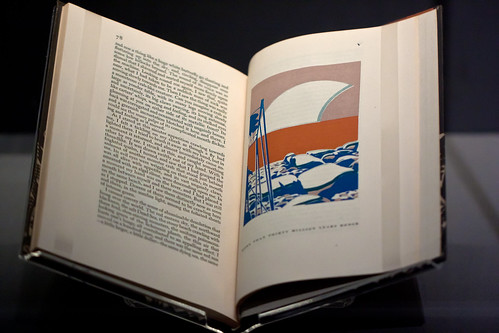
This is one of those greatly revered classics that made people look on with admiration while I was reading it, but actually isn’t a particularly hard read. It’s also not the most engaging, but it is full of Big Ideas.

And that’s both its strength and its weakness: this is an intellectual exercise more than it is a piece of entertainment. Wells was a scientist and drew on new exciting ideas in science to create a vision of the future that in its time would have been shocking, provocative, beyond credible and startlingly different from anything else, whereas now the science is widely known and accepted, what is left is a slightly bald political parable.

Somehow I came to this without really knowing the story. I mean, I’ve seen and read references to it (both Family Guy and Futurama have episodes devoted to this story) but I hadn’t seen any of the film versions or read a synopsis so some of it was a surprise to me.

The Time Traveller (as he is known throughout the book) has gathered together a meeting of London intellectuals to tell them about his new invention, the Time Machine. When they don’t believe him, he tells them to come back a week later when he will have seen the future, and it is his account of this trip to the future that forms the bulk of the novella. The format is slightly odd, in that an unnamed (indeed, un-anything) first person narrator attends these two meetings and records them in a manner somewhere between a journalist and a scientist, so that it’s fairly dry but with the occasional interjection of emotion.

The first thing that struck me was that this isn’t that familiar narrative of jumping a few years at a time into humanity’s future, finishing with a quick trip to the end of the world. The Time Traveller jumps straight beyond the human race as we know it, to the year 802,701 AD, and most of the story is set in that one time (though there are a couple of further jumps forward). In this future, human beings have evolved into two distinct species – the gentle, childlike, darkness-fearing Eloi and the ominous, monstrous-looking, light-fearing Morlocks. The Time Traveller can only conjecture how these races came to be and recounts more than one theory that he subsequently rejected upon further observation.

This means that we cannot necessarily trust the Time Traveller’s interpretation, and indeed his descriptions are a little sparse. Can we be sure that these creatures are all that human-like? When he acquires a female Eloi companion he tells us that she is called Weena and she is really the only character to have a name, almost as if he is trying a little too hard to humanise her.

Without being shocked by the conceit of suggesting that mankind might one day evolve, the political allegory seems a little heavy-handed. Wells paints an extreme end to the widening gap between rich and poor, with the idle rich becoming the Eloi and the industrial working class becoming the Morlocks. There is also an interesting point about both having lost the need for intellectual capacity, because “Only those animals partake of intelligence that have to meet a huge variety of needs and dangers.”

I will admit I was more scientifically interested in the descriptions of the further future, with geological timescales having passed, where Wells describes not only an ice age but also changes to the Sun, the Earth’s orbit, various stars, the Moon, tides, even other planets in our solar system. He was building on recent discoveries in physics and this description was no doubt just as revolutionary (and possibly just as provocative) as his evolved humanoids, but it is also beautiful. The story of the Eloi and the Morlocks is essentially a sad one but the continuation of Earth through immense changes in the solar system is somehow uplifting and inspirational.

As a story, I was a little disappointed in The Time Machine – I didn’t find it engaging, the characters are deliberately insubstantial and many of the ideas no longer appear original or daring. However, it is still a clever, inventive take on the travellers’ accounts that it is built on.

First published 1895.

Kate Gardner Reviews

Posts pagination

1 … 59 60 61 … 72

Archives

RSS feed: Nose in a book Nose in a book

  • Non-Fiction November 2026
  • Book review: The House of Doors by Tan Twan Eng
  • Book review: Taiwan Travelogue by Yáng Shuāng-zǐ

Me on the internets

  • @kate_in_a_book@mas.to (Mastodon)
  • Flickr/noseinabook
  • Instagram/kate_in_a_book
  • StoryGraph/kate_in_a_book

Categories

  • Blog
  • Reviews
  • Uncategorized
  • © Copyright Kate Gardner. All rights reserved.
Proudly powered by WordPress | Theme: Dream by vsFish.