Nose in a book

Reviews and other ramblings

  • Home
  • Reviews archive
    • Book reviews
    • TV reviews
    • Theatre reviews
  • TBR
  • Challenges
    • The Classics Club
    • 2014 Popular-Science Reading Challenge
    • Cookery challenge
    • The Gilmore Girls Reading Challenge
    • 2013 TBR Pile Challenge
    • 2013 Translation Challenge
    • Crime and Punishment read-a-long
  • About
    • Cookie legal stuff

Category: Reviews

Girls and guns and science

December 22, 2011 3 Comments

Echo: the Complete Edition
by Terry Moore

So I quite liked this graphic novel, then Tim said that the maths that the whole storyline is based around is complete rubbish and now I’m not sure if that makes a difference or not. I think I still like it.

It’s almost a superhero story, but not quite. Super-clever scientist lady invents a new element and makes herself a suit out of it, then gets blown up by her superiors while wearing it and the suit attaches itself to two unlucky bystanders. That’s the first couple of scenes. The rest of the story follows those two bystanders as they discover what the suit can do and have very different reactions to it. And both get chased by various government agencies and scientists who want their tech back.

This is one of those beautifully drawn graphic novels that includes a lot of panes with no words, so despite this being a huge tome (this was previously published as six trade paperbacks) I tore through it in one day. I probably didn’t pay enough attention to the detail.

The main character is Julie, one of those two bystanders in the desert. She is an artist struggling to pay her bills and resisting signing the divorce papers that her husband has sent. There’s a large supporting cast, but foremost among them are Dillon, who was the boyfriend of the dead scientist lady, and Ivy, a kickass agent for a mysterious organisation. The first time we meet Ivy she is picking flowers with her daughter. In the next scene she is flying a plane on her own and puts it into autopilot while she changes her clothes. Awesome.

The maths/science stuff is complete rubbish and I did get a bit annoyed by it, even before discussing it with Tim. And there’s also a religious storyline that I found a bit questionable, to say the least. But the main characters and their lives on the run are engaging, funny, upsetting, sad and touching in all the right places. A main character appearing to be offended by the suggestion she might be gay is made up for by there being other characters who just happen to gay, without it being a thing.

Throughout the book there are quotes from writers and scientists about man and science, especially the destructive nature of man. Really it’s quite a negative view of science. There are plenty of scientists in the book who are trying to do good, but the suggestion is that it’s futile, that there will always be someone who wants to do something terrible with any new scientific discovery and that someone will always get their way. I prefer not to be that pessimistic.

There’s also a lot of excuses come up with for drawing women wearing very little. In fact, flicking through the gallery of cover art at the end of this collected edition, the majority of them concentrate on Julie and her large chest.

But dodgy science and fan service aside, I really did enjoy this read. I was interested in and cared about the characters, even some we only meet very briefly, and the bikers were very cool. But not as cool as Ivy.

Published 2011 by Robyn Moore.
Kate Gardner Reviews

More of the cold stuff

December 18, 2011December 24, 2011

Antarctica
by Kim Stanley Robinson

I seem to be on a bit of an Arctic/Antarctic bent – had you noticed? After the last two titles I read, Tim suggested this as an appropriate follow-on and it did indeed fit in well. A lot of the history of Antarctica, especially the famous great expeditions of Scott, Shackleton and Amundsen, is recounted here amidst the near-future politics and sometimes scary tale of global warming and eco-terrorism.

Robinson is good at this sort of ensemble cast, giving voice to several characters to give a real overview to a situation without it being obvious that’s what’s going on. Each perspective is distinct and interesting, which I think shows in that each time it switched I was briefly disappointed to be leaving a story thread but then within a page I’d be completely caught up in the next thread.

Despite all the talk about Antarctica being the continent of science, and the scientists therefore at the top in terms of social status, they are the one group we don’t really get to know. Instead Robinson gives voice to the “other people”, a lot of whom (if not all of whom) support the science.

X is a general field assistant, essentially a dogsbody doing whatever work is assigned to him. He is very aware that he is at the bottom of the social strata and longs for change but loves Antarctica too much to leave. He used to date Val, in fact they had a bit of an ugly break-up, which is colouring his world view somewhat and she wishes he would get over it.

Val is a guide, a strong, athletic, experienced outdoors type who leads expeditions “in the footsteps of…”. She is uber-fit and uber-capable and sometimes struggles to hide her impatience with those less fit and capable. She is also fed up with the male attention she gets being a young, attractive woman on a continent with three men to every woman.

Wade Norton is an adviser to Senator Phil Chase (both of whom pop back up in Robinson’s “Science in the Capital” trilogy), and is sent down to Antarctica to investigate rumours of eco-terrorism and the effects of the breakdown of the Antarctic Treaty. The pair have humorous phone conversations that belie the complex politics they are discussing.

There’s also Ta Shu, the initially silly-seeming Chinese poet and Feng Shui expert, whose calm, steady positivity is infectious; and a mysterious eco-warrior who can no longer stand idly by as the global warming situation gets worse and worse, with sea levels rising and extreme weather events frighteningly frequent.

The story fluctuates from positive to negative, from calm to stormy. The icy continent is both a place of unparalleled beauty and of incomparable danger. Extreme tourists who have climbed Everest and the Matterhorn are challenged to the point of misery. Global warming has accelerated alarmingly and at the same time the world population has exploded and first-world governments have all but abandoned attempts to mitigate their emissions. But there are still people trying to do good, seeing the beauty of the world.

This was an exciting, moving read but I did skim some of the hard science bits (there’s a geophysics controversy that is an accurate portrayal of how science works but I must admit I found it dull) and I did get frustrated at the US bias. The two biggest research stations in Antarctica – McMurdo, or “Mac-Town” and the Amundsen–Scott South Pole Station – are indeed both American, run by the NSF, so maybe it’s understandable, but I did feel that the presence of and research carried out by other countries and other organisations was ignored somewhat. Robinson does, though, make a point of showing the vast range of nationalities working on or visiting the continent. He took part in the US Antarctic Program’s Artists and Writers Program, so he did draw on real experience.

He also, perhaps surprisingly for science fiction, shows some of the negative sides of “doing science” – the resentment and antagonism from the unseen support crew, the tendency to have such single-minded focus that the rest of the world doesn’t get noticed, the painfully slow process of peer review and publication. However, the individual scientists that we meet are great people, doing great work.

Somehow this novel is both pessimistic and hopeful, which is artful indeed. And it has made me want to re-read the Science in the Capital series. So much for making a dent in the TBR.

First published in Great Britain in 1997 by HarperCollins.

Kate Gardner Reviews

When men were men

December 14, 2011 3 Comments

Escape from the Antarctic
by Ernest Shackleton

I bow down in awe to this man. Seriously. Ernest Shackleton was a proper, honest-to-goodness hero, and a pretty good writer to boot.

This is a Penguin Great Journeys excerpt from Shackleton’s book South: The “Endurance” Expedition, which of course I now want to read in full, but I think Penguin’s editors did a good job choosing the key section of the story. As the brief introduction explains, the Imperial Trans Antarctic Expedition set out in 1914, led by Ernest Shackleton. His ship, the Endurance was crushed by ice and the crew found themselves marooned on Elephant Island in winter. With no means of contacting the outside world, Shackleton decided that the only solution was to adapt a 20-foot sailing boat as best they could and, with just six men (including himself) cross the 800 miles of stormy, icy ocean to the island of South Georgia, where there was a Norwegian whaling station.

Shackleton’s tone is matter-of-fact but the facts are incredible. Throughout hardship after hardship he is spurred by the knowledge that the lives of the 22 men left behind on Elephant Island depend entirely on his voyage succeeding. He is practical about the condition of each man but his style of leadership won me over from the start. On Elephant Island the expedition cook is taken ill so Shackleton selects one of the men particularly suffering from depression and despair at the state they are in to take the cook’s place, knowing that having plenty to do and a schedule to follow will help the man keep going.

This is not a journal or log-style account but a book written later expanding on notes taken during the voyage, so there is some room for prose that really gets to the heart what it felt like to be on that journey:

“We were a tiny speck in the vast vista of the sea – the ocean that is open to all and merciful to none, that threatens even when it seems to yield, and that is pitiless always to weakness. For a moment the consciousness of the forces arrayed against us would be almost overwhelming. Then hope and confidence would rise again as our boat rose to a wave…”

But it’s not the occasional foray into descriptive prose so much as the bare facts that make this book outstanding. Everyone should read it, and then fret about how totally useless they are by comparison.

South: The “Endurance” Expedition first published 1919.
This extract published in Penguin Books in 2007.

Kate Gardner Reviews

In the spirit of winter

December 6, 2011December 22, 2011

Dark Matter: a Ghost Story
by Michelle Paver

This book has all the perfect elements to interest me and yet somehow I hadn’t heard of it until I stumbled across it in a shop. An excellent find!

The bulk of the novel takes the form of a journal, kept by Jack Miller during an expedition to the Arctic in 1937. A down-at-heel London clerk who hates his job and resents that money troubles meant he had to give up his place at university and his dream of becoming a physicist, the opportunity to work as communications man for a meteorological study in Svalbard should be the ideal way out of his slump. He is almost put off by the other four members of the party being terribly upper class, but figures he can go off to do this for a year and then when he gets back there will be a war to fight in.

A prologue tells us that the expedition did not go well, that terrible things happened and at least one man died, so the atmosphere is ominous from the start. The tension is ramped up each time something goes wrong, but even without mishaps the fast-approaching Arctic winter is frightening enough. Paver does an excellent job of combining descriptions of the cold beauty of the 24-hour sunlight with explanations of how that will turn to 24-hour darkness without it ever feeling as though you are being lectured to.

Despite all the ramped-up fear, the early sections of this book really made me want to go to the Arctic. The setting came from Paver’s own journeys to various places in the North Pole and her first-hand knowledge really shows. She even, after conceiving the idea for this book, travelled to Svalbard during winter to experience camping and hiking in the endless darkness. As a qualified biochemist, lover of the Arctic and classic ghost stories, and published author of her own ghost stories, no-one could have been more qualified to write this story.

And it is brilliant and evocative and terrible but I was never quite convinced by the supernatural element. I would have been happy to see the terrors as a product of psychological disturbance, not an unusual outcome of overwintering in the Arctic, but the novel seems to try hard to persuade us that the ghost is real, that it is much more sinister and inexplicable than mere madness. I think more ambiguity on this point would have worked better for me.

But aside from that I loved it. Paver has done a wonderful job of developing the relationships between the men, and I especially enjoyed the growing closeness between Jack and one of the husky dogs – beautifully done. She has also very effectively created the fear and loneliness and self-doubt. Immediately after finishing this I started reading Shackleton’s account from the Antarctic and it really highlighted how Paver had got the tone spot-on.

First published in 2010 by Orion. Paperback edition published 2011.

See also: reviews on Savidge Reads and Chasing Bawa

Kate Gardner Reviews

Secrets and gangs

December 4, 2011December 4, 2011

20 Years Later
by E J Newman

The synopsis of this book greatly appealed to me – a story for young adults about people trying to survive in London 20 years after a mysterious event has destroyed humanity as we know it – so I jumped at the chance to get an advance copy. I may also have been attracted by the fact that one of the rival gangs in the story is called the Gardners. Sadly they turned out to be nasty nasty people. Darn.

Newman does a good job of eking out the details, both of what happened in the past and of what is happening now. The central characters are all 15 years old (or thereabouts, they don’t really know; they don’t bother with such things in this version of the year 2032) and therefore never knew the world before “It” happened, though there are older people around who occasionally drop a fact or two.

The story starts with Zane, a boy living with his mother Miri in an uneasy truce with two of the neighbouring gangs – the Bloomsbury Boys and the Red Lady’s Gang. They are unusual for not being part of a gang themselves and are often caught in the middle of vicious animosities. Zane’s longing to belong makes gang membership seem attractive but he is aware that he is not like other boys – he has an instinctual hatred for violence.

When Titus and his sister Lyssa stray unknowingly into Bloomsbury Boys territory a chain of events begins that leads Zane to the truth behind everything – including the fact that he is different from other people in more than just his attitude to violence.

I am reluctant to reveal much more than that, though the publisher’s blurb on the back cover gives away almost everything. I hate that. But it didn’t stop me enjoying the story. Actually, I raced through it, eager to know what happened next. A lot is packed into just over 300 pages and there are sequels in the works, so there were questions left unanswered and story threads left hanging.

One thing that stood out was that these 15 year olds are very different from the teenagers I have ever known, but this is a clear authorial decision. These characters are fighting for their lives, literally. They have no formal education, no early years of being carefree children; their intellect is dedicated to self-preservation, mastering weapons and early-warning systems. Most of the boys have never met a girl (aside from Miri) and so have never faced that side of being a teenager. Which makes them oddly childish; in fact one adult character in the book remarks on how young Zane is, compared with when he was a teenager, back before It happened. It makes the characters an odd combination of capable and self-reliant beyond almost anyone I know, and shockingly but sweetly naïve.

If you’re thinking that the author’s name seems familiar, why yes this is the same “E Newman” of the Split Worlds project. You see, a couple of months ago, I saw a Tweet from a local author about something called BristolCon, which sounded fun (and indeed was) and also that she would have copies of her new book there for reviewers. So I went along and I picked up a copy and then it was NaNoWriMo so I didn’t do a whole lot of reading for a month but I did interact with @EmApocalyptic and read a bunch of her short stories (and indeed featured one on this website). I am glad that I finally had time for her novel and look forward to the sequels.

Published 2011 by Dystopia Press.

Kate Gardner Reviews

Adaptation

November 27, 2011December 24, 2011

City of Glass: a graphic novel
by Paul Karasik and David Mazzucchelli
adapted from the novel by Paul Auster

This is a strange, complex story that I greatly enjoyed but I must admit that I could not stop wondering how it compared with the original novel. I’m still not quite sure what the purpose is of graphic novel adaptations.

It seems to be a story about identity. The main character, Daniel Quinn, is a New York writer who once had everything – wife, son, respected writing career – but then lost all three. Now he writes cheap detective fiction under the pseudonym William Wilson. One night he gets a phone call, a wrong number asking for Paul Auster, a detective. Quinn decides to say that’s him, and arranges a meeting for the next day. His client Peter Stillman is terrified that his father, also called Peter Stillman, is coming to kill him. Quinn agrees to take the case, but soon realises he knows very little about real detective work. At one point he visits Paul Auster, who the telephone call had been intended for, only to find that Auster too is a writer, not a detective.

It’s a curious mix of plot-driven gritty noir and complex literary psychological study. Nothing is certain. In fact one of the first lines in the book, written across three panes, is “Much later, he would conclude…that nothing was real…except chance.”

The story has a very strong sense of place. Quinn walks a lot around Manhattan and there are some beautiful panels showing his routes walked, or details of the city. There’s also a very strong sense of loneliness. Quinn is grieving, and partly agrees to take the case because he recognises in Stillman (the younger one) a fellow troubled soul.

The drawings cleverly and subtly show Quinn taking on characteristics of other characters in the story, making you question whether those other people are real at all. But plays on language, presumably central to the original novel, are also well conveyed. Some of the names seem carefully chosen: Stillman, Dark, Work. There are long forays into Don Quixote and Paradise Lost. There is a whole subplot about language acquisition.

The artists have done a good job with the long passages that follow convoluted thought processes or discuss literary works. They use very simple, often blocky, images to create dreamlike sequences reminiscent of a 1960s film. It’s all done very well and yet…I really love the language in this book, above all else, so won’t I get more from the full novel?

Only one way to find out.

First published in the US in 1994 by Avon Books. This edition published 2004 by Faber & Faber.

I won this book from Jenn of The Picky Girl in her Book Blogger Appreciation Week giveaway. Thank you Jenn!

Kate Gardner Reviews

Apocalypse and trams

November 20, 2011

Future Bristol
edited by Colin Harvey

This collection of short stories was compiled by a local writer (who sadly died earlier this year) to showcase science-fiction writing from in or around Bristol, so all the authors either live here or nearby or have done at some point. Though the depictions of the future are very varied, there are some common themes that say something about both Bristol and the preoccupations of the present.

I must say that in general I was more impressed by the ideas in this volume than the writing. This is mostly a taste thing. I like to have good strong characters and will happily forego storyline if the characters are written well enough. This volume conformed to that common criticism of science fiction that character comes second fiddle to ideas. I don’t actually think that’s true of the very best science fiction, but it was certainly true here. If I haven’t got to know a character, how am I going to care when crazy future apocalyptic things start happening to them?

That said, I really liked all of the ideas in these stories. I preferred the subtler futures where the city has changed and future generations have slightly different words for places and landmarks, and only vague ideas of where a name like “the Circus” or “Canesh’m” has come from. Meaningless to an outsider of course but brilliant for anyone familiar with the city.

Futures varied but tended toward the pessimistic – manmade or environmental disasters, global warming, spiralling crime – and even the more positive ideas had negative aspects. There’s the hackers who use stolen nanotechnology for the common good, only the corporations are watching their every step. There’s the urban explorers who encounter aliens in Clifton Rocks Railway. There’s the flooded city where pirates are back in full force and the police must tread carefully (possibly my favourite visually, though obviously heavily reminiscent of The Drowned World).

I think my favourite story, or at least the one that I have kept thinking about the most, was the one written by Colin Harvey himself. It’s called “Thermoclines” and is about a future when humans have evolved into winged creatures because they cannot touch the ground for fear of “the grey”. From a small community in south Wales, young Garyn is a star hunter but is tested to the limit when a rare visit from outsiders takes him on the long journey to “Brisel”, or what’s left of it. I liked that this story doesn’t try to explain everything, its hints and suggestions raising more questions than answers. It’s also one of the better examples of characterisation in the collection.

This was an interesting project and as an adopted Bristolian I loved the insider’s views of the city (and indeed disliked the more touristy moments, lingering on Clifton and the suspension bridge). I loved that multiple authors mentioned bringing back trams to the city, or found uses for the derelict Parcelforce building next to Temple Meads railway station. This definitely answered my search for stories set in Bristol, but I’m not convinced I’ve found any great new voices here.

Published 2009 by Swimming Kangaroo Books.

Kate Gardner Reviews

C is for…?

November 17, 2011March 11, 2012 2 Comments

C
by Tom McCarthy

This is another book club read that I wouldn’t have picked up otherwise and I’m a little annoyed that in the end I missed the book club meeting about it due to illness, as I think I would have got a lot more from the book by discussing it. As it was, I must admit that it fell a little flat for me.

One of the many review quotes on the book’s cover calls it “admirable for an unashamed literary ambition” and, well, it certainly does scream its literariness but I’m not sure how admirable that is. Although the narration is third person, it follows quite closely the thought processes of its main character Serge, frequently combining stream of consciousness with mechanical or scientific detail in a manner that I found hard to follow and frankly dull. There were so many allusions to science, myth or literature that you could create a very long reading list to interpret the nuances of C.

The novel follows the story of Serge’s life, starting with his birth, and it’s a reasonably interesting life. Born in 1898 to a deaf mother and a father who is both an inventor and principal of a school for the deaf (in which sign language is banned), in the early section there is a certain amount of comedy, sadly lacking later on. Serge’s name itself is pronounced in the French manner by his mother (“sairj”, which he prefers) and the English way by his father (“surge”, like electricity, a running theme) who is a brusque, difficult but enthusiastic and highly animated man. Serge has an older sister, Sophie, who he is devoted to, though as they get older he worries that she is so much cleverer than he. She performs chemistry experiments from an early age, is generously indulged by her father and cannily uses her little brother without him realising he is being manipulated.

From well-to-do English countryside, the action moves to a spa town near Dresden, where Serge has been sent to be healed of a digestive disorder; then to the First World War, during which Serge serves as a frontline aeroplane radio operator; then to post-war London, where Serge half-heartedly studies architecture while becoming increasingly embroiled in drug culture and addiction; then finally to Egypt, where Serge is sent without him ever really being clear what he is supposed to be doing. They’re very different locations and situations but what ties it all together is radio and Serge’s obsession with it.

Serge’s father, at the start of the novel, is building one of the first wireless stations. It becomes the favourite hobby of teenage Serge to listen in on conversations in Morse code and this feeds directly into his wartime employment. Between injury, illness and drug-taking he is often delirious or otherwise in an altered state of mind and at those times his thought patterns become electricity- or Morse-like, rearranging the world he sees into waves and patterns.

Serge is a very believable, multi-faceted character, but he is a little cold for my liking, though there are reasons for him being that way. I thought the depiction of him as a soldier and just after the war was particularly well done, the stand out moment being when someone begins to sympathise with what he must have been through in the war and how hard that must have been and he replies, “But I liked the war.” It’s actually an ambiguous statement, because Serge spent much of the war and a lot of the time since so drug-addled he has no handle on reality, but he thinks he really means it.

It’s not a book to read if you’re easily annoyed by little rich boys getting out of scrapes through a combination of money and knowing the right people. Or indeed if you want to know exactly what is happening and have every question answered (there are a few recurring details that I expected to come to something but never did, plus there’s all the need for interpretation). But neither of those applies to me usually, so I can only conclude that it was the writing style itself that put me off. It was certainly at times beautiful and evocative, but far too often I found myself skimming long passages through boredom, and I definitely wasn’t engrossed.

First published in 2010 by Jonathan Cape. Paperback published 2011 by Vintage.
Shortlisted for the Man Booker Prize 2010.

Kate Gardner Reviews

Under the skin

November 6, 2011March 11, 2012 9 Comments

Norwegian Wood
by Haruki Murakami
translated by Jay Rubin

This is the book that turned Murakami from successful author to superstar and sent him running into hiding in the US. It’s certainly a more “straightforward”, accessible narrative than he is generally known for, but it is still undeniably, brilliantly him.

Toru tells us the story of his student days in Tokyo, from 1968 to 1970, and the friends and lovers who mattered to him and even changed him in those formative years. Against a backdrop of free love, student protests and Beatles songs, we learn how Toru’s best friend Kizuki killed himself when they were 17. A year later, completely by chance, Toru bumps into Naoko who had been Kizuki’s girlfriend since they were small children. Unsure of what to say to each other but united by their grief that holds them apart from the rest of the world, they start spending time together. Toru falls headlong in love with Naoko even while he knows she can never love him.

While Naoko’s difficulty in dealing with life gets worse and worse, Toru meets another woman, one who could not be more different. Where Naoko is delicate, feminine and non-communicative, Midori is a blaze of talkative modernity, with short hair and a tendency to get way-too-open about sex. She also has a boyfriend, albeit one Toru never meets, just as she never meets Naoko.

A large chunk of the start of this novel was a short story in Blind Willow, Sleeping Woman, which I read quite recently, and this threw me at first. The language is beautiful, the characters so very detailed and real, the setting vividly alive but as Naoko and Toru held themselves apart, so I found myself at arm’s length from the story – observing rather than drawn in. It was really only with the introduction of Midori that this book came to life for me. I really loved her character. She is no more “ordinary” or run-of-the-mill than Toru or Naoko, but she has a joy and spirit that uplifted the story, even when terrible things were happening.

While there’s no surrealism or magical story twists here, what there is plenty of is Murakami’s uncanny ability to get under the skin of people and everyday life. Even when nothing much is happening, I was thoroughly enjoying every word. A simple description of daily life in a student dorm could have me laughing out loud, a casual conversation over a noodle lunch have me grinning in recognition. But there is also a lot of pain – the ordinary pain of growing up and facing adulthood plus the added pain of death, loss, unrequited love, psychological trauma. It’s a beautiful and moving story.

First published as Noruwei no mori in 1987 by Kodansha Ltd, Tokyo.
This translation published 2000 by the Harvill Press.

Kate Gardner Reviews

Undercurrents

October 30, 2011July 21, 2015 2 Comments

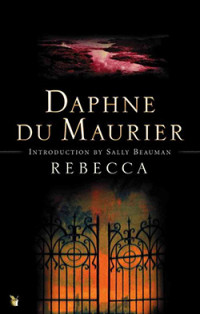
RebeccaRebecca
by Daphne du Maurier

This was, appropriately, the final book in the Discovering Daphne readalong run by Savidge Reads and Novel Insights. I have been looking forward for months to re-reading it, and was a little sad at how quickly I flew through its pages when this week finally came.

One of the reasons I highly rate this book (and no doubt many others would agree) is the great pleasure of re-reading it. This was my third reading (I think) and I loved looking out for the hints of what is to come, as well as spotting the red herrings that had misled me previous times. Knowing the story allowed me to linger over the detailed gothic descriptions when I was in the mood and skim over them when I wasn’t. Despite knowing the outcome, I was still excited by the build-up of tension and on tenterhooks in all the right places. I’m convinced – du Maurier was officially a wonderful writer.

Briefly, this is the story of the second Mrs Maxim de Winter. Or rather, she is the one who tells the story, but for a lot of the time it isn’t about her at all, it’s about Rebecca. Rebecca was Maxim’s first wife and died tragically young, just a year before he met and swiftly married his second wife.

Continue reading “Undercurrents”

Kate Gardner Reviews

Posts pagination

1 … 58 59 60 … 72

Archives

RSS feed: Nose in a book Nose in a book

  • Non-Fiction November 2026
  • Book review: The House of Doors by Tan Twan Eng
  • Book review: Taiwan Travelogue by Yáng Shuāng-zǐ

Me on the internets

  • @kate_in_a_book@mas.to (Mastodon)
  • Flickr/noseinabook
  • Instagram/kate_in_a_book
  • StoryGraph/kate_in_a_book

Categories

  • Blog
  • Reviews
  • Uncategorized
  • © Copyright Kate Gardner. All rights reserved.
Proudly powered by WordPress | Theme: Dream by vsFish.