Nose in a book

Reviews and other ramblings

  • Home
  • Reviews archive
    • Book reviews
    • TV reviews
    • Theatre reviews
  • TBR
  • Challenges
    • The Classics Club
    • 2014 Popular-Science Reading Challenge
    • Cookery challenge
    • The Gilmore Girls Reading Challenge
    • 2013 TBR Pile Challenge
    • 2013 Translation Challenge
    • Crime and Punishment read-a-long
  • About
    • Cookie legal stuff

Category: Reviews

Crime and Punishment read-a-long weeks 8 and 9
April 6, 2013

Read-a-long

The Crime and Punishment read-a-long is hosted by Wallace over at Unputdownables. In weeks eight and nine we read from part 4 chapter 6 to the end of part 5 chapter 4. The official discussion posts are over at Unputdownables.

As always, this discussion will contain spoilers, so only read on if you don’t mind/have already read this far (or further).

Raskolnikov seems to be vacillating wildly over the question of confessing to the police. He even goes to see Porfiry at the police station and seems on the verge of giving in to his provocation when someone else turns up to confess to the murder. But he knows and the police know that the confession is false so it’s only a delay, not an end to his torment. As Porfiry says:

“If I leave one gentleman quite alone, if I don’t arrest him or worry him in any way, but if he knows, or at least suspects, every minute of every hour, that I know everything down to the last detail, and am watching him day and night with ceaseless vigilance, if he is always conscious of the weight of suspicion and fear, he is absolutely certain to lose his head. He will come to me of his own accord.”

Luzhin is currently coming across as a far worse character than Ras. He’s willing to ruin Sonya, and therefore make Katerina and her children even more destitute than they are, just to score a petty point against Ras and have a slim chance of getting Dunya back.

The scene between Sonya and Ras was incredible. One moment I was completely on side with Ras and thinking their fledgling love was beautiful and heartbreaking, then the next moment I’m reminded that he’s a cold-blooded murderer trying to rationalise what he has done. Here is a selection of quotes from Ras:

“I wanted to make myself a Napoleon, and that is why I killed her.”

“I only killed a louse, Sonya, a useless, vile, pernicious louse.”

“Whoever is most audacious is most certainly right…power is given only to the man who dares stoop and take it. There is only one thing needed, only one – to dare…I wanted to have the courage, and I killed.”

“Did I murder the old woman? I killed myself, not that old creature! There and then I murdered myself at one blow, for ever!”

Kate Gardner Reviews

I count all the stuff that might crash

April 3, 2013 2 Comments

Room

Room
by Emma Donoghue

This is one of those books that was everywhere when it came out and I got put off by all the coverage. Fast forward a couple of years and I finally succumbed! As expected, it was an easy-to-read, gripping story, but it was more psychologically interesting than I had expected.

The story is that of Jack, beginning on his 5th birthday, and is narrated by him. I found his voice irritating at first but it grew on me and it was certainly believable. Jack lives with his Ma in their Room and seems to live a simple, happy life with her. But fairly quickly you see that all is not simple or happy. They never leave Room, they are locked in and a mysterious man comes at night to visit Ma, while Jack hides in Wardrobe.

“Today I’m five. I was four last night going to sleep in Wardrobe, but when I wake up in Bed in the dark I’m changed to five, abracadabra. Before that I was three, then two, then one, then zero. ‘Was I minus numbers?'”

This is clearly disturbing stuff, chilling even, and having the largely innocent narrator both adds to that and removes enough direct knowledge to make it readable. Had this been Ma’s account rather than Jack’s there would be more horrific details and negative emotions, whereas Jack just accepts the world his mother has built for him in their tiny space because he knows no different.

“How can TV be pictures of real things? I think about them all floating around in Outside Space outside the walls…all the shes and hes…there’s skyscrapers as well and cows and ships and trucks, it’s crammed out there, I count all the stuff that might crash into Room. I can’t breathe right.”

The idea has been well thought through. It is, psychologically speaking, completely believable. Reading it I couldn’t help but think of those shocking news reports about people like Josef Fritzl and that certainly added a chill factor, knowing that this wasn’t a completely unthinkable product of Donoghue’s imagination.

There were certain details that stood out for me, even though they’re not the disturbing bits. The mother’s attitude to nudity is super relaxed, but then they live in one room, after all. Her efforts to provide education and exercise for her son with only TV, a handful of books and grocery packaging are impressive. Jack and his mother do, to some extent, turn to religion to help them cope. She believes in God but I got the impression her faith wasn’t all that strong before Room as the details she has told Jack are a bit vague. It could be his age that has magic confused with miracles but the fact he thought Jesus was only ever a baby like in the picture they have on their wall (from a cereal packet) suggests a lack of fleshing out the faith beyond prayers.

It is quite hard to discuss this book fully without spoilers. I can see how this would make for an interesting book group read. There is a…turning point just over halfway through. When I saw it approaching I didn’t think it would work, narratively speaking, but it actually made the novel much richer, for me at least. Those of you who have read the book will hopefully understand what I am getting at! What did you think?

Published 2010 by Picador.

Source: I bought this secondhand.

Kate Gardner Reviews

Life had no before and after

March 27, 2013 1 Comment

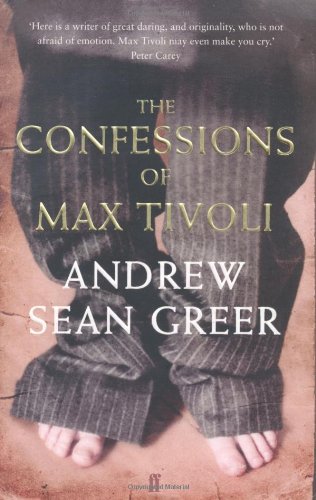
The Confessions of Max Tivoli

The Confessions of Max Tivoli
by Andrew Sean Greer

This odd book has sat on my shelves for years unread but finally, after enjoying a couple of his short stories, I decided to give this a go. It’s a beautifully written book but it didn’t entirely engage me.

The story is that of Max Tivoli, born with the appearance of an old man in his 70s and ageing backwards over the years. In a sort of magical realism moment, no explanation is given for how that birth could possibly have worked, especially considering his mother survives it, but after that it takes the tack that Max has a condition that no-one will understand, though perhaps a handful of other people might have it. So for most of his early childhood he is hidden away, with a series of nurses brought to the house to look after him. Once he is old enough mentally to get away with it, he agrees his mother to always act the age he appears. And in time-honoured tradition, it is really only when he disobeys this mantra of his mother’s that things go wrong for him.

“I could never write a true history of my childhood, because everything happened before I knew what time was…Life had no before and after, was not yet strung upon a thread, and thus cannot be brought out from the drawer intact.”

Max is a largely unsympathetic main character, though obviously he has reasons for being how he is – selfish and stubborn – and perhaps the book is more interesting that way than if he had been a good person who sacrificed himself every time his medical condition got in the way of someone else’s happiness. But as the story is narrated by him in slightly dense prose, I found that to be a lot of time spent in the mind of someone I found unpleasant.

The conceit is an interesting one. Max is writing the story of his life as an old man with the appearance of a 12-year-old boy. He is now facing perhaps the most difficult part of his life – receding into a small child’s and then a baby’s body, and he does not know quite how it will end. So he is writing his confession, frequently addressing other characters in the story who he hopes will read it.

“This morning you were the ink monitor and soberly filled our clay inkwells to their brims before gaily dropping a tiny frog into mine. Until it perished, gagging on the lampblack, the creature left a leaping pattern across my lesson book so exquisite – a hail of dark roses falling from the sky – that I will try to place it here in this memoir as the only evidence that I am not lying.”

Though Greer does not attempt at all to make this science fiction, he does address the physical and emotional challenges of Max’s life in some detail. Which is at times disturbing, as it should be.

In a purely practical vein, I can see that the historical setting (from San Francisco in 1871 to a small Mid-West town in 1930) was necessary because a modern-day version of this story would be so much harder, what with widespread photography and needing to show ID for everything. At the very least it would have been more of a story on the run from authorities. Whereas the historical setting allows Max to spend most of his life in one city. And it also gives Greer the option to pick which historical events intrude into Max’s life.

Despite the highly unusual premise there were some clichés, and plot turns that were phrased as though they were intended as revelations but did not surprise me for a second. Was that actually the intention or a failure of plotting? It’s hard to tell. Perhaps it was intended to show that even Max’s extraordinary life is subject to the same banal basic needs as everyone else’s.

“We all hate what we become. I’m not the only one…I have seen men back from war, squinting at themselves in shop windows as they feel their skull beneath their skin. They thought they would shed the worst of youth and gain the best of age, but time drifted over them, sand-burying their old hopes. Mine is a very different story, but it all turns out the same.”

As for secondary characters – Max’s mother features very little despite her being so central to his survival. Again, I can see that this might be a deliberate device, showing how little Max thinks of his poor ever-sacrificing mother. Max’s best friend Hughie is wonderful, even if he is the subject of some of the worst clichés in the story. But even he and Alice, the love of Max’s life, really aren’t fleshed out fully. And you can go on filing that under Max’s narration and his character flaw of being selfish and not really trying to understand other people, but there should have been a way to let them come to life.

It’s certainly not a bad book by any means. It was a slow, thoughtful read and really moved me at the end. I’m glad I finally picked it up. I will certainly check out Greer’s other novel The Story of a Marriage, which got a lot of positive noises a couple of years ago.

Published 2004 by Faber and Faber.

Source: I think this was a freebie from an old job. It’s been sat on my shelves a long time.

Challenges: I read this for the 2013 TBR Pile Challenge.

Kate Gardner Reviews

Recent reads in brief

March 18, 2013March 18, 2013 2 Comments

My lupus has been flaring, just a little, not enough to knock me out completely or even stop me reading completely, but enough to make my brain go blank when I try to write a review. So here are some short reviewettes of the books I’ve been reading.

Portrait Of The Mother As A Young Woman

Portrait of the Mother as a Young Woman
by Friedrich Christian Delius
translated from German by Jamie Bulloch

I had noticed for some time a growing number of glowing reviews for the books from Peirene Press, so earlier this year I ordered their Female Voice Series. This book is at once simple and highly experimental. A young German woman is living in Rome in 1943, waiting for her husband to return from the North African front. She is heavily pregnant and being cared for by nuns. The story follows her as she walks to a Bach concert at the Lutheran church and, once there, is transported by the music. That’s it. But it’s beautiful. Told in one long sentence, broken into paragraphs that work almost like the stanzas of a poem, her thoughts unreel. She ponders the sights of this foreign city, fear for her husband, faith in God, the contradictions of war and society in general, the possibilities of the future. She considers herself shy and uneducated but asks intelligent questions, questions she would only ever dare voice to her husband, if only he were there. A really excellent book and a great introduction to this new (to me) publisher.

“she sensed something within her rebelling against the constant obligation to stifle the feeling of longing with her reason and faith, because feelings were forbidden in wartime, you were not allowed to rejoice with happiness, you had to swallow your sadness, and like a soldier you were forced to conceal the language of the heart,”

Bildnis der mutter als junge frau published 2006 by Rowohlt.
This translation published 2010 by Peirene Press.

Source: I bought this direct from the publisher.

Challenges: This counts toward the 2013 Translation Challenge.

My Sister’s Keeper
by Jodi Picoult

This was a much better book than I expected. I thought it would be an easy, fluffy, light read. Well it was easy to read but certainly not the other two. It’s the story of a family whose second child, Kate, has a rare form of leukaemia. When her brother Jesse proves not to be a bone marrow match, the parents conceive another child, using IVF so that they can ensure a match this time. And so Anna is born. Every few years Kate’s leukaemia returns and Anna is again called upon to save her sister’s life. The story begins with 13-year-old Anna asking a lawyer to medically emancipate her from her parents, so that she won’t have to donate a kidney to her dying sister. Despite the emotionally charged background to the story, the book isn’t emotionally overwrought, in fact it’s often funny. But it thoughtfully considers all the options, all the situations this family has been through. Crucially they all have lives beyond this current drama, and the yo-yoing loyalties are absolutely believable. I was gripped and empathised with all the characters.

“This is not Anna. I am used to struggling with Jesse, to lightening Kate’s load; but Anna is our family’s constant. Anna comes in with a smile. Anna tells us about the robin she found with a broken wing and a blush on its cheek; or about the mother she saw at Wal-Mart with not one but two sets of twins. Anna gives us a backbeat, and seeing her sitting there unresponsive makes me realize that silence has a sound.”

Published 2004 by Simon & Schuster in the US, Hodder & Stoughton in the UK.

Source: I bought it secondhand.

Challenges: This counts towards the Rory Gilmore Reading Challenge.

The QI Book of the Dead
by John Lloyd and John Mitchinson

For those who don’t know, QI is a TV quiz show presented by Stephen Fry in which the celebrity teams have to come up with Quite Interesting answers. A whole raft of books have been published as an offshoot. This one is a series of vignettes about interesting dead people. They are grouped by topic (“Happy-go-lucky”, “Driven”, “Monkey keepers”, etc) and each person gets just 5–10 pages to have their life story told (and with more than 400 pages total that’s a lot of dead people). They’re a good mix of famous and not famous, though most were famous in their own lifetime. Often it’s the ones who have been forgotten with time that make the best reading. The book definitely lives up to its Quite Interesting label but it’s not one to read all at once. This perfectly suits dipping in and out of, reading 10 minutes at a time over a few months. The downside of this is that I’ve forgotten half the characters I swore I would look up to learn more about after John and John had whet my appetite.

“The establishment saw [Jeremy] Bentham as deeply dangerous. His ‘algebra of utility’ seemed to eat like an acid through centuries of accumulated privilege and injustice. He opposed slavery, and both capital and corporal punishment; he believed in equal rights for women, and for animals; he called for the decriminalising of homosexuality; he praised free trade and the freedom of the press; he supported the right to divorce and urged the separation of church and state. Most of what we now call liberalism can be traced back to Bentham.”

Published 2009 by Faber and Faber.

Source: A Christmas present from my brother a few years back.

Kate Gardner Reviews

Conflict has consequences, always

March 12, 2013 2 Comments

Saga

Saga volume 1
by Brian K Vaughan (story) and Fiona Staples (artwork)

This was a bit of an impulse buy on a recent trip to the comic shop and I am so glad I grabbed it. Vaughan completely lives up to the promise of Y: the Last Man and I’m both annoyed and excited that I am in on the new series from the start, as it will probably go on for years.

From science fiction and gender politics, Vaughan has moved into fantasy and racial politics, though there’s still some SF in there for good measure. The story opens with a baby being born to a mother with wings (Alana) and a father with horns and some magical ability (Marko). Almost immediately, soldiers burst in and the new family narrowly escapes with their lives. Why are they on the run? And can they possibly keep their newborn child safe?

Well, it appears that an age-old war between a planet and its moon has spread across the whole star system. Various other races have been drawn into the fight, being forced to take sides, while some individuals work as freelancers for the highest bidder. Alana and Marko were both soldiers who fell in love and vowed to give up fighting – which makes them deserters and, as far as most people are concerned, freaks.

There are some fantastic secondary characters, including the baby, who narrates the whole thing from some future point. There’s also freelancer The Will and his sidekick Lying Cat, which is a giant fearsome cat that can detect whether someone is lying. The Will appears to be a nasty piece of work at first but then a visit to Sextillion – a crazy giant brothel that caters to every desire – introduces an intriguing twist. I loved the detail that Prince Robot IV just wants to stay home and start a family with his wife after a gruelling two-year tour of duty, but his dad insists he go out and personally handle the Alana problem. And this book has the most crazy-ass ghosts I’ve ever come across in fiction.

The artwork is excellent, if a little graphic in places (no pun intended). But most importantly (to me) it’s well written. I’m not a great fan of war as a setting but this book looks past the big battles at some of the individuals involved, and does it with humour and pathos.

“They weren’t my men, Marko, they were trigger-happy assholes who got what was coming to them. Besides, I stepped in before you could do anything you’d regret.”
“Then how come it feels like I’ve just gotten us cursed?”
“Why, because you violated some personal pledge against hurting awful people?”
“My reluctance to use force isn’t ideological, it’s practical. Violence is stupid. Even as a last resort, it only ever begets more of the same. Conflict has consequences, always. Sooner or later, our family will pay for what happened today.”
“Ehn, so the guy whose hand you lopped off comes after us with a hook in 20 years. Add him to the list.”

I’m not sure I can place my finger on exactly what I loved about this book. If I described the plot in more detail it would sound ridiculous. But maybe that’s exactly it. Or maybe it’s the good old combination of well drawn characters, setting, plot and sub-plots with just the right level of pace and potential. Whatever, I’m in.

Published 2013 by Image Comics.

Source: I bought it for myself at our local comic shop.

Kate Gardner Reviews

The sadness and loneliness of death

March 8, 2013March 12, 2013 1 Comment

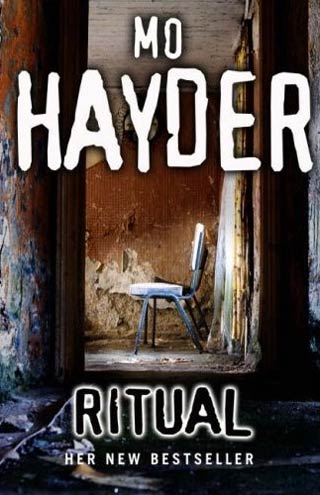
Ritual

Ritual
by Mo Hayder

Many moons ago I blogged about the lack of books set in Bristol and a couple of people pointed to Hayder as an author who has set multiple novels here. Crime series don’t tend to be my bag but that’s a combination of prejudice and unwillingness to get sucked into something that makes me add another 20 books to my TBR. Crime books have a history of strong settings so I decided to give this one a go.

This isn’t actually the first book in the series, but it’s the first one set in Bristol. Hayder’s hero policeman Jack Caffery has moved from London to the West Country, just a few weeks before the novel begins. However, the real central character in this book is Sergeant “Flea” Marley, a police diver whose personal life is a bit of a mess. She’s interesting, though perhaps loaded with a few too many foibles. But by the end of the story I really liked her and found myself hoping she’s a major part of the next few books as well. So does that mean I have become a fan of the series?

Well, yes and no. The early chapters suffer a little from a habit of describing physical appearance a bit too much, or maybe too cheesily or clunkily. It was made abundantly clear from the start that Hayder was setting up a physical attraction between Flea and Jack that, in tried and tested fashion, begins with mutual dislike/distrust.

“She had something kind of kinetic about her, something in her face that suggested her thoughts didn’t stay still for long. He hated the way he’d noticed these things about her…He hated the way he’d wanted to leave, because suddenly all he could feel was his body.”

But another apparent flaw, one that had me quite annoyed for a few days, turned out to be a prejudice of certain characters that was suddenly turned around and dealt with eloquently towards the end of the story. I can’t really explain more than that without giving away major plot points, and I am torn as to whether it shows skill or lack of it that it took so long for it to become clear that the prejudice wasn’t Hayder’s own.

But back to the plot. The story opens with Flea diving for a hand in Bristol Harbour, after someone called the police claiming to have seen one. There’s a lot of discussion about the scenarios that might lead to a severed hand being found without a body in that particular spot. Descriptions of water flow from various sources, not to mention where corpses tend to come from, seemed detailed and accurate without being at all boring. In fact one of the novel’s strengths for me was the realism of the police procedures and conversations. I completely believed in those scenes of police work, even if only Flea and Jack ever got to have the limelight.

“It wasn’t the first, nor would it be the last body part she would fish out of the mud around Bristol, and except for what it said about the sadness and loneliness of death, usually a severed hand wasn’t remarkable…Only she, Dundas and the CSM knew that this hand wasn’t commonplace at all.”

One hand becomes a pair of hands and they are quickly linked to a South African witchcraft ritual in a plot that seems at first highly unlikely before eventually becoming cleverer and darker than I had expected. There are plenty of red herrings thrown in, some a little more contrived than others, but arguably it was less of a whodunit and more of a “will the police figure it out in time?”.

It was a fairly easy, enjoyable read. It’s not great literature and I’m not in a big rush to pick up the next book but I do want to read it. Not just for the Bristol setting, either, although that was done pretty well.

Published 2008 by Bantam Press, a division of Transworld.

Source: Borrowed from a friend.

Kate Gardner Reviews

I was penetrated by sunlight

February 28, 2013

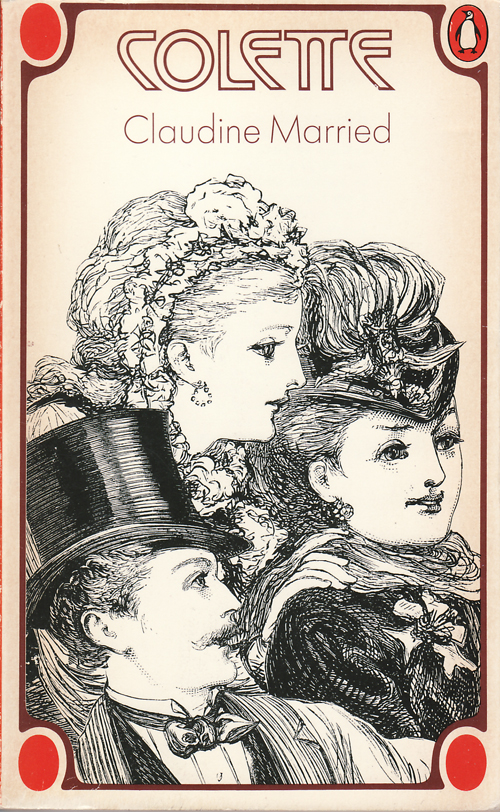
Claudine Married
by Colette
translated from French by Antonia White

Claudine Married

Getting hold of this book was a little bit of a saga. I came across the first Claudine book in a secondhand bookshop and fell in love with both the charming story and the attractive old Penguin edition I had picked up. I resolved to collect the set of four in the same design and soon had three, but this one proved a bit of a challenge. Twice I ordered it from sellers on Abe Books only for the sale to fall through because they didn’t have it in stock after all. It was with some excitement I finally lined up my little collection.

It’s a shame then that this instalment didn’t quite live up to the first two, though I hasten to add that it’s still a beautifully written and insightful book. But one of the things that I liked about the character of Claudine was her mixture of naughty wilfulness and youthful innocence. Now she is innocent no more. Or isn’t she?

In this third book in the Claudine series she returns to Paris from a long, leisurely honeymoon with her husband Renaud. She is just 18 years old and her husband in his 40s, which gives us an early clue as to his sexual tastes. There is an uncomfortable section where the newlyweds visit Claudine’s old school and both flirt outrageously with the 15-year-old girls boarding there.

Sexual attraction had been a major topic of the series previously but here that’s what it’s all about. Claudine had dabbled with both sexes before her marriage and the pattern continues. As well as loving her husband, she falls hopelessly in lust with a new acquaintance, Rezi, the buxom wife of a jealous invalid. Renaud immediately sees this and encourages Claudine in what she sees as him being an understanding husband, but I read as straightforward lechery. I won’t say which of us was right, but Claudine certainly has some lessons to learn.

As always, Colette writes with great affection for the French countryside.

“At least I had been able to bathe my bare hands and trembling legs in thick, deep grass, sprawl my tired limbs on the dry velvet of moss and pine-needles, rest without a thought in my head, baked by the fierce, mounting sun. I was penetrated by sunlight, rustling with breezes, echoing with crickets and birdsong, like a room open on a garden.”

This book is fairly sexually explicit but it’s not Henry Miller. The deed itself is usually skipped past. The narrative concentrates instead on Claudine’s reaction to events. It was with some relief I realised that her reluctance to give in to her desire for Rezi stems from wanting to be faithful to her husband, not the fact that Rezi is a woman. She has, after all, been there before.

I can see why it took almost 60 years for an English translation to appear in print but I do wonder how shocking (or not) these novels were in France.

First published as Claudine amoureuse 1902.
Published as Claudine en ménage after the above edition had been destroyed.
This translation published 1960 by Secker & Warburg.
My edition published 1972 by Penguin Books.

Source: I bought it secondhand via Abe Books.

Challenges: This counts toward the 2013 Translation Challenge.

Kate Gardner Reviews

Beseeching at the portals of the soft source

February 23, 2013February 23, 2013 2 Comments

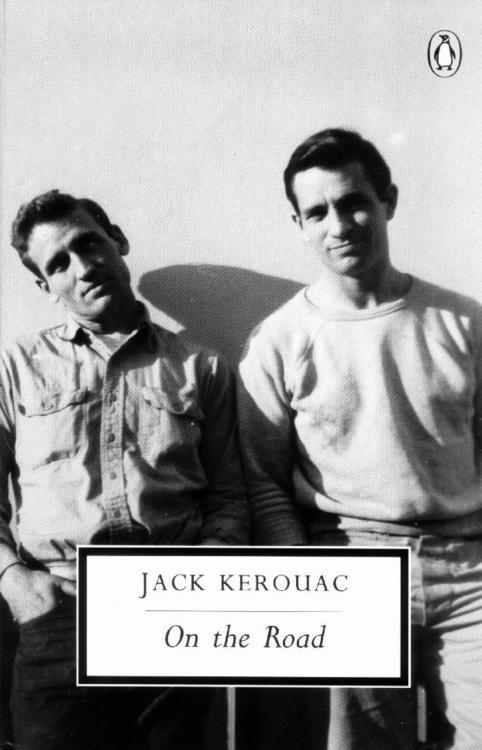
On the Road
by Jack Kerouac

On the Road

People have been telling me to read this book since I was…18? And I haven’t put it off deliberately. I even read a couple of other Kerouacs in the meantime. But I suppose the legend of this being written in one unbroken outpouring, in fact literally typed on one great long roll of paper, suggested to me something impenetrable and rambling, which this is not. Partly because that legend is not entirely true…

So much happens in this book (I hesitate to call it a novel, due to its autofiction nature) and the writing style is so open and honest it hardly matters that it’s not tightly plotted. How could it be? This is the story of a few years in the life of Kerouac’s alter ego Sal Paradise as he criss-crosses North America searching for the experience, the moment of truth that will break his writer’s block. I don’t know which parts are “real” but that really isn’t the point. The result is a beautiful, sad, enlightening book.

“Soon it got dusk, a grapy dusk, a purple dusk over tangerine groves and long melon fields; the sun the color of pressed grapes, slashed with burgundy red, the fields the color of love and Spanish mysteries. I stuck my head out the window and took deep breaths of the fragrant air. It was the most beautiful of all moments.”

The language is perfectly evocative and really shows Kerouac/Paradise’s love for his country, for the road, for people. At least to begin with. Because while the narrative starts off full of youthful excitement and wild enthusiasm, with Paradise throwing himself recklessly into every experience, the moments of awareness when a situation isn’t working out add up to produce a Paradise who is a little older and wiser, sadder and careworn, because he actually does care and recognises the value of caring.

“Boys and girls in America have such a sad time together; sophistication demands that they submit to sex immediately without proper preliminary talk. Not courting talk – real straight talk about souls, for life is holy and every moment precious.”

Ah, the girls. I can see how this book might have been shocking in the 1950s. Now, of course, sex and drugs (mostly cannabis) and booze aren’t at all shocking but there is still most definitely bad behaviour in the way the thrill-seekers treat their friends/hosts wherever they go. Most of which is the influence of Dean Moriarty. Dean is a restless trouble-maker who lives life to the full and Sal hero-worships him, even though most of his friends say straight out that they don’t trust Dean, and with good reason. Dean is the start and end of the book but we don’t actually meet him until over 100 pages in.

“I could hear Dean, blissful and blabbering and frantically rocking. Only a guy who’s spent five years in jail can go to such maniacal helpless extremes; beseeching at the portals of the soft source, mad with a completely physical realization of the origins of life-bliss.”

Sal himself, though, I loved as a character. He feels everything so deeply, from the heights of passion to the depths of despair. He wants experience and he certainly gets it, travelling any way he can, sometimes working his way, sometimes living among bums penniless and scrounging or even stealing to get by. He falls in love multiple times but to some extent he just loves life.

There’s an interesting attitude to race in this book. Considering the date I can forgive some of the race language used but I can’t quite figure out how to feel about Sal’s love of coloured people. It sounds like a good thing, and he certainly mixes with them and loves their music (the jazz, of course) and their women; but he seems to see them as exotic underdogs, as if their colour defines them. When he declares a wish to be one of them it’s shockingly naïve, showing no awareness of racism, of struggle, of the fact that while he is choosing to slum it in their company knowing that he has a comfortable home near his beloved New York to return to, most poor people did not choose that life and have to struggle their whole lives, not just for a few days as a new experience.

But I can forgive all that for the sheer joy of the language. You can’t help but fall in love with travel and America when reading this book, even as Sal is falling out of love with both. I marked so many quotes while reading this. I will leave you with a few of them.

“All that old road of the past unreeling dizzily as if the cup of life had been overturned and everything gone mad. My eyes ached in nightmare day.”

“Yang, yang, the kids started to cry. Dense, mothlike eternity brooded in the crazy brown parlor with the sad wallpaper, the pink lamp, the excited faces.”

“That last day in Frisco…the great buzzing and vibrating hum of what is really America’s most excited city – and overhead the pure blue sky and the joy of the foggy sea that always rolls in at night to make everybody hungry for food and further excitement. I hated to leave…With frantic Dean I was rushing through the world without a chance to see it.”

“We turned at a dozen paces, for love is a duel, and looked at each other for the last time.”

First published 1957 by Viking Press.
Reprinted in Penguin Classics 2000.

Source: I think I bought this for myself several years ago.

Challenges: This counts towards the 2013 TBR Pile Challenge.

Kate Gardner Reviews

Spectral shadows across the tamed gardens

February 11, 2013February 12, 2013 2 Comments

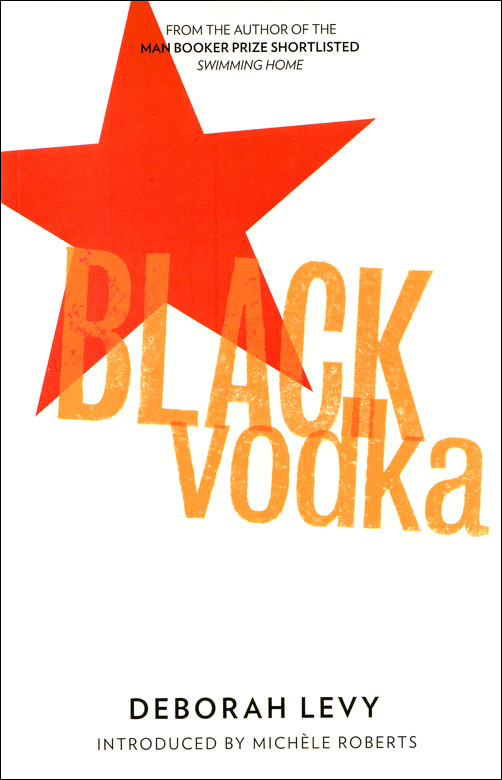
Black Vodka

Black Vodka: Ten Stories
by Deborah Levy

I loved Levy’s novel Swimming Home, which was shortlisted for the Booker Prize last year and Levy was the National Book Awards Author of the Year 2012, so I was pretty excited when I found out this would be the first book in my subscription to And Other Stories.

These are very modern short stories, zipping around different European locations and ethnicities, and incorporating modern technology reasonably well (which is something I basically never say, so kudos to Levy on that). But they’re not about story or location, they’re about emotions and characters and relationships.

“I was instructed in the art of Not Belonging from a very tender age. Deformed. Different. Strange. Go Ho-me Ali, Go Ho-me. In fact I was born in Southend-on-Sea, and so were those boys, but I was exiled to the Arabian Desert and not allowed to smoke with them behind the cockle sheds.”

Most of the stories might be better described as sketches or scenes, which I think I’ve also said about Haruki Murakami’s short stories and I loved both, and I do see some similarities. Both are modern and city-centric, and sometimes the central character can be a little mysterious and cold. But more often, Levy’s characters are warm and racked with emotion.

“At night the satellite dishes on the roofs and walls throw spectral shadows across the tamed gardens. I have grown to love the bronze doorknobs in the shape of jungle beasts: a lion’s head, a tiger, a snake…It gives me a thrill because I know the world is very old.”

Both the characters and the events tend to be oblique, not straightforward. As with Swimming Home there are subtleties at work that mean a few different things could be happening. Sometimes details or even names of characters overlap between stories. I wanted to re-read some of them right away.

My favourite is one of the shortest in the collection, “Placing a call”. It uses the second person and repetition and it’s immediately apparent that the narrator is unreliable. I also loved “Pillow talk”, which is at once a sweet love story and brutally honest.

My only tiny gripe would be that none of these stories is new, they have all been previously published, which smacks a little of cashing in on last year’s award wins, but on the other hand it gives us Levy newcomers a chance to discover more of her great work, and it has definitely solidified my interest in her writing.

Published February 2013 by And Other Stories.

Source: I am a subscriber to And Other Stories.

Kate Gardner Reviews

Crime and Punishment read-a-long end of week one

February 9, 2013 4 Comments

read-a-long-plain-001

The Crime and Punishment read-a-long is hosted by Wallace over at Unputdownables. In week one we read from the beginning to part 1, chapter 5. The official discussion post for this section is over here. However, I thought I’d expand on my own thoughts so far.

I’m finding it a slog. Already. I’m not sure if this is the grim subject matter (it’s super depressing) or the translation. I am reading a Penguin Popular Classics edition from 1997. The translator is not acknowledged at all, which is very poor. And a bit of searching on the Internet suggests it is not a respected edition. I may have to borrow a different translation from the library.

But back to the book itself. In this short section we meet Rodion Raskolnikov, who was a law student until he dropped out due to money troubles. We find him in a depressed state, not at all in his right mind, barely getting anything to eat and seriously contemplating committing some terrible crime that he thinks will solve all his troubles.

So far I am heavily reminded of Knut Hamsun’s Hunger, inasmuch as the setting is bleak and impoverished but the main character has clearly known a better life and perhaps that’s even why he isn’t dealing very well with poverty. He gives away money in random acts of kindness but then immediately regrets it. And of course the longer he goes without eating a proper meal, the crazier his state of mind becomes.

But Hunger I found compelling and so far I am not compelled by this. I don’t find Raskolnikov sympathetic. Sure he’s upset by seeing women reduced to terrible circumstances by bad or useless men, but he doesn’t even say as much out loud, let alone do anything to help. He has resolved not to let his sister accept a marriage offer, on the grounds that not only is neither party in love, but they don’t even like each other and the suitor has a worrying idea that rescuing a woman from poverty will make her indebted to him for life. However, said husband would indeed be able to save Raskolnikov’s mother and sister from poverty, not to mention give Raskolnikov himself a good job. Either he hasn’t heard of the phrase “beggars can’t be choosers” or he hasn’t figured out that he’s a beggar.

This is such a revered classic I am determined to keep going but I will have to see what the library has to offer in terms of different translations. It’s such a shame if that is my problem here.

Kate Gardner Reviews

Posts pagination

1 … 49 50 51 … 72

Archives

RSS feed: Nose in a book Nose in a book

  • Non-Fiction November 2026
  • Book review: The House of Doors by Tan Twan Eng
  • Book review: Taiwan Travelogue by Yáng Shuāng-zǐ

Me on the internets

  • @kate_in_a_book@mas.to (Mastodon)
  • Flickr/noseinabook
  • Instagram/kate_in_a_book
  • StoryGraph/kate_in_a_book

Categories

  • Blog
  • Reviews
  • Uncategorized
  • © Copyright Kate Gardner. All rights reserved.
Proudly powered by WordPress | Theme: Dream by vsFish.