Nose in a book

Reviews and other ramblings

  • Home
  • Reviews archive
    • Book reviews
    • TV reviews
    • Theatre reviews
  • TBR
  • Challenges
    • The Classics Club
    • 2014 Popular-Science Reading Challenge
    • Cookery challenge
    • The Gilmore Girls Reading Challenge
    • 2013 TBR Pile Challenge
    • 2013 Translation Challenge
    • Crime and Punishment read-a-long
  • About
    • Cookie legal stuff

Category: Reviews

The extraordinary silence of these long, self-contained days
July 10, 2013July 10, 2013 2 Comments

The Wine of Solitude

The Wine of Solitude
by Irène Némirovsky
translated from French by Sandra Smith

Since reading Suite Française when it was discovered and released I have been eager to read more of Némirovsky’s early novels. This is my second and so far they have failed to come close to the brilliance of her final, inspirational work. Not that this is by any means a bad book, but I suppose I had been expecting something more.

I suspect some of Némirovsky’s own life fed into this novel. It follows a family with a Jewish father who move from Ukraine to Russia to Finland to Paris in the 1910s and 1920s, so the background is the First World War, the Russian Revolution and the stock market rise and fall. Which is a turbulent, exciting and occasionally terrifying background for what is at heart the coming of age of a young woman.

“The smell of cigars and brandy wafted through the house until morning, slipping beneath her door and insinuating itself into her dreams. A faraway rumbling shook the paving stones: artillery detachments were passing by in the street.”

But it’s not that simple. Hélène dearly loves her father but he has no time for her between his gambling and business affairs – everything is about making money for Boris Karol. And Hélène’s mother should never really have become a mother at all, as she just wants to party, have affairs with young men and buy expensive clothes and jewels. Hélène harbours quite deep hatred of her mother, which becomes more bitter as she gets older.

“When she was ten years old she began to find a melancholy charm in the solitude of these Sundays. She liked the extraordinary silence of these long, self-contained days, which were like faint little suns in a different universe where time flowed at a slower pace.”

There is a lot of negative emotion in this book, as if Némirovsky is pressing home the point that money does not equal happiness. In fact, the brief interludes of happiness for Hélène are determinedly simple pleasures – going for afternoon walks with her French governess, sledging in snow, childhood summers in Paris playing with children who don’t judge her for being different, for having fashionable clothes and speaking better French than Russian. But mostly her early life is unhappy. Not terrible or desperate, but unhappy. And part of her journey to adulthood is learning to find and enjoy those simple pleasures, and making the decision whether to be cold and strong like her mother or passionate but breakable like her father.

“A storm was brewing over Paris; the sky was covered in copper-coloured wisps of cloud that slowly moved closer together to form a blanket of pink mist that parted every so often to reveal a dazzling ray of light.”

There is some beautiful writing here, especially in the descriptions of places, but I found the dialogue and descriptions of emotions a little simplistic or false-sounding. There would be pages of Hélène analysing herself in a manner both too detached and knowing but also naively that for me broke the spell.

“No, I won’t read. All those books make me anxious and unhappy. I have to be happy; I have to like other people…Tonight, I’ll cut out pictures, I’ll draw—I’m happy; I want to be a happy little girl.”

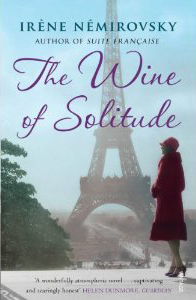
Not that it wasn’t worth reading. And I certainly think there is more to this book than the cover art lets on (a terrible cliché of the elegant young woman in Paris, which doesn’t come close to expressing the darkness that this book contains). It just suffers from my having read what was probably Némirovsky’s best before I read the rest.

First published as Le vin de solitude by Editions Albin Michel in 1935.

This translation published 2011 by Chatto & Windus.

Source: This was a present from my Dad for Christmas 2012.

Kate Gardner Reviews

It is far safer to be feared than loved

July 6, 2013July 10, 2013

Il Principe

The Prince
by Niccolò Machiavelli
translated from Tuscan Italian by N H Thompson

I find military history tedious so this wasn’t the most fun read for me but it’s a classic and it’s only 99 pages so I figured I’d give it a go.

The premise is that Machiavelli wrote this as a textbook for a member of the powerful Medici family and indeed it is formally dedicated to one of them, but it’s unknown if it was ever read by any Medici or even if that was the true intention.

The book is split into short chapters, each of which is a self-contained essay. The first half of them look at types of prince and types of situation whereby a prince might take over a new military history. The second half looks at the qualities a prince should have and the ways he should behave. There’s extensive use of historical examples, many from Italy but also from all over Europe and occasionally further afield.

To be honest, for all the negative reputation of Machiavelli, this is in general sensible or at least realistic-sounding advice. It is sometimes ruthless but not as much as I had expected at all.

“He who innovates will have for his enemies all those who are well off under the existing order of things, and only lukewarm supporters in those who might be better off under the new.”

“The ruler is not truly wise who cannot discern evils before they develop themselves, and this is a faculty given to few.”

“As long as neither their property nor their honour is touched, the mass of mankind live contentedly, and the Prince has only to cope with the ambition of a few.”

Of course, there is an awful lot of focus on war, which I didn’t like too much and objected to morally. Really much of the first half was a struggle against boredom.

“War is the sole art looked for in one who rules…when Princes devote themselves rather to pleasure than to arms, they lose their dominions.”

However, to make up for the objectionable war focus and dull military history there were moments of fascinating philosophical language and that ratio really flipped in the second half, with a lot more commentary on human nature. I especially liked the reference to Chiron the Centaur (a character I learned about in Song of Achilles) as the perfect instructor to teach princes how to use both the natures of man and beast.

“The manner in which we live, and that in which we ought to live, are things so wide asunder, that he who quits the one to betake himself to the other is more likely to destroy than to save himself; since anyone who would act up to a perfect standard of goodness in everything, must be ruined among so many who are not good. It is essential, therefore, for a Prince…to have learned how to be other than good, and to use or not use his goodness as necessity requires.”

The most famous chapter in the book is “Of cruelty and clemency, and whether it is better to be loved than feared”. But the answer given to that choice is not as clearcut as I often see quoted. As with most chapters, there is the ideal answer and the likely compromise. A prince “should desire to be counted merciful and not cruel” but should accept the reputation of cruelty “where it enables him to keep his subjects united and obedient”. And the famous line in this translation reads “it is far safer to be feared than loved”, which is not quite the same as saying it’s better. Indeed, Machiavelli goes on to caution that to inspire fear should not equal inspiring hate. In fact, there’s a whole chapter devoted to evading contempt and hatred.

There’s also an interesting discussion of assassination that might easily have referred to suicide bombers in another time:

“Let it be noted that deaths like this, which are the result of a deliberate and fixed resolve, cannot be escaped by Princes, since anyone who disregards his own life can effect them. A Prince, however, needs the less to fear them as they are seldom attempted.”

Apparently, since Machiavelli turned out later in life to be a liberal forward-thinker, many have argued over the centuries since the publication of The Prince that it’s a satire and was never intended to be taken seriously. Again, I’m not sure if it’s the translation but I didn’t detect any irony at all.

I’m glad I’ve read it and I can see how you could write many more words analysing the text than the original contains, but I am in no great hurry to read more old political philosophy. Especially not if military strategy is a common theme.

First privately distributed in 1513 under the Latin title De Principatibus (About Principalities).
First published by Antonio Blado d’Asola in 1532 as Il Principe.
This translation first published by P F Collier and Son in 1910.

Source: I honestly don’t remember. It’s a US edition so maybe one of my holidays over that side of the pond?

Challenges: This counts towards the 2013 TBR Pile Challenge.

Kate Gardner Reviews

This, which seems like time, must be instantaneous

July 2, 2013

The Victorian Chaise-longue
by Marghanita Laski

Almost exactly a year ago I went on what I hope will be the first of many trips to Persephone Books in London and, as well as being bought a book by my lovely friend H, I bought this book for myself on the back of several glowing reviews I had read around the internets. I can now add to all the glowing praise with some of my own!

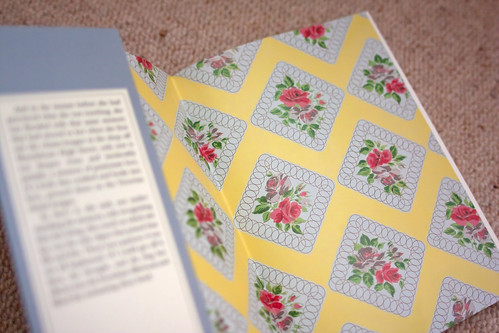
I love end papers

This novella could well be described as sci-fi horror, but it’s both easier to read and more deeply soul-searching than that implies. It explores, through a deceptively simple story, questions about life, death, love, illness, pain, secrets and probably other things that I missed. (Simon of Savidge Reads wrote a fascinating review of this book that pointed out how it depicts the role of women in society.)

Melanie is a young, bubbly wife and mother recovering from a serious bout of TB in the 1950s. After being confined to her bed for eight months, she is thrilled when the doctor says she can be moved to another room, where she is lain on the Victorian chaise-longue, which she bought on a whim while pregnant but has never before been able to use. When she falls asleep in the afternoon, she wakes up in what appears to be not only another house but another time, almost a century earlier, in the body of someone called Milly, the only thing in common being the Victorian chaise-longue, or so she thinks at first.

“It must have been the chaise-longue, argued Melanie. There is no other link; something to do with Milly and the chaise-longue that was so powerful, that even I in the present, just by lying on it, couldn’t help but feel it…This, which seems like time, must be instantaneous, without duration or reality. But I seem real…”

I liked the way Laski dealt with time travel, answering some of the key questions that always come up with her own (possibly unique?) solutions. For instance Melanie can’t say anything out loud that doesn’t fit with the time and place – there’s a disconnect between what she intends to say and what comes out. But Laski also leaves Melanie to puzzle over some of the other time-travel issues, such as how the timeline works: has all this happened before? is this an alternative past? what is time doing in her present? She rejects outright the idea that this is a previous incarnation of herself, which leaves her with the creepy knowledge that if this is real, all the people she is interacting with, including Milly, are long dead in her own present.

“This body I am in, it must have rotted filthily, this pillowcase must be a tatter of rag, the coverlet corrupt with moth, crisp and sticky with matted moths’ eggs, falling away into dirty crumbling scraps. It’s all dead and rotten…She shuddered, and knew she was shuddering in a body long ago dead. Her flesh crawled away and it was flesh that had turned green and liquescent and at last become damp dust.”

I thought Melanie was a great character, full of life and realistic frustration that just as she is recovering from her near-death and is ready to enjoy her husband and child, she is spirited away to some puzzling situation in someone else’s past. She is at times a little too stiff and snooty, but then that’s a key part of the story – Melanie believes herself above these people she finds herself surrounded by, and that’s one of the obstacles she has to overcome to understand what’s going on.

It works brilliantly as a horror story because at first you think the only question is when will she get back to her own present, but then you gradually realise that the details of Milly’s situation mean there are other dangers here. It’s genuinely scary, which is not something I say often!

Marghanita Laski was a fairly well known member of the British literati who was nearly forgotten all too quickly, until Persephone Books republished this. They have subsequently picked out three more of Laski’s books for reissue. I am so grateful that there are outfits like Persephone out there preserving great literature for the future.

First published by the Cresset Press in 1953.
This edition published by Persephone Books in 1999.

Kate Gardner Reviews

Listening to music and seeing faces in its fire

June 28, 2013 3 Comments

31 Songs

31 Songs
by Nick Hornby

I love Nick Hornby. And this collection of his essays about music might be Hornby at his best. Because when it comes to music, Hornby is a true fan, but not the kind of fan who knows it all and lectures on the roots of all music; he’s a fan in that he loves what he loves with great enthusiasm, and his enthusiasm is infectious.

As the title suggests, these essays centre around a list of 31 songs. Not necessarily Hornby’s favourite 31 songs, though they are for the most part among his favourites. Instead he has chosen songs that give him something to write about. So his selection of “Smoke” by Ben Folds Five gives us an essay about pop lyrics and whether it matters that most pop lyrics aren’t the stuff of great poetry (a subject of great interest to me; in fact I wrote my dissertation on it). I was happy to find, as a fan of Ben Folds, that Hornby’s decision on this matter doesn’t affect his belief that “Smoke” is “lyrically perfect”, and he adds a fascinating postscript:

“It’s possible that this sort of craft goes unnoticed because ‘Smoke’ is just a song, in the way that ‘Yesterday’ and ‘Something’ weren’t just songs. The young men who wrote them were also, unwittingly or not, in the process of changing the world…Their songs have therefore become imbued with all sorts of magic that doesn’t properly belong to them, and we can’t see the songs as songs anymore.”

I found some essays better than others, just as some are more personal than others. There’s a very touching essay centred around “Puff the Magic Dragon” because Hornby’s autistic son responds positively to that song, which is a huge deal when you have a child so severely autistic that he only has three or four words at the age of ten.

Hornby does sometimes contradict himself. For instance, he accuses others of being unnecessarily bleak about the state of pop music today and then makes similar dismissive statements himself. His opening essay says that this is not about songs that are connected with a certain memory, and he’s actually pretty harsh about that as a reason for picking out a song, and yet at least two of the essays are exactly that. I don’t agree with all Hornby’s statements (it’s possibly a product of the time of his writing, but I don’t think the age of the Internet has narrowed musical styles, I think it has widened and democratised them wonderfully), and I don’t always share his taste, but then that’s not the point anyway.

“This book isn’t predicated on you and me sharing the ability to hear the same things; in other words, it isn’t music criticism. All I’m hoping here is that you have equivalents, that you spend a lot of time listening to music and seeing faces in its fire.”

As someone who does indeed listen to a lot of music and loves that moment of being transported by a good song, I really really enjoyed this book. I liked that it demands to be read while listening to music, ideally pop music, which is something I tend not to do, to avoid distraction. Even though Hornby is older than me and we don’t entirely share our music taste, I felt compelled to make a playlist from this book, not of the 31 songs themselves and not of every song mentioned at all (that would be a long playlist) but instead of every song he enthuses about. I used Spotify, so not all the songs were available, but I’m enjoying the results. If anyone’s interested in listening, the playlist is here. But even if you don’t like the look of the song selection (and there is a lot of Rod Stewart on there, I’ll grant you) I still highly recommend this book to any pop/rock music lover.

“‘Caravan’ isn’t a song about life or death, as far as I can tell: it’s a song about merry gypsies and campfires and turning up your radio and stuff. But in its long, vamped passage right before the climax, when the sax weaves gently in and out of the cute, witty, neo-chamber strings, while the piano sprinkles bluesy high notes over the top, Morrison’s band seems to isolate a moment somewhere between life and its aftermath, a big, baroque entrance hall of a place where you can stop and think about everything that has gone before.”

Published 2003 by Penguin. Published in the US as Songbook.

Source: I bought this secondhand.

Challenges: This counts towards the Rory Gilmore Reading Challenge.

Kate Gardner Reviews

Tears are the perspiration of the eyes

June 25, 2013June 25, 2013

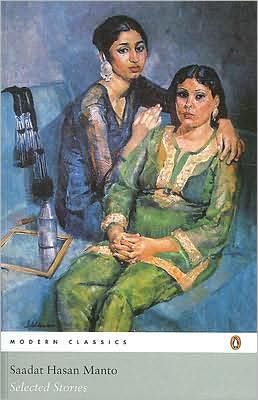
Saadat Hasan Manto

Selected Stories
by Saadat Hasan Manto
translated from Urdu by Khalid Hasan

This collection was recommended – and indeed loaned – to me by a friend after a conversation about classic books in India versus in the UK. Many of the names were the same for both of us, but one literary giant I hadn’t heard of, much less read, was Saadat Hasan Manto. So we had to fix that, obviously.

“It was about this time of year. The monsoons had come and, outside his window, the leaves of the peepal tree danced as the raindrops fell on them…Outside, in the milky dankness of the evening, the leaves of the peepal tree swung in the breeze like a golden ornament on a woman’s forehead.”

Manto wrote in almost every medium but the short story is what he was known for, and this selection, specially translated (though apparently most of Manto’s work has been translated into English before at some point) attempts to provide a representation of his whole career, including stories considered classics, such as “The new constitution”.

When telling people what I am reading I have stumbled over such basic information as his nationality, or country of birth, because the answer to those questions is a bit tricksy. He was born to a Kashmiri family in Amritsar in British-ruled India, later living mostly in Lahore, Bombay and finally Karachi. He died less than a decade after the Partition of 1947, and is quoted in the introduction to this volume as saying that he truly did know whether India or Pakistan was his true homeland.

And that, with the turbulence of those years and tensions between religions and social groups, is central to many of the stories in this collection. Which is a great insight and can be very moving. However, in all I’d say I had a mixed reaction to these stories. The language is often beautiful, not flowery and easy to read – except occasionally for the subject matter. The stories are often erotic, with lots of describing women’s bodies, and they don’t shy away from getting down and dirty at times. This is particularly true because many of the women characters are prostitutes.

And I think this is where I began to have a small problem. Where the male characters are varied, three-dimensional and cover a wide strata of careers, the depiction of women is a little…misogynist. Women are always described physically in detail and tend to be defined by their social position or religion rather than having a clear character.

“Tears flickering over her thick eyelashes will look lovely. It will be like raindrops dancing down a shuttered window. It is possible that you may not think tears to be necessary in women’s eyes, but I cannot even imagine a woman’s eyes without tears. Tears are the perspiration of the eyes. A worker’s brow is only a worker’s brow when it is shining with perspiration. A woman’s eyes can only be a woman’s eyes when they are drowned in tears.”

But that reservation aside, these are good stories. They’re real, sometimes shockingly real. There was one story, “The return”, that left me stunned. In fact, for that one story alone I would rate Manto very highly. I also really liked the (very different) story “Odour”, which is sensuous and strangely touching.

This translation first published by Penguin Books India 2007.

Source: Borrowed from a friend.

Challenges: This counts towards the 2013 Translation Challenge.

Kate Gardner Reviews

Human society was a sort of monster

June 23, 2013June 22, 2013 1 Comment

Oryx and Crake

Oryx and Crake
by Margaret Atwood

When I saw that Margaret Atwood was coming to Bristol as part of the Festival of Ideas I got very excited about it and bought tickets. Only then did I realise that she is coming here to talk about her new book Maddadam, which is the third part of the trilogy that began with Oryx and Crake and Year of the Flood, and I had read neither of those. Cue a hurried purchase of both…

This dystopia is hauntingly desolate, a lonely existence for our hero Snowman, who may be the only human left, though not the only person. The devastation of society appears to be quite recent, as Snowman not only remembers the world as it was before, but played a key role in the tragedy, something that is gradually elucidated by his unreeling memories.

“The salt water is running down his face again. He never knows when that will happen and he can never stop it. His breath is coming in gasps, as if a giant hand is clenching around his chest – clench, release, clench. Senseless panic.
‘You did this!’ he screams at the ocean.
No answer, which isn’t surprising. Only the waves, wish-wash, wish-wash.”

However, the world as it was, the world Snowman knew before, back when he was Jimmy, was also a place that might be called a dystopia. Global warming was wreaking havoc, claiming coastal cities and changing climates unrecognisably, with widespread droughts and species becoming extinct with alarming frequency. Society in North America had become unruly and dangerous, with only those living in heavily guarded compounds safe from crime and disease.

“Too many things were coming back to him, too much of what he’d lost, or – sadder – had never had in the first place. All that wasted time, and he didn’t even know who’d wasted it.”

But how did the world change from there to here? Who are or were Oryx and Crake? Who are these people who look human but aren’t, called the Children of Crake, whom Snowman feels compelled to protect? And can he keep them safe in this post-civilisation Earth?

There’s a lot going on in this book. It’s a pretty complex set-up and I can see why it’s a trilogy, because there’s so much more that could be said with this setting. The central theme is an environmental one, pressing home the point that the Earth will go on, it’s humans who will lose out and risk making ourselves extinct if we continue to mess with our habitat. And in this respect it’s a very sad story, because what’s depicted is so believable.

“Maybe there weren’t any solutions. Human society, they claimed, was a sort of monster, its main by-products being corpses and rubble. It never learned, it made the same cretinous mistakes over and over, trading short-term gain for long-term pain.”

However, there is another major theme that is, perhaps, less believable, more sci-fi conceptual idea (and possibly saves the whole from being too preachy or moralising, or perhaps is actually more of the same). The pre-disaster society depicted is a world where genetic modification/bioengineering has gone to sometimes ludicrous extremes. I found this sometimes annoying, often strange, but ultimately it all makes sense.

The world we are left with is a beautiful but terrifying devastation, with nature reclaiming control, and I look forward to seeing where Atwood is going to take this next.

“Everything in his life was temporary, ungrounded. Language itself had lost its solidity; it had become thin, contingent, slippery, a viscid film on which he was sliding around like an eyeball on a plate. An eyeball that could still see, however. That was the trouble.”

Published 2003 by Bloomsbury.

Source: I bought it from Waterstones.

Challenges: This counts towards the Rory Gilmore Reading Challenge.

Kate Gardner Reviews

Nothing said in that language can be a lie

June 20, 2013June 30, 2013 3 Comments

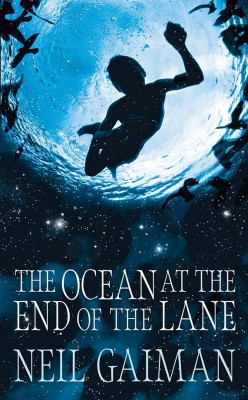
The Ocean at the End of the Lane

The Ocean at the End of the Lane
by Neil Gaiman

It’s not often I read a book within 24 hours of buying it but the combination of circumstances and it being a darned good read meant on this occasion I did just that. As I mentioned on Sunday, I was lucky enough to attend a “pre-launch event” for this book on Friday and got my 30 seconds with Neil Gaiman himself, during which I, as always, failed to have anything interesting to say. By Saturday lunchtime I was reading the last page and wishing the book could have been twice as long.

There’s a sweet story behind this book, and also a very sad one (two different stories, that is). Gaiman’s wife went away for a few months last year on a tour of Australia and he missed her, so he decided to write her a short story as a kind of love letter. Not that it’s a romantic story, but it is a personal one, with a character heavily based on 7-year-old Neil and a setting heavily based on his childhood home and beginning with an incident that really did happen to his family when he was 7 years old, though his parents didn’t tell him about it at the time. Except this isn’t a short story, because he kept on writing and ended up with a novel. Which I think all Gaiman fans will be grateful for.

The un-named 7-year-old boy at the centre of this story is bookish and friendless, which is fine by him as he has his books. But the sudden and shocking death of the family’s lodger unleashes something terrible and powerful that only the three women who live in the farm at the end of the lane can possibly defend against. These are the Hempstocks – Lettie, who is 11 and has been 11 for a very long time; Young Mrs Hempstock and Old Mrs Hempstock. They resist the word “magic” but there is definitely something magical, or even mythical, about them.

“It was only a duckpond, out at the back of the farm. It wasn’t very big. Lettie Hempstock said it was an ocean, but I knew that was silly. She said they’d come here across the ocean from the old country. Her mother said Lettie didn’t remember properly, and it was a long time ago, and anyway, the old country had sunk. Old Mrs Hempstock, Lettie’s grandmother, said they were both wrong, and that the place that had sunk wasn’t the really old country. She said she could remember the really old country. She said the really old country had blown up.”

This is quite a dark story, in a fairy tale kind of way. And it gets genuinely frightening in places, as well as being happy and sad and wistful and of course funny. It touches on the different ways in which children and adults see the world, with children both missing certain things through lack of understanding but also seeing more through curiosity and not having yet built up that blasé acceptance of how things are that can blind us adults to possibility.

“I have understood what she was saying, in my dreams. In those dreams I spoke that language too, the first language, and I had dominion over the nature of all that was real…nothing said in that language can be a lie. It is the most basic building brick of everything.”

Gaiman said on Friday that he felt writing this that he was creating a myth rather than a novel and that makes a lot of sense. He also said that the Hempstocks have been characters in his head since his childhood and this book certainly doesn’t clarify who or what they are, so I wouldn’t be surprised if they turn up again.

Published 2013 by Headline.

Source: Bought from Topping & Co at their author event on 14 June.

Kate Gardner Reviews

Her jittering soul paced on a stone slab in a grey room

June 11, 2013

Winter's Bone

Winter’s Bone
by Daniel Woodrell

When this book was suggested for book club I had never heard of it or its author, but in the months since then both have cropped up repeatedly in book blogs and podcasts, always being showered with praise. Thankfully this didn’t happen so much that I had crazy high expectations, but maybe that wouldn’t have mattered because I completely loved it.

Someone (I think on the Slate Culture Gabfest) described Woodrell’s books as the new westerns, and while the storyline may seem a long way from cowboys and indians I can kind of see what he meant. It’s certainly a remote, lawless setting, or not lawless but with a different attitude to crime.

The book follows Ree, a teenage girl living in mountainous Missouri in a very poor, very small community. Her mother is mentally ill in some way – switched off and unresponsive – so Ree has left school to care for her mother and her two young brothers. Her father is absent, and his absence, and the need to find him, is the catalyst for the story.

“She smelled the frosty wet in the looming clouds, thought of her shadowed kitchen and lean cupboard, looked to the scant woodpile, shuddered…there was no gas for the chain saw so she’d be swinging the ax out back while winter blew into the valley and fell around her.”

Woodrell doesn’t shy away from the harsh, even brutal, reality of poverty, but somehow it is made bearable by the beauty of his language. The facts can take a while to become clear. In fact for the first few chapters I wasn’t sure when or where or what this story was. But that’s part of the point in a way. You can easily imagine that this small society in this area hasn’t changed much in 100 years. Everyone knows everyone else, and there is no privacy, but secrets can be kept if they are for the good of the community. And they might all survive because the men are cooking meth but there’s still a strong sense of honour, albeit an old-fashioned one.

“Ree’s grand hope was that these boys would not be dead to wonder by age twelve, dulled to life, empty of kindness, boiling with mean. So many Dolly kids were that way, ruined before they had chin hair, groomed to live outside square law and abide by the remorseless blood-soaked commandments that governed lives led outside square law…Sometimes when Ree fed Sonny and Harold oatmeal suppers they would cry, sit there spooning down oatmeal but crying for meat, eating all there was while crying for all there could be, become wailing little cyclones of want and need, and she would fear for them.”

Ree is a wonderful character. She’s so strong and driven by her responsibilities to her family, trying to be both father and mother while only on the brink of adulthood herself. When pain and possible death face her, she doesn’t flinch, but it’s not bravado, it’s just what she has to do, as if there is no option. Except the obvious option is staring her in the face – she’s offered hard drugs countless times and clearly wouldn’t be the first in this community to check out from reality that way. What she seems to choose instead is to try to distance herself from it all mentally.

“[Ree] pulled headphones from a pocket and clamped them over her ears, then turned on The Sounds of Tranquil Shores. While frosty bits gathered in her hair and on her shoulders she raised the volume of those ocean sounds. Ree often needed to inject herself with pleasant sounds, stab those sounds past the constant screeching, squalling hubbub regular life raised in her spirit, poke the soothing sounds past that racket and deep down where her jittering soul paced on a stone slab in a grey room.”

Someone at book club mentioned that the dialogue is slightly wrong for the modern era – people don’t talk like that. But I think I like that it’s slightly stylised. It adds to the timeless feeling of the story. Replace cooking meth with making moonshine and the rest still fits perfectly.

Woodrell uses the rural setting to great advantage, describing the woods and the winter in a way that reminded me of Frankenstein, with that idea of the sublime – the picturesque snow is juxtaposed with murderous cold and ice. But the descriptions are never overdone. In fact it’s a very slight book in which quite a lot happens.

“Keening blue wind was bringing weather back into the sky, dark clouds gathering at the edge of sight, carrying frosty wet for later.”

It should be a completely depressing story – indeed, some people at book club found it to be just that – and the facts of the story are indeed depressing, but the writing about these ugly lives is so gorgeous, almost magical, that I was left wanting more. Woodrell is very subtle and often only hints are given to what might be considered the key facts of the book, the possibility left dangling. But it’s not frustrating the way that could be with a less skilful writer.

Published 2006 by Hodder & Stoughton.

Source: Bought from Amazon.

Kate Gardner Reviews

I have no culture, no humane harmony in my brains

June 5, 2013 8 Comments

Breakfast of Champions

Breakfast of Champions
or Goodbye Blue Monday!
by Kurt Vonnegut Jr

When I read Slaughterhouse 5 a couple of years back, I completely loved it and was eager to read more Vonnegut. This was even more crazy and indefinable but, for me at least, not as good.

Where to begin describing this book? Perhaps I should quote from the preface:

“This book is my 50th birthday present to myself…I am programmed at 50 to perform childishly – to insult ‘The Star-Spangled Banner’, to scrawl pictures of a Nazi flag and an asshole and a lot of other things with a felt-tipped pen…I think I am trying to clear my head of all the junk in there…I’m throwing out characters from my other books, too. I’m not going to put on any more puppet shows…I have no culture, no humane harmony in my brains. I can’t live without a culture anymore.”

Okay, maybe that doesn’t help, except to show that the narrator is a strong character in this book, and a pretty invasive one at that. So, essentially the story is about science-fiction author Kilgore Trout (reappearing from Slaughterhouse 5) and how one of his books sends a man called Dwayne Hoover mad, as in lunatic asylum, full-blown crazy. We’re told that this is the story in the preface but it doesn’t happen until near the end, so most of the book is back story to this incident, with plenty of foreshadowing and random asides and, yes, pictures that look like they were drawn with a felt-tipped pen.

“Trout was petrified there on 42nd Street. I had given him a life not worth living, but I had also given him an iron will to live. This was a common combination on the planet Earth.”

First thing to say is that this book is completely insane. Also, it really pushed my comfort zone. I’m generally pretty happy with meta weirdness (and this book is beyond meta, it breaks the fourth wall so thoroughly) but there seemed to be a deliberate edge to the book’s oddity, not to mention that it’s crude. I can see that Vonnegut is making a point by using the “ni**er” word repeatedly and then describing every character by the colour of their skin (just black or white, and one yellow) but it still made me uncomfortable to read “ni**er” over and over again in a relatively recent novel.

Drawings by the author
Click to enlarge.

“This book is made up, of course, but the story I had Bonnie tell actually happened in real life…As for Dwayne Hoover’s dog Sparky, who couldn’t wag his tail: Sparky is modelled after a dog my brother owns, who has to fight all the time, because he can’t wag his tail. There really is such a dog.”

(You could write a whole essay just on that extract, couldn’t you?!)

And yet I enjoyed the read. I enjoyed the brief synopses of Trout’s ridiculous novels; the way chapter breaks are completely random and often fall in the middle of one of said synopses; the way the whole story is told as if to an alien completely unfamiliar with our planet, let alone American culture. I also like that there are lots of overt and hidden references that I am sure I missed more than half of to Western culture. It’s not my favourite Vonnegut so far but I am still interested to read more.

First published 1973 by Delacorte Press (US) and Jonathan Cape (UK).

Source: I bought this secondhand from a stall at BristolCon 2011.

Challenges: This counts towards the 2013 TBR Pile Challenge.

Kate Gardner Reviews

I was a furious pinpoint

May 28, 2013May 28, 2013

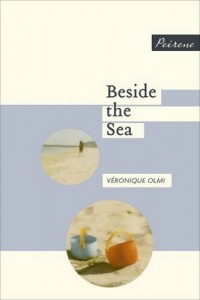
Beside the Sea

Beside the Sea
by Véronique Olmi
translated from French by Adriana Hunter

This was the first book published by small publisher Peirene Press and since I began blogging I have been hearing how wonderful this book is, so earlier this year I bought it. But the thing is that the premise of the book is so dark, so sad, that it took me a while to pick it up and to be honest even though I think it brilliant I am not sure I would ever want to put myself through it again.

The story is that of a single mother who takes her two boys to the seaside for a holiday she has planned and dreamed of for a long long time, but she is poor and suffers from depression so nothing is as she had hoped. And to add to the bleakness she has a plan to protect her boys from the world at the end of this holiday, a plan that is not explained but is nevertheless clear from page one.

“It felt really strange driving away from the city, leaving it for this unknown plane, specially as it wasn’t the holidays and that’s what the boys kept thinking, I know they did. We’d never been away for a holiday, never left the city, and suddenly life felt new, my stomach was in knots, I was thirsty the whole time and everything was irritating, but I did my best, yes really my best, so the kids didn’t notice anything. I wanted us to set off totally believing in it.”

I found this book extremely disturbing. Olmi does an amazing job of bringing to life a mother juggling money troubles and hunger and some form of depression, getting right inside her mind, which is not a comfortable place to be. Her four and eight year old sons are more au fait with the world than she is, and she feels this keenly. She has such a disturbed view of world, full of paranoia and fear, that she frequently hides from it all by trying to sleep, and her sons are familiar with this and accept it, even when they’ve skipped multiple meals and promise after promise has been broken.

“Lights mingled with the sound system, becoming as depressing as the songs, you couldn’t see the rain but it was following us all…the bells wouldn’t stop ringing, people were hurrying onto rides in every direction, where did all that money come from, everyone could afford everything, there was too much of everything everywhere, too much noise, too much rain, too many lights, all reeling past me.”

Olmi’s real skill is to show that this mother, struggling and under suspicion of social services and indeed most people they meet, truly loves her children and is trying as hard as she humanly can to do what’s right by them, it just isn’t enough. It’s unbearably sad. Doubly so as it’s so clear where this is going but you’re willing it not to go there, to find a way out.

“I was a furious pinpoint, with darkness all around, I was a star, old and always there, old and full of fire. I’d been thrown up into the sky, I wasn’t holding on to anything but everything around me hung on, like I was cradled by arms.”

I was left in a black mood for a couple of days after reading this book. I salute Olmi’s skill and achievement but I really do not want to enter that world again.

Bord de mer published 2001 by Actes Sud.
Translation published 2010 by Peirene Press.

Source: Bought direct from the publisher.

Challenges: This counts towards the 2013 Translation Challenge.

Kate Gardner Reviews

Posts pagination

1 … 47 48 49 … 72

Archives

RSS feed: Nose in a book Nose in a book

  • Non-Fiction November 2026
  • Book review: The House of Doors by Tan Twan Eng
  • Book review: Taiwan Travelogue by Yáng Shuāng-zǐ

Me on the internets

  • @kate_in_a_book@mas.to (Mastodon)
  • Flickr/noseinabook
  • Instagram/kate_in_a_book
  • StoryGraph/kate_in_a_book

Categories

  • Blog
  • Reviews
  • Uncategorized
  • © Copyright Kate Gardner. All rights reserved.
Proudly powered by WordPress | Theme: Dream by vsFish.