Nose in a book

Reviews and other ramblings

  • Home
  • Reviews archive
    • Book reviews
    • TV reviews
    • Theatre reviews
  • TBR
  • Challenges
    • The Classics Club
    • 2014 Popular-Science Reading Challenge
    • Cookery challenge
    • The Gilmore Girls Reading Challenge
    • 2013 TBR Pile Challenge
    • 2013 Translation Challenge
    • Crime and Punishment read-a-long
  • About
    • Cookie legal stuff

Category: Reviews

A small cicatrice had been made on the memory
September 9, 2013September 9, 2013 2 Comments

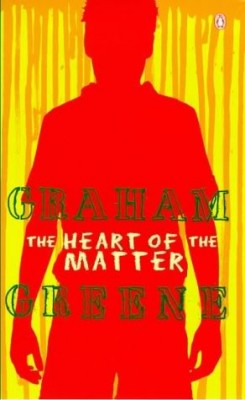
Heart of the Matter

The Heart of the Matter
by Graham Greene

I read this as part of Greene for Gran, a challenge run by Simon of Savidge Reads in honour of his recently departed grandmother, as Greene was her favourite author. Strictly the challenge was intended to run just for August but I got a bit behind. Sorry, Simon! Anyway, on to the book…

Initially the narrative switches between two characters in a West African country – a policeman called Scobie and an accountant called Wilson – but it gradually becomes clear that Scobie is our hero, with Wilson merely a player in his story. They are both Brits, serving time in a British colony that is at war (I wasn’t entirely clear if this was a civil war, a war with a neighbouring country, or the tail end of the Second World War).

“A vulture flapped and shifted on the iron roof and Wilson looked at Scobie…He couldn’t tell that this was one of those occasions a man never forgets: a small cicatrice had been made on the memory, a wound that would ache whenever certain things combined – the taste of gin at midday, the smell of flowers under a balcony, the clang of corrugated iron, an ugly bird flopping from perch to perch.”

Scobie doesn’t love his wife Louise, indeed they have been growing apart for years, but he does love this un-named country he has been living in for 15 years and he feels a strong sense of duty to look after Louise, who suffers from insecurity and depression, and he would do anything to protect her. Except lie. Because Scobie is so honest it’s painful. The book opens with him being denied a promotion because everyone is suspicious of him, or at least uneasy about him, because his level of honesty just cannot be believed.

“There was no reason to call…yet it was his habit to cry her name, a habit he had formed in the early days of anxiety and love…When he called her name he was crying like Canute against a tide – the tide of her melancholy and disappointment.”

Wilson, on the other hand, is clearly a liar from the start. He goes to great lengths to hide his love of poetry, but it is just that love that leads him to Louise, with whom he falls hopelessly in love. She’s simply amused by him, and that would be that were it not for an unfortunate combination of circumstances. Wilson is far from being a mere accountant. And Scobie is gradually getting tangled up with some shady Syrian businessmen and then, at the least expected moment, he meets another woman.

“He told himself: Be careful. This isn’t a climate for emotion. It’s a climate for meanness, malice, snobbery, but anything like hate or love drives a man off his head.”

Scobie is so tortured it’s almost ridiculous. His Catholicism plays an increasingly large role, highlighting how the average person can commit all kinds of sins and then renounce them at mass, while Scobie wrings his hands at the very idea. To be honest, I found Scobie deeply frustrating but he still got my empathy and I really did care about the outcome for him.

“The truth, he thought, has never been of any real value to any human being – it is a symbol for mathematicians and philosophers to pursue. In human relations kindness and lies are worth a thousand truths. He involved himself in what he always knew was a vain struggle to retain the lies.”

One other thing that frustrated me about this book was the undercurrent of racism. It was written in the 1940s so I know it’s unfair to hold it to today’s standards but it’s still pretty shocking to read the language used about the native people, or indeed all non-Brits. Not just the “n” word, but the way the occupiers talk to them in condescending language that’s even simpler than the natives’ pidgin English. The way the Brits all have a house boy whom they call “boy”, whether that servant is 10 or 50 years old. The way not one of the natives gets to be a fleshed out character (though at least one of the Syrians is humanised a bit; in fact he’s a very interesting man).

Something I found curious about this novel is the way that it’s divided up so much. There are three “books”, divided into parts, divided into chapters, divided into numbered sections. It’s almost like an academic textbook except that the numbers always start again at 1. There’s something oddly disconcerting about turning to page 218 and it saying “chapter 2”.

But all the frustrations and oddities aside, this is a beautifully written book that really closely examines the human heart and how people can misunderstand so horribly what each other thinks or feels. The ending is heart breaking and made me almost want to throw the book down except that the language kept me spellbound.

“He felt no jealousy, only the dreariness of a man who tries to write an important letter on a damp sheet and finds the characters blur.”

So thank you Simon for the prompt to read more Greene. I’ll certainly come back to him again. And he wrote a lot of stuff, so there’s plenty to come back to!

First published 1948 by William Heinemann.

Source: Part of a set of beautiful Penguin books I bought several years back, can’t remember where from.

Challenges: This counts toward the 2013 TBR Pile Challenge.
Kate Gardner Reviews

Summer reads in brief

September 6, 2013September 6, 2013

Sneaking this in while the weather’s warm enough to pretend that it’s still summer, even if it is September. Thunderstorms are summery, right?

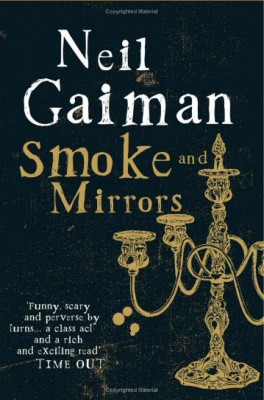
Smoke and Mirrors

Smoke and Mirrors
by Neil Gaiman

This is a truly eclectic short story collection. There are tales told in poetry, in screenplay format, in one page or 30 pages. There’s comedy, reality, fantasy, science fiction, erotica; sometimes all five at once. There were stories that stunned me (“Changes”, “Babycakes”), stories that I loved unreservedly (“The wedding present”, “The goldfish pool and other stories”) and stories that were less lovable but perhaps more surprising in their inventiveness. There were stories that felt like familiar Gaiman fare, such as the stray cat that fights every night to protect its adopted family (“The price”) or a retelling of “Snow White” from the perspective of the stepmother (“Snow, glass, apples”), but there were also stories that felt very far from my previous experience of Gaiman and it gave me new love for the man discovering his wider talents.

“Memory is the great deceiver. Perhaps there are some individuals whose memories act like tape recordings, daily records of their lives complete in every detail, but I am not one of them. My memory is a patchwork of occurrences, of discontinuous events roughly sewn together: The parts I remember, I remember precisely, whilst other sections seem to have vanished completely.”

First published 1999 by Headline.

Source: Borrowed from a friend.

A Stainless Steel Rat is Born
by Harry Harrison

A month or so ago, I had just read two very serious books indeed and badly needed some light-hearted fun, so Tim recommended this by his favourite writer. It’s a boyish adventure – it’s in the future, in space. The young main character, Jim diGriz, decides that he is going to be a master criminal. This creates many a situation where he has to survive on his wits and make use of his slightly unbelievable level of skill at everything. Only once or twice is he caught out by the naivety of youth, which makes him a tad irritating. However, the book is touching in the right moments and thrilling in the right moments. So overall, it was just what the doctor ordered.

Published 1985 by Random House.

Source: Borrowed from Tim.

A Tiny Bit Marvellous
by Dawn French

This was another fun romp, although about as different from the Stainless Steel Rat as you could get. Though I dislike the term, this is solidly chick lit: it’s funny (as you might expect from Dawn French), easy and quick to read but not particularly deep or moving. It’s the story of a nuclear family – mum, dad and two teenage children. It didn’t help that I disliked most of the characters. Mo (the mother) is cold. Dora (the daughter) is the epitome of brat. Peter/Oscar (the son) is a complete drama queen, but it’s nice that there’s a gay character where it’s not a big deal to anyone that he’s gay. And the dad, well he’s barely a character at all. A plot twist near the end is fairly unbelievable. However, before that point it’s mostly pretty believable, and readable despite some irritating turns of phrase.

Published 2010 by Penguin.

Source: Bought secondhand from a charity shop.

Kate Gardner Reviews

To gather together human debris

August 27, 2013September 1, 2013

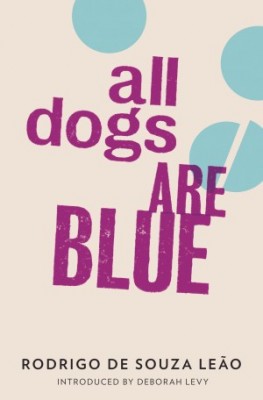
All Dogs Are Blue

All Dogs Are Blue
by Rodrigo de Souza Leão
translated from Portuguese by Zoë Perry and Stefan Tobler

This is a short, sharp shock of a book. It deals with serious, scary stuff but manages to be funny, exciting and superbly readable, as well as powerful and enlightening.

The story is narrated by the inmate of an asylum in Rio de Janeiro, fluidly moving between fact and hallucination, lucidity and paranoia. His imaginary friends are Rimbaud, who he considers reliable, and Baudelaire, who is not. Lots of things seem to happen in the course of 100 or so pages, but it’s not always possible to know what is real and what is imagined.

“I swallowed a chip yesterday…There was an electrode on my forehead. I don’t know if I swallowed the electrode with the chip. The horses were galloping. Except for the seahorse, who was swimming around in the aquarium.”

The narrator switches between his own thoughts and reported speech with no punctuation or other indication, so it can sometimes be confusing who is being referred to. But then very little of this makes absolute sense. It is quite literally the rantings of a mad man. Which can be tough or sad, but can also be beautiful or insightful.

“I had moments of lucidity. They were few, but I had them. Sometimes the drugs they used work. But there are people who don’t get better, even with the medicine. What good is hospitalisation, then? To gather together human debris.”

The blue dog of the title is a toy dog that the narrator remembers from his childhood and misses. In her introduction to this translation, Deborah Levy argues that the blue dog is a version of the black dog of depression, which adds an interesting element to its appearances in the narrator’s memories and rants.

Another element that’s hard to forget when reading this book is that it’s semi-autobiographical. Souza Leão died in 2009 in a psychiatric clinic, after years struggling with mental illness. It really brings home the message that despite the comedy and outright craziness, this is the story of a human being, a man who is intelligent and artistic but who reduces his father to tears and forces his mother to admit she doesn’t want him to come home.

“I had my first attack at 15. At 36 I’ve still got problems. Wonder what the next problem will be? I’m a walking problem. It rains and I cry. I cry and it rains.”

Aside from the occasional morose moment, the tone stays light and witty throughout the darkest and the strangest scenes. And it does get pretty dark and pretty strange.

This was the only fiction of Souza Leão’s published during his lifetime, but I understand that more has been published since and I hope that it all finds translators as good as this.

Todos os cachorros são azuis published 2008.
This translation published 2013 by And Other Stories.

Source: I’m a subscriber to the publisher.

Challenges: This counts toward the 2013 Translation Challenge.

Kate Gardner Reviews

It burned through cities like fire

August 22, 2013August 22, 2013

Year of the Flood

The Year of the Flood
by Margaret Atwood

This is the second book in Atwood’s trilogy that began with Oryx and Crake and will conclude with Maddaddam, out next week. I suspect you don’t need to have read Oryx and Crake to enjoy this book, but that said I did really love spotting all the connections before they became explicit.

The story follows two women who, separately, have lived through the “Waterless Flood”, some form of apocalypse that has left both women struggling to survive and wondering if they are the only human left alive. So far, so much like Oryx and Crake, but unlike that book’s hero, these women are not going mad and their memories are more coherent.

“In the night there are the usual noises: the faraway barking of dogs, the tittering of mice, the water-pipe notes of the crickets, the occasional grumph of a frog. The blood rushing in her ears: katoush, katoush, katoush. A heavy broom sweeping dry leaves.
‘Go to sleep,’ she says out loud. But she never sleeps well, not since she’s been alone.”

Ren is an exotic dancer trapped in the high-end sex club she worked in. Toby has created a rooftop garden on her former workplace, safely away from the prowling animals out to steal her food. Both women used to belong to God’s Gardeners, a group of outsiders who strove to heal the planet through vegetarian self-sufficiency and reuse/recycling. Pretty much hippies, but in the name of religion and at a time when the Earth depicted is far along the road to destruction, the two being linked by the fear of an imminent tipping point when human society will collapse – the Waterless Flood.

“This was the Waterless Flood the Gardeners had so often warned about. It had all the signs: it travelled through the air as if on wings, it burned through cities like fire, spreading germ-ridden mobs, terror, and butchery…It looked like total breakdown, which was why she’d needed the rifle.”

I wasn’t sure at first where I was in the timeline as compared with Oryx and Crake but it comes together, in fact more so than I had expected. Of course this means many of the issues dealt with are the same or similar, but I felt that The Year of the Flood was far more emotionally engaging. Maybe I connected better with Ren and Toby than I did with Snowman, or maybe the overall storyline cut closer to issues I care about – this book really did put the emphasis on the environmental angle rather than the bioengineering and I know I said in my review of Oryx and Crake that that could get preachy but actually it did the opposite – it made it all more real.

“It’s daybreak. The break of day. Toby turns this word over: break, broke, broken. What breaks in daylight? Is it the night? Is it the sun, cracked in two by the horizon like an egg, spilling out light?”

I think I also liked that most of the characters in this book really cared about things, rather than floating through the world. I know both types of people exist and are equally capable of good or bad but I am a carer, so I guess I empathise better with characters who care. I even forgave them all the God stuff (which was in any case heavily loaded with irony in places) because, after all, facing imminent apocalypse who knows what I’d turn to?

I found this a thrilling, wonderful read and I’m really looking forward to Maddadam and to hearing Atwood talk about all three books in Bristol next week.

Published 2009 by Bloomsbury.

Source: I bought it from Waterstones.

Kate Gardner Reviews

The story of a poor man’s life is written on his body, in a sharp pen

August 16, 2013August 16, 2013 3 Comments

The White Tiger

The White Tiger
by Aravind Adiga

This book looked like a fun read that would be something a bit different, and that’s pretty much exactly what it was. I enjoyed it greatly but in the week since I finished it, it hasn’t really stayed with me.

The style is initially surprising and unusual. The story is written in the form of letters addressed to Chinese premier Wen Jiabao from Balram Halwai, a self-proclaimed entrepreneur from a very poor background. Balram wants to tell his life story, beginning with how he got the nickname White Tiger and up to how he is wanted by the police. Through this device, Adiga exposes the state of India, or his opinion of the state of India, at any rate. And it’s not a particularly favourable opinion.

“It is an ancient and venerated custom of people in my country to start a story by praying to a Higher Power. I guess, Your Excellency, that I too should start off by kissing some god’s arse. Which god’s arse, though? There are so many choices. See, the Muslims have one god. The Christians have three gods. And we Hindus have 36,000,000 gods…Bear with me, Mr Jiabao. This could take a while. How quickly do you think you could kiss 36,000,004 arses?”

This was my pick for book club and from our discussion it looks like I thought there was more to it than the others did. There was a general feeling that the characters were a bit thin, and the overall tale a bit preachy and lacking in shades of grey (though I should note everyone found it funny and enjoyable). I must say I didn’t find it preachy but I’ll allow that it definitely had a message about class and poverty in India. And it’s certainly not subtle either – the humour is savage and the reality that is revealed is shocking.

Balram has a theory that the poor in India are in a chicken coop. Most of them accept this and stay within the bounds of the coop, but those who do try to escape are quickly shoved back in their place. It takes something extraordinary for anyone to escape the coop. He of course is one of the extraordinary (the only escapee we meet in this tale) but he freely accepts that the method he employed to escape is extreme.

“A rich man’s body is like a premium cotton pillow, white and soft and blank. Ours are different. My father’s spine was a knotted rope…cuts and nicks and scars, like little whip marks in his flesh, ran down his chest and waist, reaching down below his hipbones into his buttocks. The story of a poor man’s life is written on his body, in a sharp pen.”

Balram is a genuinely funny narrator. Since being told that he is as rare as a white tiger when he was the smartest kid in school, he has had ideas above his station. He’s also selfish, objecting to his grandmother’s repeated requests that he share his earnings with his family. He talks through his life, from working in a tea shop in a small village, to being a rich man’s driver in Delhi, to being a businessman in Bangalore. He reveals early on that he has done something shocking, so that most of the book is the answer to the question why and how.

“In the belief that the future of the world lies with the yellow man and the brown man now that our erstwhile master, the white-skinned man, has wasted himself through buggery, mobile phone usage and drug abuse, I offer to tell you, free of charge, the truth about Bangalore.”

This is not a book for those who want a subtle exploration of how modern India operates, or if you want a wide-reaching study of Indian society. It is a funny, easy-to-read, fast-paced window opened just a crack onto a version of reality. I genuinely enjoyed it and even learned a few things but I can’t say that it changed my view of the world or stunned me with its language. Not every book can do that.

Published 2008 by Atlantic Books.
Winner of the 2008 Booker Prize.

Source: A book swap.

Challenges: This counts towards the 2013 TBR Pile Challenge

Kate Gardner Reviews

It wasn’t courage that freed him from fear so much as loneliness

August 13, 2013September 7, 2013

The Ministry of Fear

The Ministry of Fear
by Graham Greene

Once upon a time I read a couple of Graham Greene books and really enjoyed them, then I promptly forgot about him as an author. Fast-forward several years and I have finally come back to him thanks to Simon of Savidge Reads, who is running a challenge called Greene for Gran,in honour of his recently departed grandmother, as Greene was her favourite author. It’s such a nice way to pay respect to someone for whom books were important.

This book has one of the greatest opening chapters I have read in a long time. Arthur Rowe goes to a vicarage fête, which sounds like a pretty dull unpromising beginning, but not so. For starters it’s in London during the Blitz, so there’s immediately a surreal atmosphere surrounding the attempt at normality, with some dark humour about the limited prizes on offer. But even beyond this, there are sinister undertones, foreshadowing the shadowy spy novel that this is going to turn into.

“There was something about a fête which drew Arthur Rowe irresistibly, bound him a helpless victim to the distant blare of the band and the knock-knock of wooden balls against coconuts. Of course this year there were no coconuts because there was a war on; you could tell that too from the untidy gaps between the Bloomsbury houses.”

Arthur wins a cake, but there appears to have been some mistake, and first a series of people try to get the cake off him, then mysterious forces appear to be coming after him. It all seems a bit farcical at first, but never annoyingly so. The humour always has a dark undertone. The depiction of the Blitz is scarily believable (which makes sense for a book published in 1943) and the thriller elements genuinely had me on edge, but the book never gets too dark.

“‘Have another piece of cake?’ Rowe asked. He couldn’t help feeling sorry for the man: it wasn’t courage that freed him from fear so much as loneliness. ‘It may not be…’ he waited till the scream stopped and the bomb exploded – very near this time – ‘…much.’ They waited for a stick to drop, pounding a path towards them, but there were no more.”

Arthur is a great character. There is something bad in his past, which both explains why he is not fighting in the war and why he is how he is – saddened and distanced. I love that the back story is given in pieces, so for a long time we are left to wonder whether the bad thing in Arthur’s past was justified or not. (Incidentally, this part is completely given away in the blurb on the back of my copy, which thankfully I didn’t read before starting the book. Also, I’ve realised that my favourite passages, highlighted while I was reading, relate to this reveal, so I won’t quote them here.)

“Blast is an odd thing; it is just as likely to have the air of an embarrassing dream as of man’s serious vengeance on man, landing you naked in the street or exposing you in your bed or on your lavatory seat to your neighbour’s gaze.”

There is a big switch in pace halfway through the book and it shows how good a writer Greene was that he gets away with this. The one thing that doesn’t change, but just keeps building up throughout the book, is the fear. It’s so cleverly done, beginning with little more than a spine tingle of a warning at the vicarage fête.

I greatly enjoyed this book and am now eager to read the other Greene I had left sat on the TBR for too long – The Heart of the Matter.

Published 1943 by William Heinemann.

Source: I really don’t remember. I have a 1972 Penguin edition so it was clearly secondhand but there’s no pencil-written price or stickers anywhere that I can find. Charity shop?

See also: Simon’s review over at Savidge Reads.

Kate Gardner Reviews

The mystery that shape-shifted at the edge of her senses

August 5, 2013

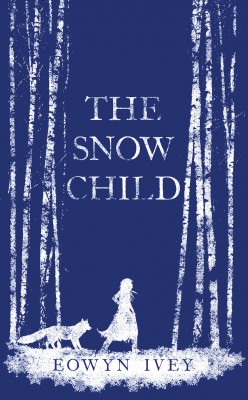
The Snow Child

The Snow Child
by Eowyn Ivey

This book was almost ruined for me by Book at Bedtime. The thing is, I love that Book at Bedtime exists, I do, but when a full-length novel is compressed into 10 15-minute segments, then necessarily a lot is cut out. A lot. (For comparison, the unabridged audio book of this is almost 11 hours.) I listened to The Snow Child on Book at Bedtime and thought ‘Huh. I don’t get the hype at all.’ And that was very nearly that.

I had read so many glowing reviews by fellow bloggers I usually share a taste in books with that I kept thinking that maybe I would give it another chance. Maybe. But I didn’t add it to my wishlist. So thank goodness I spotted it in a bookswap and decided to pick it up. From page one I was captivated.

“All her life she had believed in something more, in the mystery that shape-shifted at the edge of her senses. It was the flutter of moth wings on glass and the promise of river nymphs in the dappled creek beds. It was the smell of oak trees on the summer evening she fell in love, and the way dawn threw itself across a cow pond and turned the water to light.”

The story is adapted from the old Russian fairy tale “Snegurochka” and cleverly acknowledges this. Jack and Mabel are in their older middle age when they move to Alaska in the 1920s, looking for a fresh start. They cannot forget the sadness caused by their inability to have children and their marriage is fragile. Will the harshness of farming in Alaska heal them or break them?

“Words lay like granite boulders in her lap and when at last she spoke, each one was heavy and burdensome and all she could manage.”

The book opens at the start of their second Alaskan winter. Mabel is about ready to give up, Jack is seriously considering taking a very dangerous mining job that would take him away for most of the winter. Then the first snow falls and in a bittersweet scene of childlike play, the couple build a snowgirl. In the morning their snowgirl is gone and child-sized footsteps lead away from it. Are they just misreading the tracks in the snow? Did their snowgirl just get knocked down by a fox or other wild creature?

Perhaps, but at about that time they start seeing a small girl near their home, usually accompanied by a red fox, just like in the storybook Mabel remembers loving as a child, and she becomes convinced that they brought the girl to life with their desperate longing. The girl, Faina, slowly becomes a part of their lives. But is she real? Or is she, as Jack and Mabel’s (distant) neighbours George and Esther believe, a figment of their imaginations, a coping mechanism through the long lonely winter?

I like that the book provides realistic as well as magical explanations for everything that happens and never makes one more likely than the other. There is a definite fairytale feeling to the writing and yet it doesn’t shy away from the harshness of the Alaskan environment. Without ever getting repetitive or depressing, Ivey makes the cold and darkness of winter ever-present. But she also displays great love and respect for Alaska that I found enticing.

“A red fox darted among the fallen trees. It disappeared for a minute but popped up again, closer to the forest, running with its fluffy tail held low to the ground. It stopped and turned its head. For a moment its eyes locked with Jack’s, and there, in its narrowing golden irises, he saw the savagery of the place. Like he was staring wilderness itself straight in the eye.”

Just as I already knew the storyline before reading the book (which didn’t spoil it at all for me, though I’m still going to hold back from revealing any more of the story in this review) I also already knew, thanks to various reviews I’d read and an interview with Eowyn Ivey on The Readers, that whenever Faina speaks there are no speechmarks, for her or for the person speaking directly to her. But there are speechmarks everywhere else. This is a really clever way of maintaining the mystery, especially in the brief sections where it seems like maybe everything has been neatly explained.

Really, it’s a very simple story. And anyone who has read any of the versions of the old fairy tale (the Arthur Ransome version is included in my copy of the book, which I thought a nice touch) could have a fair stab at how it will turn out. But, for me at least, this book was about the language. Despite being hooked I read it quite slowly because it was the kind of language that slows you down, makes you want to take in each sentence. Exquisite.

Published 2012 by Headline.

Source: A book swap.

See also: reviews by Simon of Savidge Reads and Ellie of Curiosity Killed the Bookworm.

Kate Gardner Reviews

The sky was the colour of a day-old bruise

August 2, 2013August 2, 2013

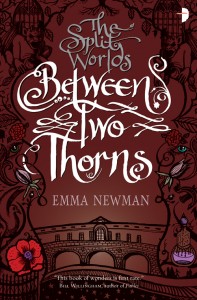
Between Two Thorns

Between Two Thorns
Book 1 of the Split Worlds
by Emma Newman

I went to the launch of this book a few months back (which for some reason I blogged about beforehand but not afterward – very strange) and the only reason I have taken so long to get round to reading it is that it is linked to a series of online short stories that I wanted to finish reading before I started this novel. Then I got impatient with myself and just read this anyway! I will go back to those short stories now.

Disclaimer: Emma Newman is a local author to me and we have met a couple of times, as well as having a few conversations over the internet. I think she is very lovely and this may or may not have coloured my opinion of her book. Which I really liked. I think it’s probably very good whether or not you ever so slightly know the author.

Newman has come up with something special in the Split Worlds. She has created a fantasy world with a multitude of characters and things going on that feed into not only 50+ short stories and three novels (at least??) but also interactive games. But you could absolutely read this novel on its own, or any one of the short stories on their own, and enjoy it for itself, without the extra knowledge of all the other stuff.

What’s great is that although Newman has clearly put a lot of thought into world-building, there’s no noticeable chunks of exposition in this novel. You get dropped straight into a funny but sinister incident involving a drunk man desperate for a wee on his way home from the pub and all the details you need to understand what is going on and how that links to the other characters are added gradually and skilfully.

“‘Tea, sir?’ Axon picked up the teapot. Ekstrand peered at it suspiciously.
‘It is Assam, isn’t it, Axon?’
‘Indeed, sir.’
‘All right,’ he muttered and started to pace. ‘It’s all happening at the same time. I never did trust Sundays and this only adds weight to my theory.'”

There are quite a few characters but arguably the main one is Cathy, one of the “fae-touched” who is trying to break free from her family and live in the normal world known as Mundanus by – shock, horror – going to university. However, those who inhabit the magical mirror world she is hiding from, the Nether, will not leave her in peace. In the meantime, Max, a sort of policeman of the Split Worlds who is separated from his own soul, has stumbled on a breach of the Split Worlds Treaty so huge that there’s no knowing how high up in society the trouble goes or who he can trust.

I like the idea of the magical world and the normal world co-existing, and Newman paints both equally well. Characters in both worlds drink a lot of tea. But the worlds themselves are very different, or at least their people and societies are. The Nether seems to be stuck in a facsimile of 18th-century Britain, all very patriarchal and anti-technology and formal, with rigid rules governing everything and everyone, especially women. Mundanus is the world as it is now, in the 21st century, which makes for a huge contrast in some ways. Really, it’s a wonder Cathy is the only one looking to escape the Nether! But the Nether also sounds quite wonderful, with its silver sky and all the possibility of magic.

“‘Bloody weather,’ she muttered and then silently took it back. The sky was the colour of a day-old bruise and the wind was bitter but she still loved it just for being there. She never wanted to see a silver sky again.”

While you could read this as a standalone book, I was left wanting more, eager to buy part two and read it soon despite my enormous TBR. Thankfully my procrastination on getting round to reading this one means that book two, Any Other Name, has already been published (and indeed I bought it last weekend) and book three, All is Fair is coming soon, in October.

Published 2013 by Angry Robot.

Source: I bought this at the book’s launch at Forbidden Planet in Bristol.

Kate Gardner Reviews

Everyone lives in the world they deserve

July 25, 2013

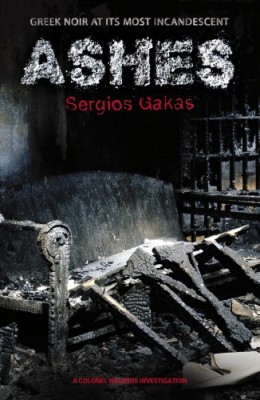
Ashes
by Sergios Gakas
translated from Greek by Anne-Marie Stanton-Ife

Ashes

I took this book on holiday with me because crime is usually a good bet for an absorbing throwaway read. This book didn’t quite live up to that expectation, being both better than expected but also in some ways worse. I probably need to explain.

For a start this is one of the more literary police procedurals I have ever read, inasmuch as the writing is very good, a little experimental even, and it doesn’t follow the expected rules of the genre. Now that may partly be because it’s Greek, and perhaps they have their own set of rules. I’m not familiar enough with Greek literature to know. But this certainly didn’t read like it was slotting into a template.

“Let me break your seal, Stoli, my love. My red beauty, come here, give yourself to me, transparent like all my mistakes…I don’t feel good, damned wine, it’s all your fault. Armchair – prepare yourself. My sweet throne, I’m coming…Who’s that creeping around outside – who’s after my vodka? It burns, the bitch…It burns like hell: fight ice with ice, fire with fire…No! My face is burning, don’t, why won’t you listen to me? No, please.”

There are some familiar themes. The detective, Police Colonel Chronis Halkidis, is middle-aged, divorced, disillusioned, addicted to cigarettes (and some rather stronger illegal drugs to boot) and doesn’t follow the rules. So far, so familiar. I didn’t warm to Halkidis, especially as his addictions and methods became, well, worse. But that’s fine, I don’t need to like the main character.

“Three dark-haired types with shiny accordions were playing songs, a hybrid, it seemed, of children’s songs and revolutionary battle cries. The audience was singing along, miming the foreign lyrics with adolescent uncertainty. They were happy. I hated them. I ducked quickly into the toilet and snorted two fat lines of powder… Everyone lives in the world they deserve, and my particular world cannot take any more accordion music.”

The book opens with the crime and follows the police investigation, which again sounds traditional enough. The crime in question is the burning to the ground of a house in a suburb of Athens, a fire which takes hold so quickly that three of the house’s occupants are killed almost immediately and the fourth, a formerly famous actress called Sonia Varika, is left in intensive care with severe burns.

“‘Do you believe in God?’
‘No.’
‘Pity. If you did, I would recommend prayer. It would save me the more pedestrian option, where I explain to you that the human body is a machine, with a highly complex mechanism that we barely understand, but a machine nonetheless…Do forgive me if I come across as a vulgar materialist, but so far the only ones I’ve seen performing miracles and saving lives have been doctors and nurses. God has never once put in an appearance, not even to stitch up an eyebrow.'”

It took me a while to figure out the narrative voice, which alternately follows Halkidis and the landlord of the destroyed house, Simeon Piertzovanis, but there are also sections in italic, which are either memories or thoughts of Sonia from her coma. Almost the first thing we learn is that both Halkidis and Piertzovanis are former lovers of Sonia, which means that they both distrust one another but also form an uneasy alliance in their search for truth and justice.

Piertzovanis was an interesting character, a lawyer, gambler and alcoholic who has inherited enough money to not really need to work, he is somehow still largely likeable. And there was a good cast of secondary characters, from a girl Piertzovanis picked up the night of the fire and who has stuck around, to Halkidis’ small team of trusted police, to the various shady types involved to varying degrees in a crime that is somehow political, or at least large enough organisations are involved for solving it to get political.

“I dropped Piertzovanis off at the statue of Kolokotronis, waited for him to take a piss on it and then lurch across Stadiou, his arm raised to deflect the oncoming traffic; drivers were drowning him in hoots, obscene gestures and abuse, but they spared his life.”

So the people and their relationships kept me interested, plus the writing was good, so why didn’t this work for me? I think where it fell down was the crime/detective/thriller part. I’m not sure which of those three it was aiming to be because I didn’t think it worked as any of them. The solution to the crime was too convoluted, with no clues for the reader to follow. But I also never felt, for all of Halkidis’ antics, that he was ever in any danger, so it didn’t work as a thriller either.

Really, this is all about the detective not the detection. And the personal angle definitely added a certain something. Reading what I’ve written it sounds like I’m bothered because I can’t categorise the book and it surprises me that I should feel that way. Perhaps it’s even that the writing was lyrical enough that it slowed me down – I wanted to pay attention to the words, not fly through them. But whatever the reason, I wasn’t gripped, and that feels like a flaw.

First published in Greece by Kastaniotis Editions in 2007.
This translation published 2011 by MacLehose Press, an imprint of Quercus.

Source: This was a review copy passed on to me by fellow blogger Ellie of Curiosity Killed the Bookworm.

Challenges: This counts towards the 2013 Translation Challenge.

Kate Gardner Reviews

The silence, the astonishing silence

July 22, 2013

Mrs De Winter book cover

Mrs de Winter
by Susan Hill

I had no idea this book existed – a sequel to one of my favourite classics by a current author I admire – until I spotted it on a shelf in the holiday home. At which I of course ignored the five books I had brought with me on holiday and read this instead. Or as well as some of them. There’s a lot of books in that holiday home. I could probably have packed fewer books.

So if you couldn’t tell from the title, this is a sequel to Rebecca, Daphne du Maurier’s best-loved, and probably best, work. I’ll try to review this without spoiling that storyline but I’m not sure this novel would make sense without reading the Du Maurier book first anyway.

Hill picks up the story 10 years after Rebecca. Maxim de Winter and his wife are still in self-imposed exile, living in a hotel in an unnamed location in Europe, existing as peacefully and dully as they can. But they are forced to make a trip to England, to Cornwall, and it all comes flooding back, all that they have tried to forget. Mrs de Winter is still haunted by the ghost of Rebecca and convinces herself that someone out there has survived who wants her to remember, to suffer. Is she going mad or is there really something to be feared in the England she loves and longs to return to more permanently?

“We were here, home, back at last and my heart was full. I felt released, new born, desperate with a sort of sickness at the sight of the autumn fields, the trees and hedgerows, the sky and the sunlight, even the black flocks of swirling, flapping crows. I was guilty and ashamed, as if I were betraying Maxim and my loyalty to him as his wife, so that then, in a small pathetic gesture that only I could understand I deliberately turned my head away from the window and refused to look at what I saw and loved.”

The story is, like Rebecca, narrated by the second Mrs de Winter and I think Hill has got the voice spot on. I think that because I found her both sympathetic and deeply frustrating, just like I did with Du Maurier. (Possibly because I recognise a lot of myself, or at least some of my worse qualities, in her – the silly fantasies and fear of what people might think of me.) As in the original, there are many painful moments that might have been avoided if she would have just spoken honestly with her husband. She convinces herself that she is shielding Maxim from pain, but of course all secrets will be revealed in the end.

Hill is known for her ghost stories, so was a great choice to capture the tone of Rebecca and give it a believable extension, with some returning cast and some new characters. Maxim is still a snob and his wife is still a self-conscious mouse. But they have changed in these 10 years. Maxim has become, to an extent, reliant on his wife, while she has become stronger, at least insofar as she knows what she wants now. Whether she has the strength to make it happen is another matter entirely.

“That was the moment I saw the eagle. It is something I shall never forget, the blue sky and the silence, the astonishing silence, and then, out of nowhere, that magnificent, soaring bird, high over the crag…But it was wrong, it was spoilt, even this very rare and yet very simple joy had been tainted.”

If I were to find fault with this book it would be that I would have wished for Mrs de Winter to have grown stronger still in the intervening years, less afraid of speaking her mind; in other words to have learned her lesson. But while that would be the perfect happy ending, it wouldn’t have made for a very good sequel. This novel relies on all that positive character-building falling apart far too easily. As with Rebecca, it is largely the narrator’s weakness and self-doubt that allow the horrors to become real. Let’s face it, a stronger woman would have fired Mrs Danvers and destroyed all Rebecca’s belongings pretty early on. But just as Du Maurier convinced us that that wasn’t the second wife Maxim wanted, Hill convinces us that Mrs de Winter still has her reasons for feeling nervous, for keeping secrets.

“We were far apart, I thought suddenly, and yet I did not understand why or how it had happened. We had come through our trials into calm seas, and been as close as it is possible for two people to be. Now it had gone, that completeness, and I wondered if marriage was always like this, constantly moving and changing, bearing one this way and that, together and then apart, almost at random, as if we were floating in it, as in a sea.”

Hill really has done an excellent job of capturing that voice, of making this feel like the sequel Du Maurier would have written, so why was I not bowled over by it? I think perhaps I love the original too much to have all my dreams for what happened next shattered by this brilliantly rendered answer to every question. Of course it wasn’t all light and happiness after the curtains were drawn, Du Maurier made that pretty clear from page one of Rebecca. But until I read this I could dream that a few years later it would all be however I wanted it to be.

Was it a mistake to read this? I hope not. I thoroughly enjoyed being back in that world, reading a love letter to England and also a subtle attack on the stiffness of “society”. I enjoyed the prickling at the back of my neck during the haunting scenes, the growing sense of foreboding and the relief of the moments of happiness in-between. I just have to try to keep this as one possibility of what happened next and still allow myself to dream what I will the next time I re-read Rebecca.

Published in 1993 by Sinclair-Stevenson.

Source: Borrowed from holiday home library.

Kate Gardner Reviews

Posts pagination

1 … 46 47 48 … 72

Archives

RSS feed: Nose in a book Nose in a book

  • Non-Fiction November 2026
  • Book review: The House of Doors by Tan Twan Eng
  • Book review: Taiwan Travelogue by Yáng Shuāng-zǐ

Me on the internets

  • @kate_in_a_book@mas.to (Mastodon)
  • Flickr/noseinabook
  • Instagram/kate_in_a_book
  • StoryGraph/kate_in_a_book

Categories

  • Blog
  • Reviews
  • Uncategorized
  • © Copyright Kate Gardner. All rights reserved.
Proudly powered by WordPress | Theme: Dream by vsFish.