Nose in a book

Reviews and other ramblings

  • Home
  • Reviews archive
    • Book reviews
    • TV reviews
    • Theatre reviews
  • TBR
  • Challenges
    • The Classics Club
    • 2014 Popular-Science Reading Challenge
    • Cookery challenge
    • The Gilmore Girls Reading Challenge
    • 2013 TBR Pile Challenge
    • 2013 Translation Challenge
    • Crime and Punishment read-a-long
  • About
    • Cookie legal stuff
  • Home
  • Reviews archive
    • Book reviews
    • TV reviews
    • Theatre reviews
  • TBR
  • Challenges
    • The Classics Club
    • 2014 Popular-Science Reading Challenge
    • Cookery challenge
    • The Gilmore Girls Reading Challenge
    • 2013 TBR Pile Challenge
    • 2013 Translation Challenge
    • Crime and Punishment read-a-long
  • About
    • Cookie legal stuff

It was only a series of feelings
August 18, 2012September 10, 2012

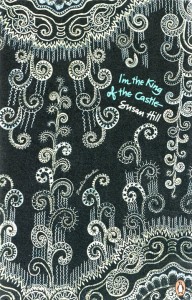
I'm the King of the Castle

I’m the King of the Castle
by Susan Hill

I think I may have left it a little too long to write this review because I was struggling to think of coherent things to say. Which is not to disparage the book. I really enjoyed it. I had just fried my brain a little with too much stuff.

This is the story of a fight for supremacy between two 10–11 year old boys. Hill perfectly captures how to them it is of utmost importance, while to their parents there is nothing of import going on. Edmund Hooper lives quietly with his father in their big old family home. He is dismayed when his father employs a new live-in housekeeper, Mrs Kingshaw, who brings her son Charles along. He is even more dismayed when it quickly becomes apparent that Mrs Kingshaw is as much a candidate for second wife as she is housekeeper. Her son is equally dismayed by this idea, partly due to jealousy of his mother’s time, but primarily due to the increasing possibility that he will spend his entire life being bullied by Hooper.

The style is slightly odd and stilted, which I suppose you could say reflects the awkwardness and distance between all these characters who ought to be intimately linked. Kingshaw thinks at one point:

“He wanted to say I’ve come here and I don’t like it [but] I’ve got to stay here [so] why can’t we make the best of things? He was willing to put himself out, he would even, just at this moment, have said he would do whatever Hooper wanted, would acknowledge him as a master of his own territory. But he couldn’t put any of it into words, not even to himself, it was only a series of feelings, overlapping one another like small waves. He was confused.”

The relationship between the boys is cleverly created. Physically they are approximate equals but Hooper has confidence and the home territory, giving him the advantage. He terrorises his prey by subtly observing Kingshaw’s many fears and playing on them. Hooper is also the cleverer of the two, knowing just how to behave in front of their parents so that they suspect nothing. Kingshaw is not a sweet innocent, though. When he gets a chance to have the upper hand he takes it, usually.

There are moments of genuine childish play in the middle of it all that give you hope that the parents will be right after all, that two boys of the same age will always become friends if thrown together. But almost as soon as these moments begin, the seeds of doubt are being sown, as the boys size one another up.

On an aside, I bought the really quite beautiful Penguin Decades edition, with cover art by Zandra Rhodes. I am such a sucker for pretty books.

First published 1970 by Hamish Hamilton.
Kate Gardner Reviews

Rain poem

August 16, 2012August 23, 2012 2 Comments

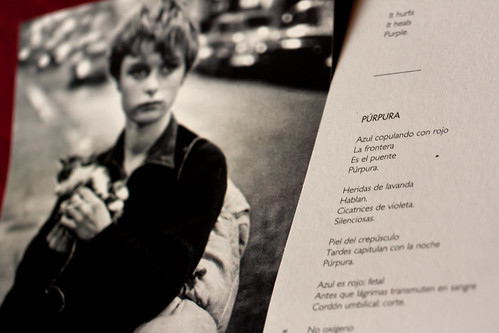
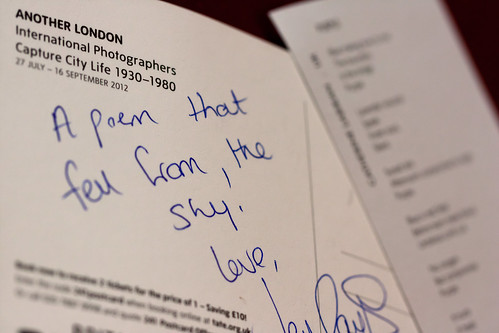
Three weeks ago, the very lovely poet and bookseller Jen Campbell blogged about a fantastic event in London called Raining Poems. She offered to send out some poems from the event and I was thrilled to be one of the lucky winners. My poem arrived today.

Beautiful post

The poem is “Purple” by Catherine Labiran (with a translation into Spanish by Andrés Anwandter).

A poem that fell from the sky

Huge thanks to Jen for the fun post and adding a beautiful poem to my life.

Kate Gardner Blog

Musical interlude: Bluetones

August 16, 2012

Whether it’s a tired, not ready for the world early morning; a lazy, no need to get up late morning; or an I’ve done too much today and want to stop now interlude, this is the perfect sleepy tune. Enjoy.

Kate Gardner Blog

Sunday Salon: British summertime

August 12, 2012August 12, 2012 5 Comments

The Sunday Salon

Many years ago, my sister won a fancy dress competition dressed as British summertime. She wore a swimsuit, kagoule and wellies and carried a bucket, spade and umbrella. And most summers that’s pretty accurate: we’re hopeful but ultimately disappointed. But this year, well it’s been a bit special.

After a month of what felt like solid rain, the sun came out in time for the school summer holidays and, of course, the Olympics. The whole country suddenly found its national pride and got excited about…sport. I’m a little sad that it’s ending today. The Olympics, that is. I’m hoping the summer carries on a little longer.

In-between watching far too much TV we have been enjoying the sunshine with a bit of gardening:
Untitled

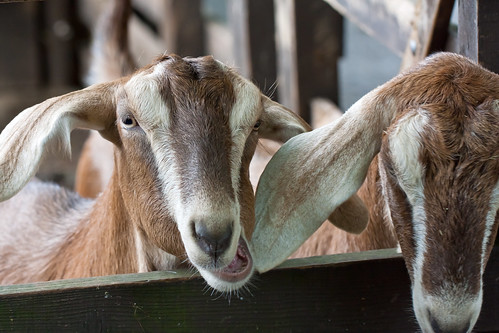
and a trip to a city farm:
Mmm, tasty goat ear

All of which means I have done very little reading. I have finally started reading Evelyn Waugh for the first time, and am greatly enjoying Vile Bodies. What have you been up to? Are you squeezing any reading into your summer activities (assuming it’s summer where you are)?

Kate Gardner Blog

All just programming

August 8, 2012September 10, 2012

Old Paint
by Megan Lindholm

This is a novelette from Asimov’s Science Fiction that Tim encouraged me to read. It’s a touching, simple story set in a near-ish future and playing on American tropes.

I hadn’t realised until looking her up for this review that Megan Lindholm also writes as Robin Hobb, which is a name that is much more familiar to me but also one I wouldn’t pick up because she writes that traditional swords and magic fantasy that I’m not a fan of. Well, turns out she can write SF pretty well so maybe I’ll look up more of her work written under her real name.

This is the story of a poor-ish family in an American city in the late 21st century. Suzanne and her two school-age kids share a small flat with one computer between them and have no car, much to the children’s shame. But when they inherit their grandfather’s huge muscle car they are even more embarrassed. Especially when their mother insists on actually driving it rather than letting it drive itself like everyone else does.

To say much more about the storyline would be to give too much away, but it’s an interesting take on the American love affair with cars. From an environmental perspective it’s hopeful, because all cars run on electricity, with back-up solar cells for when they can’t get to a charge point. Despite the advances in technology, this is a story about people. Suzanne reminisces about her teenage relationship with this same car. And yes, I know how that sounds and yes, to a certain extent the story does anthropomorphise the car (“Old Paint” is the name they give it), though it does acknowledge this directly:

“We all know that Old Paint is just following the directives of his programming. He’s not really…alive. He just seems that way because we think of him that way. But it’s all just programming.”

But that’s not what it’s about. Suzanne’s long-since given-up-on relationship with her father is rescued after the fact by this gift and her children learn to appreciate her through it as well. Which sounds odd, but trust me, it works.

There are more SF elements than my synopsis perhaps suggests but they are subtly done so that, aside from one thing that’s central to the story, it’s all background. It’s a very believable near future, with only one significant change from now.

First published in the July 2012 issue of Asimov’s Science Fiction.

Kate Gardner Reviews

Given a pen instead of a gun

August 5, 2012September 10, 2012 5 Comments

Penguin Lost
by Andrey Kurkov
translated from Russian by George Bird

When I began this book, the sequel to Death and the Penguin, I was mostly a little lost and puzzled. I ended it engrossed and near tears (happy-sad ones). Which is a pretty good review in itself, I think.

To explain the plot I’m going to have to discuss how book one ended, so big fat **SPOILER ALERT STARTS HERE**

We last saw Victor travelling to Antarctica in the place of his pet penguin Misha, whom he left in a hospital in Kiev with his treatment being paid for by dodgy types who were almost certainly mafia. In this book, Victor arrives back in Kiev to find that Misha has disappeared, Victor’s sort-of foster daughter Sonya has got a pet cat, appearing to have forgotten Misha already, and Nina (Sonya’s nanny) has moved her new boyfriend into Victor’s flat. Alone, dispirited and possibly still on the wrong side of the mafia, Victor is in a dark place and only too happy to get taken under the wing of increasingly questionable types in his search for Misha the penguin.

**END SPOILERS**

In the early parts of this book, former journalist Victor is working for a local politician who initially appears pretty dodgy and certainly has some dodgy contacts. I found this a little dull, perhaps because I was missing some of the nuances of Ukrainian politics. Or perhaps it was Victor’s semi-defeated demeanour. When he started to get his confidence back, I started to be interested. He appears to have a knack for persuading people to help in his unusual quest (finding his pet penguin, if you didn’t get that from the title), though it’s certainly not an easy adventure.

Although book one did deal with politics, mafia and death, they were in the background behind the story of a man and his attempts to pull his life together. In this story Soviet politics become far more prominent, as Victor travels from Ukraine to Russia to Chechnya, the latter embroiled in war and a dangerous place for a Russian-speaker to be. The story gets pretty dark, very dark in fact. And there is less of the black humour of Death and the Penguin, though it is still there. But what it does have plenty of is the same compelling weirdness. I also learned a lot about Ukraine in the 1990s:

“Maybe I’ll be a journalist when I’m big. And sit up in the kitchen when everyone’s asleep.”
“You mustn’t – you wouldn’t want to be a soldier and go to war.”
“No, I wouldn’t.”
“You’d have to, as a journalist. You’d be taken on by some paper, given a pen instead of a gun, and told, ‘There’s the enemy, you go and write nasty things about him.’ And you would, until you got killed or hurt.”

Victor isn’t a positive thinker, perhaps understandably, but this gives him some interesting internal monologues:

“He stared at the white sheet of paper, but his brain refused to function. It was becoming internal, this weightlessness, prior to becoming external again, and beginning to irritate. At long last, he did actually type the words ‘What now?’ and felt better for it. Materialized, turned into text, the question ceased to occupy his thoughts.”

A note on the translation: my early disinterest aside, I felt that Bird did a good job of explaining the nuances of travel and interaction between the Soviet states. And I really felt the cold, bleak atmosphere exemplified by the image of a penguin on the balcony of a high-rise flat overlooking a car park.

Zakon uliki first published 2002 by Folio, Kharkov.
This translation published 2004 by the Harvill Press.

Kate Gardner Reviews

That strangers may not loose their road and have it to goe back againe

August 2, 2012September 10, 2012 2 Comments

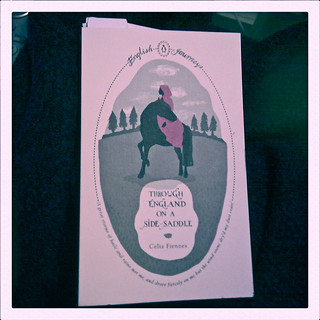
Through England on a Side-Saddle
by Celia Fiennes

I picked this up in a rare glow of national pride, what with certain sporting stuff going on. It’s an odd little book. Published as part of Penguin’s “English Journeys” series, it’s an extract from the 1698 travelogue of a rich Englishwoman travelling on horseback up to Newcastle and down to Cornwall. Intrepid, I think the word is.

Through England on a Side-Saddle

The language takes a little getting used to. Not that the words are unfamiliar, but Penguin has left the original spelling and grammar in place, with only the occasional translation in square brackets. It’s jarring but once in the flow I found myself surprisingly able to cope with the same word being spelled three different ways within a paragraph!

This travelogue was written up later from a detailed journal that Fiennes kept on the road, and it suffers a little bit from listing the same few facts about each place: number of churches (I love that this was a reasonably reliable indicator of population!), distance in miles, quality of roads, major trade. But even these facts were sometimes fascinating: in 1698 Liverpool was so small it had only one church! Compare that with Newcastle-upon-Tyne (5 churches) and Bristol (19 churches and a cathedral) – even Wells, now England’s smallest city, had 2 churches and a cathedral! Also, roadsigns were a brand new idea:

“they have one good thing in most parts off this principality [Lancashire] that at all cross wayes there are Posts with Hands pointing to each road with the names of the great town or market towns that it leads to, which does make up for the length of the miles that strangers may not loose their road and have it to goe back againe”

(I so badly want to take a red pen to that now!)

More importantly, Fiennes has occasional flashes of wit and humour that make the drier sections worthwhile. Take, for instance, her comments on St Winfreds Well:

“its a cold water and cleare and runs off very quick so that it would be a pleasant refreshment in the sumer to washe ones self in it, but its shallow not up to the waste so its not easye to dive and washe in; but I thinke I could not have been persuaded to have gone in unless might have had curtains to have drawn about some part of it to have shelter’d from the streete, for the wett garments are no covering to the body; but there I saw abundance of the devout papists on their knees all around the Well; poor people are deluded into an ignorant blind zeale and to be pity’d by us that have the advantage of knowing better”

Fiennes is travelling alone, with local guides (and, I suspect, luggage carriers) in each region. She at no point refers to being a woman travelling without husband or other family, which perhaps is a product of her being rich and well-connected enough that she knows people all over the country (and often describes their houses and gardens lengthily, another bit I found tedious). She makes a point of learning about local trades and industries, going into surprising detail about methods of coal mining, for example. She does, however, show a certain snobbery and prejudice, particularly towards the Scots when she briefly crosses the border:

“those houses are all kinds of Castles and they live great, tho’ in so nasty a way…one has little stomach to eate or use any thing as I have been told by some that has travell’d there; and I am sure I mett with a sample of it enough to discourage my progress farther in Scotland; I attribute it wholly to their sloth for I see they sitt and do little”

Overall I would say this is a fascinating historical document more than a good piece of writing but I am still interested in seeing what else is included in the “English Journeys” series.

The Journals of Celia Fiennes first published 1947 by the Cresset Press.
This selection published 2009 by Penguin Books.

Kate Gardner Reviews

Sunday Salon: Rory Gilmore Reading Challenge

July 29, 2012August 4, 2012 15 Comments

The Sunday Salon

So, this one’s just for fun. The challenge has been around for a while but then it’s a long list to get through! I love the TV show Gilmore Girls and wish I could be half as smart and frankly lucky as Rory, or have half of Lorelai’s style and wit.

To borrow the intro from It’s Time to Read: With some wonderful people on the Book Club Forum we are reading through some of the books that Rory Gilmore read in the TV show Gilmore Girls. Here is the list of books she has read (taken from this forum – thanks!).

I have annotated the ones I have read and the ones that are already on my TBR.

1984 by George Orwell – read multiple times, originally in my teens
The Adventures of Huckleberry Finn by Mark Twain – read in 2003, but I also half remember my Dad reading it to me and my sister many years earlier
Alice in Wonderland by Lewis Carroll – read multiple times, originally when at primary school
The Amazing Adventures of Kavalier & Clay by Michael Chabon – read in 2010
An American Tragedy by Theodore Dreiser
Angela’s Ashes by Frank McCourt – read in my teens
Anna Karenina by Leo Tolstoy
Anne Frank: The Diary of a Young Girl by Anne Frank – read multiple times, originally in my teens
Archidamian War by Donald Kagan
The Art of Fiction by Henry James
The Art of War by Sun Tzu
As I Lay Dying by William Faulkner – read in 2010
Atonement by Ian McEwan – read
Autobiography of a Face by Lucy Grealy
The Awakening by Kate Chopin – read for my degree
Babe by Dick King-Smith – read (under its original title of The Sheep-Pig) when at primary school
Backlash: The Undeclared War Against American Women by Susan Faludi
Balzac and the Little Chinese Seamstress by Dai Sijie – read 2009-ish
Bambi by Felix Salten
Bel Canto by Ann Patchett
The Bell Jar by Sylvia Plath – read in 2010
Beloved by Toni Morrison – read
Beowulf A New Verse Translation by Seamus Heaney – TBR
The Bhagava Gita
The Bielski Brothers by Peter Duffy
Bitch in Praise of Difficult Women by Elizabeth Wurtzel
A Bolt from the Blue and Other Essays by Mary McCarthy
Brave New World by Aldous Huxley – read in 2009
Brick Lane by Monica Ali – read, I think, almost certain
Brigadoon by Alan Jay Lerner
Candide by Voltaire – read in 2011
The Canterbury Tales by Chaucer – I’ve read the odd extract but not enough to strike this off
Carrie by Stephen King – read in my teens
Catch-22 by Joseph Heller – started and gave up. I know, I know, I must try again sometime
The Catcher in the Rye by J D Salinger – read
Charlotte’s Web by E B White – read when I was at school
The Children’s Hour by Lillian Hellman
Christine by Stephen King
A Christmas Carol by Charles Dickens – read multiple times
A Clockwork Orange by Anthony Burgess – started and gave up. Another one I intend to try again
The Code of the Woosters by P G Wodehouse
The Collected Short Stories by Eudora Welty
A Comedy of Errors by William Shakespeare – TBR
Complete Novels by Dawn Powell
The Complete Poems by Anne Sexton
The Complete Polysyllabic Spree by Nick Hornby – read in 2012
Complete Stories by Dorothy Parker
Complete Tales & Poems by Edgar Allan Poe – I’ve read several but certainly not all
A Confederacy of Dunces by John Kennedy Toole
The Count of Monte Cristo by Alexandre Dumas père – read
Cousin Bette by Honore de Balzac
Crime and Punishment by Fyodor Dostoevsky – TBR
The Crimson Petal and the White by Michel Faber
The Crucible by Arthur Miller
Cujo by Stephen King
The Curious Incident of the Dog in the Night-Time by Mark Haddon – read in 2003
Daisy Miller by Henry James
Daughter of Fortune by Isabel Allende
David and Lisa by Dr Theodore Issac Rubin
David Copperfield by Charles Dickens
The Da Vinci Code by Dan Brown – read
Dead Souls by Nikolai Gogol
Demons by Fyodor Dostoyevsky
Death of a Salesman by Arthur Miller
Deenie by Judy Blume
The Devil in the White City by Erik Larson
The Dirt: Confessions of the World’s Most Notorious Rock Band by Tommy Lee, Vince Neil, Mick Mars and Nikki Sixx
The Divine Comedy by Dante
The Divine Secrets of the Ya-Ya Sisterhood by Rebecca Wells
Don Quixote by Cervantes – started and gave up
Driving Miss Daisy by Alfred Uhrv
Dr Jekyll & Mr Hyde by Robert Louis Stevenson – read in my teens
Eleanor Roosevelt by Blanche Wiesen Cook
The Electric Kool-Aid Acid Test by Tom Wolfe
Ella Minnow Pea: A Novel in Letters by Mark Dunn
Eloise by Kay Thompson
Emily the Strange by Roger Reger
Emma by Jane Austen
Empire Falls by Richard Russo
Encyclopedia Brown: Boy Detective by Donald J Sobol
Ethan Frome by Edith Wharton
Ethics by Spinoza
Eva Luna by Isabel Allende
Everything is Illuminated by Jonathan Safran Foer
Extravagance by Gary Krist
Fahrenheit 451 by Ray Bradbury – read
Fahrenheit 9/11 by Michael Moore
The Fall of the Athenian Empire by Donald Kagan
Fat Land: How Americans Became the Fattest People in the World by Greg Critser
Fear and Loathing in Las Vegas by Hunter S Thompson – read 2002-ish
Fiddler on the Roof by Joseph Stein
The Five People You Meet in Heaven by Mitch Albom – read
Finnegan’s Wake by James Joyce
Fletch by Gregory McDonald
Flowers for Algernon by Daniel Keyes – read 2008-ish
The Fortress of Solitude by Jonathan Lethem
The Fountainhead by Ayn Rand – read 2008-ish
Frankenstein by Mary Shelley – read multiple times, originally for my A levels in 1998
Franny and Zooey by J D Salinger – read
Freaky Friday by Mary Rodgers
Galapagos by Kurt Vonnegut
Gender Trouble by Judith Butler
George W Bushism: The Slate Book of the Accidental Wit and Wisdom of our 43rd President by Jacob Weisberg
Gidget by Fredrick Kohner
Girl, Interrupted by Susanna Kaysen
The Gnostic Gospels by Elaine Pagels
The Godfather by Mario Puzo
The God of Small Things by Arundhati Roy
Goldilocks and the Three Bears by Alvin Granowsky
Gone with the Wind by Margaret Mitchell
The Good Soldier by Ford Madox Ford – read for my degree
The Gospel According to Judy Bloom by Judy Bloom
The Graduate by Charles Webb
The Grapes of Wrath by John Steinbeck – TBR
The Great Gatsby by F Scott Fitzgerald – read
Great Expectations by Charles Dickens – read multiple times, originally in my teens
The Group by Mary McCarthy
Hamlet by William Shakespeare – read
Harry Potter and the Goblet of Fire by J K Rowling – read
Harry Potter and the Sorcerer’s Stone by J K Rowling – read
A Heartbreaking Work of Staggering Genius by Dave Eggers – read
Heart of Darkness by Joseph Conrad
Helter Skelter: The True Story of the Manson Murders by Vincent Bugliosi and Curt Gentry
Henry IV, part I by William Shakespeare – TBR
Henry IV, part II by William Shakespeare – TBR
Henry V by William Shakespeare – TBR
High Fidelity by Nick Hornby – read
The History of the Decline and Fall of the Roman Empire by Edward Gibbon
Holidays on Ice: Stories by David Sedaris
The Holy Barbarians by Lawrence Lipton
House of Sand and Fog by Andre Dubus III
The House of the Spirits by Isabel Allende
How to Breathe Underwater by Julie Orringer
How the Grinch Stole Christmas by Dr Seuss
How the Light Gets in by M J Hyland
Howl by Allen Ginsberg – read 2004
The Hunchback of Notre Dame by Victor Hugo
The Iliad by Homer – TBR
I’m with the Band by Pamela des Barres
In Cold Blood by Truman Capote – read
Inherit the Wind by Jerome Lawrence and Robert E Lee
Iron Weed by William J Kennedy
It Takes a Village by Hillary Clinton
Jane Eyre by Charlotte Brontë – read multiple times
The Joy Luck Club by Amy Tan
Julius Caesar by William Shakespeare – read for my degree
The Jumping Frog by Mark Twain
The Jungle by Upton Sinclair
Just a Couple of Days by Tony Vigorito
The Kitchen Boy: A Novel of the Last Tsar by Robert Alexander
Kitchen Confidential: Adventures in the Culinary Underbelly by Anthony Bourdain
The Kite Runner by Khaled Hosseini – read
Lady Chatterley’s Lover by D H Lawrence – read
The Last Empire: Essays 1992–2000 by Gore Vidal
Leaves of Grass by Walt Whitman – read for my degree
The Legend of Bagger Vance by Steven Pressfield
Less Than Zero by Bret Easton Ellis – I started this and ended up giving it away because I really didn’t like it
Letters to a Young Poet by Rainer Maria Rilke
Lies and the Lying Liars Who Tell Them by Al Franken
Life of Pi by Yann Martel – read
Little Dorrit by Charles Dickens
The Little Locksmith by Katharine Butler Hathaway
The Little Match Girl by Hans Christian Andersen – read
Little Women by Louisa May Alcott – read multiple times
Living History by Hillary Rodham Clinton
Lord of the Fliesby William Golding – read
The Lord of the Rings by J R R Tolkien – read
The Lottery: And Other Stories by Shirley Jackson
The Lovely Bones by Alice Sebold – read
The Love Story by Erich Segal
Macbeth by William Shakespeare – read
Madame Bovary by Gustave Flaubert – read
The Manticore by Robertson Davies
Marathon Man by William Goldman
The Master and Margarita by Mikhail Bulgakov – TBR
Memoirs of a Dutiful Daughter by Simone de Beauvoir
Memoirs of General W T Sherman by William Tecumseh Sherman
Me Talk Pretty One Day by David Sedaris
The Meaning of Consuelo by Judith Ortiz Cofer
A Mencken Chrestomathy by H R Mencken
The Merry Wives of Windsor by William Shakespeare – read for my degree
Metamorphosis by Franz Kafka – read
Middlesex by Jeffrey Eugenides – read in 2011
The Miracle Worker by William Gibson
Moby Dick by Herman Melville – started, did not finish
The Mojo Collection: The Ultimate Music Companion by Jim Irvin
Moliere: A Biography by Hobart Chatfield Taylor
A Monetary History of the United States by Milton Friedman
Monsieur Proust by Celeste Albaret
A Month of Sundays: Searching for the Spirit and My Sister by Julie Mars
A Moveable Feast by Ernest Hemingway
Mrs Dalloway by Virginia Woolf – read (for A levels, I think)
Mutiny on the Bounty by Charles Nordhoff and James Norman Hall
My Lai 4: A Report on the Massacre and Its Aftermath by Seymour M Hersh
My Life as Author and Editor by H R Mencken
My Life in Orange: Growing Up with the Guru by Tim Guest
My Sister’s Keeper by Jodi Picoult – I’m actually not sure whether I’ve read this…
The Naked and the Dead by Norman Mailer
The Name of the Rose by Umberto Eco – read 2004-ish
The Namesake by Jhumpa Lahiri
The Nanny Diaries by Emma McLaughlin
Nervous System: Or, Losing My Mind in Literature by Jan Lars Jensen
New Poems of Emily Dickinson by Emily Dickinson – read some of them, not all
The New Way Things Work by David Macaulay
Nickel and Dimed by Barbara Ehrenreich
Night by Elie Wiesel
Northanger Abbey by Jane Austen – read for my degree
The Norton Anthology of Theory and Criticism by William E Cain, Laurie A Finke, Barbara E Johnson, John P McGowan
Novels 1930–1942: Dance Night/Come Back to Sorrento, Turn, Magic Wheel/Angels on Toast/A Time to be Born by Dawn Powell
Notes of a Dirty Old Man by Charles Bukowski
Of Mice and Men by John Steinbeck – read in my teens
Old School by Tobias Wolff – read
On the Road by Jack Kerouac – TBR
One Flew Over the Cuckoo’s Nest by Ken Kesey
One Hundred Years of Solitude by Gabriel Garcia Marquez – read in 2011
The Opposite of Fate: Memories of a Writing Life by Amy Tan
Oracle Night by Paul Auster
Oryx and Crake by Margaret Atwood
Othello by Shakespeare – read for my degree
Our Mutual Friend by Charles Dickens – read for my degree
The Outbreak of the Peloponnesian War by Donald Kagan
Out of Africa by Isac Dineson
The Outsiders by S E Hinton
A Passage to India by E M Forster – TBR
The Peace of Nicias and the Sicilian Expedition by Donald Kagan
The Perks of Being a Wallflower by Stephen Chbosky
Peyton Place by Grace Metalious
The Picture of Dorian Gray by Oscar Wilde – TBR
Pigs at the Trough by Arianna Huffington
Pinocchio by Carlo Collodi – read
Please Kill Me: The Uncensored Oral History of Punk by Legs McNeil and Gillian McCain
The Portable Dorothy Parker by Dorothy Parker
The Portable Nietzche by Fredrich Nietzche
The Price of Loyalty: George W Bush, the White House, and the Education of Paul O’Neill by Ron Suskind
Pride and Prejudice by Jane Austen – read in 2011
Property by Valerie Martin – read
Pushkin: A Biography by T J Binyon
Pygmalion by George Bernard Shaw – read in 2012
Quattrocento by James Mckean
A Quiet Storm by Rachel Howzell Hall
Rapunzel by the Grimm Brothers – read
The Razor’s Edge by W Somerset Maugham
Reading Lolita in Tehran: A Memoir in Books by Azar Nafisi – read
Rebecca by Daphne du Maurier – read multiple times
Rebecca of Sunnybrook Farm by Kate Douglas Wiggin
The Red Tent by Anita Diamant
Rescuing Patty Hearst: Memories From a Decade Gone Mad by Virginia Holman
R is for Ricochet by Sue Grafton
Rita Hayworth by Stephen King
Robert’s Rules of Order by Henry Robert
Roman Holiday by Edith Wharton
Romeo and Juliet by William Shakespeare – read multiple times, originally for school in 1994
A Room of One’s Own by Virginia Woolf – read in 2011
A Room with a View by E M Forster
Rosemary’s Baby by Ira Levin
Sacred Time by Ursula Hegi
Sanctuary by William Faulkner
Savage Beauty: The Life of Edna St Vincent Millay by Nancy Milford
The Scarecrow of Oz by Frank L Baum – read
The Scarlet Letter by Nathaniel Hawthorne – read for my degree
Seabiscuit: An American Legend by Laura Hillenbrand
The Second Sex by Simone de Beauvoir
The Secret Life of Bees by Sue Monk Kidd
Secrets of the Flesh: A Life of Colette by Judith Thurman
Selected Letters of Dawn Powell: 1913–1965 by Dawn Powell
Sense and Sensibility by Jane Austen
A Separate Peace by John Knowles
Sexus by Henry Miller
The Shadow of the Wind by Carlos Ruiz Zafon – read
Shane by Jack Shaefer
The Shining by Stephen King
Siddhartha by Hermann Hesse
S is for Silence by Sue Grafton
Slaughterhouse Five by Kurt Vonnegut – read in 2011
Small Island by Andrea Levy – read
The Snows of Kilimanjaro by Ernest Hemingway – read in 2010
Snow White and Rose Red by the Grimm Brothers – read
Social Origins of Dictatorship and Democracy: Lord and Peasant in the Making of the Modern World by Barrington Moore
The Song of Names by Norman Lebrecht
Song of the Simple Truth: The Complete Poems by Julia de Burgos
The Song Reader by Lisa Tucker
Songbook by Nick Hornby [31 Songs in the UK]
The Sonnets by William Shakespeare – read
Sonnets from the Portuguese by Elizabeth Barrett Browning – read some of, but not all
Sophie’s Choice by William Styron – read
The Sound and the Fury by William Faulkner
Speak, Memory by Vladimir Nabokov
Stiff: The Curious Lives of Human Cadavers by Mary Roach
The Story of My Life by Helen Keller
A Streetcar Named Desire by Tennessee Williams
Stuart Little by E B White
The Sun Also Rises by Ernest Hemingway
Swann’s Way by Marcel Proust
Swimming with Giants: My Encounters with Whales, Dolphins and Seals by Anne Collett
Sybil by Flora Rheta Schreiber
A Tale of Two Cities by Charles Dickens – read
Tender is the Night by F Scott Fitzgerald – read
Terms of Endearment by Larry McMurtry
Time and Again by Jack Finney
The Time Traveler’s Wife by Audrey Niffenegger – read 2005-ish
To Have and Have Not by Ernest Hemingway – TBR
To Kill a Mockingbird by Harper Lee – read
The Tragedy of Richard III by William Shakespeare – read for my degree
A Tree Grows in Brooklyn by Betty Smith
The Trial by Franz Kafka – read
The True and Outstanding Adventures of the Hunt Sisters by Elisabeth Robinson
Truth & Beauty: A Friendship by Ann Patchett
Tuesdays with Morrie by Mitch Albom
Ulysses by James Joyce – read for my degree
The Unabridged Journals of Sylvia Plath 1950–1962 by Sylvia Plath – TBR
The Unbearable Lightness of Being by Milan Kundera – read
Uncle Tom’s Cabin by Harriet Beecher Stowe – read for my degree
Unless by Carol Shields
Valley of the Dolls by Jacqueline Susann
The Vanishing Newspaper by Philip Meyers
Vanity Fair by William Makepeace Thackeray – TBR
The Velvet Underground and Nico (Thirty Three and a Third series) by Joe Harvard
The Virgin Suicides by Jeffrey Eugenides
Waiting for Godot by Samuel Beckett – I’ve seen the play. I know that doesn’t count, but it was excellent.
Walden by Henry David Thoreau – read for my degree
War and Peace by Leo Tolstoy
We Owe You Nothing – Punk Planet: The Collected Interviews edited by Daniel Sinker
What Colour is Your Parachute? by Richard Nelson Bolles
Whatever Happened to Baby Jane by Henry Farrell
When the Emperor Was Divine by Julie Otsuka
Who Moved My Cheese? Spencer Johnson
Who’s Afraid of Virginia Woolf? by Edward Albee
Wicked: The Life and Times of the Wicked Witch of the West by Gregory Maguire
The Wizard of Oz by Frank L Baum – read
Wuthering Heights by Emily Brontë – read
The Yearling by Marjorie Kinnan Rawlings
The Year of Magical Thinking by Joan Didion

So that’s 336 titles, I think, of which I have read 96. (I wasn’t sure how to count the “complete novels of” collections.) I have edited the list a little, removing duplicates for example. And I don’t know whether the TV series actually showed Rory reading all of these. I suspect a lot of the titles just came up in conversation or can be read when she packs her book bag. If you think you see any errors in the list, let me know.

The ones I own but have not yet read make up a bit of a heavy list, which may be why they have all sat on the TBR pile for a while. But perhaps having this challenge in the background will be a good way to finally get round to them! In addition, I would really like to read these:

Anna Karenina by Leo Tolstoy
Bel Canto by Ann Patchett
The Code of the Woosters by P G Wodehouse
Everything Is Illuminated by Jonathan Safran Foer
Gone with the Wind by Margaret Mitchell
The Gospel According to Judy Bloom
The Joy Luck Club by Amy Tan
Letters to a Young Poet by Rainer Maria Rilke
The Namesake by Jhumpa Lahiri
One Flew Over the Cuckoo’s Nest by Ken Kesey
Oryx and Crake by Margaret Atwood
Songbook by Nick Hornby
The Virgin Suicides by Jeffrey Eugenides

I have half a plan to come back to this list every six months or so and see how I’m doing. I may have to transfer it all to a spreadsheet of some kind 🙂 And I’ll be keeping a close eye on book titles when I watch Gilmore Girls repeats!

I have been meaning to do something with this challenge for a while, so thank you to Reading in Winter for reminding me!

Are you taking part in this challenge? What do you think of the list?

Kate Gardner Blog

She thought she’d left her past behind

July 28, 2012

In Her Shadow
by Louise Douglas

I was sent this book on spec by the publisher, I’m guessing partly because it’s set in Bristol, or at least half of it is. But I must admit that I wasn’t entirely won over.

The premise sounded a bit woolly and to be honest, it was. Highly strung museum worker Hannah Brown has never get over the death of her best friend Ellen when they were 18, especially because she feels that she had betrayed her friend in some mysterious way. What appears to be a sighting of Ellen sparks off a long-drawn-out breakdown, or almost-breakdown, told in alternating chapters to the story of her childhood friendship with Ellen.

The characters are interesting and varied. As well as mousey matter-of-fact Hannah and exuberant arty Ellen there’s Ellen’s brooding, troubled father and Hannah’s sort-of-foster-brother Jago who is a gentle salt-of-the-earth type.

And there is quite a lot going on. In her youth Hannah nurtured an obsessive fixation on Ellen’s father, turning a blind eye to his failures as a father to her best friend. She also got pretty jealous over both Jago and Ellen. In the current day Hannah has a fixation on her co-worker John who is married, though not happily. And she’s having a meltdown.

Which all sounds like it could have been gripping. But somehow…it wasn’t. It was easy enough to read but there were no stand-out passages. The Bristol setting if anything annoyed me because it was slightly clunky, name-checking streets and locations constantly, rather than using more subtle descriptions that Bristolians would recognise anyway.

The Cornish setting was better, combining the romantic wild landscape and the mystery of a big rich house (Ellen’s) and the starker reality of working-class Britain in what I think was the 1970s and 1980s. Douglas showed some love for this setting, subtly dropping in local detail the way I would have liked her to in the Bristol sections.

The climactic reveal of the betrayal was actually better than I had expected, and made me dislike Hannah where up to then I had been on her side. I know the moment itself could be written off as a youthful mistake but she has spent years (16 or 17, I think) doing nothing to right the wrong.

There was some gothic, melodramatic potential for this novel but for me it didn’t deliver.

This book was kindly sent to me by the publisher in return for an honest review.

Published 2012 by Bantam Press, an imprint of Transworld Publishers.

Kate Gardner Reviews

The person you thought you knew

July 23, 2012 4 Comments

The War of the Wives
by Tamar Cohen

I was intrigued by this book from the synopsis and I am left feeling very smug that I know myself well – because I loved it. It isn’t perfect but it is gripping and thought-provoking, and story and character are equally strong.

To save you even having to read the blurb, the tagline on the front of this book tells you all you need to know (when did books start having taglines? Is that a thing now?): “At your husband’s funeral you don’t expect to discover his other wife.” So it’s about grief, lies, family, bigamy, but also modern life in London and how change can make you realise what kind of person you are.

The storytelling is narrated alternately by the two wives, Selina and Lottie. Initially there’s a little bit of stereotyping. Selina is well off, uptight, a kept woman who keeps her very nice, very big house in Barnes in impeccable order and doesn’t check the price tag before buying yet another cashmere coat. She was married to Simon for 28 years, they have three children, aged 17 to 26, and while there’s not really any passion left she still loves her husband. She worries about ageing, her children’s choices of partner and why her youngest son insists on eating junk food.

Lottie is artistic, but illustrating children’s books isn’t making her a living so she also has a job she dislikes in a hotel. She lives in a flat in North London with her and Simon’s daughter Sadie, who is 16 and very difficult. She and Simon were married 17 years and they were still very passionate about each other, though they had money troubles and they fought a lot.

Cohen takes as her structure the five stages of grief. So the wives’ hatred of each other and what Simon did really comes to the fore in the “Anger” section. And the book inevitably wraps things up in the “Acceptance” section. Which was where, looking back, I feel a little disappointment. A lot of mysteries turn out to have been red herrings, which I should have seen coming when a potential major storyline just didn’t go anywhere. But what this does is keep the focus on the families, which is definitely Cohen’s strength. That and her fantastic turn of phrase that can combine urbanity and sentiment in clever, often comic, ways:

“I know how you can think you know someone, really know someone, only to find the person you thought you knew turns out to be a hollow timber structure with someone entirely different inside – a plastic wheelie bin of a someone.”

I liked the depiction of the children through their mothers’ eyes. I liked the way the women developed from the stereotypes they saw each other as being into complex, interesting characters. I liked the ultra-current setting – not just Twitter and Facebook but also preparations for the London 2012 Olympics – but I do worry that it will date the book quickly. I suppose that’s a decision the writer and her editor have already made.

The main flaw, I would say, are the prologue and epilogue, which is a shame because they are the first and last impressions. I found the epilogue especially jarring and completely lost my hold on the fictional world I had until then been enjoying thoroughly. But the rest of the book is good enough to forgive the slight lapse.

This book was kindly sent to me by the publisher in return for an honest review.

Published 2012 by Doubleday, an imprint of Transworld Publishers.

Kate Gardner Reviews

Posts pagination

1 … 93 94 95 … 124

Archives

RSS Nose in a book

  • Book review: Christopher and His Kind 1929–1939 by Christopher Isherwood
  • March 2026 reading round-up
  • Book review: We Have Always Lived in the Castle by Shirley Jackson

Me on the internets

  • @kate_in_a_book@mas.to (Mastodon)
  • Flickr/noseinabook
  • Instagram/kate_in_a_book
  • StoryGraph/kate_in_a_book

Categories

  • Blog
  • Reviews
  • Uncategorized
Proudly powered by WordPress | Theme: Dream by vsFish.