Nose in a book

Reviews and other ramblings

  • Home
  • Reviews archive
    • Book reviews
    • TV reviews
    • Theatre reviews
  • TBR
  • Challenges
    • The Classics Club
    • 2014 Popular-Science Reading Challenge
    • Cookery challenge
    • The Gilmore Girls Reading Challenge
    • 2013 TBR Pile Challenge
    • 2013 Translation Challenge
    • Crime and Punishment read-a-long
  • About
    • Cookie legal stuff
  • Home
  • Reviews archive
    • Book reviews
    • TV reviews
    • Theatre reviews
  • TBR
  • Challenges
    • The Classics Club
    • 2014 Popular-Science Reading Challenge
    • Cookery challenge
    • The Gilmore Girls Reading Challenge
    • 2013 TBR Pile Challenge
    • 2013 Translation Challenge
    • Crime and Punishment read-a-long
  • About
    • Cookie legal stuff

My first step from the old white man was trees

July 21, 2012

The Color Purple
by Alice Walker

When I read the first page of this book I wasn’t sure I could carry on. Walker plunges right into the heart of the awful beginnings of her story. But I made myself continue and within a few pages I was hooked.

The story is told in the form of letters, initially all addressed to God, from Celie. She tells how from the age of 14 she was repeatedly raped by her pa and bore him two children, both taken away from her. This has destroyed her ability to have further children so she is offloaded as a wife to Albert, a man looking for a trouble-free mother to his children. He beats her and makes no secret of his hate for her. Her beloved sister Nettie lives with them briefly before being forced to run away when she rejects Albert’s advances.

It’s all pretty bleak. And then along comes Shug Avery. The love of Albert’s life, she is a nightclub singer and quickly becomes Celie’s first real friend. Finally joy, happiness and the ability to talk openly come to Celie and she gradually finds the strength to make her life what she wants it to be.

Obviously, I knew this from reputation, but I realised it was a few chapters before it is clear that all the characters are black (at least, initially they all are). They are simply poor, ill-educated farm folk. But as Celie gets older and meets more people she learns what it means to be black. She learns about black people in other cities, other countries and even other continents. And she learns about being a woman, how she doesn’t have to be subservient.

Although the book goes very firmly from dark to light, it never gets over-sentimental or mawkish. Celie’s matter-of-fact tone gradually gains humour and worldliness. Always observant, she reports the moments and the conversations that have made her who she is at the end of the story:

“I believe God is everything, say Shug…My first step from the old white man was trees. Then air. Then birds…it come to me: that feeling of being part of everything…And I laughed and I cried…It sort of like you know what, she say, grinning and rubbing high up on my thigh.
“Shug! I say.
“Oh, she say, God love them feelings. That’s some of the best stuff God did…
“God don’t think it dirty? I ast.
“Naw, she say. God made it. Listen, God love everything you love &ndash and a mess of stuff you don’t. But more than anything else, God love admiration.
“You saying God vain? I ast.
“Naw, she say. Not vain, just wanting to share a good thing. I think it pisses God off if you walk by the color purple in a field somewhere and don’t notice it.”

Now, I’m not religious, but there was something very moving about Shug’s idea of God and I love how it freed her and later Celie to follow their own rules. Not to give too much away, but this book includes some frank talk about sex and some homosexuality, not to mention all of the affairs characters keep having. Which I hadn’t expected and found refreshing. Yes, these are poor black people in the segregated southern USA in I think the 1930s and 1940s (there’s some vague talk about war breaking out in Europe) but take away the poverty and politics and they’re still human beings with hearts to give and break and libidos to follow.

The style of writing took some getting used to. Beside the dialect, Celie doesn’t always name characters or explain a situation clearly until much later. And time was passing far more quickly than I realised. There are sometimes years between letters. Also, the absence of speech marks was sometimes confusing. But looking beyond all that, it is a wonderful book well worth the pain of the early chapters.

First published in the USA in 1983 by Harcourt Brace Jovanovich.
Winner of the Pulitzer Prize.

Kate Gardner Reviews

These are some of the things I know

July 18, 2012 2 Comments

I Remember Nothing and other reflections
by Nora Ephron

I wasn’t planning to read this. I visited my good friend H last weekend and saw it on her shelf and remembered H had said good things about it. So I read it.

In the light of Ephron’s very recent death, it was horribly poignant to read her memoir that begins with thoughts on memory loss and ends with thoughts on cancer, but in-between there is a charming, funny story of a life lived fully and happily.

Not one to be entirely conventional, Ephron tells her story in a series of essays. Some are very much memoir – how she began her career in journalism, for instance, an intriguing study in the sexism of the 1960s – while some are more rants on a topic – online Scrabble, the pointlessness of certain diets, e-mail – and others are really anecdotes. Which were perhaps my favourite bits:

“This is one of the things that drives me absolutely crazy when I see movies that take place in the fifties and early sixties: people are always saying ‘fuck’ in them. Trust me, no-one threw that word around then the way they do now. I’ll tell you something else: they didn’t drink wine then. Nobody knew about wine then. I mean, someone did obviously, but most people drank hard liquor all the way through dinner…These are some of the things I know, and they’re entirely useless and take up way too much space in my brain.”

Ephron’s writing style belies her early days in magazine feature writing. It’s a friendly, chatty style that drops in facts and cleverness without appearing to do so. Not that she hadn’t moved with the times. It did not feel like the writing of an “old person” at all:

“Alcoholic parents are so confusing. They’re your parents, so you love them; but they’re drunks, so you hate them. But you love them. But you hate them.”

There are some sweet quirks of the book. Three or four recipes are included, for example. Though after the chapter about how her friends don’t like her cooking it may or may not be worth following said recipes. There are also some lists. Mostly very funny ones but, on a bittersweet note, the book ends with “What I won’t miss” and “What I will miss”. However, my favourite part was the essay on journalism:

“It was exciting in its own self-absorbed way, which is very much the essence of journalism: you truly come to believe that you are living in the center of the universe and that the world out there is on tenterhooks waiting for the next copy of whatever publication you work at.”

Ephron comes across as a wonderful, astute, funny woman who was well loved and had lived well. What more could anyone want?

First published in the US in 2010 by Alfred A Knopf, an imprint of Transworld Publishers.

Kate Gardner Reviews

Sunday Salon: Here and there

July 15, 2012November 23, 2012 6 Comments

The Sunday Salon

We keep on doing lots of stuff with our weekends. Mostly of the fun variety, which is good, but it isn’t half cutting into my reading time!

Last weekend we went to visit my family. As my Nan has been ill we dropped by to see her and my Grandad, which was lovely as she is now doing well. We saw my Mum’s new house that she moved into a few weeks ago. I got to spend time with my little brother who I hardly ever see. I showed Tim a few more sights from my younger days. And we enjoyed being in the countryside. Even if it was raining almost constantly.

Untitled

Before we came home, my Dad had the brilliant idea to take me and Tim fossil hunting. That was so much fun! We were on the Severn Estuary and it was hideously muddy but we found loads of real actual fossils, which was amazing. And the dog had a whale of a time.

Untitled

This weekend I went to London to see my friend H while our menfolk did their man thing at Farnborough Airshow. I finally got to go to Persephone Books, which is just as wonderful as I had imagined. Huge thanks to H for taking me there and buying me one of their beautiful books. We also talked endlessly and painted our nails and had a generally brilliant time.

Persephone Books

It’s all been great. But I’m still a teeny bit glad that we don’t have much planned for the next few weekends. What have you been up to lately?

Kate Gardner Blog

One man cries ‘Doom’

July 12, 2012 1 Comment

The Gods Themselves
by Isaac Asimov

This is a complex but mindblowingly clever book. It took far too long for me to get through as it required actual thinking but I would still rate it very highly.

The book is split into three sections. In the first we learn that scientists have discovered (and implemented) a way to create unlimited clean energy using a link with a parallel universe, named the Electron Pump. The scientist who invented the method, Hallam, is lauded as a hero, the saviour of mankind. But his colleagues dislike him and one in particular, Lamont, is concerned that the Electron Pump has not been fully thought through and could very well threaten the future of mankind.

This section delves into how science works via the importance of publication and attribution, but also the politics and power struggles. It’s genuinely moving to follow someone trying his best to selflessly save humanity:

“You want me to fight the good fight? I’d like to. There’s a certain drama in going down in a good cause. Any decent politician is masochistic enough to dream now and then of going down in flames while the angels sing. But…shall I demand every man give up the personal comfort and affluence he has learned to get used to, thanks to the Pump, just because one man cries ‘Doom’ while all the other scientists stand against him?”

The characters (and this was probably where I found my main criticism of The Bicentennial Man) are well enough developed that I missed them when the narrative left them behind. Which happens at the end of each section. An entirely new setting and group of characters inhabit each part of the book. Which makes sense, but was also a little frustrating.

The middle section is set in the aforementioned parallel universe – a very carefully thought through idea of alternative intelligent life forms adapted to different fundamental constants. I found this section fascinating but also really tough. Asimov has worked so hard to create completely non-human intelligent life that it’s pretty hard to grasp. Or it was for me.

And I think that’s my only real gripe with the book. It was hard. Perhaps I shouldn’t have tried to understand the high-level physics concepts but just skimmed over them. Would I have enjoyed it more but found it less impressive? Probably.

First published in Great Britain by Victor Gollancz 1972.
Winner of the Hugo and Nebula awards for the year’s best SF novel.

Kate Gardner Reviews

Why isn’t a standing order with Shelter enough?

July 8, 2012

How to be Good
by Nick Hornby

I was feeling a bit ill and not quite up to stretching my brains around the Asimov novel I’m in the middle of reading, so I picked this off the TBR. Somehow that sounds as if I’m disparaging it. I’m not. I really like Hornby. And he is easier to read than Asimov, it turns out.

But how did I like this Hornby novel? Well, it was better than Slam, which is a good start, and generally pretty funny and intelligent, but I do have some bones to pick. And I can’t tell if I’m mostly annoyed with the storyline or with the way it’s told. Some of each, probably.

Kate is struggling with her marriage. It’s not so much that the sex has become mechanical, or that she has started an affair, or that her husband David is constantly in a heightened, bordering-on-caricature, state of anger…but something is clearly wrong and only apathy has prevented the inevitable divorce. Then, out of the blue, David visits a faith healer (largely to spite Kate, who is a GP) and suddenly he is changed beyond all recognition, his whole aim in life is to do and be good, and he’s damn well going to make the whole family join him.

A certain suspension of disbelief is required for this story that, frankly, I didn’t quite manage. Despite the faith healer, DJ GoodNews, being unappealing and having no religion and no oratory skill, he is successful at healing doubters and believers alike. David changes from comically angry and judgemental to painfully earnest do-gooder with difficulty having any other topic of conversation than, well, doing good:
“[David’s] relentless quest for the gag in everything used to drive me potty…some elaborate and usually nasty witticism would come darting out of his mouth…and I would either laugh, or, more often, walk out of the room, slamming the door on the way. But every now and again – say, five per cent of the time – something would hit me right on the end of my funny bone…So now I very rarely walk out of the room and slam the door; on the other hand, I never laugh. And I would have to say that as a consequence I am slightly worse off.”

Kate is, for the most part, pretty believable. As the narrator, it is her head we are inside and her perspective we see. She believes herself to be a good person because she is a doctor, and that the number of pus-filled sores she tends to each day outweighs minor aberrations such as having an affair. She is initially outraged that her husband’s mid-life crisis appears to require her and her children to give up some of their middle class creature comforts but she tries to support David and even begins to see the point of his efforts.

There are brilliantly quotable lines on almost every page but I think this gives a particularly good flavour:
“What is the difference between offering spare bedrooms to evacuees in 1940 and offering spare bedrooms to the homeless in 2000?…do we have a moral right to keep a spare bedroom as a junk room, or a music room, or for overnight guests who never come, when it is February and freezing and wet and there are people on the pavements? Why isn’t a standing order with Shelter enough?…I wish David and GoodNews were interested in starting up an Internet company so that they could make millions of pounds to spend on Page Three girls and swimming pools and cocaine and designer suits. People would understand that. That wouldn’t upset the neighbours.”

The story of a failing marriage is told poignantly and well. It was achingly sad to read about Kate being happy to share a bed with David because they have learned to fit together, but at the same time growing to hate him. And the social issues that David and GoodNews touch on are real ones that people should care about and want to do something about.

But this is a gentle comedy, not a hard-hitting one, so of course it implies that Kate was right to not bother in the first place and David is made to look stupid for having tried. Which is a shame. Maybe I’m reading too much into it, but I think it’s easy to poke fun at middle-class left-leaning liberals. The tone of the book, for all its humour, is actually very bleak – there is no point, no hope. Which is depressing. And not true. There are good people out there who didn’t need a spiritual conversion to make them good and don’t make themselves ridiculous by doing good deeds. Guess I’m just an optimist.

As you can tell, the story does raise interesting questions about faith, “goodness”, charity and family, though it explores them from a fairly limited Christian perspective. There were some irritating non-sequiturs when Hornby switched between David being a hardnosed rational to a science-hating artist. And a GP who doesn’t know basic first aid and includes homeopathy in a list of “proper” treatments preferable to faith healing? Both equally terrifying though sadly the latter is at least believable.

So where does that leave me? I thoroughly enjoyed the read but it also frustrated me and continues to now as I mull it over. Is that a sign of good writing? Perhaps.

First published 2001 by Penguin Books.

Kate Gardner Reviews

A Switzerland of the soul blanketed in snows of peace

July 3, 2012 4 Comments

Death and the Penguin
by Andrey Kurkov
translated from Russian by George Bird

I first read this maybe six years ago, I think for a previous book group, so it’s odd that I remembered so little of it. I think I remember it being funnier. Or maybe I used to be more receptive to super dry, dark humour? I mean, I still think it’s a very good book.

In post-Soviet Ukraine, aspiring writer Viktor lives in a city tower block with his penguin Misha. Not exactly a pet, Viktor took in Misha when the Kiev city zoo starting giving away animals that it could not afford to keep. They have a sweet, bizarrely realistic co-existence. Misha shows occasional curiosity and less occasional affection for Viktor, but mostly stands stoically in the coldest corner he can find, staring into space. Viktor, despite being given every opportunity over the course of this story, is close to no-one and seems happy enough with that, in an apathetic sort of way.

Not that you can blame him for keeping his distance once the story gets started. There’s a reason for that “death” in the title. Viktor is hired by a newspaper editor to write obituaries of prominent persons who are still living. Which seems harmless enough. But facts in these people’s files and a few untimely deaths lead him to realise that all is not as it seems. At the very least, warring factions of the local mafia are very very active. And warlike. Viktor’s life is almost certainly in danger and it may or may not be a good thing that some powerful people have taken a liking to his penguin.

Most of the humour, as you can perhaps tell from the above summary, comes from the surreal situations, especially those created by the presence of a penguin. And it’s hard not to smile at the image of a penguin. Kurkov’s manner of phrasing is unusual and yet familiar, for instance: “Progress was terribly slow. Words refused to deploy in battle formation, sentences scattered, only to be slaughtered by irritable x’s and reformed.” Isn’t that lovely?

It’s also a pretty dark book. In a bleak, run-down sort of way. Here’s Viktor pondering his obituaries:
“The pure and sinless did not exist, or else died unnoticed and with no obituary. The idea seemed persuasive. Those who merited obituaries had usually achieved things, fought for their ideals, and when locked in battle, it wasn’t easy to remain entirely honest and upright. Today’s battles were all for material gain anyway. The crazy idealist was extinct – survived by the crazy pragmatist.”

The darkness of mood and subject matter mean that the occasional poetic phrase stands out as a beautiful, rare thing. Which is not to say that the majority of the book is not well written, but it is for the most part written in a matter of fact tone appropriate to its main character. For a writer, Viktor is not a romantic. Not most of the time, anyway:
“He suddenly had the sensation of being abroad, out of reach of yesterday’s existence. This abroad was a place of tranquillity, a Switzerland of the soul blanketed in snows of peace, permeated with a dread of causing disturbance; where no bird sang or called, as if out of no desire to.”
(Yes, even the poetic bits are downbeat.)

I was glad to find that I still liked this book, even if I had mis-remembered it a little, and I’m now looking forward to reading the other Kurkov books I have in my TBR.

First published as Smert’postoronnego in 1996 by the Alterpress, Kiev.
This translation first published 2001 by the Harvill Press.

Kate Gardner Reviews

Sunday Salon: Ups and downs

July 1, 2012 5 Comments

The Sunday Salon

It’s been a bit of an up and down week. I haven’t got much reading done but I am currently completely absorbed in an old Nick Hornby novel. Which is something good to alleviate the curled-up-under-the-sick-blanket day I’m having.

For most of the week Tim was working so many hours we didn’t really see each other but on Wednesday he surprised me by taking me out to dinner. Which was lovely. It was a beautiful evening, we ate tasty food, strolled along Bristol harbour arm in arm, talked and laughed. Perfect.

Untitled

Then I found out my Nan was ill. It’s not super serious but her general health hasn’t been great this year so any illness is a bit worrying. So I got stressed. Then I pushed myself to do too much stuff and got tired.

And I thought maybe I’d got away with it. Yesterday I felt good, it was the weekend, we went into town for the afternoon, got alternatively cooked and soaked by the changeable weather, sorted some chores, drank good coffee, had a nice evening playing silly computer games and watching DVDs.

But today I feel terrible. Completely bleurgh (to use a technical term). It will pass, it’s not even the worst I’ve felt this year, but it’s still a bit of a crap end to the week. Here’s to a brand new week starting tomorrow.

How has your week been?

Kate Gardner Blog

Literary Giveaway Blog Hop: the winner

June 28, 2012June 28, 2012 1 Comment

Literary Giveaway Blog Hop

And the winner of my lovely hardback copies of 1Q84 by Haruki Murakami is…Maša. Congratulations! I will drop you an e-mail.

As for everyone else who entered, thank you all and keep an eye out for future giveaways.

Kate Gardner Blog

How do you judge a human being?

June 28, 2012June 28, 2012 1 Comment

The Bicentennial Man and other stories
by Isaac Asimov

Just over a month ago watching a certain Hollywood film starring Will Smith led to a conversation about Asimov, which led to my being told I really should read some of the SF great man’s work. It took me a while (I am a little slow on the reading front right now) but I have now read a book by Asimov. And it was good.

What I really liked about this collection of short stories (putting aside the clever ideas etc for a moment) is the way it was put together. This was published in 1977 and compiled by Asimov himself. It’s not just that he selected 12 stories (or actually one poem and 11 stories). The whole book is one long author’s introduction punctuated by the stories under discussion. It’s charming, funny in places, and completely humanises a man who might otherwise seem dauntingly and unapproachably intelligent.

But what about the stories? They’re smart, original and engagingly written. They suffer a little from more idea than character but to be honest they suffer more from age. Asimov wrote a lot of stories set in or referring back to the near future, i.e. now. And it shouldn’t matter that he didn’t accurately predict the way the world changed but it does stand out when you read a story set in 2001 and it contains big clunky computers (did anyone envision they would get so small so fast?) and a world government.

My favourites were the robot stories (each marked out by a prologue of the Three Laws of Robotics). As far as I can tell they are all set in the same timeline, and can therefore be read as an alternative history/future (some longish timespans are covered). Each story takes one central idea (e.g. “feminising” robots to make them appeal more to consumers) and explores it in clever, interesting ways. My favourite story in the collection, “That thou art mindful of him”, explores the Three Laws themselves, beginning with a robot designer consulting with a robot on how to get humans to accept robots (a longstanding difficulty faced by US Robots and Mechanical Men Inc.):

“That brings us to the Second Law.”

“The Law of Obedience.”

“Yes. The necessity of obedience is constant. A robot [is] constantly obeying orders—Whose orders?”

“Those of a human being.”

“Any human being? How do you judge a human being so as to know whether to obey or not?…I mean, must a robot follow the orders of a child; or of an idiot; or of a criminal; or of a perfectly decent intelligent man who happens to be inexpert and therefore ignorant of the undesirable consequences of his order? And if two human beings give a robot conflicting orders, which does the robot follow?”

A lot of the stories feature moral dilemmas and the explorations are fascinating. It’s also interesting to see that Asimov was somewhat of a feminist, though perhaps not one who felt comfortable writing female characters, as his women tend to be important and intelligent, but rarely if ever play a central role. I’ll be interested to see how this did or didn’t change over Asimov’s career, as I have no doubt I will be reading much more of his work.

Works first published 1966–1976.
This collection first published 1977 by Victor Gollancz.

Kate Gardner Reviews

Retinas oxidized in the ether

June 24, 2012April 27, 2015 2 Comments

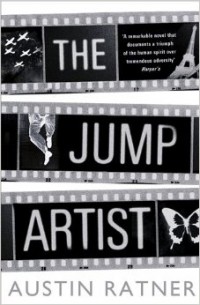
the jump artistThe Jump Artist
by Austin Ratner

Although I knew that this novel was based on a true story, it was only in the last few pages that I realised I knew a little of its subject, Philippe Halsman, and his famous photographs. Which was perhaps for the best, because it meant that the story was new to me. But I don’t think it would matter if you already knew the story, because the writing is by far good enough to keep you enraptured.

The story begins with Philippe and his father on a walking holiday in the Austrian Alps in 1928. By the end of the day Philippe has been accused of murder and his subsequent trial and retrial reverberate throughout the world’s press. Halsman was a Latvian Jew, an intense, brooding, depressive man in a bewildering world of anti-Semites. Great thinkers of the day, including Albert Einstein, Thomas Mann and Sigmund Freud spoke up on his behalf and he later became a celebrity photographer, but the murder and the imprisonment could never be struck from Halsman’s memory.

Ratner has done an excellent job of combining extensive research, with extracts from diaries, newspapers and other first-hand sources throughout the text, and yet he has still created a living breathing character in Halsman. He is not even a sympathetic character, at least not at first, though considering the seemingly hopeless situation you can forgive him for the flights of crazy. He self-harms, invents methods of self-punishment including starvation, and disappears into his own dark dark world of death and guilt and shame. Extracts from Halsman’s letters from prison reveal his slightly scary intensity and Ratner captures this in his own prose:

“When he’d seen Winged Victory on the Daru staircase at the Louvre, Papa and Mama and Liouba had had to leave him behind to go see the Persian friezes. He’d soaked up the pleasure of it in his eyes for more than an hour, and when he looked at his face in the mirror at the hotel, his eyes were wrecked with burst vessels.”

Despite this dark central character, and indeed the dark times covered, from 1920s Austria to 1930s Paris and the great exodus of 1940, this book didn’t depress me. In fact, the one time I cried it was at a beautiful moment of humanity. I was so engrossed that I powered straight through in just a couple of sittings, and then wished that I had lingered over it, savoured the often exquisite language:

“They’d been up at 5:30 that very morning and vaulted up the Schönbichlerhorn into its frigid airless winds, had their retinas oxidized in the ether, and their hands seared on the snow and the flint rocks, hot as sunburned metal. They had broken themselves on the mountain and been baptized there above the timber line at the top of the world, where the river of air meets the river of fire.”

In later chapters, I loved the descriptions of Halsman taking photographs and could often picture the finished result from Ratner’s description. From tentative beginnings, Halsman finally finds confidence and artistry in photography and Ratner evokes a believably troubled but brilliant man.

I am not sure why, after this was published to great acclaim in the US in 2009, it took three years to find a UK publisher, but I am really glad that it now has.

This book was kindly sent to me by the publisher in return for an honest review.

First published in the USA in 2009 by Bellevue Literary Press.
Winner of the 2010 Sami Rohr Prize for Jewish Literature.
Published in Great Britain in 2012 by Viking, an imprint of Penguin Books.

Kate Gardner Reviews

Posts pagination

1 … 94 95 96 … 124

Archives

RSS Nose in a book

  • Book review: Christopher and His Kind 1929–1939 by Christopher Isherwood
  • March 2026 reading round-up
  • Book review: We Have Always Lived in the Castle by Shirley Jackson

Me on the internets

  • @kate_in_a_book@mas.to (Mastodon)
  • Flickr/noseinabook
  • Instagram/kate_in_a_book
  • StoryGraph/kate_in_a_book

Categories

  • Blog
  • Reviews
  • Uncategorized
Proudly powered by WordPress | Theme: Dream by vsFish.