Nose in a book

Reviews and other ramblings

  • Home
  • Reviews archive
    • Book reviews
    • TV reviews
    • Theatre reviews
  • TBR
  • Challenges
    • The Classics Club
    • 2014 Popular-Science Reading Challenge
    • Cookery challenge
    • The Gilmore Girls Reading Challenge
    • 2013 TBR Pile Challenge
    • 2013 Translation Challenge
    • Crime and Punishment read-a-long
  • About
    • Cookie legal stuff

Easter read-a-thon: Ready? Set?

March 28, 2013 6 Comments

Easter Read-a-thon with Nose in a book

Just a quick reminder to anyone who’s interested that I’m doing an Easter read-a-thon, from Friday morning to Monday evening (ish), and anyone is welcome to join me. I hesitate to say I’m hosting it because I’m not doing any fancy linky or giveaway business but if you want to join in, feel free to add a link in the comments and I’ll come and cheerlead for you at some point!

In a foolhardy moment I gave Tim first pick on what I should read this weekend, which has resulted in a slightly odd combination of books from the TBR. I’m not necessarily going to stick to this pile. Maybe I’ll consider it the starting point. Really, this weekend is all about reading just for fun, so if a book starts to feel like hard work I will probably put it down and come back to it another time.

Read-a-thon

The sort-of shortlist is:
Dead Air by Iain Banks
The Perks of Being a Wallflower by Stephen Chbosky
Claudine and Annie by Colette
Room by Emma Donoghue
Small Hands by Susan Hill
Hell’s Angels by Hunter S Thompson

But what to start with? I may have to roll a die. Handily that list is six long…

Happy Easter and happy reading!

Kate Gardner Blog

Cookery challenge #2

March 28, 2013 1 Comment

Leon Book 3

LEON book 3: Baking & Puddings
by Claire Ptak and Henry Dimbleby

Bet you thought I’d forgotten this challenge, huh? It was never really forgotten, but I have completely failed for too long to make time for it. However, in celebration of Easter I thought I’d do a little baking.

This is actually one of the books that inspired the challenge, because about a year ago we bought a set of three gorgeous LEON cookbooks, which we pored over all the time but didn’t use.

Well, in the past couple of months I have used the third book in the set, this one on baking, three times. I have made cranberry and oat cookies, honey bread and simnel cake. I seem to keep picking recipes that include lots of awkward ingredients and adapting them quite a lot to fit what I have available or can buy from the corner shop, but all three experiments have been successful. Possibly not great looking (I figure that’s a skill I’d develop if I baked more often than once a month) but definitely tasty.

The books are artistically beautiful, with quite a lot of frontis material on baking techniques or ingredient groups. Most recipes are prefaced with a brief story about their origin, with several staff of the LEON restaurant chain featured heavily. Seeing as it’s their healthy fast food that initially attracted us, I shall have to crack open the main meals book at some point.

Leon simnel cake

Kate Gardner Blog

Life had no before and after

March 27, 2013 1 Comment

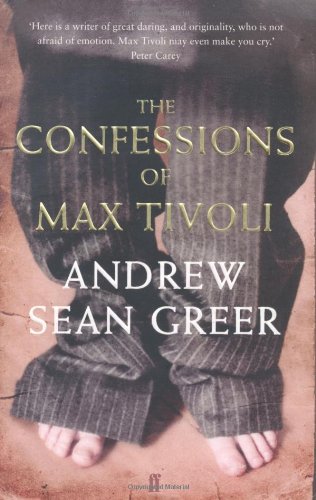
The Confessions of Max Tivoli

The Confessions of Max Tivoli
by Andrew Sean Greer

This odd book has sat on my shelves for years unread but finally, after enjoying a couple of his short stories, I decided to give this a go. It’s a beautifully written book but it didn’t entirely engage me.

The story is that of Max Tivoli, born with the appearance of an old man in his 70s and ageing backwards over the years. In a sort of magical realism moment, no explanation is given for how that birth could possibly have worked, especially considering his mother survives it, but after that it takes the tack that Max has a condition that no-one will understand, though perhaps a handful of other people might have it. So for most of his early childhood he is hidden away, with a series of nurses brought to the house to look after him. Once he is old enough mentally to get away with it, he agrees his mother to always act the age he appears. And in time-honoured tradition, it is really only when he disobeys this mantra of his mother’s that things go wrong for him.

“I could never write a true history of my childhood, because everything happened before I knew what time was…Life had no before and after, was not yet strung upon a thread, and thus cannot be brought out from the drawer intact.”

Max is a largely unsympathetic main character, though obviously he has reasons for being how he is – selfish and stubborn – and perhaps the book is more interesting that way than if he had been a good person who sacrificed himself every time his medical condition got in the way of someone else’s happiness. But as the story is narrated by him in slightly dense prose, I found that to be a lot of time spent in the mind of someone I found unpleasant.

The conceit is an interesting one. Max is writing the story of his life as an old man with the appearance of a 12-year-old boy. He is now facing perhaps the most difficult part of his life – receding into a small child’s and then a baby’s body, and he does not know quite how it will end. So he is writing his confession, frequently addressing other characters in the story who he hopes will read it.

“This morning you were the ink monitor and soberly filled our clay inkwells to their brims before gaily dropping a tiny frog into mine. Until it perished, gagging on the lampblack, the creature left a leaping pattern across my lesson book so exquisite – a hail of dark roses falling from the sky – that I will try to place it here in this memoir as the only evidence that I am not lying.”

Though Greer does not attempt at all to make this science fiction, he does address the physical and emotional challenges of Max’s life in some detail. Which is at times disturbing, as it should be.

In a purely practical vein, I can see that the historical setting (from San Francisco in 1871 to a small Mid-West town in 1930) was necessary because a modern-day version of this story would be so much harder, what with widespread photography and needing to show ID for everything. At the very least it would have been more of a story on the run from authorities. Whereas the historical setting allows Max to spend most of his life in one city. And it also gives Greer the option to pick which historical events intrude into Max’s life.

Despite the highly unusual premise there were some clichés, and plot turns that were phrased as though they were intended as revelations but did not surprise me for a second. Was that actually the intention or a failure of plotting? It’s hard to tell. Perhaps it was intended to show that even Max’s extraordinary life is subject to the same banal basic needs as everyone else’s.

“We all hate what we become. I’m not the only one…I have seen men back from war, squinting at themselves in shop windows as they feel their skull beneath their skin. They thought they would shed the worst of youth and gain the best of age, but time drifted over them, sand-burying their old hopes. Mine is a very different story, but it all turns out the same.”

As for secondary characters – Max’s mother features very little despite her being so central to his survival. Again, I can see that this might be a deliberate device, showing how little Max thinks of his poor ever-sacrificing mother. Max’s best friend Hughie is wonderful, even if he is the subject of some of the worst clichés in the story. But even he and Alice, the love of Max’s life, really aren’t fleshed out fully. And you can go on filing that under Max’s narration and his character flaw of being selfish and not really trying to understand other people, but there should have been a way to let them come to life.

It’s certainly not a bad book by any means. It was a slow, thoughtful read and really moved me at the end. I’m glad I finally picked it up. I will certainly check out Greer’s other novel The Story of a Marriage, which got a lot of positive noises a couple of years ago.

Published 2004 by Faber and Faber.

Source: I think this was a freebie from an old job. It’s been sat on my shelves a long time.

Challenges: I read this for the 2013 TBR Pile Challenge.

Kate Gardner Reviews

Sunday Salon: Easter read-a-thon anyone?

March 24, 2013March 24, 2013 12 Comments

The Sunday Salon

Lately I seem to have spent a lot of my free time planning various holidays, which has got me thinking about what makes the perfect holiday. The thing is, my favourite way to relax is with a book, but when it comes to holidays I always want to go somewhere new, to see and learn new things, which tends not to leave masses of time for reading, or really relaxing.

If I could take longer holidays, of course that wouldn’t be a problem, we could go somewhere long enough to sightsee and have whole days off reading. But being average folks who can usually only take a week off work at a time, we’re trying to figure out where we can go with enough amenities so we have food choices and some culture, plus beautiful surroundings so that if we do take a few days to chill and read, we can call it enjoying the beauty around us. I’m thinking maybe lakeside?

But in case we do plump for an action-packed city break later in the year, I figure I should make the most of any empty weekends at home to do lots of reading from the comfort of my sofa. Now as it happens, over Easter I have six days off work and plans on only two of those days. And Tim’s busy for most of the weekend, so that leaves me a lot of free time.

Easter Read-a-thon with Nose in a book

Which gave me a brilliant idea – an Easter read-a-thon! Okay, it wasn’t strictly my own idea. The primary school I volunteer at once a week issued a challenge to the kids to read six books over the Easter holiday. Now, they have two weeks, whereas I have four days, but I still think I can meet the challenge. Anyone want to join me?

I’m not going to set any rules, this is strictly for fun. But if you want to join in, feel free to use my button and have a fun weekend of reading. I’ll blog later in the week with my choice of books to tackle.

Yay, Easter read-a-thon!

NB The button was made using a Creative Commons photo by Ian Britton/freefotouk and a bit of fiddling in Photoshop.

Kate Gardner Blog

Crime and Punishment read-a-long weeks 6 and 7

March 22, 2013March 22, 2013

Read-a-long

The Crime and Punishment read-a-long is hosted by Wallace over at Unputdownables. In weeks six and seven we read from part 3, chapter 4 to the end of part 4 chapter 4. The official discussion posts are over at Unputdownables.

We’re now more than halfway through! And I read all of this week’s allotted chapters in a single sitting, so it might just be getting…compelling?

Unavoidably, this discussion will contain spoilers, so only read on if you don’t mind/have already read this far (or further).

I loved the conversation between Ras and Porfiry. Their discussion of Ras’ article about “extraordinary” people was full of fantastic quickfire wit and humour. I’m still torn as to whether Ras considers himself extraordinary, or perhaps did consider himself extraordinary until he tried to be and failed? Or if he knew all along he wasn’t and accepts that his crime was just that. But was this lucid period too much for Ras? He immediately sinks back into a bad state.

“‘Any man who has [a conscience] must suffer if he is conscious of error. That is his punishment – in addition to hard labour.’
…’But the real geniuses, those to whom you have granted the right to kill, ought surely not to suffer at all, even for the spilling of blood?’
…’There is no question either of permitting or of forbidding it. Let them suffer, if they feel pity for the victims. Suffering and pain are always obligatory on those of wide intellect and profound feeling. Truly great men must, I think, experience great sorrow on the earth,’ he added, suddenly thoughtful, as though to himself.”

Ooh, the stranger who calls Ras a murderer – considering all the references to ghosts in the following few chapters, was Ras just seeing things? Or is there really another character to be added to the cast list?

And what about Svidrigaylov? Was the imminent journey he referred to death? That was my immediate assumption.

Is it honourable of Ras to break off from his mother and sister and leave them in Raz’s care? I thought so. Raz has a plan, they have money coming; association with Ras will only bring problems and pain.

“I myself am, perhaps, even worse and viler than the louse I killed, and I knew beforehand that I should tell myself so after I had killed her! Can anything compare with such horror? Oh platitudes! What baseness!”

Now, Ras seems to be on the verge of something. Confession? Suicide? His conversation with Sonya veers wildly between compassion and complete lack of it, like he’s studying her to write an academic paper.

Kate Gardner Blog

Recent reads in brief

March 18, 2013March 18, 2013 2 Comments

My lupus has been flaring, just a little, not enough to knock me out completely or even stop me reading completely, but enough to make my brain go blank when I try to write a review. So here are some short reviewettes of the books I’ve been reading.

Portrait Of The Mother As A Young Woman

Portrait of the Mother as a Young Woman
by Friedrich Christian Delius
translated from German by Jamie Bulloch

I had noticed for some time a growing number of glowing reviews for the books from Peirene Press, so earlier this year I ordered their Female Voice Series. This book is at once simple and highly experimental. A young German woman is living in Rome in 1943, waiting for her husband to return from the North African front. She is heavily pregnant and being cared for by nuns. The story follows her as she walks to a Bach concert at the Lutheran church and, once there, is transported by the music. That’s it. But it’s beautiful. Told in one long sentence, broken into paragraphs that work almost like the stanzas of a poem, her thoughts unreel. She ponders the sights of this foreign city, fear for her husband, faith in God, the contradictions of war and society in general, the possibilities of the future. She considers herself shy and uneducated but asks intelligent questions, questions she would only ever dare voice to her husband, if only he were there. A really excellent book and a great introduction to this new (to me) publisher.

“she sensed something within her rebelling against the constant obligation to stifle the feeling of longing with her reason and faith, because feelings were forbidden in wartime, you were not allowed to rejoice with happiness, you had to swallow your sadness, and like a soldier you were forced to conceal the language of the heart,”

Bildnis der mutter als junge frau published 2006 by Rowohlt.
This translation published 2010 by Peirene Press.

Source: I bought this direct from the publisher.

Challenges: This counts toward the 2013 Translation Challenge.

My Sister’s Keeper
by Jodi Picoult

This was a much better book than I expected. I thought it would be an easy, fluffy, light read. Well it was easy to read but certainly not the other two. It’s the story of a family whose second child, Kate, has a rare form of leukaemia. When her brother Jesse proves not to be a bone marrow match, the parents conceive another child, using IVF so that they can ensure a match this time. And so Anna is born. Every few years Kate’s leukaemia returns and Anna is again called upon to save her sister’s life. The story begins with 13-year-old Anna asking a lawyer to medically emancipate her from her parents, so that she won’t have to donate a kidney to her dying sister. Despite the emotionally charged background to the story, the book isn’t emotionally overwrought, in fact it’s often funny. But it thoughtfully considers all the options, all the situations this family has been through. Crucially they all have lives beyond this current drama, and the yo-yoing loyalties are absolutely believable. I was gripped and empathised with all the characters.

“This is not Anna. I am used to struggling with Jesse, to lightening Kate’s load; but Anna is our family’s constant. Anna comes in with a smile. Anna tells us about the robin she found with a broken wing and a blush on its cheek; or about the mother she saw at Wal-Mart with not one but two sets of twins. Anna gives us a backbeat, and seeing her sitting there unresponsive makes me realize that silence has a sound.”

Published 2004 by Simon & Schuster in the US, Hodder & Stoughton in the UK.

Source: I bought it secondhand.

Challenges: This counts towards the Rory Gilmore Reading Challenge.

The QI Book of the Dead
by John Lloyd and John Mitchinson

For those who don’t know, QI is a TV quiz show presented by Stephen Fry in which the celebrity teams have to come up with Quite Interesting answers. A whole raft of books have been published as an offshoot. This one is a series of vignettes about interesting dead people. They are grouped by topic (“Happy-go-lucky”, “Driven”, “Monkey keepers”, etc) and each person gets just 5–10 pages to have their life story told (and with more than 400 pages total that’s a lot of dead people). They’re a good mix of famous and not famous, though most were famous in their own lifetime. Often it’s the ones who have been forgotten with time that make the best reading. The book definitely lives up to its Quite Interesting label but it’s not one to read all at once. This perfectly suits dipping in and out of, reading 10 minutes at a time over a few months. The downside of this is that I’ve forgotten half the characters I swore I would look up to learn more about after John and John had whet my appetite.

“The establishment saw [Jeremy] Bentham as deeply dangerous. His ‘algebra of utility’ seemed to eat like an acid through centuries of accumulated privilege and injustice. He opposed slavery, and both capital and corporal punishment; he believed in equal rights for women, and for animals; he called for the decriminalising of homosexuality; he praised free trade and the freedom of the press; he supported the right to divorce and urged the separation of church and state. Most of what we now call liberalism can be traced back to Bentham.”

Published 2009 by Faber and Faber.

Source: A Christmas present from my brother a few years back.

Kate Gardner Reviews

Sunday Salon: Short stories

March 17, 2013March 16, 2013 3 Comments

The Sunday Salon

I know, I know, it’s been months since I posted in the Sunday Salon. How are you all? What have you been up to? Me? I’ve been busy, but not with as much reading as I’d like. This week I have been thinking about short stories.

Every so often Tim has to go to America for work, usually at the last minute. One of the few advantages of this (besides getting complete control of the TV while he’s away) is that he brings me back the New Yorker, which I really love but can’t quite justify paying the international subscription price when what I’m really after is the weekly short story. They get the greatest writers in the world. Every week.

New Yorker

On the back of my recent treat of not one but two New Yorkers, I was browsing the website and spotted the fiction podcast. Oh man, this is the most amazing discovery. Once a month a writer picks a short story from the New Yorker archives, reads it aloud and discusses it a little. It’s an amazing resource. This week I have listened to “Symbols and signs” by Vladimir Nabokov, “The lottery” by Shirley Jackson and “Playing with dynamite” by John Updike.

I am not normally great at listening to audio books but a 20-minute story fits nicely into my commute and it’s a really good way to try some of the many authors I have heard praised but not read myself yet.

Do you read short stories outside of book compilations of them? Where do you read them? Do you subscribe to any fiction magazines?

Kate Gardner Blog

Conflict has consequences, always

March 12, 2013 2 Comments

Saga

Saga volume 1
by Brian K Vaughan (story) and Fiona Staples (artwork)

This was a bit of an impulse buy on a recent trip to the comic shop and I am so glad I grabbed it. Vaughan completely lives up to the promise of Y: the Last Man and I’m both annoyed and excited that I am in on the new series from the start, as it will probably go on for years.

From science fiction and gender politics, Vaughan has moved into fantasy and racial politics, though there’s still some SF in there for good measure. The story opens with a baby being born to a mother with wings (Alana) and a father with horns and some magical ability (Marko). Almost immediately, soldiers burst in and the new family narrowly escapes with their lives. Why are they on the run? And can they possibly keep their newborn child safe?

Well, it appears that an age-old war between a planet and its moon has spread across the whole star system. Various other races have been drawn into the fight, being forced to take sides, while some individuals work as freelancers for the highest bidder. Alana and Marko were both soldiers who fell in love and vowed to give up fighting – which makes them deserters and, as far as most people are concerned, freaks.

There are some fantastic secondary characters, including the baby, who narrates the whole thing from some future point. There’s also freelancer The Will and his sidekick Lying Cat, which is a giant fearsome cat that can detect whether someone is lying. The Will appears to be a nasty piece of work at first but then a visit to Sextillion – a crazy giant brothel that caters to every desire – introduces an intriguing twist. I loved the detail that Prince Robot IV just wants to stay home and start a family with his wife after a gruelling two-year tour of duty, but his dad insists he go out and personally handle the Alana problem. And this book has the most crazy-ass ghosts I’ve ever come across in fiction.

The artwork is excellent, if a little graphic in places (no pun intended). But most importantly (to me) it’s well written. I’m not a great fan of war as a setting but this book looks past the big battles at some of the individuals involved, and does it with humour and pathos.

“They weren’t my men, Marko, they were trigger-happy assholes who got what was coming to them. Besides, I stepped in before you could do anything you’d regret.”
“Then how come it feels like I’ve just gotten us cursed?”
“Why, because you violated some personal pledge against hurting awful people?”
“My reluctance to use force isn’t ideological, it’s practical. Violence is stupid. Even as a last resort, it only ever begets more of the same. Conflict has consequences, always. Sooner or later, our family will pay for what happened today.”
“Ehn, so the guy whose hand you lopped off comes after us with a hook in 20 years. Add him to the list.”

I’m not sure I can place my finger on exactly what I loved about this book. If I described the plot in more detail it would sound ridiculous. But maybe that’s exactly it. Or maybe it’s the good old combination of well drawn characters, setting, plot and sub-plots with just the right level of pace and potential. Whatever, I’m in.

Published 2013 by Image Comics.

Source: I bought it for myself at our local comic shop.

Kate Gardner Reviews

Crime and Punishment read-a-long weeks 4 and 5

March 9, 2013

read-a-long-plain-001

The Crime and Punishment read-a-long is hosted by Wallace over at Unputdownables. In weeks four and five we read from part 2, chapter 5 to the end of part 3 chapter 3. The official discussion posts are over at Unputdownables.

As always, this discussion will contain spoilers, so only read on if you don’t mind/have already read this far (or further).

So Raskolnikov’s friends have become much more interesting, complicated characters. Razumikhin in particular has adorable puppy love for Dunya and gives a great rambling drunken speech about lying:

“Do you think I am annoyed because they talk nonsense? Rubbish! I like people to talk nonsense. It is man’s unique privilege, among all other organisms. By pursuing falsehood you will arrive at the truth! The fact that I am in error shows that I am human. You will not attain to one single truth until you have produced at least 14 false theories…You can talk the most mistaken rubbish to me, and if it is your own, I will embrace you! It is almost better to tell your own lies than somebody else’s truth; in the first case you are a man, in the second you are no better than a parrot!”

Raskolnikov, after weeks of being an ass to his friends and family, showing kindness only to strangers, has now suddenly apologised for his behaviour. Is he being sincere? The narration suggests not:

“‘You’re in a very sentimental mood today, aren’t you?’ exclaimed Razumikhin. If he had had more penetration he would have seen that it was very far from being a sentimental mood, but something like the very opposite. But Avdotya Romanovna noticed it. Her eyes followed her brother with anxious attention.”

But what he is finally sounding like is the intelligent law student we had been told he was. Certainly his honesty is still questionable (though in the light of Raz’s speech above, can he perhaps be lying for the right reasons?) but his delirious state has passed, if indeed it was ever as bad as his friends thought it was. Interestingly his mother and sister are afraid of him and he knows it and even confronts them about it. Is it just the memory of seeing him delirious that scares them or is there something basic in his character that they know to be afraid of?

Kate Gardner Blog

The sadness and loneliness of death

March 8, 2013March 12, 2013 1 Comment

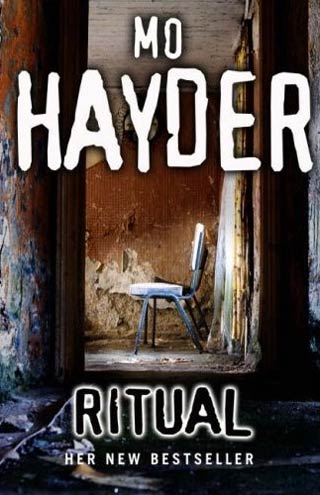
Ritual

Ritual
by Mo Hayder

Many moons ago I blogged about the lack of books set in Bristol and a couple of people pointed to Hayder as an author who has set multiple novels here. Crime series don’t tend to be my bag but that’s a combination of prejudice and unwillingness to get sucked into something that makes me add another 20 books to my TBR. Crime books have a history of strong settings so I decided to give this one a go.

This isn’t actually the first book in the series, but it’s the first one set in Bristol. Hayder’s hero policeman Jack Caffery has moved from London to the West Country, just a few weeks before the novel begins. However, the real central character in this book is Sergeant “Flea” Marley, a police diver whose personal life is a bit of a mess. She’s interesting, though perhaps loaded with a few too many foibles. But by the end of the story I really liked her and found myself hoping she’s a major part of the next few books as well. So does that mean I have become a fan of the series?

Well, yes and no. The early chapters suffer a little from a habit of describing physical appearance a bit too much, or maybe too cheesily or clunkily. It was made abundantly clear from the start that Hayder was setting up a physical attraction between Flea and Jack that, in tried and tested fashion, begins with mutual dislike/distrust.

“She had something kind of kinetic about her, something in her face that suggested her thoughts didn’t stay still for long. He hated the way he’d noticed these things about her…He hated the way he’d wanted to leave, because suddenly all he could feel was his body.”

But another apparent flaw, one that had me quite annoyed for a few days, turned out to be a prejudice of certain characters that was suddenly turned around and dealt with eloquently towards the end of the story. I can’t really explain more than that without giving away major plot points, and I am torn as to whether it shows skill or lack of it that it took so long for it to become clear that the prejudice wasn’t Hayder’s own.

But back to the plot. The story opens with Flea diving for a hand in Bristol Harbour, after someone called the police claiming to have seen one. There’s a lot of discussion about the scenarios that might lead to a severed hand being found without a body in that particular spot. Descriptions of water flow from various sources, not to mention where corpses tend to come from, seemed detailed and accurate without being at all boring. In fact one of the novel’s strengths for me was the realism of the police procedures and conversations. I completely believed in those scenes of police work, even if only Flea and Jack ever got to have the limelight.

“It wasn’t the first, nor would it be the last body part she would fish out of the mud around Bristol, and except for what it said about the sadness and loneliness of death, usually a severed hand wasn’t remarkable…Only she, Dundas and the CSM knew that this hand wasn’t commonplace at all.”

One hand becomes a pair of hands and they are quickly linked to a South African witchcraft ritual in a plot that seems at first highly unlikely before eventually becoming cleverer and darker than I had expected. There are plenty of red herrings thrown in, some a little more contrived than others, but arguably it was less of a whodunit and more of a “will the police figure it out in time?”.

It was a fairly easy, enjoyable read. It’s not great literature and I’m not in a big rush to pick up the next book but I do want to read it. Not just for the Bristol setting, either, although that was done pretty well.

Published 2008 by Bantam Press, a division of Transworld.

Source: Borrowed from a friend.

Kate Gardner Reviews

Posts pagination

1 … 88 89 90 … 126

Archives

RSS feed: Nose in a book Nose in a book

  • Book review: Taiwan Travelogue by Yáng Shuāng-zǐ
  • October 2026 reading round-up
  • Book review: The Coral Bones by E J Swift

Me on the internets

  • @kate_in_a_book@mas.to (Mastodon)
  • Flickr/noseinabook
  • Instagram/kate_in_a_book
  • StoryGraph/kate_in_a_book

Categories

  • Blog
  • Reviews
  • Uncategorized
  • © Copyright Kate Gardner. All rights reserved.
Proudly powered by WordPress | Theme: Dream by vsFish.