Nose in a book

Reviews and other ramblings

  • Home
  • Reviews archive
    • Book reviews
    • TV reviews
    • Theatre reviews
  • TBR
  • Challenges
    • The Classics Club
    • 2014 Popular-Science Reading Challenge
    • Cookery challenge
    • The Gilmore Girls Reading Challenge
    • 2013 TBR Pile Challenge
    • 2013 Translation Challenge
    • Crime and Punishment read-a-long
  • About
    • Cookie legal stuff

It burned through cities like fire

August 22, 2013August 22, 2013

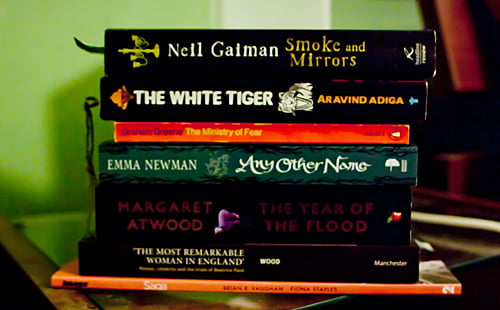
Year of the Flood

The Year of the Flood
by Margaret Atwood

This is the second book in Atwood’s trilogy that began with Oryx and Crake and will conclude with Maddaddam, out next week. I suspect you don’t need to have read Oryx and Crake to enjoy this book, but that said I did really love spotting all the connections before they became explicit.

The story follows two women who, separately, have lived through the “Waterless Flood”, some form of apocalypse that has left both women struggling to survive and wondering if they are the only human left alive. So far, so much like Oryx and Crake, but unlike that book’s hero, these women are not going mad and their memories are more coherent.

“In the night there are the usual noises: the faraway barking of dogs, the tittering of mice, the water-pipe notes of the crickets, the occasional grumph of a frog. The blood rushing in her ears: katoush, katoush, katoush. A heavy broom sweeping dry leaves.
‘Go to sleep,’ she says out loud. But she never sleeps well, not since she’s been alone.”

Ren is an exotic dancer trapped in the high-end sex club she worked in. Toby has created a rooftop garden on her former workplace, safely away from the prowling animals out to steal her food. Both women used to belong to God’s Gardeners, a group of outsiders who strove to heal the planet through vegetarian self-sufficiency and reuse/recycling. Pretty much hippies, but in the name of religion and at a time when the Earth depicted is far along the road to destruction, the two being linked by the fear of an imminent tipping point when human society will collapse – the Waterless Flood.

“This was the Waterless Flood the Gardeners had so often warned about. It had all the signs: it travelled through the air as if on wings, it burned through cities like fire, spreading germ-ridden mobs, terror, and butchery…It looked like total breakdown, which was why she’d needed the rifle.”

I wasn’t sure at first where I was in the timeline as compared with Oryx and Crake but it comes together, in fact more so than I had expected. Of course this means many of the issues dealt with are the same or similar, but I felt that The Year of the Flood was far more emotionally engaging. Maybe I connected better with Ren and Toby than I did with Snowman, or maybe the overall storyline cut closer to issues I care about – this book really did put the emphasis on the environmental angle rather than the bioengineering and I know I said in my review of Oryx and Crake that that could get preachy but actually it did the opposite – it made it all more real.

“It’s daybreak. The break of day. Toby turns this word over: break, broke, broken. What breaks in daylight? Is it the night? Is it the sun, cracked in two by the horizon like an egg, spilling out light?”

I think I also liked that most of the characters in this book really cared about things, rather than floating through the world. I know both types of people exist and are equally capable of good or bad but I am a carer, so I guess I empathise better with characters who care. I even forgave them all the God stuff (which was in any case heavily loaded with irony in places) because, after all, facing imminent apocalypse who knows what I’d turn to?

I found this a thrilling, wonderful read and I’m really looking forward to Maddadam and to hearing Atwood talk about all three books in Bristol next week.

Published 2009 by Bloomsbury.

Source: I bought it from Waterstones.
Kate Gardner Reviews

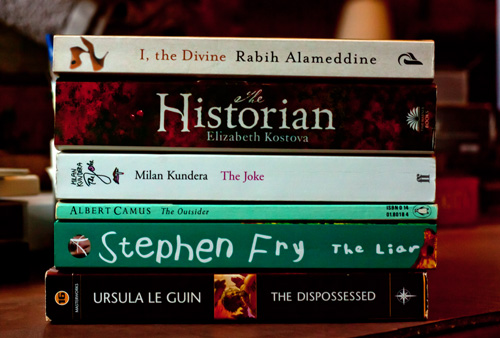
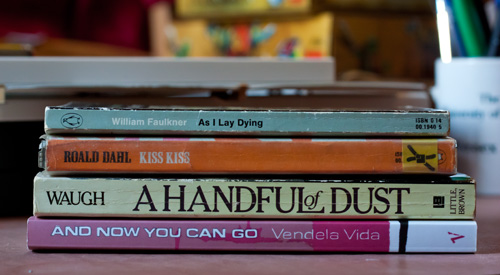
Book spine poetry

August 20, 2013 2 Comments

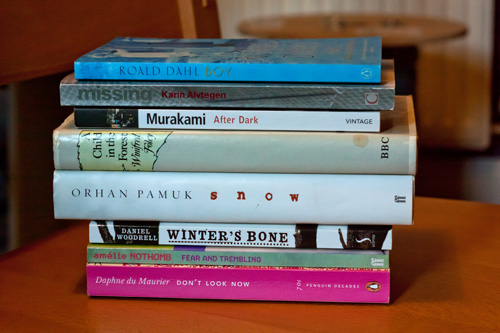
I know, I know, book spine poetry was big back in 2011. But I didn’t get round to it back then and I had a sudden urge to have a go, so here are my rudimentary attempts.

Poem one

Boy missing, after dark
A child in the forest
Snow, winter’s bone
Fear and trembling
Don’t look now

Poem two

I, the divine,
The historian, the joke,
The outsider, the liar,
The dispossessed

Poem three

As I lay dying
Kiss kiss
A handful of dust
And now you can go

So have you ever tried creating poetry from book titles? Please do share links to yours or your favourites from other people.

Kate Gardner Blog

The story of a poor man’s life is written on his body, in a sharp pen

August 16, 2013August 16, 2013 3 Comments

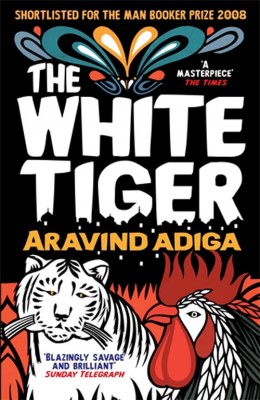
The White Tiger

The White Tiger
by Aravind Adiga

This book looked like a fun read that would be something a bit different, and that’s pretty much exactly what it was. I enjoyed it greatly but in the week since I finished it, it hasn’t really stayed with me.

The style is initially surprising and unusual. The story is written in the form of letters addressed to Chinese premier Wen Jiabao from Balram Halwai, a self-proclaimed entrepreneur from a very poor background. Balram wants to tell his life story, beginning with how he got the nickname White Tiger and up to how he is wanted by the police. Through this device, Adiga exposes the state of India, or his opinion of the state of India, at any rate. And it’s not a particularly favourable opinion.

“It is an ancient and venerated custom of people in my country to start a story by praying to a Higher Power. I guess, Your Excellency, that I too should start off by kissing some god’s arse. Which god’s arse, though? There are so many choices. See, the Muslims have one god. The Christians have three gods. And we Hindus have 36,000,000 gods…Bear with me, Mr Jiabao. This could take a while. How quickly do you think you could kiss 36,000,004 arses?”

This was my pick for book club and from our discussion it looks like I thought there was more to it than the others did. There was a general feeling that the characters were a bit thin, and the overall tale a bit preachy and lacking in shades of grey (though I should note everyone found it funny and enjoyable). I must say I didn’t find it preachy but I’ll allow that it definitely had a message about class and poverty in India. And it’s certainly not subtle either – the humour is savage and the reality that is revealed is shocking.

Balram has a theory that the poor in India are in a chicken coop. Most of them accept this and stay within the bounds of the coop, but those who do try to escape are quickly shoved back in their place. It takes something extraordinary for anyone to escape the coop. He of course is one of the extraordinary (the only escapee we meet in this tale) but he freely accepts that the method he employed to escape is extreme.

“A rich man’s body is like a premium cotton pillow, white and soft and blank. Ours are different. My father’s spine was a knotted rope…cuts and nicks and scars, like little whip marks in his flesh, ran down his chest and waist, reaching down below his hipbones into his buttocks. The story of a poor man’s life is written on his body, in a sharp pen.”

Balram is a genuinely funny narrator. Since being told that he is as rare as a white tiger when he was the smartest kid in school, he has had ideas above his station. He’s also selfish, objecting to his grandmother’s repeated requests that he share his earnings with his family. He talks through his life, from working in a tea shop in a small village, to being a rich man’s driver in Delhi, to being a businessman in Bangalore. He reveals early on that he has done something shocking, so that most of the book is the answer to the question why and how.

“In the belief that the future of the world lies with the yellow man and the brown man now that our erstwhile master, the white-skinned man, has wasted himself through buggery, mobile phone usage and drug abuse, I offer to tell you, free of charge, the truth about Bangalore.”

This is not a book for those who want a subtle exploration of how modern India operates, or if you want a wide-reaching study of Indian society. It is a funny, easy-to-read, fast-paced window opened just a crack onto a version of reality. I genuinely enjoyed it and even learned a few things but I can’t say that it changed my view of the world or stunned me with its language. Not every book can do that.

Published 2008 by Atlantic Books.
Winner of the 2008 Booker Prize.

Source: A book swap.

Challenges: This counts towards the 2013 TBR Pile Challenge

Kate Gardner Reviews

It wasn’t courage that freed him from fear so much as loneliness

August 13, 2013September 7, 2013

The Ministry of Fear

The Ministry of Fear
by Graham Greene

Once upon a time I read a couple of Graham Greene books and really enjoyed them, then I promptly forgot about him as an author. Fast-forward several years and I have finally come back to him thanks to Simon of Savidge Reads, who is running a challenge called Greene for Gran,in honour of his recently departed grandmother, as Greene was her favourite author. It’s such a nice way to pay respect to someone for whom books were important.

This book has one of the greatest opening chapters I have read in a long time. Arthur Rowe goes to a vicarage fête, which sounds like a pretty dull unpromising beginning, but not so. For starters it’s in London during the Blitz, so there’s immediately a surreal atmosphere surrounding the attempt at normality, with some dark humour about the limited prizes on offer. But even beyond this, there are sinister undertones, foreshadowing the shadowy spy novel that this is going to turn into.

“There was something about a fête which drew Arthur Rowe irresistibly, bound him a helpless victim to the distant blare of the band and the knock-knock of wooden balls against coconuts. Of course this year there were no coconuts because there was a war on; you could tell that too from the untidy gaps between the Bloomsbury houses.”

Arthur wins a cake, but there appears to have been some mistake, and first a series of people try to get the cake off him, then mysterious forces appear to be coming after him. It all seems a bit farcical at first, but never annoyingly so. The humour always has a dark undertone. The depiction of the Blitz is scarily believable (which makes sense for a book published in 1943) and the thriller elements genuinely had me on edge, but the book never gets too dark.

“‘Have another piece of cake?’ Rowe asked. He couldn’t help feeling sorry for the man: it wasn’t courage that freed him from fear so much as loneliness. ‘It may not be…’ he waited till the scream stopped and the bomb exploded – very near this time – ‘…much.’ They waited for a stick to drop, pounding a path towards them, but there were no more.”

Arthur is a great character. There is something bad in his past, which both explains why he is not fighting in the war and why he is how he is – saddened and distanced. I love that the back story is given in pieces, so for a long time we are left to wonder whether the bad thing in Arthur’s past was justified or not. (Incidentally, this part is completely given away in the blurb on the back of my copy, which thankfully I didn’t read before starting the book. Also, I’ve realised that my favourite passages, highlighted while I was reading, relate to this reveal, so I won’t quote them here.)

“Blast is an odd thing; it is just as likely to have the air of an embarrassing dream as of man’s serious vengeance on man, landing you naked in the street or exposing you in your bed or on your lavatory seat to your neighbour’s gaze.”

There is a big switch in pace halfway through the book and it shows how good a writer Greene was that he gets away with this. The one thing that doesn’t change, but just keeps building up throughout the book, is the fear. It’s so cleverly done, beginning with little more than a spine tingle of a warning at the vicarage fête.

I greatly enjoyed this book and am now eager to read the other Greene I had left sat on the TBR for too long – The Heart of the Matter.

Published 1943 by William Heinemann.

Source: I really don’t remember. I have a 1972 Penguin edition so it was clearly secondhand but there’s no pencil-written price or stickers anywhere that I can find. Charity shop?

See also: Simon’s review over at Savidge Reads.

Kate Gardner Reviews

Sunday Salon: Mooching

August 11, 2013 8 Comments

The Sunday Salon

I don’t know about you, but some weekends I just need to switch off and relax. But how I relax might mean different things at different times. For instance, I had planned to spend this weekend reading solidly, maybe even treat it like a read-a-thon with goals and a little stack of pre-selected books. But when the weekend rolled around I found that I needed something else. So I have read for maybe an hour or two total, but I have slept a lot, eaten good food, watched TV and films, listened to music, sat outside in the sunshine, laughed with friends and with Tim. And now I feel rejuvenated.

How do you relax? Do you need different types of down time?

Incidentally, this week is Bristol International Balloon Fiesta, so there’s been a lot of this:

Untitled

Plus the roar of various stunt planes overhead, the pounding bass of the music every evening, fireworks that we can just about see over the rooftops. It’s one of the things I love about this city.

And now that my brain is back online, I have a backlog of reviews to write, not to mention another Graham Greene book to read for Simon of Savidge Reads’ wonderful challenge Greene for Gran, in which he encouraged us all to read some Graham Greene in honour of his recently departed grandmother, as Greene was her favourite author. It’s such a lovely idea and great to be reminded how brilliant Greene was.

What are you up to this weekend? Have you rediscovered any authors lately?

Kate Gardner Blog

The mystery that shape-shifted at the edge of her senses

August 5, 2013

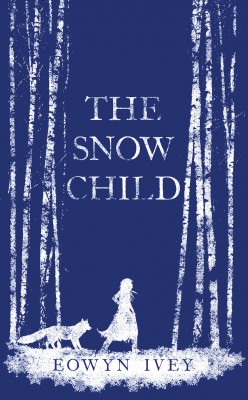
The Snow Child

The Snow Child
by Eowyn Ivey

This book was almost ruined for me by Book at Bedtime. The thing is, I love that Book at Bedtime exists, I do, but when a full-length novel is compressed into 10 15-minute segments, then necessarily a lot is cut out. A lot. (For comparison, the unabridged audio book of this is almost 11 hours.) I listened to The Snow Child on Book at Bedtime and thought ‘Huh. I don’t get the hype at all.’ And that was very nearly that.

I had read so many glowing reviews by fellow bloggers I usually share a taste in books with that I kept thinking that maybe I would give it another chance. Maybe. But I didn’t add it to my wishlist. So thank goodness I spotted it in a bookswap and decided to pick it up. From page one I was captivated.

“All her life she had believed in something more, in the mystery that shape-shifted at the edge of her senses. It was the flutter of moth wings on glass and the promise of river nymphs in the dappled creek beds. It was the smell of oak trees on the summer evening she fell in love, and the way dawn threw itself across a cow pond and turned the water to light.”

The story is adapted from the old Russian fairy tale “Snegurochka” and cleverly acknowledges this. Jack and Mabel are in their older middle age when they move to Alaska in the 1920s, looking for a fresh start. They cannot forget the sadness caused by their inability to have children and their marriage is fragile. Will the harshness of farming in Alaska heal them or break them?

“Words lay like granite boulders in her lap and when at last she spoke, each one was heavy and burdensome and all she could manage.”

The book opens at the start of their second Alaskan winter. Mabel is about ready to give up, Jack is seriously considering taking a very dangerous mining job that would take him away for most of the winter. Then the first snow falls and in a bittersweet scene of childlike play, the couple build a snowgirl. In the morning their snowgirl is gone and child-sized footsteps lead away from it. Are they just misreading the tracks in the snow? Did their snowgirl just get knocked down by a fox or other wild creature?

Perhaps, but at about that time they start seeing a small girl near their home, usually accompanied by a red fox, just like in the storybook Mabel remembers loving as a child, and she becomes convinced that they brought the girl to life with their desperate longing. The girl, Faina, slowly becomes a part of their lives. But is she real? Or is she, as Jack and Mabel’s (distant) neighbours George and Esther believe, a figment of their imaginations, a coping mechanism through the long lonely winter?

I like that the book provides realistic as well as magical explanations for everything that happens and never makes one more likely than the other. There is a definite fairytale feeling to the writing and yet it doesn’t shy away from the harshness of the Alaskan environment. Without ever getting repetitive or depressing, Ivey makes the cold and darkness of winter ever-present. But she also displays great love and respect for Alaska that I found enticing.

“A red fox darted among the fallen trees. It disappeared for a minute but popped up again, closer to the forest, running with its fluffy tail held low to the ground. It stopped and turned its head. For a moment its eyes locked with Jack’s, and there, in its narrowing golden irises, he saw the savagery of the place. Like he was staring wilderness itself straight in the eye.”

Just as I already knew the storyline before reading the book (which didn’t spoil it at all for me, though I’m still going to hold back from revealing any more of the story in this review) I also already knew, thanks to various reviews I’d read and an interview with Eowyn Ivey on The Readers, that whenever Faina speaks there are no speechmarks, for her or for the person speaking directly to her. But there are speechmarks everywhere else. This is a really clever way of maintaining the mystery, especially in the brief sections where it seems like maybe everything has been neatly explained.

Really, it’s a very simple story. And anyone who has read any of the versions of the old fairy tale (the Arthur Ransome version is included in my copy of the book, which I thought a nice touch) could have a fair stab at how it will turn out. But, for me at least, this book was about the language. Despite being hooked I read it quite slowly because it was the kind of language that slows you down, makes you want to take in each sentence. Exquisite.

Published 2012 by Headline.

Source: A book swap.

See also: reviews by Simon of Savidge Reads and Ellie of Curiosity Killed the Bookworm.

Kate Gardner Reviews

The sky was the colour of a day-old bruise

August 2, 2013August 2, 2013

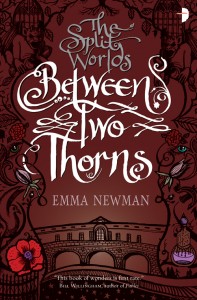
Between Two Thorns

Between Two Thorns
Book 1 of the Split Worlds
by Emma Newman

I went to the launch of this book a few months back (which for some reason I blogged about beforehand but not afterward – very strange) and the only reason I have taken so long to get round to reading it is that it is linked to a series of online short stories that I wanted to finish reading before I started this novel. Then I got impatient with myself and just read this anyway! I will go back to those short stories now.

Disclaimer: Emma Newman is a local author to me and we have met a couple of times, as well as having a few conversations over the internet. I think she is very lovely and this may or may not have coloured my opinion of her book. Which I really liked. I think it’s probably very good whether or not you ever so slightly know the author.

Newman has come up with something special in the Split Worlds. She has created a fantasy world with a multitude of characters and things going on that feed into not only 50+ short stories and three novels (at least??) but also interactive games. But you could absolutely read this novel on its own, or any one of the short stories on their own, and enjoy it for itself, without the extra knowledge of all the other stuff.

What’s great is that although Newman has clearly put a lot of thought into world-building, there’s no noticeable chunks of exposition in this novel. You get dropped straight into a funny but sinister incident involving a drunk man desperate for a wee on his way home from the pub and all the details you need to understand what is going on and how that links to the other characters are added gradually and skilfully.

“‘Tea, sir?’ Axon picked up the teapot. Ekstrand peered at it suspiciously.
‘It is Assam, isn’t it, Axon?’
‘Indeed, sir.’
‘All right,’ he muttered and started to pace. ‘It’s all happening at the same time. I never did trust Sundays and this only adds weight to my theory.'”

There are quite a few characters but arguably the main one is Cathy, one of the “fae-touched” who is trying to break free from her family and live in the normal world known as Mundanus by – shock, horror – going to university. However, those who inhabit the magical mirror world she is hiding from, the Nether, will not leave her in peace. In the meantime, Max, a sort of policeman of the Split Worlds who is separated from his own soul, has stumbled on a breach of the Split Worlds Treaty so huge that there’s no knowing how high up in society the trouble goes or who he can trust.

I like the idea of the magical world and the normal world co-existing, and Newman paints both equally well. Characters in both worlds drink a lot of tea. But the worlds themselves are very different, or at least their people and societies are. The Nether seems to be stuck in a facsimile of 18th-century Britain, all very patriarchal and anti-technology and formal, with rigid rules governing everything and everyone, especially women. Mundanus is the world as it is now, in the 21st century, which makes for a huge contrast in some ways. Really, it’s a wonder Cathy is the only one looking to escape the Nether! But the Nether also sounds quite wonderful, with its silver sky and all the possibility of magic.

“‘Bloody weather,’ she muttered and then silently took it back. The sky was the colour of a day-old bruise and the wind was bitter but she still loved it just for being there. She never wanted to see a silver sky again.”

While you could read this as a standalone book, I was left wanting more, eager to buy part two and read it soon despite my enormous TBR. Thankfully my procrastination on getting round to reading this one means that book two, Any Other Name, has already been published (and indeed I bought it last weekend) and book three, All is Fair is coming soon, in October.

Published 2013 by Angry Robot.

Source: I bought this at the book’s launch at Forbidden Planet in Bristol.

Kate Gardner Reviews

July reading round-up

July 31, 2013July 31, 2013 5 Comments

Is it this time again already? The month started so well, with our lovely lovely holiday in Cornwall where I did a whole lotta reading. But since then I have finished just one more book. One. In two and a half weeks. It’s like I overindulged on holiday and needed to lay off for a while! And I’ve not got through many short stories either because I usually listen to them at the gym and, well, I’ve not been to the gym a whole lot this month. Truly, I am disappointed with myself. I’ve also been a bit rubbish at posting reviews.

Clearly I need to buck up for August. My stack of books for next month’s reading is pretty big already, but on the plus side I’m looking forward to every single one. (And I’m already partway through two of them, which may help my goals a tiny bit.)

August book stack

Books read

The Wine of Solitude by Irène Némirovsky (review here)

Mrs de Winter by Susan Hill (review here)

Ashes by Sergios Gakas (review here)

Between Two Thorns by Emma Newman (review to follow)

The Snow Child by Eowyn Ivey (review to follow)

Short stories read

“The children’s grandmother” by Sylvia Townsend Warner (New Yorker fiction podcast)

“Cryptology” by Leonard Michaels (New Yorker fiction podcast)

“Special delivery” by Emma Newman (read by the author here)

“A fair exchange” by Emma Newman (read by the author here)

“The quiet librarian by Emma Newman (available online here)

“Wilderness” by Sarah Hall (online here)

Kate Gardner Blog

Sunday Salon: Women on banknotes? Oh my.

July 28, 2013 2 Comments

The Sunday Salon

So there’s been a bit of controversy lately about women on UK banknotes, or rather the lack of them. It began in April when the Bank of England announced that from 2016, Winston Churchill will replace Elizabeth Fry on the £5 note. This caused a bit of an upset because Fry is currently the only woman on any of the four UK banknotes. In fact, the announcement led people to take a look at the full list of figures ever featured on our banknotes and notice that women have always had pretty low representation. Which started a whole equal representation campaign.

Following this campaign, this week the Bank of England announced that the next £10 note will feature Jane Austen (also in 2016). So that’s alright then, isn’t it? They’ve picked a historically significant woman, and a writer to boot. I should be thrilled!

The thing is, Jane Austen is not the woman I would have chosen. She’s not even the writer I would have chosen and I’d probably have leaned toward woman scientist over woman writer, to be honest. Rosalind Franklin, Ada Lovelace, Dorothy Hodgkin – they all have a much stronger case for how much they contributed to the betterment of society and as role models than Jane Austen, surely?

But that’s not to say that literature can’t contribute to society. Clearly I don’t believe that. Perhaps it’s because I’m not an Austen fan, but she’s just never seemed particularly revolutionary to me. She was a woman, yes, and that in itself was unusual for the time. But that can’t be enough to make her an admirable figure. She wrote about a very narrow section of society. I hate to repeat the trope that she only wrote about money and marriage, but there is something in that accusation.

So which woman writer would I choose? Obviously she must be British and meet the other Bank of England criteria (which are currently under review, following the whole Churchill debacle). Well, I’m not the biggest George Eliot fan either (I loved Silas Marner, was less thrilled with Silly Novels by Lady Novelists and gave up on The Mill on the Floss – but that was a long time ago so please don’t judge me!) but she certainly seems to have covered a lot more of British society than Austen. I am a fan of Virginia Woolf and she was central to an artistic movement (Modernism), co-founded a publishing house (Hogarth Press) and contributed a lot to the growth of feminism. However, she might be considered too controversial for the Bank of England, between her bisexuality, depression and suicide. I hope not.

Which British female historical figures do you think deserve to be honoured on our banknotes? Do any novelists rank up there for you? Do you think this is even a debate that needs to happen or do you shy away from positive discrimination? I’d love to hear your thoughts.

Kate Gardner Blog

Everyone lives in the world they deserve

July 25, 2013

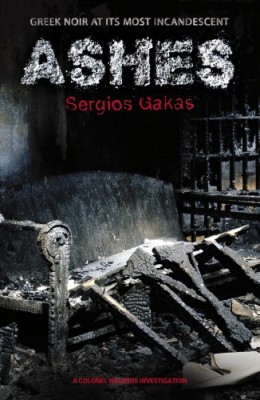
Ashes
by Sergios Gakas
translated from Greek by Anne-Marie Stanton-Ife

Ashes

I took this book on holiday with me because crime is usually a good bet for an absorbing throwaway read. This book didn’t quite live up to that expectation, being both better than expected but also in some ways worse. I probably need to explain.

For a start this is one of the more literary police procedurals I have ever read, inasmuch as the writing is very good, a little experimental even, and it doesn’t follow the expected rules of the genre. Now that may partly be because it’s Greek, and perhaps they have their own set of rules. I’m not familiar enough with Greek literature to know. But this certainly didn’t read like it was slotting into a template.

“Let me break your seal, Stoli, my love. My red beauty, come here, give yourself to me, transparent like all my mistakes…I don’t feel good, damned wine, it’s all your fault. Armchair – prepare yourself. My sweet throne, I’m coming…Who’s that creeping around outside – who’s after my vodka? It burns, the bitch…It burns like hell: fight ice with ice, fire with fire…No! My face is burning, don’t, why won’t you listen to me? No, please.”

There are some familiar themes. The detective, Police Colonel Chronis Halkidis, is middle-aged, divorced, disillusioned, addicted to cigarettes (and some rather stronger illegal drugs to boot) and doesn’t follow the rules. So far, so familiar. I didn’t warm to Halkidis, especially as his addictions and methods became, well, worse. But that’s fine, I don’t need to like the main character.

“Three dark-haired types with shiny accordions were playing songs, a hybrid, it seemed, of children’s songs and revolutionary battle cries. The audience was singing along, miming the foreign lyrics with adolescent uncertainty. They were happy. I hated them. I ducked quickly into the toilet and snorted two fat lines of powder… Everyone lives in the world they deserve, and my particular world cannot take any more accordion music.”

The book opens with the crime and follows the police investigation, which again sounds traditional enough. The crime in question is the burning to the ground of a house in a suburb of Athens, a fire which takes hold so quickly that three of the house’s occupants are killed almost immediately and the fourth, a formerly famous actress called Sonia Varika, is left in intensive care with severe burns.

“‘Do you believe in God?’
‘No.’
‘Pity. If you did, I would recommend prayer. It would save me the more pedestrian option, where I explain to you that the human body is a machine, with a highly complex mechanism that we barely understand, but a machine nonetheless…Do forgive me if I come across as a vulgar materialist, but so far the only ones I’ve seen performing miracles and saving lives have been doctors and nurses. God has never once put in an appearance, not even to stitch up an eyebrow.'”

It took me a while to figure out the narrative voice, which alternately follows Halkidis and the landlord of the destroyed house, Simeon Piertzovanis, but there are also sections in italic, which are either memories or thoughts of Sonia from her coma. Almost the first thing we learn is that both Halkidis and Piertzovanis are former lovers of Sonia, which means that they both distrust one another but also form an uneasy alliance in their search for truth and justice.

Piertzovanis was an interesting character, a lawyer, gambler and alcoholic who has inherited enough money to not really need to work, he is somehow still largely likeable. And there was a good cast of secondary characters, from a girl Piertzovanis picked up the night of the fire and who has stuck around, to Halkidis’ small team of trusted police, to the various shady types involved to varying degrees in a crime that is somehow political, or at least large enough organisations are involved for solving it to get political.

“I dropped Piertzovanis off at the statue of Kolokotronis, waited for him to take a piss on it and then lurch across Stadiou, his arm raised to deflect the oncoming traffic; drivers were drowning him in hoots, obscene gestures and abuse, but they spared his life.”

So the people and their relationships kept me interested, plus the writing was good, so why didn’t this work for me? I think where it fell down was the crime/detective/thriller part. I’m not sure which of those three it was aiming to be because I didn’t think it worked as any of them. The solution to the crime was too convoluted, with no clues for the reader to follow. But I also never felt, for all of Halkidis’ antics, that he was ever in any danger, so it didn’t work as a thriller either.

Really, this is all about the detective not the detection. And the personal angle definitely added a certain something. Reading what I’ve written it sounds like I’m bothered because I can’t categorise the book and it surprises me that I should feel that way. Perhaps it’s even that the writing was lyrical enough that it slowed me down – I wanted to pay attention to the words, not fly through them. But whatever the reason, I wasn’t gripped, and that feels like a flaw.

First published in Greece by Kastaniotis Editions in 2007.
This translation published 2011 by MacLehose Press, an imprint of Quercus.

Source: This was a review copy passed on to me by fellow blogger Ellie of Curiosity Killed the Bookworm.

Challenges: This counts towards the 2013 Translation Challenge.

Kate Gardner Reviews

Posts pagination

1 … 83 84 85 … 126

Archives

RSS feed: Nose in a book Nose in a book

  • Book review: Taiwan Travelogue by Yáng Shuāng-zǐ
  • October 2026 reading round-up
  • Book review: The Coral Bones by E J Swift

Me on the internets

  • @kate_in_a_book@mas.to (Mastodon)
  • Flickr/noseinabook
  • Instagram/kate_in_a_book
  • StoryGraph/kate_in_a_book

Categories

  • Blog
  • Reviews
  • Uncategorized
  • © Copyright Kate Gardner. All rights reserved.
Proudly powered by WordPress | Theme: Dream by vsFish.