Nose in a book

Reviews and other ramblings

  • Home
  • Reviews archive
    • Book reviews
    • TV reviews
    • Theatre reviews
  • TBR
  • Challenges
    • The Classics Club
    • 2014 Popular-Science Reading Challenge
    • Cookery challenge
    • The Gilmore Girls Reading Challenge
    • 2013 TBR Pile Challenge
    • 2013 Translation Challenge
    • Crime and Punishment read-a-long
  • About
    • Cookie legal stuff

Category: Blog

Sunday Salon: Short stories

March 17, 2013March 16, 2013 3 Comments

The Sunday Salon

I know, I know, it’s been months since I posted in the Sunday Salon. How are you all? What have you been up to? Me? I’ve been busy, but not with as much reading as I’d like. This week I have been thinking about short stories.

Every so often Tim has to go to America for work, usually at the last minute. One of the few advantages of this (besides getting complete control of the TV while he’s away) is that he brings me back the New Yorker, which I really love but can’t quite justify paying the international subscription price when what I’m really after is the weekly short story. They get the greatest writers in the world. Every week.

New Yorker

On the back of my recent treat of not one but two New Yorkers, I was browsing the website and spotted the fiction podcast. Oh man, this is the most amazing discovery. Once a month a writer picks a short story from the New Yorker archives, reads it aloud and discusses it a little. It’s an amazing resource. This week I have listened to “Symbols and signs” by Vladimir Nabokov, “The lottery” by Shirley Jackson and “Playing with dynamite” by John Updike.

I am not normally great at listening to audio books but a 20-minute story fits nicely into my commute and it’s a really good way to try some of the many authors I have heard praised but not read myself yet.

Do you read short stories outside of book compilations of them? Where do you read them? Do you subscribe to any fiction magazines?
Kate Gardner Blog

Crime and Punishment read-a-long weeks 4 and 5

March 9, 2013

read-a-long-plain-001

The Crime and Punishment read-a-long is hosted by Wallace over at Unputdownables. In weeks four and five we read from part 2, chapter 5 to the end of part 3 chapter 3. The official discussion posts are over at Unputdownables.

As always, this discussion will contain spoilers, so only read on if you don’t mind/have already read this far (or further).

So Raskolnikov’s friends have become much more interesting, complicated characters. Razumikhin in particular has adorable puppy love for Dunya and gives a great rambling drunken speech about lying:

“Do you think I am annoyed because they talk nonsense? Rubbish! I like people to talk nonsense. It is man’s unique privilege, among all other organisms. By pursuing falsehood you will arrive at the truth! The fact that I am in error shows that I am human. You will not attain to one single truth until you have produced at least 14 false theories…You can talk the most mistaken rubbish to me, and if it is your own, I will embrace you! It is almost better to tell your own lies than somebody else’s truth; in the first case you are a man, in the second you are no better than a parrot!”

Raskolnikov, after weeks of being an ass to his friends and family, showing kindness only to strangers, has now suddenly apologised for his behaviour. Is he being sincere? The narration suggests not:

“‘You’re in a very sentimental mood today, aren’t you?’ exclaimed Razumikhin. If he had had more penetration he would have seen that it was very far from being a sentimental mood, but something like the very opposite. But Avdotya Romanovna noticed it. Her eyes followed her brother with anxious attention.”

But what he is finally sounding like is the intelligent law student we had been told he was. Certainly his honesty is still questionable (though in the light of Raz’s speech above, can he perhaps be lying for the right reasons?) but his delirious state has passed, if indeed it was ever as bad as his friends thought it was. Interestingly his mother and sister are afraid of him and he knows it and even confronts them about it. Is it just the memory of seeing him delirious that scares them or is there something basic in his character that they know to be afraid of?

Kate Gardner Blog

Three years of books and me

March 5, 2013March 5, 2013

It’s my third blogoversary, yay! For my first blogoversary I baked a cake. My second passed by without me even noticing it. This time I am drinking wine and watching Pointless. Ahem. I should probably do something more bookish.

I did do some reading earlier, though. Or rather I was read to. I don’t think I’ve blogged about this before but I volunteer once a week at a local primary school, reading with a year 2 (age 6–7) pupil. It’s a fantastic scheme organised by local charity Ablaze. Today my assigned small person was very excited because it’s book week! Thursday is World Book Day and the school is making a big thing of it, with a book fair, storytelling and fancy dress. I love that the children are excited about books and in advance of Thursday I wish you all a very happy World Book Day.

Kate Gardner Blog

On the stage: a Royal Shakespeare Company double bill

March 4, 2013March 4, 2013

Okay, it wasn’t exactly a double bill. But while on holiday in Stratford-upon-Avon we went to see two RSC plays over two nights and I thought both were so great that I wanted to write about them here. Apologies for the week-long delay getting round to it!

The Winter's Tale

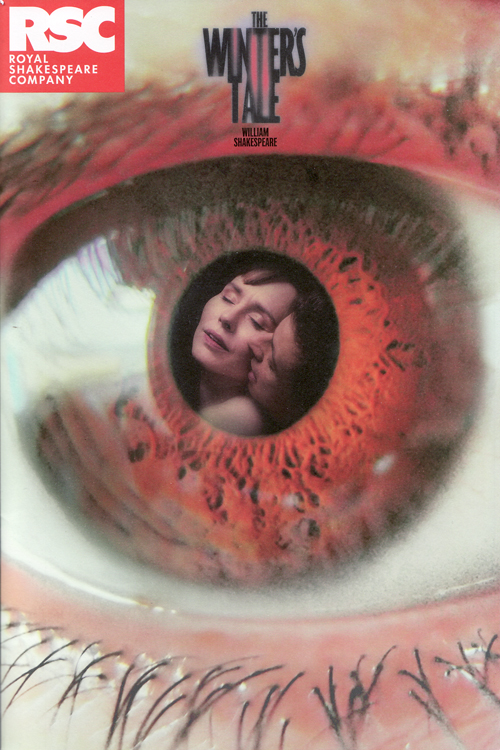
The first play we saw was Shakespeare’s The Winter’s Tale. I had no idea of the story going in and as always it took a chunk of the first scene to really get into the flow of the language, but special mention must go to Tara Fitzgerald as Hermione because from her first line I was there, completely understanding and mesmerised. As it’s one of the lesser known plays, I’ll give a quick plot summary.

Leontes, king of Sicilia, accuses his pregnant queen, Hermione, of adultery with his life-long friend Polixenes, king of Bohemia. Polixenes flees Sicilia while Hermione is imprisoned – giving birth to a baby girl, whom Leontes orders to be abandoned. Hermione collapses and when news is brought of her death, Leontes repents his jealousy and goes into mourning. Sixteen years pass. The baby girl, Perdita, has survived, having been found and raised by Bohemian shepherds. Florizel, Polixenes’ son, has fallen in love with her and seeks to marry her. When his father opposes the match the lovers flee…to Sicilia. (NB It’s also the play with the famous stage direction “Exit, pursued by a bear”.)

I was torn as regards the staging and costumes. It was styled like an early 20th century Northern English seaside town, with a big projection screen at the back of the stage showing a pier and the sea. I felt that this all worked with the bawdy comedy elements (so most of the second half) but that’s not my taste in comedy.

In addition to Fitzgerald, there was a brilliant performance from Jo Stone-Fewings as Leontes. He played a slow-but-sure build-up to crazy and unreasonable, and was on stage for almost the entire play – there was an odd industrial tower thing centre stage on which he stood/sat/lay throughout many scenes set away from his palace, wonderfully conveying his long years of mourning.

The play has some very strong female characters, who get some great speeches defending themselves from the wrong that has been done, and notably the story is on their side, Leontes is very much in the wrong. There’s a key plotline centred around female friendship, which I can’t right now remember featuring heavily in any other Shakespeare play, though I don’t claim for a second to be much of a Shakespeare scholar.

I was pleased to find we had a picked a performance followed by a Q&A with some of the cast, which we hung around for. It was very interesting to hear their views on this “problem comedy”, with a particularly problematic ending, and a relief to find that they have all the same questions as actors as we do as viewers. In some cases they’ve had to try to answer those questions for their performance but they stressed that it’s only an interpretation and they gave examples of previous shows that had clearly followed different interpretations.

The Orphan of Zhao

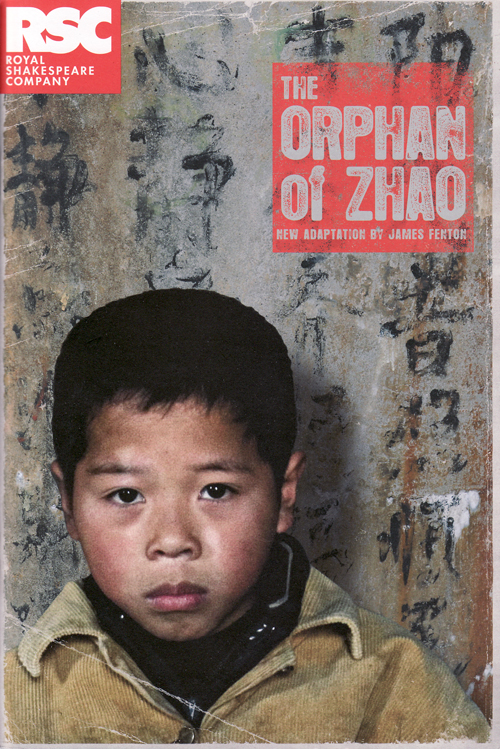
Our second RSC play was The Orphan of Zhao. From a 3000-year-old Chinese story, James Fenton has written this new adaptation of the play from several old versions, one of which was popular in England in Shakespeare’s time (that being the key link). It works well as a companion piece to The Winter’s Tale, having a similar plot but very different style.

The emperor and his favourite minister Tu’an Gu are pleasure-seekers. Three good counsellors remonstrate with the emperor about his excesses. One is banished, a second exiles himself, but the third, Zhao Dun, who is married to the emperor’s daughter, wants to stay. Tu’an Gu plots against Zhao Dun, massacres his clan and forces him to kill himself, leaving behind his pregnant wife, who is put under guard. If she has a son, he must be killed. When Dr Cheng Ying comes to deliver the baby, he agrees to smuggle the baby away. When Tu’an Gu realises the baby has escaped he decrees that every male child born that month will be killed if the orphan is not returned. Cheng Ying feels that the orphan of Zhao has an honourable duty to grow up to avenge his father’s death, so he arranges for his own newborn son to be mistaken for the orphan. Tu’an Gu then adopts the child he believes to be the doctor’s son, proposing that the two men raise him together, teaching him the arts of medicine and warfare. Skip 18 years and it is time for the orphan to learn his identity and his duty, but which parent will he be loyal to?

This was a powerful play. It didn’t have the poetry or rhythm of Shakespeare’s writing, and was heavily stylised, but I found it immediately accessible. It was about honour and duty, not emotion and yet it moved me greatly. There were again some strong female performances that greatly impressed me (especially Lucy Briggs-Owen as the princess) but it was the final scene with two men that had tears flowing down my cheeks.

The staging was brilliant – it could have been the same 500 years ago, or very close to (exchange electric lights for candles, smoke machine for actual smoke, etc) – they used puppetry, petals falling from the gantry, simple props and symbolic colours in costumes. It was all pretty classical. The humour was more my taste than the bawdiness of the “commoners” in The Winter’s Tale. And it was blended well with the rest of the play, whereas in The Winter’s Tale the comedy and tragedy sat awkwardly together. If I sat down to read The Orphan of Zhao I don’t think I’d be impressed but the performance as a whole was terrific.

Kate Gardner Blog

A very Shakespeare holiday

February 25, 2013 1 Comment

Tim and I have just (well, yesterday) come back from a few days’ holiday in Stratford-upon-Avon. We just wanted to go somewhere pretty to relax and have a break, but you’d have to try pretty hard to go to Bard Country and not do any Shakespeare tourism at all. We pretty much gave in and absorbed all of the culture, and despite the freezing cold had a lovely time.

We saw not one but two RSC plays – The Winter’s Tale and The Orphan of Zhao, more of which later – and went to three of the properties run by the Shakespeare Birthplace Trust. And though I may have mocked the tourist-trap stylings of it all, there is something humbling about standing in the house where a great genius lived half his life.

Shakespeare's birthplace

On a previous holiday we spent some time in Père Lachaise Cemetary in Paris and I paid my respects at the graves of Oscar Wilde and Colette, among others. I have now added to this list of pilgrimages by visiting Shakespeare’s grave, in Holy Trinity Church.

A grave man

The town itself is pretty and though no doubt it’s prettier still in spring and summer, I was glad we had visited when we did after a taxi driver told us that the place was dead compared with how busy it gets from Easter onwards. It was far from empty.

Wintry river

Having had our fill of plays and history lessons, on our last day we went to the butterfly farm. It was pleasingly warm and full of little flying creatures, though disappointingly lacking in educational information (Bristol Zoo does spoil us). I took a lot of photos there.

Untitled

As always, I’ll add more photos to Flickr (mostly of butterflies, no doubt) over the next few weeks. Feel free to have a gander.

Kate Gardner Blog

Crime and Punishment read-a-long end of week three

February 21, 2013February 22, 2013 2 Comments

read-a-long-plain-001

The Crime and Punishment read-a-long is hosted by Wallace over at Unputdownables. In week three we read from part 2, chapter 1 to the end of part 2 chapter 4. The official discussion post for this section will be posted over at Unputdownables but here are my thoughts.

I have now read further than I managed on my previous attempt, which is an achievement. However, though the text is more readable in this translation, I find main character Raskolnikov just as frustrating. I’m going to plough straight into the plot so here be spoilers.

I suppose I expected more of an insight into Raskolnikov’s mind than we have had so far. Maybe that’s to come. Or perhaps we’re supposed to infer his thoughts from his actions. But I am finding him inscrutable. Why why why does he turn down a good job offer, throw away money from his friend and try to reject money from his mother? Is he just ill, as his friends think? Is this a hypochondriac or even psychosomatic response to his fear of being caught? Or is it guilt/remorse? Certainly it seems to be all fear and no remorse.

Also, Raskolnikov has friends! Who really seem to care about him. Is he/was he actually a nice guy? Or are Razumikhin and Zosimov just extraordinarily nice people?

So many questions raised by this week’s reading! Which I think is a good sign. And for the first time in this novel I marked a quote that struck me:

“A new and irresistible sensation of boundless, almost physical loathing for everything round him, an obstinate, hateful, malicious sensation, was growing stronger and stronger with every minute. He loathed everyone he met – their faces, their walk, their gestures. He thought that if anyone were to speak to him, he would spit and snarl at them like an animal.”

Can you see why I am yet to be convinced I will ever like this character?

UPDATE: The official discussion post is now up.

Kate Gardner Blog

Split Worlds: the book launch

February 18, 2013February 18, 2013

Between Two Thorns

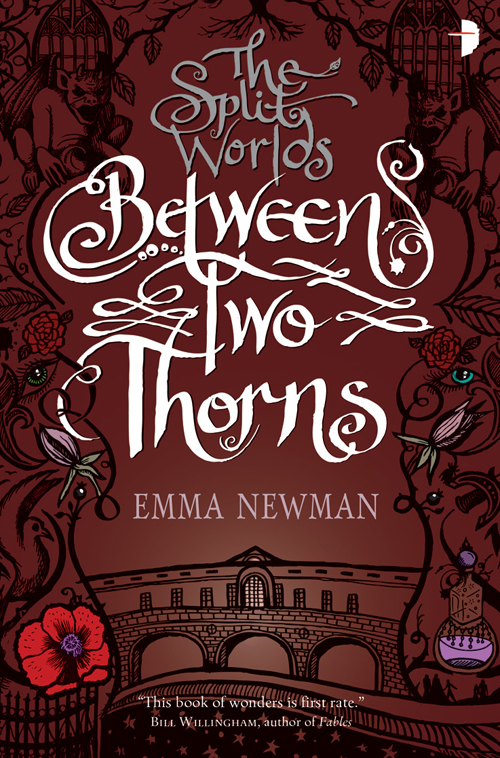
Back in November 2011 I posted something a bit unusual on this blog: a short story called “The price of art”. It formed part of a project whereby author Emma Newman releases a story online every week set in a fantasy universe called Split Worlds. Very excitingly she was snapped up by Angry Robot Books to write three novels set in the same universe and the first of those is about to be released.

Here is the official announcement from Emma…

******

I’m delighted (and slightly terrified) to say that Between Two Thorns is released in the US on the 26th of February and the 7th of March in the UK.

There are two UK launches and an international one using the magic of telephone conferencing:

7th March 6–7pm Forbidden Planet, Bristol
8th March 6–7pm Forbidden Planet, London

One lucky attendee of these launches will win a copy of Any Other Name – the second novel in the Split Worlds series – as soon as it comes out. All the details are here.

Pre-order a copy of Between Two Thorns for a chance to win a great prize!

Pre-order a copy of Between Two Thorns and you’ll be entered into a prize draw. If you win, you’ll have a character named after you in All Is Fair – the third Split Worlds novel (released October 2013) – and a special mention at the end of the book.

How to enter

Pre-order a copy of the book from your favourite retailer (if you pre-order from Forbidden Planet you’ll get a signed copy).

If you order from Forbidden Planet or the Robot Trading Company (for ebooks) you don’t need to do anything else – Angry Robot will take care of your entry for you. If you pre-order from anywhere else you’ll need to e-mail a copy of your order confirmation to thorns@angryrobotbooks.com and they’ll assign a number to you.

Here are links to all the places you can pre-order.

Forbidden Planet (signed paperback)

Robot Trading Company (DRM-free ebook)

Amazon UK (paperback)

Amazon US

The Book Depository UK edition

The Book Depository US edition (bigger)

******

Once again, huge congratulations to Emma. If you’re interested in reading the Split Worlds short stories, here is a list of links to them all. I highly recommend a visit.

Kate Gardner Blog

Crime and Punishment read-a-long end of week two

February 17, 2013 1 Comment

read-a-long-plain-001

The Crime and Punishment read-a-long is hosted by Wallace over at Unputdownables. In week two we read from part 1, chapter 5 to the end of part 1. The official discussion post for this section is over here.

My main problem with the first week was that I was reading a terrible translation. Monday lunchtime I headed to the library and compared three translations and all of them were better than the one I had bought myself years ago. So be warned: avoid the old Penguin Popular Classics edition with no translator acknowledgement. I am now reading the Oxford World’s Classics edition translated by Jessie Coulson in 1953 and updated by Coulson in 1981.

Translation makes such a difference. I mean, I knew that in theory to be true, but I don’t think I have read a bad translation before. Even on just readability and interest, the first week I struggled to read 42 pages in a week. This week I started at the beginning again and easily read 83 pages in three days. I had to stop myself from reading ahead!

But there are so many subtleties that I have noticed. Over at Unputdownables there has been a lot of discussion about whether Raskolnikov is suffering from a mental illness such as depression, whether he is just an odd person, or maybe that his state of mind is a sane response to the world he lives in (though I think this week’s reading blows that one out of the water). Well, I couldn’t see what the debate was about because on page 1 of the Penguin edition it reads:

“It was not that he had been terrified or crushed by misfortune, but that for some time past he had fallen into a state of nervous depression akin to hypochondria. He had withdrawn from society and shut himself up, till he was ready to shun, not merely his landlady, but every human face.”

But the same paragraph of the Oxford edition reads:

“It was not that he was a cowed or naturally timorous person, far from it; but he had been for some time in an almost morbid state of irritability and tension. He had cut himself off from everybody and withdrawn so completely into himself that he now shrank from every kind of contact.”

Which I would still read as signs of depression, but it’s certainly less clear. They’re really very different readings.

As for the content of this week’s reading, well here be spoilers.

This would be the crime part of the story. Unless there’s further crime to come, that’s looking like a lot of punishment discussion. Because the crime was over pretty quickly. Of course, there’s the precursor dream of the horse, which actually describes the horror and gruesomeness of a very similar death in far more detail. And it’s interesting that in his dream it’s Raskolnikov who expresses horror at the horse’s death and yet the very next day…

There’s an odd mixture of premeditation and chance here. Clearly, Raskolnikov has had this murder in mind for a month and even made preparations for it, but they’re not very well planned preparations. For instance, it really is chance that he is able to steal/borrow a hatchet when the one he had had his sights on is inaccessible on the day. And he takes no bag or other means of carrying away the old woman’s treasure, which is supposedly the whole point, if we are to believe his ramblings about this being his escape from poverty.

As for his failing to lock the door behind him once he’s inside the old woman’s flat, is that poor planning, an understandable omission from a non-criminal or a lapse caused by his distracted, starved and half-crazed state of mind? If he’d only spent that money from his mother on food instead of unfortunate women would this crime have ever happened?

Hmm. I am both excited to read on and a little nervous because it’s this next section that I gave up on last time I tried to read Crime and Punishment, back in December. Fingers crossed the different translation continues to work its magic.

Kate Gardner Blog

Musical interlude: the Wannadies

February 15, 2013

In honour of yesterday’s romanticalness (I’d have posted this yesterday but I was otherwise occupied) here is a chirpy happy love song from the 90s that makes me think of old friends more than love, but either way it makes me happy.


The Wannadies – You & Me Song on MUZU.TV.

Kate Gardner Blog

Cookery challenge #1

February 5, 2013February 5, 2013 2 Comments

Hamlyn All Colour Vegetarian Cookbook

Hamlyn All Colour Vegetarian Cookbook

I mentioned vaguely a while back that I had an idea for a challenge involving all the cookery books that I almost never refer to any more. My plan is to feature the books one at a time on this blog and each time I do that, to actually use a recipe from them! Simple, but hopefully it will widen my cooking repertoire and reinvigorate the fun that the kitchen used to hold for me but hasn’t so much lately.

Let’s begin at the beginning. When I was 13 I told my parents I wanted to be a vegetarian. Their response was to buy me the Hamlyn All Colour Vegetarian Cookbook. When I look at it now, it seems a bit cheesy and dated, but this was how I learned to make ratatouille, pasta bake, stir fry, curry and peanut butter cookies. (Don’t get the wrong idea, I wasn’t suddenly left to fend for myself; my Mum and I explored this book together to begin with, but also my desire to be vegetarian came with a surge of interest in what I ate and how to vary it more.) This book went with me to university and every house I have lived in since then, and it falls open at favourite recipes such as carrot and mushroom loaf.

Recipes

This week I was looking for a quick meal that would use some of the huge pile of vegetables from the veg box that was delivered Monday morning and I lit on a simple stir fry recipe in this book, blending British and Asian ingredients: chinese cabbage, brussels sprouts, leek, cauliflower, soy sauce. I amended it a bit to what we had available and voila: a variant on my favourite quick supper. Very tasty too. And I have a hankering to make carrot and mushroom loaf again soon.

Stir fry

Kate Gardner Blog

Posts pagination

1 … 39 40 41 … 55

Archives

RSS feed: Nose in a book Nose in a book

  • Non-Fiction November 2026
  • Book review: The House of Doors by Tan Twan Eng
  • Book review: Taiwan Travelogue by Yáng Shuāng-zǐ

Me on the internets

  • @kate_in_a_book@mas.to (Mastodon)
  • Flickr/noseinabook
  • Instagram/kate_in_a_book
  • StoryGraph/kate_in_a_book

Categories

  • Blog
  • Reviews
  • Uncategorized
  • © Copyright Kate Gardner. All rights reserved.
Proudly powered by WordPress | Theme: Dream by vsFish.