Nose in a book

Reviews and other ramblings

  • Home
  • Reviews archive
    • Book reviews
    • TV reviews
    • Theatre reviews
  • TBR
  • Challenges
    • The Classics Club
    • 2014 Popular-Science Reading Challenge
    • Cookery challenge
    • The Gilmore Girls Reading Challenge
    • 2013 TBR Pile Challenge
    • 2013 Translation Challenge
    • Crime and Punishment read-a-long
  • About
    • Cookie legal stuff
  • Home
  • Reviews archive
    • Book reviews
    • TV reviews
    • Theatre reviews
  • TBR
  • Challenges
    • The Classics Club
    • 2014 Popular-Science Reading Challenge
    • Cookery challenge
    • The Gilmore Girls Reading Challenge
    • 2013 TBR Pile Challenge
    • 2013 Translation Challenge
    • Crime and Punishment read-a-long
  • About
    • Cookie legal stuff

Tag: politics

We are the 48%

June 27, 2016 2 Comments
(CC0)
(CC0)

I am heartbroken by the EU referendum result. It is a win for nobody, except perhaps the Daily Mail. I am sad that the Leave campaign’s lies and scapegoating somehow convinced 52% of voters that leaving the EU would fix all this country’s problems.

It will not, which I think is now becoming pretty clear. (Or should I say would not? I am clinging to the hope that the referendum was not legally binding, that a majority of MPs did not want it and supported the Remain campaign. But I fear it not happening is too optimistic.)

The EU is not perfect but it is still a wonder of modern democracy, of peaceful co-operation. A consortium of 28 countries can tackle bigger problems better than any individual nation could. The benefits are so much more than a bald sum of money that no-one can agree on an exact figure for. But it is worth saying that EU immigrants are a net gain to this country.

I love Europe and I am proud to be European. I love living in a country that is diverse and enriched by immigrants from almost every other country on the planet. I want to tell every European living here that they are welcome, they are appreciated, they are needed, and that it will all be okay.

Continue reading “We are the 48%”
Kate Gardner Blog

It was a wish so far from the probabilities of life

April 3, 2016

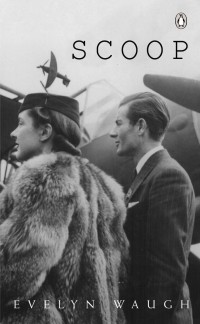
scoopScoop
by Evelyn Waugh

I had been meaning to read this novel for many years, as its satirical truth-telling about journalism is legendary. Despite the almost 80 years that have passed since its first publication, a lot of what it has to say still rings true.

The plot centres around young William Boot, an impoverished young country gentleman who is happy living in his country manor writing a weekly nature column for London paper the Daily Beast. Thanks to a farcical opening act, the paper’s management mixes him up with his distant cousin John Boot, a fashionable novelist who is eager to be sent abroad as a foreign reporter, and a reluctant William is sent instead to a “promising little war” in the fictional African republic of Ishmaelia.

I found the opening, covering London society and Fleet Street proper, genuinely laugh-out-loud funny. I may even have snorted a few times. Waugh’s first-hand knowledge of having written for the Daily Mail means that this is truly observational humour, and it’s easy to recognise the journalistic traits being picked apart. It isn’t subtle – the Daily Beast is housed in the Megalopolitan Building opposite its nearest rival the Daily Brute – but that doesn’t stop it from being cleverly done.

Continue reading “It was a wish so far from the probabilities of life”

Kate Gardner Reviews

Love should bestow sublimity

March 22, 2016March 24, 2016

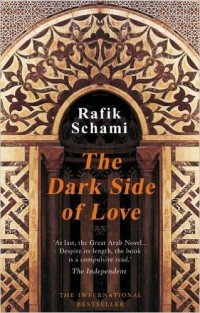
dark side of loveThe Dark Side of Love
by Rafik Schami
translated from German by Anthea Bell

I can’t remember where I first heard about this book but I do know it was on my birthday wishlist a few years back and I was surprised when I opened the parcel to find not a stack of three or four books, but one big fat book. It is epic in every sense of the word and I loved spending two weeks absorbed in it.

Rafik Schami writes in his afterword that ever since he was a 16-year-old boy in Syria, back in the 1960s, he had wanted to write a realistic Arab love story, but it took him 40-odd years to get it right. The result is a novel that looks at dozens of permutations of doomed romance against a backdrop of decades of Syrian history, though the bulk of the story is set in the 1950s and 1960s.

“Nagib looked askance at his daughter and smiled. ‘Why does love always have to imply possession?’ he asked, shaking his head…’You should love with composure…Love should bestow sublimity. It lets you give everything without losing anything. That’s its magic. But here people want a contract of marriage concluded in the presence of witnesses. Imagine, witnesses, as if it were some kind of crime…State and Church supervise the contract. That’s not love, it’s orders from a higher authority to increase and multiply.’ “

Continue reading “Love should bestow sublimity”

Kate Gardner Reviews

Who am I to judge someone else’s holy site?

December 22, 2015

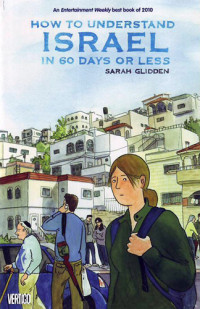
how to understand israelHow to Understand Israel in 60 Days or Less
by Sarah Glidden

Despite the grandiose title, this is the account of a small, albeit important, step in one person’s attempt to understand the complex situation surrounding Israel and Palestine. Told in comic-book style, it combines journalism and memoir to great effect.

Sarah Glidden is a “cultural Jew”. Raised in America by largely non-religious parents, her own politics being liberal and left-leaning, she has always tended to side against Israel, feeling it to be the political “bad guy”. A combination of a wish to understand, a hope to be proven right and the promise of a free holiday encourage her to sign up for a Birthright Tour. These trips, funded by the Israeli government and private sponsors, are open to Jews from around the world to show them the country that they can choose to move to if they so wish.

Sarah travels with her friend Melissa, another cultural Jew who is more earnest than Sarah in her attempts to learn about Israel without pre-judgement. Melissa’s upbringing was even more secular than Sarah’s, so Judaism itself is strange to her, but she is eager to learn and often frustrated by Sarah’s one-track mind: to every experience, every talk, Sarah asks “but what about the Arabs?”.

Continue reading “Who am I to judge someone else’s holy site?”

Kate Gardner Reviews

The reality of the present was a kaleidoscope of jumbled mirrors

November 19, 2013November 19, 2013

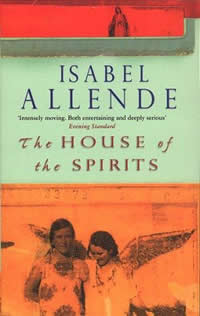
The House of the Spirits

The House of the Spirits
by Isabel Allende
translated from Spanish by Magda Bogin

I had been meaning to read Isabel Allende for years, so I heartily encouraged this book-club choice. I knew absolutely nothing about it going in but I did know a little about the author and it was interesting how that coloured my reading, especially toward the end of the book.

This is both a family saga and the tale of a country over the span of 70 or so years, beginning at the start of the 20th century. The country is clearly Chile though it’s never named. The characters – beginning with Clara del Valle as the youngest child of a large, wealthy family – and their lives are described by two narrators, one of whose identity becomes clear early on and another whose identity is not revealed until the epilogue. The longest-lived character – and therefore in some ways the largest presence in the book – is Esteban Trueba, whom I found inscrutable. He’s not hugely likeable but he’s also not 100% bad; he has genuine complexity that makes him difficult to write off or ignore.

In fact, that’s true of all the characters, despite the many stories packed in here and the sometimes extreme views depicted, they remain believably human. The family is not a metaphor – they’re well-drawn characters with shades of grey and sometimes confused loyalties – but they do represent types of people in Chile to an extent – rich landowner, activist student, charitable middle class, etc.

“She was one of those people who are born for the greatness of a single love, for exaggerated hatred, for apocalyptic vengeance, and for the most sublime forms of heroism, but she was unable to shape her fate to the dimensions of her amorous vocation, so it was lived out as something flat and gray trapped between her mother’s sick room walls.”

In the beginning I found this book funny, charming and lovely, but then we get some shocking scenes – such as Esteban Trueba mistreating his farm tenants – that remind you that this is a book with a political agenda. Not that it’s rammed home at the cost of good storytelling, by any means, but I did find that the novel moved a little uneasily from family story with politics in the background to an overtly political story with the few remaining family members directly involved in the politics.

“She felt that everything was made of glass, as fragile as a sigh, and that the machine-gun fire and bombs of that unforgettable Tuesday had destroyed most of what she knew, and that all the rest had been smashed to pieces and spattered with blood.”

This book is an often-cited example of magical realism and it certainly starts with lots of magical/fantasy elements but they fade away until they’re only a memory of the surviving characters. Which I suppose forms part of the political message getting darker and more overt as the book goes on. But perhaps the magic is also part of the old way of life, which has been lost irretrievably.

“Childhood came to an end and she entered her youth within the walls of her house in a world of terrifying stories and calm silences. It was a world in which time was not marked by calendars or watches and objects had a life of their own, in which apparitions sat at the table and conversed with human beings, the past and future formed part of a single unit, and the reality of the present was a kaleidoscope of jumbled mirrors where everything and anything could happen.”

I did feel that the earlier politics was dealt with more subtly, with distance, whereas the later politics felt much more angry and personal. This reflects to some extent the characters who are the two narrators, but it also seemed a lot like Allende’s own anger, which would certainly be understandable. And the end section of the book is certainly gripping – probably the only section that truly is – but it felt like a very different novel, at times hardly even a novel but more an account of Chile in the 1970s.

We all agreed at book group that this novel is very readable, though it’s not one to rush through. And it is perhaps a little overlong – it could easily have been trimmed. But overall it’s enjoyable, and I am interested in reading more Allende.

La casa de los espíritus published 1982 by Plaza & Janés.
This translation published 1985 by Jonathan Cape/Alfred A Knopf.

Source: Waterstones Bristol.

Challenges: This counts towards the Rory Gilmore Reading Challenge.

Kate Gardner Reviews

It is far safer to be feared than loved

July 6, 2013July 10, 2013

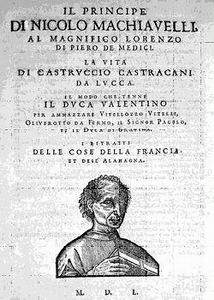
Il Principe

The Prince
by Niccolò Machiavelli
translated from Tuscan Italian by N H Thompson

I find military history tedious so this wasn’t the most fun read for me but it’s a classic and it’s only 99 pages so I figured I’d give it a go.

The premise is that Machiavelli wrote this as a textbook for a member of the powerful Medici family and indeed it is formally dedicated to one of them, but it’s unknown if it was ever read by any Medici or even if that was the true intention.

The book is split into short chapters, each of which is a self-contained essay. The first half of them look at types of prince and types of situation whereby a prince might take over a new military history. The second half looks at the qualities a prince should have and the ways he should behave. There’s extensive use of historical examples, many from Italy but also from all over Europe and occasionally further afield.

To be honest, for all the negative reputation of Machiavelli, this is in general sensible or at least realistic-sounding advice. It is sometimes ruthless but not as much as I had expected at all.

“He who innovates will have for his enemies all those who are well off under the existing order of things, and only lukewarm supporters in those who might be better off under the new.”

“The ruler is not truly wise who cannot discern evils before they develop themselves, and this is a faculty given to few.”

“As long as neither their property nor their honour is touched, the mass of mankind live contentedly, and the Prince has only to cope with the ambition of a few.”

Of course, there is an awful lot of focus on war, which I didn’t like too much and objected to morally. Really much of the first half was a struggle against boredom.

“War is the sole art looked for in one who rules…when Princes devote themselves rather to pleasure than to arms, they lose their dominions.”

However, to make up for the objectionable war focus and dull military history there were moments of fascinating philosophical language and that ratio really flipped in the second half, with a lot more commentary on human nature. I especially liked the reference to Chiron the Centaur (a character I learned about in Song of Achilles) as the perfect instructor to teach princes how to use both the natures of man and beast.

“The manner in which we live, and that in which we ought to live, are things so wide asunder, that he who quits the one to betake himself to the other is more likely to destroy than to save himself; since anyone who would act up to a perfect standard of goodness in everything, must be ruined among so many who are not good. It is essential, therefore, for a Prince…to have learned how to be other than good, and to use or not use his goodness as necessity requires.”

The most famous chapter in the book is “Of cruelty and clemency, and whether it is better to be loved than feared”. But the answer given to that choice is not as clearcut as I often see quoted. As with most chapters, there is the ideal answer and the likely compromise. A prince “should desire to be counted merciful and not cruel” but should accept the reputation of cruelty “where it enables him to keep his subjects united and obedient”. And the famous line in this translation reads “it is far safer to be feared than loved”, which is not quite the same as saying it’s better. Indeed, Machiavelli goes on to caution that to inspire fear should not equal inspiring hate. In fact, there’s a whole chapter devoted to evading contempt and hatred.

There’s also an interesting discussion of assassination that might easily have referred to suicide bombers in another time:

“Let it be noted that deaths like this, which are the result of a deliberate and fixed resolve, cannot be escaped by Princes, since anyone who disregards his own life can effect them. A Prince, however, needs the less to fear them as they are seldom attempted.”

Apparently, since Machiavelli turned out later in life to be a liberal forward-thinker, many have argued over the centuries since the publication of The Prince that it’s a satire and was never intended to be taken seriously. Again, I’m not sure if it’s the translation but I didn’t detect any irony at all.

I’m glad I’ve read it and I can see how you could write many more words analysing the text than the original contains, but I am in no great hurry to read more old political philosophy. Especially not if military strategy is a common theme.

First privately distributed in 1513 under the Latin title De Principatibus (About Principalities).
First published by Antonio Blado d’Asola in 1532 as Il Principe.
This translation first published by P F Collier and Son in 1910.

Source: I honestly don’t remember. It’s a US edition so maybe one of my holidays over that side of the pond?

Challenges: This counts towards the 2013 TBR Pile Challenge.

Kate Gardner Reviews

Thoughts on ideology

June 24, 2013

“Democracy is an experiment the goal of which is to keep the experiment going. The purpose of democracy is to enable people to live democratically. That’s it. Democracy is not a means to something else; there is no higher good that we’re trying as a society to attain. When we compromise with democracy in order to achieve some other purpose, even when the purpose is to defend democracy, then we are in danger of losing it.”

This quote from Louis Menand in the New Yorker (Mar 4, 2013, p71) really got me thinking. It’s such a basic point and one that should be blindingly obvious, yet I’d hazard it’s a subtlety that’s often lost on politicians.

The piece in the New Yorker, incidentally, was a review of a book about the New Deal. Menand was arguing that Franklin Roosevelt’s success as a politician was rooted in his being “a political pragmatist, someone who is less interested in the ideological provenance of a policy than in its effectiveness” – which sounds like a good thing to me. But it must be pretty rare to rise to the top in politics without a strong ideology, right?

I don’t pretend to know enough about politics or philosophy to be able to say more myself, but I like what Menand has to say.

Kate Gardner Blog

Each of us has only a quantum of compassion

November 8, 2012 2 Comments

Tinker, Tailor, Soldier, Spy
by John le Carré

Audiobook read by Michael Jayston

Many years ago I was sent a free copy of this novel (I think as a welcome gift to one of those book-buying clubs; I loved those when I was a teenager with my first part-time job) and I turned my nose up at it. It sat for years on the bookshelf and is probably still there at my Dad’s house faded and unread. Then when the film came out last year one of the newspapers offered the audiobook free to its readers, so I downloaded the mp3s and finally got round to listening to it over the past few weeks.

I have discovered more about me and audiobooks, I suspect, than I have about the book itself. Because it turns out I’m not great at listening to audiobooks, especially not during my commute (when I usually listen to podcasts). My mind wanders; I don’t always have a free hand to turn up the volume when the traffic noise drowns out the narrator; if I see someone I know I get chatting and fumble over hitting pause. I had more success listening to it at home while doing housework or, my favourite discovery, while having a bath (so much better than getting a nice book wet!). But even when giving it my full attention without distracting background noise, I still struggled a little. I think I just don’t take in information as well audibly as I do when I read it. I missed being able to flick back through the pages to check a name or other detail. I missed marking quotes I liked. Which was a real shame because there were some gems in here. I cribbed these off Goodreads:

“’I have a theory which I suspect is rather immoral,’ Smiley went on, more lightly. ‘Each of us has only a quantum of compassion. That if we lavish our concern on every stray cat, we never get to the centre of things.’”

“The more identities a man has, the more they express the person they conceal.”

For those who haven’t read the book/seen the film/watched the TV show, this novel follows George Smiley, a spy who was forced into early retirement from MI6, as he is persuaded to help former colleagues track down a mole within the British ranks. Le Carré really brings alive the day-to-day existence of a spy, often humdrum, occasionally explosively exciting, always suspicious. I loved the language of Le Carré spycraft – how MI6 is “the circus” because it is (fictionally) located at Cambridge Circus in London; how babysitter, caretaker, janitor and mother are all euphemisms for jobs within the circus (there are others too that I missed; see this list for more); and terms I remembered from the brilliant children’s book I had of spycraft, which I think was a forerunner of the Usborne Spy’s Guidebook.

The story is heavily political, with real ambiguity about whether any of what any of the spies is doing is of use to their country, or humanity at large. There’s a lot of men talking in rooms, as I believe Mark Kermode said of the film, and what action there is is in flashback. There are two main narrative threads – the main one following Smiley and an occasional one following a former spy called Jim Prideaux, who is now working as a schoolmaster at a boarding school in Somerset and has developed a sweet facsimile of a spymaster–apprentice relationship with one of the boys there. The latter thread was more immediately accessible and has made me interested in Le Carré’s earlier novel A Murder of Quality, which sees Smiley investigate a murder at a boarding school. (Incidentally, I hadn’t realised this wasn’t the first Smiley novel and now hope I can read the earlier ones without plot points having been spoiled for me.)

Michael Jayston’s narration was spot-on and it was only a small surprise to discover that he played a main role in the 1979 TV series. I loved his voice for Smiley, a quiet, almost bored, quickly forgettable tone perfectly in keeping with Le Carré’s description.

I wish I could properly assess Le Carré’s writing but, aside from knowing that there were many brilliant phrases that stood out for me, I don’t think listening to the words allows me to be sure of my reaction the way reading them would.

First published 1974 by Hodder & Stoughton.

Kate Gardner Reviews

Light bleeds in among the cracks

October 26, 2012 1 Comment

The Yiddish Policemen’s Union
by Michael Chabon

I found this book hard to read and I’m finding it hard to write about, but I don’t want to give the wrong idea. It’s hard in a brilliant, literary way. And it’s sort-of SF. Which I took a while to twig to.

In a big Jewish settlement in Alaska (that should have been my first clue that something was askew), detective Meyer Landsman is called in to the scene of a murder in the very same seedy hotel that he lives in. The dead man was a junkie who played chess – and that’s all anyone seems to know. Landsman’s lifelong love–hate relationship with chess has him intrigued by the case but he is almost immediately told to drop it by his boss, who is also his ex-wife. She is tidying up loose ends before administration of the Sitka district is handed back to the USA, as the Jews’ 50-year lease on the land is about to end.

“She puts a hand to his mouth. She has not touched him in three years. It probably would be too much to say that he feels the darkness lift at the touch of her fingertips against his lips. But it shivers, and light bleeds in among the cracks.”

There is so much going on this novel and it’s all wrapped up in gorgeous language, a combination of the purple prose of, say, Raymond Chandler, and Yiddish. Yes, Yiddish, which I am not so learned in, I must admit. And there’s also a fair selection of outright obscure words (a “hortatory cigarette”, anyone?). Which makes for brilliant quotes (I have marked so many pages in this book) but does not allow a quick read.

“Until this minute Landsman didn’t realize what he and every noz in the District, and the Russian shtarkers and small-time wiseguys, and the FBI and the IRS and the ATF, were up against…You could lead men with a pair of eyes like that. You could send them to the lips of whatever abyss you chose.”

Landsman of course does not drop the case and drags in his partner for good measure, a half-Native-American, half-Jew called Berko Shemets. Which gives Chabon the opportunity to discuss the effect a sudden mass-immigration of Jews immediately following the Second World War might have had on the local Alaskan population, not to mention on US politics in general. Social history, race, religion and culture are central to the story. The Jews are split between the averagely devout, the really devout, or “black hats”, and the…lapsed.

Unsurprisingly, Landsman is the latter. He is your typical detective – divorced, family all dead, a drunk, without faith, obsessive about his work and he chain smokes. He loves his friend Berko but is not above using him badly. He also (and/or perhaps Chabon) has a wry sense of humour.

“Landsman watches the progress of Elijah the Prophet and plans his own death. This is a fourth strategy he has evolved to cheer himself when he’s going down the drain. But of course he has to be careful not to overdo it.”

Despite the familiar trappings of a typical whodunit, with an action-packed story and a variety of bad guys who are linked in various ways, this is not a rip-roaring read because it is just too complex for that. I found it hard to follow and I am honestly sure if this was deliberate or if it was me struggling with the language. There are definitely facts held back, not fully explained until later. And the characters, while being realistically unstraightforward, are kept at a distance, because we effectively experience the story from Landsman’s perspective and he is almost perpetually drunk, so it’s tough to get to know even him.

“Men tend to cry, in Landsman’s experience, when they have been living for a long time with a sense of rightness and safety, and then they realize that all along, just under their boots, lay the abyss. That is part of the policeman’s job, to jerk back the pretty carpet that covers over the deep jagged hole in the floor.”

This novel is to some extent an intellectual exercise. There’s more than one “What if” scenario being played out, but there’s also a lot of general information about Jewish tradition, history and culture, some of which I felt I was expected to already know, to recognise from page one and be at home with. Add to that all the chess discussion and there was a fair bit of this book passing me by. But I kept going, because though I found it tough, I also found it beautiful, in a rough and dirty sort of way.

“The reporters have tumbled their way through the black hats…they haul out the questions they have brought. They unpocket them like stones and throw them all at once. They vandalize the woman with questions.”

First published in Great Britain by Fourth Estate in 2007.
Winner of the Hugo and Nebula awards in 2008.

Kate Gardner Reviews

This place will lend you books for free

May 15, 2012 2 Comments

The Library Book
edited by Rebecca Gray

This collection of essays, musings and stories about public libraries has been compiled in support of the Reading Agency‘s library programmes. Which is definitely a cause I can get behind. They are all big names, from Zadie Smith to Alan Bennett to Susan Hill to Stephen Fry, but sadly the levels of enthusiasm and quality are a little variable.

I think part of the problem is that several of the essays cover the same ground: memories of the writer’s first library followed by a vociferous attack on the idea of closing any of them. Some writers are more practical, looking at how libraries and librarians can change with the times. Seth Godin makes a good case for the necessity of the librarian as gatekeeper of information. Bella Bathurst talks about libraries as places where people can mix, can make connections, can interact, whoever they are.

Other writers use fiction, including a very nice extract from China Miéville’s novel Un Lun Dun (though I can’t help think that’s cheating, when everyone else seems to have written their contribution specially). And I like that not all of the writers are novelists. There are also several journalists and, my personal favourite, Nicky Wire, whose piece is titled “If you tolerate this…” and discusses (among other things) the background behind that great Manic Street Preachers lyric “Libraries gave us power”.

This book is certainly a conversation-starter. Though my position on public libraries was never in dispute, I have learned more about the potential arguments against spending public money on them and gained many weapons in the arsenal against such attacks.

I love libraries. To me, these days, they share much in common with bookshops, in that I’m stepping into a room crammed full of books and I get to take some home with me. But then these days I can afford to buy enough books to keep up with how much I read. When I was a child I read so, so much more (and admittedly the books were smaller, generally) and neither I nor my parents could have afforded that without the local library. But libraries are about more than just reading. They are community centres. They are public access to the internet. They are free access to information. They are equal access to culture. They are great.

Published 2012 by Profile Books.

Kate Gardner Reviews

Posts pagination

1 2 3 4

Archives

RSS Nose in a book

  • Book review: Interstellar Megachef by Lavanya Lakshminarayan
  • May 2026 reading round-up
  • Book review: Passing by Nella Larsen

Me on the internets

  • @kate_in_a_book@mas.to (Mastodon)
  • Flickr/noseinabook
  • Instagram/kate_in_a_book
  • StoryGraph/kate_in_a_book

Categories

  • Blog
  • Reviews
  • Uncategorized
Proudly powered by WordPress | Theme: Dream by vsFish.