Nose in a book

Reviews and other ramblings

  • Home
  • Reviews archive
    • Book reviews
    • TV reviews
    • Theatre reviews
  • TBR
  • Challenges
    • The Classics Club
    • 2014 Popular-Science Reading Challenge
    • Cookery challenge
    • The Gilmore Girls Reading Challenge
    • 2013 TBR Pile Challenge
    • 2013 Translation Challenge
    • Crime and Punishment read-a-long
  • About
    • Cookie legal stuff
  • Home
  • Reviews archive
    • Book reviews
    • TV reviews
    • Theatre reviews
  • TBR
  • Challenges
    • The Classics Club
    • 2014 Popular-Science Reading Challenge
    • Cookery challenge
    • The Gilmore Girls Reading Challenge
    • 2013 TBR Pile Challenge
    • 2013 Translation Challenge
    • Crime and Punishment read-a-long
  • About
    • Cookie legal stuff

Tag: family

Sunday Salon: Merry Christmas!

December 27, 2015 2 Comments

The Sunday SalonI hope you are all having wonderful Christmases/end-of-year breaks. It’s still unseasonably warm and our time with family was brief, but it’s been lovely. We had a big family party at my Grandad’s yesterday for the first time in years and it was just like the Boxing Days of my childhood – completely wonderful.

Did you get any good presents for Christmas? I got the usual mix of DVDs, CDs, chocolate and random awesomeness, such as a diary stuffed with tickets for awesome events throughout 2016 (Tim’s pretty great at gift-giving). And of course, as usual, I got lots of books. I love getting new books, always.

Continue reading “Sunday Salon: Merry Christmas!”
Kate Gardner Blog

I am more than I can dream of

December 12, 2015

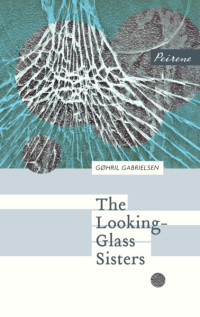
The Looking-Glass Sisters by Gøhril Gabrielsen

The Looking-Glass Sisters
by Gøhril Gabrielsen
translated from Norwegian by John Irons

Once again, I feel that I haven’t given a Peirene book a fair chance. These short novels are intended to be read in a single sitting and those I have read in a couple of large chunks do seem to be those I have enjoyed more. I haven’t had huge chunks of free time lately, so my reading has been split into 20 minutes here and there, which I don’t think really does any book justice.

But I digress. I should tell you about this book.

It’s the story of two middle-aged sisters, Ragna and her younger sister, who narrates the book. The narrator suffered a childhood illness that has left her body severely weakened, so that she never leaves the house and is largely dependent on Ragna. They have lived together alone since the death of their parents and their relationship is bitter and twisted, but it works…until a man comes into Ragna’s life. Johan upsets the delicate balance, revealing alternative paths for the sisters.

Continue reading “I am more than I can dream of”

Kate Gardner Reviews

This elemental silence which could crush you to nothing

October 29, 2015

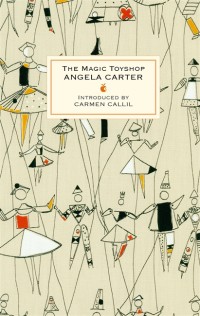
magic-toyshopThe Magic Toyshop
by Angela Carter

This book was not what I had imagined, having read two previous works by Carter, but it was equally wonderful and has cemented her as one of the great authors for me.

The title had suggested to me something a bit fantastical, which aligned with my experience of Carter (I’d previously read Nights at the Circus and The Infernal Desire Machines of Doctor Hoffman) but – on the surface, at least – this book stays within the realm of reality. And yet from the very first page, there is an air of dark fantasy pervading the background.

The story centres on 15-year-old Melanie. She and her two younger siblings have to move from the middle-class comforts of their country home to live in relative poverty with their Uncle Philip in London. He is a toymaker but in every way defies the expectations of that label – he is tall, broad, strong, dark and frequently violent. He shows no kindness or empathy for the uprooted children.

“His silence had bulk, a height and a weight. It reached from here to the sky. It filled the room. He was heavy as Saturn. She ate at the same table as this elemental silence which could crush you to nothing.”

Continue reading “This elemental silence which could crush you to nothing”

Kate Gardner Reviews

Light travels differently in a room that contains another person

August 29, 2015August 29, 2015

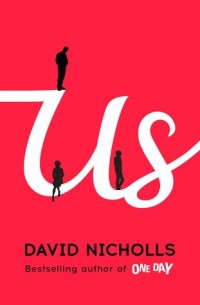
usUs
by David Nicholls

I’ve enjoyed David Nicholls novels in the past, but the hype around this one, partly because it was longlisted for the Man Booker Prize, suggested it was something a bit different, a break from the usual. I was unsure how to feel about that, but I gave it a go and now I’m befuddled, because to me it felt exactly like a David Nicholls novel.

That’s not a criticism of the novel, only of the marketing. Well, maybe it’s a little bit a criticism of the novel, in that I’m not sure exactly why this was deemed more literary, more mature in style, because to me it’s not. It’s a sweet, easy-to-read tale that’s more about plot than the writing. It is often introspective and soul-searching and I very much enjoyed it. I just…thought I might get a little more from it.

The novel opens with middle-aged Douglas being woken by his wife Connie who says that she is leaving him. Or she thinks she wants to. Their marriage isn’t working for her anymore and in a few months’ time, when their son Albie leaves home for university, she will probably leave too. In the meantime, it’s the summer when they had intended to take Albie on the trip of a lifetime, an old-fashioned grand tour around Europe, or at least its greatest art galleries. Connie wants to go ahead and so Douglas throws himself into planning the best holiday ever, hoping that maybe this way he can salvage his marriage.

Continue reading “Light travels differently in a room that contains another person”

Kate Gardner Reviews

Defeated by its own decay, it was dying

April 14, 2015April 14, 2015 3 Comments

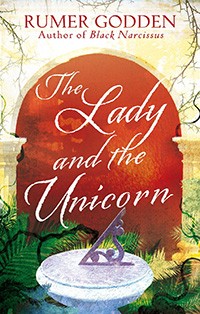
lady-and-the-unicornThe Lady and the Unicorn
by Rumer Godden

I had never heard of Rumer Godden until I flicked through the Virago Modern Classics catalogue and saw that they are reissuing her books, but she was apparently hugely successful in her lifetime. Between the 1930s and 1990s she wrote an astonishing 70 books, including most famously Black Narcissus, which was made into that wonderful film with Deborah Kerr that I have always loved but never knew was based on a novel.

Godden had an interesting life. Born to an English family in India, she moved back and forth between India and the UK throughout her life, and her first-hand knowledge of both countries is clear in The Lady and the Unicorn.

The story centres around a crumbling, decaying mansion in Calcutta, split into apartments occupied by several Eurasian families. Belonging to neither the British colonial society nor the native Indian society, they cling to pride in their “Europeanness”, but it’s a lonely position to be in.

Continue reading “Defeated by its own decay, it was dying”

Kate Gardner Reviews

It became frightening to step back onto firm ground

February 17, 2015March 25, 2015

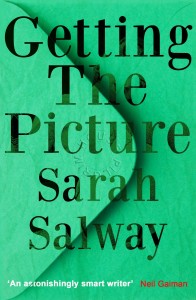
getting-the-pictureGetting the Picture
by Sarah Salway

When new publisher Dean Street Press offered up any of their books for review, I picked this one partly because the synopsis sounded good but mostly because they had a quote from Neil Gaiman on the cover. Not the greatest reason but I think it worked out.

The book opens with Maureen accompanying her model friend Pat to a photographer’s studio. Maureen is married with a young child and the photographer, Martin, specialises in nude portraits – tasteful ones, but nudes all the same – so Maureen is nervous to be there but undeniably attracted to Martin. Cut to 40 years later and Martin is moving into a retirement home. He writes a letter to Maureen to tell her that he picked the same home that her husband George is in, because he wants to finally understand why she went back to her husband after their affair ended.

Continue reading “It became frightening to step back onto firm ground”

Kate Gardner Reviews

I had no memory any more, only a puzzle of images

March 13, 2014 2 Comments

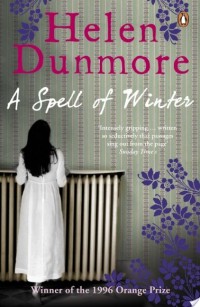
A Spell of Winter

A Spell of Winter
by Helen Dunmore

Dunmore is one of those authors I’ve been hearing good things about for years but hadn’t got round to reading, despite her being local and exactly suited to my taste. Which perhaps gives away what I feel about this book!

The story is narrated by Cathy and in a slightly dreamlike nonlinear fashion she tells us how she went from happy child playing endlessly with her brother Rob, to depressed 20-something seemingly living alone in a big old house that’s falling apart. The setting is the early 20th century (in fact, the First World War acts as a big dividing line in the narrative) and a country house estate owned by Cathy’s grandfather. The facts of her life come together slowly, so although we learn early on that her grandfather, parents and brother are no longer around, the when and why take some time to be revealed. And because she, especially at first, jumps around in time, sometimes I missed whopping great clues to something that happened later and it was only with hindsight I realised I should have seen it coming.

“I had no memory any more, only a puzzle of images, each one so bright I had to believe it as it burnt up in my mind.”

The slow reveal is a recurring trope in this novel. But it never gets annoying, even when I realised after finishing the book how many mysteries are actually never resolved. The basic facts, of a small family living largely in isolation from the world and everything falling apart, are recognisable as a classic storyline, and rightly so. But Dunmore does bring something new to it, and I don’t just mean the inappropriate closeness of Cathy and Rob (after all, that’s been done before too).

“My winter excitement quickened each year with the approach of darkness. I wanted the temperature to drop lower and lower until not even a trace of mercury showed against the figures. I wanted us to wake to a kingdom of ice where our breath would turn to icicles as it left our lips and we would walk through tunnels of snow to the outhouses and find birds fallen dead from the air. I willed the snow to lie for ever, and buried my head under the pillow so as not to hear the chuckle and drip of thaw.”

For a start, the writing is beautiful. Dunmore somehow combines really vivid descriptions and gripping story with an ethereal quality, with the first chapter and epilogue feeling particularly trance-like. This, along with the first-person narrative, plants the question of how much of what we are told is real, or how much is solely in Cathy’s imagination. It certainly seems at times that she is not told things – she is after all the younger child of a (relatively) well-off family with guilty secrets at a time when women were far from equal. But this means she snatches at servant gossip or inferences to build her own ideas, not all of which are wholly proved or disproved. For instance, her grandfather is “the man from another place” and she at one point refers to herself as “half English”, but this is never fully explained.

“I ought to have made sure I knew more. He’d had a past, a geography of silence. None of us had ever mapped it.”

I feel I would be doing a disservice to the book if I didn’t say something about the big unavoidable subject at its centre but for readers like me who don’t read blurbs it will count as a spoiler so…don’t read on unless you’ve read the book or don’t mind!

*** SPOILERS BEGIN ***

So – incest. This is a tough subject for a lot of people and I was both disturbed and impressed by Dunmore that she doesn’t just imply it and leave it oblique. She has Cathy describe fully and sensually her teenage sexual awakening and it is completely sympathetic and in many ways inevitable. Cathy and Rob are entirely each other’s world, rarely seeing others their own age. But they are also both completely aware of what they are doing and both the social implications and the moral position of it.

This very much ties in to another major subject in the book – mental health. There are two occasions when characters have breakdowns in their mental health following something traumatic happening, and the story poses the question of whether this is a natural reaction to what has happened, or something that was always lingering inside them, perhaps something hereditary. Cathy wonders if her unhealthy relationship with her brother proves right all those whispers about how she is so like her mother, who ran away.

I did start to worry that Cathy’s situation had got too dark and that there was no good way out for her, but bizarrely the First World War came at just the right time for her. She has complained all along that she is too sturdily built to be a beauty but with all the men gone and a farm to run she discovers how capable she is. I loved this transformation. Though it doesn’t make her happy, it made me like her again as a person, which isn’t necessary for me to like a book but usually makes it a more pleasant read.

*** SPOILERS END ***

I really enjoyed this book. The writing style and the story, with its period setting and sensationalist angle, reminded me a lot of Daphne du Maurier, which is high praise indeed! I will definitely have to read more by Dunmore. Anyone have any recommendations?

Published in 1995 by Viking.
Winner of the 1996 Orange Prize.

Source: Topping Bookshop, Bath.

Kate Gardner Reviews

The truth is complicated

February 20, 2014 2 Comments

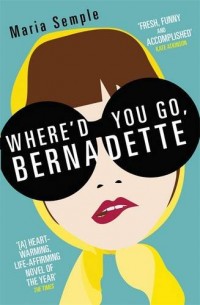
Where'd You Go, Bernadette

Where’d You Go, Bernadette
by Maria Semple

I picked up this comedy for a quick read when I was struggling to get into another book and it turned out to be much better than I had expected: funny but also original and compelling.

The story is told from the perspective of 15-year-old Seattle-resident Bee (short for Balakrishna), whose mother Bernadette has gone missing. Who Bernadette really is and why she disappeared is gradually pieced together and it’s both an odder story and a more relatable one than it at first appears.

“The first annoying thing is when I ask Dad what he thinks happened to Mom, he always says, ‘What’s most important is for you to understand it’s not your fault.’ You’ll notice that wasn’t even the question. When I press him, he says the second annoying thing, ‘The truth is complicated. There’s no way one person can ever know everything about another person.’ “

Semple rips into Seattle culture, but it’s humour with an edge of fondness. She satirizes the dominance of Microsoft and its influence over the city, the difficulty of being a retiring artistic type in a social group that puts pressure on to get involved at your child’s school. But she also acknowledges that, unlike in California (where Bernadette and her husband Elgie moved from), people in Seattle (including teenage children) aren’t obsessed with fashion or the latest gizmos.

The story is mostly told through e-mails and letters, with some being brief notes and others much longer storytelling affairs. This meant there were not only lots of voices, but some characters were depicted in multiple facets of their life and I thought this was handled well. It was a nice update to the epistolary style without feeling like it was trying too hard to be modern (except where mocking modernity).

“Your mission statement says Galer Street [School] is based on global ‘connectitude’. (You people don’t just think outside the box, you think outside the dictionary!)…you must emancipate yourselves from what I am calling Subaru Parent mentality and start thinking more like Mercedes Parents…Grab your crampons because we have an uphill climb. But fear not: I do underdog.”

I liked the combination of themes dealt with – there’s career versus family (for men and women) and how everyone, even your nearest and dearest, is a mystery to everyone but themselves. The book also touches on technological developments (through the character of Elgie) and the fight to balance societal and commercial pressures. And without giving anything away, I loved the final section, which could have felt like it just wrapped everything up neatly, but managed to steer clear of that, just as it managed to get emotional without seeming mawkish.

Semple’s is the comedy of everyday irritations and she judges well the point when something stops being funny or when it stops being acceptable to get annoyed. Not that that line is never crossed, but the character in question stops being sympathetic, which is such a realistic means of showing up character flaws.

I must admit that, more than a week later, this book hasn’t particularly stayed with me, but as you can tell I enjoyed it while it lasted.

Published 2012 by Weidenfeld & Nicolson.

Source: Amazon.

Kate Gardner Reviews

December reading round-up

December 30, 2013December 30, 2013

Christmas bokeh

Well I hope you’ve all had a few days off work and eaten far too much and maybe even found some time to escape into a quiet corner and read. I didn’t get much reading done over Christmas because, as predicted, meeting my newest niece was quite the distraction! Plus it was good to spend some time with my family and old friends, as well as just enjoying being back in the beautiful Forest of Dean for a week.

Having a cuddle with my niece.

Tomorrow I’ll write a round-up of my year in reading, but for now here’s what I read in December. You’ll notice it’s significantly less than the number of books I was given for Christmas 🙂

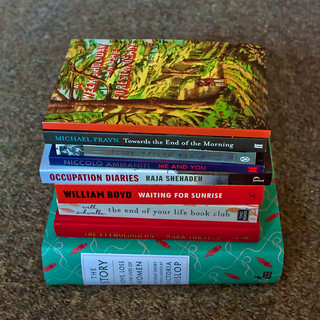
Christmas bookses

Books
All is Fair by Emma Newman (review here)

Other Colours by Orhan Pamuk (review here)

Cold Comfort Farm by Stella Gibbons

And as I’m writing this a day early, I’m hoping I will have finished Paradises by Iosi Havilio by midnight tomorrow!

Short stories
“Xingu” by Edith Wharton (Selected Shorts podcast)

“How to relax while broadcasting” by James Thurber (Selected Shorts podcast)

“The topaz cufflinks mystery” by James Thurber (Selected Shorts podcast)

“A ride with Olympy” by James Thurber (Selected Shorts podcast)

“Macbeth murder mystery” by James Thurber (Selected Shorts podcast)

“The secret life of Walter Mitty” by James Thurber (Selected Shorts podcast)

“The babysitter” by Jane Yolen (Selected Shorts podcast)

“The pedestrian” by Ray Bradbury (Selected Shorts podcast)

“The wood duck” by James Thurber (Selected Shorts podcast)

“Here we are” by Dorothy Parker (Selected Shorts podcast)

“Just a little one” by Dorothy Parker (Selected Shorts podcast)

“The waltz” by Dorothy Parker (Selected Shorts podcast)

There’s a bit of a pattern to my short stories this month, I notice! This was a particularly good bunch, I thought.


Happy New Year, all.

Kate Gardner Blog

Summer reads in brief

September 6, 2013September 6, 2013

Sneaking this in while the weather’s warm enough to pretend that it’s still summer, even if it is September. Thunderstorms are summery, right?

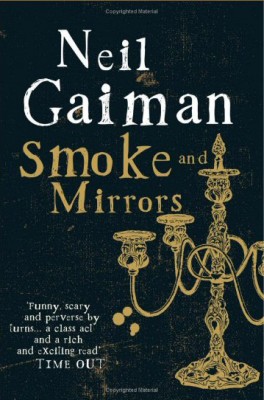
Smoke and Mirrors

Smoke and Mirrors
by Neil Gaiman

This is a truly eclectic short story collection. There are tales told in poetry, in screenplay format, in one page or 30 pages. There’s comedy, reality, fantasy, science fiction, erotica; sometimes all five at once. There were stories that stunned me (“Changes”, “Babycakes”), stories that I loved unreservedly (“The wedding present”, “The goldfish pool and other stories”) and stories that were less lovable but perhaps more surprising in their inventiveness. There were stories that felt like familiar Gaiman fare, such as the stray cat that fights every night to protect its adopted family (“The price”) or a retelling of “Snow White” from the perspective of the stepmother (“Snow, glass, apples”), but there were also stories that felt very far from my previous experience of Gaiman and it gave me new love for the man discovering his wider talents.

“Memory is the great deceiver. Perhaps there are some individuals whose memories act like tape recordings, daily records of their lives complete in every detail, but I am not one of them. My memory is a patchwork of occurrences, of discontinuous events roughly sewn together: The parts I remember, I remember precisely, whilst other sections seem to have vanished completely.”

First published 1999 by Headline.

Source: Borrowed from a friend.

A Stainless Steel Rat is Born
by Harry Harrison

A month or so ago, I had just read two very serious books indeed and badly needed some light-hearted fun, so Tim recommended this by his favourite writer. It’s a boyish adventure – it’s in the future, in space. The young main character, Jim diGriz, decides that he is going to be a master criminal. This creates many a situation where he has to survive on his wits and make use of his slightly unbelievable level of skill at everything. Only once or twice is he caught out by the naivety of youth, which makes him a tad irritating. However, the book is touching in the right moments and thrilling in the right moments. So overall, it was just what the doctor ordered.

Published 1985 by Random House.

Source: Borrowed from Tim.

A Tiny Bit Marvellous
by Dawn French

This was another fun romp, although about as different from the Stainless Steel Rat as you could get. Though I dislike the term, this is solidly chick lit: it’s funny (as you might expect from Dawn French), easy and quick to read but not particularly deep or moving. It’s the story of a nuclear family – mum, dad and two teenage children. It didn’t help that I disliked most of the characters. Mo (the mother) is cold. Dora (the daughter) is the epitome of brat. Peter/Oscar (the son) is a complete drama queen, but it’s nice that there’s a gay character where it’s not a big deal to anyone that he’s gay. And the dad, well he’s barely a character at all. A plot twist near the end is fairly unbelievable. However, before that point it’s mostly pretty believable, and readable despite some irritating turns of phrase.

Published 2010 by Penguin.

Source: Bought secondhand from a charity shop.

Kate Gardner Reviews

Posts pagination

1 2 3 4 … 6

Archives

RSS Nose in a book

  • Book review: Interstellar Megachef by Lavanya Lakshminarayan
  • May 2026 reading round-up
  • Book review: Passing by Nella Larsen

Me on the internets

  • @kate_in_a_book@mas.to (Mastodon)
  • Flickr/noseinabook
  • Instagram/kate_in_a_book
  • StoryGraph/kate_in_a_book

Categories

  • Blog
  • Reviews
  • Uncategorized
Proudly powered by WordPress | Theme: Dream by vsFish.