Nose in a book

Reviews and other ramblings

  • Home
  • Reviews archive
    • Book reviews
    • TV reviews
    • Theatre reviews
  • TBR
  • Challenges
    • The Classics Club
    • 2014 Popular-Science Reading Challenge
    • Cookery challenge
    • The Gilmore Girls Reading Challenge
    • 2013 TBR Pile Challenge
    • 2013 Translation Challenge
    • Crime and Punishment read-a-long
  • About
    • Cookie legal stuff
  • Home
  • Reviews archive
    • Book reviews
    • TV reviews
    • Theatre reviews
  • TBR
  • Challenges
    • The Classics Club
    • 2014 Popular-Science Reading Challenge
    • Cookery challenge
    • The Gilmore Girls Reading Challenge
    • 2013 TBR Pile Challenge
    • 2013 Translation Challenge
    • Crime and Punishment read-a-long
  • About
    • Cookie legal stuff

Tag: family

I do not see him in the mirror but feel him

May 1, 2012May 1, 2012

Anatomy of a Disappearance
by Hisham Matar

This short, quick read effectively covers a devastating subject: the loss of a parent. And somehow it manages to be about everything else as well: love, family, identity, growing up and lust.

It is this last that the book might seem to be centred around. The story is narrated by Nuri who is 14 when his father mysteriously disappears, never to be found. Born in Paris, raised in Cairo, Nuri’s family are outsiders, Arabs, from an unnamed other country suffering military dictatorship. Nuri’s father was a government adviser to their king so they are now effectively in exile. After the death of Nuri’s mother when he is 10, the father and son struggle to communicate until one summer they meet Mona, a half-British half-Egyptian beauty aged exactly between them. Father and son both fall in lust but of course it is the father she responds to and marries while 12-year-old Nuri is in torment.

Nuri, like most teenage boys, struggles desperately with his lustful feelings, which are complicated by Mona’s flirtatious behaviour with him and then, later, his father’s absence. Though there are so many other things going on in his life that he could fixate on (boarding school in England; his so-called mother country; his struggle to make friends), in this narrative at least it is Mona who takes centre stage for most of the story. It is only when he gets older that he straightens out his priorities and makes an attempt to look for his father and make a life for himself.

The story is simply told, with what might believably be a young man’s voice recalling his childhood and teenage years and their raw pain. Though the setting moves all over the world, nowhere is strongly evoked except his own mind. While it was beautifully, sparsely done, I couldn’t help but wish for something that had gone deeper. Perhaps follow the adult searches a little and the politics that that might dredge up. But that would be a very different book.

My only other difficulty with this book was that Nuri’s family is so extremely well off, that outside his family, life is made very easy for him. We never see him get a job or struggle for something to do in holidays from his boarding school when he does not feel comfortable staying with Mona. I know this might be petty but I might have sympathised a little more if he was scraping together the funds to go to Switzerland to search for his father.

Not naming the “mother country” is, I would guess, an attempt to distance the fictional story from the author’s true life experience. Matar’s family fled their native Libya to Egypt following political persecution and when he was 20 his father was kidnapped. For many years Matar did not know whether his father was alive or dead. All that must, of course, have informed his writing but in Nuri he has created a believable separate character from himself.

I think I would say I was not as bowled over by this as by Matar’s debut novel In the Country of Men but I would still rank him as an excellent writer to keep an eye on.

First published 2011 by Viking.

Kate Gardner Reviews

The silence that anaesthetises shame

April 26, 2012 4 Comments

The Light Between Oceans
by M L Stedman

This is a beautifully written account of people facing terrible circumstances and decisions. It didn’t move me the way I thought it would (or should) but it got me thinking about love, in all its forms. I can see why this debut novel has already attracted a lot of interest.

The story is set in Western Australia in the 1920s, primarily on a tiny island far off the coast occupied only by the lighthouse keeper and his family. After serving in World War I, Tom is looking for a quiet, useful life when he signs up to “the lights”. He expects to live out his days alone and has accepted that when, on shore leave in the small town of Partageuse, he meets Isabel. She is young, sparkling, headstrong and quick to fall in love.

Izzy has to persuade Tom that she can deal with the life on the island. Shore leave is every three years, with the only other contact with people being a quarterly supply boat. In emergencies a signal can be sent out but otherwise they are quite alone with the lighthouse, cottage, vegetable patch, chickens and goats, at the forefront of every weather front and surrounded by the tempestuous meeting point of two oceans. It is a tough life but Izzy seems up to the task.

The novel begins with the pivotal event before going back to fill in all these details. One day a boat washes up on the island containing a dead body and a crying baby. Izzy has just lost her third child in stillbirth and is out of her mind with grief. The baby appears like a gift from God. But they can’t possibly keep it and not report it, can they?

The story explores grief, truth, lies and choices, sometimes slightly too obviously but at other times very effectively: “History is that which is agreed upon by mutual consent. That’s how life goes on – protected by the silence that anaesthetises shame.”

It’s a hugely emotional story quietly told. I actually thought it was written by a man until I read Stedman’s bio because it is largely viewed from Tom’s perspective. He is stoic, dependable and brave – essentially a good man – where Izzy is impetuous, subject to mood swings and bears grudges. Perhaps this perspective prevented the story from becoming melodramatic or schmaltzy, which is some achievement considering the subject matter, but it also distanced me enough from events that I was not moved by things that I think should have moved me. I should have cried reading this story, or at least come close, but I did not. In fact at times I found it too slow, though it picked up a lot in the third act.

The characters are very well created and I was eager to know what would happen to them. I liked how Tom turned to his duty, becoming more efficient, more clean and tidy, when life got hard. But the best part was the setting. The descriptions of the sea and the weather are stunning: “There are times when the ocean is not the ocean – not blue, not even water, but some violent explosion of energy and danger”. Beautiful.

This book was sent to me by the publisher in return for an honest review.

Published 26 April 2012 by Doubleday, an imprint of Transworld Books.

Kate Gardner Reviews

A few days in the Forest

March 3, 2012 2 Comments

I was lucky enough to be raised in the Forest of Dean, which may have spoiled me for other beautiful places everywhere. As my folks are still there I went back for a few days last week and took some photographs in the gorgeous February light.

Mr blue sky

Melissa's Tree

Coleford colours

As always, there’s a bunch more photos in my Flickr photostream.

Kate Gardner Blog

How sweet it is

May 31, 2011

How sweet it is

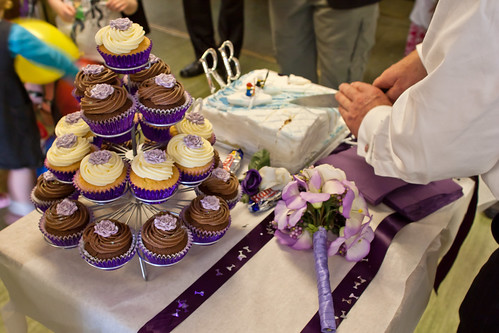
My sister came over for a marriage blessing and another party. There was cake. It was fun.

That’s actually my Dad slicing the cake there, not the groom. My Dad made the cake with his own fair hands and decorated it too. And yes that is a river of blue sparkles and two Lego canoeists. My sister and her husband do a lot of canoeing, you see. It’s a whole family thing.

Kate Gardner Blog

Holiday, celebrate

April 27, 2011April 28, 2011 2 Comments

At the risk of boring my lovely readers, I have now been through all of my holiday pictures, plus some taken by other people, and present to you a round-up of my trip to the USA.

We had a good look around Charlotte, North Carolina, which I had not visited before. A recent and thriving banking industry means that the city centre is very clean and new looking, even the old bits. We did meet a local who complained about how many old bits got torn down to built condos but I don’t know enough of the ins and outs to comment on that.

The Inn Uptown

Alexander Michael's Restaurant & Tavern

We also went to the nearby Great Smoky Mountains and did a bit of hiking (hard work in hot sunshine).

Contemplating

The way forwardMile High Swinging Bridge

We went to the US National White Water Center and did some rafting (great fun).

Photo by talkie_tim

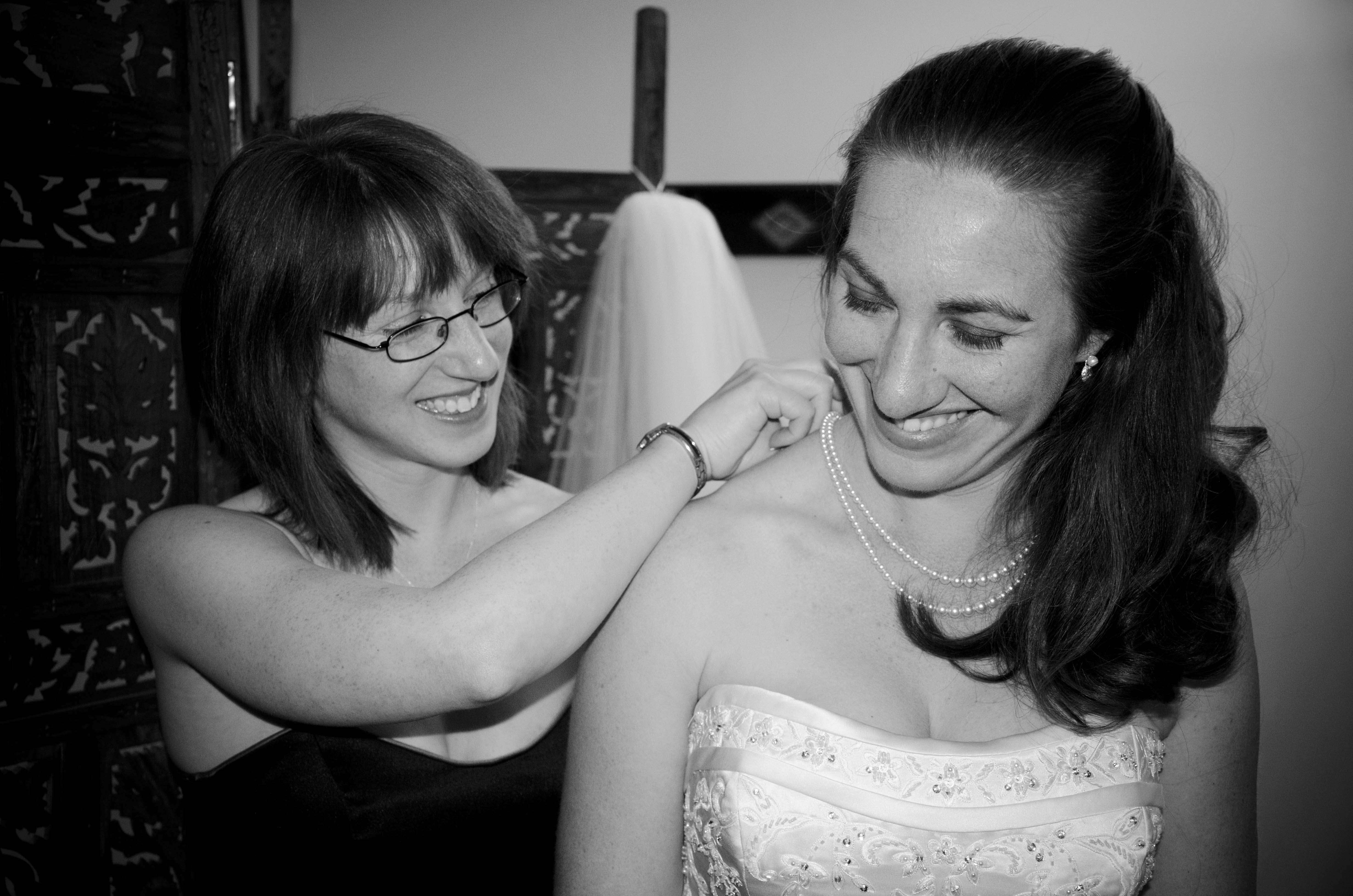
And my sister got married so well done her. I was there, I performed my bridesmaidly duties including dancing as much as I could and attempting not to sing the real lyrics to that song by Cee Lo Green when a small person took a shine to dancing with me. Which was tough.

Photos by St Martin Photography (You can click on these pics to view them big.)

There were also some lovely evenings with family and friends, old and new. There were some impressive storms thanks to the big temperature changes. There were some astute observations about different races not mixing a whole lot and some less astute ones about food being a bit rubbish. But we probably just went to the wrong places. I’m sure it’s not all deep fried really.

Kate Gardner Blog

A reader reads

February 13, 2011 6 Comments

Inspired by Wallace of Unputdownables‘ lovely post about how her mum was her biggest reading influence, I got thinking about people who were important to me in that respect. One of my big reading influences was my third-year infants teacher, Mrs Barkley.

She quickly cottoned on to the fact that I was not only way ahead in reading the official school reading scheme books, but I was bored and unchallenged by them. So she introduced me to her special book cupboard. That place was amazing! A lifetime’s worth of children’s books, mostly suitable for kids in exactly my situation. That’s where I discovered Mrs Pepperpot and Supergran and countless others.

She retired at the end of that year and we held a special assembly for her, with lots of ragtime classics, including “Any old iron”, “She’s a lassie from Lancashire” and the specially written masterpiece “Knees up Mrs Barkley” (to the tune of “Knees up Mrs Brown”, if you didn’t get that). I remember that for “Here am I waiting at the church” we dressed up in bridesmaid dresses (or the closest equivalent we had) and I discovered to my horror on returning to the classroom to change for the next number that I’d gone out on stage with my ordinary dress unzipped and hanging around my waist, underneath the frilly frock. I was lifted by the success of playing Jennifer Eccles in “Lily the Pink”, particularly because I was deemed not freckly enough and had huge freckles drawn on my face. (At the age of seven I was a little self-conscious of my freckles.) But the highlight was when we sang Mrs Barkley’s favourite song “When you’re smiling” and she cried. It may have been the first time I saw someone cry with happiness.

My parents also, of course, had their part in my love of reading. I am fairly certain I could read before I started school, which must have been down to them, mostly my Mum, but I also fondly remember Dad reading us to sleep (for some reason the only title I remember specifically being read to us is Danny the Champion of the World). They also read for themselves, though not voraciously, and there were always lots of books in our house. In later years I took to reading to my older sister when we went to bed, because I wanted to share my favourite books with her. I have no idea if she actually liked this or was just indulging her little sister.

In fact, my whole family reads. But there is a definite step change between them and me. I was always the bookish one, even if everyone had a book on the go. I would read while walking to school, while eating my meals, with a torch under the bedcovers after lights out. I would read the same book a dozen times and make a diagram of the characters’ relationships or a timeline of events. And for some reason I attribute this extra level of obsessiveness, this need to devour every book in sight, to my favourite primary school teacher. So thank you Mrs Barkley!

Kate Gardner Blog

That’s prostrate, with two Rs

January 30, 2011March 11, 2012 2 Comments

Adrian Mole: The Prostrate Years
by Sue Townsend

Oh, Sue Townsend, you never let me down. I’ve been struggling to read much lately but as soon as I opened this book I was tearing through the pages, laughing out loud and loving reconnecting with the characters that are so familiar they are like extended family.

I pretty much grew up with Adrian Mole. I somehow got hold of the first two books when I was about 10 (I think they’d been given to my older sister, not to me) and I read and re-read those volumes many a time through my teens. I think I have bought and read all of the subsequent volumes, and though grown-up Adrian is far more annoying than the teenage boy was, I still love being back in that world.

Adey, as Pandora still calls him, is approaching 40, is living next-door to his parents in a converted pigsty, is worried that his wife Daisy is gaining weight and losing interest in him, and is having trouble with his prostate (which everyone keeps calling his prostrate, much to his irritation). Still, he enjoys his job at a local independent bookshop and his five-year-old daughter Gracie is a treasure, albeit one with an overactive imagination. And surprisingly, the glamorous and successful Pandora (MP and junior minister) still shows enough interest in him to make his wife jealous.

This wouldn’t be an Adrian Mole book if he wasn’t teetering on the brink of total failure and there are moments when you wonder if he doesn’t bring it on himself (he’s so earnest) but he is ultimately a very sympathetic character surrounded by everyday-type chaos. What I’ve always thought Townsend does particularly well is to make Adrian a terrible writer when he’s trying to write (which he’s still convinced is his forte despite only ever having published a cookbook that his mother had to ghost-write when he couldn’t get past the introduction) but a brilliant diarist. His daily life, boring to his own eyes and those of his friends and family, becomes wonderfully funny through a combination of keen observation and fantastic characterisation.

In this book, for possibly the first time, my favourite character was Adrian’s mother Pauline. She freely admits to a long litany of faults but is devoted to her family and amazingly capable (she is often the only one who can persuade Gracie to wear her school uniform and not one of her many fancy dress costumes…and she does it without tears or tantrums). She is also writing an autobiography full of shocking lies that she has provisionally titled A Girl Called Shit and is threatening to take Adrian’s sister Rosie on The Jeremy Kyle Show to reveal who her real father is.

As ever, the diaries are set in the recent past (2007–2008) and provide an often-satirical look at life in Britain. There are the precursors to and early rumblings of recession, the resignation of Tony Blair, the summer floods and the smoking ban.

The next instalment of the Mole diaries is due out later this year and I greatly look forward to it.

Published 2009 by Michael Joseph.

Kate Gardner Reviews

Christmas sledging fun

December 28, 2010

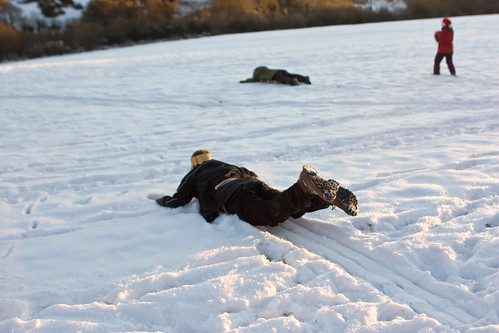
The snow stuck around just long enough for us to replace our traditional Christmas Day walk with sledging up at the local park. It’s the same park my siblings and I sledged in as children so it was a real memory lane moment to be up there with a variety of sleds, my Dad throwing himself enthusiastically down every slope while I took it a little easier. The light was falling so I didn’t get many photos, but here are a few to show the great fun we had.

Practice run on a gentle slope:
On your marks

Tim following my Dad’s cue by going headfirst:
Whoosh

Kitty the dog didn’t get that sledging and fetch are a tad incompatible:

Holly the dog was content to just dig around in the snow:
Digging

Happy holidays!

Kate Gardner Blog

A bit of festive cheer

December 24, 2010March 11, 2012

Comfort and Joy
by India Knight

Some people might classify this as chicklit, not my usual genre, but as Dervla would say this time of year, this is no ordinary chicklit; this is chicklit that absolutely completely struck a chord with me. Plus, it’s Christmassy.

Clara is 40 and is scrambling around Oxford Street on 23 December to complete the perfect Christmas she has planned for her 16 guests, including her three children, husband and ex-husband. The book follows her through the ensuing mayhem of family, friends and Christmas.

Knight mercilessly mocks the middle-class boreishness. I mean, these people are London middle class, which is a whole separate sub-class of its own. They obsess over the provenance of their food (in fact, food in general) and PTA meetings and how to give their children everything without spoiling them. Clara herself is painfully aware that these are not issues most of the world has the luxury of worrying about and besides, she finds it boring. What happened to those youthful days of discussing politics?

There are some painfully real moments and Clara can be a little vicious in her own mind, but she loves the people around her and this shines through. Her sisters are particularly wonderful characters and their shared history and language are joyous to be part of.

I laughed out loud many a time but I also appreciated the main “lesson” that Clara learns – that your true family is the one that’s there for you, the people who “taught me to swim, and everything that that’s shorthand for” as she puts it. Broken marriages and jumbled extended families may be nothing new but I suspect there’s still a lot of people out there trying to negotiate the tricky waters of which parents, step-parents, half-brothers and ex-step-granddads they keep in touch with. It’s always nice to know that someone else is struggling with the same issue.

Knight has got right into the Christmas tradition by writing about Christmas past, present and future. I loved that touch, though the future Christmas was rather less bleak than Dickens’. If you’re not one for making a fuss about Christmas, this may not be the book for you. But I loved it. I stayed up far too late into the night to finish it and then felt a little sad that it was over so soon.

Merry Christmas and happy holiday reading!

Published 2010 by Penguin.

Kate Gardner Reviews

Don’t open that door

October 24, 2010March 11, 2012

Coraline
by Neil Gaiman

This is one of that excellent trend of children’s books that don’t shy away from being scary or gruesome because, well, children like that kind of thing. I did. Far more so than I do now.

Coraline is a young girl who moves, with her parents, to a flat in a big old house one summer. Her parents rarely have time to spend with her and as the long holiday drags on she gets increasingly bored of rainy days with nothing to do and starts exploring the house and grounds until the only thing left is whatever’s behind the mysterious door in the drawing room. Despite cryptic warnings from the neighbours, Coraline finds a way to unlock the door and her ghostly adventures in a strange new world begin.

The story is excellent and the characters brilliant, either ghoulish or eccentric apart from Coraline herself, in that slightly exaggerated manner that makes sense in children’s books. The other world is cleverly imagined, starting off as a bright, attractive place and gradually becoming stranger and scarier. Coraline is a strong heroine who learns to appreciate her slightly absent parents and to solve problems for herself. The language is very simple, in fact possibly simpler than is strictly necessary. It reads like a children’s book and as an adult I found the language a little offputting. Clearly I am not the target audience but I do think perhaps Gaiman has tried too hard to distinguish this from his more adult fiction.

However, I did enjoy it. I genuinely flinched at the scarier moments and laughed out loud at some lines. I loved the downstairs neighbours, two retired actresses whose talk of treading the boards and famous Shakespeare quotes make no sense to Coraline but might to a well read (or read to) child. The main villain is chilling and original and described well enough to picture – the illustrations by Dave McKean help, of course. I would not hesitate to recommend this for a child but not necessarily to an adult.

First published 2002 by Bloomsbury.

Kate Gardner Reviews

Posts pagination

1 … 4 5 6

Archives

RSS Nose in a book

  • Book review: Interstellar Megachef by Lavanya Lakshminarayan
  • May 2026 reading round-up
  • Book review: Passing by Nella Larsen

Me on the internets

  • @kate_in_a_book@mas.to (Mastodon)
  • Flickr/noseinabook
  • Instagram/kate_in_a_book
  • StoryGraph/kate_in_a_book

Categories

  • Blog
  • Reviews
  • Uncategorized
Proudly powered by WordPress | Theme: Dream by vsFish.