Nose in a book

Reviews and other ramblings

  • Home
  • Reviews archive
    • Book reviews
    • TV reviews
    • Theatre reviews
  • TBR
  • Challenges
    • The Classics Club
    • 2014 Popular-Science Reading Challenge
    • Cookery challenge
    • The Gilmore Girls Reading Challenge
    • 2013 TBR Pile Challenge
    • 2013 Translation Challenge
    • Crime and Punishment read-a-long
  • About
    • Cookie legal stuff
  • Home
  • Reviews archive
    • Book reviews
    • TV reviews
    • Theatre reviews
  • TBR
  • Challenges
    • The Classics Club
    • 2014 Popular-Science Reading Challenge
    • Cookery challenge
    • The Gilmore Girls Reading Challenge
    • 2013 TBR Pile Challenge
    • 2013 Translation Challenge
    • Crime and Punishment read-a-long
  • About
    • Cookie legal stuff

Tag: romance

To define happiness, its one clean note

November 26, 2012

Seducing Ingrid Bergman
by Chris Greenhalgh

When I spotted this title in the Penguin Press Newsletter it wasn’t so much Bergman’s name that attracted me – though she was a great actress and some of her films are deservedly classics – but that of the other half of this brief affair – war photographer Robert Capa. Photography interests me as a hobby and as an art form and I was interested to see how that would be handled within a novel about one of the medium’s legendary names.

It’s a great story that has all the right ingredients for becoming a great film, but it didn’t immediately click for me. Despite a dramatic, well judged opening that contrasts Capa parachuting into enemy territory and being shot at in March 1945 with Bergman receiving an Oscar in a glittering ceremony in Hollywood, I found myself noticing the writing, tutting at all the similes that would have served better as metaphors and the slightly obvious parallels drawn with photography wherever possible:

“…involuntarily she repeats the way Pia had wrinkled her nose, closing both eyes at the same time as though taking a photograph.”

However, I think perhaps I just took a while to get over the fact that these were real people and that I had been expecting something that felt a bit more like historical fiction or even biography. Because this is solidly a novel, ascribing thoughts and fears and feelings to its characters and even using first person for about half of the narrative (always as Capa). And as I gradually got pulled into the story I began to thoroughly enjoy it and even to pick out well written passages:

“We watch as the light rises, giving the world shadows. The grey shapes of the trees on the boulevards hold their breath for the heat of day. And behind the buildings the sun comes up with its liquid edges.”

The bulk of the story is set in Paris, where Bergman is sent to entertain troops and Capa is based in-between assignments. Greenhalgh does a good job of describing Paris, primarily in a romantic light but with the occasional touch of realism, such as very funny observation about a high class cafe having a hole-in-the-floor toilet, and Capa imagining all the fancy ladies in their high heels squatting over the filth and being impressed by them emerging looking flawless.

I must admit, and this may be largely my own cynicism, that I found the early descriptions of the affair saccharine to an annoying degree:

“I don’t know whether it’s the music or Ingrid sitting there, her spoon poised over her ice cream, but everything merges at this moment – the leaves, the sunlight, the scent of vanilla, the street with its sliced shadows – and if I had to define happiness, its one clean note, well, this is the closest I’ve come to it.”

For me, it was everything else in their lives that captivated me, for instance when Capa had flashbacks to wartime and was terrified and yet would profess later that day a desire to get back to work, meaning another war. Or descriptions of Bergman making films I know and love, such as Notorious.

Perhaps I would have been better off reading biographies of these people and an anonymous love story, but the one advantage this novel does have is that you know from the start (or at least I did) how it ends, you know that this was not the only love either person experienced in their lives, nor even the most dramatic one, and yet while it lasted it was all those things and more, because that’s how life and love are. And I do now want to go back to Capa’s photographs and Bergman’s films, which is after all their legacy, not who they loved.

This book was kindly sent to me by the publisher in return for an honest review.

Published November 2012 by Penguin Books.

Kate Gardner Reviews

Sunday Salon: Celebrating 10 years

September 2, 2012 2 Comments

The Sunday Salon

Not 10 years of the blog; I’m not that with it! No, this week Tim and I celebrated 10 years together with a holiday in Cambridge. I’d not been before, though I felt like I knew it well from books, films and TV, but it was a real treat to go and soak up the centuries of learning. So much great architecture, culture, science and art. Far too much for a week in fact! At least, it is when you take frequent breaks for pleasant walks, reading books and eating delicious food.

The classic view of the River Cam, complete with punts and bridges, and I think that’s the back of King’s College.
The classic view

Plenty of narrow cobbled streets and a little less plenty of sunshine.
A glimpse of blue sky

Some seriously impressive architecture and interior décor at these colleges, for instance this hall at Queens’ College.
Restored to magnificence

Plus lots of bookshops, lots of green spaces and bikes everywhere (though not that many actually being ridden while we were there; not sure if that’s because it’s outside of term time or because my expectations were skewed by living in the Cycling City that is Bristol). I took approximately a bajillion photos, a lot of which were on film, so my Flickr photo set will grow, if you’re interested.

Kate Gardner Blog

What’s in a name

January 23, 2012 1 Comment

Possession
by AS Byatt

This was a re-read that I sadly ended up rushing through because it was for book club and I didn’t give myself enough time. It’s a wonderful book, as literary as they come yet immensely readable.

The story begins with Roland, a postgrad scholar of the eminent (and fictional) Victorian poet Randolph Henry Ash, discovering long-hidden drafts of a love letter from Ash to a mystery woman. This is a potentially huge discovery, Ash having been assumed to be a dull, happily married type.

Thus begins the unravelling of great secrets, but Roland is jealous of his discovery and does not tell his university supervisor or his girlfriend Val. Instead he turns to a complete stranger, fellow academic Maud, because he suspects that the subject of her studies, minor Victorian poet Christabel LaMotte, was also the subject of Ash’s letter.

Between letters, diaries, academic texts, poems and good old-fashioned third-person narrative, there are a lot of switches in style and voice in this book, yet it never feels as though that is the case. Similarly, like the poems being studied for clues, this text is packed full of allusions and references, but it doesn’t feel overly clever or difficult.

In some ways this book is very much a product of its time. It was written in the 1980s and Byatt gently satirises the times. Roland is emasculated by Val’s stronger earning power and neither of them ever says what they mean. Maud is surrounded by feminists who seem obsessed with lesbianism and anti-men sentiments. The shadow of AIDS looms large over thoughts of sex. But this is all subtly kept in the background.

At book club we discussed how you can read this book at many different levels. There is the surface level where it’s a romance/mystery/drama and is fun and enjoyable without requiring any background knowledge. There’s the satire on academia, particularly 1980s academia. And there’s the literary novel, referencing mainly Victorian poetry but also older texts such as Shakespeare and Ovid and I’m sure plenty more that I didn’t spot. The character names are carefully chosen for the literary allusions that they have. And at all these levels it works, works very well, without ever seeming to show off.

I’m told that The Children’s Book is another excellent Byatt read, and that just happens to be on my TBR (a kind Christmas present), so I expect to be breaking that out soon.

First published 1990 by Chatto & Windus.
Winner of the 1990 Booker Prize.

Kate Gardner Reviews

Under the skin

November 6, 2011March 11, 2012 9 Comments

Norwegian Wood
by Haruki Murakami
translated by Jay Rubin

This is the book that turned Murakami from successful author to superstar and sent him running into hiding in the US. It’s certainly a more “straightforward”, accessible narrative than he is generally known for, but it is still undeniably, brilliantly him.

Toru tells us the story of his student days in Tokyo, from 1968 to 1970, and the friends and lovers who mattered to him and even changed him in those formative years. Against a backdrop of free love, student protests and Beatles songs, we learn how Toru’s best friend Kizuki killed himself when they were 17. A year later, completely by chance, Toru bumps into Naoko who had been Kizuki’s girlfriend since they were small children. Unsure of what to say to each other but united by their grief that holds them apart from the rest of the world, they start spending time together. Toru falls headlong in love with Naoko even while he knows she can never love him.

While Naoko’s difficulty in dealing with life gets worse and worse, Toru meets another woman, one who could not be more different. Where Naoko is delicate, feminine and non-communicative, Midori is a blaze of talkative modernity, with short hair and a tendency to get way-too-open about sex. She also has a boyfriend, albeit one Toru never meets, just as she never meets Naoko.

A large chunk of the start of this novel was a short story in Blind Willow, Sleeping Woman, which I read quite recently, and this threw me at first. The language is beautiful, the characters so very detailed and real, the setting vividly alive but as Naoko and Toru held themselves apart, so I found myself at arm’s length from the story – observing rather than drawn in. It was really only with the introduction of Midori that this book came to life for me. I really loved her character. She is no more “ordinary” or run-of-the-mill than Toru or Naoko, but she has a joy and spirit that uplifted the story, even when terrible things were happening.

While there’s no surrealism or magical story twists here, what there is plenty of is Murakami’s uncanny ability to get under the skin of people and everyday life. Even when nothing much is happening, I was thoroughly enjoying every word. A simple description of daily life in a student dorm could have me laughing out loud, a casual conversation over a noodle lunch have me grinning in recognition. But there is also a lot of pain – the ordinary pain of growing up and facing adulthood plus the added pain of death, loss, unrequited love, psychological trauma. It’s a beautiful and moving story.

First published as Noruwei no mori in 1987 by Kodansha Ltd, Tokyo.
This translation published 2000 by the Harvill Press.

Kate Gardner Reviews

Undercurrents

October 30, 2011July 21, 2015 2 Comments

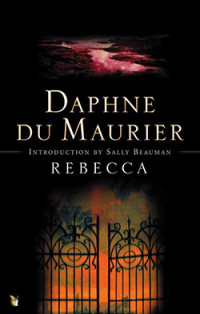
RebeccaRebecca
by Daphne du Maurier

This was, appropriately, the final book in the Discovering Daphne readalong run by Savidge Reads and Novel Insights. I have been looking forward for months to re-reading it, and was a little sad at how quickly I flew through its pages when this week finally came.

One of the reasons I highly rate this book (and no doubt many others would agree) is the great pleasure of re-reading it. This was my third reading (I think) and I loved looking out for the hints of what is to come, as well as spotting the red herrings that had misled me previous times. Knowing the story allowed me to linger over the detailed gothic descriptions when I was in the mood and skim over them when I wasn’t. Despite knowing the outcome, I was still excited by the build-up of tension and on tenterhooks in all the right places. I’m convinced – du Maurier was officially a wonderful writer.

Briefly, this is the story of the second Mrs Maxim de Winter. Or rather, she is the one who tells the story, but for a lot of the time it isn’t about her at all, it’s about Rebecca. Rebecca was Maxim’s first wife and died tragically young, just a year before he met and swiftly married his second wife.

Continue reading “Undercurrents”

Kate Gardner Reviews

The start of her career

October 9, 2011March 11, 2012 1 Comment

The Loving Spirit
by Daphne du Maurier

I read this book as part of Discovering Daphne, an event/readalong run by Savidge Reads and Novel Insights. Unfortunately, a combination of bad planning and ill health means I’m a week late finishing this book but it does feel appropriate to have read the bulk of it at the seaside!

This was du Maurier’s debut, a love letter to Cornwall as much as a novel, but also an ambitious family saga. It covers four generations of the Coombe family, from 1830 to 1930. Each section concentrates on one family member, each of whom has inherited a wild streak, the “loving spirit” of the title. It starts with Janet, who wishes she had been born a boy so that she could go to sea and is never quite content with her devoted loving husband, for all that she does love him. Then there’s her middle son Joseph, the love of her life, the boy who really does run away to sea and have great adventures and lead women on while never loving any of them the way he loves his mother. Then there’s Joe’s oldest son Christopher who disappoints his father by not wanting to become a sailor, but with that old family restlessness ends up trying to make his fortune in London. And finally there’s Christopher’s youngest, Jennifer, a strong and independent woman determined to break away from her controlling mother and grandmother and return to the family’s roots in Cornwall.

It’s a beautifully written, warm, engaging book, but it does have its flaws. For the first two generations du Maurier has her characters speak in strong Cornish dialect, which added a certain country charm and “ye oldeness” I suppose but also smacked of condescension. Maybe that’s just me. The relationship between Janet and Joseph troubled me. I know that a mother and son can have a stronger bond than a husband and wife and there’s nothing wrong with that, but something about the obsessive quality du Maurier describes made this particular relationship a bit wrong. There were a lot of times when I felt that everything moved too fast, that there was too much sketching out what has happened while time passed and not enough current story. And I didn’t like how down on London du Maurier was, with absolutely nothing good to say about the capital, though at least she was kinder to Bristol when it got a brief mention.

But for all that I still greatly enjoyed the book. Each of the central characters was engaging and sympathetic and I did like the way the language of courtship developed from incredibly polite and formal to teasing sarcastic banter. The descriptions of the sea and Cornwall are so detailed and evocative that the town of Plyn was almost a character itself. In fact, while none of the love stories or deaths roused much emotion in me, the final homecoming to Plyn did bring a tear to my eye.

There’s a lot of what I would guess were du Maurier’s pet “issues” in this book. She clearly thinks country is better than city, especially for children. She doesn’t hold stock with prim and proper, preferring openness and honesty. She believes in children knowing the facts of life rather than it all being a frightening mystery. She believes in the strength of women, in them holding jobs and speaking their minds and having options beyond “wife and mother” if they want them. And she believes in good, honest, simple lives – hard work, loving family, friendly neighbours – rather than building fortunes or being fashionable. Which is all fine, though you might argue she presses the point home a little strong. Of the many many characters in this book the odd one who broke the general trend would have perhaps evened things out.

See also: reviews on Savidge Reads and Novel Insights. Next up in Discovering Daphne? The House on the Strand, to be discussed next Sunday.

First published in 1931 by William Heinemann.

Kate Gardner Reviews

Something missing

August 22, 2011March 11, 2012

Trance of Insignificance
by Jennifer Rainville

This book was sent to me by the author after a short e-mail exchange during which she intrigued me with her title and synopsis. It sounded like a smart, modern romance that would make an easy but satisfying summer read. It certainly had all the right components, but for me it didn’t quite hit the spot.

Rainville has created a main character with a lot in common with herself. Jules Duvil, like her creator, worked as a political aide in Washington and then as a TV journalist in New York City before becoming a media adviser and writing a novel, which is about to be released at the start of this book. This lends a weight of authority to the passages set in newsrooms and I was a little sorry that there wasn’t any detail about Jules’ time in Washington, because I’d have loved to learn more about that.

The book cuts back and forward in time, mostly to three periods: Jules’ problematic childhood on the rougher side of Boston; her relationship 10 years ago with local celebrity news anchor Jack who is a known womaniser and yet is jealous of Jules’ every move; and the present day, in which Jules is trying to make things work with the far more staid and predictable ad exec Noah, who comes from money and believes in doing things in a certain way. It is clear that neither man is good for Jules; both of them want to change her, but they also love her deeply.

For me, the novel started on a bit of a bum note. In an early chapter we hear about Jules’ first day as a lowly production assistant for a big New York news station and that day just happened to be 11 September 2001. It’s a bold decision to take and gives Rainville the chance to quickly explain a lot about how TV news works while relating it to a news story that we all remember vividly. However, she doesn’t write much about the effect of 9/11 outside the news room – the state the city was in, the change that was suddenly and irrevocably wrought. I know she is trying to make a point about news journalists being bloodthirsty enough to not think about the human side of tragedy, but surely that was too big and awful an event for that to be true? Maybe I’m wrong.

I didn’t warm to Jules. Though we gradually learn from the flashbacks why she is a little cold and label-obsessed, I was annoyed by the need to detail every one of Jules’ outfits, including accessories – all designer. I wasn’t convinced that a single woman living alone in New York and struggling to make it as a journalist would honestly be able to afford such extravagant outfits, not coming from a poor background. Maybe she earned a small fortune during her couple of years in Washington? But that seems unlikely. It’s more believable in the present-day sections, when she’s become a successful self-employed media adviser and it would have been interesting to see a contrast from perhaps her envy of other women’s clothing in 2001 to having a designer-filled wardrobe in 2011.

Jules’ rough upbringing wasn’t, sadly, entirely convincing. Rainville drops in a lot of family trauma and some scenes are frank and shocking, but they didn’t feel fully fleshed out. They were often very brief – just a page or two – and could have done with expanding, perhaps even softening with some warmer or even just mundane memories.

This is Rainville’s first novel and it’s self-published, neither of which is necessarily a bad thing, but in this case it shows. Though Rainville has some talent, she would have benefited enormously from a professional publishing house to give her some guidance and edit the text line by line. The copy editing is poor, though that may have particularly stood out for me because it’s how I make my living. But more than that, there are some clumsy lines, poor exposition and extraneous details that a professional would have helped Rainville to iron out.

I suppose I would have liked to see more descriptions of the city, rather than just name-dropping restaurants and bars; and more small, nuanced details that reveal something about a person rather than a personals-ad-style height, figure, hair and eye colour list. Rainville does know how to turn a phrase, and uses some great imagery, not to mention having a good ear for dialogue, but there’s too much clumsiness in-between to ignore. That said, I was involved enough in the story to read the book pretty quickly and care how things turned out. If Rainville works with a professional publisher for future novels, I do think it will be worth giving her another chance.

This is all, of course, just one person’s opinion, and I may have been negatively influenced by the grammatical errors. Other reviewers out there seem to have more positive views.

Published 2011 by Rainville Books.

Kate Gardner Reviews

The shock of growing up

June 3, 2011March 11, 2012

Claudine in Paris
by Colette
translated from French by Antonia White

After thoroughly enjoying the first book in the Claudine series, I was glad to already have the second book waiting in my TBR. It was another wonderful, rollicking read and I’m now going to have to search out the other two.

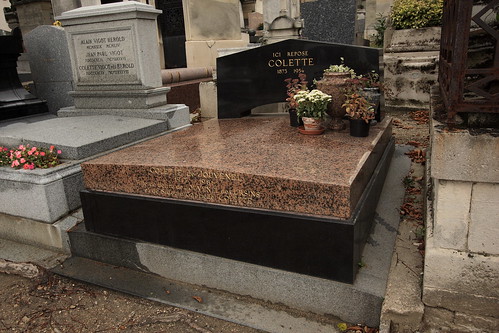
These were the first novels written by Sidonie Gabrielle Colette, who was an absolutely fascinating literary figure. I visited her grave in Paris a few years ago and was moved in a way I hadn’t expected to be (especially considering that previous to this series her novels have failed to move me).

Ici repose Colette

In this volume, Claudine and her father have moved to Paris, so that he can further his studies of slugs. She discovers to her surprise that she suffers greatly from homesickness for her beloved countryside village. She also discovers, on exposure to a new male friend who is gay and an old female friend who has become a rich man’s mistress, that she is far more easily shocked than she would have expected of herself:

“Disgust, yes definitely! There I was, making myself completely sophisticated and disillusioned and shouting from the rooftops ‘Ha, ha! You can’t teach me anything. Ha, ha! I read everything! And I understand everything even though I am only seventeen!’ Precisely. And when it comes to a gentleman pinching my behind in the street or a little friend living what I’m in the habit of reading about, I’m knocked sideways…In your heart of hearts, Claudine, you’re nothing but a common everyday decent girl.”

Well, Claudine may have discovered that the big wide world isn’t as easily bluffed as her old schoolmates were, but she is still far from common or everyday. Claudine is hypersensitive enough to catch a fever when she gets anxious but she is also tomboyish enough to do exercises every morning and speak her mind almost thoughtlessly. She is still vain enough to admire herself in every window or mirror and look coquettishly at every man she sees, but is self-aware enough to know that she is silly and vain and inexperienced to boot. She catches herself feeling jealous of an old friend who is marrying a sensible, dull sort of man and presses her friend the kept woman for information about sex while all the while feeling scared and sickened by the whole business.

Most of all, Claudine is still a witty, entertaining narrator who lets you into her world with disarming honesty, beside the occasionally withheld nugget of interest. The main switch in this book is that Claudine appears to have left behind the lesbian intrigues of school, only revisiting them for the entertainment of her cousin Marcel, who is left hot under the collar by her accounts and begs for more detail. Claudine’s romantic interest now seems to be firmly aimed toward men and marriage.

For all its shocking content and its youthful, not as sophisticated as she’d like to be narrator, this book is extremely well written with a wonderful, colourful cast of characters and a clever humour that must have been a challenge to translate this deftly.

Claudine à Paris first published in 1901 by Paul Ollendorff, attributed to Willy (Colette’s first husband)
This translation first published 1958 by Secker and Warburg

Kate Gardner Reviews

Disagreeing with the majority

March 1, 2011March 11, 2012 5 Comments

Pride and Prejudice
by Jane Austen

This is a book I had started half a dozen times but never finished before. I downloaded it from Project Gutenberg so that I could help test the Kindle that we bought for Tim’s parents and somehow wound up reading the whole thing, finally!

My previous attempts at this book were thwarted by the detached, stuffy manner of the storytelling. I read recently that Jane Austen wrote all her books in secret while in a drawing room full of family and other guests, so she naturally turned to the type of drama that is played out in a drawing room. And that is certainly true. She turns a certain studious eye and ironic wit on her subject and I was surprised to find myself laughing out loud on occasion.

As a lover of the 1990s BBC retelling of this story starring Jennifer Ehle and Colin Firth, it was hard to be indifferent to the love stories that were playing out or the comedy of some of the characters, however I still can’t say that I greatly liked this book. Austen never really gets under the skin of anyone and, though she hints that the social niceties being followed are silly or pointless, they are never truly thwarted.

I was surprised to find, despite this being a dialogue-heavy novel, that some of the most important moments are not told in enough detail. For instance, when Lizzie finally confesses her love to Darcy or when she tells her father of her love for Darcy, Austen does not actually give us the words Lizzie uses or hears in return, which I found deeply dissatisfying. Nor is there even one single kiss, and the only embraces are between friends and family. But there is a slightly odd final chapter summarising the next few years of everyone’s lives, giving the novel a feeling of not having a proper solid ending.

I know that a lot of people out there love this book and will wholeheartedly disagree with me. I should also say that I have read a couple of Austen’s other books and enjoyed them (though still not loved them). I recognise that Austen had great talent, intelligence and wit. Her style, however, is not one that I particularly enjoy.

First published in 1813.

For some alternative points of view, see reviews from Bookworm With a View and The Zen Leaf.

Kate Gardner Reviews

Fluffy as fluff should be

October 19, 2010March 11, 2012 2 Comments

The Learning Curve
by Melissa Nathan

You may notice that this is not my usual fare. There’s a lot of pink on the cover and big curly letters, with testimonial quotes from B magazine and Jilly Cooper. You got me – it’s chick-lit. And not well written, wittily observed, you-could-almost-call-this-literary-fiction chick-lit either. But I needed a day of mindless entertainment and, much like a Friends boxset, this provided it.

I haven’t read anything approaching this genre since I was a teenager so I’m not entirely sure how this compares with others of its kind, but I’m sure chick-lit authors don’t expect to be compared to Milan Kundera or Bret Easton Ellis and that’s fine. I don’t deny that a lot of the books I read require a bit of work to get my head round, or just to get into, and I definitely see the attraction of sinking straight into a story from page one.

This isn’t good literature. There were no phrases or descriptions that made me smile at the choice of language. I didn’t find myself transported to a place I’ve never been or start thinking deep thoughts about life, the universe and everything. It was enjoyable, in a guilty kind of way (again, much like Friends). The characters were both familiar and realistic enough to be interested in and the storyline kept me hooked. Perhaps more importantly, on a day when I was pretty much exhausted, a state in which I normally struggle to read, I was happily devouring this without getting a headache.

The storyline is simple. Nicky Hobbs is a primary school teacher who always wanted kids but hasn’t got her man yet. Now she’s turned 30 she’s discovered she also has ambition in the workplace and she worries that she’ll have to choose between career and motherhood. If a man comes along to make the latter an option, that is. As it happens, two men start showing an interest. Rob is a fellow teacher at her school and her ex. They’ve been friends for years since the break-up but the flirtation seems to have subtly changed lately. Then there’s Mark, father to Nicky’s favourite pupil and a workaholic absent father, and single parent. Cue lots of agonising over life-changing decisions and also more minor ones like wardrobe choices, pouring out of hearts to close girl friends and misunderstandings that take months to be cleared up.

The twists and turns of the story are obvious from a mile off and this occasionally grated. The phrasing seemed to suggest that I should be surprised at this, that or the other when I was just thinking ‘About bloody time.’ The debate about career versus motherhood is an interesting one and the differences between parenting styles is also something I’m interested in. They weren’t explored in great depth but they gave a little bit of background colour. There was a decent extended cast of characters who were all fully fleshed out and the dialogue was realistic and occasionally laugh-out-loud funny. The school is the setting for a lot of the book and at times it felt like I was reading a novelisation of Teachers, which is a series I loved so that’s probably a compliment. The bitchiness and cliquiness of the staff room, the sudden changes of allegiance when a relationship is formed or breaks up or a promotion opportunity is announced, the division between those who genuinely love teaching and those who don’t – all felt familiar and provided much of the humour. Nicky herself is a fairly typical white middle-class British woman who worries about whether she looks good and what people think of her but is also determined to have a career on equal terms to any man. Not exactly a feminist but a reasonable approximation of how a lot of women I know think.

I probably won’t seek out other books by this author – which there aren’t many of because Melissa Nathan sadly died of breast cancer shortly after completing this novel, aged just 37 – but if I find myself in that same state of exhaustion without a TV again and another of her books happens to be handy for borrowing, I’ll accept the offer.

Published 2006 by Arrow Books.

Kate Gardner Reviews

Posts pagination

1 … 5 6 7

Archives

RSS Nose in a book

  • Book review: Interstellar Megachef by Lavanya Lakshminarayan
  • May 2026 reading round-up
  • Book review: Passing by Nella Larsen

Me on the internets

  • @kate_in_a_book@mas.to (Mastodon)
  • Flickr/noseinabook
  • Instagram/kate_in_a_book
  • StoryGraph/kate_in_a_book

Categories

  • Blog
  • Reviews
  • Uncategorized
Proudly powered by WordPress | Theme: Dream by vsFish.