Nose in a book

Reviews and other ramblings

  • Home
  • Reviews archive
    • Book reviews
    • TV reviews
    • Theatre reviews
  • TBR
  • Challenges
    • The Classics Club
    • 2014 Popular-Science Reading Challenge
    • Cookery challenge
    • The Gilmore Girls Reading Challenge
    • 2013 TBR Pile Challenge
    • 2013 Translation Challenge
    • Crime and Punishment read-a-long
  • About
    • Cookie legal stuff
  • Home
  • Reviews archive
    • Book reviews
    • TV reviews
    • Theatre reviews
  • TBR
  • Challenges
    • The Classics Club
    • 2014 Popular-Science Reading Challenge
    • Cookery challenge
    • The Gilmore Girls Reading Challenge
    • 2013 TBR Pile Challenge
    • 2013 Translation Challenge
    • Crime and Punishment read-a-long
  • About
    • Cookie legal stuff

Tag: romance

It is poverty only which makes celibacy contemptible

November 23, 2016

emmaEmma
by Jane Austen

In my late teens I went through a serious period drama phase, fuelled by TV miniseries based on classic books. A particular favourite was the 1996 ITV production of Emma starring Kate Beckinsale. I loved that show and watched it so many times I can still picture every scene now, a good 15+ years after I last saw it. Plus, of course I’ve seen the Gwyneth Paltrow film (meh), the 2009 BBC series starring Romola Garai (okay) and the greatest (or at least the most fun) Austen adaptation of them all, Clueless.

So you’d think I would have read Emma long ago. However, to date my experience of Jane Austen has not gone so well. I quite liked Northanger Abbey but I gave up multiple times on both Pride and Prejudice and Sense and Sensibility, finding the stuffiness outweighed the wit. I can’t say finally reading Emma has won me over; largely I think I only got through it because I already knew it so well.

Emma Woodhouse is young, rich, devoted to her family and determined to be cheerful. Her elderly father doesn’t like to go out and she doesn’t like to leave him home alone, so ever since her governess Miss Taylor left to marry Mr Weston she has been pretty bored. She makes friends with Harriet Smith, a girl of unknown parentage who was raised by the local schoolmistress. Harriet is dull but straightforward and quick to adore Emma. Emma’s friend and adviser Mr Knightley (her sister’s husband’s brother, who lives nearby) thinks she would do better to befriend Jane Fairfax, who is intelligent and accomplished. But Emma has always found Miss Fairfax cold and distant, not to mention being a little jealous of her musical skill.

Continue reading “It is poverty only which makes celibacy contemptible”

Kate Gardner Reviews

The white sea-mists of early summer turn the hill to fantasy

August 18, 2016

TheKingsGeneralThe King’s General
by Daphne du Maurier

I picked this book to read while on holiday in Fowey. Du Maurier wrote this historical novel while living at Menabilly, and loosely based it on the house’s occupants during the English Civil War. In her author’s note she calls it a “blend of fact and fiction” – as far as I can tell, the names of people and outcomes of battles are correct, their personalities and feelings about each other are presumably invented.

It’s a slightly uneven novel, weaving a questionable romance into what is otherwise a fascinating mix of characters and events. The narrator is Honor, who structures her story around the Grenviles, a pair of siblings who came into her life when she was a young child. Richard Grenvile is dashing but pretty much a bastard. For the first part of the book he doesn’t even come across as the roguish antihero he later becomes, he’s just nasty and it’s a little hard to see how Honor could, as she does, fall in love with him. Then again, she’s very young and nice girls falling for bad boys is a classic trope for a reason, right?

Richard’s sister Gartred Grenvile is similarly beautiful and treats people like dirt. She is an interesting baddie, always acting out of self-interest rather than any inherent evil. This puts her at times in an uneven truce with Honor, while at others they are clear enemies.

Continue reading “The white sea-mists of early summer turn the hill to fantasy”

Kate Gardner Reviews

Words, dropping on her like millstones

April 16, 2016

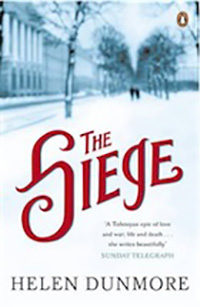
siegeThe Siege
by Helen Dunmore

After thoroughly enjoying Helen Dunmore’s A Spell of Winter for my old book club, I added a random handful of her other books to my Christmas wishlist and this was the one my Mum picked out. I’m sure they would all have worked out equally well, as I’m starting to think I might be a Dunmore fan.

This is the story of the 1941 siege of Leningrad. Which sounds like a tough, war-heavy subject, and this book is certainly all about how tough it was, but Dunmore also makes it compulsively readable. 23-year-old Anna, her father Mikhail and her 5-year-old brother Kolya are settling into summer life at their dacha, in the countryside just outside Leningrad, when news of the German army’s advance reaches them. Instead of spending the brief northern summer growing their usual store of food for winter, they must instead hurry back to the city and help to build defences before the Germans arrive.

“Even the trees in the parks have become something else. Now they are defensive positions, behind which a man can crouch, watching, alert, his cheek pressed against bark which is carved with lovers’ initials. Each prospect of stone and water yields a second meaning which seems to have been waiting, hidden, since the city was first conceived.”

Continue reading “Words, dropping on her like millstones”

Kate Gardner Reviews

Love should bestow sublimity

March 22, 2016March 24, 2016

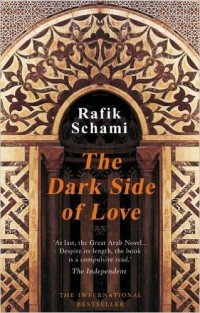
dark side of loveThe Dark Side of Love
by Rafik Schami
translated from German by Anthea Bell

I can’t remember where I first heard about this book but I do know it was on my birthday wishlist a few years back and I was surprised when I opened the parcel to find not a stack of three or four books, but one big fat book. It is epic in every sense of the word and I loved spending two weeks absorbed in it.

Rafik Schami writes in his afterword that ever since he was a 16-year-old boy in Syria, back in the 1960s, he had wanted to write a realistic Arab love story, but it took him 40-odd years to get it right. The result is a novel that looks at dozens of permutations of doomed romance against a backdrop of decades of Syrian history, though the bulk of the story is set in the 1950s and 1960s.

“Nagib looked askance at his daughter and smiled. ‘Why does love always have to imply possession?’ he asked, shaking his head…’You should love with composure…Love should bestow sublimity. It lets you give everything without losing anything. That’s its magic. But here people want a contract of marriage concluded in the presence of witnesses. Imagine, witnesses, as if it were some kind of crime…State and Church supervise the contract. That’s not love, it’s orders from a higher authority to increase and multiply.’ “

Continue reading “Love should bestow sublimity”

Kate Gardner Reviews

For what is lightness but inconsequence

June 16, 2015

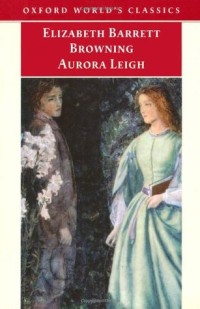
aurora leighAurora Leigh
by Elizabeth Barrett Browning

Yes, I read an epic poem, or novel in verse, and it wasn’t just to tick something off my Classics Club list. I really like Browning and had been meaning to read this for years.

Aurora Leigh is born in Italy but when her beloved parents die she is sent to England to be raised by her aunt. At every step she chooses her own way in a manner that to a modern reader might appear progressive and feminist. She is self-taught (aside from a few years when she is taught by her aunt) and chooses her career over a man; she argues for the contributions of women to the arts, and poetry in particular. From the day Aurora declines a marriage proposal because her suitor denigrates her chosen career and her gender, I was in love with her.

“We get no good / By being ungenerous, even to a book, / And calculating profits – so much help / By so much reading. It is rather when / We gloriously forget ourselves and plunge / Soul-forward, headlong, into a book’s profound, / Impassioned for its beauty and salt of truth – / ‘Tis then we get the right good from a book.”

Continue reading “For what is lightness but inconsequence”

Kate Gardner Reviews

I am my mind. Not my body

March 11, 2015March 25, 2015

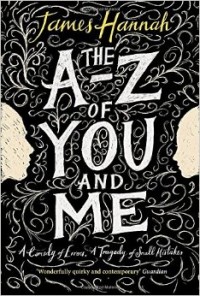
The A-Z of You and MeThe A–Z of You and Me
by James Hannah

From the marketing campaign around this debut novel – and the strapline on the cover (“A comedy of errors, a tragedy of small mistakes”) – I was expecting quite a light read, even though the premise should have prepared me for something a bit darker. It’s certainly an easy, often sweet read, but its subject matter is pretty dark. It’s an odd juxtaposition.

Ivo is lying in a hospice, trying his best not to dwell on the past, but he’s so young to be dying, still in the middle of all the drama that is life. To distract him from the pain, his nurse gets him to play a game of naming a body part for each letter of the alphabet and coming up with an anecdote for each body part. And so he plays the game, telling the story of his life out of order and one body part at a time.

Continue reading “I am my mind. Not my body”

Kate Gardner Reviews

Night Safari: Love in the Natural World

February 21, 2015March 25, 2015

Natural History Museum, London
Monday 16 February 2015

Dippy has a tail

Our Valentine’s long weekend in London was largely built around Tim managing to get tickets for the Natural History Museum‘s special Valentine’s tie-in evening event. I almost didn’t care what the event was, I was so excited by the prospect of being in the museum at night, sharing it with only 50 or so people. If you’ve ever seen the ridiculous queues to get into the Natural History Museum, particularly on a weekend or school holiday (which this last week was for most of England) you’ll understand why that was exciting.

But it was also a cool event in itself: three short lectures from NHM scientists about “romance” in the natural world (there was also a “passion” option with three different scientists, which I’m guessing concentrated more on sex but let’s face it, both options were mostly about sex).

Continue reading “Night Safari: Love in the Natural World”

Kate Gardner Blog

Was her memory meaningless? Her experience insubstantial?

October 19, 2014October 19, 2014

seconds-bryan-lee-omalley

Seconds
by Bryan Lee O’Malley

This is a sweet, funny graphic novel from the author and artist behind Scott Pilgrim, very much in the same vein. It blends real life with fantastical elements and has a strong female lead. What’s not to love?

Katie is the head chef at a restaurant called Seconds, but her dream is to own her very own restaurant. She has started to make her dream come true but it isn’t going smoothly. Her ex-boyfriend Max keeps turning up at Seconds, she’s having an affair with the man she’s supposed to be training up to replace her, and the builders at her new restaurant keep calling with bad news. When she causes an accident through negligence Katie knows something has to change…and somehow it does.

“Katie disappeared into the pantry. It was pretty pathetic. She sat there heaving and trying to make herself cry. The saddest thing was that she couldn’t have a moment away from herself. And then, through a crack in the floorboards, she saw—something.”

This has elements of a classic folk or fairy tale, including the idea that being able to put right mistakes won’t necessarily result in everything turning out perfectly. It also has a lovely strand about female friendship, as Katie alleviates her loneliness by getting to know her waitress Hazel. In familiar Bryan Lee O’Malley fashion, there are no clear right answers and Tim and I argued about the ending, before agreeing to accept that it isn’t the ending.

“Katie’s heart wouldn’t stop racing. Was her memory meaningless? Her experience insubstantial? Was she losing her grip on reality? Was she even awake?”

The art style is simple and atmospheric, with some beautiful set pieces. For instance, one double page is given over to a top-down view of the Seconds building, like a floor plan occupied by people and furniture. It reminded me of a page from one of the Usborne Puzzle Adventure series, with subtle jokes and hidden clues to the story to come – and I mean that as a compliment; I loved my Usborne Puzzle Adventures and still have several of them in my library!

Katie is an imperfect, relatable lead character. She’s strong and confident when she needs to be, fragile and heartbroken in hidden moments. She makes mistakes and she tries to put them right. She’s a bitch on a bad day and beloved by all on a good day. She doesn’t want to be alone but she doesn’t want to give up her dreams for a boyfriend. And she talks back to the narrator, which I found hilarious.

So now the only question is: will Edgar Wright please make a film of this? It would be really really great.

Published 2014 by Ballantine Books/SelfMadeHero.

Source: Excelsior! comic shop, Bristol.

Kate Gardner Reviews

I had no memory any more, only a puzzle of images

March 13, 2014 2 Comments

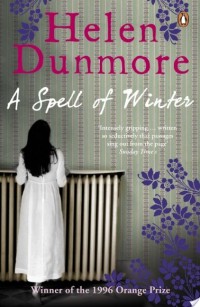
A Spell of Winter

A Spell of Winter
by Helen Dunmore

Dunmore is one of those authors I’ve been hearing good things about for years but hadn’t got round to reading, despite her being local and exactly suited to my taste. Which perhaps gives away what I feel about this book!

The story is narrated by Cathy and in a slightly dreamlike nonlinear fashion she tells us how she went from happy child playing endlessly with her brother Rob, to depressed 20-something seemingly living alone in a big old house that’s falling apart. The setting is the early 20th century (in fact, the First World War acts as a big dividing line in the narrative) and a country house estate owned by Cathy’s grandfather. The facts of her life come together slowly, so although we learn early on that her grandfather, parents and brother are no longer around, the when and why take some time to be revealed. And because she, especially at first, jumps around in time, sometimes I missed whopping great clues to something that happened later and it was only with hindsight I realised I should have seen it coming.

“I had no memory any more, only a puzzle of images, each one so bright I had to believe it as it burnt up in my mind.”

The slow reveal is a recurring trope in this novel. But it never gets annoying, even when I realised after finishing the book how many mysteries are actually never resolved. The basic facts, of a small family living largely in isolation from the world and everything falling apart, are recognisable as a classic storyline, and rightly so. But Dunmore does bring something new to it, and I don’t just mean the inappropriate closeness of Cathy and Rob (after all, that’s been done before too).

“My winter excitement quickened each year with the approach of darkness. I wanted the temperature to drop lower and lower until not even a trace of mercury showed against the figures. I wanted us to wake to a kingdom of ice where our breath would turn to icicles as it left our lips and we would walk through tunnels of snow to the outhouses and find birds fallen dead from the air. I willed the snow to lie for ever, and buried my head under the pillow so as not to hear the chuckle and drip of thaw.”

For a start, the writing is beautiful. Dunmore somehow combines really vivid descriptions and gripping story with an ethereal quality, with the first chapter and epilogue feeling particularly trance-like. This, along with the first-person narrative, plants the question of how much of what we are told is real, or how much is solely in Cathy’s imagination. It certainly seems at times that she is not told things – she is after all the younger child of a (relatively) well-off family with guilty secrets at a time when women were far from equal. But this means she snatches at servant gossip or inferences to build her own ideas, not all of which are wholly proved or disproved. For instance, her grandfather is “the man from another place” and she at one point refers to herself as “half English”, but this is never fully explained.

“I ought to have made sure I knew more. He’d had a past, a geography of silence. None of us had ever mapped it.”

I feel I would be doing a disservice to the book if I didn’t say something about the big unavoidable subject at its centre but for readers like me who don’t read blurbs it will count as a spoiler so…don’t read on unless you’ve read the book or don’t mind!

*** SPOILERS BEGIN ***

So – incest. This is a tough subject for a lot of people and I was both disturbed and impressed by Dunmore that she doesn’t just imply it and leave it oblique. She has Cathy describe fully and sensually her teenage sexual awakening and it is completely sympathetic and in many ways inevitable. Cathy and Rob are entirely each other’s world, rarely seeing others their own age. But they are also both completely aware of what they are doing and both the social implications and the moral position of it.

This very much ties in to another major subject in the book – mental health. There are two occasions when characters have breakdowns in their mental health following something traumatic happening, and the story poses the question of whether this is a natural reaction to what has happened, or something that was always lingering inside them, perhaps something hereditary. Cathy wonders if her unhealthy relationship with her brother proves right all those whispers about how she is so like her mother, who ran away.

I did start to worry that Cathy’s situation had got too dark and that there was no good way out for her, but bizarrely the First World War came at just the right time for her. She has complained all along that she is too sturdily built to be a beauty but with all the men gone and a farm to run she discovers how capable she is. I loved this transformation. Though it doesn’t make her happy, it made me like her again as a person, which isn’t necessary for me to like a book but usually makes it a more pleasant read.

*** SPOILERS END ***

I really enjoyed this book. The writing style and the story, with its period setting and sensationalist angle, reminded me a lot of Daphne du Maurier, which is high praise indeed! I will definitely have to read more by Dunmore. Anyone have any recommendations?

Published in 1995 by Viking.
Winner of the 1996 Orange Prize.

Source: Topping Bookshop, Bath.

Kate Gardner Reviews

The silence, the astonishing silence

July 22, 2013

Mrs De Winter book cover

Mrs de Winter
by Susan Hill

I had no idea this book existed – a sequel to one of my favourite classics by a current author I admire – until I spotted it on a shelf in the holiday home. At which I of course ignored the five books I had brought with me on holiday and read this instead. Or as well as some of them. There’s a lot of books in that holiday home. I could probably have packed fewer books.

So if you couldn’t tell from the title, this is a sequel to Rebecca, Daphne du Maurier’s best-loved, and probably best, work. I’ll try to review this without spoiling that storyline but I’m not sure this novel would make sense without reading the Du Maurier book first anyway.

Hill picks up the story 10 years after Rebecca. Maxim de Winter and his wife are still in self-imposed exile, living in a hotel in an unnamed location in Europe, existing as peacefully and dully as they can. But they are forced to make a trip to England, to Cornwall, and it all comes flooding back, all that they have tried to forget. Mrs de Winter is still haunted by the ghost of Rebecca and convinces herself that someone out there has survived who wants her to remember, to suffer. Is she going mad or is there really something to be feared in the England she loves and longs to return to more permanently?

“We were here, home, back at last and my heart was full. I felt released, new born, desperate with a sort of sickness at the sight of the autumn fields, the trees and hedgerows, the sky and the sunlight, even the black flocks of swirling, flapping crows. I was guilty and ashamed, as if I were betraying Maxim and my loyalty to him as his wife, so that then, in a small pathetic gesture that only I could understand I deliberately turned my head away from the window and refused to look at what I saw and loved.”

The story is, like Rebecca, narrated by the second Mrs de Winter and I think Hill has got the voice spot on. I think that because I found her both sympathetic and deeply frustrating, just like I did with Du Maurier. (Possibly because I recognise a lot of myself, or at least some of my worse qualities, in her – the silly fantasies and fear of what people might think of me.) As in the original, there are many painful moments that might have been avoided if she would have just spoken honestly with her husband. She convinces herself that she is shielding Maxim from pain, but of course all secrets will be revealed in the end.

Hill is known for her ghost stories, so was a great choice to capture the tone of Rebecca and give it a believable extension, with some returning cast and some new characters. Maxim is still a snob and his wife is still a self-conscious mouse. But they have changed in these 10 years. Maxim has become, to an extent, reliant on his wife, while she has become stronger, at least insofar as she knows what she wants now. Whether she has the strength to make it happen is another matter entirely.

“That was the moment I saw the eagle. It is something I shall never forget, the blue sky and the silence, the astonishing silence, and then, out of nowhere, that magnificent, soaring bird, high over the crag…But it was wrong, it was spoilt, even this very rare and yet very simple joy had been tainted.”

If I were to find fault with this book it would be that I would have wished for Mrs de Winter to have grown stronger still in the intervening years, less afraid of speaking her mind; in other words to have learned her lesson. But while that would be the perfect happy ending, it wouldn’t have made for a very good sequel. This novel relies on all that positive character-building falling apart far too easily. As with Rebecca, it is largely the narrator’s weakness and self-doubt that allow the horrors to become real. Let’s face it, a stronger woman would have fired Mrs Danvers and destroyed all Rebecca’s belongings pretty early on. But just as Du Maurier convinced us that that wasn’t the second wife Maxim wanted, Hill convinces us that Mrs de Winter still has her reasons for feeling nervous, for keeping secrets.

“We were far apart, I thought suddenly, and yet I did not understand why or how it had happened. We had come through our trials into calm seas, and been as close as it is possible for two people to be. Now it had gone, that completeness, and I wondered if marriage was always like this, constantly moving and changing, bearing one this way and that, together and then apart, almost at random, as if we were floating in it, as in a sea.”

Hill really has done an excellent job of capturing that voice, of making this feel like the sequel Du Maurier would have written, so why was I not bowled over by it? I think perhaps I love the original too much to have all my dreams for what happened next shattered by this brilliantly rendered answer to every question. Of course it wasn’t all light and happiness after the curtains were drawn, Du Maurier made that pretty clear from page one of Rebecca. But until I read this I could dream that a few years later it would all be however I wanted it to be.

Was it a mistake to read this? I hope not. I thoroughly enjoyed being back in that world, reading a love letter to England and also a subtle attack on the stiffness of “society”. I enjoyed the prickling at the back of my neck during the haunting scenes, the growing sense of foreboding and the relief of the moments of happiness in-between. I just have to try to keep this as one possibility of what happened next and still allow myself to dream what I will the next time I re-read Rebecca.

Published in 1993 by Sinclair-Stevenson.

Source: Borrowed from holiday home library.

Kate Gardner Reviews

Posts pagination

1 … 4 5 6 7

Archives

RSS Nose in a book

  • Book review: Interstellar Megachef by Lavanya Lakshminarayan
  • May 2026 reading round-up
  • Book review: Passing by Nella Larsen

Me on the internets

  • @kate_in_a_book@mas.to (Mastodon)
  • Flickr/noseinabook
  • Instagram/kate_in_a_book
  • StoryGraph/kate_in_a_book

Categories

  • Blog
  • Reviews
  • Uncategorized
Proudly powered by WordPress | Theme: Dream by vsFish.