Nose in a book

Reviews and other ramblings

  • Home
  • Reviews archive
    • Book reviews
    • TV reviews
    • Theatre reviews
  • TBR
  • Challenges
    • The Classics Club
    • 2014 Popular-Science Reading Challenge
    • Cookery challenge
    • The Gilmore Girls Reading Challenge
    • 2013 TBR Pile Challenge
    • 2013 Translation Challenge
    • Crime and Punishment read-a-long
  • About
    • Cookie legal stuff
  • Home
  • Reviews archive
    • Book reviews
    • TV reviews
    • Theatre reviews
  • TBR
  • Challenges
    • The Classics Club
    • 2014 Popular-Science Reading Challenge
    • Cookery challenge
    • The Gilmore Girls Reading Challenge
    • 2013 TBR Pile Challenge
    • 2013 Translation Challenge
    • Crime and Punishment read-a-long
  • About
    • Cookie legal stuff

Tag: poverty

The silence was as terrible as cold is
November 10, 2013 3 Comments

The Long Winter

The Long Winter
by Laura Ingalls Wilder

Appropriately, I read the majority of this book on a cold, windy November day, feeling increasingly grateful for central heating and a cupboard well stocked with teabags. Before I carry on, this is book 6 in the Little House series, so this may contain spoilers for the previous titles.

No sooner have the Ingalls family installed themselves in their claim shanty (their littlest house yet) on their brand new Dakota farm that they hope will be their last home, than what should come along but a prediction (and early signs of) a seven-month extra-harsh winter. The shanty is far from weather-proof and they haven’t been able to grow themselves a winter store of supplies yet, so there’s nothing for it but to move into the nearby new town (De Smet) where Pa owns a store building they can live in. The store building is weather-proof and just over the road from shops that can sell them supplies as they need them. And there’s a school in town, so Laura and not-so-little-anymore sister Carrie can go to school and make new friends.

The bulk of the story to this book is: really bad winter, poor family barely scrapes through. But it’s actually pretty gripping. Wilder tells us how monotonous it got eating nothing but potatoes and brown bread and desperately trying to eke out the kerosene by using the lamplight as little as possible, but she doesn’t repeat these details more often than needed.

One way that she manages to bulk out the narrative is by adding in the Wilder brothers as new characters. Obviously we all know that Almanzo Wilder is going to wind up marrying Laura Ingalls – it’s right there in her name on the cover of the book, after all! But I still found it odd that after four books written from the perspective of Laura, we now have scenes following Almanzo’s story, scenes Laura isn’t in at all. The thing is, the narrative is third person, not first, but it’s most definitely not omniscient. We only ever, before this book at least, experience events as Laura experienced them. So, for instance, when Pa meets an Indian when he’s out hunting the panther in Little House on the Prairie, we only hear that story as Pa recounts it to the family when he gets home. But now we get scenes of Almanzo and his brother Royal cooking pancakes and making plans for their own homestead, next door to the Ingalls’ new land. Perhaps if I hadn’t skipped book 2, Farmer Boy, which is about Almanzo’s childhood, this would have been less strange. I’ll probably go back to it.

Incidentally, much is made in this book of Almanzo being 19 years old, which means that he has lied to the officials to make a land claim because the rules say he’d have to be 21. But in real life Almanzo was 24 at this point. Wikipedia suggests this change was made so that the age gap between Laura and Almanzo is only 5 years, which would be more palatable to 20th-century readers than the true gap of 10 years once their romance gets going in later books. Personally I think knowing they were happily married for several decades, until Almanzo’s death, negates any question about the age gap being inappropriate, but I wouldn’t be surprised if the same concern would be raised by a publisher today.

“Everything was still. No wind stirred the grey-bleached grass and no birds were on the water or in the sky. The lake faintly lapped at the rim of that stillness. Laura looked at Pa and she knew he was listening too. The silence was as terrible as cold is. It was stronger than any sound. It could stop the water’s lapping and the thin, faint ringing in Laura’s ears. The silence was no sound, no movement, no thing; that was its terror.”

Published 1940 by Harper & Brothers.

Source: Google Books.
Kate Gardner Reviews

The story of a poor man’s life is written on his body, in a sharp pen

August 16, 2013August 16, 2013 3 Comments

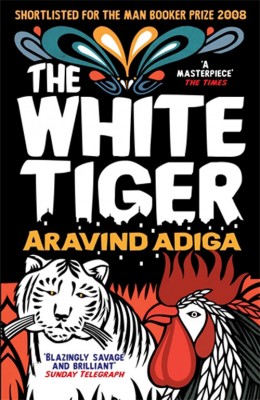
The White Tiger

The White Tiger
by Aravind Adiga

This book looked like a fun read that would be something a bit different, and that’s pretty much exactly what it was. I enjoyed it greatly but in the week since I finished it, it hasn’t really stayed with me.

The style is initially surprising and unusual. The story is written in the form of letters addressed to Chinese premier Wen Jiabao from Balram Halwai, a self-proclaimed entrepreneur from a very poor background. Balram wants to tell his life story, beginning with how he got the nickname White Tiger and up to how he is wanted by the police. Through this device, Adiga exposes the state of India, or his opinion of the state of India, at any rate. And it’s not a particularly favourable opinion.

“It is an ancient and venerated custom of people in my country to start a story by praying to a Higher Power. I guess, Your Excellency, that I too should start off by kissing some god’s arse. Which god’s arse, though? There are so many choices. See, the Muslims have one god. The Christians have three gods. And we Hindus have 36,000,000 gods…Bear with me, Mr Jiabao. This could take a while. How quickly do you think you could kiss 36,000,004 arses?”

This was my pick for book club and from our discussion it looks like I thought there was more to it than the others did. There was a general feeling that the characters were a bit thin, and the overall tale a bit preachy and lacking in shades of grey (though I should note everyone found it funny and enjoyable). I must say I didn’t find it preachy but I’ll allow that it definitely had a message about class and poverty in India. And it’s certainly not subtle either – the humour is savage and the reality that is revealed is shocking.

Balram has a theory that the poor in India are in a chicken coop. Most of them accept this and stay within the bounds of the coop, but those who do try to escape are quickly shoved back in their place. It takes something extraordinary for anyone to escape the coop. He of course is one of the extraordinary (the only escapee we meet in this tale) but he freely accepts that the method he employed to escape is extreme.

“A rich man’s body is like a premium cotton pillow, white and soft and blank. Ours are different. My father’s spine was a knotted rope…cuts and nicks and scars, like little whip marks in his flesh, ran down his chest and waist, reaching down below his hipbones into his buttocks. The story of a poor man’s life is written on his body, in a sharp pen.”

Balram is a genuinely funny narrator. Since being told that he is as rare as a white tiger when he was the smartest kid in school, he has had ideas above his station. He’s also selfish, objecting to his grandmother’s repeated requests that he share his earnings with his family. He talks through his life, from working in a tea shop in a small village, to being a rich man’s driver in Delhi, to being a businessman in Bangalore. He reveals early on that he has done something shocking, so that most of the book is the answer to the question why and how.

“In the belief that the future of the world lies with the yellow man and the brown man now that our erstwhile master, the white-skinned man, has wasted himself through buggery, mobile phone usage and drug abuse, I offer to tell you, free of charge, the truth about Bangalore.”

This is not a book for those who want a subtle exploration of how modern India operates, or if you want a wide-reaching study of Indian society. It is a funny, easy-to-read, fast-paced window opened just a crack onto a version of reality. I genuinely enjoyed it and even learned a few things but I can’t say that it changed my view of the world or stunned me with its language. Not every book can do that.

Published 2008 by Atlantic Books.
Winner of the 2008 Booker Prize.

Source: A book swap.

Challenges: This counts towards the 2013 TBR Pile Challenge

Kate Gardner Reviews

Her jittering soul paced on a stone slab in a grey room

June 11, 2013

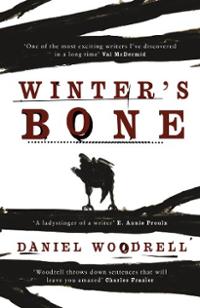
Winter's Bone

Winter’s Bone
by Daniel Woodrell

When this book was suggested for book club I had never heard of it or its author, but in the months since then both have cropped up repeatedly in book blogs and podcasts, always being showered with praise. Thankfully this didn’t happen so much that I had crazy high expectations, but maybe that wouldn’t have mattered because I completely loved it.

Someone (I think on the Slate Culture Gabfest) described Woodrell’s books as the new westerns, and while the storyline may seem a long way from cowboys and indians I can kind of see what he meant. It’s certainly a remote, lawless setting, or not lawless but with a different attitude to crime.

The book follows Ree, a teenage girl living in mountainous Missouri in a very poor, very small community. Her mother is mentally ill in some way – switched off and unresponsive – so Ree has left school to care for her mother and her two young brothers. Her father is absent, and his absence, and the need to find him, is the catalyst for the story.

“She smelled the frosty wet in the looming clouds, thought of her shadowed kitchen and lean cupboard, looked to the scant woodpile, shuddered…there was no gas for the chain saw so she’d be swinging the ax out back while winter blew into the valley and fell around her.”

Woodrell doesn’t shy away from the harsh, even brutal, reality of poverty, but somehow it is made bearable by the beauty of his language. The facts can take a while to become clear. In fact for the first few chapters I wasn’t sure when or where or what this story was. But that’s part of the point in a way. You can easily imagine that this small society in this area hasn’t changed much in 100 years. Everyone knows everyone else, and there is no privacy, but secrets can be kept if they are for the good of the community. And they might all survive because the men are cooking meth but there’s still a strong sense of honour, albeit an old-fashioned one.

“Ree’s grand hope was that these boys would not be dead to wonder by age twelve, dulled to life, empty of kindness, boiling with mean. So many Dolly kids were that way, ruined before they had chin hair, groomed to live outside square law and abide by the remorseless blood-soaked commandments that governed lives led outside square law…Sometimes when Ree fed Sonny and Harold oatmeal suppers they would cry, sit there spooning down oatmeal but crying for meat, eating all there was while crying for all there could be, become wailing little cyclones of want and need, and she would fear for them.”

Ree is a wonderful character. She’s so strong and driven by her responsibilities to her family, trying to be both father and mother while only on the brink of adulthood herself. When pain and possible death face her, she doesn’t flinch, but it’s not bravado, it’s just what she has to do, as if there is no option. Except the obvious option is staring her in the face – she’s offered hard drugs countless times and clearly wouldn’t be the first in this community to check out from reality that way. What she seems to choose instead is to try to distance herself from it all mentally.

“[Ree] pulled headphones from a pocket and clamped them over her ears, then turned on The Sounds of Tranquil Shores. While frosty bits gathered in her hair and on her shoulders she raised the volume of those ocean sounds. Ree often needed to inject herself with pleasant sounds, stab those sounds past the constant screeching, squalling hubbub regular life raised in her spirit, poke the soothing sounds past that racket and deep down where her jittering soul paced on a stone slab in a grey room.”

Someone at book club mentioned that the dialogue is slightly wrong for the modern era – people don’t talk like that. But I think I like that it’s slightly stylised. It adds to the timeless feeling of the story. Replace cooking meth with making moonshine and the rest still fits perfectly.

Woodrell uses the rural setting to great advantage, describing the woods and the winter in a way that reminded me of Frankenstein, with that idea of the sublime – the picturesque snow is juxtaposed with murderous cold and ice. But the descriptions are never overdone. In fact it’s a very slight book in which quite a lot happens.

“Keening blue wind was bringing weather back into the sky, dark clouds gathering at the edge of sight, carrying frosty wet for later.”

It should be a completely depressing story – indeed, some people at book club found it to be just that – and the facts of the story are indeed depressing, but the writing about these ugly lives is so gorgeous, almost magical, that I was left wanting more. Woodrell is very subtle and often only hints are given to what might be considered the key facts of the book, the possibility left dangling. But it’s not frustrating the way that could be with a less skilful writer.

Published 2006 by Hodder & Stoughton.

Source: Bought from Amazon.

Kate Gardner Reviews

Don’t be so tough early in the morning

January 8, 2013January 25, 2013 1 Comment

To Have and Have Not
by Ernest Hemingway

I have been slowly working my way through a box set of Hemingway. At times completely brilliant, at others it was overblown, racist and inconsistent in style. I can see why it divides people.

The main character is Harry Morgan, a poor man who lives in the Florida Keys with his wife and daughters and, at the start of the book, makes a living in Cuba taking tourists out sea fishing in his boat. But with the depression starting to bite, a rich tourist doesn’t pay a large bill and Harry is forced to accept one of the more questionable business deals he repeatedly gets offered, marking the beginning of his slow decline into crime.

The structure is a little odd, switching between points of view, introducing detailed minor characters who sometimes have a role in the main story but often don’t. The tone and style is initially a lot like Raymond Chandler and it retains a touch of that throughout, though it does get both more real and more political.

“You know how it is there early in the morning in Havana with the bums still asleep against the walls of the buildings, before even the ice wagons come by with ice for the bars?…
‘Listen,’ I told him. ‘Don’t be so tough early in the morning. I’m sure you’ve cut plenty people’s throats. I haven’t even had my coffee yet.’
‘So you’re sure I’ve cut people’s throats?’
‘No,’ I said. ‘And I don’t give a damn. Can’t you do business without getting angry?’ “

There are some nasty characters in this book and Harry certainly isn’t blameless in his descent. He makes some bad choices, but he also has bad luck thrust upon him. The switches in point of view can be very revealing. For instance, Harry is genuinely in love and lust with his wife still but when another character describes her it’s a very unflattering picture that is painted, with a total lack of understanding for how the Morgans’ relationship might work.

Which is a theme, actually – assumptions about other people being proved wrong when the narrative switches to their perspective. There are some surprisingly modern touches, such as the smug misogynist painted as a fool. But Harry’s racism certainly isn’t modern. I can’t remember the last time I read the n*** word so many times in one sitting and it bothered me, but it wasn’t just casual terminology. Harry talks about various coloured people in demeaning stereotypes, painting them as less than human, and no amount of historical leniency can make me okay with that.

Hemingway does show some real knowledge of boating and fishing, with detailed descriptions of bringing a boat in to harbour or chasing down a marlin. Neither is my thing at all but even those sections kept me engrossed, which suggests they were written pretty well.

I’ll continue reading through my Hemingway box set but so far The Old Man and the Sea is still the high point for me.

First published 1937 by Charles Scribner’s Sons.

Source: Secondhand, I think from a book swap.

Challenges: This counts towards the Rory Gilmore Reading Challenge.

Kate Gardner Reviews

My first step from the old white man was trees

July 21, 2012

The Color Purple
by Alice Walker

When I read the first page of this book I wasn’t sure I could carry on. Walker plunges right into the heart of the awful beginnings of her story. But I made myself continue and within a few pages I was hooked.

The story is told in the form of letters, initially all addressed to God, from Celie. She tells how from the age of 14 she was repeatedly raped by her pa and bore him two children, both taken away from her. This has destroyed her ability to have further children so she is offloaded as a wife to Albert, a man looking for a trouble-free mother to his children. He beats her and makes no secret of his hate for her. Her beloved sister Nettie lives with them briefly before being forced to run away when she rejects Albert’s advances.

It’s all pretty bleak. And then along comes Shug Avery. The love of Albert’s life, she is a nightclub singer and quickly becomes Celie’s first real friend. Finally joy, happiness and the ability to talk openly come to Celie and she gradually finds the strength to make her life what she wants it to be.

Obviously, I knew this from reputation, but I realised it was a few chapters before it is clear that all the characters are black (at least, initially they all are). They are simply poor, ill-educated farm folk. But as Celie gets older and meets more people she learns what it means to be black. She learns about black people in other cities, other countries and even other continents. And she learns about being a woman, how she doesn’t have to be subservient.

Although the book goes very firmly from dark to light, it never gets over-sentimental or mawkish. Celie’s matter-of-fact tone gradually gains humour and worldliness. Always observant, she reports the moments and the conversations that have made her who she is at the end of the story:

“I believe God is everything, say Shug…My first step from the old white man was trees. Then air. Then birds…it come to me: that feeling of being part of everything…And I laughed and I cried…It sort of like you know what, she say, grinning and rubbing high up on my thigh.
“Shug! I say.
“Oh, she say, God love them feelings. That’s some of the best stuff God did…
“God don’t think it dirty? I ast.
“Naw, she say. God made it. Listen, God love everything you love &ndash and a mess of stuff you don’t. But more than anything else, God love admiration.
“You saying God vain? I ast.
“Naw, she say. Not vain, just wanting to share a good thing. I think it pisses God off if you walk by the color purple in a field somewhere and don’t notice it.”

Now, I’m not religious, but there was something very moving about Shug’s idea of God and I love how it freed her and later Celie to follow their own rules. Not to give too much away, but this book includes some frank talk about sex and some homosexuality, not to mention all of the affairs characters keep having. Which I hadn’t expected and found refreshing. Yes, these are poor black people in the segregated southern USA in I think the 1930s and 1940s (there’s some vague talk about war breaking out in Europe) but take away the poverty and politics and they’re still human beings with hearts to give and break and libidos to follow.

The style of writing took some getting used to. Beside the dialect, Celie doesn’t always name characters or explain a situation clearly until much later. And time was passing far more quickly than I realised. There are sometimes years between letters. Also, the absence of speech marks was sometimes confusing. But looking beyond all that, it is a wonderful book well worth the pain of the early chapters.

First published in the USA in 1983 by Harcourt Brace Jovanovich.
Winner of the Pulitzer Prize.

Kate Gardner Reviews

Happy Dickens Day!

February 7, 2012February 11, 2012 3 Comments

Night Walks

Night Walks
by Charles Dickens

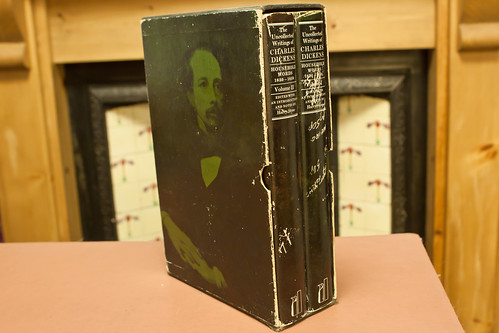
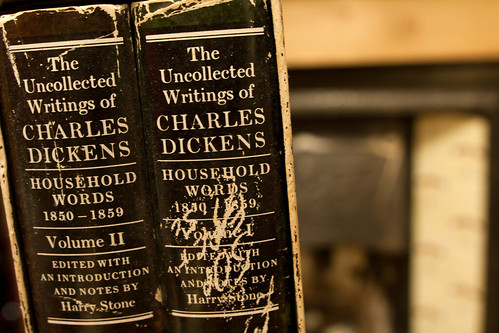
Today is the 200th anniversary of the birth of Dickens, so in preparation I thought I should read at least one of his works that have been sat on my TBR far too long. This is a collection of his essays, most of them from his journal Household Words, which I have a beautiful old boxed set of in my library. They give great insight into Dickens the man, as well as Dickens the writer.

The essays are mostly about Dickens’ forays around London, particularly poorer areas. His social conscience comes through strongly. In fact, he almost seems to be a bit of a busybody, inviting himself into workhouses and people’s homes, dragging children out of the gutter and throwing accusations at the police and government. But in the context of the time, writing such as this was hugely important. He described the real, actual conditions that people in London lived and worked in to spread the word, to spread awareness.

The writing is the Dickens familiar from his novels but with a single theme at a time making him a touch more accessible. There’s a definite sense of humour and a love of people in all their variety, as well as a need to know London thoroughly, at its best and worst. I found myself touched, amused, surprised and informed. Anyone interested in Victorian London would find something here for them.

Dickens Day

Some Dickens Day reading

First published 1850–1870.
This collection published 2010 by Penguin Books in the Great Ideas series.

Kate Gardner Reviews

Humour in the darkest places

April 21, 2011March 11, 2012 1 Comment

Our Spoons Came from Woolworths
by Barbara Comyns

This partially fictionalised autobiography has me torn. On the one hand it was entertaining, funny and moving; on the other the author’s lack of education resulted in writing that was at times stilted or phrased in ways that I felt could have been improved by better editing.

“Sophia” lives in London, eking a meagre living as an artist in a commercial studio. Aged just 21 she and her artist lover Charles decide to marry. He is from a middle class family who disapprove mildly of his bohemian lifestyle but disapprove far more vehemently of Sophia marrying him and becoming a drain on his scant resources. Given the choice between his allowance and his marriage Charles chooses Sophia, which sounds romantic and indeed at first it seems that way. Comyns wittily describes making do with the little they have, the joy of rare treats, the shared humour of learning to cook and keep house. But when she falls pregnant life goes from bad to worse and abject poverty destroys the marriage and threatens her life multiple times.

It seems amazing, given the content (poverty, abortion, serious illness, the threat of having a child taken away) that I could say this, but this is a fairly light read. Comyns is great fun, with an original turn of phrase and genuine warmth, always trying to see the world in a positive light (or almost always; she has her dark times). In some ways book this functions as a brilliantly strong argument for the changes that society has made since the 1930s setting – maternity leave, child support, access to and information about contraception, and free healthcare would have helped her a lot, obviously, but I also mean the general attitude of the book’s characters that Charles has the right to his lifestyle and she has failed him by becoming pregnant, that he has no obligation to the family he has created.

The section about Sophia’s first pregnancy is the part that has stayed with me most strongly. She is summarily dismissed from her job on announcing the news (which her co-workers had all guessed before her because she has shockingly little knowledge on this front). She relies on charity to get to see a doctor, because she and Charles cannot afford it themselves, which means that her labour takes place in a hideous charitable hospital where she is treated like a wicked schoolgirl and given no explanation of anything. For instance, a bath is run for her and she is left alone to take it, but she is too doubled up in pain from a contraction to get in. When the nurse returns and sees this, she shouts at Sophia for being a “horrid, dirty girl” rather than lending her a hand.

For all of the awfulness that she goes through, I could not call Sophia entirely blameless. I know that she is to an extent a result of a certain culture but she so rarely speaks her mind. She never once berates Charles for not getting a job or for spending money unnecessarily when the family is literally starving. And she does let pride stop her from getting a little help sometimes, despite the extreme poverty she endures. There were a few such moments that reminded me of Knut Hamsun’s Hunger, though in other respects the two books could not be much more different.

I am certainly intrigued by Comyns, who wrote further volumes of autobiography disguised to varying degrees, as well as some true fiction, but I do not think, on the basis of this book at least, that she was a great writer.

First published in Great Britain by Eyre & Spottiswoode 1950.

I picked this up after reading this intriguing review on Novel Insights.

Kate Gardner Reviews

Talking books

January 8, 2011March 11, 2012 2 Comments

Hunger
by Knut Hamsun
translated from Norwegian by Sverre Lyngstad

A few months back I went along to a new book group at a local pub. I only found out about it a few days beforehand and didn’t even know which book they were discussing, so that was an odd start to the evening but it was a great night. I met some new people, found out more about my adopted city and talked a lot about books. The chosen book turned out to be Hunger, which was already on my TBR, and the discussion about it inspired me to dig it out and give it a try.

The unnamed narrator of Hunger (except for when he gives himself pseudonyms) is a young, struggling writer, battling with his pride and the difficulties of getting paid to write, with the result that he is often starving or even homeless. The lack of food and warmth plays with his mind and the story delves into a dark psychology that to me seemed far more advanced than its publication date of 1890.

The writing is brilliant, and draws you on even when the narrator is incomprehensible or the storyline particularly dark, both of which happen often. There are dozens or more moments that stand out as somehow key – sleeping out in the forest one night (which struck him as a romantic idea and a potential source of food but turned out to be cold, wet and a long walk from the city); trying to sell the buttons from his overcoat to a pawnbroker; turning down a food coupon because he has told the police he is a rich man who lost his key, though it seems that surely they see through that lie and the writer hasn’t eaten in so long…

I completely agree with the member of the book group who said that she often wanted to scream at the narrator, he’s so frustrating. Although his pride does wear down eventually, for a lot of the book it gets in the way of him getting money or food. I did sympathise to a certain point. He seems to find it funny to tell lies to random strangers, including policeman, which is sometimes entertaining but other times costs him dearly.

I also think that the narrator probably has serious psychological issues that may have preceded the starvation. He has extreme highs and lows, achieving euphoria in his hunger or his writing but also stark depression. It’s a pretty extreme experience being described and it affected me deeply that the high moments were such small, simple things like a sunny day or decent night’s sleep. Interestingly, I don’t think eating was ever described as particularly pleasurable. In fact, he often vomits because the rare food he gets he eats too quickly, or it’s too rich.

One thing we discussed at the book group was the question of translation. This book is old enough that it has been translated into English multiple times. There were three or four versions round the table. This could mean that members of our group had very different experiences from each other. I wonder if all those who liked it most read the same version?

Thanks Hombre Mediocre for the book choice and for starting the group. I look forward to our January meeting.

First published in Norway in 1890.
This translation first published by Canongate Books in 1996.

Kate Gardner Reviews

Posts pagination

1 2

Archives

RSS Nose in a book

  • Book review: Interstellar Megachef by Lavanya Lakshminarayan
  • May 2026 reading round-up
  • Book review: Passing by Nella Larsen

Me on the internets

  • @kate_in_a_book@mas.to (Mastodon)
  • Flickr/noseinabook
  • Instagram/kate_in_a_book
  • StoryGraph/kate_in_a_book

Categories

  • Blog
  • Reviews
  • Uncategorized
Proudly powered by WordPress | Theme: Dream by vsFish.