Nose in a book

Reviews and other ramblings

  • Home
  • Reviews archive
    • Book reviews
    • TV reviews
    • Theatre reviews
  • TBR
  • Challenges
    • The Classics Club
    • 2014 Popular-Science Reading Challenge
    • Cookery challenge
    • The Gilmore Girls Reading Challenge
    • 2013 TBR Pile Challenge
    • 2013 Translation Challenge
    • Crime and Punishment read-a-long
  • About
    • Cookie legal stuff
  • Home
  • Reviews archive
    • Book reviews
    • TV reviews
    • Theatre reviews
  • TBR
  • Challenges
    • The Classics Club
    • 2014 Popular-Science Reading Challenge
    • Cookery challenge
    • The Gilmore Girls Reading Challenge
    • 2013 TBR Pile Challenge
    • 2013 Translation Challenge
    • Crime and Punishment read-a-long
  • About
    • Cookie legal stuff

Tag: fiction

The problem with build-up

June 20, 2011March 11, 2012 2 Comments

Great House
by Nicole Krauss

I loved Krauss’s two previous novels, Man Walks Into a Room and The History of Love. Add in that this book was shortlisted for this year’s Orange Prize and you have some pretty high hopes and expectations. Were they met? Kinda, ish, not really.

This was one of those books that I started…not struggling with, but I wasn’t particularly drawn into it. Krauss creates complex, believable characters with distinct voices and interesting histories and weaves a story that slowly links these disparate people together, but it took a while for me to be hooked. Once I was, though, I was thoroughly hooked and stayed up far too late three nights in a row to get to the end.
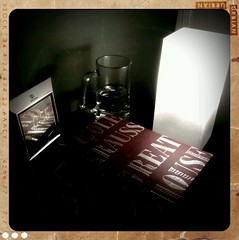
Just one more chapter

This isn’t exactly one story, it’s the tale of several lives that are linked by a desk. Yes – a desk. It isn’t entirely clear, when you meet some characters, how they are connected. The stories come together from various angles, usually made more obtuse by having the narrator of that section not really be the person that it’s about. So there’s Nadia, a writer in New York who spends one night with an enigmatic Chilean poet and then never sees him again, though he haunts her whole life. There’s Arthur in London, caring for his dying wife who is losing her memory. There’s Izzy, an American student at Oxford who falls in love with an Israeli who can never be as close to her as he is to his sister.

“Great House” is a term from Jewish history, originally a quote from the Book of Kings. Most of the characters in the novel are Jewish and the action keeps coming back to Jerusalem and also to the Second World War. The timeline is not always clear, though every so often a date is thrown in to the narrative. It takes a while to puzzle out the desk’s journey across the world and it doesn’t help that there are some red herrings along the way. But while figuring out how the characters are linked is a interesting exercise, you could just as easily read this as separate stories because each one is beautifully written and in most cases I was sorry to get to the end and have to switch to a new narrator again.

I do have a couple of gripes. The book takes in a lot of locations and I thought it telling that New York, which is the author’s home, is not really described and yet is completely believable as a location, whereas Oxford is painstakingly detailed in terms of streets walked down and pubs visited and yet did not feel at all real. Similarly Liverpool. And, frankly, Arthur’s leafy London suburb could have been anywhere, though he doesn’t leave home much so that might be unfair. Jerusalem was better-realised though it didn’t completely come to life for me.

My other gripe is that two sections are told by and about characters whose link to the rest is, if I’ve understood it right, so slight that it seems out of place to have given them so much of the book. It does seem like the link might get stronger after the book ends, but that’s just supposition on my part.

Overall, the strength of the characterisation overcomes everything else for me and I like the book but I didn’t love it like her previous novels.

First published in the USA in 2010 by W W Norton.
Paperback edition published 2011.

On a related note, this month’s Radio 4 Book Club was with Nicole Krauss. They were talking about The History of Love but a lot of her answers are also relevant to Great House, particularly one about developing characters’ voices.

Kate Gardner Reviews

Don’t be put off by the title

June 15, 2011March 11, 2012 1 Comment

The Gospel According to Jesus Christ
by José Saramago
translated from Portuguese by Giovanni Pontiero

This month’s book club pick sounded a tad intimidating and I certainly would never have picked it up if not for the group. What I discovered was a complex, at times difficult, but also beautiful and funny book that I’m glad to have read.

Much could be made of the heretical aspects of this book. It was written by an atheist shortly after the publication of The Satanic Verses and definitely attracted the attention of the Church. But what struck me the most was that it seemed to be at least partly an attempt to answer some genuine questions – if Jesus experienced life as a real human man (whether or not he was the son of God) what would that life have been like? Saramago answers this in depth, from the landscape and food to the people, ways of speaking and acting, and the historical context – Jesus’s part of the world was under Roman occupation, which had its effect on everyday life. Saramago also explores how Jesus might have been treated when he started talking about his relationship with God, the reactions of those close to him and those of strangers.

Of course, it’s about more than that because it also takes some small but significant deviations from the accepted Biblical story. Mary and Joseph conceive Jesus in the usual way, with God only later claiming to have had some part in the union. God is indifferent toward his people but then decides he wants more followers so starts to pay attention and make demands of Jesus. Jesus and Mary Magdalene are lovers. Satan is a friendly, approachable, “human” character. And Jesus is perhaps a little too human even before Mary Magdalene comes along:

“…such is youth, selfish and thoughtless, and there is nothing to suggest that Jesus was any different from other boys his age.”

So yes, it’s certainly heretical. It suggests God only wants to expand his leadership, to have more followers, but is unhelpful in terms of how and tricks Jesus into accepting his fate. It also says that God and Satan are equal, or rather balance each other out. This is certainly not a cuddly, loving God.

The style is a little difficult to start with, written in Biblical rhetoric, sometimes reverent sometimes very not. It can be very detailed and descriptive, even beautiful (OT-like, perhaps), especially near the start. But in other places it is bareboned, more like reading the New Testament. There are no paragraph breaks (a Portuguese thing?) and speech is not marked out by speech marks. But I got used to those things quite quickly and found I was reading at a faster pace than I had expected considering how demanding the prose is in terms of references and allusions. There is a lot of pathos. These characters are so human, with hopes and fears and guilt and temptation and the little niggles of everyday life. It could have been a very serious book, so thank goodness for the wonderful sense of humour:

“…this revelation did not escape Mary despite the angel’s obscure speech, and, much surprised, she asked him, So Jesus is my son and the son of the Lord, Woman, what are you saying, show some respect for rank and precedence, what you must say is the son of the Lord and me, Of the Lord and you, No, of the Lord and you, You’re confusing me, just answer my question, is Jesus our son, You mean to say the Lord’s son because you only served to bear the child, So the Lord didn’t choose me, Don’t be absurd…”

Clearly a lot of research went into it. It directly references not only passages from the Bible but also other religious writings and historical/archaeological knowledge of what life would have been like in that time and place. To a certain extent it fills in the gaps left by the Biblical gospels, therefore there’s lots of detail about Mary and Joseph, and Jesus’ childhood, but it skips quite quickly through the evangelism and miracle-working of Jesus’s last few years.

I was never clear about who the narrator is. The title suggests that it’s Jesus but it doesn’t read like that, it reads like one of his followers. But no-one could know all of this except an omniscient narrator so is it God? Or Satan? Or Jesus but much later from his seat in Heaven talking about “Jesus” in third-person because he’s now Michael?

Whoever it is, the narrator sometimes interjects in a manner that drags you out of the beautifully and believably constructed world of 2000 years ago to the present day, whether by directly referencing something modern or by applying a modern perspective. For instance, the narrator is often at great pains to point out the misogyny of life back then.

Joseph takes centre stage for the first half or so of the book and is therefore fully fleshed out, despite his brief appearance and disappearance in the Bible. He is a good man who, in contrast with the thinking of the time, is tormented by guilt for his own personal wrongdoing, which lays the groundwork for the major difference between Judaism and Christianity, according to this text – that Jews say prayers and give thanks and make sacrifices as part of the collective guilt of mankind, wheras Christianity is about acknowledging and asking forgiveness for personal sins.

At book club we discussed how, because the reader already knows the story, or thinks they do, Saramago plays with this. There’s a sense when reading this book of “when’s it going to get to the part when xyz” and xyz either happens later than expected or in an underwhelming sort-of way or even doesn’t happen at all. But some scenes are taken almost word for word from scripture, cleverly woven in.

There was some symbolism that I noticed but didn’t get, and I suspect it would help to have some solid theological knowledge when reading this rather than just a semi-deliberately forgotten memory of Sunday School and acting out Bible stories for Girls Brigade. I did find myself looking up some passages because they either rang a bell or rang false and the result varied from discovering they were surprisingly similar to the Bible (e.g. the wedding at Cana) to being a combination of different gospels put together in a new way (Jesus’ birth) to being a twist or slightly skewed take on the Biblical telling (Judas betraying Jesus to the Romans). Sometimes the narrator gives us a clue as to how this “true” account might become altered, for instance when Jesus spends 40 days and 40 nights talking to God and Satan he is not in the desert, but almost immediately on his return his followers are talking about it as his time in the desert.

There is so much to say about this book (clearly), and it was definitely a good one to have a roundtable discussion of.

O Evangello segundo Jesus Cristo first published 1991 by Editorial Caminho, Lisbon.
This translation first published 1993 by Harcourt Brace.
José Saramago won the Nobel Prize in Literature 1998

Kate Gardner Reviews

The murky depths

April 8, 2011March 11, 2012 3 Comments

Death in Venice
by Thomas Mann
translated from the German by David Luke

This is really closer to a short story than a novel so I shouldn’t have waited so long to read it, but a few recent outpourings of praise for it made me finally take it down from the shelf. Yet for such a short piece, it was a very slow starter.

This is your classic flowery literary prose, with endless allusions to Greek myth and a gradual, thoughtful story. It’s about a successful ageing writer, Aschenbach, who feels a sudden urge to take a break and travel. While in Venice he falls heavily and hopelessly in love with a beautiful young man, Tadzio, who is staying at the same hotel. In the meantime, a cholera outbreak is gradually spreading across Venice and both Aschenbach and Tadzio have delicate health…

The story isn’t really about homosexuality as such, it’s about an old man falling helplessly for the beauty of youth. He never expects anything from Tadzio, he just wants to see him every day and gets a thrill when the boy smiles in his direction. It’s almost heartbreakingly sad, this cultured respected man reduced to stalking a stranger and his family. It is also a little creepy. Aschenbach is fully aware of how out of character he is acting, but presses on even when his poor health means he really should leave the city.

Having a writer for the main character is an old trope that both familiarises and distances the hero. We think we know what a writer is like but at the same time recognise that he could be anyone. It allows the first-person narration to be highly stylised and fanciful while being believable. “Do you see now perhaps why we writers can be neither wise nor dignified…The magisterial poise of our style is a lie and a farce…the public’s faith in us is altogether ridiculous…how can one be fit to be an educator when one has been born with an incorrigible and natural tendency toward the abyss?”

There are some truly beautiful passages and I can see how Mann ended up winning the Nobel Prize for Literature, but I did struggle a bit with the myth interludes, which I found tedious.

First published by Hyperionverlag Hans von Weber in 1912.
This translation first published by Bantam Books in 1988.

Kate Gardner Reviews

Quietly getting on with being human

March 31, 2011March 11, 2012

Ladder of Years
by Anne Tyler

Until a few months ago I hadn’t really heard of Anne Tyler. While we were visiting Tim’s parents his mum recommended this book to me and since then I keep seeing her everywhere. This week she was nominated for the Man Booker International Prize for her lifetime body of work. This is an intriguing book, a study of human character, and I suspect that the way a reader reacts to it is very telling. In some ways it’s a very sad story, and it definitely got me thinking.

“Baltimore woman disappears during family vacation” begins the book, or more accurately the newspaper article that precedes chapter one. The description of the missing woman, 40-year-old Cordelia Grinstead, is so vague, so comical that I thought this was some kind of ironic take on the actual news story, a character’s bitter retelling – “Her eyes are blue or gray or perhaps green”, she “avoided swimming wherever possible and…may have been a cat in her most recent incarnation”. It’s a slightly bizarre introduction to a not-at-all comic novel about the Grinstead family, with all its quirks and pecularities.

I had assumed, from that beginning and the brief description I’d been given by Tim’s mum, that that would be where the story began – with the woman walking away from her family – and that the bulk of the novel would alternate between them looking for her and whatever she was doing, in a slightly detached, psychological study type of way.

Instead, the book begins weeks before the family holiday, with Cordelia, or Delia as she’s known to everyone, getting into a bizarre situation while at the supermarket – a younger man spots his estranged wife with another man and begs Delia, a complete stranger, to pose as his lover. It’s a brilliant opening – the comedy of the dichotomy between what Delia wants to buy for her family and what the young man throws into the basket, what he hisses at her not to buy because it will reveal that she has children or simply isn’t glamorous enough – and gives lots of room for Delia’s thoughts to reflect on her life, on how exciting this situation is compared with the humdrum of her usual existence, on what type of person she must be to go along with this, to drive away without half of the things she needs just to please a complete stranger.

Delia isn’t unhappy, but the more she reflects on that scene at the supermarket and other circumstances that come up in the run-up to the annual family holiday (Delia, her husband Sam, their three mostly grown-up children, both Delia’s sisters and her two nieces) she becomes, not exactly dissatisfied, but aware of herself and how other people see her and how little she appears to matter in anyone else’s life.

The book follows Delia all along, revealing every thought, every indecision, every awareness, every doubt. It is fascinating to watch as she walks away from her family aimlessly, catches a lift with no particular destination in mind, and creates a whole new life for herself. She dresses differently, interacts differently with people, reads a different type of book and, importantly, is delighted whenever anyone comments on her independence. From then on the question is: will she stay here? Will she take this new Delia back home to her family? Will she move on again when this new life becomes humdrum?

I wasn’t altogether satisfied by the ending, but then I don’t think I ever quite empathised with Delia. I understand the need for a change, to search herself for a while, but it seems such a cold, cruel way of going about it. And she does spend a lot of the book seeming a little empty, distracted, not quite there, so when she is moved by events toward the end of the book it is clear that she has finally figured out where she belongs, what and who she cares about. But again she goes about it in such a cold way.

Despite my difficulty with Delia, I really enjoyed this book. I may not empathise, but hers is still a fascinating head to get inside. It really did get me thinking about that common complaint of being unappreciated, trapped in a marriage that has lost all the spark and with the children about to leave home – what’s left? Everybody wants to feel needed, right?

First published in 1982.

Kate Gardner Reviews

Comedy is soul

March 23, 2011March 11, 2012 1 Comment

The Commitments
by Roddy Doyle

This was another book club read and I was excited when I was told it had been chosen. It promises a lot – great author, raucous humour, snapshot of an interesting time and place – and I definitely got the humour but I’m sad to say that I wasn’t bowled over on the whole.

I think that was the general feeling of everyone in book club. It’s definitely funny – we all had a favourite joke to recite – and it’s stylistically interesting, but it didn’t stun anyone or inspire deep thoughts.

In brief, it’s the story of a soul band in a working-class suburb of 1980s Dublin, a band which is formed at the start of the book and falls apart by the end. Most of the characters have either never played an instrument before or are amateurs at best and it’s unclear if they ever become good, but they certainly enjoy a brief spell of success. And that’s roughly it. There’s no dark undercurrent, no distracting sub-plots, there’s just the band.

The book is almost all dialogue, written in dialect, which is occasionally confusing as a non-Dubliner but it adds a lot to the characters to really hear how they speak. The songs are also written as dialogue, with stress and accent picked out, making the music a character itself.

There’s a certain amount of casual sexism and racism – the girls are often referred to as a unit, expected to be pretty and ego-free, there solely to look good; and the characters’ views of black musicians are hideously stereotyped – but I think this is a reflection of the setting rather than actual bigotry.

None of the characters is particularly fleshed out. The book is very short, with a song often taking up a few pages, which doesn’t give much room for stuff like character development or personal histories, so we learn very little about these people, only what they say and do while they’re in the band. There’s a lot of fun to be had guessing at when a character is lying or embellishing, which we got the feeling was a lot.

Quick word of warning: there is a lot of coarse language, which I don’t mind myself but can see others being put off by it.

This is a very funny book, an easy and quick read. Thanks Matthias for choosing it for book club!

First published in Ireland in 1987.

Kate Gardner Reviews

I knew my Mum’s obsession with Wimbledon would come in handy one day

March 12, 2011March 11, 2012 3 Comments

Double Fault
by Lionel Shriver

I picked up this book, like many people have, I suspect, because I was bowled over by We Need to Talk About Kevin and was hoping for more of the same hard-hitting, emotionally draining, intelligently frightening fiction. This was a good book, but it wasn’t those things; not really.

It does cover some of the same ground, though. This is a dissection of a modern marriage, a tumultuous story of two large egos struggling to adapt to loving someone. There’s a lot of introspection, a lot of dissection, a lot of resentment and only brief euphoric highs.

The background is the world of professional tennis and Shriver has clearly done some homework here. As I often find to be the case, I found a lot of the detailed descriptions of matches or point systems to be laboured and dull. But then I’m really not a sports fan. And the book isn’t really about tennis so it’s probably okay that I started skimming those passages.

What it’s really about is doggedly pursuing ambition in the face of many reasons not to, confusing your self with your ability, gender politics in relationships, and the difficult questions of marriage itself – should it change you? Should love have already changed you so that the compromises of marriage are a breeze? What if your career requires you to be the sort of person who never compromises? How do you switch that off when you get home? Plus the added complications of being a professional athlete – being away from home a lot, having to fit in training – and you have a marriage that seems doomed from the start.

I was not bowled over by this book but I do think it was well done, so I think I have to admit that my problem was mostly with the main characters and my inability to connect with them. Wilhelmina “Willy” Novinsky had some charm at first in her noviceness at relationships, it is sweet to see her being won over. But she has so much anger in her, and is so ready to blame everyone else in her life when things go wrong, that I lost all empathy with her.

The writing is good, with believable dialogue that occasionally raised a chuckle or a wry smile of familiarity from me. There’s an early scene where Willy is on a date and senses that she is being scored on her answers to some probing questions. The one question she won’t answer is the lighthearted assertion that she must be having an affair with her coach. It’s a neat way of introducing the possibility, and the air of disappointment and uncertainty that flavours the whole book.

The back of my copy had a couple of pages of reading group questions, and I do think this could be a good choice for a book club. There’s a lot I’d love to discuss that I can’t raise here without giving away key plot points, particularly in the gender politics area.

First published 2006.

Kate Gardner Reviews

That’s prostrate, with two Rs

January 30, 2011March 11, 2012 2 Comments

Adrian Mole: The Prostrate Years
by Sue Townsend

Oh, Sue Townsend, you never let me down. I’ve been struggling to read much lately but as soon as I opened this book I was tearing through the pages, laughing out loud and loving reconnecting with the characters that are so familiar they are like extended family.

I pretty much grew up with Adrian Mole. I somehow got hold of the first two books when I was about 10 (I think they’d been given to my older sister, not to me) and I read and re-read those volumes many a time through my teens. I think I have bought and read all of the subsequent volumes, and though grown-up Adrian is far more annoying than the teenage boy was, I still love being back in that world.

Adey, as Pandora still calls him, is approaching 40, is living next-door to his parents in a converted pigsty, is worried that his wife Daisy is gaining weight and losing interest in him, and is having trouble with his prostate (which everyone keeps calling his prostrate, much to his irritation). Still, he enjoys his job at a local independent bookshop and his five-year-old daughter Gracie is a treasure, albeit one with an overactive imagination. And surprisingly, the glamorous and successful Pandora (MP and junior minister) still shows enough interest in him to make his wife jealous.

This wouldn’t be an Adrian Mole book if he wasn’t teetering on the brink of total failure and there are moments when you wonder if he doesn’t bring it on himself (he’s so earnest) but he is ultimately a very sympathetic character surrounded by everyday-type chaos. What I’ve always thought Townsend does particularly well is to make Adrian a terrible writer when he’s trying to write (which he’s still convinced is his forte despite only ever having published a cookbook that his mother had to ghost-write when he couldn’t get past the introduction) but a brilliant diarist. His daily life, boring to his own eyes and those of his friends and family, becomes wonderfully funny through a combination of keen observation and fantastic characterisation.

In this book, for possibly the first time, my favourite character was Adrian’s mother Pauline. She freely admits to a long litany of faults but is devoted to her family and amazingly capable (she is often the only one who can persuade Gracie to wear her school uniform and not one of her many fancy dress costumes…and she does it without tears or tantrums). She is also writing an autobiography full of shocking lies that she has provisionally titled A Girl Called Shit and is threatening to take Adrian’s sister Rosie on The Jeremy Kyle Show to reveal who her real father is.

As ever, the diaries are set in the recent past (2007–2008) and provide an often-satirical look at life in Britain. There are the precursors to and early rumblings of recession, the resignation of Tony Blair, the summer floods and the smoking ban.

The next instalment of the Mole diaries is due out later this year and I greatly look forward to it.

Published 2009 by Michael Joseph.

Kate Gardner Reviews

The serious side of fluff

January 12, 2011March 11, 2012 1 Comment

Olivia Joules and the Overactive Imagination
by Helen Fielding

This is a bit of a mishmash of a novel, combining hapless heroine, chicklit, rollicking adventure and post-9/11 paranoia. It doesn’t entirely work.

Olivia Joules is a freelance journalist with an awful lot in common with Fielding’s more famous creation, Bridget Jones – she’s man-obsessed, convinced she’s made for greater things than the job she’s doing and gives her imagination free rein without applying common sense – but Joules has a darker past and, when pushed, turns out to be a lot more capable. By the end of the book she’s a strong heroine but it takes her a while to get there.

The story is far-fetched and heavily influenced by 9/11. Possibly too much so. Joules is sent to Miami to cover an inane story for the Sunday Times’ Style magazine where she meets a man she’s convinced is up to no good on a global scale, with her usual ability to add 2 and 2 and make 7. However, this time there are an awful lot of coincidences that appear to suggest that her hunch was right.

Fielding’s style is very readable and Joules is likeable enough, but she still has too much Bridget Jones in her to be an interesting original creation. She makes lists. She jumps to conclusions from people’s initial appearances. It’s like Fielding started creating a much more interesting, strong character, but then held back. And threw in an awful lot of prejudiced nonsense to boot. Racially, mostly (I can’t explain that without giving away spoilers but if you read it you’ll see what I mean), but also against geeks/techies. In addition, she seems to be trying to write satirically and failing.

There’s a lot about this story that’s hard to believe, and I suppose to enjoy it you need to switch off from thinking that way, but I just couldn’t. I freely admit that I loved Bridget Jones’ Diary when I read it back in 1996, but I was a lot younger then and I think my tastes have changed somewhat.

Published 2003 by Picador.

UPDATE: See also this review by Judith of Leeswammes.

Kate Gardner Reviews

A bit of festive cheer

December 24, 2010March 11, 2012

Comfort and Joy
by India Knight

Some people might classify this as chicklit, not my usual genre, but as Dervla would say this time of year, this is no ordinary chicklit; this is chicklit that absolutely completely struck a chord with me. Plus, it’s Christmassy.

Clara is 40 and is scrambling around Oxford Street on 23 December to complete the perfect Christmas she has planned for her 16 guests, including her three children, husband and ex-husband. The book follows her through the ensuing mayhem of family, friends and Christmas.

Knight mercilessly mocks the middle-class boreishness. I mean, these people are London middle class, which is a whole separate sub-class of its own. They obsess over the provenance of their food (in fact, food in general) and PTA meetings and how to give their children everything without spoiling them. Clara herself is painfully aware that these are not issues most of the world has the luxury of worrying about and besides, she finds it boring. What happened to those youthful days of discussing politics?

There are some painfully real moments and Clara can be a little vicious in her own mind, but she loves the people around her and this shines through. Her sisters are particularly wonderful characters and their shared history and language are joyous to be part of.

I laughed out loud many a time but I also appreciated the main “lesson” that Clara learns – that your true family is the one that’s there for you, the people who “taught me to swim, and everything that that’s shorthand for” as she puts it. Broken marriages and jumbled extended families may be nothing new but I suspect there’s still a lot of people out there trying to negotiate the tricky waters of which parents, step-parents, half-brothers and ex-step-granddads they keep in touch with. It’s always nice to know that someone else is struggling with the same issue.

Knight has got right into the Christmas tradition by writing about Christmas past, present and future. I loved that touch, though the future Christmas was rather less bleak than Dickens’. If you’re not one for making a fuss about Christmas, this may not be the book for you. But I loved it. I stayed up far too late into the night to finish it and then felt a little sad that it was over so soon.

Merry Christmas and happy holiday reading!

Published 2010 by Penguin.

Kate Gardner Reviews

Slow-burning intrigue

December 21, 2010March 11, 2012

The Mysteries
by Robert McGill

I had just been thinking that it was a while since I last read a murder mystery, and then I randomly selected this from my TBR. It’s a debut novel that the publisher describes as being akin to David Lynch’s films, which caught my attention.

There are a lot of characters in this dissection of small-town life in Ontario and one of the novel’s strengths is that I was interested in every one, finding them believable, complex and full of contradiction. Which is exactly what you need for a good mystery.

The town of Mooney’s Dump changed its name to Sunshine shortly after attractive young mother and dentist Alice Pederson disappeared two years ago, but a new name can’t take away the dark unease of the townspeople. Alice was last seen at a party at the local wildlife park, a party most of the town attended. Now remains have been found and a man has been arrested for Alice’s murder. But is it her body and her murderer? And what’s with these sightings of a tiger prowling loose?

In addition to the usual small-town intrigues of who’s sleeping with who and who used to date who, there’s the man who’s not been quite right since his parents died in a car crash, conflicts with the local First Nations reserve and gossip bordering on prejudice about a gay couple and a mixed-race marriage.

The timeline skipped around a lot, with it not always being clear when events happened, so that most of the relevant details to unravelling the mystery had been revealed before the final chapters pulled it all together by clarifying the order of events.

I was thoroughly drawn into the story and devoured the bulk of the book in one sitting. But I did have some issues with it. I know it’s an old method for thriller writers to try to mislead the reader with red herrings, throwing in extra suspicious characters and events, but there were moments reading this when I was annoyed by how a plot thread turned out.

What I didn’t notice until after I’d finished reading was that McGill appears to have made himself a character, adding a postmodern meta aspect to his storytelling. At least I think that’s what he’s done. Anyone else who’s read this know what I’m talking about? No? Just me then.

Published 2004 by Jonathan Cape.

Kate Gardner Reviews

Posts pagination

1 2 3 4

Archives

RSS Nose in a book

  • Book review: Interstellar Megachef by Lavanya Lakshminarayan
  • May 2026 reading round-up
  • Book review: Passing by Nella Larsen

Me on the internets

  • @kate_in_a_book@mas.to (Mastodon)
  • Flickr/noseinabook
  • Instagram/kate_in_a_book
  • StoryGraph/kate_in_a_book

Categories

  • Blog
  • Reviews
  • Uncategorized
Proudly powered by WordPress | Theme: Dream by vsFish.