Nose in a book

Reviews and other ramblings

  • Home
  • Reviews archive
    • Book reviews
    • TV reviews
    • Theatre reviews
  • TBR
  • Challenges
    • The Classics Club
    • 2014 Popular-Science Reading Challenge
    • Cookery challenge
    • The Gilmore Girls Reading Challenge
    • 2013 TBR Pile Challenge
    • 2013 Translation Challenge
    • Crime and Punishment read-a-long
  • About
    • Cookie legal stuff
  • Home
  • Reviews archive
    • Book reviews
    • TV reviews
    • Theatre reviews
  • TBR
  • Challenges
    • The Classics Club
    • 2014 Popular-Science Reading Challenge
    • Cookery challenge
    • The Gilmore Girls Reading Challenge
    • 2013 TBR Pile Challenge
    • 2013 Translation Challenge
    • Crime and Punishment read-a-long
  • About
    • Cookie legal stuff

Tag: fiction

Book review: Earthlings by Sayaka Murata

November 19, 2022 2 Comments

Earthlings book cover

In 2020 when Earthlings by Sayaka Murata came out (in translation from Japanese by Ginny Tapley Takemori) everyone was raving about it. Our local bookshop Storysmith promoted it as one of their bookseller favourites (technically they’re no longer our closest bookshop thanks to the sudden boom in indie bookshops in Bristol, but that’s a topic for another blog post). I was intrigued, and I’d really liked Murata’s previous novel Convenience Store Woman, but I was feeling guilt about how little I was reading (for me) so I put buying new books on hold. Then this summer I fed a friend’s cat while they were on holiday and as a thank you they bought me this. Yay for awesome friends who know the way to my heart.

Like her bestselling previous novel, Murata’s hero in Earthlings is a woman who is emotionally disconnected from the world. But in Natsuki’s case, this may not be due to an innate neurodifference, but rather trauma. Or perhaps a combination.

We meet Natsuki as a child. She believes that her cuddly toy hedgehog Piyyut is an alien from the planet Popinpobopia, a country she first heard of from her beloved cousin Yuu, who she only sees during the summer holidays they spend in the mountains at her grandparents’ home. Yuu claims he is also Popinpobopian and is searching for a spaceship to take him home.

Continue reading “Book review: Earthlings by Sayaka Murata”
Kate Gardner Reviews

Book review: Kololo Hill by Neema Shah

November 12, 2022 1 Comment

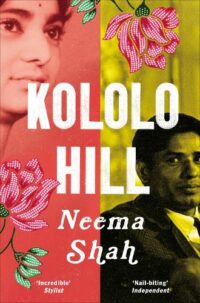
Kololo Hill book coverBack in March, I bought two copies of Kololo Hill in an auction to raise funds for British-Ukrainian Aid. The author, Neema Shah, kindly offered to sign the books with personalized recommendations and I thought here was a great opportunity to do a readalong with my friend H, who I was planning to see soon. Cue months of Covid- and non-Covid-related reasons for us delaying our get-together until in August I finally posted H’s copy of the book to her. In September we agreed to start reading the book. In October I finally read it.
It’s a good book; don’t judge it harshly for my delay.

It’s 1972 and Asha and Pran are newly married. They live in the leafy Kololo Hill suburb of Kampala with Pran’s parents, Jaya and Motichand, and his brother Vijay. Pran is planning to expand his shop; Asha is settling in with her in-laws. But in the background of their life is Uganda’s increasing anti-Asian violence, the curfew imposed on them, and the sounds of gunfire at night. Slowly that background becomes foreground, becomes almost all their lives revolve around. And then Idi Amin issues an edict that all Asians must leave Uganda within 90 days. It’s not much time for them to make the necessary plans.

Continue reading “Book review: Kololo Hill by Neema Shah”

Kate Gardner Reviews

Book review: A Fine Balance by Rohinton Mistry

February 27, 2022March 9, 2022 1 Comment

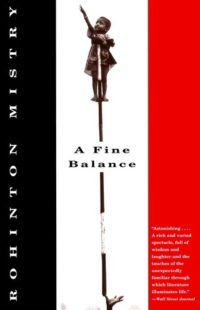
A fine balance book coverAfter tearing through books in the first half of January, I decided it was a good time for a big book and Rohinton Mistry’s epic A Fine Balance certainly fit that bill.

A Fine Balance is epic in scope, but the bulk of it takes place in one single year: mid-1975 to 1976. In an unnamed Indian city on the coast, four people are thrown together, their lives increasingly integrated as political unrest leads to restricted freedoms in the form of the Emergency.

Mistry does a wonderful job of giving all the characters complex backgrounds and motivations, so that time after time, someone who is introduced as an annoyance or outright villain becomes a sympathetic character, even someone to root for. He also takes the time to give thorough backgrounds for our four leads before the main narrative gets going.

First we have Dina, a Parsi woman who was widowed young and has struggled to maintain a life independent of her controlling older brother. She is brittle and judgmental, but this is often a facade to hide her fear of losing the life she has. After years of working as a seamstress to make ends meet, her eyesight is now failing and she must turn to two new sources of income: taking in a tenant and subcontracting sewing work to tailors she can supervise.

Continue reading “Book review: A Fine Balance by Rohinton Mistry”

Kate Gardner Reviews

Contemporary African fiction – reviews in brief

December 5, 2021

Since starting this blog, I have been on a journey to expand my reading horizons. These days, I read very few dead white men – if anything I read a majority of living women. But they’re still mostly white, mostly writing in English. I’ve been gradually increasing the translations in my reading mix, especially contemporary translation, but in the last couple of years I became aware of a glaring gap in my bookshelves: African fiction.

I’ve read some of the big hitters – Chinua Achebe, Ahdaf Soueif – but I have almost certainly read more books by white Europeans about Africa than books by African authors. Which is not great. So I looked up some lists of recommended books and authors. Here are mini reviews of three recent novels by African women that I have enjoyed.

Continue reading “Contemporary African fiction – reviews in brief”

Kate Gardner Reviews

Book review: Girl Meets Boy by Ali Smith

November 23, 2021March 31, 2022

Girl Meets Boy by Ali Smith is such a lovely book. Using that word, I fear undersells or even undermines it, but it’s precisely how I feel about it.

Sisters Anthea and Imogen live together in what was their grandparents’ home in Inverness. Their relationship is strained, fractious, as they see the world very differently. Imogen enjoys her job in marketing at Pure, a large corporation that is looking to bottle and sell the local water. She even got Anthea a job there too, but Anthea is less keen. Corporate isn’t really her.

Through the sisters, their lives and love lives, Smith explores Ovid’s Metamorphoses in a modern setting, in particular the story of Iphis and Ianthe. It isn’t hidden away in the subtext; one character explains this story to another, but Smith makes that feel entirely natural. (There are also Shakespeare references that are a little more hidden, but I don’t think the reader who doesn’t spot them will miss anything. No doubt there are allusions I didn’t see too.)

Continue reading “Book review: Girl Meets Boy by Ali Smith”

Kate Gardner Reviews

Sorrow rose from memory’s deepest dwelling place

December 12, 2019

Exemplary Tales book coverExemplary Tales
by Sophia de Mello Breyner Andresen
translated from Portuguese by Alexis Levitin

This is my Portugal choice for the EU Reading Challenge. Sophia de Mello Breyner Andresen is best known as a poet but little of her work has been translated into English. This collection of her short stories took me some time to track down but was worth the effort.

The stories tend to have religious or moral themes, which I would usually find offputting, but something about Breyner Andresen’s tone meant they worked for me. It’s a weird tone for stories that are – for the most part – grounded in reality.

The opening story, “The bishop’s dinner”, reads like a Biblical parable. A rich man has two guests in the same evening: a planned visit from the bishop and an unexpected visit from a beggar. The story contrasts how the two visitors are treated, the differing reaction of their host and his staff. The religious undertones are underlined by one character being a bishop and conversations revolving around a local priest, but the tenets of Christianity are far from being on display here.

Continue reading “Sorrow rose from memory’s deepest dwelling place”

Kate Gardner Reviews

All of us who survived on the street could not renounce the charm of the stories we told

September 22, 2019September 22, 2019

Dry SeasonDry Season
by Gabriela Babnik
translated from Slovene by Rawley Grau

This is a strange book, difficult to follow at times, but always lyrical and occasionally outstanding. It’s my Slovenia book for the EU Reading Challenge, written by a Slovene author and starring a Slovene main character, but actually set in Burkina Faso. It seems extra appropriate for this project as its publication was co-funded by the Creative Europe Programme of the European Union.

The book opens with two people in bed together in a hotel room in Ouagadougou. They are Ana – a 62-year-old artist here on holiday – and Ismael, a 27-year-old local who spent much of his life living on the street. It’s an unlikely pairing and one that doesn’t seem destined to last, but as the narrative alternates between their points of view, we discover things they have in common. In a way they are both running away from their daily lives, and as they gradually open up to each other, we learn that neither of them is quite what you expect.

Continue reading “All of us who survived on the street could not renounce the charm of the stories we told”

Kate Gardner Reviews

Dorama review: Midnight Diner

February 17, 2019February 24, 2019 1 Comment

Midnight Diner: Tokyo Stories

This Japanese TV show exists in many versions – largely with the same actors – but I am here referring to the Netflix series Midnight Diner: Tokyo Stories (which is arguably season 4 of the show originally aired on MBS). Tim and I love this show so much.

It’s a simple concept: at a late-night diner (open from midnight until 7 a.m.) in Shinjuku, the chef-owner cooks whatever dish his guests request. The camera lingers on the cooking, but this is a drama about people. Each episode takes as its subject one of the regular customers. In this way, the episodes are largely separate stories.

Midnight Diner has a wonderful atmosphere – warm, cosy, but within the confines of reality. The acoustic background music adds to the sensation of being in a friendly backstreet bar where there is always gentle hubbub and subdued lighting.

Continue reading “Dorama review: Midnight Diner”

Kate Gardner Reviews

Another vague drifty one

August 28, 2011May 9, 2015

Saving Agnes
by Rachel Cusk

I picked this up while in the US on holiday. I had read and enjoyed Cusk’s second novel The Temporary, which it turns out has rather a lot in common with this title. Possibly too much.

Agnes Day (which is a great name for a heroine) is drifting. She doesn’t really care about her job, feels distant from her (somehow still active) love life and even her friends. She lives with two former schoolmates in a house that is on the brink of being condemned, thanks to a large crack in the wall. This crack acts as a literal (and slightly over-obvious) representation of Agnes’s inner life.

Agnes is one of those heroines who frets about everything, is convinced everyone else is normal while she is abnormal and reminisces fondly about her teenage years when she came close to suicide because at least she was more decisive back then. I did not warm to her. Which is perhaps odd because I’m an over-thinker myself, but I like to think I’m also practical and Agnes is certainly not that. She seems to expect some magical change to just happen to her life, rather than going out and making it happen. She’s also one of those annoying people who take up causes without really learning about them. Even when challenged about this she doesn’t recognise her own failure to engage. And she’s self-absorbed, taking some serious jolts to notice the people around her.

There is an art to creating such a vague, drifting character. For much of the novel Agnes talks about her current relationship and her previous one interchangeably, so that it can be unclear which one is the subject, though what does gradually becomes clear is that Agnes’s attitude to relationships is unorthodox.

Cusk is…wordy. Her prose is beautiful but obscured by long, convoluted sentences:

“Agnes lay in bed waiting for the telephone to ring, believing as she did that the former event would precipitate the latter. Her faith, though gritty, was, she knew, ill-founded, attempting as it did to harness the perversity of the universe and make consistency where there was essentially none. By taking upon herself the task of second-guessing ill-fortune, she was in fact violating the creed of her anti-faith, which, if its principles were to be understood, would presumably visit her only at her own inconvenience…” [This goes on for two full pages before we learn whether or not the phone rings.]

I remember liking The Temporary but with very similar reservations – it also is about a disaffected woman in her 20s drifting, hating London (there is no love for the setting here) and being generally self-absorbed. However, the writing is good and Agnes is completely realistic (lesser characters aren’t quite fully realised but this is actually a believable portrayal of Agnes’s picture of the world).

First published 1993 by Macmillan.
Winner of the Whitbread First Novel Award 1993.

Kate Gardner Reviews

Something missing

August 22, 2011March 11, 2012

Trance of Insignificance
by Jennifer Rainville

This book was sent to me by the author after a short e-mail exchange during which she intrigued me with her title and synopsis. It sounded like a smart, modern romance that would make an easy but satisfying summer read. It certainly had all the right components, but for me it didn’t quite hit the spot.

Rainville has created a main character with a lot in common with herself. Jules Duvil, like her creator, worked as a political aide in Washington and then as a TV journalist in New York City before becoming a media adviser and writing a novel, which is about to be released at the start of this book. This lends a weight of authority to the passages set in newsrooms and I was a little sorry that there wasn’t any detail about Jules’ time in Washington, because I’d have loved to learn more about that.

The book cuts back and forward in time, mostly to three periods: Jules’ problematic childhood on the rougher side of Boston; her relationship 10 years ago with local celebrity news anchor Jack who is a known womaniser and yet is jealous of Jules’ every move; and the present day, in which Jules is trying to make things work with the far more staid and predictable ad exec Noah, who comes from money and believes in doing things in a certain way. It is clear that neither man is good for Jules; both of them want to change her, but they also love her deeply.

For me, the novel started on a bit of a bum note. In an early chapter we hear about Jules’ first day as a lowly production assistant for a big New York news station and that day just happened to be 11 September 2001. It’s a bold decision to take and gives Rainville the chance to quickly explain a lot about how TV news works while relating it to a news story that we all remember vividly. However, she doesn’t write much about the effect of 9/11 outside the news room – the state the city was in, the change that was suddenly and irrevocably wrought. I know she is trying to make a point about news journalists being bloodthirsty enough to not think about the human side of tragedy, but surely that was too big and awful an event for that to be true? Maybe I’m wrong.

I didn’t warm to Jules. Though we gradually learn from the flashbacks why she is a little cold and label-obsessed, I was annoyed by the need to detail every one of Jules’ outfits, including accessories – all designer. I wasn’t convinced that a single woman living alone in New York and struggling to make it as a journalist would honestly be able to afford such extravagant outfits, not coming from a poor background. Maybe she earned a small fortune during her couple of years in Washington? But that seems unlikely. It’s more believable in the present-day sections, when she’s become a successful self-employed media adviser and it would have been interesting to see a contrast from perhaps her envy of other women’s clothing in 2001 to having a designer-filled wardrobe in 2011.

Jules’ rough upbringing wasn’t, sadly, entirely convincing. Rainville drops in a lot of family trauma and some scenes are frank and shocking, but they didn’t feel fully fleshed out. They were often very brief – just a page or two – and could have done with expanding, perhaps even softening with some warmer or even just mundane memories.

This is Rainville’s first novel and it’s self-published, neither of which is necessarily a bad thing, but in this case it shows. Though Rainville has some talent, she would have benefited enormously from a professional publishing house to give her some guidance and edit the text line by line. The copy editing is poor, though that may have particularly stood out for me because it’s how I make my living. But more than that, there are some clumsy lines, poor exposition and extraneous details that a professional would have helped Rainville to iron out.

I suppose I would have liked to see more descriptions of the city, rather than just name-dropping restaurants and bars; and more small, nuanced details that reveal something about a person rather than a personals-ad-style height, figure, hair and eye colour list. Rainville does know how to turn a phrase, and uses some great imagery, not to mention having a good ear for dialogue, but there’s too much clumsiness in-between to ignore. That said, I was involved enough in the story to read the book pretty quickly and care how things turned out. If Rainville works with a professional publisher for future novels, I do think it will be worth giving her another chance.

This is all, of course, just one person’s opinion, and I may have been negatively influenced by the grammatical errors. Other reviewers out there seem to have more positive views.

Published 2011 by Rainville Books.

Kate Gardner Reviews

Posts pagination

1 2 3 4

Archives

RSS Nose in a book

  • Book review: Interstellar Megachef by Lavanya Lakshminarayan
  • May 2026 reading round-up
  • Book review: Passing by Nella Larsen

Me on the internets

  • @kate_in_a_book@mas.to (Mastodon)
  • Flickr/noseinabook
  • Instagram/kate_in_a_book
  • StoryGraph/kate_in_a_book

Categories

  • Blog
  • Reviews
  • Uncategorized
Proudly powered by WordPress | Theme: Dream by vsFish.