Nose in a book

Reviews and other ramblings

  • Home
  • Reviews archive
    • Book reviews
    • TV reviews
    • Theatre reviews
  • TBR
  • Challenges
    • The Classics Club
    • 2014 Popular-Science Reading Challenge
    • Cookery challenge
    • The Gilmore Girls Reading Challenge
    • 2013 TBR Pile Challenge
    • 2013 Translation Challenge
    • Crime and Punishment read-a-long
  • About
    • Cookie legal stuff
  • Home
  • Reviews archive
    • Book reviews
    • TV reviews
    • Theatre reviews
  • TBR
  • Challenges
    • The Classics Club
    • 2014 Popular-Science Reading Challenge
    • Cookery challenge
    • The Gilmore Girls Reading Challenge
    • 2013 TBR Pile Challenge
    • 2013 Translation Challenge
    • Crime and Punishment read-a-long
  • About
    • Cookie legal stuff

Life might have been totally different

April 3, 2012April 28, 2012 3 Comments

1Q84
by Haruki Murakami

It’s my own fault. I was really excited about this book. I built it up in my head. I believed the “magnum opus” hype. I was bound to be let down.

1Q84

I really like Murakami. He’s not my favourite writer but I have loved some of his books and really liked several more, so the prospect of a three-volume masterpiece by him sounded wonderful. Unfortunately it turned out to be my least favourite of his works so far. In fact, at times it had me angry enough to want to throw the book across the room and I nearly gave up on it multiple times. But I soldiered on because this is after all Murakami and there is an intriguing storyline that is not wrapped up until the last page. And I had to know.

So that’s it’s great strength: the story. It’s a very Murakami story, an idea that starts gradually, slowly forming, giving you room to guess what’s going on. It’s weird in a surreal sort of way but it has an internal logic that allows you to see the directions it might go in.

Because it takes most of book 1 (300+ pages) for the basic concept to become clear, I don’t want to say too much about what happens. The chapters alternate between the stories of Tengo and Aomame. Tengo is part-time teacher, part-time writer, who allows himself to be persuaded by an editor friend to rewrite someone else’s entry in a creative writing competition, a story called Air Chrysalis. The situation goes from a bit unethical to downright dangerous when it turns out that there is a lot more to Air Chrysalis than meets the eye.

Aomame is a fitness instructor and also an assassin. But not the ruthless kind who will kill anyone for the right price. She has just one client and kills one particular breed of very bad men. So what links her to Tengo? Well, that would be saying too much, but from the start it is clear that they have a lot in common. They are both about 30 years old, living in Tokyo, with no strong emotional ties to anyone. They have almost clinical attitudes to their sex lives. They are particular about cleanliness and eating well. And because they would clearly get on well, it was wonderful slowly learning about how they were linked, seeing their stories draw together. But.

For one thing, I think 1Q84 is far longer than it needs to be. Murakami has a reputation as a sparse writer but here there is lots of repetition, lots of restating facts – a lot of bulk could have been shed. After the initial teasing out of a detail or plot point it then gets overstated and too obvious. This was to the detriment of the more surreal, magical elements because it made them seem at times clumsy and over-thought.

But I also had issues with some of the major themes in the book. First up: sex. I have no problem with sex scenes, but here I frequently got the feeling that typical male fantasies were being depicted for no good reason. Aomame is straight and at one point turns down an offer of sex with a woman, yet Murakami has her linger on the memory of a teenage lesbian dalliance with a close friend more than once. For no reason that I could fathom, when she remembers two good female friends from her past she thinks about their breasts. And not in a jealous way but in a sexual way. It’s very strange.

Then there’s the parents thing. There are no good parent–child relationships in this book. Tengo is horribly self-centred in his attitude to his father. Both Tengo and Aomame chose to move out from their parents at the earliest possible opportunity, but neither describes anything particularly terrible to explain why. Aomame’s parents were religious, Tengo’s father a distant workaholic, and perhaps with some further details those would have indeed been in some way abusive situations, but for all the very many words, I was never able to see what had been so wrong with either childhood.

Which brings us to the last problem: religion. Oh my word does Murakami have an axe to grind here. I should point out that I am an atheist, I am no fan of organised religion and recognise that it has been the source of a lot of bad stuff. But it has its positive side too and in most cases is probably best described as benign. 1Q84 gives no stock to such nuances. ALL RELIGION BAD could sum its attitude up. Basically, you have a cult that somehow grew out of a non-religious hippy commune and became a child-raping place of evil. And all other religious sects, churches or organisations mentioned are spoken of as if they are just as bad. As if they all brainwash, make children miserable, expect unreasonable things of their followers. Some of the statements I read made me slam the book shut and shout out angrily. At one point there was so much of this nonsense I didn’t know how I could possibly read on, but thankfully the narrative moved past it. (Although this is also a problem because I felt it was very ambiguous whether the nasty child-rape situation had been resolved or not.)

It started well and it ended well. The anger I felt in book 2 never resurfaced, although the boredom with some of the “waiting” sections did. I kept on reading because I wanted to know more, but I could not honestly say I enjoyed the read. This was translated by Murakami regulars Jay Rubin and Philip Gabriel so the style should have been familiar but it genuinely felt poorly edited in places and there were no moments when the writing stood out as beautiful or moving. Tengo and Aomame were typical Murakami characters in that they felt real but at a distance, slightly cold fish, so I could never be in their shoes truly living the story.

It saddens me that I cannot recommend this book and am even a little bit put off reading Murakami at all for a while. But I know other people have loved it so remember this is just my opinion. Others are available.

First published in Japanese in 2009 and 2010 by Shinchosa Publishing.
This translation published 2011 by Harvill Secker.

See also: discussions on Tony’s Reading List and In Spring it is the Dawn

Kate Gardner Reviews

Holiday snaps

April 1, 2012 3 Comments

Last week Tim and I went on holiday to Pembrokeshire with some good friends and it was perfect. We had seaside, a pretty cottage to stay in, log fires, lots of board games to play and the random heatwave meant we had sunshine too, despite it being March.

The beaches were almost empty.
Untitled

I revisited a place that had a profound effect on me when I was younger (17, I think. I read Frankenstein for my A level English while sat on the cliffs outside).
Untitled

I fell in love with the fossa, an animal I had never even heard of before.
Untitled

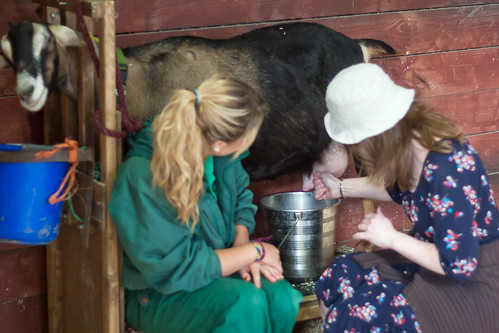
And I milked a goat. It only stood in the bucket once, despite my hideously long nails.
Kate milks a goat

The rest of my photos were on film so they will follow soon. Keep an eye out on my Flickr photostream.

Kate Gardner Blog

Bloggiesta is here!

March 30, 2012April 1, 2012 9 Comments

Bloggiesta

Bloggiesta is an online event for (book) bloggers in which we are encouraged to spend the next three days working on our blog in any way we see necessary. We Plan, Edit, Develop, Review and Organise – no wonder our mascot is called PEDRO! OlΓ©! Bloggiesta is organised by It’s All About Books and There’s A Book.

The Bloggiesta fun begins here with my vague not-nearly-planned-enough to do list; and there’s a lot to be done!

TO DO
1. Change how hyperlinks appear (I don’t like the current style).
2. Tidy up sidebar.
3. Catch up on book blog posts in Google Reader.[Done for now at least!]
4. Contact some publishers about getting their new releases catalogues.
5. Back up all blog content (thanks to Leeswammes for that idea).
6. Read and join in as much as possible with the Bloggiesta discussions on Twitter and other blogs. (If you’re on Twitter, you can use the hashtag #bloggiesta to keep in touch with what’s happening. I am @Nose_in_a_book.)

For me, that last is the real point of all this. I hope to learn a bunch and meet lots of new book bloggers. So, let’s get started!

UPDATE 1 (Sat): I have changed one of my goals to a more realistic one for this weekend because I am already flagging! And catching up with my fellow book bloggers is way more important than most other stuff anyway πŸ™‚

UPDATE 2 (Sun): I will soon be going out for the rest of the evening so here ends Bloggiesta for me. I have achieved everything I set out to and gathered together a bunch of new ideas, not to mention meeting lots of ace new book bloggers (new to me) on Twitter. Thanks to everyone who took part!

Kate Gardner Blog

The power of a great title

March 27, 2012March 21, 2012

Clash of Civilizations Over an Elevator in Piazza Vittorio
by Amara Lakhous
translated from Italian by Ann Goldstein

This book is clever, funny, insightful, serious and lighthearted all at once. I bought it on the back of a glowing review I read somewhere (possibly Eva of A Striped Armchair? Sorry I’m not sure on that) and am so glad that I discovered both an excellent book and a very interesting new publisher to me.

This book blends together a tried and tested format with a very modern story and characters. It’s a murder mystery, with alternate chapters made up of diary entries by the now missing – and therefore prime suspect – Amedeo, and the chapters in-between each narrated by a different character involved in the story.

They all live in an apartment building on Piazza Vittorio in Rome managed by the redoubtable Benedetta, or “the Neapolitan”. In fact, the residents come from all over – elsewhere in Italy, in Europe and the whole world. Immigration, racism and racial stereotypes are the central theme here. This one building is home to people from different parts of society, including a university professor, a travel agent, a cafe owner, a film student and an unemployed former chef. Each has their own view of the world and their own limits on what they observe or question.

The humour is evident right from the start, with Iranian immigrant Parviz despairing at his inability to hold down a job, convinced that he keeps getting fired because he doesn’t like pizza; despairing at the concierge Benedetta’s persistent use of a word he thinks (wrongly) is a swear word; despairing at the police repeatedly arresting him for feeding the pigeons, which he cannot comprehend being a crime. It is clear that this is a series of misunderstandings, largely based on his almost non-existent Italian. But he is not being mocked. Rather, Lakhous is pointing out how easy it is for people to choose anger and resentment rather than try to understand and be understood.

And the misunderstandings continue, get worse even, among people who do (or can) speak the same language but fail to listen to each other. Or prefer to believe their own prejudices and stereotypes rather the evidence before them. This can lead to some horrifying assumptions, but the humour – often revolving around the apartment’s elevator, which is central to many a row between residents – keeps the tone from getting too serious.

This is a short, fun read that has a lot to say and does it supremely elegantly. I will be on the lookout for more from this author and this publisher.

First published as Scontro di civiltà per un ascensore a piazza Vittorio in 2006 by Edizioni.
This translation published 2008 by Europa Editions.

Kate Gardner Reviews

When real life gets terrifying

March 24, 2012March 21, 2012

Some Other Rainbow
by John McCarthy and Jill Morrell

When I was visiting my parents the other weekend, I spotted this on the bookshelves. I had been meaning to read it since my Mum bought it shortly after publication but somehow hadn’t got round to it. Since then I have become a fan of John McCarthy as the host of BBC Radio 4’s excellent programme Excess Baggage so I thought I would take a trip back to the events that made John a household name for a few years in my youth.

If you lived in Britain in the late 1980s/early 1990s you will know who John is but for everyone else, a quick summary. John went to Beirut in 1986 as part of his job as a TV news producer. He was supposed to work there for four weeks and then come home to his girlfriend Jill who he had left looking for a flat that they could buy together. Lebanon was in the midst of civil war at the time and westerners were being taken hostage but the situation had seemed to be getting better. Then, on the drive to the airport to fly home, John was kidnapped. He was held hostage for five years.

Though I lived through these events, I was quite young so a lot of the detail was either new to me or I had forgotten. It is an incredible story. The book is split so that John will narrate what happened to him over a certain time, then Jill will tell her story of that time. And while John’s story is inherently more interesting, some of the real shocks come from Jill’s side. It was not until his release that a political group claimed John as their hostage (Islamic Jihad, who actually released him as their envoy to the UN). There was no video or photograph of him sent home. In fact, for four years, until his fellow hostage Frank Reed was released, Jill had no way of knowing that he was alive.

There are so many details in this book that shook me hard. The hostages had to be blindfolded whenever the guards were within sight, which in some prisons meant all of the time. They were chained to the wall most of the time, with – if they were lucky – two trips a day to the bathroom. They were moved around a lot, staying in prisons anything from a few days to a year. And with each move they would not know who they would be with at the next location. Both guards and fellow prisoners would disappear and reappear.

John was fortunate not to be held alone after the first six weeks. For the majority of his captivity he shared a cell with Irish schoolteacher Brian Keenan. They formed a strong friendship and found ways to help each other cope. They also found innovative ways to communicate with prisoners in other rooms or cells (their prisons varied between houses, apartments, basements and purpose-built prisons). A moment that really got to me, after reading so much about John and Brian’s companionship, was when they heard knocking from the room next door and translated it as “My name is Terry Waite, I have been alone for over three years.”

Jill, in the meantime, had a lot of difficult decisions to make. She had to decide to what degree to get on with life, whether talking to the press (against Foreign Office advice) would help or hinder John (she had to weigh up the chance of John seeing her on TV or in the press, hopefully lifting his spirits, versus the risk of making him seem more valuable to his captors), whether to do her own investigations into the political situation (again, counter to FO advice). She made the decision, with many of John’s close friends, to campaign for his release. This was partly to keep him on the political agenda, so that deals would not be done with Middle Eastern countries without the hostages being mentioned. But it had the effect that, on his release, she was as much a celebrity as he was and there was a lot of press interest in their renewed relationship.

Both John and Jill had worked in journalism, though neither of them on the writing side, and that does show. Not that the book is at all badly written; rather that it is surprisingly conversational, open, honest but all grounded in the bare facts of what happened. Brian Keenan also wrote a book about his captivity, An Evil Cradling, which I read shortly after publication and found hauntingly beautiful. This is a very different take on the same events.

John is amazingly positive and cheerful, one of those people who is deeply affected by others’ troubles, so he takes great effort to learn how to help his fellow prisoners. He also reaches out to the guards and in some cases makes a connection, though it is never something that he can trust, as he can of course never forget that these men are keeping him like an animal, subject to occasional beatings and with his “belongings” (books, playing cards, dominoes, very occasionally a radio or television but they would usually be banned from listening to news) taken away on a whim. Jill is less cheery, but she makes up for this with incredible determination and brutal honesty about her darkest doubts.

A quick Google reveals that John later co-wrote a book with Brian Keenan, which I would very much like to read. But I also hope that I can go back to enjoying his Radio 4 show without picturing him locked in a dark concrete basement. It’s a horrid image and I have to contradict his statement that he is not a hero. He survived (and helped others to survive), he went on to live life, he is living proof of what the human spirit can endure if it must.

Published 1993 by Bantam Press.

Kate Gardner Reviews

11 random things about me

March 21, 2012

Whenever I get tagged by one of these things, I am torn. I have an age-old hatred of chain letters (remember when they were actual letters and you were expected to write the whole thing out 10 times?) but I like to learn more about my fellow bloggers and have no problem with sharing more about myself.

So, because Jo is so nice I will half-reply (and direct you to her far-more-interesting answers) but I won’t continue the chain (though if you want to carry it on yourself, feel free!).

Here goes…

1. I had glue ear when I was little and was almost entirely deaf by the time I turned 6. Thankfully, one operation, two grommets and a bunch of unpleasant wax-drainings later my hearing was completely restored. (Theories about how this may have affected the rest of my life or at least childhood could fill a whole series of blog posts.)

2. I was a quite-good gymnast as a child and am a trained gymnastics coach.

3. I have a phobia of fish.

4. My first foray into journalism was at primary school when I wrote, produced and distributed an environmental newspaper that I now sadly not only have no copies of but cannot even remember the name of.

5. I have been a vegetarian – for ethical/moral reasons – since I was 13 but when I was 17 I worked on the deli counter in the local supermarket and had no problem with skewering chickens for the rotisserie; indeed to this day I’m happy (well, okay with) pulling apart a chicken carcass. I am also very careful about food hygiene since that job.

6. My first job was doing my Dad’s filing. He would take me to work on Saturday mornings and before we left he’d log my hours in the petty cash book and pay me my wages. It was such a good gig I continued to work the occasional Saturday for Dad until I left home.

7. As a kid I always had a project on the go. I planned theoretical trips around the world. I made a database of kings and queens of England that was harder to refer to than the books I’d used as reference.

8. I used to cut out pictures from magazines that I thought might inspire my writing.

9. I was, briefly, a member of the Barbie Fan Club.

10. I once adopted a whale (or rather, it was a birthday present, but I asked for it specifically). She was called Scylla.

11. I have read Ulysses. I had to for the modernism unit of my English degree. I recognise its brilliance but did not enjoy the experience.

Apparently most of the things I think might be interesting about me date back to my childhood.

Kate Gardner Blog

The joy of reading

March 18, 2012 2 Comments

The Complete Polysyllabic Spree
by Nick Hornby

This book looked and sounded like fun with a literary bent, which was exactly what I needed after a few non-absorbing reads in a row.

This is a compilation of Hornby’s “Stuff I’ve Been Reading” columns that he wrote for the literary magazine Believer from 2003 to 2006. Hornby is funny and the magazine had a policy of positivity so the result is a real delight to read.

Hornby’s novels probably fall into the more readable end of literary fiction so it is perhaps no surprise that that is where his own reading tastes lie. He loves Dickens but has little patience for the vaguer, plotless end of literary fiction so to keep in line with the Believer‘s no-negativity clause he creates the mythical Polysyllabic Spree, the “twelve [or 100, or 64, depending on the column] rather eerie young men and women…all dressed in white robes and smiling maniacally” who he claims berate him for any bad reviews, which makes for some hilarity.

But most of the pleasure comes from Hornby’s frank discussions of how he chooses what he reads, how life intrudes on his reading, and sharing his great joy in reading what he wants to read. He despairs of literary snobbery, of those who look down on others for reading Dan Brown or Mills & Boon. He wisely and wittily describes his reads, mostly biographies, comedy and history. He is open about the sources of his books – his publisher, friends and family send him proof copies, but he is also an insatiable book buyer, frequenting book shops, new and used, whenever he can.

Believer is published by McSweeney’s, so a lot of the names involved are writers who are familiar to me – Vendela Vida, for instance – and, brilliantly, the internet tells me that Hornby’s column was recently reinstated. I might just have to become a subscriber!

First published by Viking 2006.

Kate Gardner Reviews

Weekend breaktime

March 16, 2012March 16, 2012

I can’t get this song by Lenka out of my head since I first heard it earlier this week, so here is an earworm for you.

And if you liked that I also recommend “Heart skips a beat” by Lenka.

Kate Gardner Blog

On the brink of getting old

March 15, 2012

Break of Day
by Colette
translated from French by Enid Mcleod

I found this book both beautiful and uplifting, and painstakingly slow and even dull. Which is probably why I had started and abandoned it once before. I’m glad I gave it another go.

I suppose you could call this novel a lightly fictionalised autobiography, and it may even have been the inspiration for so many books since written in that vein – half of Amélie Nothomb’s works, for example. Its ageing heroine, Colette, is spending a summer in her beloved Provence. She is alone but for a coterie of pets and, though she has endless company from friends old and new, she feels strongly that the time has come to learn how to be on her own, how to live without love.

The novel is partly addressed to, and partly about, her mother Sido. Colette quotes from her mother’s letters and realises with pride how much she has come to be like her. But mostly it is a musing on her own life, her love of nature and her thoughts on love. Her lofty aim to no longer depend on a man for happiness is complicated by the presence of Valère Vial, a younger man whose company she enjoys but who she frets does not belong in her story.

The prose is beautiful but rambling. The blurb calls it a prose poem and that’s pretty apt. If you can accept that for pages at a time nothing will happen, or her meaning will not be clear, then you can just wallow in the language and enjoy a master at work:

“The open windows let in the smell of the melon rinds floating on the water of the port; between two parts of a tango, a long sigh announced that a wave, born far out at sea, had just died within a few paces of us.”

The title refers to her ongoing battle with sleep and her love of the dawn. A lot of the book is set in the middle of the night or in the early hours of the morning, with Colette perusing life in an overtired state, hoping to see the new day begin before sleep finally comes. It could be the most lyrical autobiography I have read, except that she adds the lines:

“Are you imagining, as you read me, that I am portraying myself? Have patience: this is merely my model.”

First published 1928 by Flammarion as La Naissance du Jour.
This translation first published 1961 by Martin Secker and Warburg.

Kate Gardner Reviews

Bloggiesta: coming soon

March 12, 2012April 1, 2012

Bloggiesta

Bloggiesta is a blogathon that is all about working on your blog. I have watched it from afar the past two years and this year I’ve decided to plunge in and be a joiner. It takes place on the weekend of 30 March – 1 April and it’s hosted by Suey of It’s All About Books.

What will I be doing? I have a few ideas I want to investigate but mostly catching up on writing posts, reading up on advice from other bloggers and brushing up my HTML and CSS skills. Which is quite enough for one weekend.

Interested? You can sign up here.

Kate Gardner Blog

Posts pagination

1 … 98 99 100 … 124

Archives

RSS Nose in a book

  • Book review: Christopher and His Kind 1929–1939 by Christopher Isherwood
  • March 2026 reading round-up
  • Book review: We Have Always Lived in the Castle by Shirley Jackson

Me on the internets

  • @kate_in_a_book@mas.to (Mastodon)
  • Flickr/noseinabook
  • Instagram/kate_in_a_book
  • StoryGraph/kate_in_a_book

Categories

  • Blog
  • Reviews
  • Uncategorized
Proudly powered by WordPress | Theme: Dream by vsFish.