Nose in a book

Reviews and other ramblings

  • Home
  • Reviews archive
    • Book reviews
    • TV reviews
    • Theatre reviews
  • TBR
  • Challenges
    • The Classics Club
    • 2014 Popular-Science Reading Challenge
    • Cookery challenge
    • The Gilmore Girls Reading Challenge
    • 2013 TBR Pile Challenge
    • 2013 Translation Challenge
    • Crime and Punishment read-a-long
  • About
    • Cookie legal stuff
  • Home
  • Reviews archive
    • Book reviews
    • TV reviews
    • Theatre reviews
  • TBR
  • Challenges
    • The Classics Club
    • 2014 Popular-Science Reading Challenge
    • Cookery challenge
    • The Gilmore Girls Reading Challenge
    • 2013 TBR Pile Challenge
    • 2013 Translation Challenge
    • Crime and Punishment read-a-long
  • About
    • Cookie legal stuff

Today x, y and z came to visit

March 11, 2012March 12, 2012

The Bookshop at 10 Curzon Street:
Letters between Nancy Mitford and Heywood Hill 1952–73

edited by John Saumarez Smith

This is the first collection of Mitford letters that I have read, after a couple of years of build-up, and I must confess that I feel a little bit let down.

Nancy Mitford briefly worked at the London bookshop of the title, before her writing career took off and she moved to Paris. The bookshop was started by, and for many years run by, Heywood Hill. Their correspondence lasted from 1942, while Nancy was still working at the shop, through Heywood’s sale of the shop and subsequent retirement, right up to Nancy’s death. From friendly but businesslike beginnings, they became firm friends and confidantes.

Between Nancy Mitford’s reputation (and indeed my great enjoyment of her novel The Pursuit of Love) and the bookish basis for the book, I had high hopes. I imagined an 84 Charing Cross Road with added gossip and celebrity shoulder-rubbing, and to an extent that’s true, but this book almost entirely lacks the charm of Helene Hanff’s classic. While both Heywood and Nancy are clever, witty and bookish, their letters seem to be largely composed of lists of people who they have visited/who visited them, most of whom are famous or aristocratic or literati (or all three).

Now, this may be down to the editing, which I was not impressed by. Smith also worked at the shop, starting there just before Heywood’s retirement, and struck up a friendship with Heywood and his wife, so he is not an impartial outsider. He is even mentioned in some of the letters. He has heavily cut the letters – ellipses abound – and added lots of explanations in square brackets, but he has not changed anything. So there are varying styles for book titles or emphasis, and abbreviated names are left abbreviated. I am sure it would have been acceptable to readers to spell out all those ampersands and contractions (seriously, text messaging was not the first time people wrote in their own shorthand code to one another) and it would have been a sight easier to read.

What he has done is summarise the first nine years of letters and occasionally throughout he adds in italics his summary of a letter or exchange of letters rather than the originals. But he hasn’t explained some events that are obliquely referred to – a falling out between the Hills and Heywood’s successor at the bookshop, for instance, which comes up often but is never explained. There are also bookshop/publishing terms used often and only a couple of these are explained. (What on earth is a Rainbird?)

Between Smith’s interjections, footnotes and a bibliographical index, there are a lot of different ways of filling in the details of the large cast and it felt bitty. A lot of the letters have been cut down to half a page or less and I constantly got the feeling that the better half had been cut out. There was certainly very little that was personal left in. I understand that in places a letter had been lost and Smith was piecing together what had been said from other sources but he also chose not to include letters that had been published elsewhere, leaving odd gaps, especially early in the book.

Perhaps more time needs to pass between a person’s death and a publication like this (Heywood Hill died in 1986 and I imagine this book took many years to compile). And I would certainly have thought that an editor who did not count the book’s subject as a personal friend would be preferable. Or perhaps surviving family (Hill’s widow and Nancy’s youngest sister are both still alive) were responsible for the odd editorial decisions that appear to have been made.

Whatever the reason, though both letter writers come across as warm, intelligent, humorous people, this collection was only occasionally entertaining and often tedious.

First published 2004 by Frances Lincoln.

See also: review by Simon at Savidge Reads.

Kate Gardner Reviews

Codes and spies and stuff

March 6, 2012 2 Comments

The Thirty-Nine Steps
by John Buchan

Reading this book appealed because I love the Hitchcock film and I was looking for a couple of short books to read before embarking on 1Q84.

Richard Hannay is an intriguing lead character. He has made himself a small pile of money mining in Zimbabwe (or Rhodesia, as it was then) and come to London to enjoy his earnings, but quickly finds himself bored and lonely. So it’s almost a stroke of luck when he discovers a Mr Scudder has been murdered in his flat, just days after the victim confided in him that he has uncovered an assassination plot that could lead to war.

As prime suspect in the murder, Hannay flees London for remote Scotland with both the British police and a German spy ring close at his heels. His resourcefulness and acting skills ensure there is never a dull moment. And he has Scudder’s coded notebook, with a mysterious message about 39 steps.

I really liked this. It’s an enjoyable romp and yet any reader knows that the war Hannay is working so hard to avoid is inevitable (the dates are clearly given as May and June 1914), which gives it a sad air. The descriptions of Scotland are beautiful but brief because there is no space here for asides. It’s 107 pages of action and, as such, was perfect for translation to film, but there was still, as always, something lost in transition. The book explains why Hannay is how he is and briefly summarises the political state of Europe, neither of which is in the film, as I recall.

First published 1915.

Kate Gardner Reviews

A few days in the Forest

March 3, 2012 2 Comments

I was lucky enough to be raised in the Forest of Dean, which may have spoiled me for other beautiful places everywhere. As my folks are still there I went back for a few days last week and took some photographs in the gorgeous February light.

Mr blue sky

Melissa's Tree

Coleford colours

As always, there’s a bunch more photos in my Flickr photostream.

Kate Gardner Blog

Drink, drugs, rock’n’roll

February 27, 2012 3 Comments

A Visit from the Goon Squad
by Jennifer Egan

This was a book club read that I was happy we picked after having heard about it from all over the place last year.

We all enjoyed reading it and yet had a lot of negative points to raise. I think the problem is that the final chapter lets the rest of the book down, so you leave the book on a sour note and forget that you had enjoyed it up to then.

This book doesn’t have an overarching plot as such, but is rather a series of scenes in the lives of interconnecting characters, from the 1970s through to the near future. Essentially, each chapter takes a minor character from the previous chapter and tells their story, or at least part of it, sometimes completing someone else’s story in the background.

Add in the fact that time is not chronological and that each chapter is written in a different style and you get what could have been a big, dull mess. But it isn’t. Egan’s writing is engaging and she quickly but deftly creates each character such that it can be a jolt to leave their story. For a relatively small book to contain so many lives, what Egan has mostly done is to write them each one detailed scene and then a sketch of the rest of their life.

I did find, especially in earlier chapters, that it was not always clear when a section was set, which was initially frustrating but it always slots together in the end. Similarly I was not always clear who my new narrator/POV character was in relation to previous chapters but I generally figured out.

Egan constantly drops in details that will crop up again later, or that refer obliquely to time, which divided us at book club – it’s fun to spot such things but is it a bit too structured/clever clever?

These are mostly dark characters and stories, with lots of drugs and “lost time”. A lot of the characters are in or want to be in the music industry, and drink and drugs seem to be bound up in that. Some people come back from it but the attitude seemed a bit judgy to me.

But my main bugbear was the vision of future – it was really OTT, especially considering how nuanced rest of book was. Everyone communicates only via text, toddlers control fashions; I mean, really?

As long as you aren’t easily annoyed by slightly trite messages about the journey that makes up a life then I would recommend this as a quick, interesting, well written read.

First published 2010 by Random House. Paperback edition published 2011 by Corsair.
Winner of the Pulitzer Prize for Fiction 2011.

Kate Gardner Reviews

Ranting is not writing

February 22, 2012

Why I Write
by George Orwell

I generally like Orwell’s writing in all its forms, but I must admit this essay collection was not, for me, up to his usual standard. It was all a bit too…ranty.

Three of the four essays here are primarily about politics. The fourth is a short piece about a hanging, which surprisingly was by far the best of the lot. It is clever and funny and touching, describing Orwell’s personal experience of observing a death by hanging in Burma. It is an official state execution and Orwell is acting as one of the legal observers. He describes their procession toward the scaffold and how a dog jumps out at them, excited and wanting to play, not understanding why these men try to shoo him away. He describes noticing the condemned man sidestepping a puddle and how that observation brought home to him how this was not a man who wanted to die. A very interesting and surprisingly not gruesome or depressing piece.

The other essays however, are all rants. By and large I agree with Orwell’s points but he is not nearly so entertaining a writer when he has a bee in his bonnet. Which is ironic considering that the last essay here is “Politics and the English language”, an out-and-out attack on political language and its downhill journey. He accuses writers of imprecision, vagueness and using unnecessary foreign words or metaphors in their prose. His recommendations for improving the standards of writing are all familiar. (In fact, this essay’s concluding six rules for good writing are quoted in more than one style guide I have worked with.) But the way he wraps this up with politics is actually a little vague itself.

He has certainly not followed his own advice in the longest essay in the collection. “The lion and the unicorn” is an 84-page meditation on Englishness, the ongoing Second World War and how socialism will answer all ills. Orwell repeats himself, makes grandiose unprovable statements and generally goes on a bit.

Which is a shame because even here Orwell’s writing is wonderful. There are so many quotable phrases I don’t know where to begin picking them out but I certainly annoyed Tim by reading to him randomly.

It is of course the opening essay, “Why I write”, that initially attracted me to this book. While it does diverge into politics more than you might expect from that title, it also provides great insight into Orwell as a person and includes the cracking line:

“Serious writers, I should say, are on the whole more vain and self-centred than journalists, though less interested in money.”

Essays originally published 1931–1946.
This edition published 2004 by Penguin Books in the Great Ideas series.

Kate Gardner Reviews

Memorised

February 18, 2012 1 Comment

One thing I envy my parents’ and grandparents’ generations is that they were taught, in fact required, to memorise poetry. For me, in the 1980s and 90s, we barely touched poetry at school.

There was one supply teacher who did the scissors poem from Please Mrs Butler by Allan Ahlberg (a collection I still love) and I have a vague memory of there being a “big cat poetry” element to my GCSE English course…and that’s it. Aside from on posters on the classroom walls (which, incidentally, is where I discovered this love of mine) and being encouraged to write our own, poetry was strangely absent.

I am lucky that my family spotted my interest and bought me plenty of poetry books to read at home, but I feel that I somehow lack something by not being able to reel off a dozen of my favourite poems by heart. I know bits of poems – from Night Mail by W H Auden (incidentally, I recently discovered you can buy that film from the BFI), The Second Coming by W B Yeats and the aforementioned Please Mrs Butler – and I think I was once able to recite Jabberwocky by Lewis Carroll and Leisure by W H Davies (which I was reminded of yesterday by this amazing piece in the Washington Post), but now in both cases I get lost.

Of course, I could remediate this; it’s hardly too late. I have all the books. And I should perhaps be grateful that I instead came out of school with computer skills and some knowledge of books written outside the UK (I discovered the Yeats poem mentioned above when I studied Chinua Achebe’s Things Fall Apart at A level). I think I need to go read some poetry now.

Kate Gardner Blog

What if?

February 16, 2012

Murder Born
by Robert Reed

This intriguing novella explores ideas around murder, revenge and capital punishment. It’s not the lightest read, but definitely one to make you think.

In his introduction, Reed says “[State] executions carry huge consequences…in the end not even the most Old Testament of these souls [families of the victim] are left happy, or even at peace…I asked myself what would make state-sponsored murder into the only moral response…I guess this is my bid for transparent justice.” Still intrigued?

Shawn is a photojournalist who is travelling home from an assignment in Asia when he gets a call from his ex-wife to say that their teenage daughter is missing, last seen with her boyfriend. So begins Shawn’s descent into the world of crime and punishment, with a science-fiction twist that makes it all even more complex and difficult.

And that’s as much as I can say about the plot without giving too much away, because the idea is revealed slowly, step by step. It has been carefully thought through and every “what if” I thought of came up and was dealt with. It is a very clever, hugely thought-provoking idea that I imagine will stay with me for a long long time.

That said, this novella won’t be for everyone. The story is all about the idea and, while characters weren’t wooden, they weren’t completely rounded either. It also owes a certain something to the murder mystery template, with the plot suddenly wrapping up very quickly after the “big reveal”. But it is well written, with a middle America setting that is both anywhereville and completely real. And while the topic could be considered political, the story doesn’t actually take sides or offer a clear solution, though you can take a guess at Reed’s position from the idea that he has come up with.

I really recommend not just that you read this, but also that you get someone else to read it so that you can talk it over afterward. Many thanks to Tim for doing just that to me!

First published in Asimov’s Science Fiction February 2012 issue

Kate Gardner Reviews

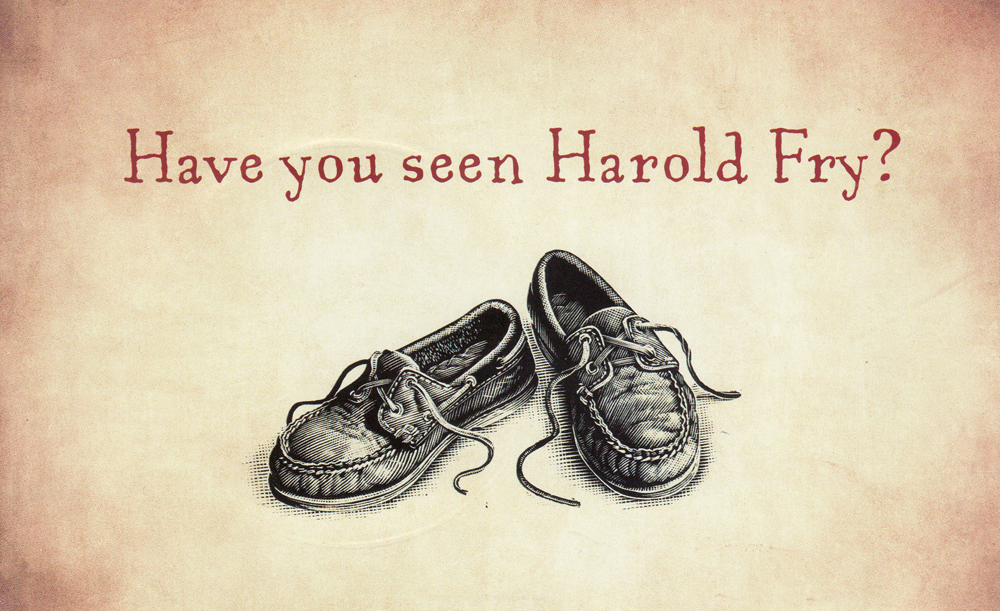
Have you seen Harold Fry?

February 11, 2012 3 Comments

The Unlikely Pilgrimage of Harold Fry
by Rachel Joyce

This is a very sweet novel about old age and regret and Englishness. It takes a simple but interesting idea and keeps it engaging throughout. The author’s inclusion of social media such as Facebook and Twitter in the storyline was of course a gift to the publisher’s marketing department (as you may have started to notice) but do not be put off – it’s worth a chance.

Have you seen Harold Fry?

Harold Fry has been retired for six months and spends his days with his wife Maureen keeping boredom at bay, when he receives a letter from an old friend, Queenie, telling him that she is dying of cancer. He goes out to post a reply and keeps on walking. He resolves to walk all the way from his home in Kingsbridge, South Devon, to Berwick Upon Tweed (so almost the whole length of England), having some idea that this is an act of faith that will save her life.

There are a few secrets at the heart of this story that are revealed slowly, with clues and partial memories dropped in between the story of Harold’s trek. Some I guessed and some I didn’t, but I don’t think it matters hugely either way; there is plenty enough story to keep you engaged even if you think you have figured the secrets out.

There are quite a few “issues” dealt with, including how it can be difficult to adapt to retirement, and how parents affect their child’s life, but the one that got to me the most was Harold and Maureen’s marriage. For 20 years they have lived at a polite distance, never really talking about what they want to say, to the point that when Harold starts his walk neither can understand the other. Maureen is bemused by the walk and the rules Harold has set himself (which change a few times anyway) and thinks that maybe Harold is doing it because he was once in love with Queenie. Harold thinks his wife will not miss him, that she will not be affected at all by his absence. During his walk, they both have time to think about the past, their marriage, what they once meant to each other and how things have changed. They both come to life, in their own ways, waking up from the monotony they had got stuck in.

The chapters alternate between Harold and Maureen, and they are both lovely characters, though both are also a little difficult and frosty at times. They are old-fashioned, in both good and bad ways. For instance, when a stranger confesses to Harold that he is cheating on his wife with a young man, Harold is appalled and repulsed but continues to listen politely.

There is a lot of detail about the landscape and route of Harold’s walk, sometimes lovingly admiring of England, sometimes less than complimentary, but this tends to reflect Harold’s mood mostly. He has realistic problems, mostly to do with his feet, and his perseverance in the face of pain is inspiring, though I couldn’t help but wonder at times if it was going to be worth it.

This book deals with some big issues in a quiet, understated way. It never gets gritty or deep into a subject, but it also doesn’t gloss over problems. A very sweet read.

This advance proof was sent to me by the publisher in exchange for a review.

Published March 2012 by Transworld Publishers.

Kate Gardner Reviews

Happy Dickens Day!

February 7, 2012February 11, 2012 3 Comments

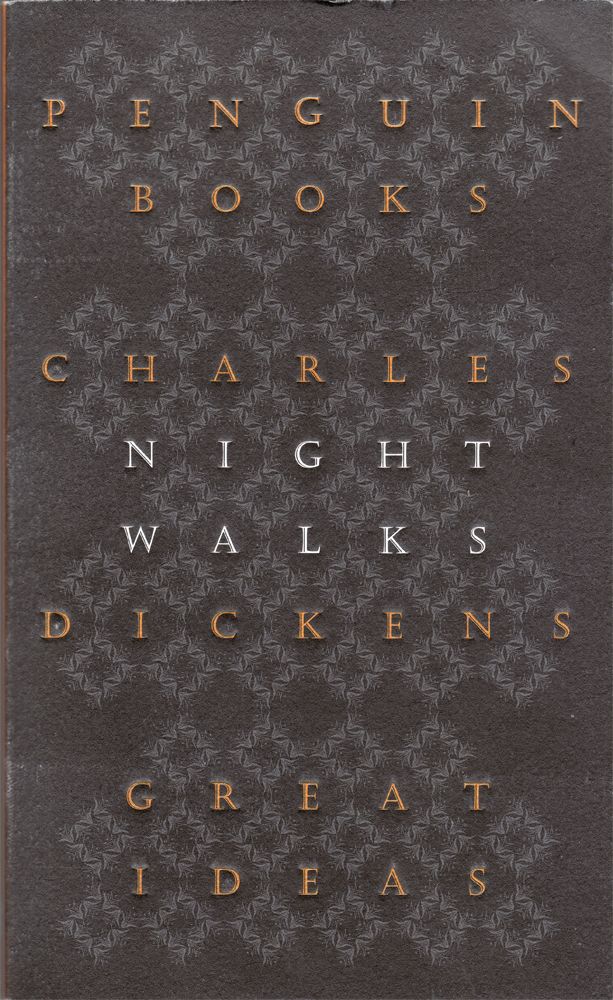
Night Walks

Night Walks
by Charles Dickens

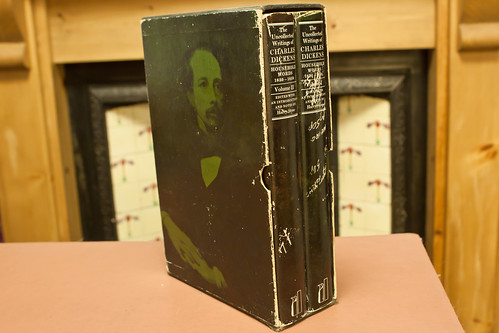
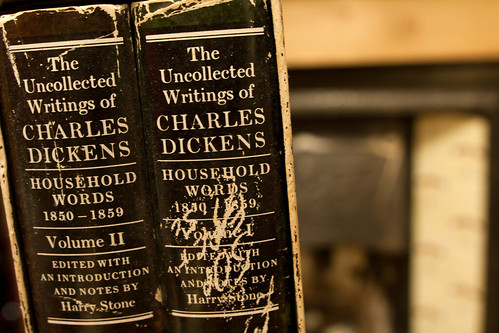
Today is the 200th anniversary of the birth of Dickens, so in preparation I thought I should read at least one of his works that have been sat on my TBR far too long. This is a collection of his essays, most of them from his journal Household Words, which I have a beautiful old boxed set of in my library. They give great insight into Dickens the man, as well as Dickens the writer.

The essays are mostly about Dickens’ forays around London, particularly poorer areas. His social conscience comes through strongly. In fact, he almost seems to be a bit of a busybody, inviting himself into workhouses and people’s homes, dragging children out of the gutter and throwing accusations at the police and government. But in the context of the time, writing such as this was hugely important. He described the real, actual conditions that people in London lived and worked in to spread the word, to spread awareness.

The writing is the Dickens familiar from his novels but with a single theme at a time making him a touch more accessible. There’s a definite sense of humour and a love of people in all their variety, as well as a need to know London thoroughly, at its best and worst. I found myself touched, amused, surprised and informed. Anyone interested in Victorian London would find something here for them.

Dickens Day

Some Dickens Day reading

First published 1850–1870.
This collection published 2010 by Penguin Books in the Great Ideas series.

Kate Gardner Reviews

Steampunk spy action

February 4, 2012 2 Comments

The Vesuvius Club
by Mark Gatiss

A friend passed this book on to me describing it as a “romp”. I think that’s an excellent assessment. All very silly and over-the-top but undeniably fun.

This is the first book in the Lucifer Box series, that being the name of their outlandish hero. Box inherited wealth and a property on Downing Street and as far as most of the world is concerned he’s a dandy and a so-so artist with a big ego. But he has a secret life as a spy for the British government. Throw in an Edwardian setting with a touch of steampunk, some rather open sexuality and a black sense of humour and you get the gist.

The story in this case is that two prominent scientists have recently died and a British secret agent who reported having suspicions about their deaths has gone missing. Box is asked to investigate and looks forward to the necessary trip to Italy, but first he has to get his best friend Christopher Miracle out of a spot of bother and he’d quite like to close the deal with the beautiful Bella Pok. And what’s with the suspiciously un-businesslike undertaker Tom Bowler?

As you can see, the names are fantastic. Dickensian, or perhaps sillier than that. And Box is deliciously twisted, initially seeming quite unfeeling and cruel, though his concern for his friend Miracle proves that assumption wrong. The story powers along at full speed, with multiple attempts on his life, including a horse and carriage chase through a cemetery. Like Sherlock Holmes, Box has his London low-life helpers, who are a brilliant touch even if the attempt to write in their Cockney accents did grate a little.

Box narrates the story as a cross between a memoir and a casebook. He delights in the religious connotations of his name and plays on this often. As he does in misleading the reader. And there were some nice touches. The “office” he goes to receive his spy missions is a men’s toilet, because the government can’t afford better. And the scattered illustrations by Ian Bass add a certain stylishness.

To be honest, this was fun but it wasn’t great. The characters are all absurdly over the top, which is I’m sure deliberate but not my taste. The attempts to surprise or gross out the reader are blatant, the science/technology stuff is ridiculous and the action got a bit hard to follow. Not that you need to follow it closely, the detail isn’t hugely important, but considering I read this in one day it’s pretty bad that I still got a bit lost whenever I put it down and picked it up again.

I should probably add that I am not a fan of the League of Gentlemen, Gatiss’s most famous writing credit, though I do really like the new BBC Sherlock Holmes series, which he co-writes. I generally dislike caricatures and gross-out comedy. If you like League of Gentlemen you will probably like this book a lot. I think it says something about the skill of the writer that I didn’t dislike it and I did laugh at times. But I won’t be rushing to pick up the sequels.

First published 2004 by Simon and Schuster.

Kate Gardner Reviews

Posts pagination

1 … 99 100 101 … 124

Archives

RSS Nose in a book

  • Book review: Christopher and His Kind 1929–1939 by Christopher Isherwood
  • March 2026 reading round-up
  • Book review: We Have Always Lived in the Castle by Shirley Jackson

Me on the internets

  • @kate_in_a_book@mas.to (Mastodon)
  • Flickr/noseinabook
  • Instagram/kate_in_a_book
  • StoryGraph/kate_in_a_book

Categories

  • Blog
  • Reviews
  • Uncategorized
Proudly powered by WordPress | Theme: Dream by vsFish.