Book review: The Godfather by Mario Puzo
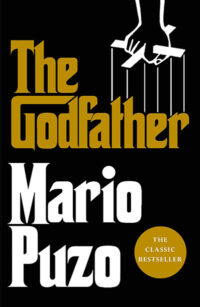 Back in early 2019 I received a smart hardback copy of The Godfather by Mario Puzo in the post. I hadn’t bought it. Penguin Classics was issuing a new edition for the book’s 50th anniversary and had sent me (along with many other book bloggers, I’m sure) a free review copy. I put it on my shelf of unsolicited review copies figuring that in one of my periodic clearouts I’d probably get rid of it. But it stayed there, an intriguing option for the right occasion.
Three and a half years later, I have COVID and am isolating from Tim (which sucks) and the rest of the world (less bothered). The one positive is that by not spending my evenings with anyone else, I am flying through books. After finishing the two books I had already started, I asked Tim to select some books for me from my TBR shelves. He left me a stack of three very different books: If I Had Your Face by Frances Cha, A Map of Tulsa by Benjamin Lytal and The Godfather by Mario Puso. Well, if there was ever a time to read a 600-page saga…
I’ve seen the films (albeit a very long time ago) and had heard many times that they’re far superior to the source material. Even Francis Ford Coppola, in his introduction to this edition, calls it a “potboiler”, albeit one with Shakespearean-level plotting. And I am averse to the romanticisation of violence, murder and the other terrible behaviours in this story. But I figured I’d give it a go and if it was awful then I would finally add it to the charity pile.
Continue reading “Book review: The Godfather by Mario Puzo”
 I started this book in August for
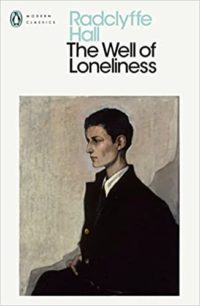 I had been intending to read The Well of Loneliness by
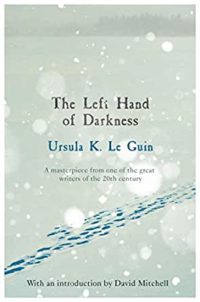 When my book club put out its call a few months ago for book suggestions on the theme of gender, I felt that science fiction could be a good angle from which to explore this topic but I feared that might put off some of the group. I needn’t have feared. Not only was my suggestion of The Left Hand of Darkness by Ursula K Le Guin the vote winner for our March meeting, it was also a really well attended (virtual) meet-up and a very fruitful, lively discussion. I should never have doubted them.