Book review: The Old Drift by Namwali Serpell
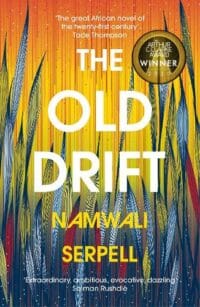 I forget where I saw the recommendation to read The Old Drift by Namwali Serpell. I suspect it was a listicle about African sci-fi. And indeed this book won the Arthur C Clarke Award in 2020. But I feel like calling it sci-fi is a bit misleading. This is an epic saga, incorporating some sci-fi elements in the last 20 years of its 125-year tale. With a touch of magical realism in the earlier part of the story. It’s also brilliant.
This is the story of three families in what is now Zambia. In 1904, on the banks of the Zambezi river, near Victoria Falls, a feverish British man, an Italian hotelier and a local African busboy become connected by what seems like a small incident. Percy Clarke is an archetypal colonist – a bored Englishman looking for adventure. He’s racist, often drunk and generally unpleasant. His is a disturbing mind to be inside.
Thankfully it is just a few pages before the narrative swiftly moves on to “The Grandmothers”. Serpell lays out the stories of three women connected to that moment in the prologue.
Sibilla is the illegitimate granddaughter of the Italian hotelier. Born in Italy, raised in poverty near the sumptuous home of her father, she is kept hidden from the world. Until as a young woman, a combination of love and murder necessitates her journey to Tanzania.
Agnes is Percy’s granddaughter, a beautiful young woman raised in wealth in England who happens to be blind. Which means she has no idea that the young man who has been sent to stay with her family for the summer from the family estate in Northern Rhodesia is Black. By the time she has figured it out, they are in love. Their presence back in colonial Africa challenges the social order.
The third grandmother is Matha, granddaughter of the busboy. Her life is tied up with revolution and activism. A major influence in her life is Edward Makuka Nkoloso – the real-life member of the Zambian resistance movement, director of the Zambia National Academy of Science, and founder of the Zambia space programme. Matha is based on the real-life Matha Mwambwa – one of Nkoloso’s “Afronauts”. Her story is exciting, encompassing the independence of Zambia, science and engineering.
But by their 30s, all three grandmothers’ lives have diminished – their grand loves are lost, their days are sadder. And at this point we are whisked on to the stories of “The Mothers”. And hot on their heels, “The Children”.
Between each section of the novel is a short chapter directly addressing the reader, where the narrator is a collective “we” that appears to be mosquitoes. Certainly, diseases are a recurring theme, though the specific disease that is the major threat changes over time – malaria, HIV, Zika.
“A dead white man grows bearded and lost in the blinding heart of Africa. With his rooting and roving, his stops and starts, he becomes our father unwitting, our inadvertent pater muzungu. This is the story of a nation – not a kingdom or a people – so it begins, of course, with a white man. Once upon a time, a goodly Scottish doctor caught a notion to find the source of the Nile. He found instead a gash in the ground full of massed, tumbling water…He despaired, he was broken…Oh, father muzungu! The word means white man, but it describes not the skin, but a tendency. A muzungu is one who will zunguluka – wander aimlessly – until they end up in circles.”
At 563 pages, this is a chunky novel, but with so many characters’ tales to tell from early childhood onward, it does kinda feel like it’s constantly moving on several years. The lives lived in its pages are rich and varied, which I love. There is a high proportion of characters who wind up sad and disappointed, but perhaps that’s a fair representation of life.
The style and mix of genres reminded me a little bit of Cloud Atlas by David Mitchell. Not to diminish Serpell’s originality one iota, but like that book I found some sections engrossing, some magical, and some…less so. I liked that it wasn’t quite straight-up historical fiction, that the SF and fantasy elements add another dimension through which to explore postcolonialism.
Published 2019 by Hogarth Press, Penguin Books.
Source: present from family.