Nose in a book

Reviews and other ramblings

  • Home
  • Reviews archive
    • Book reviews
    • TV reviews
    • Theatre reviews
  • TBR
  • Challenges
    • The Classics Club
    • 2014 Popular-Science Reading Challenge
    • Cookery challenge
    • The Gilmore Girls Reading Challenge
    • 2013 TBR Pile Challenge
    • 2013 Translation Challenge
    • Crime and Punishment read-a-long
  • About
    • Cookie legal stuff
  • Home
  • Reviews archive
    • Book reviews
    • TV reviews
    • Theatre reviews
  • TBR
  • Challenges
    • The Classics Club
    • 2014 Popular-Science Reading Challenge
    • Cookery challenge
    • The Gilmore Girls Reading Challenge
    • 2013 TBR Pile Challenge
    • 2013 Translation Challenge
    • Crime and Punishment read-a-long
  • About
    • Cookie legal stuff

Tag: USA

Cold purple shadows rose in the east

November 5, 2013November 10, 2013 2 Comments

By the Shores of Silver Lake

By the Shores of Silver Lake
by Laura Ingalls Wilder

I may have been sold on this book by the section where Ma mourns the lack of trees on the prairie. I do love me some trees. This is book 5 in the Little House series, by the way, so this may contain spoilers if you haven’t read them.

Laura’s getting all grown up! I almost don’t want to carry on with the series now, but leave them all here, with 13-year-old Laura interested in that Wilder boy only for his beautiful horse. Wilder has apparently skipped the few years her family spent running a hotel in Iowa so that her fictional age and real-life age finally match up. This might be because she had a baby brother who died during that time, which isn’t exactly kids’ book material. Or it might be because living in an established town and running a hotel doesn’t fit the pioneer theme of the series.

Despite skipping over the baby brother, this book has a pretty depressing opening. Obviously bad stuff does happen in life and Wilder chose not to omit all of it from the books, so she threw it all into the opening chapters of this volume (or that’s how it felt reading it). The first chapter is actually a bit of a catch-up because a couple of years have passed since the end of On the Banks of Plum Creek. Carrie is no longer a baby, but now there’s new baby Grace. And they’ve all had scarlet fever, which has caused Mary to lose her sight, so Laura must be Mary’s eyes. (This is actually rather well dealt with and reminded me a lot of the Helen Keller book I read recently.)

Once again Pa has itchy feet. He wants to go out west but Ma will only agree to go where there will be a school nearby, so they head to Dakota, where a new town is planned for the following spring on the path of a railroad that’s under construction.

I enjoyed the children riding on a train for the first time, and the combination of excitement and fear that came with that. I liked the interactions with some very different people – the construction crews and fellow would-be settlers are a wilder lot than the townfolk they’ve left behind in Plum Creek.

In this book I really felt how much this series is teaching me about the history of the USA. It is so strange to be sat here in a house that’s older than the town the Ingalls family helped to create, back in 1879. Obviously this is a children’s book so it doesn’t go into the politics of the population boom in Dakota, or the question of it being a territory rather than a state, but the fact that I have gone and looked up that history says something about Wilder’s ability to drop in just enough detail to pique interest. Some details might well be coloured by hindsight – did Pa really talk about how all the buffalo are gone because white men have come and shot them all? Or is that 20th century Laura Ingalls Wilder speaking? But really I don’t mind that and it’s interesting to see what Wilder does choose to comment on.

On reflection, a lot happens in this book. It meets the same criteria as Plum Creek, in that it’s well written but also has plenty of story and isn’t hideously racist. There is actually a slightly dodgy character who’s half American Indian but he’s Pa’s friend and Laura really likes him so Ma’s distrust passes as just one character being racist, rather than Wilder herself.

“The sun sank. A ball of pulsing, liquid light, it sank in clouds of crimson and silver. Cold purple shadows rose in the east, crept slowly across the prairie, then rose in heights on heights of darkness from which the stars swung low and bright.”

Published 1939 by Harper & Brothers.

Source: Google Books.

Kate Gardner Reviews

Cosy and comfortable in their little house

October 28, 2013

Little House in the Big Woods

Little House in the Big Woods
by Laura Ingalls Wilder

I didn’t read the Little House books growing up, nor did I watch the Little House on the Prairie TV show, but they are referenced so often and are clearly so beloved that I thought it was about time to rectify the situation. Also, thanks to a bit of a mini lupus flare I’ve been struggling a bit with reading lately so I thought it might not hurt to try a few children’s books!

At this point I have read three of the series and I must admit it took me a while (a book and a half) to be won over but I am now engrossed and want to read the rest of the original Wilder books. I am intrigued by the decisions she made about which parts of her life to write about (albeit fictionalised) and which facts to retain, change or drop entirely. No doubt her publisher had some part in these decisions, but she was also apparently heavily influenced by her daughter Rose Wilder Lane, who was already a successful writer herself when she persuaded her mother to write down some of her stories of childhood.

On reflection, this first book paints the picture that appeals to me the most. But I am predisposed to like woods (I grew up in the Forest of Dean). The life of the Ingalls family (Ma Caroline, Pa Charles, big sister Mary, baby sister Carrie and Laura – aged five – plus their bulldog Jack) sounds idyllic, in a basic, rustic kind of way. They live, as the title suggests, in the middle of the woods in Wisconsin, with Laura’s grandparents, uncles, aunts and cousins all within a few miles in the same woodland. They have a small garden and raise animals or hunt for their meat. They make a little money from selling animal pelts to buy the few things they need that they can’t provide for themselves.

Not a lot happens and, while it’s fun to learn how maple syrup tapping works or how Pa makes his bullets, this book wasn’t especially gripping. It must have been less idyllic than described or the family would never have left, but nothing in this book gives you a clue as to what was wrong with this life. (I suppose you might suggest the lack of schools or the opportunity to make a little more money, but neither of those is any more available in their next home.) The writing is also a little simplistic – of the three Little House books I’ve read so far this was the one that felt most clearly like a children’s book. Ingalls referring to herself in the third person, as Laura, also threw me at first, but I guess that’s just a clear marker that this is fictionalised.

“They were cosy and comfortable in their little house made of logs, with the snow drifted around it and the wind crying because it could not get in by the fire.”

Remembering how long ago these books were written, and how much longer again it is since the time in which they’re set (1868 onward), I’ve tried not to judge them on things like gender politics and racism, but as you’ll see from my mini reviews through the next couple of weeks, there are some things I just couldn’t ignore!

Published 1932 by Harper and Brothers.

Source: Project Gutenberg Canada.

Kate Gardner Reviews

Beseeching at the portals of the soft source

February 23, 2013February 23, 2013 2 Comments

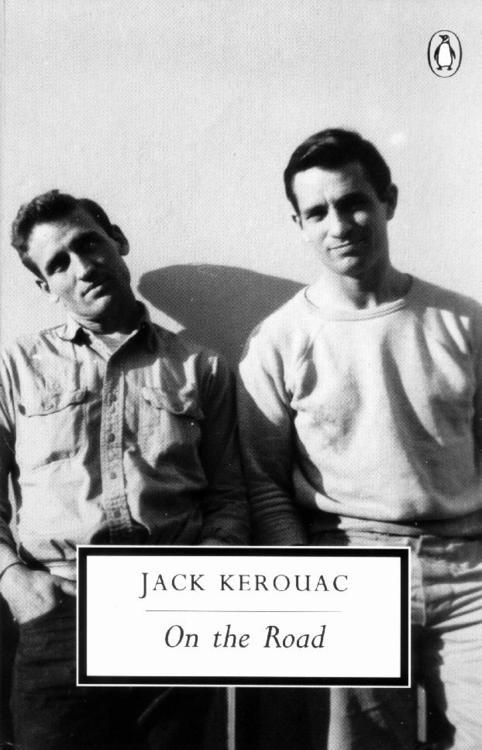
On the Road
by Jack Kerouac

On the Road

People have been telling me to read this book since I was…18? And I haven’t put it off deliberately. I even read a couple of other Kerouacs in the meantime. But I suppose the legend of this being written in one unbroken outpouring, in fact literally typed on one great long roll of paper, suggested to me something impenetrable and rambling, which this is not. Partly because that legend is not entirely true…

So much happens in this book (I hesitate to call it a novel, due to its autofiction nature) and the writing style is so open and honest it hardly matters that it’s not tightly plotted. How could it be? This is the story of a few years in the life of Kerouac’s alter ego Sal Paradise as he criss-crosses North America searching for the experience, the moment of truth that will break his writer’s block. I don’t know which parts are “real” but that really isn’t the point. The result is a beautiful, sad, enlightening book.

“Soon it got dusk, a grapy dusk, a purple dusk over tangerine groves and long melon fields; the sun the color of pressed grapes, slashed with burgundy red, the fields the color of love and Spanish mysteries. I stuck my head out the window and took deep breaths of the fragrant air. It was the most beautiful of all moments.”

The language is perfectly evocative and really shows Kerouac/Paradise’s love for his country, for the road, for people. At least to begin with. Because while the narrative starts off full of youthful excitement and wild enthusiasm, with Paradise throwing himself recklessly into every experience, the moments of awareness when a situation isn’t working out add up to produce a Paradise who is a little older and wiser, sadder and careworn, because he actually does care and recognises the value of caring.

“Boys and girls in America have such a sad time together; sophistication demands that they submit to sex immediately without proper preliminary talk. Not courting talk – real straight talk about souls, for life is holy and every moment precious.”

Ah, the girls. I can see how this book might have been shocking in the 1950s. Now, of course, sex and drugs (mostly cannabis) and booze aren’t at all shocking but there is still most definitely bad behaviour in the way the thrill-seekers treat their friends/hosts wherever they go. Most of which is the influence of Dean Moriarty. Dean is a restless trouble-maker who lives life to the full and Sal hero-worships him, even though most of his friends say straight out that they don’t trust Dean, and with good reason. Dean is the start and end of the book but we don’t actually meet him until over 100 pages in.

“I could hear Dean, blissful and blabbering and frantically rocking. Only a guy who’s spent five years in jail can go to such maniacal helpless extremes; beseeching at the portals of the soft source, mad with a completely physical realization of the origins of life-bliss.”

Sal himself, though, I loved as a character. He feels everything so deeply, from the heights of passion to the depths of despair. He wants experience and he certainly gets it, travelling any way he can, sometimes working his way, sometimes living among bums penniless and scrounging or even stealing to get by. He falls in love multiple times but to some extent he just loves life.

There’s an interesting attitude to race in this book. Considering the date I can forgive some of the race language used but I can’t quite figure out how to feel about Sal’s love of coloured people. It sounds like a good thing, and he certainly mixes with them and loves their music (the jazz, of course) and their women; but he seems to see them as exotic underdogs, as if their colour defines them. When he declares a wish to be one of them it’s shockingly naïve, showing no awareness of racism, of struggle, of the fact that while he is choosing to slum it in their company knowing that he has a comfortable home near his beloved New York to return to, most poor people did not choose that life and have to struggle their whole lives, not just for a few days as a new experience.

But I can forgive all that for the sheer joy of the language. You can’t help but fall in love with travel and America when reading this book, even as Sal is falling out of love with both. I marked so many quotes while reading this. I will leave you with a few of them.

“All that old road of the past unreeling dizzily as if the cup of life had been overturned and everything gone mad. My eyes ached in nightmare day.”

“Yang, yang, the kids started to cry. Dense, mothlike eternity brooded in the crazy brown parlor with the sad wallpaper, the pink lamp, the excited faces.”

“That last day in Frisco…the great buzzing and vibrating hum of what is really America’s most excited city – and overhead the pure blue sky and the joy of the foggy sea that always rolls in at night to make everybody hungry for food and further excitement. I hated to leave…With frantic Dean I was rushing through the world without a chance to see it.”

“We turned at a dozen paces, for love is a duel, and looked at each other for the last time.”

First published 1957 by Viking Press.
Reprinted in Penguin Classics 2000.

Source: I think I bought this for myself several years ago.

Challenges: This counts towards the 2013 TBR Pile Challenge.

Kate Gardner Reviews

All just programming

August 8, 2012September 10, 2012

Old Paint
by Megan Lindholm

This is a novelette from Asimov’s Science Fiction that Tim encouraged me to read. It’s a touching, simple story set in a near-ish future and playing on American tropes.

I hadn’t realised until looking her up for this review that Megan Lindholm also writes as Robin Hobb, which is a name that is much more familiar to me but also one I wouldn’t pick up because she writes that traditional swords and magic fantasy that I’m not a fan of. Well, turns out she can write SF pretty well so maybe I’ll look up more of her work written under her real name.

This is the story of a poor-ish family in an American city in the late 21st century. Suzanne and her two school-age kids share a small flat with one computer between them and have no car, much to the children’s shame. But when they inherit their grandfather’s huge muscle car they are even more embarrassed. Especially when their mother insists on actually driving it rather than letting it drive itself like everyone else does.

To say much more about the storyline would be to give too much away, but it’s an interesting take on the American love affair with cars. From an environmental perspective it’s hopeful, because all cars run on electricity, with back-up solar cells for when they can’t get to a charge point. Despite the advances in technology, this is a story about people. Suzanne reminisces about her teenage relationship with this same car. And yes, I know how that sounds and yes, to a certain extent the story does anthropomorphise the car (“Old Paint” is the name they give it), though it does acknowledge this directly:

“We all know that Old Paint is just following the directives of his programming. He’s not really…alive. He just seems that way because we think of him that way. But it’s all just programming.”

But that’s not what it’s about. Suzanne’s long-since given-up-on relationship with her father is rescued after the fact by this gift and her children learn to appreciate her through it as well. Which sounds odd, but trust me, it works.

There are more SF elements than my synopsis perhaps suggests but they are subtly done so that, aside from one thing that’s central to the story, it’s all background. It’s a very believable near future, with only one significant change from now.

First published in the July 2012 issue of Asimov’s Science Fiction.

Kate Gardner Reviews

Size matters

October 2, 2011March 14, 2012 2 Comments

Middlesex
by Jeffrey Eugenides

I had a bit of a struggle with reading this summer and for some reason my response was to only pick out slim little books from the TBR. Why oh why did I forget how absorbing and satisfying a big chunkster is? Like this one, for example.

Eugenides has a new novel out this month, only the third of his career. While Middlesex may not be the biggest book on my shelves, it’s pretty big and I can easily believe that the combination of writing and research might have taken ten years (the gap between this and his first novel). Because this book is epic.

Ostensibly the story of Cal Stephanides, our narrator takes us back through three generations of family history, from Asia Minor to Detroit to Berlin. The heart of the story is summed up in its first line: “I was born twice: first, as a baby girl, on a remarkably smogless Detroit day in January of 1960; and then again, as a teenage boy, in an emergency room near Petoskey, Michigan, in August of 1974.” So that title’s not about the English county then, just to clarify.

Raised as a girl, Calliope, it is not until her teens – unusually tall, flat-chested and with no sign of getting her period – that she is identified as a hermaphrodite. The journey from beautiful young girl in Detroit to confident but lonely man living in Berlin and telling us his life story is one that has to unravel slowly, because it’s a lot to take in.

This book probably isn’t for the prudish. Cal has been forced to be matter of fact about certain aspects of life, namely sex and genitalia. We hear all about the sex lives of his grandparents and parents, as well as Cal’s own experimental fumblings, because it is all relevant. There’s also a lot of talk about gender identity and body dysmorphia, which I found interesting and well told.

But it’s so much more than that. Cal’s grandparents are forced to flee their home in Greece when it is occupied by Turkey. They arrive at a cousin’s house in Detroit and do their best to assimilate. We follow the family through world wars and race riots, through the rise and fall of the American car industry, through Watergate and through hippy love and drugs. But we also follow the minutiae of an immigrant family, their daily ups and downs, their changing fortunes as they are alternately accepted and rejected by their adopted city.

It is a tremendous work. Eugenides has done his homework, but the only place that stands out is regarding hermaphroditism, which Cal is also learning about. The language is beautiful, educated but warm. The people are real and engaging – no-one is wholly good or bad. I thoroughly enjoyed the week I spent absorbed in this book and will try to stop being afraid of picking up a bigger book from the shelf.

First published in Great Britain in 2002 by Bloomsbury Publishing.
Winner of the 2003 Pulitzer Prize for Fiction.

See also: review by Ingrid on The Blue Bookcase.

Kate Gardner Reviews

Holiday, celebrate

April 27, 2011April 28, 2011 2 Comments

At the risk of boring my lovely readers, I have now been through all of my holiday pictures, plus some taken by other people, and present to you a round-up of my trip to the USA.

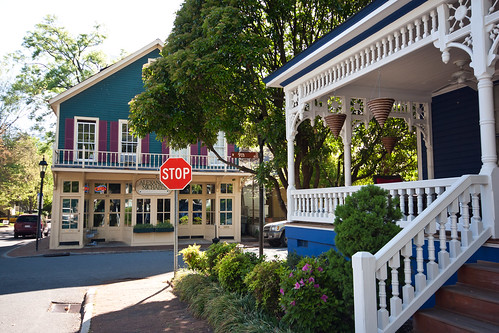
We had a good look around Charlotte, North Carolina, which I had not visited before. A recent and thriving banking industry means that the city centre is very clean and new looking, even the old bits. We did meet a local who complained about how many old bits got torn down to built condos but I don’t know enough of the ins and outs to comment on that.

The Inn Uptown

Alexander Michael's Restaurant & Tavern

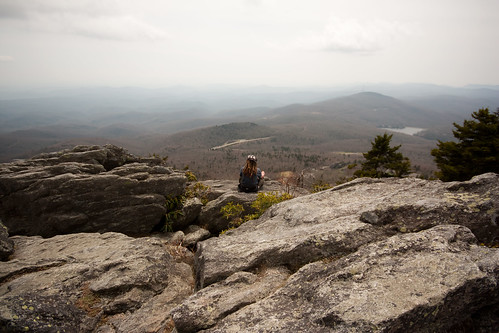
We also went to the nearby Great Smoky Mountains and did a bit of hiking (hard work in hot sunshine).

Contemplating

The way forwardMile High Swinging Bridge

We went to the US National White Water Center and did some rafting (great fun).

Photo by talkie_tim

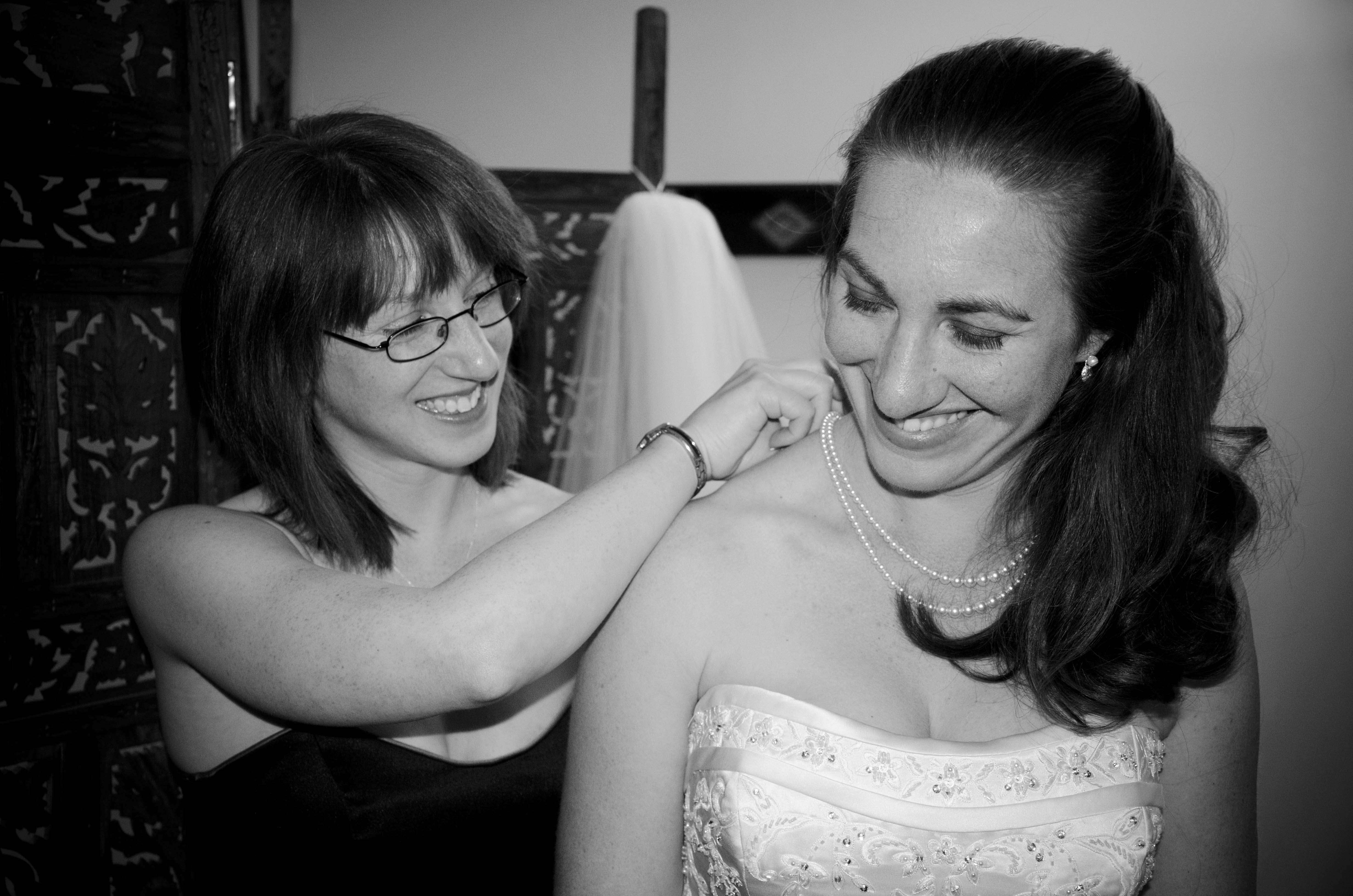
And my sister got married so well done her. I was there, I performed my bridesmaidly duties including dancing as much as I could and attempting not to sing the real lyrics to that song by Cee Lo Green when a small person took a shine to dancing with me. Which was tough.

Photos by St Martin Photography (You can click on these pics to view them big.)

There were also some lovely evenings with family and friends, old and new. There were some impressive storms thanks to the big temperature changes. There were some astute observations about different races not mixing a whole lot and some less astute ones about food being a bit rubbish. But we probably just went to the wrong places. I’m sure it’s not all deep fried really.

Kate Gardner Blog

Posts pagination

1 2

Archives

RSS Nose in a book

  • Book review: Interstellar Megachef by Lavanya Lakshminarayan
  • May 2026 reading round-up
  • Book review: Passing by Nella Larsen

Me on the internets

  • @kate_in_a_book@mas.to (Mastodon)
  • Flickr/noseinabook
  • Instagram/kate_in_a_book
  • StoryGraph/kate_in_a_book

Categories

  • Blog
  • Reviews
  • Uncategorized
Proudly powered by WordPress | Theme: Dream by vsFish.