Nose in a book

Reviews and other ramblings

  • Home
  • Reviews archive
    • Book reviews
    • TV reviews
    • Theatre reviews
  • TBR
  • Challenges
    • The Classics Club
    • 2014 Popular-Science Reading Challenge
    • Cookery challenge
    • The Gilmore Girls Reading Challenge
    • 2013 TBR Pile Challenge
    • 2013 Translation Challenge
    • Crime and Punishment read-a-long
  • About
    • Cookie legal stuff
  • Home
  • Reviews archive
    • Book reviews
    • TV reviews
    • Theatre reviews
  • TBR
  • Challenges
    • The Classics Club
    • 2014 Popular-Science Reading Challenge
    • Cookery challenge
    • The Gilmore Girls Reading Challenge
    • 2013 TBR Pile Challenge
    • 2013 Translation Challenge
    • Crime and Punishment read-a-long
  • About
    • Cookie legal stuff

Tag: translation

My love is a suicide bomber

May 17, 2015

i am the beggar of the worldI am the Beggar of the World: Landays from Contemporary Afghanistan
compiled by Eliza Griswold and Seamus Murphy

This is a collection of landays, which are a traditional two-line Afghan poem mostly written/performed by women, many of whom are illiterate. Some are historical, some are modern, often reinterpretations of the old ones. The landay’s apparently simple form often hides great complexity – symbolism, history, politics and so much else.

“A landay [is] an oral and often anonymous scrap of song created by and for mostly illiterate people: the more than 20 million Pashtun women who span the border between Afghanistan and Pakistan. Traditionally, landays are sung aloud, often to the beat of a hand drum, which, along with other kinds of music, was banned by the Taliban from 1996 to 2001, and in some places still is.”

Continue reading “My love is a suicide bomber”

Kate Gardner Reviews

Shiny New Books is one year old!

April 7, 2015

A very quick post to congratulate the team behind Shiny New Books who have just published their fifth edition of book reviews, author interviews and essays, marking one year since the website launched. If you haven’t yet checked them out, I do recommend taking a look and subscribing to their excellent newsletter, which has the admirable aim of bringing great new books to people who don’t know what to read next.

I should add that I have contributed to the latest edition, by writing a review of White Hunger by Aki Ollikainen. If you’re interested in what I thought of this Finnish novella about a harsh winter in the 19th century, do check out my review. And while you’re there take a look at the rest of the content in the Spring 2015 edition.

Kate Gardner Blog

Mid-winter reading round-up

January 11, 2015 4 Comments

Hands up: I finished reading two of these books weeks ago and have therefore forgotten almost everything about them. They all deserve full reviews but I’d have to reread the books for that to happen and, let’s face it, that’s not happening. So here are some woefully brief thoughts on the last few books that I’ve read. (Incidentally, my 2015 reading has started slowly. Goodreads tells me I am already behind. Stupid reading challenges.)

Dear LifeDear Life
by Alice Munro

Munro writes beautiful short stories about everyday life in Canada, often set in or starting from the mid-20th century, and even the more modern settings have a timeless quality to them. There was a bit of a theme of passing through, of the people who are important to you for a while and then move on, which is not an easy theme to create satisfying endings from, but this never bothered me. I really liked the story “Amundsen”, about a woman who goes to a remote village to teach at a school that’s part of a tuberculosis sanatorium. It’s somehow very ordinary and very strange at the same time.

“The building, the trees, the lake, could never again be the same to me as they were on that first day, when I was caught by their mystery and authority. On that day I had believed myself invisible. Now it seemed as if that was never true.”

First published in Great Britain 2012 by Chatto & Windus.

Source: Foyles, Bristol.

The Dead Lake
by Hamid Ismailov
translated from Russian by Andrew Bromfield

This strange short book started out with so much eerie promise but it got a little boring in middle. In fact, I put it down for a month and wasn’t sure if I would pick it up again, but I’m glad that I did. The language is beautiful and the story almost a fairy tale. It’s about Yerzhan who lives in a remote part of Kazakhstan where the Soviets test atomic weapons. As a young boy he fell in love with the girl next door and one day, to impress her, he dived into a forbidden (and almost certainly radioactive) lake. The consequences of this action are odd and fantastical, which is fitting for such an empty, unsettling landscape.

“Yerzhan stood there with his heart pumping hard, pounding its rhythm against the wall – or was that the heavy passenger express that pounded on the rails with a rhythm that pulsed through the ground? Whatever the cause of the pounding, Yerzhan just stood there nailed to the floor, more dead than alive. And once again that same implacable, visceral fear rose up from his trembling knees to his stomach, where it stopped like a hot, heavy, aching lump.”

Published 2014 by Peirene Press.

Source: Peirene gave this away as a free e-book to newsletter subscribers.

Rivers of London
by Ben Aaronovitch

This had been recommended to me by basically everyone and we accidentally ended up with two copies of it, so I’ve been meaning to read it for a while. It’s the story of Peter Grant, constable for the Met, who at the start of the book is at the end of his probation, waiting to be assigned to a department, so his whole career could hinge on how he handles guarding a crime scene in Covent Garden. Which would be easier if this particular murder case didn’t appear to involve ghosts and all manner of strangeness. This book is a lot of fun. It explores fantasy, magic, policing, class, race, history and death, doing so with great humour and plenty of action. There are already four sequels, which I know people rave about as much as this first book.

“Rush hour was almost in full flood when I got on the train, and the carriage was crowded just short of the transition between the willing suspension of personal space and packed in like sardines…I was sending out mixed signals, the suit and reassuring countenance of my face going one way, the fact that I’d obviously been in a fight recently and was mixed race going the other. It’s a myth that Londoners are oblivious to one another on the tube: we’re hyper-aware of each other and are constantly revising our what-if scenarios and counter strategies.”

Published 2011 by Gollancz.

Source: Heffers Bookshop, Cambridge.

Kate Gardner Reviews

Order will come to your distracted mind again

August 17, 2014 2 Comments

Faces of Love

Faces of Love and the Poets of Shiraz
by Hafez, Jahan Malek Khatun and Obayd-e Zakani
translated from Persian by Dick Davis

This book was a bit of a serendipitous find. I was in West Hampstead to meet friends and had arrived early, so I thought I’d pop into West End Lane Books. I wasn’t looking for anything particular, just enjoying a good browse, and I spotted this book on a shelf of beautiful books. Clearly, I don’t need more books right now, but this was poetry, in translation and beautiful, all of which are things I’d like to have more of! Not only is it well designed (like all Penguin Classics Deluxe Editions) but the pages have been roughly cut in an old-fashioned style – I can’t tell if this is deliberate or a binding error, but I like it either way!

However, that’s not enough for me to consider it truly serendipitous. On the train home, I was reading this book (not that I hadn’t brought any with me, but new book often trumps old, let’s face it) and the guy sat next to me asked if I was reading Persian, as he recognised the style of art used on the cover. He seemed to know a thing or two about Iran and we had a really nice conversation about the book, even reading a couple of the poems together and discussing the oddness of Hafez’s style. Which was rather lovely.

“O sorrow-stricken heart, your fortunes will revive,
Order will come to your distracted mind again
– do not despair

And if the heavens turn against us for two days
They turn, and will not stay forever in one place
– do not despair

Sweet singing bird, survive until the spring, and then
You’ll tread on grass again, deep in the flowers’ shade
– do not despair”
—Hafez

As for the book itself, there’s a chance it was more educational than a discovery of a new favourite poet, but I’m not averse to a little learning. Hafez, Jahan Malek Khatun and Obayd-e Zakani were mid-to-late 14th century court poets from the city of Shiraz in Persia (now Iran). Shiraz is near Persepolis and at that time was not especially important politically but was home to some of Persia’s most famous poets – despite the spread of Islam, which then as now discouraged the music and wine that tended to accompany court poets (indeed much of their verse would have been sung). Most of the 14th century rulers of Shiraz generously patronised artists, including poets, so it was a safe haven for them.

Hafez is the most famous of three poets featured. His work is still studied today and many an academic has tried to unravel the layers of meaning in his work. In his time he was famous and well respected. Jahan Malek Khatun was a princess of Shiraz – her father and later her uncle ruled the city. While not the only female poet whose work has survived, it is likely that she had an easier time of being a female poet because of her royalty. Obayd-e Zakani wrote much more satirical work than the other two, often political, and though he enjoyed fame in his lifetime, he also made great enemies.

“How long will Heaven’s heartless tyranny
Which keeps both rich and poor in agony

Go on? The dreadful happenings of these times
Have torn up by the roots Hope’s noble tree,

And in the garden of the world you’d say
They’ve stripped the leaves as far as one can see.”
—Jahan Malek Khatun

As you can tell from my ability to give you these summaries, Davis has written a good (extensive but not dull) introduction to the history and the poets, as well as the poetry. There are also end notes giving plenty of further analysis of the poems without interrupting the reading of the poems themselves.

I especially appreciated Davis’ notes on his translation, with explanations of the challenges (such as recreating the ancient styles of verse used), the things he was able to recreate in English and the things that are lost. I also enjoyed the appendix of three tongue-in-cheek poems Davis wrote about the difficulty of translating Hafez! I learned a lot, for instance that Persian pronouns do not distinguish between male and female, so most of the time it isn’t clear whether the subject of a poem is male or female. (From historical records and those poems that do make it clear – by referencing body parts, for example – we know that it was common for poets of the time to write admiringly of attractive youths of both genders.) It was also common (as with some western poets of a similar era) for references to a person to mean both a flesh-and-blood person and God, or to switch between the two.

“Here with our souls’ companions, bored to death
With hypocrites and all they claim they’ve done,

No pompous pride disturbs our minds, no thoughts
Of purity – no, not a single one!

We’ve drunk the poison of our indigence
And don’t want antidotes from anyone.”
—Obayd-e Zakani

And my reaction to the poetry? Some I loved, some was okay, some I disliked. Hafez was my favourite – I see why he is the most famous of these three by some way. I wanted to like Jahan Khatun more, as the one woman featured, but there was a single-notedness to her verse, mostly talking about unhappiness in love, though that’s not to say I disliked it. Obayd I liked politically but not his sexual stuff (which there’s quite a lot of). I’m not a prude, I just didn’t find the verses sensual or sexy at all, instead they were distasteful – this might be the translation but as Davis did such a good job elsewhere I tend to think it was the original that I disliked.

I’m really glad I followed my whim and picked up this book. I’ll certainly re-read the Hafez, and maybe if I give the others a chance I’ll get something more from them as well.

First published in the US in 2012 by Mage Publishers.
This edition published in the UK in 2013 by Penguin Books.

Source: West End Lane Books.

Kate Gardner Reviews

White people don’t care where they send you

July 22, 2014

The Extraordinary Journey of the Fakir who got Trapped in an IKEA Wardrobe

The Extraordinary Journey of the Fakir who got Trapped in an IKEA Wardrobe
by Romain Puértolas
translated from French by Sam Taylor

This book has already been a huge success in France and the publishers of the English translation are clearly hoping for similar sales figures. I hope they get them, even though I didn’t love it.

It would be wrong to say I am ambivalent about this book – it does not invite ambivalence. Rather, I both loved aspects of it and was frustrated or disappointed by others. It could well be a bit of a Marmite book.

At first glance – especially for the first few chapters – this is a very silly comedy, one that did make me laugh (or rather, snigger) a few times, though it’s not entirely to my comedic taste. Then, just as I was struggling to decide how I felt about all this slapstick silliness (it has a very Clouseau vibe) and the rather tricky main character, some serious issues get thrown into the mix (primarily human trafficking/illegal immigration) and, for me, it all picked up considerably. I know from online reviews that some people have objected to this combination of serious and silly but I actually thought that was handled fairly well – that was not my objection.

“A fakir by trade, Ajatashatru Oghash (pronounced A-jar-of-rat-stew-oh-gosh!) had decided to travel incognito for his first trip to Europe. For this occasion he had swapped his ‘uniform’, which consisted of a loincloth shaped like an enormous nappy, for a shiny grey suit and a tie rented for peanuts from Dilawar (pronounced Die, lawyer!), an old man from the village.”

It’s a difficult novel to summarise but the title does a fairly good job of the start! Ajatashatru Oghash Rathod has travelled from his home village in Rajhastan to Paris to buy a bed of nails from IKEA. He’s brought only a counterfeit €100 note, his real funds having been entirely spent on his airfare and visa, which I felt nicely set up the balancing act between his poverty and his shaky morals. When he gets trapped in a display model of a wardrobe in IKEA, it of course happens to be one that is earmarked for hasty transport (i.e. it isn’t disassembled) to England, where the fakir is discovered in a lorry with five illegal immigrants.

This neatly opens the door for an exploration – a largely scathing one – of border controls in a few different western European countries through the eyes of someone – an Indian with a legal Schengen visa – who doesn’t already know their ins and outs (such as the fact that the UK is not Schengen). One of Puértolas’ many former careers was as a French border guard and his inside knowledge shows, in a good way. He clearly has great sympathy for those who leave behind unimaginable poverty, hunger and disease in search of a better life, and great hatred for those who take advantage of such desperation. There are some tough details in this book, though they are never lingered on.

“It is not the fear of being beaten that twists our guts. No, because on this side of the Mediterranean we do not suffer beatings. It is the fear of being sent back to the country from which we have come, or, worse, being sent to a country we don’t know, because the white people don’t care where they send you.”

So I appreciated the subject matter, I found the story very readable and when the comedy got a little less broad it was more to my taste (or perhaps it even grew on me)…but I still didn’t love it. I might argue that the serious issues were handled a little too lightly and that they deserved to be explored more deeply, but then that would be a very different book. In fact, I am hopeful that the comedic tone of this novel will bring the issues surrounding human trafficking and illegal immigration to a wider conversation. (Indeed, at the hairdresser I spotted that this book is one of British Vogue magazine’s picks for their summer reads, which is a good start.)

My problem then is that the fakir’s reactions to his unlikely journey are trite, his opinions of the world are voiced clumsily and I never could decide if the book is racist. Certainly, it uses racial/national/gender stereotypes for comedic effect – for instance, the inability of any European to pronounce Indian names correctly – and up to a point that’s fine, but I often felt the line had been crossed.

I suppose that leaves me not ambivalent but also not decided.

L’extraordinaire voyage du fakir qui était resté coincé dans une armoire Ikea published 2013 by Le Dillettant.
This translation published July 2014 by Harvill Secker.

Source: This book was kindly sent to me by the publisher in return for an honest review.

Kate Gardner Reviews

This is mad, and I promise. All those words

January 9, 2014

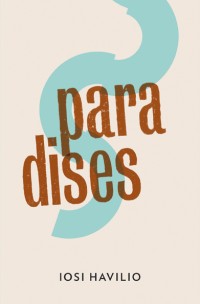
Paradises

Paradises
by Iosi Havilio
translated from Spanish by Beth Fowler

I got this book as part of my subscription to And Other Stories. I didn’t realise that it’s a sequel to Havilio’s first novel, Open Door, but I’m not sure how much that mattered. However, I guess that does mean that this review might contain spoilers to the first book (which I fully intend to go back and read now).

This novel follows a young mother who, suddenly widowed and forced off her husband’s farm, moves to Buenos Aires with her four-year-old son Simón. She finds work, housing and friends in a poor, dodgy corner of the city.

“It’s me who ends up carrying Simón most of the way, and if at first it feels like he’ll break my back, I adapt as we go and that annoying kick between the ribs becomes just another part of my body. Like everything, once the novelty has passed, things stop hurting or making you happy.”

The unnamed narrator floats through life, letting things happen to her, which was sometimes frustrating but totally believable. There are fleeting references to a lunatic asylum in her past, and she does show non-specific signs of some kind of mental illness – a loose hold on reality, an inability to say no to some really bad ideas, a surprising comfort with lying.

“I think about how each of us had to devise our truth in relation to the other, a comparison of before and after. And that’s the reason for all the affectations, the smiles, the embarrassment, the surprise, the And you? This is mad, and I promise. All those words.”

In some ways this is a story of survival. The narrator is doing what she can to get through life and parenthood. Though she’s new to the city, she is some ways ideally suited to this kind of life, though she is also the type of person most at risk from it.

Her vagueness isn’t just apparent in her narration, it’s also clear from the way her friends interact with her. Most of them take what they want from her silence, interpreting it the way that suits them best, but then other people (probably those who are best for her) struggle and fail to understand.

“I look into his eyes, sad, broken eyes like an orphaned, tortured cat’s, I don’t know what to say to him…I sympathise in silence, with my eyebrows, all the words of consolation that occur to me turn out to be impossible to articulate. He realises this and must feel a bit disappointed.”

I loved the opening of this novel, with the uncomfortable funeral and the final days at the farm. And I liked the rest of it, but I think I did ultimately find the narrator too vague and frustrating to love the book overall.

Published 2013 by And Other Stories.

Source: I subscribe to the publisher.

Kate Gardner Reviews

A thick, pulsating silence gushed from the walls

November 16, 2013 1 Comment

A Handful of Sand

A Handful of Sand
by Marinko Koščec
translated from Croatian by Will Firth

I ordered this book after Tony of Tony’s Reading List blogged about new publisher Istros Books, who specialise in fiction translated from Eastern Europe. They have lots of authors who have won big literary prizes in the Balkans but somehow have not previously been translated into English, so I am glad that they exist. However, I must admit I was not entirely won over.

The writing is very lyrical. The story is about two lonely people (narrated by them alternately) who are heading towards romance, and how all-consuming and overwhelming passion can be. It takes its time, examining more than a decade of their lives and how they come to be the people they are with the attitudes to love that they have. But it’s not just a love story, it’s also a story about parents and children and how that relationship changes as the children become adults and the parents are the ones who need support.

“A thick, pulsating silence gushed from the walls, filling the whole space and burning my throat. I went to bed around midnight; Mother lay directly below, down on the ground floor. Needles stabbed from the depths of the night. At around four, the birds began to call with their inexhaustible joy at the breaking of a new day.”

I learned a lot about the atmosphere of modern Croatia, from this book. And while it’s a simple story, it felt very real, with people and emotions brought completely alive. Sometimes it verged on heartbreaking, and it certainly delved thoroughly and believably into different types of loneliness.

There were some passages that felt almost like set pieces – a mini rant on a given topic. But this is forgiveable because they tended to be well written and often funny.

“I came to hate that house with which we lived in symbiosis. We were vitally addicted to it, and it mirrored our inner states and limitations, never hesitating to show its disdain for all our efforts to retard its ageing. As restless as it was thankless, it added fresh cracks to the collection on the walls, rescrawled its mouldy graffiti in corners only just repainted, left rust on metal, and heralded each spring with clogged drains, peeling woodwork and a leaking roof. Selfish and ungrateful like a pre-pubescent child, it demanded constant attention to restrain even just the outward signs of decay.”

However, the two narrative voices were very similar, in fact two very different fonts had been used to distinguish between them, which is not a sign of faith in the writing or the readers. And I was not hugely impressed with the technical quality of this book – the paper and print quality, design, typesetting and proof-reading could all have done with more care. In the final chapter at least half a dozen times a sentence didn’t make any sense – I’m not sure if words were missing or lines transposed, but it jolted me out of the book at a critical juncture. I hope Ipsos Books is able to invest a little more in the production of future books so that good writing isn’t let down by such mundane and yet very important matters.

To malo pijeska na dlanu published 2005 by Profil International.
This translation published 2013 by Ipsos Books.

Source: Waterstones.com. (I tried to order direct from the publisher but their online store didn’t seem to want to sell me anything!)

Challenges: This counts towards the 2013 Translation Challenge.

Kate Gardner Reviews

Tears are the perspiration of the eyes

June 25, 2013June 25, 2013

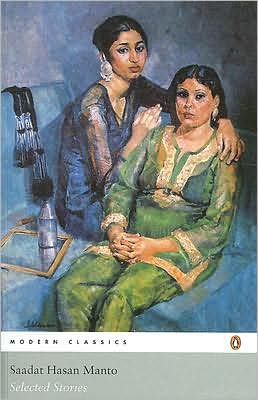
Saadat Hasan Manto

Selected Stories
by Saadat Hasan Manto
translated from Urdu by Khalid Hasan

This collection was recommended – and indeed loaned – to me by a friend after a conversation about classic books in India versus in the UK. Many of the names were the same for both of us, but one literary giant I hadn’t heard of, much less read, was Saadat Hasan Manto. So we had to fix that, obviously.

“It was about this time of year. The monsoons had come and, outside his window, the leaves of the peepal tree danced as the raindrops fell on them…Outside, in the milky dankness of the evening, the leaves of the peepal tree swung in the breeze like a golden ornament on a woman’s forehead.”

Manto wrote in almost every medium but the short story is what he was known for, and this selection, specially translated (though apparently most of Manto’s work has been translated into English before at some point) attempts to provide a representation of his whole career, including stories considered classics, such as “The new constitution”.

When telling people what I am reading I have stumbled over such basic information as his nationality, or country of birth, because the answer to those questions is a bit tricksy. He was born to a Kashmiri family in Amritsar in British-ruled India, later living mostly in Lahore, Bombay and finally Karachi. He died less than a decade after the Partition of 1947, and is quoted in the introduction to this volume as saying that he truly did know whether India or Pakistan was his true homeland.

And that, with the turbulence of those years and tensions between religions and social groups, is central to many of the stories in this collection. Which is a great insight and can be very moving. However, in all I’d say I had a mixed reaction to these stories. The language is often beautiful, not flowery and easy to read – except occasionally for the subject matter. The stories are often erotic, with lots of describing women’s bodies, and they don’t shy away from getting down and dirty at times. This is particularly true because many of the women characters are prostitutes.

And I think this is where I began to have a small problem. Where the male characters are varied, three-dimensional and cover a wide strata of careers, the depiction of women is a little…misogynist. Women are always described physically in detail and tend to be defined by their social position or religion rather than having a clear character.

“Tears flickering over her thick eyelashes will look lovely. It will be like raindrops dancing down a shuttered window. It is possible that you may not think tears to be necessary in women’s eyes, but I cannot even imagine a woman’s eyes without tears. Tears are the perspiration of the eyes. A worker’s brow is only a worker’s brow when it is shining with perspiration. A woman’s eyes can only be a woman’s eyes when they are drowned in tears.”

But that reservation aside, these are good stories. They’re real, sometimes shockingly real. There was one story, “The return”, that left me stunned. In fact, for that one story alone I would rate Manto very highly. I also really liked the (very different) story “Odour”, which is sensuous and strangely touching.

This translation first published by Penguin Books India 2007.

Source: Borrowed from a friend.

Challenges: This counts towards the 2013 Translation Challenge.

Kate Gardner Reviews

I was a furious pinpoint

May 28, 2013May 28, 2013

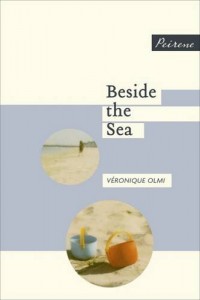
Beside the Sea

Beside the Sea
by Véronique Olmi
translated from French by Adriana Hunter

This was the first book published by small publisher Peirene Press and since I began blogging I have been hearing how wonderful this book is, so earlier this year I bought it. But the thing is that the premise of the book is so dark, so sad, that it took me a while to pick it up and to be honest even though I think it brilliant I am not sure I would ever want to put myself through it again.

The story is that of a single mother who takes her two boys to the seaside for a holiday she has planned and dreamed of for a long long time, but she is poor and suffers from depression so nothing is as she had hoped. And to add to the bleakness she has a plan to protect her boys from the world at the end of this holiday, a plan that is not explained but is nevertheless clear from page one.

“It felt really strange driving away from the city, leaving it for this unknown plane, specially as it wasn’t the holidays and that’s what the boys kept thinking, I know they did. We’d never been away for a holiday, never left the city, and suddenly life felt new, my stomach was in knots, I was thirsty the whole time and everything was irritating, but I did my best, yes really my best, so the kids didn’t notice anything. I wanted us to set off totally believing in it.”

I found this book extremely disturbing. Olmi does an amazing job of bringing to life a mother juggling money troubles and hunger and some form of depression, getting right inside her mind, which is not a comfortable place to be. Her four and eight year old sons are more au fait with the world than she is, and she feels this keenly. She has such a disturbed view of world, full of paranoia and fear, that she frequently hides from it all by trying to sleep, and her sons are familiar with this and accept it, even when they’ve skipped multiple meals and promise after promise has been broken.

“Lights mingled with the sound system, becoming as depressing as the songs, you couldn’t see the rain but it was following us all…the bells wouldn’t stop ringing, people were hurrying onto rides in every direction, where did all that money come from, everyone could afford everything, there was too much of everything everywhere, too much noise, too much rain, too many lights, all reeling past me.”

Olmi’s real skill is to show that this mother, struggling and under suspicion of social services and indeed most people they meet, truly loves her children and is trying as hard as she humanly can to do what’s right by them, it just isn’t enough. It’s unbearably sad. Doubly so as it’s so clear where this is going but you’re willing it not to go there, to find a way out.

“I was a furious pinpoint, with darkness all around, I was a star, old and always there, old and full of fire. I’d been thrown up into the sky, I wasn’t holding on to anything but everything around me hung on, like I was cradled by arms.”

I was left in a black mood for a couple of days after reading this book. I salute Olmi’s skill and achievement but I really do not want to enter that world again.

Bord de mer published 2001 by Actes Sud.
Translation published 2010 by Peirene Press.

Source: Bought direct from the publisher.

Challenges: This counts towards the 2013 Translation Challenge.

Kate Gardner Reviews

An infinite sadness took hold of him

April 29, 2013

Dan Yack

Dan Yack
by Blaise Cendrars
translated from French by Nina Rootes

Probably the most serendipitous book find of my life was in the Oxford branch of Blackwells Bookshop about eight years ago. From their bargain bins I randomly picked up a book I had never heard of by an author I had never heard of and I completely loved it; in fact it’s one of my top three or four books ever. That book was The Confessions of Dan Yack by Blaise Cendrars, which is actually the second book about Dan Yack, so for years I had been intending to read this earlier novel but somehow it just sat there on the TBR.

This is a stunning piece of writing. If everything was written this way I would probably find it frustrating but in this case it works. It blends the poetic and the banal, even baseness. A couple of pages might include high adventure, stream of consciousness, erotica, boredom, detailed descriptions of settings and switch between multiple points of view.

“The Neva flowed past at eye-level. The rushing current swept the timber-barges down at full speed; crouched and menacing, they ploughed through the close-packed waves that were ruffled up the wrong way by the harsh wind of dawn. Sudden shivers rippled the wet fur of the river as it stretched itself nervously and arched its back.”

In its 130 pages we follow multi-millionaire playboy Dan Yack from St Petersburg to Liverpool to the Antarctic to Chile. Yack is an eccentric and initially appears frivolous and unthinking but gradually reveals both good business sense and a good heart. However, I never did completely warm to him – the combination of seal hunting and his never having read a book didn’t exactly make him my ideal hero – but I was certainly intrigued.

“Dan Yack suddenly fell silent. He felt uneasy again. His legs sagged. He was overwhelmed by fatigue. An infinite sadness took hold of him, drained him, blew him up again, oppressed him.”

I suppose you might call this a Modernist take on the adventure novel. The bulk of the story centres around Yack deciding to treat his heartbreak by spending a winter in the Antarctic. On a whim he invites three impoverished artists he meets at the end of a long drunken night of debauchery to join him.

I suppose one of the attractions for me of this book was the Antarctic setting. Cendrars ran away to sea as a teenager so he was almost certainly writing from true experience of the endless days turning into endless nights. Certainly that section had many of the same details and much of the same unease, even terror, of other books I have read with an Antarctic setting.

“Nine times out of ten, the weather was overcast, but when it was not, the night outside was like a fairyland. The icy cold was always intoxicating…sometimes, there is an austral dawn that shakes out its crackling draperies at the level of the ice; it is yellow, green, shot with fugitive gleams and punch-flames.”

The storyline is incredible, in a literal sense, but that’s almost beside the point. Cendrars unveils the human psyche, the revelation is what truly matters to Yack, not what happens to him. But while that sounds terribly serious, the book is actually a lot of fun, with an odd sense of humour, or at least a sense of the ridiculous.

“Deene had to wait a while before he could get a word in because a little nasal phonograph was filling the narrow cabin with a young, charmingly artificial female voice. Dan Yack swore it was a buxom little blonde, wiggling her hips as she sang…
‘Sir,’ the captain began determinedly, ‘I—’
‘Wait,’ said Dan Yack, ‘let me change the cylinder. It’s amazing…Can you see the old tart who’s singing now, Captain?…The sweat’s rolling down from under her ridiculous wig…She’s wearing thick blue stockings with garters at the knee, I adore that! What a marvellous invention!…Wait a minute, I’m going to have you listen to the cries of a sea-lion that’s having its throat cut.'”

While Modernist, this is certainly not an especially modern story. It is full of sexism and racism, not to mention the hunting (Yack’s family fortune is largely based on whale hunting). And yet I loved it. I was utterly spellbound. Huge credit must go to the translator here because every sentence was perfect. I quickly gave up picking out quotes because every line is quotable.

“Outside the storm raged. A sheet of corrugated iron was ripped from the roof. Then a pile of barrels came crashing against the door. The wind besieged the house.
It raged for many days and nights.
The first blizzard.
A white-out.
Winter.”

Apparently Cendrars was one of the founders of, the pioneers, of Modernism and it seems a shame that he is not read widely. I seriously must not wait another eight years to pick up the other Cendrars title on my TBR.

First published 1927 by Editions Denoël. This translation published 1987 by Peter Owen.

Source: I bought this secondhand, probably via Abe Books.

Challenges: This counts toward the 2013 Translation Challenge and the 2013 TBR Pile Challenge.

Kate Gardner Reviews

Posts pagination

1 … 3 4 5 6

Archives

RSS Nose in a book

  • Book review: Interstellar Megachef by Lavanya Lakshminarayan
  • May 2026 reading round-up
  • Book review: Passing by Nella Larsen

Me on the internets

  • @kate_in_a_book@mas.to (Mastodon)
  • Flickr/noseinabook
  • Instagram/kate_in_a_book
  • StoryGraph/kate_in_a_book

Categories

  • Blog
  • Reviews
  • Uncategorized
Proudly powered by WordPress | Theme: Dream by vsFish.