Nose in a book

Reviews and other ramblings

  • Home
  • Reviews archive
    • Book reviews
    • TV reviews
    • Theatre reviews
  • TBR
  • Challenges
    • The Classics Club
    • 2014 Popular-Science Reading Challenge
    • Cookery challenge
    • The Gilmore Girls Reading Challenge
    • 2013 TBR Pile Challenge
    • 2013 Translation Challenge
    • Crime and Punishment read-a-long
  • About
    • Cookie legal stuff
  • Home
  • Reviews archive
    • Book reviews
    • TV reviews
    • Theatre reviews
  • TBR
  • Challenges
    • The Classics Club
    • 2014 Popular-Science Reading Challenge
    • Cookery challenge
    • The Gilmore Girls Reading Challenge
    • 2013 TBR Pile Challenge
    • 2013 Translation Challenge
    • Crime and Punishment read-a-long
  • About
    • Cookie legal stuff

Tag: thriller

Cornwall reads in brief

July 19, 2015 2 Comments

Yes, I’ve been on holiday again. This time a long weekend in Cornwall. It wasn’t what most people might consider beach weather, but that just provided an excuse to stay indoors reading while looking out at the sea and listening to the waves crash. (It’s a comforting noise, which possibly doesn’t make any sense.)

It was a lovely holiday with old friends in a place we have visited many times, so it’s like a home from home. I didn’t actually have my nose in a book the whole time – there were beach/clifftop walks, games to play, crosswords to complete, a whole lot of tasty food to eat and even (in my case very briefly because brrr) swimming in the sea.

porthcothan-beach

But I did get a lot of reading done too.

Continue reading “Cornwall reads in brief”
Kate Gardner Reviews

I liked pretending my body was two hundred tons of unstoppable steel

May 5, 2014

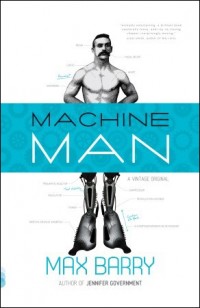
Machine Man

Machine Man
by Max Barry

Max Barry was one of the first authors Tim introduced me to that he loved, back in the heady early days of our relationship when we were young and worried about agreeing on things like whether a book or film or album or TV show was complete genius. We’re over that now, but on Max Barry we still agree – he’s a great author and it is criminal that this book was never properly published in the UK (a Kindle version was eventually released in 2013, presumably after he signed a publishing deal for his new book Lexicon). Tim picked this up in the US and after waiting a year to let him to read it first, I gave up on that and read it for myself.

In fairness, Tim has read the first third or so of this before, albeit in its original unedited form. Barry did something a bit unusual with this book: he published the whole thing online in daily excerpts, initially free and later to subscribers only. Possibly this is related to the lack of a UK publisher, but the formally published version has been heavily edited because, as Barry concedes in his author’s note, what his online fans read (and often fed back on) was just a first draft, and one that was for the most part written on an odd schedule to meet the self-imposed daily deadline.

“As a boy, I wanted to be a train. I didn’t realise this was unusual – that other kids played with trains, not as them. They liked to build tracks and have trains not fall off them. Watch them go through tunnels. I didn’t understand that. What I liked was pretending my body was two hundred tons of unstoppable steel. Imagining I was pistons and valves and hydraulic compressors.”

The story is typical Barry – a sci-fi thriller with great characters, love, humour and a strong anti-corporate theme. Charles Neumann is a scientist and engineer working for Better Future, a large company with fingers in many pies. Charlie is socially awkward, probably autistic. Certainly, his reaction to losing his leg in an industrial accident isn’t a typical one, but in his voice it seems perfectly reasonable. He sees the opportunity to build himself a new leg that’s more than just a prosthesis. But then the artificial leg will be better than his remaining healthy leg, which poses a problem. Or is it an opportunity?

“I woke to a terrible cramp in my foot. Not the foot I had. The other one. I groped around in the dark, grimacing and clutching at empty sheets. I hauled myself upright and turned on the lamp and threw back the sheets. ‘See. Nothing there.’ I was talking to my brain. ‘Nothing to hurt.’ I leaned forward and pretended to massage the space where my toes would have been. As a scientist, I am not proud of this. But it seemed to help.”

An added romantic complication is Lola, the prosthetist, who is surprisingly sympathetic to Charlie’s way of thinking. And there’s a whole array of managers from Better Future whose reaction to Charlie’s surreptitious new project isn’t wholly expected either. He soon finds himself caught in a bewildering web of people he isn’t sure he can trust.

“I had been going about this all wrong. Biology was not ideal. When you thought about it, biological legs couldn’t do anything except convey a small mass from A to B, so long as A and B were not particularly far apart and you were in no hurry. That wasn’t great…If you were designing something within that limitation, then okay, good job. But if you weren’t, it seemed to me you could build in a lot more features.”

This book has some surprising plot turns (not exactly twists) and it definitely fulfils the thriller requirement of keeping you reading avidly. Charlie’s narration gives it all a fresh angle as he often doesn’t understand why people react the way they do, but of course as the reader you can see both sides. It’s darkly funny and also quite moving. I felt at times that this had a lot in common with Flowers for Algernon (which is my favourite sci-fi book) and I wonder if Charlie’s name might be a nod to that classic.

Published 2011 by Vintage Books.

Source: Tim bought it at the Last Bookstore, LA.

Kate Gardner Reviews

For the record this is me talking

May 24, 2013May 24, 2013 5 Comments

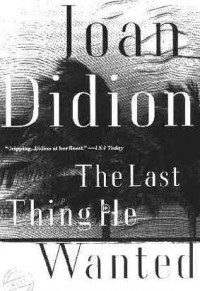
The Last Thing He Wanted
by Joan Didion

The Last Thing He Wanted

So Tim went on holiday without me and the only thing about it I am jealous of is his discovery of the Last Bookstore in LA, which looks pretty darned amazing. And because Tim is quite nice really he bought me some books there, a couple by authors he knew I’d like and one book entirely based on the recommendation of the bookseller. Now I’m not sure how long Tim spent telling this bookseller about my taste in books, but she got it so very right. I had never read any Didion (although I had heard of her and may even have one of her journalistic pieces on my wishlist) but this novel is completely up my street.

Usually this is the point where I give a very brief plot synopsis but that’s going to be quite tough here, not necessarily for fear of spoilers, but more because for most of the book I wasn’t entirely sure what was going on or what it was all about. It did all come together in the end, but I think that feeling a bit lost was an integral part of the reading experience for me.

“There were hints all along, clues we should have registered , processed, sifted for their application to the general condition.”

I suppose you could call it a thriller, maybe a political thriller. It has the right elements: spies, embassies, arms deals, shady characters, multiple identities, an unspecified island location. It even has a reporter as its central character, Elena McMahon, only she’s not there as a journalist, she’s somehow involved more deeply in the murky goings-on of an island that should be tourist heaven but isn’t. However, it’s not written like any thriller I’ve ever read before. The story is in a jumble, not stream of consciousness but not straightforward narrative either. But it’s not messy, it’s carefully constructed. There are repeated phrases and fragments, like memories someone is trying to put back together in the right order.

“Goddamn what’s the matter out there.
Smell of jasmine, pool of jacaranda, blue so intense you could drown again.
We had a real life and now we don’t and just because I’m your daughter I’m supposed to like it and I don’t.”

And who is that someone? The story is narrated by a curious combination of omniscient narrator and background character. But how can one character possibly have all these veiled links to Elena and have access to all these government files and interviews that are supposedly being used to put together the story of what happened to Elena McMahon on that island in 1984? So are we being misled?

“For the record this is me talking.
You know me, or think you do.
The not quite omniscient author.
No longer moving past.
No longer traveling light.
When I resolved in 1994 to finally tell this story, register the clues I had missed ten years before, process the information before it vanished altogether, I considered reinventing myself…a strategy I ultimately jettisoned as limiting, small-scale, an artifice to no point…
The best story I ever told was a reef dream. This is something different.”

In some ways, this book reminded me of a good film, like Open Your Eyes or Tell No-one, in the way it unfolds, with repeated flashes of key scenes and the situation devolving further and further from safe normality. As a reader, it’s an odd experience. I never felt I “settled into” the story; more than halfway through I was still shaking my head trying to figure out where it was going (though the clues are all there, and it would be interesting to read this again to see if it’s a more straightforward read second time around) but I still enjoyed it.

My only reservation is that to sell the government side of the plot, there are forays into political language that I would characterise as mumbo jumbo, or even corporate speak. And there’s a very definite attempt to make sure you don’t know if you can trust Elena, to the point that it becomes a little alienating. But then again not knowing who to trust is half the fun of a thriller, right?

Published 1996 by Vintage Books.

Source: Present from Tim, who bought it in a real (and awesome-looking) bookshop.

Kate Gardner Reviews

This is a disaster movie directed by Satan

April 8, 2013 1 Comment

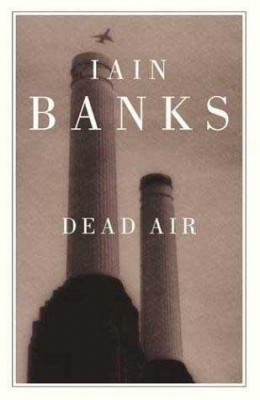
Dead Air

Dead Air
by Iain Banks

Timing, huh? Ever since my GCSE English teacher put beautiful posters of Banks’ book Whit on the classroom wall I have intended to read his books and just not got round to it. When planning my Easter read-a-thon Tim picked this book out from my TBR and I finally became a legitimate Iain Banks fan just a couple of days before learning the very sad news of his terribly ill health.

Ken Nott is a London DJ, an extreme liberal who likes to shock. He’s a good guy, except when it comes to relationships because he is major cheatypants.

The story opens with a hedonistic party. Drugs, scandal, bitching and bad behaviour are cranked up high and then news filters through that a plane has crashed into the World Trade Center. In the aftermath of 9/11, Nott’s brand of humour is right on the edge of uncomfortable, using liberalism as a form of attack. He says a lot of things any left-wing person might say now, 11+ years later, but few would have dared to say in those heightened days.

“That day, sitting in the ruins of the abandoned party…we kept going out onto the terrace to look at the Canary Wharf towers, tall against the skyline less than a mile away, half expecting to see them hit by a plane and crumble with the same awful grandeur as the first tower. ‘It’s Pearl Harbor II,’ we said. ‘They’ll fucking nuke Baghdad.’…’The barbarians have seized the narrative.’ ‘Fuck, the bad guys are re-writing the scripts…this is a disaster movie directed by Satan.'”

Between saying crazy things to the wrong people and being an ass when it comes to women, Nott gets himself into trouble in various ways, so when his life comes under threat, there are all sorts of possible reasons for it, most of which are red herrings.

I must admit I came to like Nott and even found myself thinking he talked a lot of sense. But the story definitely got better when it became a thriller, albeit a literary one. And it was funny. Gotta love a book that’s both literary and funny.

“Liberals…They’re my kind of people. Liberals want niceness. What the hell is wrong with that? And, bless them, they do it in the teeth of such adversity! The world, people, are disappointing them all the time, constantly throwing up examples of what total shites human beings can be, but liberals just take it all…and they keep on going…sending cheques to good causes, turning up at marches, getting politely embarrassed by working-class oafism and just generally getting all hot under the collar…I’m telling you, it’s a sick, sick nation that turned the word ‘liberal’ into an expletive.”

Published 2002 by Little, Brown.

Source: I’m pretty sure I bought it from a real live bookshop but a long time ago now. Too long ago.

Kate Gardner Reviews

We invent memories without thinking

November 5, 2012 2 Comments

Before I Go to Sleep
by S J Watson

I think this may be one of those books that is best not analysed. While reading it I thoroughly enjoyed the ride, was gripped even, but since putting it down I have been picking it apart.

The story is that of Christine who has an unusual form of amnesia whereby she is only able to retain new memories until she falls asleep, so each morning she wakes up not knowing where she is or who the man lying next to her is. Every day this man must explain that he is her husband Ben and that she is 47 years old, not in her early 20s as she feels. The novel begins with her meeting a doctor who gives her a journal he says she has been keeping. On the first page is written “Don’t trust Ben”. And so begins a rollercoaster ride of paranoia and uncertainty.

“The bedroom is strange. Unfamiliar. I don’t know where I am, how I came to be here. I don’t know how I’m going to get home.”

The writing is simple, effective and without flourish. I did not mark any notable quotes while reading but I didn’t cringe at anything either. It’s a thriller that does its job and does not try to be any more than that. Which is fair enough. And I was hooked while it lasted.

“We’re constantly changing facts, rewriting history to make things easier, to make them fit in with our preferred version of events. We do it automatically. We invent memories. Without thinking. If we tell ourselves something happened often enough we start to believe it, and then we can actually remember it.”

But when it ended I began spotting plot holes, mostly relating to the ending, so I won’t discuss them. One failing is that the majority of the book is supposed to be Christine’s journal, but it doesn’t read like a journal at all. Another failing is, I suppose, a product of the amnesia plot device: Christine has no real character and all the people she meets essentially seem the same to her – friendly-seeming but potentially lying and therefore slightly creepy.

There are some criticisms I have heard from elsewhere that I don’t agree with. While the form of Christine’s amnesia seems too good to be true for a thriller writer, it is actually based on real-life cases (the author’s bio says rather vaguely that he worked for the NHS). And a few people said they guessed the end and were therefore disappointed. While the ending was one possibility that occurred to me early on, it wasn’t the only one. I probably won’t re-read this, but it was a good read at the time.

Published 2011 by Doubleday, an imprint of Transworld.

Kate Gardner Reviews

What idiocy, to be racing into this story and its labyrinths

May 29, 2012 1 Comment

Enduring Love
by Ian McEwan

This is a story of love in all its forms, and both how painful and how uplifting that love can be. It also manages to be a compelling thriller, beginning with an event that sets wheels in motion for a series of misfortunes, building up to a dramatic climax.

Clarissa and Joe are happy, utterly in love after many years together. While at a picnic, they unwittingly become part of a terrible accident. At first it seems that the rest of the book will be them coming to terms with tragedy. But it quickly turns out to be something else, or at least, as the narrator, Joe keeps insisting that something else is going on, but Clarissa and the police don’t believe him. Is this a classic case of the unreliable narrator? Or is there a genuine terror stalking Joe and Clarissa, ready to erupt at any time?

For a start, Joe is easily lost in daydreams or work-related thoughts from the reality at hand. From the first page he is challenging his own memory. Did it happen the way he describes? He knows certain details conflict with other witness accounts gathered by the police and Clarissa’s memory. He says, “I’m holding back, delaying the information. I’m lingering in the prior moment because it was a time when other outcomes were still possible.”

Joe is a freelance science writer, a successful one, but also a man who feels that he made a mistake leaving research behind, so he is not entirely happy with where he is. He loves Clarissa unreservedly but she is unable to have children, which has always been a huge source of pain for them both. It’s a set-up that allows pure happiness to fall apart very quickly.

Through a psychological thriller framework, McEwan examines relationship love, parental love, religious love (though only at the extreme end), the love shared in friendship, sibling love (quite briefly) and obsessive love. It also examines a few forms of psychological instability, from the uncertainties of grief through to a far more troubling example.

McEwan writes well and keeps the possibilities open as he carries us along to the climax. In true thriller style, the augurs are all there that something is coming, but as a literary novel you know that the actual ending may be a more mundane realisation of truth.

I didn’t greatly like Joe. He is a bit dismissive of Clarissa, even condescending at times. While he has acquired tidbits of knowledge from far outside his original physics training, he seems to assume Clarissa’s only interests are her scholarly work on Keats, and children. I’m not sure if this is a failing of the character or of McEwan. Certainly, neither of the other female characters comes off well from Joe’s descriptions either. One is a widow too distracted by her loss to pay attention to her children, the other essentially a bimbo. I hope the problem is Joe’s.

Interestingly, although this all sounds plot-driven, despite having watched the film made of this book a few years back, I could not remember where it was going. Perhaps that’s just my memory, or the film was somehow incoherent, but perhaps it is because this book is sneakily about the writing after all: “What idiocy, to be racing into this story and its labyrinths, sprinting away from our happiness.”

First published 1997 by Jonathan Cape.

Kate Gardner Reviews

The danger of looking away

January 2, 2012

The Last King of Scotland
by Giles Foden

While I liked the film that was made of this novel, I wasn’t sure what more I would get out of the novel. I am glad that I was encouraged to read it because there is so much more here than I expected.

Dr Nicholas Garrigan is not the most likeable narrator, but somehow he keeps you reading. Young and lacking focus, he turns up in Uganda with no clear idea of the country’s politics or why he has chosen to practice medicine there. On his first day in the country, Idi Amin seizes power, his thugs roaming the streets, making the new situation clear. The British Embassy is quick to send Nicholas out of the capital to a remote village where a hospital is run by doctors from all over the world, their wages and equipment sourced from various aid agencies.

At this point Nicholas is just trying to be a doctor, though he can be naïve, or even thoughtless, and is hopeless with women. As the political situation worsens, and his co-workers worry about Amin’s policies, Nicholas determinedly stays out of it. Except that he insists on going to hear Amin speak and is caught up by the big man’s beguiling rhetoric. So when he gets the invitation to become Amin’s personal doctor he gladly accepts, much to the consternation of everyone at the village hospital.

Nicholas is drawn in by Amin’s magnetism and seems willing to overlook the frankly bonkers content of all his conversation. He is slightly afraid of Amin, but also fascinated, and continues to turn a blind eye to the increasing evidence for beatings, torture, death and disappearances at the hands of Amin’s men.

The blurb describes the book as a thriller and to some extent it does become that toward the end, but right from the start we know that Nicholas is narrating this from a few years later, in Scotland, from his own journals, so there is no tension as to whether he survives. But he does insinuate that it got pretty bad and berate himself for his stupidity and blindness.

It’s an interesting book and I felt that I learned a lot. I don’t know where Foden got the idea but the acknowledgements indicate that he did a lot of interviews and research before writing. Which is in an odd sort of way my only quibble with the book. As with all historical fiction I wanted to know which bits were fiction and which real and I would have liked an author’s note or something along those lines.

First published in 1998 by Faber and Faber.

Kate Gardner Reviews

Undercurrents

October 30, 2011July 21, 2015 2 Comments

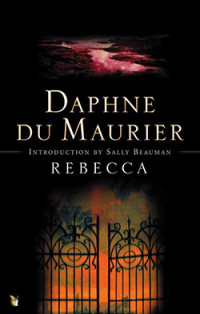
RebeccaRebecca
by Daphne du Maurier

This was, appropriately, the final book in the Discovering Daphne readalong run by Savidge Reads and Novel Insights. I have been looking forward for months to re-reading it, and was a little sad at how quickly I flew through its pages when this week finally came.

One of the reasons I highly rate this book (and no doubt many others would agree) is the great pleasure of re-reading it. This was my third reading (I think) and I loved looking out for the hints of what is to come, as well as spotting the red herrings that had misled me previous times. Knowing the story allowed me to linger over the detailed gothic descriptions when I was in the mood and skim over them when I wasn’t. Despite knowing the outcome, I was still excited by the build-up of tension and on tenterhooks in all the right places. I’m convinced – du Maurier was officially a wonderful writer.

Briefly, this is the story of the second Mrs Maxim de Winter. Or rather, she is the one who tells the story, but for a lot of the time it isn’t about her at all, it’s about Rebecca. Rebecca was Maxim’s first wife and died tragically young, just a year before he met and swiftly married his second wife.

Continue reading “Undercurrents”

Kate Gardner Reviews

Twists and turns

October 23, 2011March 11, 2012 2 Comments

Don’t Look Now and other stories
by Daphne du Maurier

Though I’ve read quite a few du Maurier novels and even a guidebook to Cornwall that she once wrote, I hadn’t tried her short stories before this week. Thanks to Discovering Daphne, an event/readalong run by Savidge Reads and Novel Insights, I have now, and I’m glad.

The title story was of course made into a successful and critically acclaimed film of 1973, a film I have never seen and only had a rough idea of the storyline to, so I was able to come to it without foreknowledge. I think this greatly helped with my enjoyment of the story so I won’t reveal more of the plot than I knew beforehand: it’s a horror/thriller about a couple who travel to Venice following the death of their child. That’s all I knew (well, okay, I knew there was also something to do with a red coat, but then that’s really it).

As always, du Maurier is greatly skilled at creating complex, believable characters. All of these stories have some element of horror, but for the most part that horror comes from within, from the very human flaw of misreading a situation or other people, from imagining something that isn’t real. When there are “real” horrors, they tend to be somewhat banal, nothing like the troubled or possibly disturbed minds of the characters.

Another great skill of du Maurier’s that is evident here is her ability to describe diverse locations, imbuing them with real atmosphere. (This must be a skill she developed over time because it was something I found specifically lacking in scenes set outside of Cornwall in The Loving Spirit.) This book ranges from Venice to Crete to Ireland to Jerusalem to East Anglia, each time taking a character away from their home in England to a strange new location. There’s the schoolmaster on holiday who gets caught up with a strange American couple. There’s the young actress who decides, following her father’s death, to track down his former best friend. There’s the working class vicar who reluctantly agrees to guide a group of rich strangers around holy sites. And there’s the electronics engineer whose boss seconds him to work on a secret project that combines science fiction and spirituality.

All these stories have a certain tendency to mislead the reader, or at least I personally felt many times that I had been led down one path and was then blindsided by the story’s very different conclusion. As horror goes, there is none of the gore or violence you might expect. Or if there is it’s not described in any detail. These stories are all about the psychological, and even when it gets a bit supernatural or spiritual, the emphasis is on its effect on people rather than whether or not the apparently supernatural is real.

I think “Don’t look now” in particular will bear repeated readings, if only to hunt for the clues to how things turn out that I missed first time around. I think it is the best written and cleverest story in the collection, though none of them was by any means bad. They all share the same fish-out-of-water, sinister atmosphere, yet they are very different. I’m looking forward now to reading the other du Maurier short story collection I have, The Breaking Point.

This collection first published 1971 by Victor Gollancz.

Kate Gardner Reviews

Sometimes you shouldn’t probe too deep

May 8, 2011March 11, 2012 1 Comment

Rupture
by Simon Lelic

This was another book club read and it certainly generated a lot of discussion, even if part of that was our cynical reaction to the marketing surrounding this book – a lot of review copies were sent out and the book includes “book club” style questions at the back. I mean, it worked, we all read it!

I really enjoyed this book but I didn’t note down my thoughts on finishing it, as I usually would, because I suspected it wouldn’t stand up to intense criticism. Turns out I was right. The more questions asked around the table, the more I realised that this was a guilty pleasure rather than a class act.

The story follows policewoman Lucia May’s investigation into a school shooting. It seems to be a cut-and-dried case – teacher walked into assembly, shot and killed five people including himself – and May’s superiors urge her to wind up the investigation quickly so that the community can move on. But May wants to know not just what happened but also why, and that’s a complex question.

Lelic certainly has some skill. I was gripped by the story even though most of the facts are revealed early on. Every other chapter is a transcript of an interview from shortly after the shooting, allowing a lot of characters’ voices to be heard. Certain details are revealed in these chapters that you realise Lucia has known all along (because she conducted all the interviews) while we as readers had to wait to get to that interview, which is the opposite way round to how information in a novel usually works, and I liked that.

Without wanting to give too much away, the key theme of this book is bullying, and it wears its mission statement so plainly that the message can get heavy handed at times. Yes, bullying happens among adults as well as children and I think it’s important to acknowledge that, but I’m not sure that this book gave the most accurate portrayal. I’m also not sure how accurate Lelic’s portrayal of the police is (I’m guessing not very) though I did find the school convincing. Our discussion revealed a number of plot holes, many more than I would ever have spotted alone.

I was glad to find I was not alone in considering the killer, Samuel Szajkowski, to be the most compelling character in this book. Even though he is dead before the book begins, and there are no flashbacks, we get to know a little of him through other people and what emerges is a believable, complex man. It’s a shame that no other characters are quite so fully rounded, but then you could argue that the book is really about Szajkowski even though it follows Lucia’s daily life.

It was suggested that there is a certain element of doggedly following writing guidelines evident in this book, which is Lelic’s first novel. But while reading it I was able to completely suspend disbelief and enjoy the ride. Which is no bad thing, let’s face it.

First published 2010 by Picador.
Finalist for the Crime Writers Association John Creasey (New Blood) Dagger Award 2010.

Kate Gardner Reviews

Posts pagination

1 2

Archives

RSS Nose in a book

  • Book review: Interstellar Megachef by Lavanya Lakshminarayan
  • May 2026 reading round-up
  • Book review: Passing by Nella Larsen

Me on the internets

  • @kate_in_a_book@mas.to (Mastodon)
  • Flickr/noseinabook
  • Instagram/kate_in_a_book
  • StoryGraph/kate_in_a_book

Categories

  • Blog
  • Reviews
  • Uncategorized
Proudly powered by WordPress | Theme: Dream by vsFish.