Nose in a book

Reviews and other ramblings

  • Home
  • Reviews archive
    • Book reviews
    • TV reviews
    • Theatre reviews
  • TBR
  • Challenges
    • The Classics Club
    • 2014 Popular-Science Reading Challenge
    • Cookery challenge
    • The Gilmore Girls Reading Challenge
    • 2013 TBR Pile Challenge
    • 2013 Translation Challenge
    • Crime and Punishment read-a-long
  • About
    • Cookie legal stuff
  • Home
  • Reviews archive
    • Book reviews
    • TV reviews
    • Theatre reviews
  • TBR
  • Challenges
    • The Classics Club
    • 2014 Popular-Science Reading Challenge
    • Cookery challenge
    • The Gilmore Girls Reading Challenge
    • 2013 TBR Pile Challenge
    • 2013 Translation Challenge
    • Crime and Punishment read-a-long
  • About
    • Cookie legal stuff

Tag: reading

July reading round-up
July 31, 2014August 9, 2014
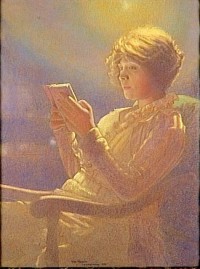
(Leon Kaufman, 1892-1933)

Aren’t we having a lovely summer? Well we are here in Bristol and I hope that you are too. Not that I’ve had a lot of free time to enjoy it properly, but it’s still nice to have long sunny days. I’ve been busy helping my Mum celebrate her 60th birthday, visiting Oxford with my friend H, redecorating the living room (still a work in progress) and I even squeezed in writing an article for For Books’ Sake. Not to mention, y’know, doing my job.

Somehow, I also managed to get through several books this month (I’m halfway through two more as well), though I notice I only read three short stories. Three! This despite the New Yorker opening up its content free to all for the summer, including their wonderful short stories. I must make time to read some of them before they’re locked down to subscribers only again.

Here’s to continued summer loveliness, with added free time to enjoy it.
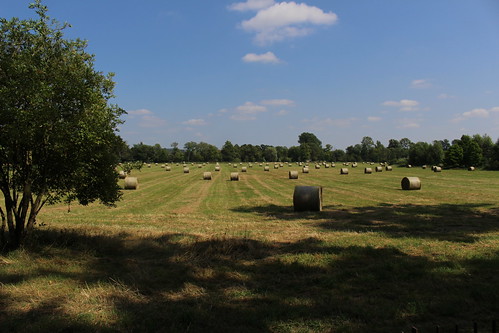
 

Untitled

Books read

Weyr Search by Anne McCaffrey (review here)

Parasites Like Us by Adam Johnson (review here)

The Extraordinary Journey of the Fakir who got Trapped in an IKEA Wardrobe by Romain Puértolas (review here)

Gold by Dan Rhodes (review here)

Paintwork by Tim Maughan

Silent Spring by Rachel Carson (review here)

Short stories read

“How many miles to Babylon?” by Megan Arkenberg (Lightspeed Magazine, issue 20)

“Gene wars” by Paul McAuley (Lightspeed Magazine, issue 20)

“Always true to thee, in my fashion” by Nancy Kress (Lightspeed Magazine, issue 20)

Happy summer everyone!

Kate Gardner Blog

June reading round-up

June 30, 2014
Woman reading a book
(National Media Museum, photographer unknown)

In this month of #bookaday running into Independent Booksellers Week I certainly haven’t read a book a day or even some of a book every day, but I have visited my favourite independent bookshop: Mr B’s Emporium of Reading Delights in Bath. Despite the towering TBR I couldn’t leave empty-handed, so Tim and I picked two books each to treat ourselves!

I’ve been busy at work and enjoying the glimpse of summer we had until the last few days, so it wasn’t my greatest or my worst month reading-wise, but to spice things up I did review a great musical at Bristol Old Vic and Germaine Greer’s talk at Bristol Festival of Ideas. I love living somewhere with events like those pretty much every night. If only I had the time, money and energy to go to them all!

Books read

Tales from the Secret Annexe by Anne Frank (review)

Captain America: Castaway in Dimension Z – volumes 1 and 2 by Rick Remender and John Romita Jr (review)

In the Shadow of Man by Jane Goodall (review)

Sex Criminals, Volume 1: One Weird Trick by Matt Fraction and Chip Zdarsky (review)

The Needle’s Eye by Margaret Drabble

Short stories read

“Father’s last escape” by Bruno Schulz (New Yorker Fiction podcast)

“St George” by Gail Godwin (Selected Shorts podcast)

“The trickle-down effect” by Annie Proulx (Selected Shorts podcast)

“Now that you’ve died” by Patrick Ness (Guardian Books podcast)

“The lone pilgrim” by Laurie Colwin (Selected Shorts podcast)

“The night bookmobile” by Audrey Niffenegger (Selected Shorts podcast)

“Home” by Jess Pineda (Empower: Fight Like a Girl! anthology)

“Stolen child” by Jennifer Quintenz (Empower: Fight Like a Girl! anthology)

“Still waters” by Lisa Randolph (Empower: Fight Like a Girl! anthology)

“Martyoshka” by Kay Reindl (Empower: Fight Like a Girl! anthology)

“Bat Girl” by Kira Snyder (Empower: Fight Like a Girl! anthology)

“Crystal Brook” by Jeane Wong (Empower: Fight Like a Girl! anthology)


Happy summer everyone!

Kate Gardner Blog

Sunday Salon: 2014 – the halfway point

June 29, 2014June 29, 2014 4 Comments

The Sunday Salon

I thought rather than waiting until December to see how I’ve performed against my goals, I’d check now and see if I need to make any adjustments! First, let’s look at the reading plans I made back at the end of last year.

1. Read more science fiction
I’ve read four SF books in the last six months, plus you could argue that some of the comics I’ve read count toward this goal. Not an amazing showing but I think it just about counts. (Oh, and I’ve just remembered that a big chunk of the short stories I’ve read are science fiction, so that makes me feel better!)

2. Read popular science 
After a slow start, my 2014 Popular-Science Reading Challenge is going great guns (as my Dad would say). I’ve so far read six books and I have my next read (Silent Spring by Rachel Carson) lined up on my bedside table. Now I just have to keep it up!

3. Re-read
Oh dear, this one isn’t going well at all. I have re-read one book so far and even that was strictly a revised edition with added material. The ever-growing TBR makes it hard to justify re-reading and yet, if I don’t, what’s the point in keeping read books at all?

More generally, how’s my reading looking? So far this year I’ve read 33 books, which is less than half of last year, so I’m definitely reading slower (or spending less of my time reading). Of those, 20 were written by women, which is a massive improvement on previous years. However, only 3 were written in a language other than English, which is shameful, especially considering I subscribe to And Other Stories and have several of their books languishing in the TBR. Must do better.

Overall, it looks like my efforts to include popular science have been achieved at the expense of translated fiction, but I’m going to really try during the rest of the year to read both. This may be over-ambitious, but it’s important to have aims, right?

Did you make any reading plans for 2014? Have you checked to see how you’re doing?

Kate Gardner Blog

May reading round-up

May 31, 2014
Woman Reading by Kuroda Seiki
(Kuroda Seiki, c. 1890)

My May reading is looking very female-author heavy, which I’m happy with. And includes not one but three popular-science books! Take that complete-failure-that-was-me-in-March. However, my reading has also been heavily borrowed from friends/the library, so my TBR has not shrunk at all. One day I will achieve my aim of owning fewer than 100 unread books. One day.

We’ve had lots of weekend fun this month, distracting me from my books, plus we’re back in redecorating mode (we’re currently at the stage where everything looks much worse than when we started so no I will not post any photos just yet) so frankly I’m pleased to have read anything at all. Amazing how I manage to find the time to read when I’m actually enjoying every book I pick up and struggle to fit in reading when the books are a little bit disappointing. Can’t imagine what the lesson there is!

Books

The Immortal Life of Henrietta Lacks by Rebecca Skloot (review here)

The Luminaries by Eleanor Catton (review here)

Saga volume 3 by Brian K Vaughan and Fiona Staples

Breasts by Florence Williams (review here)

Orlando by Virginia Woolf (review here)

Snowball Earth by Gabrielle Walker

Short stories

“Shakespeare’s memory” by Jorge Luis Borges (New Yorker Fiction podcast)

“Where the Cluetts are” by Jack Finney (Selected Shorts podcast)

“Lederhosen” by Haruki Murakami (Selected Shorts podcast)

“Outlaw” by Amy Berg (Empower: Fight Like a Girl! anthology)

“Healthy happy hailie!” by Cherry Chevapravatdumrong (Empower: Fight Like a Girl! anthology)

“Hallelujah” by Akela Cooper (Empower: Fight Like a Girl! anthology)

“Three minutes” by Liz Edwards (Empower: Fight Like a Girl! anthology)

“INT. WOLF—NIGHT” by Jane Espenson (Empower: Fight Like a Girl! anthology)

“XAYMACA” by Shalisha Francis & Nadine Knight (Empower: Fight Like a Girl! anthology)

“Collapse” by Lisa Klink (Empower: Fight Like a Girl! anthology)

“Suzie homemaker/apocalypse ass kicker” by Pang-Ni Landrum (Empower: Fight Like a Girl! anthology)

“Positive symptoms” by Lauren LeFranc (Empower: Fight Like a Girl! anthology)

“Dangerous stars” by Kam Miller (Empower: Fight Like a Girl! anthology)

“Recording angel” by Ian McDonald (Lightspeed magazine, issue 13, June 2011)

“The treatment” by Daniel Menaker (Selected Shorts podcast)

“Palais de Justice” by Mark Helprin (Selected Shorts podcast)
 
 
Hope you had a great May and here’s hoping for more happy reading times in June!

Kate Gardner Blog

Sunday Salon: Books and school

May 25, 2014 4 Comments

The Sunday Salon

I was going to do one of my “what I’ve been up to lately” posts today but then Michael Gove’s comments about the new GCSE curriculum were all over Twitter and I had to respond. I know that what Gove said (or is quoted as saying) does not accurately reflect the content of the new GCSE curriculum, it was just his own bizarre prejudices and ideas, but the man is the education secretary and sadly his words have consequence. So this is a riposte to him, not necessarily the curriculum.

I went to secondary school already loving books. Whether that was something innate in me or the influence of my parents and some or all of my primary school teachers I don’t know. But that’s why I survived five years of indifferent teaching of English lit and came out the other end as a lover of books. I would not be surprised if a lot of my former classmates don’t read as adults. We were not inspired to.

I should add for the record that my secondary school did have some great teachers – in history, maths and French I was very well served. And English language was handled well – I learned to debate, to write in different forms, especially creatively. But that cornerstone of education – reading books – was not handled in a way that inspired.

It can’t have all been about the choice of books. Because we did read some great books – Goodnight Mister Tom, Romeo and Juliet, Uncle Tom’s Cabin – but I can remember six books or plays that I studied in five years. That’s pretty poor. Is that the way the books were taught or the choice of books? I don’t know but I suspect it’s both.

Again, I was already a lover of books. My home was filled with books and I was encouraged to visit the library for more. My parents read and would recommend titles to me. I was given books and book vouchers for birthdays and Christmas. I was lucky. Many people don’t have that luck. For far too many children school represents all of their access to books, and that makes the books that are chosen to be taught – and the way they are taught – really really important.

At GCSE I studied A View from the Bridge, The Merchant of Venice, To Kill a Mockingbird, big cat poetry (including “Tyger, tyger, burning bright” and something about a caged animal in a zoo)…and that’s almost all I can tell you. There might have been a couple more novels, I’m not sure. I remember basically nothing about the first or last items on that list. We didn’t see A View from the Bridge or The Merchant of Venice performed, even on film. We did watch the film of To Kill a Mockingbird. In fact I remember the assignment was to compare and contrast book and film. Which was interesting and different but didn’t really touch on any of the key themes of that amazing book. I was convinced until I studied Shakespeare again at university that The Merchant of Venice was the dullest of all his plays.

Even at 15/16 it broke my heart that my English teacher was not inspiring me or my class, that I was not in love with each and every one of the books we studied. I know some people say that they learned to hate every book they studied at school but I maintain that’s not a natural outcome, it’s a result of the teacher and the choice of book. I would see friends in another English class with a different teacher filled with enthusiasm about their texts. I don’t know what limits were placed on the curriculum for my school in the 1990s and maybe my perception of that other class was wrong – perhaps all English teaching was constrained back then in just the way people fear it’s about to be again.

The thing I take from this is that teaching is hard and putting ill-thought-through reactionary limits on the books that can be taught to children at that crucial age is unhelpful. Declaring that all the books must be British is ridiculous – teenagers need to learn about the rest of the world too, if only to learn that it’s not all that different from the life we know, even when at first glance it’s completely different. And limiting the curriculum to pre-1900 is more than just ridiculous. When are we most sneering about boring old stuff? When do we most need to feel a connection to a world that is increasingly scary and full of big life-changing decisions? And yet when are we most receptive to big new ideas? This is when we should be exposed to science fiction, foreign fiction, the politics of gender, race and, well, politics in general.

So what saved my love of reading? I left that school and went elsewhere for my A-levels. It was a great decision because it led me to a great teacher. Linda picked a varied reading list for us but equally importantly she overflowed with enthusiasm for those books. (In fact, sometimes we mocked her a little for her exuberance but we loved her for it really.)

Frankenstein
My A-level copy of Frankenstein. Click to enlarge if you want to read my notes!

Not only can I tell you what books I read for A-level but I still have my copies of all of them and I can remember what they were about and what they taught me. We went to see both plays we studied – Shakespeare’s Measure for Measure and David Hare’s Murmuring Judges – performed on stage (Linda had made sure this would be possible before picking them for us), which showed me that sometimes humour needs to be spoken aloud to be funny. Penelope Lively’s memoir Oleander Jacaranda made me yearn to go to Egypt, even though I knew I would, like Lively, never know what it was to be Egyptian. (In fact, my first foreign holiday that I paid for and arranged by myself was indeed to Egypt.) Mary Shelley’s Frankenstein filled my passionate heart with dramatic images of snowy mountains and Arctic tundra and also, in Shelley, gave me a heroine to admire. Chinua Achebe’s Things Fall Apart showed me a completely alien yet still relatable way of life and taught me to question colonialism and Christianity. But in some ways Henry James’s Washington Square was the real turnaround. I did not like that book, I found it tedious, but Linda still taught me to appreciate it. She used it to teach us about irony and sarcasm, and about the changing role of women in society.

I owe Linda so much. If I had continued with those teachers and book lists I’d had at secondary school I probably wouldn’t have studied English at university. I might not have continued to love reading at all (though I think – hope – that that’s unlikely). Reading is a huge and joyous part of my life still now, 17 years after I left that school, 15 years after Linda hugged me goodbye on A-level results day.

So I want to say thank you to the teachers who are putting their all into encouraging children to not only read, but to enjoy reading, to appreciate books. And to those teachers who aren’t inspired or inspiring? Please don’t give up or become complacent. Please keep trying. What you do is SO important. And definitely ignore that Mr Gove. He’s an idiot. But you knew that.

Kate Gardner Blog

April reading round-up

April 30, 2014April 30, 2014
A Lady Reading by Sir Francis Seymour Haden
(Sir Francis Seymour Haden, 1858)

After a slow start to the year, this month I really hit my reading stride. I not only finished six books, but I’m also partway through two more that I’m thoroughly enjoying. (I should add that one of those is The Luminaries by Eleanor Catton, which is more than 800 pages long, so next month’s round-up might not look quite so healthy!)

I was perhaps helped in my reading by the fact that I inadvertently installed malware on my laptop, which put it out of commission for a couple of weeks (beware fake software updates, people). As I hate browsing the Web on my phone and felt weird using Tim’s giant laptop, I read instead. It was nice, and possibly habit-forming, so apologies to all those websites I usually visit and comment on regularly! Even now my laptop is back and better than ever (Tim kindly reinstalled everything and upgraded parts while he was at it, because he’s nice like that) I actually don’t want to be on the Internet right now, I want to be reading one of the several books scattered on the sofa next to me.

One quick last note: libraries are great, aren’t they? I went to Bristol Central Library during my lunch hour today and was reminded how much I like them. I only go a couple of times a year because, well, giant TBR and all. But for those times when you’re interested in a book but don’t know if you’ll love it, or want the latest in a series without paying for a hardback, or want to learn a little about a subject the old-fashioned way, you can’t beat a good library. Do you use libraries?

Books read

The Diary of a Young Girl by Anne Frank (review here)

The Last Seven Months of Anne Frank by Willy Lindwer (review here)

Just a Geek by Wil Wheaton

Instructions for a Heatwave by Maggie O’Farrell (review here)

Heart of Darkness by Joseph Conrad (review here)

Machine Man by Max Barry (review to follow)

Short stories read

“The cemetery where Al Jolson is buried” by Amy Hempel (Selected Shorts podcast)

“The night in question” by Tobias Wolff (Selected Shorts podcast)

“I know what I’m doing about all the attention I’ve been getting” by Frank Gannon (Selected Shorts podcast)

“The night the ghost got in” by James Thurber (Selected Shorts podcast)

“Examining the evidence” by Alice Hoffman (Selected Shorts podcast)

“It had wings” by Allan Gurganus (Selected Shorts podcast)

“Secondhand man” by Rita Dove (Selected Shorts podcast)

“The relive box” by T Coraghessan Boyle (New Yorker, Mar 17, 2014)

How was your reading month? Read anything especially good?

Kate Gardner Blog

March reading round-up

March 31, 2014April 1, 2014 2 Comments
Woman reading, Seattle, Washington, USA, 1930s
Woman reading, 1930s. (Seattle Municipal Archives)

It’s not been my best reading month, or at least it started badly. I think I set my aim too high in the Popular Science Reading Challenge, expecting myself to read one book every month in an unfamiliar genre. Last month I struggled a little with 13 Things That Don’t Make Sense by Michael Brooks and this month I started and gave up on The Simpsons and their Mathematical Secrets by Simon Singh (I thought as a fan of The Simpsons and someone who loved maths at school it would appeal but it really really didn’t do it for me; however several people I know have read and enjoyed it so what do I know?!). I’ve revised my aim down to 6 books this year, which takes the pressure off. And might mean I actually read something from the TBR next month!

On a more positive note, I signed up to a Kickstarter called Women Destroy Science Fiction! I know, the title alone was enough without learning the details, but it turns out those are fab too! Lightspeed Magazine has been publishing science fiction short stories and related non-fiction since 2010 and they proposed an issue written and edited entirely by women, as a means of combating the tired cliché that women can’t write good SF. The campaign was so successful that they are also producing women-only issues of their sister publications Nightmare Magazine (Women Destroy Horror!) and Fantasy Magazine (Women Destroy Fantasy!). As part of my Kickstarter reward I got digital copies of some back issues of all three magazines (the women-only issues will follow later this year) and I started reading them while on holiday. So far they are excellent. I really like the way the essays are thematically linked to the stories.

Now that's a library

Speaking of holiday, we had an awesome holiday in Amsterdam this month and I still have LOADS to blog about it. I’ve sorted through about half the photos and prepared two blog posts, which is probably enough for now, but there’s lots more to say.

As if that wasn’t enough for one month, this past weekend was Bloggiesta. I had a growing todo list already for the blog so I thought it would be a good idea to take part. Unfortunately I had some problems with my FTP server and internet connection, which meant I got stuck on one of the first tasks I started for a whole day (backing up the blog). Oops. I have investigated better ways so hopefully next time it will work more smoothly.

Books read

A Spell of Winter by Helen Dunmore (review here)

Letters of a Woman Homesteader by Elinore Pruitt Stewart (review here)

The Lathe of Heaven by Ursula le Guin (review to follow)

Hawkeye Volume 1 by Matt Fraction (the hardcover, which, because comics are complicated, is a different collection from the paperback volume 1)

Short stories read

“The paper revolution” by Dinaw Mengestu (New Yorker, Jan 13, 2014)

“By fire” by Tahar Ben Jelloun (New Yorker, Sep 16, 2013)

“I’m alive, I love you, I’ll see you in Reno” by Vylar Kaftan (Lightspeed Magazine, Issue 1, June 2010)

“The Cassandra Project” by Jack McDevitt (Lightspeed Magazine, Issue 1, June 2010)

“Cats in victory” by David Barr Kirtley (Lightspeed Magazine, Issue 1, June 2010)

“Amaryllis” by Carrie Vaughan (Lightspeed Magazine, Issue 1, June 2010)

“Snapshots I brought back from the black hole” by K C Ball (Lightspeed Magazine, Issue 13, June 2011)

“Frost painting” by Carolyn Ives Gilman (Lightspeed Magazine, Issue 13, June 2011)

“Transcript of interaction between astronaut Mike Scudderman and the OnStar Hands-Free AI Crash Advisor” by Grady Hendrix (Lightspeed Magazine, Issue 13, June 2011)

“Able, baker, charlie, dog” by Stephanie Vaughn (New Yorker Fiction podcast)

“The evolution of knowledge” by Niccolo Tucci (New Yorker Fiction podcast)

“The writers’ model” by Molly Giles (Selected Shorts podcast)

“Creative writing” by Etgar Keret (Selected Shorts podcast)

“On keeping a notebook” by Joan Didion (Selected Shorts podcast)

 
As I’m posting this about a minute before midnight, happy April!

Kate Gardner Blog

February reading round-up

February 28, 2014February 27, 2014 1 Comment
Woman reading c.1890
UK National Media Museum (c. 1890) via Wikimedia Commons.

I feel like I have done a lot and also very little this month. That doesn’t make much sense but it’s a pretty accurate summary of how I feel about the past four weeks! I’ve managed to read a decent amount, and I’d say my favourite read this month was The Ship Who Sang by Anne McCaffrey.

I also realised that I am terrible at giving book recommendations. I’m pretty good at knowing what I’m going to like but I’m also aware how much taste varies and it’s a rare book indeed that I would say no-one could like or that everyone would like. And yet people always ask me for advice, which is perfectly reasonable because I not only read a lot but I have this book blog thing…

How do you feel about recommending books? Do you have special favourites that you always recommend? How did you come to select those? I seek advice!


Books read

The Year of Magical Thinking by Joan Didion (review here)

The Ship Who Sang by Anne McCaffrey (review here)

Where’d You Go, Bernadette by Maria Semple (review here)

Code Monkey Save World by Greg Pak (I haven’t reviewed this comic because it was just a quick read for fun but do check it out if you can)

Maddaddam by Margaret Atwood (review here)

13 Things That Don’t Make Sense by Michael Brooks (review to follow)


Short stories read

“Break it down” by Lydia Davis (Guardian Books podcast)

“Meet the president!” by Ali Smith (New Yorker, available online)

“The heron” by Dorthe Nors (New Yorker, Sep 9, 2013)

“Concerning the bodyguard” by Donald Barthelme (New Yorker Fiction podcast)

“A village after dark” by Kazuo Ishiguro (New Yorker Fiction podcast)

“Bluebell meadow” by Benedict Kiely (New Yorker Fiction podcast)

“A different kind of imperfection” by Thomas Beller (New Yorker Fiction podcast)

“I see you” by Harry Harrison (from his short story collection 50 in 50)

“The mistake” by Martín Kohan, translated by Nick Caistor (Guardian, available online)


How was your February? Has it finally sunk in that it’s 2014 now?

Kate Gardner Blog

January reading round-up

February 2, 2014 2 Comments
A Girl Reading
A Girl Reading by Berndt Abraham Godenhjelm (1830s).

January was so busy I didn’t even find time to write this post! I had a slow start reading-wise, possibly not helped by my new knitting hobby, which gives me an excuse to watch telly instead of reading, as I am still “being useful”. I’ve settled into a better balance now so hopefully February’s round-up will look a bit healthier. (I also have a few days off work coming up, which should help with finding time to read.)

Lack of reading certainly didn’t translate into low-quality reading, as this month I awarded my first five-star rating on Goodreads since last August, to The Invention of Wings by Sue Monk Kidd. I really do recommend this book to anyone and everyone; it ticked all the boxes for me. (Not that I’m a fan of star ratings, I find them a bit of a crude measure and we all have different levels of generosity/harshness, but they can be useful as a rough idea of how I felt about a book immediately on completing it.)

So what did I read this month overall?

Books
The Days of Anna Madrigal by Armistead Maupin (review here)
Bullet Park by John Cheaver (review here)
The Invention of Wings by Sue Monk Kidd (review here)
Packing for Mars by Mary Roach (review here)


Short stories

“Victory” by Yu Hua (New Yorker magazine, Aug 26, 2013)
“The veldt” by Ray Bradbury (Selected Shorts podcast)
“The catbird” by James Thurber (Selected Shorts podcast)
“I love Girl” by Simon Rich (Selected Shorts podcast)
“Then we lived together in the belly of a whale, some nights were perfect” by Mara Sternberg (Selected Shorts podcast)
“Jubilation, Florida” by N M Kelby (Selected Shorts podcast)
“Homegirls on St Nicholas Avenue” by Sonia Sanchez (Selected Shorts podcast)
“Strike and fade” by Henry Dumas (Selected Shorts podcast)
“Fenstad’s mother” by Charles Baxter (Selected Shorts podcast)

How has your reading month been? What was your last outstanding read?

Kate Gardner Blog

2013 reading stats

December 31, 2013December 31, 2013 5 Comments

The mulled wine is keeping warm and the box of chocolate biscuits is open, so all that’s left to do before bringing in the New Year is to round up my 2013 reading.

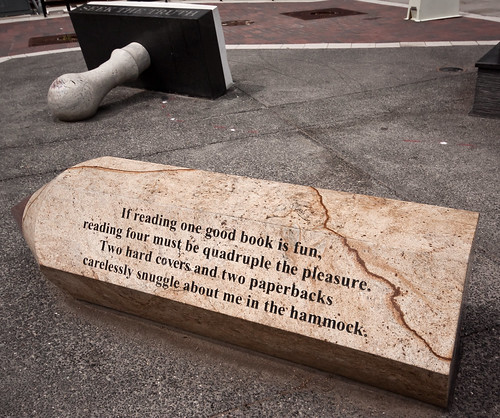
Seek the truth

This year I continued keeping stats on what I’ve read, as I had begun to in 2012. I have read 75 books, which is the exact number I aimed for in the Goodreads 2013 Reading Challenge (yay!) and just three fewer than last year. Of those, 18 were translated from other languages, which is a fair bit better than last year, though clearly there’s still room for improvement. And only 18 books were written by authors not from the UK or North America (strictly not quite the same 18 books as there was one written in French by a British author and one written in English by an Indian author). My best success is that I read 37 books by women and 38 by men, which is about as even a split as it could be!

As I thought I would find, I’ve only read 5 books that could be classed as science fiction this year, so I’m definitely going to try to read one SF book per month in 2014. And only 9 were non-fiction (not counting the Little House books because they are fictionalised memoir) so my 2014 Popular-Science Reading Challenge will definitely be a bit of a change for me.

My favourite reads this year were The Year of the Flood by Margaret Atwood, Dan Yack by Blaise Cendrars, On the Road by Jack Kerouac, Black Vodka by Deborah Levy and The Picture of Dorian Gray by Oscar Wilde. What were yours?

Overall I’d say it’s been a good reading year. I have greatly enjoyed most of what I’ve read (lots of 4 stars on Goodreads) and only abandoned one book that I can remember. As I mentioned last month, my 2013 challenges have been a bit hit and miss, but I’m happy with what I have lined up for 2014.

Now I’m going to refill my mug of mulled wine and pick out a book to begin 2014 with. So many to choose between!

I hope you have a fantastic New Year, and here’s to a wonderful 2014!

Kate Gardner Blog

Posts pagination

1 … 11 12 13 … 17

Archives

RSS Nose in a book

  • Book review: Interstellar Megachef by Lavanya Lakshminarayan
  • May 2026 reading round-up
  • Book review: Passing by Nella Larsen

Me on the internets

  • @kate_in_a_book@mas.to (Mastodon)
  • Flickr/noseinabook
  • Instagram/kate_in_a_book
  • StoryGraph/kate_in_a_book

Categories

  • Blog
  • Reviews
  • Uncategorized
Proudly powered by WordPress | Theme: Dream by vsFish.