Nose in a book

Reviews and other ramblings

  • Home
  • Reviews archive
    • Book reviews
    • TV reviews
    • Theatre reviews
  • TBR
  • Challenges
    • The Classics Club
    • 2014 Popular-Science Reading Challenge
    • Cookery challenge
    • The Gilmore Girls Reading Challenge
    • 2013 TBR Pile Challenge
    • 2013 Translation Challenge
    • Crime and Punishment read-a-long
  • About
    • Cookie legal stuff
  • Home
  • Reviews archive
    • Book reviews
    • TV reviews
    • Theatre reviews
  • TBR
  • Challenges
    • The Classics Club
    • 2014 Popular-Science Reading Challenge
    • Cookery challenge
    • The Gilmore Girls Reading Challenge
    • 2013 TBR Pile Challenge
    • 2013 Translation Challenge
    • Crime and Punishment read-a-long
  • About
    • Cookie legal stuff

Tag: Palestine

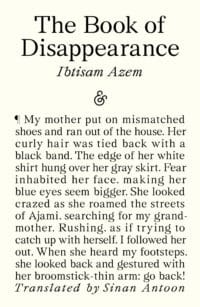
Book review: The Book of Disappearance by Ibtisam Azem
August 14, 2025February 16, 2026

The Book of Disappearance

Of the Palestinian books I’ve read in recent years, The Book of Disappearance by Ibtisam Azem is possibly the most educational, yet is also highly entertaining.

Alaa and Ariel are friends who live in the same building in Tel Aviv. They hang out most evenings, work in similar jobs and have friendly disagreements about the history of their city. But then one day Alaa disappears without warning – along with all the other Palestinians in Israel and the Occupied Territories. Ariel must now confront how well he knew his friend, and how he feels about Palestinians in general.

The narrative skips between Ariel’s story and excerpts from Alaa’s diary. In between are vignettes about how other non-Arab Israelis are affected by the disappearance of the Palestinians. From a farmer wondering why none of his day labourers have turned up, to a patient whose surgery is cancelled because the surgeon hasn’t come to work, at first the rumour is that “the Arabs” are on strike.

But how can four million people have just disappeared? Rumours swirl, security alerts are raised, official statements from the Knesset and IDF top brass are minimal.

Continue reading “Book review: The Book of Disappearance by Ibtisam Azem”
Kate Gardner Reviews

Book review: The Skin and Its Girl by Sarah Cypher

March 8, 2025

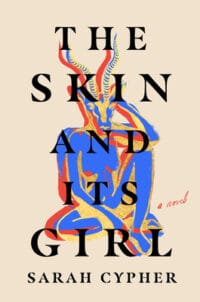
The Skin and its Girl cover

The Skin and Its Girl by Sarah Cypher is one of the stories of Palestinian diaspora that I have been particularly excited to get hold of. Reviews made it sound right up my street – and it absolutely is. It celebrates language and storytelling; questions ideas of truth and honesty; features queerness; and is beautifully written.

Betty Rumanni tells the story of her life so far, starting with the day of her birth. At first she wasn’t breathing, doctors thought she was dead, then she took her first breath and her skin turned cobalt blue. Betty’s skin has been bright blue ever since.

This is not some alternative universe where some people are blue-skinned. Betty is one-of-a-kind. And while it’s a clear metaphor for standing out as an Arab American “soon after 9/11”, it also makes for a kind of modern myth.

It becomes clear that Betty is telling her story to a specific person, her great aunt Nuha. Or more accurately, Nuha’s grave. Betty is trying to figure out whether to stay in America to take care of her mother, or to follow her girlfriend overseas to build a new life together. But more than that, she is trying to piece together her aunt’s story and that of the Rumanni family.

Betty’s knowledge of the Rumanni family largely comes from Nuha’s bedtime stories. There’s a family feud relating to a soap factory in Nablus; a girl who follows a silver gazelle to Haifa; even a tattooed ogre. And mixed in with these stories of Palestine are Bible stories, retold by someone who believes in God but does not feel God has ever been there for her. How do these tales relate to the friction between her grandmother Saeeda and great aunt Nuha in America? Are these the roots of Betty’s mother Tashi’s fragile mental health?

Continue reading “Book review: The Skin and Its Girl by Sarah Cypher”

Kate Gardner Reviews

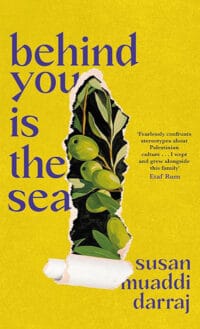
Book review: Behind You is the Sea by Susan Muaddi Darraj

December 16, 2024December 17, 2024

Behind You is the Sea coverEvery new book is a gamble. Unless you’ve read it before, you don’t really know what you’re getting. Sure, there are some ways to mitigate risk. Tried and tested author; recommendation from a friend or book blogger who shares your taste; perhaps a bookseller or book club you’ve found you jibe with. But even the best of these can end in disappointment. Not every book can be a gem.

So it’s an extra big risk to pre-order a not-yet-published book by an unknown author based solely on a random Bookstagram post. What can I say? They were persuasive: a way to financially support Palestinian authors and encourage more publishers to work with them is to pre-order their books. Demonstrate there is a demand. So I pre-ordered Behind You is the Sea by Susan Muaddi Darraj, mostly forgot about it and then a couple of months later got a lovely surprise in the post.

I actually don’t mind the risk of not loving a book. Makes it easier to decide which ones to keep after reading, which ones to even finish. But in this case I did love the book. And that’s despite some narrative decisions that haven’t always worked for me in the past.

This novel is about three Palestinian families in Baltimore, Maryland. Each chapter concentrates on a different character from these families, following them closely for days, weeks or even months. There are big time jumps between each chapter as well, so that by the end of the book decades have passed. Some chapters only have a small cast, others feature dozens of people – a lot of whom will have appeared in previous chapters or go on to appear again later.

Continue reading “Book review: Behind You is the Sea by Susan Muaddi Darraj”

Kate Gardner Reviews

Book review: Enter Ghost by Isabella Hammad

October 28, 2024 1 Comment

Enter GhostAfter a year of war, starvation, genocide, reading books by Palestinian authors feels like such a tiny, insignificant act. But – alongside campaigning, writing to MPs, boycotting and divesting – I do think there is real value in sharing Palestinian stories. Sadly I think there are people who need reminding that Palestinians are human beings, who had stuff going on in their lives beyond minute-to-minute survival before all this. And for the rest of us, learning everything we can about Palestine past and present certainly can’t hurt.
Perhaps most important, I want to share genuinely good books by less-well-known authors. And while there are many excellent Palestinian writers, very few could be considered well known. So I will continue scouring all the lists of Palestinian books, buying them, reading them and sharing them.

British-Palestinian author Isabella Hammad features on a lot of those lists, and in particular her 2023 novel Enter Ghost. It’s about Sonia, a Palestinian-British actress who finds herself without work for the summer after a disastrous affair with a director, whose casting promises evaporate when they break up. So she decides to visit her sister Haneen who lives in Haifa (in what is now Israel), where their grandparents lived. While there, Sonia is talked into joining the cast of an Arabic production of Hamlet in Ramallah, directed by her sister’s friend Mariam.

Continue reading “Book review: Enter Ghost by Isabella Hammad”

Kate Gardner Reviews

June 2024 reading round-up

July 1, 2024July 3, 2024

Another month when I read a lot and didn’t do much reviewing. We also watched some good films and started watching season 3 of The Bear. Which continues to be both stressful and brilliant. Oh, and we watched all of Mr and Mrs Smith, created by and starring Donald Glover. It’s not as good as Atlanta but it is good – and much lighter fare.

Most days have been gorgeous so I’ve done a lot of sitting in the garden reading and throwing a ball for the dog. I’ve been on some bike rides, taken a couple of days off work to enjoy the summer, and treated myself to multiple book shop visits.

I attended a brilliant event at Bookhaus called Reading For Gaza. Palestinian-Italian author Sabrin Hasbun read an excerpt from her memoir about visiting Gaza. Noreen Masud read extracts from her book A Flat Place and explained why she has joined Book Workers for a Free Palestine. Nikesh Shukla introduced the work of a writer he is mentoring, Anam Raheem, who lived in Gaza for five years. She worked at Gaza Sky Geeks, a tech hub and community space, with Matt Davis who also spoke at Bookhaus. I found this event sad and hopeful, inspiring and beautiful. Matt runs a mutual aid fund for Gaza if you are looking for a specific place to donate money where it can truly help.

Continue reading “June 2024 reading round-up”

Kate Gardner Blog

Book review: You Exist Too Much by Zaina Arafat

June 14, 2024

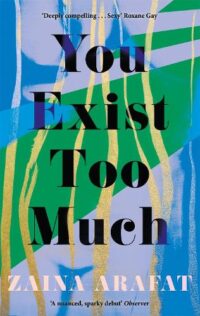
You Exist Too Much book coverLike the best literary novels, You Exist Too Much by Zaina Arafat encompasses several big topics in what might seem like a simple, quiet story. I saw this book recommended on several social-media posts about Palestinian books and it is to some extent about being Palestinian, but much more too.

Arafat, like her main character, is Palestinian-American and grew up between the US and the Middle East. Her unnamed narrator has for years struggled to reconcile her queerness with her mother’s conservative values. Now she is finally in her first serious relationship with Anna, even living together in New York City, she feels ready to tell her mother she is bi. She is not close to her mother but does speak to her every day, so this is a big step. One that she has been avoiding for years. But she finds herself sabotaging what she and Anna have by obsessing over a potential new love interest.

Continue reading “Book review: You Exist Too Much by Zaina Arafat”

Kate Gardner Reviews

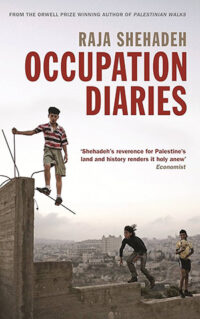
Book review: Occupation Diaries by Raja Shehadeh

December 22, 2023 1 Comment

Occupation Diaries

Palestinian author, lawyer and human rights activist Raja Shehadeh has won prizes for his writing and his humanitarian work. Occupation Diaries is one of several non-fiction books he has written about Palestine through the lens of his own life. Born in Ramallah, he attended law school in the UK, then moved back to Ramallah to join his father’s law practice. To the best of my knowledge he still lives in Ramallah now and certainly that’s where he was living in 2012 when he published this book.

As the title suggests, Occupation Diaries is a series of diary entries covering the period December 2009 to December 2011. Shehadeh writes about his daily life but adds in historical and political detail.

In the opening entry, Shehadeh travels with a group of friends to a countryside spot called Wadi Qelt. As they spread out their picnic on a rock next to a picturesque pool, a large family arrives and settles on a rock on the opposite side of the water. Shehadeh’s group are Christians and/or foreigners dressed in Western clothes; the family group is local and Muslim, with the women in hijabs and long black skirts. Mutual suspicion quickly grows and there is a brief shouting match, though it is quickly defused.

Continue reading “Book review: Occupation Diaries by Raja Shehadeh”

Kate Gardner Reviews

We are the ones who have to support our walls

July 8, 2018

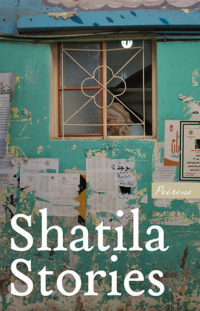
Shatila Stories
– a collaborative novel from Peirene Press

Authors: Omar Khaled Ahmad, Nibal Alalo, Safa Khaled Algharbawi, Omar Abdellatif Alndaf, Rayan Mohamad Sukkar, Safiya Badran, Fatima Omar Ghazawi, Samih Mahmoud, Hiba Mareb

Editors: Meike Ziervogel, Suhir Helal

Translator from Arabic: Nashwa Gowanlock

This novel is the outcome of a series of writing workshops that Peirene Press and the NGO Basmeh & Zeitooneh held at the Shatila refugee camp in Lebanon, which is home to up to 40,000 refugees, largely Palestinian and Syrian. Nine refugee writers wrote their own fictional stories set in Shatila, which the editors helped them to hone and weave together into a single narrative. The outcome is a piece of fiction that gives a true flavour of life in Shatila.

The story, perhaps unsurprisingly, is a series of vignettes. The same characters start and end the story, and others do recur, but some sections are more loosely connected – a name mentioned in one chapter becomes central in another chapter, but then we don’t meet them again.

Where this book’s strength lies is the Shatila setting. Throughout, Shatila is ever-present and brought to life in all its terrifying – and life-threatening – ramshackle chaos. Whether the chapter is about romance, or debt, or bullying, or careers and education, the facts of living in a refugee camp – in this refugee camp – are never forgotten. The photographs at the start and end of the book by Paul Roman also help to place the physical reality of Shatila, though only the writers can establish its emotional truth.

Continue reading “We are the ones who have to support our walls”

Kate Gardner Reviews

The hands of loss keep touching the memory

March 19, 2017

All the Rivers
by Dorit Rabinyan
translated from Hebrew by Jessica Cohen

I remember spotting this book in the Serpent’s Tail catalogue last year and immediately liking the sound of it. It had potential to be brilliant or awful, to deal with complex matters sensitively or insensitively. Thankfully, to my mind, Rabinyan got it just right.

Liat is a translation student spending the academic year in New York City. She is practical and idealistic. Hilmi is a painter struggling for his artistic break. He is passionate and pessimistic. When they meet one day in a coffee shop there is instant attraction, but it also immediately clear that theirs won’t be a straightforward courtship. Besides the fact that Liat has only six months left on her visa, there’s the question of where she will be moving back to. Because she is from Israel and he is from Palestine.

The narrative isn’t quite linear, dealing with different aspects of the relationship in turn. First there’s getting to know each other. Then there’s Hilmi’s burgeoning art career. Then how they act around their friends. And so on. The day of Liat’s departure keeps getting close, only for the story to jump back a few months to fill in fresh detail. It feels very much like the way someone remembering events might structure their thoughts.

Continue reading “The hands of loss keep touching the memory”

Kate Gardner Reviews

A break from the norm

May 17, 2011March 11, 2012 2 Comments

Palestine
by Joe Sacco

This is an unusual, interesting, informative but potentially inflammatory work from journalist Joe Sacco. It’s an account of two months spent in Palestine (and occasionally Israel) in 1991–1992, told in graphic novel form.

It’s an interesting idea, this “comic-book journalism” and one that has won Sacco awards, including the 1996 American Book Award for this work. He’s an intelligent man, from what I can tell, and Palestine is a difficult situation that could potentially be too complex or political and therefore dull to many readers. This book is certainly not dull. It’s political, sure, but also moving, graphic, disturbing and compelling.

As journalism goes, this isn’t the third-person, bias-free, author-free account you might expect. The book stars Sacco, following his time in Palestine, his interviewing technique, his thoughts, fears, boasts and worries. Sacco does not do himself favours in his self-depiction. Comic-book Joe is both physically and at times morally unattractive. He admits to craving sordid details that will enliven his journalism. He pushes interviewees for the most disturbing stories and shows little emotional reaction while his translator or host is weeping at what they have heard. He also, unusually for an American, places himself solidly on the Palestinians’ side.

Now I’m not sure if this is a position he took in retrospect, after spending months in Gaza and the West Bank and Jerusalem. He certainly went there with the intention of getting the Palestinian side of the story, because the US tends to only ever hear the Israeli side. It’s a reasonable background to have for his trip. And he clearly knows that he comes across as biased because toward the end of the book we see him spending time with two Israeli women and failing to engage with their arguments. But it did at times make me feel uncomfortable. Very few of the characters he meets are blameless. Yes, the small man on the street, even the soldiers, are ultimately in thrall to what the politicians do or say, but when everyone is throwing stones…who is innocent?

I don’t know a great deal about this situation, a situation that started long before I was born and continues now. I know a lot more than I did before I read this book and I feel both incensed and helpless. Because so many people are trying, have tried, to help. The events of this book happened 20 years ago and it still goes on; people still die, are thrown in jail, live in abject poverty.

Sacco’s artwork is excellent. He draws in black and white, packing in the detail, with lots of big half-page or full-page scenes. He recounts atrocities without getting too graphic, tending instead to concentrate on what he himself saw – one room after another full of people telling him their stories. Which sounds dull. Luckily his humour, in addition to further details from his trip (hazardous roadtrips, riots, menacing soldiers in the street) and the occasional depiction of a story he is being told ensure that this book never gets boring. It is genuinely gripping, in part because from what we learn it seems likely that some of the people we meet will not survive until the end of the story.

I do have a couple of gripes. In a few places early on, Sacco packs a lot of text in to contextualise. Which is necessary and helpful but it’s visually offputting, because to retain the comic-book feel without having many or any pictures he presents the text in various skewiff, haphazard arrangements, sometimes hard to follow. And these are historical events being described which I felt could have been, maybe should have been, illustrated.

Secondly, there’s no real narrative arc. It’s just Sacco’s time in Palestine start to finish. Except not quite because a couple of times he breaks from chronological order to talk about something thematic. But there’s no lessons learned, no how it affected or changed him, no “this is what I’m going to do now I’ve seen what’s happening for real”. Maybe that can’t be helped. If all the world’s politicians can’t figure out what to do then why should I expect an American journalist to have the answers? But somehow I did. The closest he comes is to quote one (Israeli) man he met in Jerusalem:

“Ultimately I don’t think peace is about whether there should be one state or two. Of course that issue is important, but what is the point of two racist states or one racist state…or one racist state dominating another? The point is whether the two peoples can live side by side as equals.”

Of course, what Sacco did was to write and draw this comic series, to spread the word about what life is like in Palestine, what really goes down day-to-day. That’s what journalism is about and it’s an important role. He actually went back and produced a sequel to this, Footnotes in Gaza, in 2009. I definitely want to read it. And that’s saying something. This is not an uplifting read and I don’t expect the sequel to be, but it’s enlightening and if there’s one thing I read for, it’s to be enlightened.

First published as a nine-issue comics series in 1993–1996. Reissued as a single volume with a new introduction in 2001. Published by Fantagraphics Books.

Kate Gardner Reviews

Archives

RSS Nose in a book

  • Book review: Interstellar Megachef by Lavanya Lakshminarayan
  • May 2026 reading round-up
  • Book review: Passing by Nella Larsen

Me on the internets

  • @kate_in_a_book@mas.to (Mastodon)
  • Flickr/noseinabook
  • Instagram/kate_in_a_book
  • StoryGraph/kate_in_a_book

Categories

  • Blog
  • Reviews
  • Uncategorized
Proudly powered by WordPress | Theme: Dream by vsFish.