Nose in a book

Reviews and other ramblings

  • Home
  • Reviews archive
    • Book reviews
    • TV reviews
    • Theatre reviews
  • TBR
  • Challenges
    • The Classics Club
    • 2014 Popular-Science Reading Challenge
    • Cookery challenge
    • The Gilmore Girls Reading Challenge
    • 2013 TBR Pile Challenge
    • 2013 Translation Challenge
    • Crime and Punishment read-a-long
  • About
    • Cookie legal stuff
  • Home
  • Reviews archive
    • Book reviews
    • TV reviews
    • Theatre reviews
  • TBR
  • Challenges
    • The Classics Club
    • 2014 Popular-Science Reading Challenge
    • Cookery challenge
    • The Gilmore Girls Reading Challenge
    • 2013 TBR Pile Challenge
    • 2013 Translation Challenge
    • Crime and Punishment read-a-long
  • About
    • Cookie legal stuff

Tag: death

He doesn’t have the sense of a billy goat

December 14, 2012December 14, 2012

Fried Green Tomatoes at the Whistle Stop Cafe
by Fannie Flagg

This was a book club pick and I thought somehow that it would be light and fluffy and girly, possibly because that’s how I remember the film (though on rewatching the film this week I discovered it’s not really those things either). It’s certainly an easy, enjoyable read, but it covers a lot of issues without labouring the point and has some very interesting things to say.

In the 1980s middle-aged Alabama housewife Evelyn Couch is visiting a nursing home and gets talking to a resident there, Mrs Ninny Threadgoode. Ninny is old and a little forgetful but also charming and immediately launches into stories about her early life in a small town called Whistle Stop. At the heart of these stories are Idgie and Ruth, the two women who ran the Whistle Stop Cafe from 1929 until it closed. However, inbetween there are snippets about other characters from the town and their lives, all told with a wonderful sense of humour.

“This skinny little man, so black he was a deep royal blue, had caused a lot of trouble for the opposite sex. One gal drank a can of floor wax and topped it off with a cup of Clorox, trying to separate herself from the same world he was in. When she survived, claiming that the liquids had ruined her complexion for life, he became continually uneasy after dark, because she had snuck up behind him more than once and cracked him in the head with a purseful of rocks.”

And at that level it all sounds a bit twee. But this book covers racist violence, domestic abuse, homosexuality, prostitution, extreme poverty and death, which is some pretty dark stuff for a story that’s so nice and chirpy on the surface. I know some at book group felt that this meant none of the themes were really explored, but were just thrown in there, and certainly the only subjects really talked about are female empowerment and death.

But then one of the running themes in this book is not talking about important things. Idgie and Ruth are a couple, which you would think was a big no-no in a small southern US town in the 1930s, but the whole town seems to know and just accept the situation. I wondered if this was because they all consider Idgie an honorary man. She certainly not only joins in with but often takes lead in hunting, fishing, gambling, drinking and the other manly pursuits of the town. But she’s far from being the only strong woman in town.

“Cleo, Idgie’s brother, was concerned…
‘Idgie, I’m telling you, you don’t need to feed every [hobo] that shows up at your door. You’ve got a business to run here. Julian…says he thinks you’d let Ruth and the baby go without to feed those bums.’
…’What does Julian know? He’d starve to death himself if Opal didn’t have the beauty shop. What are you listening to him for? He doesn’t have the sense of a billy goat.’
Cleo couldn’t disagree with her on that point.”

Each chapter takes a different source or viewpoint, so there’s Evelyn’s daily life, Ninny’s reminiscences, the Whistle Stop newsletter and other newspaper articles, and occasionally a plain old omniscient narrator. There’s also lots of jumping back and forth in time, which was confusing at first because there seemed to be sections that were unrelated, but by the end it all ties together. And also, in the end there is no single character who knows everything that the reader does, which I quite liked.

Generally, I found what could have been a heavy-handed moral tale a much more subtle look at life in the southern US. The one unsubtle message was about strong women. Really, it’s Evelyn’s story, and she is discovering through Ninny’s stories how unhappy she is with her life, downtrodden and ignored by her husband.

“After the boy at the supermarket had called her those names, Evelyn Couch had felt violated. Raped by words. Stripped of everything. She had…always been terrified of displeasing men…She had spent her life tiptoeing around them like someone lifting her skirt stepping through a cow pasture.”

As someone at book club pointed out, at the novel’s heart is the power of storytelling. Ninny’s stories have to be good for us to believe they would have such a profound effect on Evelyn. And it is all a rollicking good yarn, with a running theme of tall tales.

I seem to be saying this of every other book at the moment, but I think I would get a lot out of re-reading this.

First published 1987 by Random House.

Kate Gardner Reviews

Time is supposed to measure history, isn’t it?

November 15, 2012 1 Comment

The Sense of an Ending
by Julian Barnes

This book has left me puzzled. I was happily reading it, enjoying the slow, thoughtful prose, and then the last page happened and I thought, “What?!” Is that a standard sign of a Booker prize winner? Or is it just my standard reaction to Julian Barnes?

It’s a little difficult to discuss this book without giving too much away. It’s so short, only 150 pages, and is one of those books where you could say very little happens, or that a lot happens. Which is fine. The language is beautiful, measured and philosophical.

Briefly, narrator Tony Webster is retired, divorced, but generally happy with his ordinary life. Then something happens (and we don’t find out what until halfway through) to remind him of his childhood friend Adrian. Adrian was always the brilliant, serious, passionate one and Tony muses on the lost passions of youth, love, friendship, life and death. There’s a lot of musing.

“The history that happens underneath our noses ought to be the clearest, and yet it’s the most deliquescent. We live in time, it bounds us and defines us, and time is supposed to measure history, isn’t it? But if we can’t understand time, can’t grasp its mysteries of pace and progress, what chance do we have with history – even our own small, personal, largely undocumented piece of it?”

Through flashback, Tony revisits his childhood and early adulthood. During the story he is led to question his memory, not just of events but of other people’s experiences of the same events. Which isn’t exactly original, but it’s done reasonably well.

“I must stress that this is my reading now of what happened then. Or rather, my memory now of my reading then of what was happening at the time.”

The storyline annoyed me but the writing was provocative, intellectually stimulating. I’m glad I read it but I’m not sure I rate it as highly as other Booker winners I’ve read. I know a few people have said that it’s a book that demands re-reading so perhaps I should do that to see if I missed something?

“It ought to be obvious to us that time doesn’t act as a fixative, rather as a solvent. But it’s not convenient – it’s not useful – to believe this; it doesn’t help us get on with our lives; so we ignore it.”

Published 2011 by Jonathan Cape.
Winner of the Man Booker Prize 2011.

Kate Gardner Reviews

Given a pen instead of a gun

August 5, 2012September 10, 2012 5 Comments

Penguin Lost
by Andrey Kurkov
translated from Russian by George Bird

When I began this book, the sequel to Death and the Penguin, I was mostly a little lost and puzzled. I ended it engrossed and near tears (happy-sad ones). Which is a pretty good review in itself, I think.

To explain the plot I’m going to have to discuss how book one ended, so big fat **SPOILER ALERT STARTS HERE**

We last saw Victor travelling to Antarctica in the place of his pet penguin Misha, whom he left in a hospital in Kiev with his treatment being paid for by dodgy types who were almost certainly mafia. In this book, Victor arrives back in Kiev to find that Misha has disappeared, Victor’s sort-of foster daughter Sonya has got a pet cat, appearing to have forgotten Misha already, and Nina (Sonya’s nanny) has moved her new boyfriend into Victor’s flat. Alone, dispirited and possibly still on the wrong side of the mafia, Victor is in a dark place and only too happy to get taken under the wing of increasingly questionable types in his search for Misha the penguin.

**END SPOILERS**

In the early parts of this book, former journalist Victor is working for a local politician who initially appears pretty dodgy and certainly has some dodgy contacts. I found this a little dull, perhaps because I was missing some of the nuances of Ukrainian politics. Or perhaps it was Victor’s semi-defeated demeanour. When he started to get his confidence back, I started to be interested. He appears to have a knack for persuading people to help in his unusual quest (finding his pet penguin, if you didn’t get that from the title), though it’s certainly not an easy adventure.

Although book one did deal with politics, mafia and death, they were in the background behind the story of a man and his attempts to pull his life together. In this story Soviet politics become far more prominent, as Victor travels from Ukraine to Russia to Chechnya, the latter embroiled in war and a dangerous place for a Russian-speaker to be. The story gets pretty dark, very dark in fact. And there is less of the black humour of Death and the Penguin, though it is still there. But what it does have plenty of is the same compelling weirdness. I also learned a lot about Ukraine in the 1990s:

“Maybe I’ll be a journalist when I’m big. And sit up in the kitchen when everyone’s asleep.”
“You mustn’t – you wouldn’t want to be a soldier and go to war.”
“No, I wouldn’t.”
“You’d have to, as a journalist. You’d be taken on by some paper, given a pen instead of a gun, and told, ‘There’s the enemy, you go and write nasty things about him.’ And you would, until you got killed or hurt.”

Victor isn’t a positive thinker, perhaps understandably, but this gives him some interesting internal monologues:

“He stared at the white sheet of paper, but his brain refused to function. It was becoming internal, this weightlessness, prior to becoming external again, and beginning to irritate. At long last, he did actually type the words ‘What now?’ and felt better for it. Materialized, turned into text, the question ceased to occupy his thoughts.”

A note on the translation: my early disinterest aside, I felt that Bird did a good job of explaining the nuances of travel and interaction between the Soviet states. And I really felt the cold, bleak atmosphere exemplified by the image of a penguin on the balcony of a high-rise flat overlooking a car park.

Zakon uliki first published 2002 by Folio, Kharkov.
This translation published 2004 by the Harvill Press.

Kate Gardner Reviews

The person you thought you knew

July 23, 2012 4 Comments

The War of the Wives
by Tamar Cohen

I was intrigued by this book from the synopsis and I am left feeling very smug that I know myself well – because I loved it. It isn’t perfect but it is gripping and thought-provoking, and story and character are equally strong.

To save you even having to read the blurb, the tagline on the front of this book tells you all you need to know (when did books start having taglines? Is that a thing now?): “At your husband’s funeral you don’t expect to discover his other wife.” So it’s about grief, lies, family, bigamy, but also modern life in London and how change can make you realise what kind of person you are.

The storytelling is narrated alternately by the two wives, Selina and Lottie. Initially there’s a little bit of stereotyping. Selina is well off, uptight, a kept woman who keeps her very nice, very big house in Barnes in impeccable order and doesn’t check the price tag before buying yet another cashmere coat. She was married to Simon for 28 years, they have three children, aged 17 to 26, and while there’s not really any passion left she still loves her husband. She worries about ageing, her children’s choices of partner and why her youngest son insists on eating junk food.

Lottie is artistic, but illustrating children’s books isn’t making her a living so she also has a job she dislikes in a hotel. She lives in a flat in North London with her and Simon’s daughter Sadie, who is 16 and very difficult. She and Simon were married 17 years and they were still very passionate about each other, though they had money troubles and they fought a lot.

Cohen takes as her structure the five stages of grief. So the wives’ hatred of each other and what Simon did really comes to the fore in the “Anger” section. And the book inevitably wraps things up in the “Acceptance” section. Which was where, looking back, I feel a little disappointment. A lot of mysteries turn out to have been red herrings, which I should have seen coming when a potential major storyline just didn’t go anywhere. But what this does is keep the focus on the families, which is definitely Cohen’s strength. That and her fantastic turn of phrase that can combine urbanity and sentiment in clever, often comic, ways:

“I know how you can think you know someone, really know someone, only to find the person you thought you knew turns out to be a hollow timber structure with someone entirely different inside – a plastic wheelie bin of a someone.”

I liked the depiction of the children through their mothers’ eyes. I liked the way the women developed from the stereotypes they saw each other as being into complex, interesting characters. I liked the ultra-current setting – not just Twitter and Facebook but also preparations for the London 2012 Olympics – but I do worry that it will date the book quickly. I suppose that’s a decision the writer and her editor have already made.

The main flaw, I would say, are the prologue and epilogue, which is a shame because they are the first and last impressions. I found the epilogue especially jarring and completely lost my hold on the fictional world I had until then been enjoying thoroughly. But the rest of the book is good enough to forgive the slight lapse.

This book was kindly sent to me by the publisher in return for an honest review.

Published 2012 by Doubleday, an imprint of Transworld Publishers.

Kate Gardner Reviews

These are some of the things I know

July 18, 2012 2 Comments

I Remember Nothing and other reflections
by Nora Ephron

I wasn’t planning to read this. I visited my good friend H last weekend and saw it on her shelf and remembered H had said good things about it. So I read it.

In the light of Ephron’s very recent death, it was horribly poignant to read her memoir that begins with thoughts on memory loss and ends with thoughts on cancer, but in-between there is a charming, funny story of a life lived fully and happily.

Not one to be entirely conventional, Ephron tells her story in a series of essays. Some are very much memoir – how she began her career in journalism, for instance, an intriguing study in the sexism of the 1960s – while some are more rants on a topic – online Scrabble, the pointlessness of certain diets, e-mail – and others are really anecdotes. Which were perhaps my favourite bits:

“This is one of the things that drives me absolutely crazy when I see movies that take place in the fifties and early sixties: people are always saying ‘fuck’ in them. Trust me, no-one threw that word around then the way they do now. I’ll tell you something else: they didn’t drink wine then. Nobody knew about wine then. I mean, someone did obviously, but most people drank hard liquor all the way through dinner…These are some of the things I know, and they’re entirely useless and take up way too much space in my brain.”

Ephron’s writing style belies her early days in magazine feature writing. It’s a friendly, chatty style that drops in facts and cleverness without appearing to do so. Not that she hadn’t moved with the times. It did not feel like the writing of an “old person” at all:

“Alcoholic parents are so confusing. They’re your parents, so you love them; but they’re drunks, so you hate them. But you love them. But you hate them.”

There are some sweet quirks of the book. Three or four recipes are included, for example. Though after the chapter about how her friends don’t like her cooking it may or may not be worth following said recipes. There are also some lists. Mostly very funny ones but, on a bittersweet note, the book ends with “What I won’t miss” and “What I will miss”. However, my favourite part was the essay on journalism:

“It was exciting in its own self-absorbed way, which is very much the essence of journalism: you truly come to believe that you are living in the center of the universe and that the world out there is on tenterhooks waiting for the next copy of whatever publication you work at.”

Ephron comes across as a wonderful, astute, funny woman who was well loved and had lived well. What more could anyone want?

First published in the US in 2010 by Alfred A Knopf, an imprint of Transworld Publishers.

Kate Gardner Reviews

Veils, shimmering like curtains

April 9, 2012April 14, 2012

Ariel
by Sylvia Plath

A still life for Easter

This was Plath’s final volume of poetry, published two years after her death, and I could not separate the knowledge of what shortly followed these writings from the words themselves. It was not an easy read.

Death is everywhere in these poems. I got shivers down my spine on almost every page. Yet these are not obvious musings on death but rather word collages. For the most part the poems are constructed of a series of images, with no clear story or scene, but there are a few exceptions. “Gulliver” describes Swift’s character in the scene in Lilliput when he is tied to the ground:

“You there on your back,
Eyes to the sky.
The spider-men have caught you,”

“Daddy” explores her feelings about her father, a complex relationship despite his death early in her life (“I was ten when they buried you”). And “Wintering” is actually the last part of a series of four poems about her new-found vocation of beekeeping:

“Now they ball in a mass,
Black
Mind against all that white.”

But these are exceptions in-between the darker poems (and even those were not entirely free from comment on death). Her depression is ever present:

“I am terrified by this dark thing
That sleeps in me;
All day I feel its soft, feathery turnings, its malignity.” [from “Elm”]

She refers to her previous suicide attempt many times over, making it clear her only regret about it is that she didn’t succeed:

“After all I am alive only by accident.
I would have killed myself gladly that time any possible way.
Now there are these veils, shimmering like curtains” [from “A birthday present”]

But the poem that moved me most was “Years”, where Plath’s pain and anger seem to be at their peak:

“O God, I am not like you
In your vacuous black,
Stars stuck all over, bright stupid confetti.
Eternity bores me,
I never wanted it.”

First published 1965 by Faber & Faber.

Kate Gardner Reviews

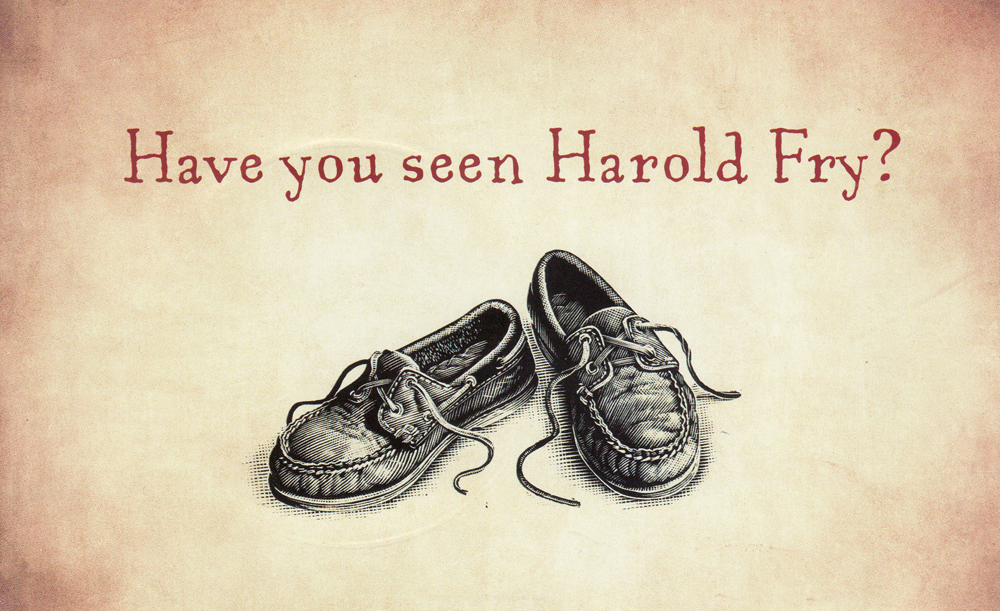
Have you seen Harold Fry?

February 11, 2012 3 Comments

The Unlikely Pilgrimage of Harold Fry
by Rachel Joyce

This is a very sweet novel about old age and regret and Englishness. It takes a simple but interesting idea and keeps it engaging throughout. The author’s inclusion of social media such as Facebook and Twitter in the storyline was of course a gift to the publisher’s marketing department (as you may have started to notice) but do not be put off – it’s worth a chance.

Have you seen Harold Fry?

Harold Fry has been retired for six months and spends his days with his wife Maureen keeping boredom at bay, when he receives a letter from an old friend, Queenie, telling him that she is dying of cancer. He goes out to post a reply and keeps on walking. He resolves to walk all the way from his home in Kingsbridge, South Devon, to Berwick Upon Tweed (so almost the whole length of England), having some idea that this is an act of faith that will save her life.

There are a few secrets at the heart of this story that are revealed slowly, with clues and partial memories dropped in between the story of Harold’s trek. Some I guessed and some I didn’t, but I don’t think it matters hugely either way; there is plenty enough story to keep you engaged even if you think you have figured the secrets out.

There are quite a few “issues” dealt with, including how it can be difficult to adapt to retirement, and how parents affect their child’s life, but the one that got to me the most was Harold and Maureen’s marriage. For 20 years they have lived at a polite distance, never really talking about what they want to say, to the point that when Harold starts his walk neither can understand the other. Maureen is bemused by the walk and the rules Harold has set himself (which change a few times anyway) and thinks that maybe Harold is doing it because he was once in love with Queenie. Harold thinks his wife will not miss him, that she will not be affected at all by his absence. During his walk, they both have time to think about the past, their marriage, what they once meant to each other and how things have changed. They both come to life, in their own ways, waking up from the monotony they had got stuck in.

The chapters alternate between Harold and Maureen, and they are both lovely characters, though both are also a little difficult and frosty at times. They are old-fashioned, in both good and bad ways. For instance, when a stranger confesses to Harold that he is cheating on his wife with a young man, Harold is appalled and repulsed but continues to listen politely.

There is a lot of detail about the landscape and route of Harold’s walk, sometimes lovingly admiring of England, sometimes less than complimentary, but this tends to reflect Harold’s mood mostly. He has realistic problems, mostly to do with his feet, and his perseverance in the face of pain is inspiring, though I couldn’t help but wonder at times if it was going to be worth it.

This book deals with some big issues in a quiet, understated way. It never gets gritty or deep into a subject, but it also doesn’t gloss over problems. A very sweet read.

This advance proof was sent to me by the publisher in exchange for a review.

Published March 2012 by Transworld Publishers.

Kate Gardner Reviews

It’s Hell in here

October 19, 2011March 11, 2012

Damned
by Chuck Palahniuk

This, Palahniuk’s latest offering, is every bit as crazy, vitriolic, scathingly sarcastic and darkly comic as you might expect if you’ve read any of his previous work. It might actually be lighter than usual and more funny, but it’s been a few years so maybe I’m mis-remembering.

I throw out words like “light” and “comic” and then have to tell you that this book is set in Hell. A really nasty, gruesome Hell to boot. But it’s narrated by a chirpy 13-year-old American girl whose view of both the world above and the one below is hilarious.

Each chapter begins, “Are you there, Satan? It’s me, Madison,” in a riff on just one of the many literary influences in this story. In life, Madison, slightly chubby and hopelessly naïve daughter of rich, famous parents, liked to read romantic novels and watch feel-good films. In death she raves about how she managed to die in an outfit particularly practical for Hell and tries to make friends with fellow damned souls. We gradually hear her life story, told in-between descriptions of Hell and her attempts to get on with spending eternity there.

Initially I found Madison irritating, though the concept was funny. She repeats the same phrases, harks back to the same references and makes the same jokes over and over. Which is realistic, I don’t doubt, but not the makings of a sympathetic character. However, death forces her to examine and analyse herself, remember details she’d rather forget and question the identity she clings to, so that she gradually becomes more likeable. Perhaps it says something about me that I vastly prefer her once she has lost her innocent guilelessness!

The depiction of Hell plays on preconceptions, twisting and turning them around. There are demons, sure; in fact every demon ever invented by any culture or religion. There are fires and pits of torment and endless methods of torture, but there are also the very gruesome indeed Great Ocean of Wasted Sperm, Swamp of Rancid Perspiration, Dandruff Desert and many more of that ilk. Thankfully they are not all described in detail but, well, some are. And there are strict rules. Many, many rules. In fact, it becomes a running joke. At first it seems to Madison that perhaps the Christian right had all the answers, but she slowly discovers that the rules of Hell are petty, almost arbitrary, and can trap anyone. But the fact that there are rules means that you can learn them, and play them.

From the cell in which she first finds herself installed in Hell, Madison makes the acquaintance of a cheerleader (Babette), a jock (Patterson), a nerd (Leonard) and a punk (Archer). Adding her goody-two-shoes self, that makes her very own Breakfast Club and she determines to befriend them all. When Archer uses the safety pin from his cheek to spring them all from their cells, the motley crew journey across Hell together. Patterson just tries to get off with Babette while Leonard drones on about all the different demons encountered (he’s more of a history nerd than your typical science nerd) but Archer and Babette prove themselves surprisingly useful friends to have around.

I found this book genuinely funny, but also disturbing (it is Palahniuk, after all) and even sad. I grew to like Madison’s style of chatter, though the obviousness of her references never failed to grate. With her uber-bohemian parents and Swiss boarding school, surely she could have some less mainstream books or films to refer to occasionally? And while I accept that in the parents Palahniuk is mocking a certain kind of hypocritical celebrity, I did find some of his attacks a little too broad-ranging.

I think I will continue to look out all Palahniuk’s new releases, but so far his Diary: a novel has not been ousted from the favourite spot.

Copy kindly sent to me by the publisher in return for an honest review.
Published October 2011 by Doubleday.

Kate Gardner Reviews

The murky depths

April 8, 2011March 11, 2012 3 Comments

Death in Venice
by Thomas Mann
translated from the German by David Luke

This is really closer to a short story than a novel so I shouldn’t have waited so long to read it, but a few recent outpourings of praise for it made me finally take it down from the shelf. Yet for such a short piece, it was a very slow starter.

This is your classic flowery literary prose, with endless allusions to Greek myth and a gradual, thoughtful story. It’s about a successful ageing writer, Aschenbach, who feels a sudden urge to take a break and travel. While in Venice he falls heavily and hopelessly in love with a beautiful young man, Tadzio, who is staying at the same hotel. In the meantime, a cholera outbreak is gradually spreading across Venice and both Aschenbach and Tadzio have delicate health…

The story isn’t really about homosexuality as such, it’s about an old man falling helplessly for the beauty of youth. He never expects anything from Tadzio, he just wants to see him every day and gets a thrill when the boy smiles in his direction. It’s almost heartbreakingly sad, this cultured respected man reduced to stalking a stranger and his family. It is also a little creepy. Aschenbach is fully aware of how out of character he is acting, but presses on even when his poor health means he really should leave the city.

Having a writer for the main character is an old trope that both familiarises and distances the hero. We think we know what a writer is like but at the same time recognise that he could be anyone. It allows the first-person narration to be highly stylised and fanciful while being believable. “Do you see now perhaps why we writers can be neither wise nor dignified…The magisterial poise of our style is a lie and a farce…the public’s faith in us is altogether ridiculous…how can one be fit to be an educator when one has been born with an incorrigible and natural tendency toward the abyss?”

There are some truly beautiful passages and I can see how Mann ended up winning the Nobel Prize for Literature, but I did struggle a bit with the myth interludes, which I found tedious.

First published by Hyperionverlag Hans von Weber in 1912.
This translation first published by Bantam Books in 1988.

Kate Gardner Reviews

The line between life and death

February 9, 2011March 11, 2012

The Graveyard Book
by Neil Gaiman

Yet again looking for a quick, undemanding read, I picked up another of Gaiman’s children’s books. Once again I was reminded that not all children’s books work as easy adult reads.

Gaiman’s prose is beautiful, expertly bringing to life each scene. The story is original, with lots of twists and turns. The characters tread a fine line between over-the-top grotesque and real-life normality; definitely believable. But somehow…I wasn’t kept interested.

The story is that of Bod (short for Nobody), a boy who is raised in a graveyard after his family are murdered. The ghostly inhabitants of the graveyard club together to provide him with education and support, but his main guardian is Silas, not a ghost but some other creature who is neither alive nor dead. Bod is discouraged from leaving the graveyard because Silas is convinced that the man who killed his family still wants Bod dead.

The book opens brilliantly with the murder of Bod’s family, from the perspective of the killer. The pages are illustrated evocatively by Dave McKean and I genuinely thought from that first chapter that I would love this book. Certainly I love that this is a children’s book unafraid to talk about death – murder even – and from the interesting perspective of having ghosts be, for the most part, friendly or at least benign creatures. I also like that not every mystery raised is solved.

However, whether it was too vague an overarching story (each chapter is a separate adventure, a year or two after the last one) or something else, I wasn’t engrossed. Maybe I’ll switch back to Gaiman’s adult books now.

Published 2008 by Bloomsbury.

See also reviews from Col Reads, Farm Lane Books Blog and Girls Gone Reading.

Kate Gardner Reviews

Posts pagination

1 2 3

Archives

RSS Nose in a book

  • Book review: Interstellar Megachef by Lavanya Lakshminarayan
  • May 2026 reading round-up
  • Book review: Passing by Nella Larsen

Me on the internets

  • @kate_in_a_book@mas.to (Mastodon)
  • Flickr/noseinabook
  • Instagram/kate_in_a_book
  • StoryGraph/kate_in_a_book

Categories

  • Blog
  • Reviews
  • Uncategorized
Proudly powered by WordPress | Theme: Dream by vsFish.