Nose in a book

Reviews and other ramblings

  • Home
  • Reviews archive
    • Book reviews
    • TV reviews
    • Theatre reviews
  • TBR
  • Challenges
    • The Classics Club
    • 2014 Popular-Science Reading Challenge
    • Cookery challenge
    • The Gilmore Girls Reading Challenge
    • 2013 TBR Pile Challenge
    • 2013 Translation Challenge
    • Crime and Punishment read-a-long
  • About
    • Cookie legal stuff
  • Home
  • Reviews archive
    • Book reviews
    • TV reviews
    • Theatre reviews
  • TBR
  • Challenges
    • The Classics Club
    • 2014 Popular-Science Reading Challenge
    • Cookery challenge
    • The Gilmore Girls Reading Challenge
    • 2013 TBR Pile Challenge
    • 2013 Translation Challenge
    • Crime and Punishment read-a-long
  • About
    • Cookie legal stuff

I had to crack every word one by one

January 19, 2014 2 Comments

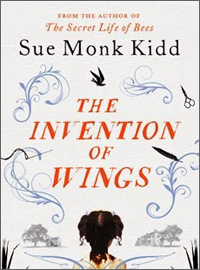
The Invention of Wings

The Invention of Wings
by Sue Monk Kidd

It is a while since I have been so thoroughly engrossed by a book, to the point where no matter where I was, day or night, I wanted nothing more than to be reading this book. Which of course means that it was over far too soon. So this definitely comes under the category of A Good Read.

It’s the fictionalised story of real-life anti-slavery campaigner Sarah Grimké, who was raised in Charleston, South Carolina, in a slave-owning family. But it’s also the story of the (almost entirely fictional) slave girl Hetty who was given to Sarah as a birthday present when she turned 11. The two girls take turns at telling the story, painting two lives closely linked and yet starkly different.

“The skies were bright cerulean, teeming with ferocious winds, spilling mallards and wood drakes from the clouds. Up and down the lanes, the fences were bright with yellow jasmine, its musk a sweet, choking smoke. I rode with the same drunk sensuality with which I had reclined in the copper tub, riding till the light smeared, returning with the falling dark.”

Sarah is the middle daughter (there are also several brothers – her mother is…prolific) and while considered a little plain and too intelligent for her own good, it is her wilfulness and ambition that get her in trouble. As a child she dreams of becoming the first female lawyer and devours the books that her father (a powerful legislator) secretly allows her until he realises that she is taking her dream seriously. When he shoots down that dream, it takes her many years to find another way to do something about the issue nearest to her heart – abolition of slavery.

Hetty, or Handful as she is known among the slaves, might have been happy with her lot – the cruelties of Mrs Grimké, or Missus, notwithstanding – were it not for her mother Charlotte who harbours such hatred of her lot that she devises small revenges against her owners and plots their eventual escape. Handful is practical and in many ways protected by Sarah, but between Charlotte’s unhappiness and Sarah’s abolitionist leanings, she catches the bug – the yearning for freedom.

“The man’s writing looked like scribble. I had to crack every word one by one and pick out the sound the way we cracked blue crabs in the fall and picked out the meat till our fingers bled. The words came lumps at a time.”

The other major character is Nina, Sarah’s youngest sister, who is in many ways a daughter to her. They are so close that it is never clear whether Nina’s small revolutions – from refusing baptism to writing anti-slavery pamphlets – are entirely her own, or the influence of Sarah. She’s an interesting character because she is more beautiful, more determined, more confident than Sarah, and yet it is Sarah’s lead that she follows.

I think it’s important that Kidd chose Sarah to narrate the story, not Nina, because Sarah is undoubtedly more troubled. She suffers from a stammer and, after the dream to become a lawyer is snatched away, never again feels that confidence in her abilities. She fervently feels that slavery is wrong (in fact, the day that she is given Handful she tries to grant her freedom, but of course that isn’t allowed) and more than that, she feels that women and coloured people are equal to white men in the eyes of God, but for much of her life she feels helpless to do anything about those beliefs.

“They say in extreme moments time will slow, returning to its unmoving core, and standing there, it seemed as if everything stopped. Within the stillness, I felt the old, irrepressible ache to know what my point in the world might be. I felt the longing more solemnly than anything I’d ever felt.”

What I thought was wonderful about this book was that it isn’t an anti-slavery treatise (after all, I think we all know these days that slavery is bad, we don’t need persuading), it’s a warm engaging story full of characters painted in all sorts of shades of grey. And there’s action and adventure too, from the terrible punishments meted out to slaves to a planned slave revolution. But there’s also romance, broken hearts, social faux pas and outright castigation. There are complicated relationships between people and there are terrible decisions that have to be made.

I also appreciated that the publishers have included quite a long author’s note at the end detailing Kidd’s historical research, including where she did and didn’t deviate from history in her fiction.

Clearly, I outright loved this book. I now plan to look out all Kidd’s previous works and hope that it all lives up to this high standard.

Published January 2014 by Tinder Press, an imprint of Headline.

Source: This book was kindly sent to me by the publisher in return for an honest review.

Kate Gardner Reviews

Instability is a permanent condition that adapts with the times

January 15, 2014February 9, 2020

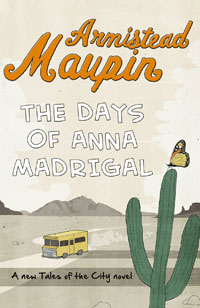
The Days of Anna Madrigal

The Days of Anna Madrigal
by Armistead Maupin

I thought quite hard about what should be my first book of the new year and this felt like a really good choice. I was really excited to be sent a copy of this, the latest Tales of the City novel, having loved the first book in the series. And this ninth instalment is just as funny, touching, well observed and eye-opening as that first one was for me. Those who haven’t read the whole series might find spoilers in this review.

Anna Madrigal was the eccentric but beloved landlady of the legendary 28 Barbary Lane. Now she is very old and, feeling that her time is near, takes a trip to her childhood home in Nevada, hoping to come to peace with the actions of the boy she once was. At the same time, several of her dearest friends are heading for the annual Burning Man festival, also in Nevada, and they have their own gremlins to deal with. Will Shawna take the biggest step of her life and become a mother? Will Michael find peace with his younger, hipper husband? Will Jake’s painstaking plan to honour Anna come to fruition or fall apart in the desert dust?

“‘Chillax? You don’t say chillax.’
‘I’m saying it now. Because you’re acting like you’re twelve and hormonal.’
If only he knew, thought Michael. Sixty-two was a lot like twelve and hormonal. Teenagers rage against the end of childhood, old people against the end of everything. Instability is a permanent condition that adapts with the times.”

This book was, perhaps inevitably, a little more serious than the start of the series was. It’s certainly not without humour, or lighter moments, but the overarching themes include ageing, death and betrayal, and when the death that’s most imminent is that of a character who has been beloved through eight previous books over 35 years, well, you can’t be flippant about it.

There are also more positive themes such as renewal and acceptance. Which all sounds remarkably worthy, and that’s one thing this book isn’t. It’s touching, moving even, but never overly sentimental. In fact, I found Anna just as hard to get inside the head of as ever. But then the other characters have the same problem with her so I guess that’s just how she is.

“Summer had been warmer than usual this year, but the heat that throbbed in the East Bay was already coaxing pale fingers of fog into the city. Anna could feel this on her skin, the chilly caress she had come to think of as ‘candle weather’.”

There’s quite a broad cast of characters here, most of whom (though not all) are LGBT, and I like how the sheer number of people he’s created allows Maupin to not stereotype or pigeonhole any one character. They are all human and interesting. They have realistically complicated relationships with one another, which I know is partly a result of having several previous books about most of these people. But it’s also an accurate reflection of how the world is. Couples break up and move on but often still have mutual friends. Sometimes if you examine how you met your best friend you realise that to begin with they were your ex-boyfriend’s boss’s landlady, and you’re no longer in touch with your ex but that tenuous connection became the most important friendship of your life.

It’s hard to write much more about this book without giving away the events in it, but I really did find it charming and enjoyable, and I am glad to have been reminded to go back to this wonderful series.

Published January 2014 by Doubleday, an imprint of Transworld.

Source: This book was kindly sent to me by the publisher in return for an honest review.

Kate Gardner Reviews

Sunday Salon: New year, new start?

January 12, 2014 5 Comments

The Sunday Salon

The new year is really just an arbitrary point in time, but I think a lot of us see it as an opportunity for change. That might be making resolutions, beginning new projects or routines, or just making promises to ourselves to be “better” in some way this year. I pretty much never make resolutions, though I do have annual reading goals, but I do tend to see the new year as a time to start afresh on good habits.

Well, we might only be 12 days in, but so far the signs aren’t good for my habits this year. I could blame it on the nasty cough/cold I’ve had or the fact I’ve not yet settled back into a routine after the Christmas holiday, but I’m still not happy with how my year has started. I have so far finished one book. I have done zero exercise. The to do list is longer than ever. And I’ve not been eating especially healthily. Hmm.

Just practising

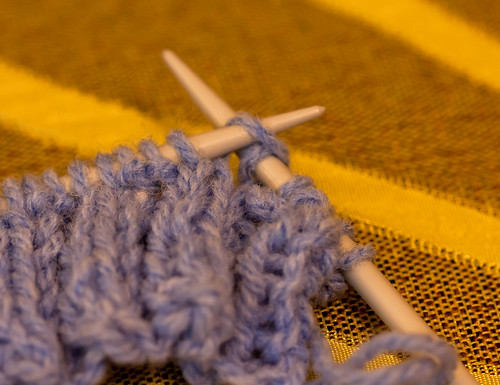
On the plus side, since my mother-in-law taught me to knit in December I’ve been practising a little every day and I’m really pleased with my progress. I might even treat myself to a second ball of wool soon! I find myself studying every knitted item I see to figure out what stitches it’s made up of and whether I think I might be capable of making it in the future.

Oh – and I have also ordered myself a comfy reading chair, which I look forward to snuggling up in when it arrives. That will – finally – complete our library, a mere three a half years after we started work on it. We’re not the fastest at redecorating!

Right, I need to squeeze in some reading and review-writing before the weekend is gone. It’s time to start asserting those good habits!

How’s your new year going? Do you have any special aims, goals or resolutions? If so, then good luck with them!

Kate Gardner Blog

This is mad, and I promise. All those words

January 9, 2014

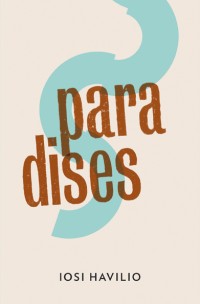
Paradises

Paradises
by Iosi Havilio
translated from Spanish by Beth Fowler

I got this book as part of my subscription to And Other Stories. I didn’t realise that it’s a sequel to Havilio’s first novel, Open Door, but I’m not sure how much that mattered. However, I guess that does mean that this review might contain spoilers to the first book (which I fully intend to go back and read now).

This novel follows a young mother who, suddenly widowed and forced off her husband’s farm, moves to Buenos Aires with her four-year-old son Simón. She finds work, housing and friends in a poor, dodgy corner of the city.

“It’s me who ends up carrying Simón most of the way, and if at first it feels like he’ll break my back, I adapt as we go and that annoying kick between the ribs becomes just another part of my body. Like everything, once the novelty has passed, things stop hurting or making you happy.”

The unnamed narrator floats through life, letting things happen to her, which was sometimes frustrating but totally believable. There are fleeting references to a lunatic asylum in her past, and she does show non-specific signs of some kind of mental illness – a loose hold on reality, an inability to say no to some really bad ideas, a surprising comfort with lying.

“I think about how each of us had to devise our truth in relation to the other, a comparison of before and after. And that’s the reason for all the affectations, the smiles, the embarrassment, the surprise, the And you? This is mad, and I promise. All those words.”

In some ways this is a story of survival. The narrator is doing what she can to get through life and parenthood. Though she’s new to the city, she is some ways ideally suited to this kind of life, though she is also the type of person most at risk from it.

Her vagueness isn’t just apparent in her narration, it’s also clear from the way her friends interact with her. Most of them take what they want from her silence, interpreting it the way that suits them best, but then other people (probably those who are best for her) struggle and fail to understand.

“I look into his eyes, sad, broken eyes like an orphaned, tortured cat’s, I don’t know what to say to him…I sympathise in silence, with my eyebrows, all the words of consolation that occur to me turn out to be impossible to articulate. He realises this and must feel a bit disappointed.”

I loved the opening of this novel, with the uncomfortable funeral and the final days at the farm. And I liked the rest of it, but I think I did ultimately find the narrator too vague and frustrating to love the book overall.

Published 2013 by And Other Stories.

Source: I subscribe to the publisher.

Kate Gardner Reviews

The snarling cries of a wind eating its way

January 4, 2014January 4, 2014 3 Comments

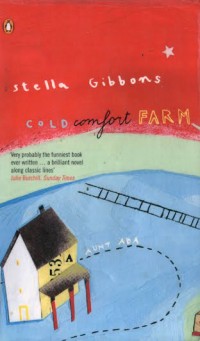
cold comfort farm book cover

Cold Comfort Farm
by Stella Gibbons

I read this novel as the Guardian Reading Group picked it as the book for December and it had already sat for too long on the TBR. It’s one of those books so beloved, and described so often in hyperbolic terms, that I worried I would be disappointed. It turns out, I was not.

I suppose my biggest fear was that I wouldn’t find it funny, that the comedy would have dated. And there are aspects of the book that show their age (some racism/antisemitism and homophobia) but the comedy is still very funny.

The story is that of Flora Poste, who is well brought up, highly educated and suddenly orphaned, therefore in need of somewhere to live. Eschewing all the easy options available from her various friends in London, she writes to all her distant relatives and accepts the offer that sounds the strangest and least appealing – Cold Comfort Farm near Howling in Sussex, with the wonderfully named Aunt Ada Doom and her large family.

Flora is a busybody and immediately decides that these strange parochial relatives, with their gloomy demeanour and dislike of cleaning, need straightening up, so she sets herself the challenge of sorting them all out. And it’s a big challenge. From the lustful young man Seth, who gets the serving girl pregnant every spring, to doddering old farmhand Adam, who fails to notice when hoofs and horns fall off his beloved cows, to raving old Ada Doom herself, who never leaves her room yet wields a strange power over the farm, which may or may not be related to that fateful night when she saw something nasty in the woodshed.

“Aunt Ada Doom sat in her room upstairs…alone. There was something almost symbolic in her solitude. She was the core, the matrix; the focusing-point of the house—and she was, like all cores, utterly alone. You never heard of two cores to a thing, did you? Well, then”

Oh, and I should also mention that this is set in a near future (or what was near future at the time it was written), so it has a touch of SF mixed in there. It’s quite subtle but there are small details, especially toward the end – video phones, airmail literally dropped at the front door, personal planes to the nearest field – which add an extra level of strangeness. I’m not quite sure what the purpose of the future setting was – perhaps to make the strong female lead and satire excusable in some way?

“‘She – she’s mad.’
The word lay between them in the indifferent air. Time, which had been behaving normally lately, suddenly began to spin upon a bright point in endless space.”

If there’s one thing this book has in spades, it’s satire. Right from the author’s foreword when Gibbons tells her friend Tony that she has “marked what I consider the finer passages with one, two or three stars”, which “ought to help the reviewers” and indeed there are passages so marked throughout the book, all particularly overblown examples of satirising the prose of “country” novels such as those by George Eliot.

“**Dawn crept over the Downs like a sinister white animal, followed by the snarling cries of a wind eating its way between the black boughs of the thorns. The wind was the furious voice that was baring the dormers and mullions and scullions of Cold Comfort Farm.”

One of the questions raised on the Guardian Reading Group was whether or not we are supposed to admire Flora. She is an interfering city girl who decides that these country folk aren’t up to scratch and sets out to change them into a more acceptable “normality”. Or is that also part of the satire? She is after all in love with her cousin back in London, who happens to be a vicar, so her own story is pretty much a satire of a Jane Austen plot.

“The brittle air, on which the fans of the trees were etched like ageing skeletons, seemed thronged by the bright, invisible ghosts of a million dead summers. The cold beat in glassy waves against the eyelids of anybody who happened to be out in it.”

I like that the satire is of literary styles, rather than any people or ways of life (or at least that’s how I read it). And I must say I found Flora adorable, which is surprising because it’s in a way irritating that she is so capable and right about everything, but then that also makes her a brilliant strong female character. And she wasn’t the only surprise for me. Most of the characters begin as almost surreal fairytale types but become human as you get to know them (or should that be as Flora works her magic?).

I really enjoyed this book and can definitely see myself returning to it. The question now is do I seek out the sequels that Gibbons wrote, which are by most accounts good but not as good, or leave it at this, the pinnacle of her ability?

First published 1938 by Penguin Books.

Source: I bought it secondhand, probably from a charity shop.

Kate Gardner Reviews

2013 reading stats

December 31, 2013December 31, 2013 5 Comments

The mulled wine is keeping warm and the box of chocolate biscuits is open, so all that’s left to do before bringing in the New Year is to round up my 2013 reading.

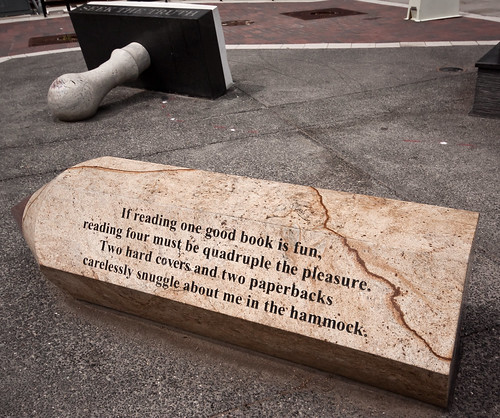
Seek the truth

This year I continued keeping stats on what I’ve read, as I had begun to in 2012. I have read 75 books, which is the exact number I aimed for in the Goodreads 2013 Reading Challenge (yay!) and just three fewer than last year. Of those, 18 were translated from other languages, which is a fair bit better than last year, though clearly there’s still room for improvement. And only 18 books were written by authors not from the UK or North America (strictly not quite the same 18 books as there was one written in French by a British author and one written in English by an Indian author). My best success is that I read 37 books by women and 38 by men, which is about as even a split as it could be!

As I thought I would find, I’ve only read 5 books that could be classed as science fiction this year, so I’m definitely going to try to read one SF book per month in 2014. And only 9 were non-fiction (not counting the Little House books because they are fictionalised memoir) so my 2014 Popular-Science Reading Challenge will definitely be a bit of a change for me.

My favourite reads this year were The Year of the Flood by Margaret Atwood, Dan Yack by Blaise Cendrars, On the Road by Jack Kerouac, Black Vodka by Deborah Levy and The Picture of Dorian Gray by Oscar Wilde. What were yours?

Overall I’d say it’s been a good reading year. I have greatly enjoyed most of what I’ve read (lots of 4 stars on Goodreads) and only abandoned one book that I can remember. As I mentioned last month, my 2013 challenges have been a bit hit and miss, but I’m happy with what I have lined up for 2014.

Now I’m going to refill my mug of mulled wine and pick out a book to begin 2014 with. So many to choose between!

I hope you have a fantastic New Year, and here’s to a wonderful 2014!

Kate Gardner Blog

December reading round-up

December 30, 2013December 30, 2013

Christmas bokeh

Well I hope you’ve all had a few days off work and eaten far too much and maybe even found some time to escape into a quiet corner and read. I didn’t get much reading done over Christmas because, as predicted, meeting my newest niece was quite the distraction! Plus it was good to spend some time with my family and old friends, as well as just enjoying being back in the beautiful Forest of Dean for a week.

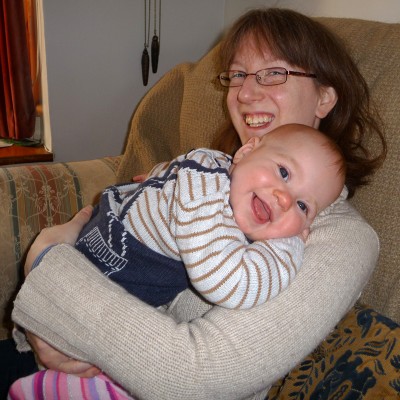
Having a cuddle with my niece.

Tomorrow I’ll write a round-up of my year in reading, but for now here’s what I read in December. You’ll notice it’s significantly less than the number of books I was given for Christmas 🙂

Christmas bookses

Books
All is Fair by Emma Newman (review here)

Other Colours by Orhan Pamuk (review here)

Cold Comfort Farm by Stella Gibbons

And as I’m writing this a day early, I’m hoping I will have finished Paradises by Iosi Havilio by midnight tomorrow!

Short stories
“Xingu” by Edith Wharton (Selected Shorts podcast)

“How to relax while broadcasting” by James Thurber (Selected Shorts podcast)

“The topaz cufflinks mystery” by James Thurber (Selected Shorts podcast)

“A ride with Olympy” by James Thurber (Selected Shorts podcast)

“Macbeth murder mystery” by James Thurber (Selected Shorts podcast)

“The secret life of Walter Mitty” by James Thurber (Selected Shorts podcast)

“The babysitter” by Jane Yolen (Selected Shorts podcast)

“The pedestrian” by Ray Bradbury (Selected Shorts podcast)

“The wood duck” by James Thurber (Selected Shorts podcast)

“Here we are” by Dorothy Parker (Selected Shorts podcast)

“Just a little one” by Dorothy Parker (Selected Shorts podcast)

“The waltz” by Dorothy Parker (Selected Shorts podcast)

There’s a bit of a pattern to my short stories this month, I notice! This was a particularly good bunch, I thought.


Happy New Year, all.

Kate Gardner Blog

Merry Christmas everyone!

December 23, 2013

I’ve wrapped the presents, picked out my Christmas Day outfit and had too many Christmas drinks already. I thought I’d share a favourite Christmas tune with you to keep the blog ticking over while I’m busy with family. I do love a good Christmas song.

I have no idea if I’ll find time for reading (I have a new niece to play with and there’s a lot of enthusiasm for board games this year…) but I do (of course) have a stack of books lined up that I’m hoping to snatch a few hours with at some point in the next week and a half off work.

Happy holidays!

Kate Gardner Blog

The world is bathed in the colour of heat

December 20, 2013December 20, 2013 2 Comments

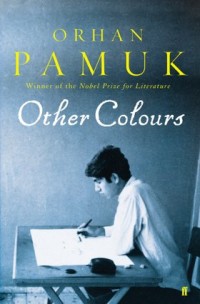
Other ColoursOther Colours: Writings on Life, Art, Books and Cities
by Orhan Pamuk
translated from Turkish by Maureen Freely

I completely fell in love with Pamuk’s novel Snow when it came out so when I saw he had a new book out I snapped it up before realising that it was a collection of his essays. And then it sat on the shelf unread for five or six years. Ahem.

Pamuk’s writings as collected here are…varied, from a light-hearted series written as a regular newspaper column to serious literary analysis and his Nobel Prize speech. And my enjoyment of them was pretty varied too. The short pieces from the newspaper column were sweet, brief pithy observations about life but the longer essays tended to get a bit bogged down with either name-dropping all the classic authors he’s read or talking at length about being a bestselling author – which I couldn’t help but find big-headed. Perhaps it’s a cultural thing.

“We see things and we don’t. The world is bathed in the colour of heat, and in our minds we can see this too.”

Pamuk is an interesting man with an interesting life, but perhaps a little repetitive even when I spread my reading of this book out over three or four months. There was lots of theorising about East versus West and Turkish politics, which I liked, plus backgrounds to most of his books, e.g. months spent in Kars while writing Snow, which is naturally interesting to any fan.

“To those viewing them from the outside, one city can seem much like the next, but a city’s collective memory is its soul, and its ruins are its most eloquent testimony.”

One of my problems with this book is that Pamuk does that thing when talking of being a writer: he generalises that all writers must be this way or feel this way. Why? Are there not many thousands of writers producing very different work from very different backgrounds? Can they maybe not have very different personalities and motivations too?

“The stones we writers use are words. As we hold them in our hands, sensing the ways in which each of them is connected to the others, looking at them sometimes from afar, sometimes almost caressing them with our fingers and the tips of our pens, weighing them, moving them around.”

(I should note that the above quote is not one I consider over-generalised. I quite like this phrasing. It’s more the stuff about working methods and personality type that wound me up.)

On the other hand Pamuk is a gifted writer, with great skill at bringing scenes, real or imagined, to life, and I still intend to read more of his fiction. (In fact, this book did include one short story, which was very good.) But I might give any future essay collections of his a miss.

Published 2007 by Faber & Faber.

Source: I honestly don’t remember.

Challenges: This counts towards the 2013 TBR Pile Challenge.

Kate Gardner Reviews

It’s a queer thing, people always moving west

December 16, 2013 3 Comments

These Happy Golden YearsThese Happy Golden Years
by Laura Ingalls Wilder

Here I am already, at the end of the Little House series. I guess that’s how you can tell they’re strictly children’s books, the way I got through seven of them so quickly! Despite a rocky start, I enjoyed the series overall and am a little sad to have reached the end.

The previous book, Little Town on the Prairie, ended with Laura being offered a three-month teaching job, aged just 15. She knew she had to accept it because she desperately wants to help with the fees to keep Mary at the college for the blind, but this teaching post is in midwinter at a town 12 miles away from her home in De Smet, so she will have to live with strangers. And she’s so young still, she doesn’t even know how to teach.

This book picks up just a few days later, with Laura being driven by Pa to her new job. I would be fascinated to know how accurately this reflects the author’s real-life experience because this first job is not a happy one. Laura must teach children who are her own age or older and who don’t recognise her authority. But even worse than that, she must stay with a couple who argue constantly, the wife of whom makes it clear she resents having Laura there. It is an intensely uncomfortable situation.

The light in the darkness is that every Friday afternoon, Almanzo Wilder turns up with his sleigh to take her home to her family for the weekend. No-one has asked him to do this, and Laura is so grateful to be able to see her family, albeit briefly, that for the first few weekends she doesn’t question it, though she feels awkward not knowing what to talk about for the long journey each way. Eventually, she figures out that Almanzo likes her like that and has an interesting reaction.

This book really is all about watching Laura grow up, from 15 to 18, from that first teaching post to accepting any job she is offered to help Mary out, from being nervous of Almanzo’s interest in her to requiting it. After those first few months, there isn’t much that’s negative, but I still found this book deeply touching. I was caught up emotionally in Laura’s story and related to her in many ways, as she worries about being quieter than other girls, and therefore less interesting. But of course Almanzo likes her for her wild spirit and sense of adventure, which he shares. It seems the name “Wilder” was a bit of nominative determinism!

I really do feel like the Little House characters have become friends and I’m sure I will come back to them in the future. It’s also made me want to go back to the series that I loved when I was young – Anne of Green Gables. But maybe I should make a dent in the TBR before I embark on that!

“‘It’s a queer thing,’ said Pa. ‘People always moving west. Out here it is like the edge of a wave, when a river’s rising. They come and they go, back and forth, but all the time the bulk of them keep moving on west.'”

Published 1943 by Harper & Brothers.

Source: Google Books

Kate Gardner Reviews

Posts pagination

1 … 76 77 78 … 124

Archives

RSS Nose in a book

  • Book review: We Have Always Lived in the Castle by Shirley Jackson
  • Book review: Ripe by Sarah Rose Etter
  • February 2026 reading round-up

Me on the internets

  • @kate_in_a_book@mas.to (Mastodon)
  • Flickr/noseinabook
  • Instagram/kate_in_a_book
  • StoryGraph/kate_in_a_book

Categories

  • Blog
  • Reviews
  • Uncategorized
Proudly powered by WordPress | Theme: Dream by vsFish.