Nose in a book

Reviews and other ramblings

  • Home
  • Reviews archive
    • Book reviews
    • TV reviews
    • Theatre reviews
  • TBR
  • Challenges
    • The Classics Club
    • 2014 Popular-Science Reading Challenge
    • Cookery challenge
    • The Gilmore Girls Reading Challenge
    • 2013 TBR Pile Challenge
    • 2013 Translation Challenge
    • Crime and Punishment read-a-long
  • About
    • Cookie legal stuff
  • Home
  • Reviews archive
    • Book reviews
    • TV reviews
    • Theatre reviews
  • TBR
  • Challenges
    • The Classics Club
    • 2014 Popular-Science Reading Challenge
    • Cookery challenge
    • The Gilmore Girls Reading Challenge
    • 2013 TBR Pile Challenge
    • 2013 Translation Challenge
    • Crime and Punishment read-a-long
  • About
    • Cookie legal stuff

Justifiable anger

June 26, 2011March 11, 2012 3 Comments

An Image of Africa
by Chinua Achebe

This is actually two essays by the great Nigerian author: “An image of Africa: racism in Conrad’s Heart of Darkness”, and “The trouble with Nigeria”. Which are some pretty heavy topics, so it’s possibly best that they total less than 100 pages between them!

The first essay is fascinating, though I would no doubt get more from it had I actually read Conrad’s Heart of Darkness. But then the major reason Achebe came to write this essay is that Heart of Darkness is so widely read and studied that the grotesque myths and caricatures it perpetuates cannot easily be erased from the public consciousness, so perhaps by not reading it myself I’m helping just a little bit?

As the title suggests, Achebe argues that Heart of Darkness is hideously, unforgivably racist. From subtle linguistic differences between descriptions of black and white to outright lies told about African natives, Achebe’s argument seems hard to counter. I found it interesting that he calls Conrad a “great stylist of modern fiction”, which is perhaps akin to saying he ought to have known better. He speaks of Conrad’s fixation with blackness and the word “nigger” but mostly he is concerned with the way the book questions “the very humanity of black people”. Which is a grievous accusation indeed, and certainly I can see why Achebe might feel such anger toward the book.

Achebe doesn’t just look to the book itself but also to modern scholars’ writing about it. Not one of them, he says, has dealt with the subject of racism in Heart of Darkness, which suggests that all those scholars considered racism to be entirely normal and/or acceptable. The possible damage of continuing to teach such a text widely is that such attitudes will continue to be normalised, that the image of Africa as the dark, prehistoric continent will be perpetuated and therefore racism continue.

Reading the second essay is to some extent dependent on having some knowledge of Nigeria and in particular the Nigeria of 1983, when the essay was written. Achebe speaks largely about corruption and rule-breaking in his home country. Though he lambasts his fellow Nigerians, occasionally lapsing into caricature and generalisation, he always comes back to how the country’s leaders have made the situation what it is. He balances out the generalisations with specific examples of men or occasions that highlight his points. Politicians Azikiwe and Owolowo come under particular fire, but I was more interested to hear brief mention of a name entirely new to me, Aminu Kano, who Achebe compares to Mahatma Gandhi and calls a “saint and revolutionary”. I am immensely curious what is behind these words of admiration and am off right now to ask the internet what the story is.

“An image of Africa” was originally given as a lecture at the University of Massachussetts, Amherst, February 1975; later published in the Massachussetts Review 1977.
“The trouble with Nigeria” first published by Fourth Dimension Publishing 1983.
This selection published 2010 by Penguin Books in the “Great Ideas” series.


Kate Gardner Reviews

It’s here! Literary Giveaway Blog Hop (25–29 June)

June 24, 2011June 30, 2011 99 Comments

** This competition is now closed. Winners announced here. **

Give Away Blog Hop!

WIN a copy of Naked Lunch by William S Burroughs or Our Spoons Came From Woolworths by Barbara Comyns. All you have to do to enter is leave a comment below saying which book you’d prefer, if you have a preference, before midnight on Wednesday 29 June. I will then pick a name out of a hat and announce the lucky winners.

Naked Lunch, first published in 1959, is sometimes called a modern classic. A series of loosely related vignettes travel from the US to Mexico to the dream state “Interzone” and cover topics including drug addiction, politics and murder. It’s dark and there’s a lot of bad language. You have been warned!

Our Spoons Came From Woolworths is a partially fictionalised autobiography. “Sophia” lives in London, eking a meagre living as an artist in a commercial studio. She and her artist lover Charles marry young and struggle against poverty, a fight that gets harder when Sophia falls pregnant and loses her job. (You can read my recent review of this book here.)

Both books are “spare” copies that have not been read, but have been sat on my shelves for a while. I hope someone can give them a loving home! This competition is open to anyone living anywhere.

This blog hop with a literary flavour is being run by Judith of Leeswammes. To find out more check out the blog hop starting post. And do take some time to visit some of the other participants, listed below.

List of participants

  1. Leeswammes (Int)
  2. The Book Whisperer (Int)
  3. Kristi Loves Books (Int)
  4. Teadevotee (Int)
  5. Bookworm with a View (Int)
  6. Bibliosue (Int)
  7. Sarah Reads Too Much (Int)
  8. write meg! (USA)
  9. My Love Affair With Books (Int)
  10. Seaside Book Nook (Int)
  11. Uniflame Creates (Int)
  12. Always Cooking Up Something (Int)
  13. Book Journey (Int)
  14. ThirtyCreativeStudio (Int)
  15. Col Reads (Int)
  16. The Book Diva’s Reads (Int)
  17. The Scarlet Letter (USA)
  18. The Parrish Lantern (Int)
  19. Lizzy’s Literary Life (Int)
  20. Read, Write & Live (Int)
  21. Book’d Out (Int)
  22. The Readers’ Suite (Int)
  23. I Am A Reader, Not A Writer (USA)
  24. Ephemeral Digest (Int)
  25. Miel et lait (Int)
  26. Bibliophile By the Sea (Int)
  27. Polychrome Interest (Int)
  28. Book World In My Head (Int)
  29. In Spring it is the Dawn (Int)
  30. everybookhasasoul (Int)
  31. Nishita’s Rants and Raves (Int)
  32. Fresh Ink Books (Int)
  33. Teach with Picture Books (USA)
  34. How to Teach a Novel (USA)
  35. The Blue Bookcase (Int)
  36. Gaskella (Int)
  37. Reflections from the Hinterland (USA)
  38. chasing bawa (Int)
  39. 51stories (Int)
  40. No Page Left Behind (USA)
  1. Silver’s Reviews (USA)
  2. Nose in a book (Int)
  3. Lit in the Last Frontier (Int)
  4. The Book Club Blog (Int)
  5. Under My Apple Tree (Int)
  6. Caribousmom (USA)
  7. breienineking (Netherlands)
  8. Let’s Go on a Picnic! (Int)
  9. Rikki’s Teleidoscope (Int)
  10. De Boekblogger (Netherlands)
  11. Knitting and Sundries (Int)
  12. Elle Lit (USA)
  13. Indie Reader Houston (Int)
  14. The Book Stop (Int)
  15. Eliza Does Very Little (Int)
  16. Joy’s Book Blog (Int)
  17. Lit Endeavors (USA)
  18. Roof Beam Reader (Int)
  19. The House of the Seven Tails (Int)
  20. Tony’s Reading List (Int)
  21. Sabrina @ Thinking About Loud! (Int)
  22. Rebecca Reads (Int)
  23. Kinna Reads (Int)
  24. In One Eye, Out the Other (USA)
  25. Books in the City (Int)
  26. Lucybird’s Book Blog (Europe)
  27. Book Clutter (USA)
  28. Exurbanis (Int)
  29. Lu’s Raves and Rants (USA & Canada)
  30. Sam Still Reading (Int)
  31. Dolce Bellezza (Int)
  32. Lena Sledge’s Blog…Books, Reviews and Interviews (Int)
  33. a Thousand Books with Quotes (Int)

Kate Gardner Blog

Further adventures in film

June 22, 2011June 22, 2011

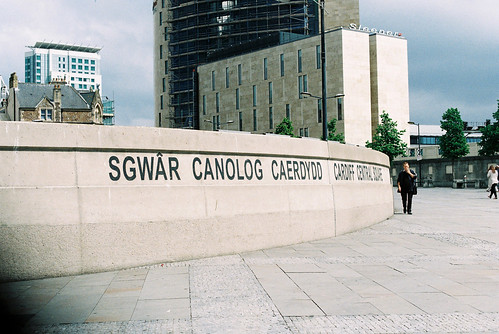
Fence

Please

Cardiff Central

Sgwar Canolog Caerdydd

Kate Gardner Blog

The problem with build-up

June 20, 2011March 11, 2012 2 Comments

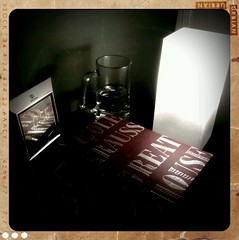
Great House
by Nicole Krauss

I loved Krauss’s two previous novels, Man Walks Into a Room and The History of Love. Add in that this book was shortlisted for this year’s Orange Prize and you have some pretty high hopes and expectations. Were they met? Kinda, ish, not really.

This was one of those books that I started…not struggling with, but I wasn’t particularly drawn into it. Krauss creates complex, believable characters with distinct voices and interesting histories and weaves a story that slowly links these disparate people together, but it took a while for me to be hooked. Once I was, though, I was thoroughly hooked and stayed up far too late three nights in a row to get to the end.

Just one more chapter

This isn’t exactly one story, it’s the tale of several lives that are linked by a desk. Yes – a desk. It isn’t entirely clear, when you meet some characters, how they are connected. The stories come together from various angles, usually made more obtuse by having the narrator of that section not really be the person that it’s about. So there’s Nadia, a writer in New York who spends one night with an enigmatic Chilean poet and then never sees him again, though he haunts her whole life. There’s Arthur in London, caring for his dying wife who is losing her memory. There’s Izzy, an American student at Oxford who falls in love with an Israeli who can never be as close to her as he is to his sister.

“Great House” is a term from Jewish history, originally a quote from the Book of Kings. Most of the characters in the novel are Jewish and the action keeps coming back to Jerusalem and also to the Second World War. The timeline is not always clear, though every so often a date is thrown in to the narrative. It takes a while to puzzle out the desk’s journey across the world and it doesn’t help that there are some red herrings along the way. But while figuring out how the characters are linked is a interesting exercise, you could just as easily read this as separate stories because each one is beautifully written and in most cases I was sorry to get to the end and have to switch to a new narrator again.

I do have a couple of gripes. The book takes in a lot of locations and I thought it telling that New York, which is the author’s home, is not really described and yet is completely believable as a location, whereas Oxford is painstakingly detailed in terms of streets walked down and pubs visited and yet did not feel at all real. Similarly Liverpool. And, frankly, Arthur’s leafy London suburb could have been anywhere, though he doesn’t leave home much so that might be unfair. Jerusalem was better-realised though it didn’t completely come to life for me.

My other gripe is that two sections are told by and about characters whose link to the rest is, if I’ve understood it right, so slight that it seems out of place to have given them so much of the book. It does seem like the link might get stronger after the book ends, but that’s just supposition on my part.

Overall, the strength of the characterisation overcomes everything else for me and I like the book but I didn’t love it like her previous novels.

First published in the USA in 2010 by W W Norton.
Paperback edition published 2011.

On a related note, this month’s Radio 4 Book Club was with Nicole Krauss. They were talking about The History of Love but a lot of her answers are also relevant to Great House, particularly one about developing characters’ voices.

Kate Gardner Reviews

Tasting notes: Red espresso at A Cappella

June 18, 2011 1 Comment

On a damp, grey Saturday morning, not yet fully awake, what could be better than a robust, hot drink at a friendly local cafe? So I was glad that I had arranged to drop by A Cappella today to taste its new Red range of rooibos tea espressos. On the other hand, I believe in giving completely honest reviews and I’d hate to have to say anything bad about a favourite local eatery. Was this a good plan?

The best pizza in Bristol

Joe the barista takes his job seriously. I remember him telling me once about the chemistry of hot milk and sugar while serving me a cappuccino. When he heard through the coffee-makers grapevine about rooibos espressos he quickly persuaded A Cappella owners Paul and Jennifer to give it a try.

Treating tea leaves like coffee is a challenge that takes some practice, and Joe has found that it’s so new an idea that other experimenters are reluctant to share their knowledge. So it’s a bit of a steep learning curve, but one he’s relishing. The idea comes from South Africa, the home of rooibos tea. Farmer Carl Pretorius wanted to wean himself off caffeine but still enjoy an espresso-like drink. Rooibos tea is naturally caffeine-free and Carl figured out a way to make espresso shots of it. He (cannily) patented his idea in 2005 and sold it to local coffee shops, who began to use the shots to make the “traditional” range of coffee drinks from the rooibos – cappuccinos, americanos, lattes and so on.

So it’s actually been around for a few years, but there are still very few places in the UK that sell the Red range. A few in London, one in Birmingham and now A Cappella in Bristol. But enough of all this background; how does it taste?

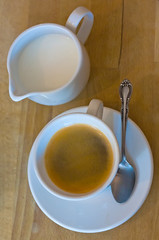
Red macchiatoRed americanoTaste

Not like coffee, so don’t order it expecting that. If you’re familiar with rooibos (or redbush) tea, that’s obviously the basis of the taste, but this isn’t like what you get from a Co-op teabag. We (Tim and I) tasted the cappuccino, americano and macchiato. The americano – without milk – was my favourite, without question. It has a robust, earthy taste, is easy to drink and very warming. The cappuccino has added honey and cinnamon, and I thought the rooibos taste got a little lost, though the milk was so beautifully creamy that it was still a tasty drink. It reminded me of a milky chai tea, though not that spicy. A definite bedtime drink. The macchiato again tasted a little weak on tea and strong on milk and that’s a shame because a macchiato really should have some kick to it. But that could probably be resolved with a bit more practice on Joe’s part.

The drinks look amazing, actually red, even the milky ones. I can definitely see myself ordering one of these again on a not-coffee day (i.e. any of the 6 days a week I don’t have coffee) although I can’t see this replacing coffee for me and I worry that the marketing is so coffee-centric, it may not be aimed at the right people. It’s a very different drink. Tasty in its own right, but I’m not convinced by the “coffee replacement” angle.

Red cappuccino

A Cappella, 184c Wells Road, Bristol, solicited this review via Twitter. Check them out for the best pizzas in Bristol!

All photos by talkie_tim.

Kate Gardner Blog

Don’t be put off by the title

June 15, 2011March 11, 2012 1 Comment

The Gospel According to Jesus Christ
by José Saramago
translated from Portuguese by Giovanni Pontiero

This month’s book club pick sounded a tad intimidating and I certainly would never have picked it up if not for the group. What I discovered was a complex, at times difficult, but also beautiful and funny book that I’m glad to have read.

Much could be made of the heretical aspects of this book. It was written by an atheist shortly after the publication of The Satanic Verses and definitely attracted the attention of the Church. But what struck me the most was that it seemed to be at least partly an attempt to answer some genuine questions – if Jesus experienced life as a real human man (whether or not he was the son of God) what would that life have been like? Saramago answers this in depth, from the landscape and food to the people, ways of speaking and acting, and the historical context – Jesus’s part of the world was under Roman occupation, which had its effect on everyday life. Saramago also explores how Jesus might have been treated when he started talking about his relationship with God, the reactions of those close to him and those of strangers.

Of course, it’s about more than that because it also takes some small but significant deviations from the accepted Biblical story. Mary and Joseph conceive Jesus in the usual way, with God only later claiming to have had some part in the union. God is indifferent toward his people but then decides he wants more followers so starts to pay attention and make demands of Jesus. Jesus and Mary Magdalene are lovers. Satan is a friendly, approachable, “human” character. And Jesus is perhaps a little too human even before Mary Magdalene comes along:

“…such is youth, selfish and thoughtless, and there is nothing to suggest that Jesus was any different from other boys his age.”

So yes, it’s certainly heretical. It suggests God only wants to expand his leadership, to have more followers, but is unhelpful in terms of how and tricks Jesus into accepting his fate. It also says that God and Satan are equal, or rather balance each other out. This is certainly not a cuddly, loving God.

The style is a little difficult to start with, written in Biblical rhetoric, sometimes reverent sometimes very not. It can be very detailed and descriptive, even beautiful (OT-like, perhaps), especially near the start. But in other places it is bareboned, more like reading the New Testament. There are no paragraph breaks (a Portuguese thing?) and speech is not marked out by speech marks. But I got used to those things quite quickly and found I was reading at a faster pace than I had expected considering how demanding the prose is in terms of references and allusions. There is a lot of pathos. These characters are so human, with hopes and fears and guilt and temptation and the little niggles of everyday life. It could have been a very serious book, so thank goodness for the wonderful sense of humour:

“…this revelation did not escape Mary despite the angel’s obscure speech, and, much surprised, she asked him, So Jesus is my son and the son of the Lord, Woman, what are you saying, show some respect for rank and precedence, what you must say is the son of the Lord and me, Of the Lord and you, No, of the Lord and you, You’re confusing me, just answer my question, is Jesus our son, You mean to say the Lord’s son because you only served to bear the child, So the Lord didn’t choose me, Don’t be absurd…”

Clearly a lot of research went into it. It directly references not only passages from the Bible but also other religious writings and historical/archaeological knowledge of what life would have been like in that time and place. To a certain extent it fills in the gaps left by the Biblical gospels, therefore there’s lots of detail about Mary and Joseph, and Jesus’ childhood, but it skips quite quickly through the evangelism and miracle-working of Jesus’s last few years.

I was never clear about who the narrator is. The title suggests that it’s Jesus but it doesn’t read like that, it reads like one of his followers. But no-one could know all of this except an omniscient narrator so is it God? Or Satan? Or Jesus but much later from his seat in Heaven talking about “Jesus” in third-person because he’s now Michael?

Whoever it is, the narrator sometimes interjects in a manner that drags you out of the beautifully and believably constructed world of 2000 years ago to the present day, whether by directly referencing something modern or by applying a modern perspective. For instance, the narrator is often at great pains to point out the misogyny of life back then.

Joseph takes centre stage for the first half or so of the book and is therefore fully fleshed out, despite his brief appearance and disappearance in the Bible. He is a good man who, in contrast with the thinking of the time, is tormented by guilt for his own personal wrongdoing, which lays the groundwork for the major difference between Judaism and Christianity, according to this text – that Jews say prayers and give thanks and make sacrifices as part of the collective guilt of mankind, wheras Christianity is about acknowledging and asking forgiveness for personal sins.

At book club we discussed how, because the reader already knows the story, or thinks they do, Saramago plays with this. There’s a sense when reading this book of “when’s it going to get to the part when xyz” and xyz either happens later than expected or in an underwhelming sort-of way or even doesn’t happen at all. But some scenes are taken almost word for word from scripture, cleverly woven in.

There was some symbolism that I noticed but didn’t get, and I suspect it would help to have some solid theological knowledge when reading this rather than just a semi-deliberately forgotten memory of Sunday School and acting out Bible stories for Girls Brigade. I did find myself looking up some passages because they either rang a bell or rang false and the result varied from discovering they were surprisingly similar to the Bible (e.g. the wedding at Cana) to being a combination of different gospels put together in a new way (Jesus’ birth) to being a twist or slightly skewed take on the Biblical telling (Judas betraying Jesus to the Romans). Sometimes the narrator gives us a clue as to how this “true” account might become altered, for instance when Jesus spends 40 days and 40 nights talking to God and Satan he is not in the desert, but almost immediately on his return his followers are talking about it as his time in the desert.

There is so much to say about this book (clearly), and it was definitely a good one to have a roundtable discussion of.

O Evangello segundo Jesus Cristo first published 1991 by Editorial Caminho, Lisbon.
This translation first published 1993 by Harcourt Brace.
José Saramago won the Nobel Prize in Literature 1998

Kate Gardner Reviews

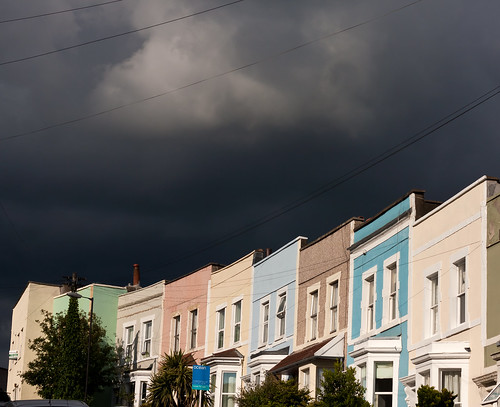
Ominous

June 13, 2011

Ominous

Kate Gardner Blog

Prepare for tears

June 10, 2011March 11, 2012 1 Comment

Red Dog
by Louis de Bernières

This is the sweetest most wonderful book I have read in some time. I think it’s sort-of aimed at children, at least I hope it is else I will have to have criticisms about some of the slightly condescending explanations and I don’t want to criticise such a lovely lovely book.

The best summary of this book is the one supplied by the author himself:

“In early 1998 I went to Perth in Western Australia in order to attend the literature festival, and part of the arrangement was that I should go to Karratha to do their first ever literary dinner. Karratha is a mining town a long way further north. The landscape is extraordinary, being composed of vast heaps of dark red earth and rock poking out of the never-ending bush. I imagine that Mars must have a similar feel to it. I went exploring and discovered the bronze statue to Red Dog outside the town of Dampier. I felt straight away that I had to find out more about this splendid dog. A few months later I returned to Western Australia and spent two glorious weeks driving around collecting Red Dog stories and visiting the places that he knew, writing up the text as I went along. I hope my cat never finds out that I have written a story to celebrate the life of a dog.”

Red Dog was a Red Cloud kelpie, which is an Australian breed of sheepdog, and lived in the 1970s in and around Dampier, at that time mostly a mining town. De Bernières has lightly fictionalised his account but based it on those stories he collected and it does read like a collected folklore, though there is nothing unbelievable or magical about it. Red Dog was simply a dog who refused to be tied to one owner but somehow became everyone’s dog. As dogs go he had some quirky habits and he wasn’t above stealing his dinner but he was affectionate and loyal to those he befriended and in return most everyone he met considered him a friend. People would take it in turn to de-flea him or take him to the vet for shots and he would sit by their sick children’s bedsides or guide caravan-dwellers to the toilet block at night.

This is such a simple story but de Bernières tells it beautifully, describing the landscape and the weather and using the local dialect just enough to give a real flavour of the time and place. The book is illustrated by Alan Baker with basic but effective line drawings in red and black and they add a fairy-tale quality to the experience.

The only negative, and I really hesitate to say it, is that de Bernières does over-explain some details. It adds to the condescension that at the back of the book there is a “Glossary of Australianisms” which I didn’t find at all necessary, seeing as the few words I didn’t know were made completely clear by context. But as I said above, if this is intended as a children’s book I can forgive all of that.

I really would recommend that everyone read this heartwarming book but doglovers beware, you will need to have tissues handy – it’s the life story of a dog, how do you think it’s going to end?

First published in Great Britain in 2001 by Secker & Warburg.

Kate Gardner Reviews

Flavour of the south

June 6, 2011March 11, 2012 4 Comments

The Romance Readers’ Book Club
by Julie L Cannon

I bought this book on my recent trip to the United States because it looked like both a fun, easy read and an authentic flavour of the southern US. It deals well with some big issues, though it doesn’t come to the conclusions that I would necessarily have hoped for or agreed with.

This book treads a fine line between sweet fluffy teen romance and deeper “issues”-ridden prose with some literary merit. For the most part it is well written and engaging but some of the exposition was clunky, especially at the start. That said, the characters are believable and the story had me interested enough that I read the whole book in one sitting.

The story is that of teenage Tammi, living a secluded life on a farm in Rigby, Georgia, with her strict religious grandparents, or rather step-grandparents, which adds an element of them doing her a favour that is the first clue that all is not actually sweetness and light. Tammi has a lot of chores to do, must dress in the shapeless clothes her grandmother picks out and isn’t allowed to listen to modern music (it’s the 1970s). Which doesn’t exactly make her Miss Popularity at school. Tammi’s only real friends are her Aunt Minna and Uncle Orr, who each live in their own house on the farm and provide an escape. Minna is colourful and eccentric, Orr is severely mentally disabled; both are devoted to young Tammi.

The story proper begins when Tammi gets hold of a stack of steamy romance novels that she knows her grandmother will disapprove of but is eager to read. She persuades a girl at school to join her Romance Readers Book Club and soon a small group is meeting secretly every four weeks to share the illicit thrill. Tammi’s burgeoning sexuality is being stifled by real life and she desperately needs this escape, but she is terrified that it is a huge sin and may be the cause of the endless drought that is threatening her family’s livelihood.

There’s quite a lot going on in Tammi’s world, with peripheral characters having their own dramas that sometimes crash into Tammi’s life. I did find it odd that, aside from sexual matters, Tammi seemed to lack curiosity – maybe she has been too well trained in politeness and not asking questions but she seemed happy to find out what’s going on in dribs and drabs. And even when it came to sex there was a for me heartbreaking scene where she realises she doesn’t actually know what all these metaphors and allusions about passionate encounters are actually getting at. She has no idea what comes after kissing.

I definitely felt a strong sense of place in this novel. Not that I’m familiar with Georgia, but it somehow persuaded me of its authenticity of accent, terminology and people. I also felt that Orr was depicted well; his friendship with Tammi was touching and his inability to cope with having steamy romance novels read aloud to him was surprisingly sad because it marked the first division between Tammi and her favourite companion.

It’s worth pointing out that this book comes from a part of the world where going to church is all-important. Cannon uses some clever misdirection on this topic but actually faith itself is never questioned, only how to interpret the word of God. Tammi’s revolt against the strictness of her grandmother is never very extreme and she repents every tiny thing. In a way, this is actually very clever, because if Tammi had broken away from everything dramatically this would be a story about how romance novels are a corrupting influence, whereas the point of course is that these novels are a natural and badly needed escape and the only harm done is the temporary confusion that Tammi would probably have gone through anyway.

There are a lot of short “excerpts” from the romance novels in question and they really did take me back to being a teenager myself, devouring these books before I had ever even kissed a boy, daydreaming obsessively of being a character in one of those exotic locales with the clichéd dark handsome man. By the time I got my first boyfriend I’d realised those books were trash and moved on but they played their part in my “coming of age” and I suspect I’m not alone in that.

One final point on this novel – the blurb on the back was particularly poor. I know a lot of people say to always ignore it anyway and if I’m buying a book because I like the author or read about it in a review I do ignore the cover as much as I can. But when I’m just browsing unknown books, that blurb is providing useful information. Theoretically. But in this case whoever wrote the blurb got the wrong end of the stick and almost certainly hadn’t read the manuscript. There are several factual errors and it misses out some of the more interesting, serious themes. That said, I’m still glad I picked it up.

First published 2008 by Plume, an imprint of the Penguin Group.

Kate Gardner Reviews

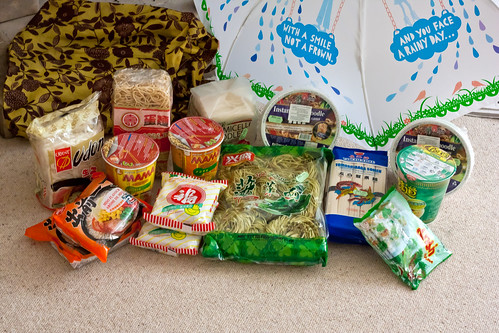
Noodled

June 4, 2011 4 Comments

Noodled

Tim asked me to drop by the Asian supermarket for some noodles. I may have gone a little overboard. So much choice!

Kate Gardner Blog

Posts pagination

1 … 108 109 110 … 124

Archives

RSS Nose in a book

  • Book review: Christopher and His Kind 1929–1939 by Christopher Isherwood
  • March 2026 reading round-up
  • Book review: We Have Always Lived in the Castle by Shirley Jackson

Me on the internets

  • @kate_in_a_book@mas.to (Mastodon)
  • Flickr/noseinabook
  • Instagram/kate_in_a_book
  • StoryGraph/kate_in_a_book

Categories

  • Blog
  • Reviews
  • Uncategorized
Proudly powered by WordPress | Theme: Dream by vsFish.