Nose in a book

Reviews and other ramblings

  • Home
  • Reviews archive
    • Book reviews
    • TV reviews
    • Theatre reviews
  • TBR
  • Challenges
    • The Classics Club
    • 2014 Popular-Science Reading Challenge
    • Cookery challenge
    • The Gilmore Girls Reading Challenge
    • 2013 TBR Pile Challenge
    • 2013 Translation Challenge
    • Crime and Punishment read-a-long
  • About
    • Cookie legal stuff
  • Home
  • Reviews archive
    • Book reviews
    • TV reviews
    • Theatre reviews
  • TBR
  • Challenges
    • The Classics Club
    • 2014 Popular-Science Reading Challenge
    • Cookery challenge
    • The Gilmore Girls Reading Challenge
    • 2013 TBR Pile Challenge
    • 2013 Translation Challenge
    • Crime and Punishment read-a-long
  • About
    • Cookie legal stuff

Something new every time

September 6, 2011

We like to go to the zoo. Specifically, Bristol Zoo, which just happens to be our local one. Handy that. It’s a particularly good one in terms of conservation and breeding programmes and all that. The enclosures are big enough and full of enough foliage and whatnot that the animals can pretty effectively hide from view, which some of them do more often than not (no aye ayes for us on the last 2 or 3 visits) but somehow we still managed to take almost 1000 photos there at the weekend. Yup. 1000. Of which I have so far identified about 20 good ones.

While we like to think we know our zoo pretty well and can find our way around and show visitors hidden treats, there is always something new to see/do/learn. This time we saw lion cubs, learned about gorillas and fed lorikeets. Which was all very cool.

The lorikeets know that visitors are bringing them food so they land all over you, eager to be closest when you reveal the pot of nectar. It’s a bizarre feeling, birds’ feet on your bare arm. The keeper shooed off the bird that landed on my Mum’s head. Sadly I didn’t get a photo of that because we foolishly all fed the birds at the same time. So my photos are of complete strangers feeding the lorikeets.

They are very pretty and reasonably gentle if slightly frantic birds. My best photos of the day were taken in the Bug House but I figured they might freak some of my readers out, seeing as it freaked me out a little editing them. Zooming in on a locust’s head to check if the eye or the mouth is in focus – it’s making the hairs rise on the back of my neck just thinking about it!

I’m gradually adding the selected photographic highlights to my Flickr photostream so if you’re interested and ready to be slightly unnerved by/speed quickly past the insect macros, take a peek.


Kate Gardner Blog

The fun of the fair

September 4, 2011March 11, 2012 2 Comments

Nights at the Circus
by Angela Carter

This is one of those modern classics that keeps popping up in discussions on Radio 4, with nothing but praise directed its way, so I thought it was about time I gave it a go.

It is a beautiful, crazy book. Right from the start, Carter keeps us guessing: is anyone telling the truth? Is this the part fantasy/fairy tale that it seems to be or is it a story about some rather clever, even fantastic, people in “real” life?

The story switches between three narrators, sometimes third person, sometimes first, but always appearing to be one of their perspectives. First there’s Jack Walser, an American investigative journalist who, at the start of the novel, is in London to interview a woman who he thinks must be pulling some kind of trick on the British public. That woman is our second narrator, Sophie Fevvers, a six foot plus blonde with wings – yes, wings – who takes advantage of this strange growth by performing as a trapeze artist. She gladly tells Walser her story, or a version of it, with help from her rather less welcoming foster mother Lizzie, who seems to have tricks up her sleeve, has a way with words that belies her coarse cockney accent and is our third narrator/perspective.

Walser quickly falls for Fevvers, as she prefers to be known, to the extent that he signs himself up to join the circus that she is about to go on tour with; and so begins a cacophony of adventure and misadventure.

The story is set in 1899 so the circus is that old-fashioned kind that combined freak show, performing animals, and heavy superstition and tradition. This sometimes got hard to stomach. I have in my time campaigned for circuses to be animal-free and, frankly, this novel offers strong evidence in that campaign’s favour. However, it’s all part of the surreal menagerie that now includes Fevvers – part woman, part swan. And the chimps are completely brilliant.

Carter toys with her readers throughout, mixing reality with lore and perception so that it is never clear what the characters believe to be true and what actually is true:

“[They] did not live alone. There was a bear, a black one, not yet a year old, still almost a cub. This bear was part pet, part familiar; he was both a real, furry and beloved bear and, at the same time, a transcendental kind of meta-bear, a minor deity and also a partial ancestor because the forest-dwellers extended considerable procreational generosity towards the other species of the woods and there were bears in plenty on the male side of the tribal line.”

For all its rollicking, good humoured, wonderfully written storytelling, it did take me a while to get through this book. Mostly I think that was the language. This isn’t simple, accessible language. This is complex, crafted, allusion-heavy prose, with borrowings from the folklore and mythology of several European countries. I thought it was magnificent, but there was no rushing through it.

I also – and I hate to admit that this made a difference – took a while to warm to any of the main characters. Fevvers and Lizzie deliberately keep themselves at a distance, though they can talk for hours on end (and do so), so you’re always aware that they’re holding something back, even without the big mystery of Fevvers’ wings. And Walser starts out as a pure journalist, not letting his own character or history get anywhere near the story that he is unravelling, so it is a long time before his personality begins to show through.

In all, this is a magical, funny, adventure-filled read encompassing all sorts of colourful outsiders – prostitutes, freaks, clowns, murderers and more besides. The story travels from London to Siberia and evocatively captures each location as well as the daily lives of its huge cast of characters. Carter created something extraordinary here and I will definitely have to read more of her work.

First published 1984.
Winner of the James Tait Black Memorial Prize.

Kate Gardner Reviews

Non-fiction in fiction’s guise

September 1, 2011March 11, 2012 1 Comment

War is Boring
story by David Axe, artwork by Matt Bors

I am starting to acquire a collection of this “graphic novel style journalism” and I’m really liking it thus far. If anyone has any recommendations for more titles, let me know!

That said, this is not my favourite of the bunch. It’s a slim volume by war correspondent Axe and flits quickly through Chad, Iraq, Lebanon, East Timor, Afghanistan and Somalia, with really only a few short scenes in each place. Which is the point of the book but still not what I was expecting. I suppose I was hoping for a little more background behind each war; in fact I say “more” but in some cases we learn no more than “it’s a war zone”.

But I’m being unfair. Axe’s actual journalism about all these places was published elsewhere. This is not that. This book is about the effect of war on him, on his way of seeing the world. Or perhaps it’s not about war itself but solely about him and the type of person he is. You see, from the start his maxim is “War is boring, peace is much worse” and despite coming perilously close to bullets, explosions, rockets and deadly knives, this view of things doesn’t change.

While he calls himself a war junkie, Axe doesn’t seem to get a thrill from war, it’s just that a direct attempt on his life is the only thing that makes him feel alive. I can’t really understand that but then I’ve never experienced it; I suspect my whole world view would change.

I do empathise with Axe’s aim, which is to bring world conflicts and the people affected by them to wider attention. He genuinely cares and is deeply upset by what he sees when he travels to these places. His website, warisboring.com is part webcomic, part blog from the warzones that he continues to travel to and, with all the space of the internet, it seems to get deeper into the minutiae of each conflict visited, or even just Axe’s experience of each. There are photographs of soldiers in action and straight journalistic accounts alongside the panels of the comic and this combination works better, for me, than the comic alone.

As with previous examples of this genre, the artwork is excellent – detailed and illuminating without showing a lot of graphic violence. And the depiction of Axe himself is self-deprecating and self-aware and more likeable than not. Maybe he has since struck a better balance in life, but the book ends with a frighteningly bleak statement about the awfulness of humanity and the senselessness of violence that made me want to tell him to go see some beautiful things in-between wars – but then, I’m an optimist.

First published August 2010 by Penguin Books.

Kate Gardner Reviews

Job done

August 29, 2011August 29, 2011 11 Comments

Last year we had builders in to do various jobs and for longer than I was entirely happy about our dining room looked like this:

The builders' ready room

At new year, with the builders finally gone and the room freshly plastered, we were ready to start redecorating. We picked out colours,

And it begins

braved putting up wallpaper,

Progress

(Tim worked speedy fast for me)

Fast work

and started constructing my library.

Shelves up

In fact, a few months back we were mostly done and I blogged about my almost-finished library here. However, there were a few bits and pieces still to do. Between my sister’s wedding, my lupus flares and us generally wanting to have a life outside of DIY, it’s taken us a while, but today I can finally declare the library finished! And isn’t it beautiful?

Set

Detail

Kate Gardner Blog

Another vague drifty one

August 28, 2011May 9, 2015

Saving Agnes
by Rachel Cusk

I picked this up while in the US on holiday. I had read and enjoyed Cusk’s second novel The Temporary, which it turns out has rather a lot in common with this title. Possibly too much.

Agnes Day (which is a great name for a heroine) is drifting. She doesn’t really care about her job, feels distant from her (somehow still active) love life and even her friends. She lives with two former schoolmates in a house that is on the brink of being condemned, thanks to a large crack in the wall. This crack acts as a literal (and slightly over-obvious) representation of Agnes’s inner life.

Agnes is one of those heroines who frets about everything, is convinced everyone else is normal while she is abnormal and reminisces fondly about her teenage years when she came close to suicide because at least she was more decisive back then. I did not warm to her. Which is perhaps odd because I’m an over-thinker myself, but I like to think I’m also practical and Agnes is certainly not that. She seems to expect some magical change to just happen to her life, rather than going out and making it happen. She’s also one of those annoying people who take up causes without really learning about them. Even when challenged about this she doesn’t recognise her own failure to engage. And she’s self-absorbed, taking some serious jolts to notice the people around her.

There is an art to creating such a vague, drifting character. For much of the novel Agnes talks about her current relationship and her previous one interchangeably, so that it can be unclear which one is the subject, though what does gradually becomes clear is that Agnes’s attitude to relationships is unorthodox.

Cusk is…wordy. Her prose is beautiful but obscured by long, convoluted sentences:

“Agnes lay in bed waiting for the telephone to ring, believing as she did that the former event would precipitate the latter. Her faith, though gritty, was, she knew, ill-founded, attempting as it did to harness the perversity of the universe and make consistency where there was essentially none. By taking upon herself the task of second-guessing ill-fortune, she was in fact violating the creed of her anti-faith, which, if its principles were to be understood, would presumably visit her only at her own inconvenience…” [This goes on for two full pages before we learn whether or not the phone rings.]

I remember liking The Temporary but with very similar reservations – it also is about a disaffected woman in her 20s drifting, hating London (there is no love for the setting here) and being generally self-absorbed. However, the writing is good and Agnes is completely realistic (lesser characters aren’t quite fully realised but this is actually a believable portrayal of Agnes’s picture of the world).

First published 1993 by Macmillan.
Winner of the Whitbread First Novel Award 1993.

Kate Gardner Reviews

Strangely weird or weirdly strange

August 24, 2011March 11, 2012

Blind Willow, Sleeping Woman
by Haruki Murakami
translated from Japanese by Philip Gabriel and Jay Rubin

This is another of those books that I kept in my work drawer for months on end to read in the occasional lunch break, meaning that by the time I came to the end of it I’d forgotten the first half. Thankfully it’s short stories, so that’s not a huge problem, but it is a drawback in writing this review.

This wasn’t my favourite Murakami to date. Though it’s not unusual for a Murakami story to be more of a character sketch with no clear storyline, several of these stories felt a bit…nothing. There were also some beautiful, wonderfully weird stories, to be clear.

The impression I got from the introduction was that this is a compilation of Murakami’s earliest published writing and certainly there is no overarching theme or even the same translator throughout. There is, however, a certain pattern to his work. He takes an ordinary Japanese person and explores an event or relationship of significance to their life. Occasionally a story tries to tell a whole lifetime but that felt too stretched. A number of times he introduces the story third-hand, as if this is about a friend of a friend, like that adds some kind of authenticity. I found this a little weak, detracting from the power that opening lines can have; should have. In one story he tries to explain himself:

“I think things took place pretty much as set out…though I might have forgotten some of the details, I distinctly recall the general tone. When you listen to somebody’s story and then try to reproduce it in writing, the tone’s the main thing. Get the tone right and you have a true story on your hands. Maybe some of the facts aren’t quite correct, but that doesn’t matter…Turn this around, and you could say there are stories that are factually accurate yet aren’t true at all.”

Which might make for an interesting essay but as an interjection in the middle of a story, for me it just drags me out of the story’s world, interrupts the imaginative process of reading.

But as I said, there were some good stories here and lots of good writing. Two stories centre around how a person’s name is their identity, which was interesting. In “Nausea 1979” a man gets a phonecall every evening where an anonymous voice just says his name then hangs up. This has such a profound effect on him, physically and emotionally, that he begins to wonder if he has a psychiatric illness, but the university hospital turns him away. The police also aren’t interested: “there are two kinds of crime the police won’t bother with: crank calls and stolen bicycles” (which certainly rings true to me). Throughout the story the main character is unnamed but the narrator is addressed as Mr Murakami.

In the second story about names, “The Shinagawa monkey”, a woman keeps forgetting her own name. She has no other memory trouble but the name thing becomes such a problem that even having a bracelet made with her name on it doesn’t resolve the problem and she turns to a councillor with unusual methods. This woman is named and we learn a lot about her life and her past as she struggles to understand what is happening.

The other theme that comes up time and again – throughout Murakami’s work, not just here – is music, specifically jazz. He often meditates on the pleasure of finding that rare vinyl recording of a certain combination of musicians, or the reasons why this performance of a certain song is better than that one. If a Murakami character is into music it is invariably jazz, as if there is no other kind.

This is not a wide study of Japanese society. The characters are middle class with good jobs (or savings to live off if they lose their job) or are students at university. When they marry, the women often stop working to keep house for their husbands. And I was a little disappointed that the one time there was a gay character, this was made a big fuss of.

Perhaps I would have enjoyed this more if my reading had been less disjointed. Or perhaps my reading would have been less disjointed if I’d been enjoying it more.

Most of these stories had been previously published in periodicals, including Harpers and McSweeney’s.
This collection first published 2006 by Harvill Secker.

Kate Gardner Reviews

Something missing

August 22, 2011March 11, 2012

Trance of Insignificance
by Jennifer Rainville

This book was sent to me by the author after a short e-mail exchange during which she intrigued me with her title and synopsis. It sounded like a smart, modern romance that would make an easy but satisfying summer read. It certainly had all the right components, but for me it didn’t quite hit the spot.

Rainville has created a main character with a lot in common with herself. Jules Duvil, like her creator, worked as a political aide in Washington and then as a TV journalist in New York City before becoming a media adviser and writing a novel, which is about to be released at the start of this book. This lends a weight of authority to the passages set in newsrooms and I was a little sorry that there wasn’t any detail about Jules’ time in Washington, because I’d have loved to learn more about that.

The book cuts back and forward in time, mostly to three periods: Jules’ problematic childhood on the rougher side of Boston; her relationship 10 years ago with local celebrity news anchor Jack who is a known womaniser and yet is jealous of Jules’ every move; and the present day, in which Jules is trying to make things work with the far more staid and predictable ad exec Noah, who comes from money and believes in doing things in a certain way. It is clear that neither man is good for Jules; both of them want to change her, but they also love her deeply.

For me, the novel started on a bit of a bum note. In an early chapter we hear about Jules’ first day as a lowly production assistant for a big New York news station and that day just happened to be 11 September 2001. It’s a bold decision to take and gives Rainville the chance to quickly explain a lot about how TV news works while relating it to a news story that we all remember vividly. However, she doesn’t write much about the effect of 9/11 outside the news room – the state the city was in, the change that was suddenly and irrevocably wrought. I know she is trying to make a point about news journalists being bloodthirsty enough to not think about the human side of tragedy, but surely that was too big and awful an event for that to be true? Maybe I’m wrong.

I didn’t warm to Jules. Though we gradually learn from the flashbacks why she is a little cold and label-obsessed, I was annoyed by the need to detail every one of Jules’ outfits, including accessories – all designer. I wasn’t convinced that a single woman living alone in New York and struggling to make it as a journalist would honestly be able to afford such extravagant outfits, not coming from a poor background. Maybe she earned a small fortune during her couple of years in Washington? But that seems unlikely. It’s more believable in the present-day sections, when she’s become a successful self-employed media adviser and it would have been interesting to see a contrast from perhaps her envy of other women’s clothing in 2001 to having a designer-filled wardrobe in 2011.

Jules’ rough upbringing wasn’t, sadly, entirely convincing. Rainville drops in a lot of family trauma and some scenes are frank and shocking, but they didn’t feel fully fleshed out. They were often very brief – just a page or two – and could have done with expanding, perhaps even softening with some warmer or even just mundane memories.

This is Rainville’s first novel and it’s self-published, neither of which is necessarily a bad thing, but in this case it shows. Though Rainville has some talent, she would have benefited enormously from a professional publishing house to give her some guidance and edit the text line by line. The copy editing is poor, though that may have particularly stood out for me because it’s how I make my living. But more than that, there are some clumsy lines, poor exposition and extraneous details that a professional would have helped Rainville to iron out.

I suppose I would have liked to see more descriptions of the city, rather than just name-dropping restaurants and bars; and more small, nuanced details that reveal something about a person rather than a personals-ad-style height, figure, hair and eye colour list. Rainville does know how to turn a phrase, and uses some great imagery, not to mention having a good ear for dialogue, but there’s too much clumsiness in-between to ignore. That said, I was involved enough in the story to read the book pretty quickly and care how things turned out. If Rainville works with a professional publisher for future novels, I do think it will be worth giving her another chance.

This is all, of course, just one person’s opinion, and I may have been negatively influenced by the grammatical errors. Other reviewers out there seem to have more positive views.

Published 2011 by Rainville Books.

Kate Gardner Reviews

Looking down

August 21, 2011

Abstract swans

Kate Gardner Blog

Voices

August 18, 2011September 12, 2011 4 Comments

The Help
by Kathryn Stockett

Audiobook narrated by Jenna Lamia, Bahni Turpin, Octavia Spencer and Cassandra Campbell

A few weeks ago the Guardian offered readers this audiobook as a free download via Audible. Well, I couldn’t say no to that, could I? This book was even on my wishlist. Perfect.

This is the first audiobook I’ve listened to in years and it’s a very different experience from reading, so I still can’t say for sure whether I would have enjoyed reading this book. Probably, but I can’t be certain. However, I loved the audiobook. It’s a gripping story, with lots of wonderful characters and the narrators did a fantastic job of bringing it to life. Really, this felt more like a radio play than a read, but it was more immersive and captivating than any radio play I can remember.

The story is narrated by three characters, plus there is one chapter told in third person, and those are the four voice actors. Each narrates their own chapters in full, putting on different voices for the different people they talk about, so you hear some characters voiced three or even four different ways. It sounds confusing but it isn’t really.

The story is set in Jackson, Mississippi in the early 1960s. White women throw themselves into the busy schedule of society events, setting up their unmarried friends with suitable partners and having babies, while their coloured maids raise those babies, clean their houses and cook their meals. No-one questions this state of things or tries to change it, even while the rest of the USA is discovering civil rights, but beneath the surface, tensions are high between the communities. Nasty things happen to anyone who steps out of line, and the line is narrow.

Narrator number one is Aibileen, maid to Elizabeth Leefolt, a vacuous woman whose eagerness to please centre of society and “League” president Hilly Holbrook makes her an increasingly difficult and even dangerous employer. Narrator number two is Minnie, another maid, who near the start of the book is fired by Hilly Holbrook on behalf of her aged mother and must find another job while Hilly is spreading lies all over town about her. Narrator number three is Eugenia “Skeeter” Phelan, an old schoolfriend of Elizabeth and Hilly and the only one to make it through college – the others left to get married. She is a slightly awkward woman, convinced by her mother’s constant sniping that she is too tall, too plain and too lacking in taste to ever attract a man. So instead she lives with her parents and sticks to her routine of League events and tennis at the country club, keen to be a part of it all.

At the start of the book Elizabeth and Skeeter seem quite similar – nice enough, thrown by Hilly’s nasty comments about black people but pretty clueless about the world really. But a combination of things make their paths diverge. Skeeter is intelligent while Elizabeth is dumb, but Elizabeth is a central member of society by being married and a mother, while Skeeter, by being single and resisting attempts to change that, is held at arms’ length from society. When Skeeter pitches article ideas to a New York publisher and touches on civil rights, she is only raising the topics she thinks the publisher wants to hear about. But then she starts to look around her and find out what is actually going on, and is shocked into taking sides.

The three narrators are warm, funny, wonderful characters – at least, once they get to have their own say they are. But there’s also a large cast of further characters running the whole gamut from scheming and vindictive, complacent and therefore complicit, genuinely good but afraid to stand out from the crowd, and many others inbetween. There’s a violent husband, a loving husband, an absent husband. There’s white outsiders besides Skeeter. All are fully fleshed out and real (though that may be due to good acting as much as good writing).

I thought I knew the facts about civil rights, about the divisions and the violence and the politics, but this book brought to life what it must have really been like, the genuine life-threatening danger of being different, just 50 years ago in a so-called civilised country. It’s terrifying but it’s also wonderful to see how brave people could be, had to be, in the face of awfulness. And yet, in spite of the huge, dark issues, this is a warm, uplifting book.

When I first downloaded the audiobook I didn’t know how I would find time to listen to over 17 hours of it. That’s a lot of time. But I downloaded the Audible app so I could listen on my phone and it has been my companion for two weeks – walking to work, doing housework, taking the train – all to the soundtrack of Mississippi accents drawing me into a world that I was genuinely sad to leave behind.

The film rights were snapped up pretty quickly and I believe The Help (film) has already been released in the US, while in the UK we have to wait until October. I’m intrigued but so much will have to be cut. Hmm.

Book first published 2009.

UPDATE: There has been some controversy surrounding this book and a great discussion has started over on Amy Reads and Wolfs Howl, who are also running a related reading project. Very illuminating.

Kate Gardner Reviews

Local bookshops: Foyles

August 15, 2011 3 Comments

Foyles Bristol

As bookshop chains go, Foyles retains the respect of booklovers by being a darn good bookshop. The Foyles in Bristol’s Quakers Friars was the first in the chain outside of London but I’m sure it won’t be the last.

I first came across Foyles when I was a magazine intern in London and I discovered this incredible series of talks run by Foyles. They have an author event almost every night. The only other bookshop I’ve known to equal it is Topping & Co in Bath.

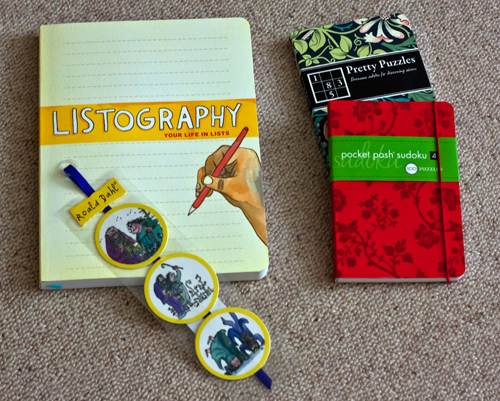
The new Bristol Foyles store feels spacious and yet full of books. There is a fair selection of related paraphernalia – notebooks, diaries, games, postcards – but these are so well chosen, not to mention well designed, that I’ll forgive them using up floorspace that could have gone to books.

Pretty things from Foyles

This is not the place to go to get the latest celebrity autobiography or 3 for 2 chicklit. The “top ten” and “staff picks” bookcases showcase mostly literary fiction, including a few titles I’d never heard of. There is a surprisingly large cookery section, including a display of the new Penguin Great Food series. In fact, there was a certain emphasis on this current trend for beautiful books, which I am all in favour of. I picked up a few pretty tidbits for forthcoming birthdays in addition to some books for me.

I’d still like to see more independent bookshops out there but I do think Foyles is a welcome addition to Bristol.

Foyles, 6 Quakers Friars, Cabot Circus, Bristol, BS1 3BU

Kate Gardner Blog

Posts pagination

1 … 105 106 107 … 124

Archives

RSS Nose in a book

  • Book review: Christopher and His Kind 1929–1939 by Christopher Isherwood
  • March 2026 reading round-up
  • Book review: We Have Always Lived in the Castle by Shirley Jackson

Me on the internets

  • @kate_in_a_book@mas.to (Mastodon)
  • Flickr/noseinabook
  • Instagram/kate_in_a_book
  • StoryGraph/kate_in_a_book

Categories

  • Blog
  • Reviews
  • Uncategorized
Proudly powered by WordPress | Theme: Dream by vsFish.