Nose in a book

Reviews and other ramblings

  • Home
  • Reviews archive
    • Book reviews
    • TV reviews
    • Theatre reviews
  • TBR
  • Challenges
    • The Classics Club
    • 2014 Popular-Science Reading Challenge
    • Cookery challenge
    • The Gilmore Girls Reading Challenge
    • 2013 TBR Pile Challenge
    • 2013 Translation Challenge
    • Crime and Punishment read-a-long
  • About
    • Cookie legal stuff
  • Home
  • Reviews archive
    • Book reviews
    • TV reviews
    • Theatre reviews
  • TBR
  • Challenges
    • The Classics Club
    • 2014 Popular-Science Reading Challenge
    • Cookery challenge
    • The Gilmore Girls Reading Challenge
    • 2013 TBR Pile Challenge
    • 2013 Translation Challenge
    • Crime and Punishment read-a-long
  • About
    • Cookie legal stuff

NaNoWriMo

December 1, 2011November 30, 2011 5 Comments

Writing a novel is hard. Really, really hard.

This is not the first time I’ve ever done creative writing. But historically I wrote when an idea struck, whatever time of day or night that might be, a fevered hour or two, then the moment was over. I have an awful lot of disconnected scenes scattered around in various notebooks (I like to write longhand to start with, ideally).

But this year, inspired by friends/very nice people on the internets, plus the vague sense of needing to write creatively (and not having done much of that in the past five years) I signed up to NaNoWriMo, which is essentially a challenge to write a novel in a month, or at least 50,000 words of a first draft of a novel.

I was surprised to find that at first it was relatively easy to fit in writing on work days. I created a slot for it in my daily routine. Weekends and other days off are determinedly unstructured, so that was harder. I like a good lie-in, not getting dressed until mid-afternoon, so it can be hard to make myself switch into work mode and get on with it.

I have to agree with this brilliant blog post that writers are hard to live with. To write, I need to shut everything out for hours on end. It’s not like reading a book where I can be interrupted for a conversation or an offer of/request for a cup of tea. And because I was fitting it around a full-time job and I have limited energy thanks to the delights of lupus I had to drop something so I dropped doing housework, which was delightful for Tim I’m sure (I should point out that Tim has been super-supportive, picking up the slack and encouraging me to write even when it meant we barely exchanged five words a day).

Unfortunately it was all too much and in week two I burned out. I’m not sure if it was a lupus flare or if I will never be able to do that much every day but I felt that zombie feeling come over me and knew I had to stop. So I stopped worrying about word counts and fitting everything else around NaNoWriMo, and just tried to do some writing when I could (not every day). Which means that I didn’t “win” – my final word count yesterday was 31,018 – but that’s 31,018 words of which some might even be reasonably not awful and an idea for a novel that might be an okay one. So for now I won’t just drop it because NaNoWriMo is over. And maybe next year I’ll do some planning before November and try to plan some time off work and make a bit more of NaNoWriMo. Either way, it feels good to be writing again, and that was really the point.
Kate Gardner Blog

Adaptation

November 27, 2011December 24, 2011

City of Glass: a graphic novel
by Paul Karasik and David Mazzucchelli
adapted from the novel by Paul Auster

This is a strange, complex story that I greatly enjoyed but I must admit that I could not stop wondering how it compared with the original novel. I’m still not quite sure what the purpose is of graphic novel adaptations.

It seems to be a story about identity. The main character, Daniel Quinn, is a New York writer who once had everything – wife, son, respected writing career – but then lost all three. Now he writes cheap detective fiction under the pseudonym William Wilson. One night he gets a phone call, a wrong number asking for Paul Auster, a detective. Quinn decides to say that’s him, and arranges a meeting for the next day. His client Peter Stillman is terrified that his father, also called Peter Stillman, is coming to kill him. Quinn agrees to take the case, but soon realises he knows very little about real detective work. At one point he visits Paul Auster, who the telephone call had been intended for, only to find that Auster too is a writer, not a detective.

It’s a curious mix of plot-driven gritty noir and complex literary psychological study. Nothing is certain. In fact one of the first lines in the book, written across three panes, is “Much later, he would conclude…that nothing was real…except chance.”

The story has a very strong sense of place. Quinn walks a lot around Manhattan and there are some beautiful panels showing his routes walked, or details of the city. There’s also a very strong sense of loneliness. Quinn is grieving, and partly agrees to take the case because he recognises in Stillman (the younger one) a fellow troubled soul.

The drawings cleverly and subtly show Quinn taking on characteristics of other characters in the story, making you question whether those other people are real at all. But plays on language, presumably central to the original novel, are also well conveyed. Some of the names seem carefully chosen: Stillman, Dark, Work. There are long forays into Don Quixote and Paradise Lost. There is a whole subplot about language acquisition.

The artists have done a good job with the long passages that follow convoluted thought processes or discuss literary works. They use very simple, often blocky, images to create dreamlike sequences reminiscent of a 1960s film. It’s all done very well and yet…I really love the language in this book, above all else, so won’t I get more from the full novel?

Only one way to find out.

First published in the US in 1994 by Avon Books. This edition published 2004 by Faber & Faber.

I won this book from Jenn of The Picky Girl in her Book Blogger Appreciation Week giveaway. Thank you Jenn!

Kate Gardner Reviews

The price of art

November 22, 2011November 22, 2011 12 Comments

The Split Worlds
Today we have something a little bit different. I am handing you over to talented local author Emma Newman, who will explain all.

—

This is the fourth in a year and a day of weekly short stories set in the Split Worlds. You can find links to all the other stories, and the new ones as they are released here.

The price of art


“Not one?”


“No.”


Clive sat heavily on the crate, feeling the cold air of his workshop for the first time that morning.


“I did warn you,” the sneer leaked into her voice. “There’s just no demand for big installations by unknown artists. It’s the recession.”


“Yeah,” Clive croaked. “The recession.”


“So you’ll have them picked up by the end of today?”


“Yeah,” Clive tried to sound convincing. He didn’t have the money to hire the specialist removal firm to get the pieces back to the workshop. He’d banked on at least one being sold to cover some of his costs. “See you later.”


He chucked the mobile onto the table, its landing cushioned by piles of unpaid bills. He’d pulled in every favour to make the exhibition happen, put every last pound into getting people through the door and it had come to less than nothing.


He tried to remind himself that he still had his health, and that he hadn’t been caught for stealing the lead off the local park’s bandstand roof when he couldn’t afford to buy new materials. A lack of illness and a non-existent criminal record were poor comfort faced with losing his workshop and tools. Was it time to get a boring job in a boring office with boring people?


A loud knock echoed through the workshop. He froze, wondering if it was the first bailiff. At the second knock, he stood slowly, keeping silent.


“Mr Pascoe?” It was a man. “Are you in there? I need to discuss your work.”


A ruse to make him come to the door?


“I saw the exhibition, I want to buy your installations.”


Clive tripped over a pizza box as he hurried to unlock the door. “Sorry,” he said, tucking his shirt in. “I was out the back. Come in, come in.”


The man was in his fifties, wearing a pinstripe suit and the air of authority. His eyes were the same colour of the copper sulphate crystals Clive had used in his first installation, his hair a greying blonde.


“Mr Pascoe?” At Clive’s nod he extended a hand. “I’m Mr Neugent.”


“Would you like a drink?”


The brilliant blue eyes scanned the lone crate, the instant coffee jar and pile of cups in the grimy sink. “No thank you, I don’t have a great deal of time. You’re a very talented artist Mr Pascoe.”


“Call me Clive, please. You went to the exhibition?”


“Yes. Twice. I wanted to be sure.”


“The gallery owner said there wasn’t any interest.”


Neugent smiled. “I have no interest in dealing with middle men. I know that gallery takes a steep commission. I would rather all of the money go to you. Do you have a problem with that?”


“Not at all,” Clive grinned. The snooty cow had only agreed to exhibit with a hefty commission rate after a lot of hassle. “Which one are you interested in?”


“All of them,” Neugent replied. “Here’s a cheque, I can have them picked up from the gallery, discreetly, if that’s convenient?”


Clive nodded, feeling the flush burning in his cheeks.


“I also have a proposition,” Neugent opened the briefcase. “I work for a company with offices and public buildings all over the world. Your work is exactly what I’ve been looking for. I want to commission you for ten more pieces, with a view to a long term contract should my employer like your work as much as I do. I took the liberty of preparing a contract.”


Clive took the stapled pages with a shaking hand. “Can I read this over?”


“Of course, take your time. Perhaps you’d prefer to have your solicitor look over it.”


“Thanks,” Clive reined in the urge to dance a jig.


“It’s a standard contract and we’ll provide access to any raw materials you require. One of our subsidiary companies deals in metal, we can get you whatever you need at a fraction of the cost you’ve been used to.”


“Great,” Clive tried not to grin too much.


“Here’s my card,” Neugent handed it over. “I look forward to hearing from you soon.”


Clive waited a few moments after he left, then whooped so loud it echoed around the workshop. When there was another knock on the door he thought it was Neugent again and opened it straight away. A woman smiled, dressed in an emerald green coat and looking like she’d stepped off a film set.


“Mr Pascoe?”


He took in the same green of her eyes, the rich brown of her hair and the perfection of her skin. She was almost too beautiful.


“My name is Amelia Rose. I wanted to talk to you about your art, may I come in?” He nodded dumbly again.


“Did you go to the exhibition?”


“Yes.”


“Did you like my work?”


“Can I be frank?”


“Of course,” he said, with the cockiness of a man who’d already sold it.


“You’re extraordinarily gifted,” she began, glancing around the workshop as she pulled off her gloves. “But you’re working with the wrong materials. Metal just isn’t right for you.”


His cheek twitched. “Someone’s just bought all of those pieces, and commissioned me for more.”


She glanced at the card and contract still held in his hands. “Oh, Mr Neugent has been here already I see. Promised you a long term contract and lucrative deal I suppose?” At his nod she smiled sadly. “He always makes an offer one can’t refuse. I hoped I’d be able to speak to you before he got his claws in, but I suppose it’s too late.”


She headed back towards the door, he stopped her. “What do you mean?”


“He’s only interested in money, not art. He has a gift for finding hungry artists and sucking them dry. By all means, take the money Mr Pascoe. In a few years you may be comfortably well off but you’ll be burned out and unable to create anything original ever again.”


“Really?”


“I’ve seen it happen before,” she said sadly. “But I know you need the money. Good luck.”


“Wait,” he stopped her with a gentle touch on her shoulder. “Which materials do you think I should work with?”


She looked up at him, straight into his eyes. “Wood, Mr Pascoe. Oak, willow, ash, your hands would craft them into something magnificent.”


“I don’t know anything about working with wood.”


“I had a teacher lined up for you, and a patronage agreement all worked out,” Amelia sighed, stroking the palm of her hand with the gloves. “But I should imagine that cheque is worth more to you. Unless…” she reached towards his face, touching his cheek lightly. Anyone else and he would have flinched away, but he found himself just staring back at her. “Unless, I can convince you to value your art more.”


“But I have debts.”


“I’ll pay them off. I’ll give you somewhere better to live and a comfortable salary. Nothing as ostentatious as Neugent offers, but I will ensure you reach your full artistic potential. Which is more important to you Mr Pascoe? Wealth, or art?”


He felt calm, blissful. He didn’t take his eyes off her as he tore the cheque and the contract in two.


“I’m so glad you made the right decision,” Amelia purred. “I promise you won’t regret it.”


—


Thanks for hosting Kate! I hope you enjoyed the story. If you would like to find out more about the Split Worlds project, it’s all here: www.splitworlds.com. If you would like to host a story over the coming year, either let me know in the comments or contact me through the Split Worlds site. Em x


Kate Gardner Blog

Apocalypse and trams

November 20, 2011

Future Bristol
edited by Colin Harvey

This collection of short stories was compiled by a local writer (who sadly died earlier this year) to showcase science-fiction writing from in or around Bristol, so all the authors either live here or nearby or have done at some point. Though the depictions of the future are very varied, there are some common themes that say something about both Bristol and the preoccupations of the present.

I must say that in general I was more impressed by the ideas in this volume than the writing. This is mostly a taste thing. I like to have good strong characters and will happily forego storyline if the characters are written well enough. This volume conformed to that common criticism of science fiction that character comes second fiddle to ideas. I don’t actually think that’s true of the very best science fiction, but it was certainly true here. If I haven’t got to know a character, how am I going to care when crazy future apocalyptic things start happening to them?

That said, I really liked all of the ideas in these stories. I preferred the subtler futures where the city has changed and future generations have slightly different words for places and landmarks, and only vague ideas of where a name like “the Circus” or “Canesh’m” has come from. Meaningless to an outsider of course but brilliant for anyone familiar with the city.

Futures varied but tended toward the pessimistic – manmade or environmental disasters, global warming, spiralling crime – and even the more positive ideas had negative aspects. There’s the hackers who use stolen nanotechnology for the common good, only the corporations are watching their every step. There’s the urban explorers who encounter aliens in Clifton Rocks Railway. There’s the flooded city where pirates are back in full force and the police must tread carefully (possibly my favourite visually, though obviously heavily reminiscent of The Drowned World).

I think my favourite story, or at least the one that I have kept thinking about the most, was the one written by Colin Harvey himself. It’s called “Thermoclines” and is about a future when humans have evolved into winged creatures because they cannot touch the ground for fear of “the grey”. From a small community in south Wales, young Garyn is a star hunter but is tested to the limit when a rare visit from outsiders takes him on the long journey to “Brisel”, or what’s left of it. I liked that this story doesn’t try to explain everything, its hints and suggestions raising more questions than answers. It’s also one of the better examples of characterisation in the collection.

This was an interesting project and as an adopted Bristolian I loved the insider’s views of the city (and indeed disliked the more touristy moments, lingering on Clifton and the suspension bridge). I loved that multiple authors mentioned bringing back trams to the city, or found uses for the derelict Parcelforce building next to Temple Meads railway station. This definitely answered my search for stories set in Bristol, but I’m not convinced I’ve found any great new voices here.

Published 2009 by Swimming Kangaroo Books.

Kate Gardner Reviews

C is for…?

November 17, 2011March 11, 2012 2 Comments

C
by Tom McCarthy

This is another book club read that I wouldn’t have picked up otherwise and I’m a little annoyed that in the end I missed the book club meeting about it due to illness, as I think I would have got a lot more from the book by discussing it. As it was, I must admit that it fell a little flat for me.

One of the many review quotes on the book’s cover calls it “admirable for an unashamed literary ambition” and, well, it certainly does scream its literariness but I’m not sure how admirable that is. Although the narration is third person, it follows quite closely the thought processes of its main character Serge, frequently combining stream of consciousness with mechanical or scientific detail in a manner that I found hard to follow and frankly dull. There were so many allusions to science, myth or literature that you could create a very long reading list to interpret the nuances of C.

The novel follows the story of Serge’s life, starting with his birth, and it’s a reasonably interesting life. Born in 1898 to a deaf mother and a father who is both an inventor and principal of a school for the deaf (in which sign language is banned), in the early section there is a certain amount of comedy, sadly lacking later on. Serge’s name itself is pronounced in the French manner by his mother (“sairj”, which he prefers) and the English way by his father (“surge”, like electricity, a running theme) who is a brusque, difficult but enthusiastic and highly animated man. Serge has an older sister, Sophie, who he is devoted to, though as they get older he worries that she is so much cleverer than he. She performs chemistry experiments from an early age, is generously indulged by her father and cannily uses her little brother without him realising he is being manipulated.

From well-to-do English countryside, the action moves to a spa town near Dresden, where Serge has been sent to be healed of a digestive disorder; then to the First World War, during which Serge serves as a frontline aeroplane radio operator; then to post-war London, where Serge half-heartedly studies architecture while becoming increasingly embroiled in drug culture and addiction; then finally to Egypt, where Serge is sent without him ever really being clear what he is supposed to be doing. They’re very different locations and situations but what ties it all together is radio and Serge’s obsession with it.

Serge’s father, at the start of the novel, is building one of the first wireless stations. It becomes the favourite hobby of teenage Serge to listen in on conversations in Morse code and this feeds directly into his wartime employment. Between injury, illness and drug-taking he is often delirious or otherwise in an altered state of mind and at those times his thought patterns become electricity- or Morse-like, rearranging the world he sees into waves and patterns.

Serge is a very believable, multi-faceted character, but he is a little cold for my liking, though there are reasons for him being that way. I thought the depiction of him as a soldier and just after the war was particularly well done, the stand out moment being when someone begins to sympathise with what he must have been through in the war and how hard that must have been and he replies, “But I liked the war.” It’s actually an ambiguous statement, because Serge spent much of the war and a lot of the time since so drug-addled he has no handle on reality, but he thinks he really means it.

It’s not a book to read if you’re easily annoyed by little rich boys getting out of scrapes through a combination of money and knowing the right people. Or indeed if you want to know exactly what is happening and have every question answered (there are a few recurring details that I expected to come to something but never did, plus there’s all the need for interpretation). But neither of those applies to me usually, so I can only conclude that it was the writing style itself that put me off. It was certainly at times beautiful and evocative, but far too often I found myself skimming long passages through boredom, and I definitely wasn’t engrossed.

First published in 2010 by Jonathan Cape. Paperback published 2011 by Vintage.
Shortlisted for the Man Booker Prize 2010.

Kate Gardner Reviews

BristolCon11: science

November 12, 2011 1 Comment

There were two panels at BristolCon based around “real” science: “When did science become the bad guy?” and “Sci-fi now”. Both were interesting discussions and shared a few panel members so I thought I’d write them up together.

(Apologies by the way, for the scatty and delayed nature of this post. I wrote it weeks ago and then NaNoWriMo started and I didn’t get round to tidying it up. And now I must get back to writing that novel…)

Tim Maughan kicked us off with the declaration that science is not considered uncool itself, but understanding it is. All these shiny new TV shows about science are pretty but have little or no depth, and certainly don’t teach anything new (though, as a counterpoint, he still rates Sky at Night). Eugene Byrne suggested that this dumbing down was part of a general increased shallowness of the media. In fact, he was quite positive, comparing the 1980s general fear of science to the current feeling that science is an important tool and the great enthusiasm for technology and gadgets. He also controversially put forward the idea that raised tuition fees will be good for science, because potential students will likely lean towards more practical subjects with firmer career prospects.

Simon Breeze made the suggestion that the Internet generation couldn’t build the Internet, which I have to say I disagree with. But I could see how someone might think that – as Jonathan Wright pointed out, technology has advanced so much so quickly that you can’t just learn how things work by taking them apart. Tim Maughan added the interesting point that state schools in the UK teach computing, including HTML and basic coding, but public schools don’t go near it, staying as always behind the times but also creating an odd reverse snobbery.

But what about the cool future science we all thought we’d have by now and don’t? This discussion kept coming back to the idea that technologies are developed when we need them. And of course some things turn out different from exactly what was envisaged. Paul McAuley thought teleportation might be useful, but suggested that the long queues for the booths might make it only fractionally quicker than flying. And drones barely feature in old science fiction yet are becoming scarily real (in military use). Tim Maughan pointed out that the car that drives itself is imminent and Eugene Byrne suggested that increased age and disability in western populations will accelerate technologies like robot cars. Dev Agarwal suggested that the same might be true of investment in cybernetics – e.g. for making people walk again.

The panel all agreed, in response to an audience question, that the future science fiction of 1984 is scarily close to coming true – and we’re all willingly helping it along. From Internet security measures that save our every search term and movement on the Web, to store cards that track our purchases, to CCTV, to social media where we announce our every action, we are creating the surveillance culture that Orwell envisaged, only we’ve forgotten to be horrified by the idea.

Thought-provoking stuff.

Kate Gardner Blog

Under the skin

November 6, 2011March 11, 2012 9 Comments

Norwegian Wood
by Haruki Murakami
translated by Jay Rubin

This is the book that turned Murakami from successful author to superstar and sent him running into hiding in the US. It’s certainly a more “straightforward”, accessible narrative than he is generally known for, but it is still undeniably, brilliantly him.

Toru tells us the story of his student days in Tokyo, from 1968 to 1970, and the friends and lovers who mattered to him and even changed him in those formative years. Against a backdrop of free love, student protests and Beatles songs, we learn how Toru’s best friend Kizuki killed himself when they were 17. A year later, completely by chance, Toru bumps into Naoko who had been Kizuki’s girlfriend since they were small children. Unsure of what to say to each other but united by their grief that holds them apart from the rest of the world, they start spending time together. Toru falls headlong in love with Naoko even while he knows she can never love him.

While Naoko’s difficulty in dealing with life gets worse and worse, Toru meets another woman, one who could not be more different. Where Naoko is delicate, feminine and non-communicative, Midori is a blaze of talkative modernity, with short hair and a tendency to get way-too-open about sex. She also has a boyfriend, albeit one Toru never meets, just as she never meets Naoko.

A large chunk of the start of this novel was a short story in Blind Willow, Sleeping Woman, which I read quite recently, and this threw me at first. The language is beautiful, the characters so very detailed and real, the setting vividly alive but as Naoko and Toru held themselves apart, so I found myself at arm’s length from the story – observing rather than drawn in. It was really only with the introduction of Midori that this book came to life for me. I really loved her character. She is no more “ordinary” or run-of-the-mill than Toru or Naoko, but she has a joy and spirit that uplifted the story, even when terrible things were happening.

While there’s no surrealism or magical story twists here, what there is plenty of is Murakami’s uncanny ability to get under the skin of people and everyday life. Even when nothing much is happening, I was thoroughly enjoying every word. A simple description of daily life in a student dorm could have me laughing out loud, a casual conversation over a noodle lunch have me grinning in recognition. But there is also a lot of pain – the ordinary pain of growing up and facing adulthood plus the added pain of death, loss, unrequited love, psychological trauma. It’s a beautiful and moving story.

First published as Noruwei no mori in 1987 by Kodansha Ltd, Tokyo.
This translation published 2000 by the Harvill Press.

Kate Gardner Reviews

The Split Worlds

November 1, 2011October 31, 2011 2 Comments

Today marks the start of a new project from local author Emma Newman – Split Worlds. For a year and a day, Em will be posting stories, games and puzzles in the urban fantasy setting of the Split Worlds.

I discovered Em on Twitter and managed to meet her in the real life last month at BristolCon, where we attended a reading of one of her short stories, from her collection From Dark Places. I’ve read two stories from the Split Worlds so far and really like the slightly sinister atmosphere.

Just sign up to receive the first short story and notifications of new content. Go, enjoy!

Kate Gardner Blog

Undercurrents

October 30, 2011July 21, 2015 2 Comments

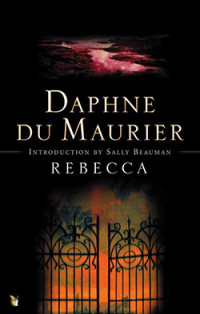
RebeccaRebecca
by Daphne du Maurier

This was, appropriately, the final book in the Discovering Daphne readalong run by Savidge Reads and Novel Insights. I have been looking forward for months to re-reading it, and was a little sad at how quickly I flew through its pages when this week finally came.

One of the reasons I highly rate this book (and no doubt many others would agree) is the great pleasure of re-reading it. This was my third reading (I think) and I loved looking out for the hints of what is to come, as well as spotting the red herrings that had misled me previous times. Knowing the story allowed me to linger over the detailed gothic descriptions when I was in the mood and skim over them when I wasn’t. Despite knowing the outcome, I was still excited by the build-up of tension and on tenterhooks in all the right places. I’m convinced – du Maurier was officially a wonderful writer.

Briefly, this is the story of the second Mrs Maxim de Winter. Or rather, she is the one who tells the story, but for a lot of the time it isn’t about her at all, it’s about Rebecca. Rebecca was Maxim’s first wife and died tragically young, just a year before he met and swiftly married his second wife.

Continue reading “Undercurrents”

Kate Gardner Reviews

BristolCon11: reviews

October 28, 2011November 12, 2011 2 Comments

The discussions and readings at BristolCon were all excellent but I did particularly enjoy “Reviews: threat or menace?”. As the panel pointed out, the title suggests that reviews can only be bad or more bad, yet most of them were both reviewers and authors and had some interesting thoughts on the process.

Juliet McKenna‘s view was that both reading and writing reviews can give you a snapshot of what’s new out there. She is reluctant to trash a book in a review, as she knows how much hard work has gone into writing it. Jonathan Wright agreed that it can be too easy to slag off a book, that that style of writing can come far too easily. Paul McAuley continued that as a bright young thing, the easiest way to get noticed is to be funny and slag off the books you review, but he is now ashamed of having written damaging reviews, and that’s a large part of the reason he stopped reviewing regularly.

Juliet McKenna raised the point I have heard elsewhere about the responsibility of the reviewer to present a fair cross-section of what’s out there. Stats collected by Vida and Strange Horizons show that in the UK and US approximately 44% of books are written by women, yet less than 30% of books reviewed are by women. Although this bias is unconscious, once known about it should be acknowledged.

A quick check of my reviews index shows that to date I have reviewed 46 books by women and 76 by men (i.e. not quite 38% women). And apparently male reviewers have a much stronger bias towards reading male writers. (Incidentally, my current TBR is much worse, standing at 26 books by women versus 77 by men. If ever I needed an excuse to buy more books!)

But in general the views about reviews and reviewing were positive, despite the event’s title.

Kate Gardner Blog

Posts pagination

1 … 102 103 104 … 124

Archives

RSS Nose in a book

  • Book review: Christopher and His Kind 1929–1939 by Christopher Isherwood
  • March 2026 reading round-up
  • Book review: We Have Always Lived in the Castle by Shirley Jackson

Me on the internets

  • @kate_in_a_book@mas.to (Mastodon)
  • Flickr/noseinabook
  • Instagram/kate_in_a_book
  • StoryGraph/kate_in_a_book

Categories

  • Blog
  • Reviews
  • Uncategorized
Proudly powered by WordPress | Theme: Dream by vsFish.