Nose in a book

Reviews and other ramblings

  • Home
  • Reviews archive
    • Book reviews
    • TV reviews
    • Theatre reviews
  • TBR
  • Challenges
    • The Classics Club
    • 2014 Popular-Science Reading Challenge
    • Cookery challenge
    • The Gilmore Girls Reading Challenge
    • 2013 TBR Pile Challenge
    • 2013 Translation Challenge
    • Crime and Punishment read-a-long
  • About
    • Cookie legal stuff
  • Home
  • Reviews archive
    • Book reviews
    • TV reviews
    • Theatre reviews
  • TBR
  • Challenges
    • The Classics Club
    • 2014 Popular-Science Reading Challenge
    • Cookery challenge
    • The Gilmore Girls Reading Challenge
    • 2013 TBR Pile Challenge
    • 2013 Translation Challenge
    • Crime and Punishment read-a-long
  • About
    • Cookie legal stuff

Category: Reviews

I like it here precisely because it is dull

July 4, 2014

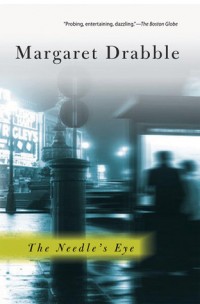
The Needle's Eye

The Needle’s Eye
by Margaret Drabble

I liked this book, but it was only while discussing it at book club that I realised how much. And why. It’s certainly the kind of book that benefits from taking time to think about it afterward.

Before this was suggested for book club I had never read any Margaret Drabble and had no particular plans to read her. I think I had an idea that her books would be old-fashioned and middle-of-the-road. Well this novel is certainly in many ways of its time, but that doesn’t stop it from being a great read with fascinating psychological complexity and insight.

The story – as far as there is one – begins at a London dinner party where unhappily married Simon Camish meets Rose Vassiliou, notorious for a scandal Simon can’t quite remember. They strike up an uneasy friendship, based on her asking Simon for gradually increasing favours, many of them related to the fact her ex-husband is sueing her for custody of their three children.

“He looked dreadful tonight, did Simon…She wondered whether he knew how miserable he looked – how offensively bored…it was pointless, worrying about someone like him, he would never tell anyone anything; in a way she rather resented the obduracy of his silence. Why didn’t he forget about it one day and just complain? Everyone else did.”

For a novel where not much happens, custody battle notwithstanding, there are lots of interesting ideas about feminism, class, charity, parenting; but most of all this novel has wonderfully complex characters. Simon and Rose in particular are sometimes lovable, sometimes dull, often frustrating and frequently contradictory – very realistically. However, this isn’t entirely a realistic novel. There’s a lot of symbolism and patterns of structure, not least references to the needle’s eye of the title.

“Impossible, really, to make one’s mind up about any other human person, even one’s own children, whose whole life had unrolled before one’s eyes, whose every influence was known: they were so contradictory, so inconstant, so confusing a mass of shifting characteristics.”

For instance, Simon and Rose’s lives have followed opposite trajectories. Born to a struggling working class family, Simon is the scholarship kid made good – he’s now a lawyer married to a rich woman, Julie – and he wears his background with both pride and shame. He wants to fit in and yet he despises the people he socialises with. Until Rose. She was born to a rich country estate and hit the headlines when she gave up her inheritance to marry a man her parents disapproved of, her ex-husband Christopher. She has a strong distaste for unearned money and so she chooses to live in a shabby working class neighbourhood, counting pennies to make ends meet and taking great pleasure in getting to know her genuinely poor neighbours. Yet it’s all a game of sorts, because she could easily earn more money, or get it from Christopher or her parents, and she has a second lump of inheritance due to her. Her poverty isn’t real and her reasons for choosing that life are stretched quite far from their honourable origin.

“I like it here precisely because it is dull…Oh, I know, people think it’s not real, they think it’s nonsense for me to sit here like I do, they think I’m playing. They tell me that everyone else round here is miserable…But they don’t know because they’ve never tried it.”

Simon shares this slightly misguided belief in sticking to a principle. His legal speciality is trade unions and he steadfastly stands by the union every time, even when he can clearly see that the union is in the wrong. Like Rose, he cannot separate the theoretical black-and-white ideal from the shades of grey of real life. Similarly, he cannot see the world through anyone else’s eyes, and finds it hard to marry his assumption that everyone is as bored and depressed as he is with the evidence before him. Rose seems to be the first person who manages to at least begin to break through to him just how different people can be.

“He sat there…and wondered whose fault it was, that he should spend so much time like this, with people he really deeply disliked, talking about things that bored him rigid. It would have been better if he could have felt that the others were enjoying themselves, but from every soul there seemed to him to rise a cry of mute anguish and lonely fear.”

Inevitably Simon begins to fall in love with Rose, but this isn’t the story of a torrid affair. If anything, it is the story of a friendship that awakens two people to some, though certainly not all, of their faults.

First published 1972 by Weidenfeld and Nicolson.

Source: Borrowed from the library.

See also: “10 reasons to love Margaret Drabble” on For Books’ Sake

Kate Gardner Reviews

I accepted loneliness as a way of life

June 23, 2014June 27, 2014

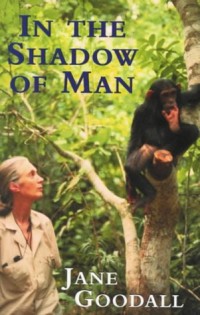
In the Shadow of Man

In the Shadow of Man
by Jane Goodall

While famous in the world of science, Goodall is perhaps lesser known to the rest of the world than her American counterpart Dian Fossey thanks to Hollywood and Sigourney Weaver, but Goodall is apparently the better writer. I certainly enjoyed this example of her writing, with a few reservations.

This is the second of Goodall’s 26 books to date, most of which are about the chimpanzee study that occupied her for more than 40 years. As such, it’s very much the beginning of her story and I’m aware, both from the 1988 foreword added to this book and further details online that much has changed since, both in Goodall’s life and in our knowledge of chimpanzees, and therefore my review is at a disadvantage by being based only on the book I have just read.

Goodall knew as a young woman that she wanted to study animals, so she worked hard as a waitress to raise the money when an opportunity arose for her to visit Kenya. In Africa she got herself a job so that she could stay until she had wrangled herself an invite to meet the great naturalist Louis Leakey. He saw her passion and gave her the job of studying chimpanzees at Gombe Stream in Tanzania. He told her from the start it was a solitary and long-term project – a previous study of two months had been woefully inadequate – and Goodall gamely rose to the challenge.

“I accepted loneliness as a way of life…I became immensely aware of trees; just to feel the roughness of a gnarled trunk or the cold smoothness of a young bark with my hand filled me with a strange knowledge of the roots under the ground and the pulsing sap within…I loved to sit in a forest when it was raining, and to hear the pattering of the drops on the leaves and feel utterly enclosed in a dim twilight world of greens and browns and dampness.”

This is a memoir as well as a scientific book, but most of all it is the story of the specific group of chimps that Goodall got to know over many years (this book covers the first decade). You can watch her early progress as a scientist, as the first part of the book describes her gradually learning to do the job through trial and error, while the latter half is effectively her actual study results. These chapters are split fairly scientifically into subjects such as hierarchy, feeding, parenthood and death, but Goodall always uses specific examples to illustrate her general observations. She is a storyteller and she has a fascinating, sometimes moving story to tell. I even shed tears at one point.

The book is a little dated, in multiple ways. Goodall’s tone is often preachy when it comes to human behaviour, sometimes to a cringeworthy degree. Though tied into this are the clear beginnings of her activism in animal protection, which obviously I am wholeheartedly behind. The fact that she so often compares human behaviour with that of the chimps feels old-fashioned and unnecessary (but admittedly, that is the entire basis of the book’s title). But most of all the scientific study itself feels dated. Then again, even within the first 10 years Goodall learned from her early mistakes – for instance, their initially high level of artificial feeding of the chimps was heavily cut back over time.

“Would Mike have become the top-ranking male if my kerosene cans and I had not invaded the Gombe Stream? We shall never know, but I suspect he would have in the end. Mike has a strong ‘desire’ for dominance, a characteristic very marked in some individuals and almost entirely lacking in others.”

I know that some people have accused Goodall of anthropomorphism because she named the chimps (and some of the local baboon population) that she studied, but I disagree with that criticism. Naming an animal is not the same as describing it in human terms, and the latter is something that Goodall never does; in fact, she is careful to specify that is not what she means when she describes something that could be construed as close to a human response. She was the first to observe many key aspects of chimp behaviour, including tool-making and meat-eating. I really felt I learned a lot about chimpanzees from this book and would be interested to find out how much more we know now, after more than 50 years of close study, in Tanzania and, later, elsewhere. (The Gombe Stream base started taking on students quite early on in Goodall’s career and is still going now.)

“I cannot conceive of chimpanzees developing emotions, one for the other, comparable in any way to the tenderness, the protectiveness, tolerance and spiritual exhilaration that are the hallmarks of human love in its deepest sense. Chimpanzees usually show a lack of consideration…which in some ways may represent the deepest gulf between them and us.”

For all its 1970s moralising, this book is never prudish about the facts of life. Goodall describes simply and factually everything about the chimps, including their sex lives, their toilet habits and how they deal with death. She maintains the same matter-of-fact tone about her own life, which is slightly disconcerting when she is telling the story of her romance with and marriage to Hugo van Lawick, a National Geographic photographer who was selected to go to Gombe Stream by Louis Leakey, who had a hunch that Hugo and Jane would hit it off. Hugo managed to get his assignment in Tanzania extended and started helping out with the chimp study so that soon he and Jane were working closely together, which they continued to do throughout their marriage. There are many of Hugo’s photos in the book, a nice touch that helps bring the story to life.

I think now I really should read books by Louis Leakey’s other famous protégées, Dian Fossey and Biruté Galdikas, though I might need to take a break in-between so I don’t overload on great apes!

Published 1971 by Houghton Mifflin/Collins.

Source: Borrowed from a friend.

Challenges: This counts toward the 2014 Popular-Science Reading Challenge.

Kate Gardner Reviews

Early summer reads in brief

June 19, 2014June 23, 2014 2 Comments

As you might gather from the sparcity of this blog this month, I’ve been busy. I’ve still been reading, but I’m very very behind on writing reviews, so here’s a few shorter thoughts on recent reads.

captain america

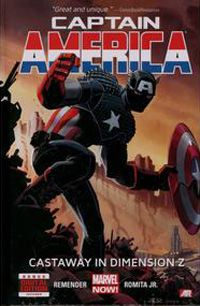
Captain America: Castaway in Dimension Z,
books 1 and 2
by Rick Remender and John Romita Jr

This relatively short storyline is a great example of how comics – superhero comics, at that – can be a really good medium through which to explore unusual or difficult ideas. Cap is doing his thing for the Avengers when he is kidnapped by the evil Dr Zola and taken to Dimension Z, and while he soon escapes his captors it seems that Dimension Z will not give him up so easily. Over time he gets caught up in the ongoing war between Zola’s bioengineered army and the phrox, who look monstrous but are willing to give Cap a home. Which all sounds a bit robots fight monsters grr argh, but while this book is distinctly masculine, it’s also very thoughtful. In fact, my main reservation was that Cap was perhaps too brooding and thoughtful. By far the majority of the text is his thoughts and for several pages I wondered whether he was going to speak at all. But overall I enjoyed it and the take on questions surrounding, among other things, war, parenthood, love, loyalty and belonging.

“Adrenaline surging—enough to jolt a dead man to a waltz. Need the help—so long as I don’t pass out. Pain—the shattered left hand screaming at me—it has no business maintaining a grip on a B-52 in a dead drop. Thank the adrenaline…His howl—agony…a reminder of what happens to a million people if you fail—millions of screams.”

Published 2013 by Marvel.

Source: Borrowed from Tim, who bought them at Excelsior! comic shop, Bristol.


Tales from the Secret Annexe
by Anne Frank
translated from Dutch by Susan Massotty

It pains me, after rediscovering the talent of Anne Frank earlier this year, to conclude that this collection of her essays and short stories is so far below the standard of her diary that it should probably never have been published. There are signs of her writing ability, certainly, and I don’t doubt that if she had lived she would have produced a collection after the war that would have shone with greatness. But this isn’t it; these are the writings of a child and it shows. Even her moving essays about hope and charity suffer from youthful naivety. The first part of the collection is especially odd, as it is a series of alternative accounts of events that are also included in Anne’s diary – essentially discarded early drafts. The book isn’t entirely without merit: it’s perfectly readable, provides a little extra depth to the picture of Anne for anyone who has read her diary, and the foreword is actually the best summary I have read of the Frank family’s war-time experience.

“Everyone is born equal; we all come into the world helpless and innocent. We all breathe the same air…Riches, power and fame last for only a few short years. Why do we cling so desperately to these fleeting things? Why can’t those who have more than enough for their own needs give the rest to their fellow human beings?”

Verhaaltjes, en gebeurtenissen uit het Achterhuis published 1982 by Bert Bakker.
This edition published 2010 by Halban.

Source: I bought it at Anne Frank House, Amsterdam.


Sex Criminals volume 1: One Weird Trick
by Matt Fraction and Chip Zdarsky

It really tells how much I enjoyed the first volume of Hawkeye by Matt Fraction that I was eager to check out his other current project despite a title that didn’t seem entirely aimed at me. However, it turns out that this is another fun, well written and stylishly presented series. The premise is that librarian Suzie stops time whenever she has an orgasm, an ability she discovered in her teens and has quietly enjoyed since, while getting on with her otherwise normal life. Until she meets Jon, who not only shares her ability, but has ideas about what they could do with it. Her library is closing due to lack of money, they can stop time – it seems like robbing the bank will be an easy solution. But when is life ever easy? Although this comic is undeniably explicit and R-rated, it’s actually much less explicit than some Alan Moore stuff I’ve read and, importantly, far more honest about sex. As Suzie and Jon get to know each other we learn about their teen years, discovering masturbation and other sexual acts, which is a subject that, while not quite taboo, is usually dealt with extremely lightly. This comic combines a good level of honesty and humour with a bit of action adventure thrown in.

Published 2014 by Image Comics.

Source: Borrowed from Tim, who bought it from comiXology.

Kate Gardner Reviews

London Road: a Musical

June 11, 2014

Bristol Old Vic Studio, 11 June
Bristol Old Vic Theatre School

Bristol Old Vic Theatre School
(Copyright: Graham Burke)

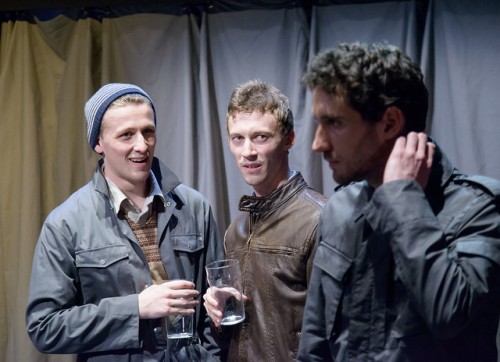
Describing this production too briefly would probably put off most people. It’s a musical based on the real-life murders of five prostitutes in the London Road area of Ipswich in 2006 – that’s fine, if a bit dark. But it’s also verbatim theatre – all the words are taken from interviews that writer Alecky Blythe conducted with residents of London Road and are performed as precise copies of the original voices – the intonation, pauses, repetitions, accents, ums and ahs are all learned by the actors. And then a level of stylisation is added in the form of songs and song-like sections that perhaps most closely resemble poetry.

All of which could have added up to something unwatchable in the wrong hands. But this is more than just watchable, it’s actually pretty good, though the verbatim dialogue does take some getting used to. Key to this is the excellent script. Blythe took what were presumably many many hours of many interviews and cut together a story of a community both haunted and hopeful, with plenty of those small humorous moments that real life serves up. But a good script is nothing without a good cast, and here Bristol Old Vic Theatre School really delivers.

Bristol Old Vic Theatre School
(Copyright: Graham Burke)

Once again the Studio Theatre was used to good effect, with the stage area and audience chairs arranged at the start as if for something like a town hall meeting. The cast milled about a tea trolley making cups of instant coffee and settled around a cheap folding table and a noticeboard covered with flyers. As the live orchestra on the balcony started up and hush fell over the small but eclectic audience, we learned that this was a Neighbourhood Watch meeting, that the London Road residents want to wrestle something good out of the horror they have lived through.

The cast all play multiple roles, fleshing out the story to include visiting journalists, police, prostitutes and other townsfolk, but they have clear principal characters who make up the Neighbourhood Watch committee – concerned citizens who obviously had plenty to say to Blythe and were trying to be positive for the future. This positive spin shines through the story, though it’s hard not to wonder what the tone might have been if a different set of people had opened up to Blythe.

With so many changes in character with just a subtle adjustment of costume or props, it’s perhaps little wonder that there was an occasional slip into comic overacting. And I couldn’t help but be irritated to spot that the first photographer depicted carried both a Canon camera and a Nikon, which is really not realistic. But that’s a pernickity detail that my being a bit of a photography geek taught me! More importantly, the “real words” added a certain something to the show – it felt more realistic than the average scripted drama despite all the repetition and singing.

Bristol Old Vic Theatre School
(Copyright: Graham Burke)

Though it is very much an ensemble cast, I’d like to give special mention to Bethan Nash who was excellent both in her main role as Julie, organiser of the local “In bloom” gardening competition, but even more excellent in the short scene of an interview with three prostitutes, which ended with Nash appearing near tears despite having said very little. That scene was exceptional and I don’t wonder that it is the one section of Blythe’s original recording that was selected to be played toward the end of the show.

For all my praise, this is an odd show that probably won’t be to everyone’s taste, but if you’re willing or even eager to experience something a bit different, I would encourage you to try it.

Disclaimer: Tickets were kindly supplied to me by the theatre in return for an honest review.

Kate Gardner Reviews

Scratch a geologist and, under their skin, you’ll find a romantic

June 2, 2014

Snowball Earth

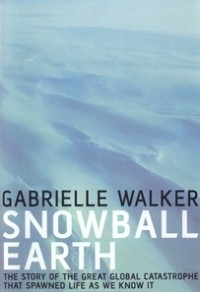
Snowball Earth: the Story of the Great Global Catastrophe That Spawned Life as we Know it
by Gabrielle Walker

I picked up this book because Walker came highly recommended, not because of the subject matter. In fact, the one aspect of the book I had been interested in (the biology angle) was squeezed largely into one chapter. It turns out that this is a book about geology, which I have very little knowledge of or interest in, yet I found it hugely readable and genuinely enjoyable.

I will attempt to explain the premise briefly. The Earth is about 4.5 billion years old. The first lifeforms – single-celled slime, often called the “primordial ooze” – emerged about 3.7 billion years ago. The first multi-cellular creatures – the ancestors that led to complex beings such as us humans – didn’t show up until 600 million years ago. Scientists had long been puzzled as why it took so long for evolution to really get started and whether there had been some kind of trigger. In the late 20th century geologists finally found what looks like the answer – the Snowball Earth.

“Stretch your arms out wide to encompass all the time on Earth. Let’s say that time runs from left to right, so Earth was born at the tip of the middle finger on your left hand. Slime arose just before your left elbow and ruled for the remaining length of your left arm, across to the right, past your right shoulder, your right elbow, on down your forearm, and eventually ceded somewhere around your right wrist. For sheer Earth-gripping longevity nothing else comes close. The dinosaurs reigned for barely a finger’s length. And a judicious swipe of a nail file on the middle finger of your right hand would wipe out the whole of human history.”

But what is the Snowball Earth? The idea is that sometime around 650 million years ago the Earth froze completely over, even at the equator, for a few million years. There’s a lot of geological evidence pointing to this having happened, possibly multiple times in quick (geologically speaking) succession, and it is the theory that best answers a lot of questions raised by odd rock formations and other geological anomalies. However, it’s also a controversial idea that has taken a lot of time and accumulated evidence to reach the state of semi-approval it currently has.

It really is to Walker’s credit that she has made a book about looking at rocks so very appealing to me. I think this is partly because she puts the emphasis firmly on the people and personalities involved. This book is as much about Paul Hoffman, a professor of geology at Harvard, as it is about anything else. Walker depicts him as quite the character, difficult and brilliant, with long-standing rivalries and a long string of we-used-to-be-friends, but her picture is still a warm one.

“There’s something about holding a geological hammer that makes you want to hit rocks. Weigh one in your hand, and you’ll find yourself itching to whack something with it. Still, to carve a hand sample into just the right shape for your pocket requires considerable skill. Paul is very, very good at it. If his geology career went awry, he could make a living as an ornamental rock chipper.”

The way Walker describes the piecing together of the Snowball Earth theory is very enlightening as regards the scientific process, elucidating where ideas come from and how they develop, sometimes painfully slowly. She lets the story unfold as it really did – in fits and starts – with only the occasional backpedal to clarify. This can be frustrating at times when suddenly a new character comes into play and has to be introduced but it also cannily introduces suspense: How is this new person connected to everything else? And how will they affect Paul’s story?

“Relationships among geologists are intense. By its nature, geology involves travelling with your colleagues to remote places…living on top of one another and away from other people for weeks on end…Their personalities become magnified. They bond or they break.”

Walker’s explanations of the actual science are largely excellent, though she does occasionally simplify a little too far – who doesn’t know at the basic level what DNA is? But I came away from this book really feeling that I understood it all and curious about what further developments have been made in this area since the book was published 11 years ago.

There are some beautiful descriptions both of the remote locations the geologists travel to to find the right rock formations and of geology itself. Walker paints a romantic view of geology, showing love for the subject and affection for all the people involved in the tale. Perhaps it’s this warmth that drew me in. I’m certainly intrigued to read more of her works and see if she can make other unlikely subjects come alive for me in the same way.

“Scratch a geologist and, under their skin, almost invariably, you’ll find a romantic. They will often be gruff about the landscape they work in. They are usually matter of fact about the rocks and how they interconnect. But try asking why they’ve chosen to spend their lives working on this particular place or on that particular terrain, and that’s when the stories start to slip out.”

Published 2003 by Bloomsbury.

Source: Borrowed from the library.

Challenges: This counts towards the 2014 Popular Science Reading Challenge.

Kate Gardner Reviews

Memory is the seamstress, and a capricious one at that

May 29, 2014 2 Comments

Orlando

Orlando
by Virginia Woolf

This is an odd book. Having read some Woolf before and knowing roughly what the storyline was I thought I knew what to expect, but it wasn’t really what I got. I ended up greatly enjoying it but though I found it clever and witty from the start, it took me a while – more than half the book – to actually like it.

How to explain the story? Orlando is born the son and heir to an aristocratic English family and becomes beloved courtier to Queen Elizabeth I and then King James I until his heart is broken by a Russian beauty, after which he sulks his way through the civil war and Restoration and then travels to Turkey to be the British Ambassador there to King Charles II, is made a duke, then falls asleep for a week and wakes up a woman, upon which she continues to have adventures up until the present day (or rather the present when the novel was written, back in 1928).

Notice the hinky timeline there? Orlando’s ability to live through centuries with minimal ageing (the narrative clearly states Orlando is 30 when he turns into a she about a third of the way through the novel, despite about a century having passed since the book’s opening scene, in which a 16-year-old Orlando alternates swordplay with writing poetry) isn’t directly addressed until quite late on, and it took me a little while to notice the historical clues to this fantastical thread. The switch in Orlando’s gender, on the other hand, is very directly dealt with, with comments on Orlando’s gender from page one.

“Orlando stared; trembled; turned hot; turned cold; longed to hurl himself through the summer air; to crush acorns beneath his feet…Whom had he loved, what had he loved, he asked himself in a tumult of emotion, until now?…Love had meant to him nothing but sawdust and cinders…as he looked the thickness of his blood melted; the ice turned to wine in his veins…he dived in deep water; he saw the flower of danger growing in a crevice…”

I can see how many an essay could be based on this book, there are so many interesting themes and details, from gender identity and sexuality, to Orlando’s attempts to be a patron of poets and a poet him/herself, to Woolf’s view of the changes in society over the centuries covered, and so much more besides. (It’s also apparently a fictionalised biography of Vita Sackville-West, with whom Woolf had an affair and to whom the novel is dedicated, but I don’t know enough about the real-life history to have spotted this within the text myself.)

What struck me most was the tone of the book. It’s very satirical, almost brashly so, and this I felt kept me at a distance from the story, which was in stark contrast to my experience of Woolf’s other works. This meant I never got a handle on Orlando as a person but I did (eventually) grow to love the style and rhythm of the story.

“Once the disease of reading has laid hold upon the system it weakens it so that it falls easy prey to that other scourge which dwells in the inkpot and festers in the quill. The wretch takes to writing. And while this is bad enough in a poor man…the plight of a rich man, who has houses and cattle, maid-servants, asses and linen, and yet writes books, is pitiable in the extreme.”

There’s certainly no shortage of great lines. I had to stop using sticky notes to mark great quotes and start using a pencil, because there were so many but also because I found myself wanting to add little comments. I just wish I’d found a harder pencil as I’m having to squint a bit to read my faint scribbles!

While the genres the book satirises – picaresque adventure, historical biography, overblown romance – are as old as the novel, and while this is not written in Woolf’s familiar Modernist style, there are nevertheless modern touches. Woolf breaks the fourth wall by not only speaking direct to the reader and discussing the art of writing biography but even referencing specific page numbers (which are presumably carefully changed in every new edition) in a non-fiction fashion. And though for the most part the style is straight-faced biography, occasionally it turns abstract, nonlinear, in sections that are not exactly stream of consciousness but certainly owe their origin to Woolf’s mastery of that mode. Through Orlando’s own attempts to become a writer, Woolf pulls apart the literary style of every age since the Elizabethan but also mocks the literary critics of every age for preferring anything old over anything new.

“Memory is the seamstress, and a capricious one at that. Memory runs her needle in and out, up and down, hither and thither. We know not what comes next, or what follows after. Thus, the most ordinary movement in the world, such as sitting down at a table and pulling the inkstand towards one, may agitate a thousand odd, disconnected fragments, now bright, now dim, hanging and bobbing and dipping and flaunting, like the underlinen of a family of fourteen on a line in a gale of wind.”

I think I liked the last part of the book best because it became more self-aware, discussing Orlando’s reactions to the changing times rather than time just passing unnoticed as it seemed to in the first part of the book. The satire gets particularly savage in the 19th century, perhaps exposing Woolf’s own prejudices, but this results in some of the book’s most delicious lines.

“Thus the British Empire came into existence; and thus – for there is no stopping damp; it gets into the inkpot as it gets into the woodwork – sentences swelled, adjectives multiplied, lyrics became epics, and little trifles that had been essays a column long were now encyclopaedias in ten or twenty volumes.”

All of which did appeal to me, but I was still left wishing this had been more like Woolf’s other works. Perhaps (and I seem to find myself saying/writing this far too often) this is another book I need to re-read to fully appreciate. I definitely think I would get more from studying it – from having someone draw out the little details and historical background that I know I missed. Maybe I’ll search out a study guide before I pick it up again!

First published 1928 by the Hogarth Press.

Source: I bought this as part of a set of Penguin Red Classics several years ago, I think from a catalogue so probably the Book People?

Kate Gardner Reviews

We love breasts, yet we can’t quite take them seriously

May 22, 2014 2 Comments

Breasts

Breasts: a Natural and Unnatural History
by Florence Williams

Continuing with the popular-science self-education, I picked up this book because descriptions made Williams sound a lot like Mary Roach, whose book I enjoyed. And this was much in the same vein, even with some of the same reservations.

It’s an eye-catching title, right? I quite enjoyed watching people’s reactions when I was reading this book at the pub, or when we had guests round and it was sat casually on the arm of the sofa. This book also started a fun game where for a week, Tim got to ask me every evening “What have you learned about breasts today?” and I was able to give genuine answers!

“We love breasts, yet we can’t quite take them seriously. We name them affectionately, but with a hint of insult. Breasts embarrass us…For such an enormously popular feature of the human race…it’s remarkable how little we actually know about their basic biology…Not even the experts among us are certain.”

I did learn some good facts, especially in the early chapters. This book starts strong, with a fun-fact-filled overview and then a plunge into what we know about breasts and evolution. Apparently there’s quite the division between scientists about whether breasts (and by that I mean human breasts, because we are the only animal to have breasts throughout adulthood, not just while lactating) evolved because men find them sexually attractive (and primarily mated with the women with breasts) or because it confers multiple advantages for feeding babies and for women’s health in general. Williams clearly leans toward the latter explanation and I was pretty thoroughly persuaded to her side.

“Modern life has…taken a strange and confounding toll on our breasts. For one thing, they are bigger than ever…We are sprouting them at younger and younger ages. We are filling them with saline and silicone and transplanted stem cells to change their shape. Most of us are not using them to nurture infants anymore, but when we do, our breast milk contains industrial additives.”

Williams shows a sense of humour but she doesn’t treat her subject lightly, for the most part. However, she does show her own bias a little too clearly. For instance, in the section on breast implants, she is clearly bemused by the whole idea and a little mocking. But at least some of the increase in implant surgery is down to the rise in breast cancer, which she devotes multiple chapters to later in the book. It seems to me that this subject merited a little more seriousness – perhaps a few more conversations with women about why they had the surgery.

“Double-D breasts on skinny women are not all that common in nature. (Barbie’s proportions are naturally found in one out of one hundred thousand women, according to researchers from the University of South Australia; Ken’s bod, by contrast, is found in one in fifty men.) Big, fake breasts have so thoroughly saturated mainstream entertainment and media that they’ve created a new standard by which boys judge girls and girls judge themselves.”

In fact, this was a bit of a running theme. For such a human subject, Williams failed to humanise the issues but instead tended to get clinical. I appreciated that there was plenty of real science explained very well, but I don’t think this is an entirely medical subject and yet Williams devotes more than half the book to what seem to be her pet topics – breast cancer and breast feeding. Yes, these are clearly important aspects of a book about breasts but I can think of plenty of areas left unexplored or only lightly touched upon. For instance, anthropology – what are the historical and geographical differences in social attitudes to breasts? (I would guess Williams shied away from this kind of discussion because it tends to centre around the sexual aspect of breasts, which she was distancing herself from.)

It’s not an overly clinical book. In fact, it is written engagingly and warmly. Williams happily uses herself and her pre-teen daughter as examples, from getting themselves tested for toxins before and after a sort of plastic detox (lots of chemicals used in lots of household plastics and flame retardants end up in breast milk, but only because our modern bodies are swimming in them) to detailing their family history of ages at child-bearing (which has a complicated relationship to chances of getting breast cancer). This adds a personal flavour while she also gives the stats and other wider details.

“In [macaque] society, daughters learn from hanging around their mothers longer and more often, and thinner milk means they stay close for more frequent feedings. The sons, by contrast, might be ‘tricked’ by the [relatively] fattier milk into feeling sated and therefore not feeding as often. It’s not a bad thing for the sons; they have more time to play and explore, skills they’ll need down the road when they leave the group.”

More than anything, this book owes a debt to Rachel Carson’s Silent Spring (which I haven’t read and clearly really shoould), which Williams freely acknowledges. She worries about the effects of environmental toxins more than anything else and is fairly persuasive on this topic. She certainly made me glad I don’t live in the US! (Europe has much stronger regulations regarding chemicals, both on general sale and in household uses.) There is a bit of a US-centric angle, with plenty of specific studies from elsewhere but the general statistics are all US and almost always quoted without comparison. (There’s one place where she compares US stats with Canada and it’s a stark difference, which I found fascinating. Why? No suggestion is given, frustratingly.)

I preferred the opening chapters on evolution and puberty more than the later stuff but this was overall an interesting book on a subject we don’t tend to talk about, despite the importance of breasts in our lives. I strongly feel we need, as a society, to get over the sexualised view of women’s bodies and this book has a strong contribution to make to that.

Published 2012 by W W Norton.

Source: Borrowed from the library.

Challenges: This counts toward the 2014 Popular-Science Reading Challenge.

Kate Gardner Reviews

There is no truth except in relation

May 14, 2014 2 Comments

The Luminaries

The Luminaries
by Eleanor Catton

I’m a bit bemused why this won the Booker Prize. It’s not by any means a bad book, but less than a week after finishing it I’m finding it’s not really stayed with me, and nothing about it felt particularly standout. Except perhaps its size. That’s pretty noticeable.

This is a historical mystery novel with a broad cast of characters (and you know there’s a lot of people to keep track of when a book begins with a character list) who inhabit the New Zealand coastal town of Hokitika during the 1860s. The story opens with the arrival of Mr Walter Moody, come to make his fortune on the nearby goldfields. On his first night in town he stumbles on a secret meeting of 12 men who are trying to get to the bottom of a series of mysterious events that occurred two weeks previously: a prostitute attempted suicide (or did she?), a wealthy (and well-liked) man vanished and a drunken hermit was found dead with a fortune hidden in his home. Moody finds that by chance he has some information that may be pertinent to the gathered men, so they all tell their stories in turn. Or rather their snippets of the same story, because it becomes clear that they are each part of a large jigsaw puzzle that must be reassembled.

“Unconfirmed suspicion tends, over time, to become wilful, fallacious, and prey to the vicissitudes of mood – it acquires all the qualities of common superstition – and the men of the Crown Hotel, whose nexus of allegiance is stitched, after all, in the bright thread of time and motion, have, like all men, no immunity to influence.”

That’s part one, which is 360 pages long – partly because every new character is described in great detail, or at least their physical appearance and temperament are. But that length also comes from the same story effectively being told multiple times from different perspectives, with different details added or assumptions made that are later proved wrong. It’s an interesting way to tell a story, if sometimes confusing, and I think I was a little disappointed that the rest of the novel didn’t follow quite the same style.

From part two the story moves more conventionally forward and then eventually backward in time, much like a detective novel, following the characters trying to unravel the mysteries and then going back to reveal what actually happened. It’s no surprise that all of the odd events are linked together, but figuring out how and why is genuinely intriguing and enjoyable enough to keep me reading without feeling burdened by the book’s 832 pages (except for the occasional sore arm from holding all that size and weight – this is definitely a good argument for the e-book).

“[This] only showed, Moody thought, that a man ought never to trust another man’s evaluation of a third man’s disposition. For human temperament was a volatile compound of perception and circumstance.”

So if it wasn’t the book’s size or the plot that left me unsatisfied, what was it? One thing is that I didn’t really get the book’s main narrative device – the plural narrative voice (as in, the story is told by “we”, not that different narrators take turns). I wasn’t sure who these voices were supposed to be, though I did get a sense they were somehow linked to star signs and astrology, which also pop up at the start of each section. It’s a shame because I quite like the idea of a chorus, like in an old play, but it just didn’t quite work for me. Possibly because I was put off by the astrology references. This is a personal prejudice, but I did think that the astrology didn’t strongly relate to the rest of the story and felt out of place. (It does actually come up as a plot point that’s probably meant to be really important, but I felt could easily have been dropped without affecting the rest of the story at all, so that’s not really key at all, is it?)

“When we looked upon Man, we sought to fix him: we mourned his failures and measured his gifts…But there is no truth except in relation, and heavenly relation is composed of wheels in motion, tilting axes, turning dials; it is a clockwork orchestration that alters every minute, never repeating, never still. We are no longer sheltered in a cloistered reminiscence of the past. We now look outward, through the phantasm of our own convictions.”

I did like the little summary at the start of each chapter, which reminded me a lot of Henry Fielding’s Tom Jones, including the tongue-in-cheek sense of humour with which they are written. And I liked the variety of people, both in terms of nationalities and personalities. But that very plurality also meant that there was no psychological insight into any people or events. It’s a personal preference, I know, but I like to get under someone’s skin in my reading, rather than be held at arm’s length.

Have you read this? What did you think of it?

Published 2013 by Granta.
Winner of the 2013 Man Booker Prize.

Source: Borrowed from a friend.

Kate Gardner Reviews

I can’t get mad at science

May 9, 2014 4 Comments

The Immortal Life of Henrietta Lacks

The Immortal Life of Henrietta Lacks
by Rebecca Skloot

I remember hearing about this book when I first came out and thinking “That sounds interesting” and moving on. It got serious fanfare in the US but I think over here it was a quieter success and now I’ve read it I wonder why it wasn’t a bigger deal here as well, because it’s an amazing book.

I mean, I get it really. It’s an American story by an American author dealing with some specifically American issues – segregation and civil rights, medical care and insurance, education of the poor. But it’s also a universal story. I mean, Henrietta Lacks’ cells are at the heart of biological and medical research all over the world.

“[I’ve wondered] what she’d think about cells from her cervix living on forever – bought, sold, packaged, and shipped by the trillions to laboratories around the world. I’ve tried to imagine how she’d feel knowing that her cells went up in the first space missions…or that they helped with some of the most important advances in medicine…I’m pretty sure that she – like most of us – would be shocked to hear that there are trillions more of her cells growing in laboratories now than there ever were in her body.”
– Rebecca Skloot

I should explain. Henrietta Lacks was a very poor black woman who died of aggressive cervical cancer in 1951, aged just 31. She was being treated at Johns Hopkins Hospital in Baltimore, where a Dr Gey was particularly interested in cervical cancer, as he was studying its two different known forms, so he was taking tissue samples of every cervical tumour he came across. He also happened to be trying to grow human cells in the lab but couldn’t seem to keep any alive, so any tissue samples he collected were also passed to his assistant for that purpose. Lacks’ cancer cells, labelled HeLa after her, didn’t die but instead multiplied. And they kept on multiplying day after day, something which was unprecedented in human tissue.

This was huge news scientifically speaking. Lab-grown human cells gave scientists an intermediary between animal testing and live human subjects. Suddenly they could infect real human cells with diseases and see how they reacted. They could test medicines and biological theories. Specific chromosomes were identified for the first time using HeLa cells. The polio vaccine was developed, as were IVF and chemotherapy. Many huge breakthroughs in science can be traced back to Henrietta Lacks. So it’s strange and jarring to read that she died so poor she didn’t even have a gravestone (until, that is, a year or so after this book was published when Skloot had prompted enough people to remember Lacks that the money was finally raised and a memorial service held). In fact, Henrietta Lacks wasn’t even asked permission for her tissue sample to be used in research. And her family didn’t know about HeLa cells until two decades after her death, when they found out from a journalist.

“John Hopkin [sic] didn’t give us no information about anything. That was the bad part. Not the sad part, but the bad part.”
– Sonny Lacks

“It’s not fair! She’s the most important person in the world and her family living in poverty. If our mother so important to science, why can’t we get health insurance?”
– Lawrence Lacks

It’s an often sad story, and it would be easy to be judgemental about the money made by pharmaceutical companies from HeLa while many of the Lacks family can’t afford basic healthcare or decent education. But that would be an oversimplification and Skloot is a better writer than that. Dr Gey freely sent samples of HeLa cells to fellow researchers all over the world, so his only profit was his continued career. And there were very few laws surrounding medical ethics in the 1950s; it was common to take human tissues without consent, or perform tests on patients without explaining why.

Skloot combines three different stories here: the life of Henrietta Lacks and her family; the scientific impact of HeLa, including the development of ethics laws and lab procedures; and her own investigations, which lasted more than a decade and had their roots in her biology degree course, in which Henrietta Lacks merited just one sentence in one lecture. Skloot really did have to be dogged in her pursuit of the truth. The Lacks family had not been treated well by previous journalists and took a lot of persuading to co-operate.

“Truth be told, I can’t get mad at science, because it help people live, and I’d be a mess without it. I’m a walking drugstore! I can’t say nuthin bad about science, but I won’t lie, I would like some health insurance so I don’t got to pay all that money every month for drugs my mother cells probably helped make.”
– Deborah Lacks

She manages all three strands brilliantly, with wit and insight. I learned a lot about the science of HeLa cells, about medical ethics (and the historical lack of them), about the Lacks family. Skloot depicts it all honestly, warts and all. The Lacks family history is a colourful one that includes slavery, STDs, domestic violence, drugs, prison and many a family feud. And the scientific story, while largely a positive one, also includes some disturbing moments.

This is an important story that needed to be told but Skloot wasn’t the first to try. The difference is that she was the first to do it well. This is a gripping, entertaining read and deserves all praise and success that comes its way. When I did a little further reading on Skloot’s website I discovered that with the profits from this book she set up the Henrietta Lacks Foundation, which provides grants for medical and educational expenses to those in need, particularly members of the Lacks family. I think I have developed a small crush on her.

Published 2010 by Macmillan.

Source: Borrowed from the library.

Challenges: This counts towards the 2014 Popular-Science Reading Challenge.

Kate Gardner Reviews

Death and Treason, Rhyme and Reason

May 7, 2014May 7, 2014

Bristol Old Vic Studio, 7 May
Twisted Theatre

Death and Treason, Rhyme and Reason
(Twisted Theatre/Bristol Old Vic)

You can tell when you walk into the Studio Theatre, with toys and cider bottles strewn between the instruments on their stands, long-stemmed roses and little plastic figures arranged on the tables, that this is going to be an unusual night’s entertainment. It’s a musical cabaret, with some acting and storytelling mixed in. It’s different, and I liked that about it.

The theme is nursery rhymes – the dark side. Twisted Theatre have investigated the historical origins of those familiar childhood songs and from that research, written original songs (and a couple of poems set to music) that illuminate those stories with a sense of humour and pathos. I must say from the outset that the music that forms the basis of this show is amazing. Lead singer and compère Nuala Honan’s voice is incredible. In the first song there is a section where she is wailing, in the character of a mother whose baby has died, and I felt chills down my spine. She’s also funny. I liked her eye rolling imitation of a decapitated head. Trust me, it’s better than it sounds.

It’s certainly not all about the laughs. They allow the sadness of the stories to come through as well. The end of Jill’s monologue to Jack (styled as a series of text messages) is heartbreaking. And their retelling of “Pop goes the weasel” as a tale of poverty is moving both lyrically and musically.

Twisted Theatre
(Twisted Theatre/Bristol Old Vic)

The troupe’s musical style reminded me of Hugh Laurie and the Copper Bottom Band, which is the highest praise I can give, but I don’t just mean that they’re good. The combination of instruments (cello, viola, violin, drums and occasional glockenspiel) and the blues style of singing had the definite feeling of a New Orleans jazz club, though the stories being told are thoroughly European. Though Honan very much led the performance, all the musicians are great singers as well as being excellent at their own instruments. There’s a brilliant section when the four women descend on the one man on stage, drummer Robert Burgess, ousting him from his seat, and the women proceed to drum altogether, with cellist Jessica Macdonald doing a fine job of leading the rhythm.

This is not a slick, neat show. In fact, it’s a little…rough. I got the impression that the cast know they tend to the chaotic and decided to make a virtue of that, and their plan worked better in some places than others. I loved the meat cleaver chopping celery (I mean, it was slightly scary, in a frantic crazed way, but it was also funny and impressively rhythmical) but the pantomime of the electric leads getting tangled every time violinist Elizabeth Westcott and violist Emma Hooper moved around the stage got a little bit tiring. It’s good to see that the cast are having fun and that they grasp that what they are doing has its silly side, but a tiny bit more polish might not hurt.

They will certainly have plenty of time to add that polish before the end of their run as this show is touring for the rest of the year. Do check www.twistedtheatre.com for details of dates and venues. To get a flavour you can listen to their song “Baby plug hole” on Soundcloud. I quite fancy a second helping myself.

Disclaimer: Tickets were kindly supplied to me by the theatre in return for an honest review.

Kate Gardner Reviews

Posts pagination

1 … 39 40 41 … 70

Archives

RSS Nose in a book

  • 2025 reading stats and top reads
  • December 2025 reading round-up
  • Book review: The Galaxy and the Ground Within by Becky Chambers

Me on the internets

  • @kate_in_a_book@mas.to (Mastodon)
  • Flickr/noseinabook
  • Instagram/kate_in_a_book
  • StoryGraph/kate_in_a_book

Categories

  • Blog
  • Reviews
  • Uncategorized
Proudly powered by WordPress | Theme: Dream by vsFish.