Nose in a book

Reviews and other ramblings

  • Home
  • Reviews archive
    • Book reviews
    • TV reviews
    • Theatre reviews
  • TBR
  • Challenges
    • The Classics Club
    • 2014 Popular-Science Reading Challenge
    • Cookery challenge
    • The Gilmore Girls Reading Challenge
    • 2013 TBR Pile Challenge
    • 2013 Translation Challenge
    • Crime and Punishment read-a-long
  • About
    • Cookie legal stuff
  • Home
  • Reviews archive
    • Book reviews
    • TV reviews
    • Theatre reviews
  • TBR
  • Challenges
    • The Classics Club
    • 2014 Popular-Science Reading Challenge
    • Cookery challenge
    • The Gilmore Girls Reading Challenge
    • 2013 TBR Pile Challenge
    • 2013 Translation Challenge
    • Crime and Punishment read-a-long
  • About
    • Cookie legal stuff

Category: Reviews

Up close the city constitutes an oppressive series of staircases

November 7, 2014

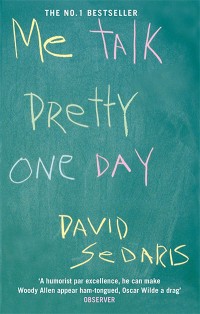
sedaris-me-talk-prettyMe Talk Pretty One Day
by David Sedaris

I had come across Sedaris a few times in the New Yorker and found him invariably hilarious, so I’d been meaning to read this, his most famous book, for ages. Finally, on a day out in Oxford earlier this year with my friend H, we inevitably found ourselves in my favourite branch of Blackwells and I wandered around happily picking up and putting down books indecisively until I spotted this volume and knew it was the one.

This both is and isn’t an autobiography. It’s a collection of essays, previously published in various places including the New Yorker and Esquire, but they are all stories from Sedaris’s life and they are arranged in chronological order, so a sort of memoir emerges, a highly selective one.

“That’s one of Alisha’s most well-worn adjectives, sweet, and she uses it to describe just about everyone. Were you to kick her in the stomach, the most you could expect would be a demotion to ‘semi sweet’. I’ve never known someone so willing to withhold judgment and overlook what often strike me as major personality defects. Like all of my friends, she’s a lousy judge of character.”

The first half of the book deals with Sedaris’s childhood in North Carolina, his failed attempts to be an academic, his move to New York and the varied jobs he took to survive there, including as a house mover and as PA to an eccentric publisher. I say “deals with” but each essay tells one memory, or set of linked memories, so this is by no means the full story of Sedaris’s life. However, his open engaging style makes it feel a lot like a memoir, so it can be a bit disconcerting to realise that information learned in one essay means that some pretty important information was withheld from a previous essay.

“It was my father’s dream that one day the people of the world would be connected to one another through a network of blocky, refrigerator-size computers…He envisioned families of the future gathered around their mammoth terminals, ordering groceries and paying their taxes from the comfort of their own homes…’I mean, my God,’ he’d say, ‘just think about it.’ My sisters and I preferred not to. I didn’t know about them, but I was hoping the people of the world might be united by something more interesting, like drugs or an armed struggle against the undead. Unfortunately, my father’s team won, so computers it is.”

Apparently Sedaris has attracted some controversy for the questionable veracity of his non-fiction, to the extent that some magazines that regularly publish him label the work as fiction. It’s fairly clear in some stories that there’s an element of exaggeration if nothing else, but this doesn’t bother me at all, as they’re so very well written.

Sedaris really is a great humorist, making me laugh out loud and save up so many great quotes that I ended up reading whole essays out to Tim for him to share the fun. Sedaris makes genuinely funny observations on an at first glance unremarkable life – he’s been a drug addict and lived in Paris and New York, so it’s hardly been a dull life, but he somehow paints it as painfully ordinary, while also making it wildly interesting.

“If you happen to live there, it’s always refreshing to view Manhattan from afar. Up close the city constitutes an oppressive series of staircases, but from a distance it inspires fantasies of wealth and power so profound that even our communists are temporarily rendered speechless.”

What I’ll admit I did find odd is that there is no reference to Sedaris becoming a writer, and a successful one at that. The second half of the book deals with his time in France with his partner Hugh, from shorter trips and language difficulties to moving there full-time and taking French lessons (from which the title of the book comes). These essays feel like a series, like they had been commissioned and were being written in the moment, as indeed they were. This was long after Sedaris had achieved some success telling his stories on NPR, but he continues to refer to taking odd jobs and helping Hugh do up his rural French cottage, while never talking about writing or being a writer. It’s almost as though he wants to maintain the character built up in the first half of the book, that of a lovable loser, a disappointment for not making the most of his comfortable middle-class start in life. Perhaps he wanted to save writing on writing for another time, or perhaps he thought it a dull subject. I’m more than happy to read more of his books to find out!

First published in 2000 by Little, Brown & Company.

Source: Blackwells, Oxford.

Challenges: This counts towards the Rory Gilmore Reading Challenge.

Kate Gardner Reviews

Sound played for the enemy side

October 22, 2014

sworn-virgin

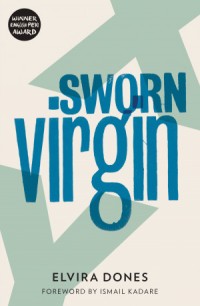
Sworn Virgin
by Elvira Dones
translated from Italian by Clarissa Botsford

This sounds like it could be a very serious, heavy book but it really isn’t; it’s a very readable, enjoyable, gorgeous novel that deals with issues, serious and light, familiar and unfamiliar.

Back in 1986, when Hana Doda was a happy carefree student in the city of Tirana, she got the news that her Uncle Gjergj, her foster father, was dying back home in the mountains of northern Albania. Hana is the last family he has left, but caring for him isn’t easy in their small village with its strict traditional roles and remote distance from anywhere else. Hana can’t work or travel safely to get her uncle medicine because she is a woman. So she makes a decision. Following an old Albanian tradition, she chooses to become a sworn virgin – she will live the rest of her life as a man. In return for the freedom to earn money, travel freely, drink and smoke and, crucially, read her beloved books, she must remain chaste.

14 years later she arrives in the US to live with her cousin. She’s been Mark for her whole adult life but now she can choose to be Hana again, only it isn’t that simple. It’s a huge wrench to see herself as female again and to interact with others as a woman.

“It’s weird but when she was Mark she was better with words. Mark weighed them out inside himself, observed and honed them, stroked them, at times erased them from his mind. As a man, silence was his ally. In silence there was hope; in conversations there often wasn’t. Sound played for the enemy side.”

That a novel covering such weighty issues as communism, patriarchal oppression, sexual violence, immigration and gender identity manages to be so warm and enjoyable is a huge achievement. The contrast between Albania just before and just after the fall of communism there, and the USA in the early 21st century is vast, but Dones paints both with assurance. The US is not entirely a promised land and Albania is not entirely awful, and while Hana has opportunities in the US she didn’t have back home, she isn’t entirely sure she wants them.

“It wasn’t life. It was the annihilating breath of fear. It was pain a whisper away from the atrocious pleasure of hearing death knock at the door, then move on. It was a daily ration of menace, a nightmare you couldn’t escape.”

Dones shows criticism and compassion for tradition, but Hana’s reasons for becoming a sworn virgin aren’t just about her desire to fulfil an obscure tradition. The full reasons for her choice are revealed slowly, as she comes to terms with them herself.

But as much as anything else, this is the story of an immigrant arriving in the US, a woman starting anew in her mid-30s, reconciling who she is with the life that she wants to have. And she’s a lovely woman to spend 270 pages with, sarcastically witty, fighting hard to keep up her prickly defences.

Apparently Dones is a popular and distinguished author in Albania. I really hope that means more of her work gets translated into English.

Vergine giurata published 2007 by Giangiacomo Feltrinelli Editore.
This translation published 2014 by And Other Stories.

Source: I’m a subscriber to And Other Stories.

Kate Gardner Reviews

Was her memory meaningless? Her experience insubstantial?

October 19, 2014October 19, 2014

seconds-bryan-lee-omalley

Seconds
by Bryan Lee O’Malley

This is a sweet, funny graphic novel from the author and artist behind Scott Pilgrim, very much in the same vein. It blends real life with fantastical elements and has a strong female lead. What’s not to love?

Katie is the head chef at a restaurant called Seconds, but her dream is to own her very own restaurant. She has started to make her dream come true but it isn’t going smoothly. Her ex-boyfriend Max keeps turning up at Seconds, she’s having an affair with the man she’s supposed to be training up to replace her, and the builders at her new restaurant keep calling with bad news. When she causes an accident through negligence Katie knows something has to change…and somehow it does.

“Katie disappeared into the pantry. It was pretty pathetic. She sat there heaving and trying to make herself cry. The saddest thing was that she couldn’t have a moment away from herself. And then, through a crack in the floorboards, she saw—something.”

This has elements of a classic folk or fairy tale, including the idea that being able to put right mistakes won’t necessarily result in everything turning out perfectly. It also has a lovely strand about female friendship, as Katie alleviates her loneliness by getting to know her waitress Hazel. In familiar Bryan Lee O’Malley fashion, there are no clear right answers and Tim and I argued about the ending, before agreeing to accept that it isn’t the ending.

“Katie’s heart wouldn’t stop racing. Was her memory meaningless? Her experience insubstantial? Was she losing her grip on reality? Was she even awake?”

The art style is simple and atmospheric, with some beautiful set pieces. For instance, one double page is given over to a top-down view of the Seconds building, like a floor plan occupied by people and furniture. It reminded me of a page from one of the Usborne Puzzle Adventure series, with subtle jokes and hidden clues to the story to come – and I mean that as a compliment; I loved my Usborne Puzzle Adventures and still have several of them in my library!

Katie is an imperfect, relatable lead character. She’s strong and confident when she needs to be, fragile and heartbroken in hidden moments. She makes mistakes and she tries to put them right. She’s a bitch on a bad day and beloved by all on a good day. She doesn’t want to be alone but she doesn’t want to give up her dreams for a boyfriend. And she talks back to the narrator, which I found hilarious.

So now the only question is: will Edgar Wright please make a film of this? It would be really really great.

Published 2014 by Ballantine Books/SelfMadeHero.

Source: Excelsior! comic shop, Bristol.

Kate Gardner Reviews

The broken branch was a symbol of my too-much

October 16, 2014 2 Comments

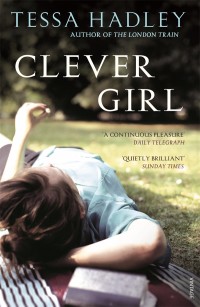
clever girl

Clever Girl
by Tessa Hadley

I bought this book for two reasons – it’s set in Bristol and it was a staff recommendation at the very lovely Mr B’s Reading Emporium in Bath. Why buy one of the hundreds of books on my wishlist when I can pick up something new and random?

Stella tells us her life story, from working-class single-parent 1950s origins, to gaining a stepfather and moving to a fancy new estate and fancy new school in the 1960s. Stella is smart and suddenly she has the opportunity to do something with her abilities. But a life that could have been predictable is made unpredictable by choices she makes when she is 17.

“He broke off a whole branch of wet, scented apple blossom and gave it to me. It was a criminal thing; bees were still dangling, desirous, around the flowers’ stamen and stigma and their bulges of ovary which would never now grow into apples. The broken branch was a symbol of my too-much; it seemed more lordly not to refuse such bounty if offered. What it was impossible to have without harm was also most to be desired.”

For a lot of the book, Stella is a window into the youth cultures of the time, from the late 1960s on through the 70s and 80s. She is attracted to the political and the alternative, but somehow the book is never about politics itself, only about political ideologies. Stella is never wholly happy or satisfied or confident in herself, which makes her a sympathetic, if occasionally frustrating, character. She certainly doesn’t let her lack of direction stop her from living a varied and interesting life.

“I tried to prolong this happiness, or find a code I could store it in, so that it meant something even when I wasn’t feeling it. I imagined it as resembling the filmy skin of a bubble enclosing its sphere of ordinary air; impermanent yet also, for as long as it existed, flexible and resilient – real, a revelation.”

In some ways, this book could have been set anywhere, or at least in any British city outside London, but on the other hand, Bristol does have a certain mix of people and neighbourhoods that allows Stella to see and meet all sorts without ever living anywhere else. For those familiar with Bristol, you can nod along when Hadley mentions a specific area, knowing what relevance it has, but Hadley gives enough information for non-Bristolians to get it too (e.g. Totterdown in the 1970s = working class; Totterdown in the 2000s = working and middle class, arty types and professionals – I can attest to this one!). I don’t know any other city as well as Bristol but I can firmly believe in this story happening here. I can believe in people getting lost in politics/drugs/ideals while all around them friends and family plod on with boring ordinary lives.

“The land’s fabric seemed dragged down and tearing under the sheer weight of the built environment, which never ended and could surely never be undone and wasn’t even thriving: the monster machine was stalling, it had poisoned itself and now it had fallen into enemy hands.”

Stella’s story is very readable and absorbing, with some gorgeous language, but somehow not quite what I hoped for. She’s smart and loves books, which is usually a winner for me, but the story doesn’t linger on her bookishness, lingering instead on the men in her life, who are admittedly key, but for a character who calls herself feminist I struggled with how much she is defined by her role or by her man and not by her self.

Published 2013 by Jonathan Cape.

Source: Mr B’s Reading Emporium, Bath.

Kate Gardner Reviews

I wish you to gasp not only at what you read

October 11, 2014

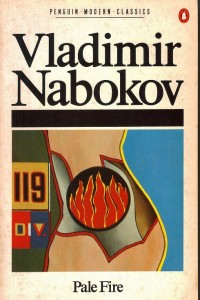
Pale Fire

Pale Fire
by Vladimir Nabokov

I need to let you know from the start that this is one crazy crazy book. The structure, the plot and the characters are complex to the point of inscrutable. This is truly experimental literary fiction.

How to describe this book? The poet and academic John Shade has been murdered and this is his last poem, introduced and analysed by a neighbour and colleague of the poet, Charles Kinbote. Kinbote is clearly crazy, but the question is exactly how crazy.

Kinbote’s “commentary” mostly ignores the actual poem and rambles on about the last king of Zembla, the country he has emigrated from to the small New England college where he met Shade. The story of this king is one of wild adventure, preposterous even, and Kinbote is clearly obsessed with it. He had told this story to Shade in the hope that the great poet would write a great poem about it, but that’s not what this final poem is and Kinbote’s disappointment is palpable.

“What if we awake one day, all of us, and find ourselves utterly unable to read? I wish you to gasp not only at what you read but at the miracle of its being readable (so I used to tell my students)…I can do what only a true artist can do – pounce upon the forgotten butterfly of revelation, wean myself abruptly from the habit of things, see the web of the world, and the warp and weft of that web.”

The whole conceit, and Kinbote himself, are often frustrating, occasionally tedious and frankly wholly ridiculous and yet at times it becomes almost, almost, believable. Kinbote’s obsessive nature has attached itself to his learned neighbour and he has clearly read the situation wrong time and time again, convincing himself that he became Shade’s dearest friend on the basis of flimsy evidence. It’s not a new story, but it’s nevertheless an interesting one and it’s being told in a very new way.

Thankfully, the scholarly frame of the novel is not entirely po-faced. This is a comedy, packed full of satire, poking fun at poets and scholars and literary criticism. Kinbote is somehow both subtly ambiguous and a broad comic character. The language is laughably over-the-top academic and delights in putting together pleasing sounds and amazing, if unwieldy, sentences.

“The heating system was a farce, depending as it did on registers in the floor wherefrom the tepid exhalations of a throbbing and groaning basement furnace were transmitted to the rooms with the faintness of a moribund’s last breath. By occluding the temperatures upstairs I attempted to give more energy to the register in the living room but its climate proved to be incurably vitiated by there being by there being nothing between it and the arctic regions save a sleezy front door without a vestige of a vestibule.”

It’s a clever balancing act and I would be thoroughly impressed by a book that made me laugh out loud despite such an outlandish structure if I hadn’t found other sections painfully tedious. This is a short book but it took me a long time to read, partly because I kept putting it down and declaring “This is batshit insane.” Which it is.

“The coming of summer presented a problem in optics: the encroaching foliage did not always see eye to eye with me: it confused a green monocle with an opaque occludent, and the idea of protection with that of obstruction.”

I must admit, this is one of those books I’m a little bit proud of having got through. Which perhaps undersells it. Many people consider this a masterpiece and I certainly see that there’s plenty to admire but I don’t think Nabokov will ever be a favourite of mine.

First published 1962 by G B Putnam’s Sons.

Source: Secondhand, probably from the Oxfam Bookshop on Park Street, Bristol.

Kate Gardner Reviews

Summer reads in brief

October 5, 2014

Well, it’s sure not summer anymore, but in my defence it still felt like summer until last week when I finished the last of these books, so I figure that counts!

The Quiet War

The Quiet War
by Paul McAuley

I’d been intending for a while to read one of McAuley’s novels, having really liked short stories of his I had come across, and this was Tim’s recommendation. It’s a book about war, and the politics leading up to war, which isn’t my favourite subject matter, but I tried to put that to one side. The book is set in a future post global warming with human settlements throughout the solar system. These “Outers” make surgical changes to themselves to suit the very different environments in which they live and are also supporters of science for science’s sake. The Earthlings, meanwhile, have turned to science to regenerate their planet but heavily restrict the science that can be done. There is ongoing tension that many believe is inevitably going to become war. War is prodded along by surreptitious activities on both sides. Chapters alternate between following various key characters in this space opera, though the reasons why they are key is clearer in some cases than others. There are beautiful descriptions of moving through space – McAuley manages to combine poetic language with scientific accuracy (or believability in the case of science/tech we don’t currently have). I loved the characters, even those who were thoroughly nasty. However, I did find the gradual build-up of political tensions in the first half of the book a little too slow.

“Jupiter’s fat disc dominated the black sky. Stars were flung with careless extravagance everywhere else, thousands of them, hard untwinkling lights of every colour.”

Published 2008 by Gollancz.

Source: Borrowed from Tim.

Paintwork
by Tim Maughan

I picked up this book about a thousand years ago at BristolCon, where I bought it from the author after hearing him speak in one of the sessions and thinking he sounded interesting. It was a good call and this is by some way the best self-published work I’ve yet read. It’s made up of three linked short stories set in a future where virtual reality software and gaming are the centre of the economy. Not being much of a gamer myself, this isn’t an obvious appeal for me but I found it really enjoyable. Maughan paints a believable but very different vision of the future. The book starts in Bristol, very much rooted in the local graffiti culture, and works outward from there.

“He skulked around the city in the early hours, darting under robotic surveillance cameras with a ninja-like bandanna over his face and a clanking knapsack full of car-repair spray cans on his back, his hands stained with multicoloured rainbows.”

Published 2011 by Tim Maughan Books.

Source: Bought direct from the author at BristolCon.

Improper Stories
by Saki

This collection of short stories are both separate and linked, as there are some recurring characters and clear recurring themes. They’re comic pieces set in upper class England in the very early 20th century and are very much comedy of manners a la P G Wodehouse or Dorothy Parker. The action tends to be slight; really it’s all about the drawing room conversations, about the character who shocks or outwits the rest. The opening story is about two children on a train whose governess is trying and failing to entertain them with moral tales. A stranger in their carriage shuts them up with a silly and morally outrageous tale, delighting the children and shocking the governess. That’s the whole story, and a typical example. I found them very funny to begin with but to be honest, the same joke over and over wore a little thin, even spacing out reading them to one or two per week.

“Her letter of thanks for the gift of a tiger-claw brooch was a model of repressed emotions. The luncheon-party she declined; there are limits beyond which repressed emotions become dangerous.”

Originally published between 1904 and 1914.
This collection published 2010 by Daunt Books.

Source: Amazon.

Kate Gardner Reviews

We are unconsciously influenced in the most amazing ways

September 26, 2014October 1, 2014

Sensation

Sensation: the New Science of Physical Intelligence
by Thalma Lobel

I have very mixed feelings about this book. I will try to sort them out during this review, but apologies if it just comes off as a confused mess of thoughts!

Lobel is a psychologist who is interested in how our senses affect the way we think and links that to the way that we think metaphorically – a new area of psychology called “embodied cognition”. Sounds a bit complicated? Here are some examples to show how straightforward an idea it is: holding something warm makes us friendlier; the colour red makes us anxious; the smell of fish makes us feel suspicion. Yes, really.

The examples explored in the book vary quite a lot. Some of them seemed obvious to me (we equate weight and value, for instance), while others were surprising (touching something cold or hard makes us act more sternly). For me, Lobel certainly achieved her stated goal, which is to make readers question whether their senses are affecting their judgement. Am I agreeing to take on extra work because I’m holding a warm cup of tea? Am I choosing not to give money to that homeless person because they’re wearing black? Is that person genuinely good at their job or is it just that they’re tall?

“We are constantly exposed to environmental stimuli and cues…We experience much of our world quite consciously through our senses. But without noticing it, we are also unconsciously influenced in the most amazing ways by the physical experiences our senses convey. “

Which is all very interesting, and Lobel quotes a lot of studies rather than just making assertions. The training instilled in me by Ben Goldacre’s Bad Science blog meant I couldn’t help noticing that they’re mostly very small studies, but then it is a fairly new area of research and Lobel is careful to say when further studies back up the findings or when they are still needed.

Often, I found that a subject was obvious from one direction – that we think heavy things have more gravitas than light things, for example – but what was really interesting was when this was studied from the opposite direction. We estimate weights as heavier when they are somehow linked to a more serious subject (for instance a book deemed “important” compared with one that is supposedly random). We estimate heights as taller when the person is in a position of power. We perceive people as being nicer if they have a sweet tooth.

Despite the endless examples, Lobel has a very readable style. She is clearly excited by the science and manages to pass on her enthusiasm. She includes examples from books, films and TV as well as anecdotes from her own life to illustrate aspects of embodied cognition, which didn’t always hit the mark for me, but added personality and, coupled with her own involvement in this area of research, gave the book a personal touch.

“I had always thought of my grandfather as tall…In reality…he was on the shorter side of average. The pictures in my hands showed [this] but even then I checked with my mother to verify what my eyes were seeing. Even after learning that the grandfather I had always thought of as being tall was actually short, I still see him in my memory as towering over the rest of the family.”

My one problem with the book is possibly a problem I have with psychology in general – I don’t just want to know how behaviour is affected by sensory input, I want to why and this is only occasionally touched on. Lobel gets a bit defensive in an early chapter about psychology being considered a “soft science” but I can’t help observing that, compared with the other popular-science books I’ve read, this one was lacking that dogged search for the underlying truth, and I missed that.

I also want to know if these findings are universal or if they’re language-based. My guess would be that the link between red and danger and sex is universal, but the link between the smell of fish and feeling suspicion isn’t. But I want someone to tell me whether I’m right and why! Some of my questions were at least broached in the final chapter, but for the most part the answer was that more studies are needed, which I suppose is fair, but unsatisfactory.

It’s honestly a fascinating book and it has made me more aware of my sensory surroundings and how they might affect me.

Published 2014 by Icon Books.

Source: This book was kindly sent to me by the publisher in return for an honest review.
Challenges: This counts towards the 2014 Popular-Science Reading Challenge.

Sensation

Kate Gardner Reviews

You had to have a lot of time left if you were going to start reading Bolaño

September 21, 2014 2 Comments

The End of Your Life Book Club

The End of Your Life Book Club
by Will Schwalbe

After this book received universally good reviews from people I trust/have similar taste to (there’s a strong correlation there; I should probably investigate that sometime) I knew I would read it eventually, but I worried it would be super depressing. The “end of your life” part of the title is not euphemistic; it really is about the end of someone’s life. But it was a surprisingly entertaining, easy read. I’m not saying I didn’t get sad at all; I’m not that cold-hearted.

This is a memoir written by American publisher-turned-journalist Schwalbe about the books he and his mother Mary Anne read together when she was dying of cancer. They knew from her first diagnosis that the cancer was terminal, so there is no question how the book will end. This gives the book a largely matter-of-fact background of chemotherapy, pain relief and other palliative care, but also the emotional side of dealing with and preparing for death.

“I was fine until right after I fastened my seat belt. For me, there’s something about planes that isolates and intensifies sadness, the way a looking glass can magnify the sun until it grows unbearably hot and burns.”

The gradual change (for both Will and Mary Anne) from denial to anger to acceptance is clear without being overtly discussed. By which I don’t mean that they ever deny her diagnosis or expect a magical turnaround, but initially they don’t discuss death at all, they just get on with the surgery and trying out different chemo drugs. However, it is of course there the whole time. In fact, when Mary Anne is diagnosed, her daughter, Will’s sister Nina, is about to move to Switzerland with her family and must make the decision whether or not to go, which of course boils down to: does Mary Anne have weeks left or years?

This uncertainty is something I haven’t really read about before, though I know (and have known) people for whom it is true, and it is in some ways harder on the family than the fact of death itself. How far ahead do you allow yourself to plan? Do you book holidays? Do you throw great big birthday and other celebratory parties because they might be the last one with her? Following Mary Anne’s lead, the family slowly figure all these things out – while she can, she wants to do everything she can, including continuing to work and travelling abroad. As her health worsens and her energy levels drop, plans simplify and are built around what she can and can’t do.

“Those extraordinary chemicals, with their remarkable names, now sound totally different: Gemcitabine. Xeloda. Before they sounded like harsh detergents. Now they sound cool and magical, like a new rock band you’ve come to love.”

Mary Anne was a wonderful, inspiring woman. In fact, the whole family are and made me feel quite inadequate at times, but Mary Anne especially. After responding to an unsolicited begging letter from a nun, she quit a very good, secure job as the head of a New York girls’ school to start a charity for women refugees. She travelled to many of the least desirable parts of the world to meet for herself the people she was helping. The danger that she had put herself in time and again is brought home by the fact that during the timeline of this book, a friend and colleague of hers is held hostage by the Taliban in Afghanistan.

But most importantly, of course, at least for this to be the book that it is, Mary Anne and Will share a deeply ingrained love for books. They discuss the books they read in depth, which appears to be something they have always done, but the difference now is twofold – they are choosing to read the same books, even calling it a book club, and they are spending more time alone together than perhaps ever (Will is the middle of three children, after all) as Will accompanies Mary Anne to the doctor, to chemo and spends more time with her at home. (I should add here that so too do Will’s father, brother and sister and all their partners, but this book is about Will and his mother and their time together.)

“In the summer, Mom and I had read slender books. Now we were reading one long book after another. Maybe that was one way of expressing hopefulness—you had to have a lot of time left if you were going to start reading Bolaño, or Thomas, or Halberstam…I remarked to Mom how all the books we were reading then shared not just length but a certain theme: fate and the effects of the choices people make.”

The books they read are many and varied, though fairly firmly literary. Each chapter is named after a book that was of particular significance but the full list of books discussed is provided as an appendix and is six full pages long. You don’t need to have the books to follow the discussions of them but when it was a book I’ve read, I did feel a little glow of “I’ve read that! I could join this conversation!” The book discussions tend not to be so much about the style or quality of writing, but more about the subject matter. Often Will uses a book as a jumping-off point to tell us about Mary Anne’s life or anecdotes from earlier in their life together.

Ridiculously, considering the situation, I found myself at times jealous of the relationship Will and Mary Anne have through books. Not that I’m not close to my Mum. In fact, she gave me this book, which at the time I didn’t twig was especially significant. But currently we have very different taste in books. She likes memoirs/biographies to the exclusion of all else, so I don’t think we could come up with a very long list of books to share. Then again, this is of course a memoir and I really liked it, so perhaps I should lend it to her and have a mini book club next time we see each other. Hmm… But back to the review…

This feels like a very honest book. We learn about Will’s life, about the books he didn’t finish reading even though Mary Anne was eager to discuss them, about the blog that Mary Anne wrote in Will’s name to keep their extended family and friends up to date with her health (she felt it wouldn’t be suitable for it to written by her!) and about Will and Mary Anne’s different attitudes toward religion, plus of course about the long slow decline of terminal cancer. In the end, it was sad but not heartbreaking. I’m not sure if this is because Mary Anne was in her 70s and had lived a rich and full life, or if it is down to the way Will writes about her, about how intellectually sharp and full of hope and kindness she remained to the end.

I think Schwalbe found the right combination of topics here, so that it isn’t all about pain and suffering, or sorrow and self-reflection, or a biography of a great and inspiring woman, or even just about great books, but instead it’s a book that pays tribute to Mary Anne and appeals to the intellectual and emotional draw of books, while also dealing with a tough subject that we will all have to face up to at some point. He also found the right balance between writing about the pain and difficulty of his mother’s slow death and the positive side of the situation: he had the warning to start spending more time with his mother, and had rich, rewarding times with her at the end of her life.

I don’t think Schwalbe is himself a great literary writer, so this doesn’t have the writerly quality of Joan Didion’s memoir The Year of Magical Thinking, say (which in fact is one of the books discussed), but I suppose that makes this book more accessible and serves as a reminder that not every avid reader is also a great writer. I can’t see myself checking out Schwalbe’s book about e-mail, but I do think that if I read books covered in The End of Your Life Book Club I might well come back to it to remind myself what Will and Mary Anne had to say!

First published 2012 by Hodder & Stoughton.

Source: A Christmas present from my Mum.

Kate Gardner Reviews

Every sort of trouble I can think of, we’ve tried it out

September 16, 2014

Z

Z: a Novel of Zelda Fitzgerald
by Therese Anne Fowler

In case you missed me effusing on Twitter, I loved this book. A lot. I picked it up on a whim in a bookshop, having heard nothing about it and with no idea what to expect. I only knew that I was interested in the subject matter, but of course that was no guarantee. It was a good whim: I was engrossed and tore through it, then regretted having read so fast.

This is a work of fiction, but Fowler did a lot of research, reading diaries, letters, articles and interviews from Zelda and F Scott Fitzgerald and their friends, in order to reach her own interpretation of Zelda’s character. What she came up with was a character I felt I had a lot in common with – I know, I’m not an obvious comparison to the original flapper and embodiment of the jazz age, but such is the skill of a good writer!

The story follows Zelda from the day she first met Scott until her death, and the life they led was pretty exciting and event-filled, so on reflection a lot has been squeezed into these 350 or so pages, but it never felt rushed or crammed at all. Fowler has somehow given Zelda space to reflect and reminisce rather than just telling her story event by event, and by doing this the character comes truly alive.

“Before Scott’s success, before people everywhere had been ravaged by war and flu, there’d been little glamour in the literary world. To be a writer then was to be a drab little mole who thought big thoughts and methodically committed them to paper…With this group, though…and the postwar push for life, for fun, for all the things Scott and I were seeking and embodying, the literary world put its foot into the circle of the entertainment world’s spotlight.”

First of all, this is a story about true love. Although their marriage was far from perfect (in fact, arguably they were destructive for each other), Scott and Zelda were unusual among the circles they moved in, in that they were indisputably the love of each other’s life. This is backed up by the fact that, though this is a book in Zelda’s voice and very clearly on Zelda’s side, so that at times Scott is the bad guy, for the most part he is also a warm, relatable character, albeit one with a long long list of flaws! But then the portrait of Zelda acknowledges her flaws too. Until her health problems slowed her down, her drinking and partying was as out of control as Scott’s. They both struggled psychologically with feelings of inadequacy and failure – though for Scott this alternated with him being convinced he was a genius.

As those who know Zelda’s story will already be aware, it is psychological problems that give her and Scott an air of tragedy. She clearly suffered with mental health issues, but, from this novel at least, it seems that perfectly manageable issues were blown up into huge problems by a combination of stigma, prejudice, misdiagnosis and outdated treatments. Add to this Scott’s alcoholism and the intense jealousy that both felt, and you have a situation that was never going to end well.

“There’s a word for people who move from place to place, never seeming to be able to settle down for long: peripatetic. And there’s a word for people who can’t seem to stay out of trouble—well, there are a lot of words for such types…Every sort of trouble I can think of, we’ve tried it out—become expert at some of it, even, so much so that I’ve come to wonder whether artists in particular seek out hard times the way flowers turn their faces toward the sun.”

But for a while there, Scott and Zelda were on top of the world. They were very young when fame hit – they married when Zelda was 20 and Scott 23, and were hitting the headlines and gossip columns pretty much immediately. Fowler does a good job of showing the glamorous, romantic side of fame and the jazz age while acknowledging that Scott and Zelda were never truly as happy or carefree as they seemed to the outside world. She also acknowledges the very many famous names the Fitzgeralds befriended, without it ever feeling like namedropping.

Certainly, I am pre-disposed to like stories about all those artists in Paris in the 1920s, but that’s actually quite a small part of the overall story. What really gripped me most of all was Zelda’s aspiration to be an artist herself, independent of Scott. She was a writer, painter and ballerina, and dearly wished to fully become one or all of those things, but Scott never properly gave her his support. Time and again he would stop her from doing something she loved either in the name of her health or in the name of being a wife and mother. Admittedly, this is Fowler’s interpretation of the situation, but to me it felt that Zelda was a woman born 50 years too soon. Of course there were women in the 1920s (and long before that) working as writers, artists and dancers, but they had to be willing to completely split from conventionality, and Zelda loved Scott too much to risk losing him by doing something he so thoroughly disproved of.

“Imagine your body is youthful, firm, a pleasure to live inside of—and you’re wise enough already to know that this is fleeting, this body and its condition. It won’t last. None of it will last. And because it won’t, you allow the beautiful person who seeks you out to become as much a part of your day, a part of this place, as the poppies that grow beside the rocky path…You let it happen because all of it is illusory anyway.”

Fowler has done a wonderful job of giving Zelda a lyrical, living voice that transported me in time, place and emotions. Her Zelda is difficult and destructive but also wonderful and alive, so that her story is all the more heartbreaking.

So aside from the clunky and possibly misleading subtitle (is it just me or could that be interpreted as “a novel by Zelda Fitzgerald”?) I loved this book thoroughly and recommend it heartily. Predictably it has made me want to read Zelda’s own fiction and indeed more of Scott’s work too. And it’s made me feel a lot better about finding Hemingway mostly too brash and macho!

Published 2013 by Two Roads, an imprint of Hodder & Stoughton.

Source: Foyles, Bristol.

Kate Gardner Reviews

I am too diffused

September 10, 2014 2 Comments

The Golden Notebook

The Golden Notebook
by Doris Lessing

This book is more of an intellectual exercise than a novel, which has its rewards and makes it good fodder for discussion, but doesn’t make it the most enjoyable book I’ve read lately. Not that I hated it by any means, I’m glad I’ve read it, but I’m not convinced of Lessing’s skill as a writer so much as her intellect.

Having said there’s plenty to discuss, I’m not sure some of the more interesting things I got from it can go into this review as they reveal too much about the end of the book, but I’ll try to say what I can without spoilers and without sounding like a study guide (which, incidentally, there are plenty of for this book, because it’s that kind of book).

This is the story of two women, Anna and Molly, in 1950s London. (There are some flashbacks to earlier in their lives, particularly Anna’s, but the bulk of the story is in the 50s.) Molly is an actress, with a steady stream of small parts, or sometimes big parts in small shows. She has a grown son, Tommy, who lives with her and a fraught relationship with her ex-husband Richard. Anna is a writer who wrote one very successful book early in her life and has been living off the proceeds since. She is also a single mother, though the story of the child’s father is only gradually revealed. Both women have been communists, which proved a major influence on their lives.

“Looking back at those week-ends they seem like beads on a string, two big glittering ones to start with, then a succession of small, unimportant ones, then another brilliant one to end. But that is just the lazy memory.”

Essentially, the book is split into sections: there’s the “wraparound novel”, a seemingly straightforward narrative about Anna and Molly, titled Free Women. Then there are four notebooks kept by Anna, in which she writes about different aspects of her life, splitting herself and the way she observes the world. Anna writes multiple times that she can’t help fictionalising her own life, indeed it is never wholly clear whether Free Women is written by her, and therefore yet another fictionalised account, or if it is the supposedly objective “truthful” account.

“I was going to say disaster. That word is ridiculous. Because what is so painful about that time is that nothing was disastrous. It was all wrong, ugly, unhappy and coloured with cynicism, but nothing was tragic, there were no moments that could change anything or anybody.”

Anna’s previously published novel that she is living off was loosely based on her own experience in colonial Africa during the Second World War, and she writes several accounts of her time there in the notebooks, but they don’t entirely match up – sometimes she changes names, sometimes she refers to the version of the story told in her novel. When you add to this that Anna shares an awful lot in common with Doris Lessing, it all starts getting rather meta. Lessing’s own explanation of the book is that it’s a novel plus the notes an author makes surrounding it, which either demonstrates how much is discarded from the full “fictional” idea, or demonstrates how differently the same “true” story can be told, even by the same person.

“I am incapable of writing the only kind of novel which interests me: a book powered with an intellectual or moral passion strong enough to create order, to create a new way of looking at life. It is because I am too diffused.”

Which all sounds more complicated than it is to read. The writing style is pretty straightforward, though I found my interest wavered with the subject matter. The overriding theme of the notebooks is to analyse over and over, which I tended to find an interruption to the story rather than an enhancement, but arguably it was the whole point. Though Lessing claims in her introduction that the novel isn’t “about” anything except a person falling apart, it certainly has a lot to say about communism, feminism, friendship, writing, love, sex, relationships, parenthood, psychoanalysis and truth. I suppose you could try to read it as a straightforward narrative without trying to piece together the different versions of the same story, but for me that was part of the fun. I like that when I got to the end there were several ways to interpret it, both in terms of what “happened” and in what the “real” structure is.

“It’s a question of form. People don’t mind immoral messages. They don’t mind art which says that murder is good, cruelty is good, sex for sex’s sake is good. They like it, provided the message is wrapped up a little. And they like the messages saying that murder is bad, cruelty is bad, and love is love is love is love. What they can’t stand is to be told it all doesn’t matter, they can’t stand formlessness.”

However, I only fully engaged with relatively short sections (bearing in mind this is 550 pages of small print), when the story got under flow, in-between lists, newspaper cuttings, diary-style brief notes and the like. I didn’t warm to Anna, which is in some ways surprising as a writer struggling with anxiety and depression, contemplating motherhood and politics, full of concern about the world, should be right up my street! But I mostly found her cold and unemotional, even listless, making odd decisions about life, which I suppose might arguably be a better depiction of depression than many I’ve read.

Maybe it was just far too long. I certainly highlighted dozens of passages that I admired, either for the language or for the idea. I really liked learning more about communism in Britain in the 1950s, and about war-time in a British colony in Africa, but despite her Nobel Prize in Literature I don’t think I’ll be rushing back to Lessing.

First published 1962 by Michael Joseph.

Source: Paper copy bought from Toppings in Bath, e-book from Amazon. (I have both as I was going on holiday just before the book club and I only take my Kindle on holidays.)

Kate Gardner Reviews

Posts pagination

1 … 37 38 39 … 70

Archives

RSS Nose in a book

  • 2025 reading stats and top reads
  • December 2025 reading round-up
  • Book review: The Galaxy and the Ground Within by Becky Chambers

Me on the internets

  • @kate_in_a_book@mas.to (Mastodon)
  • Flickr/noseinabook
  • Instagram/kate_in_a_book
  • StoryGraph/kate_in_a_book

Categories

  • Blog
  • Reviews
  • Uncategorized
Proudly powered by WordPress | Theme: Dream by vsFish.