Nose in a book

Reviews and other ramblings

  • Home
  • Reviews archive
    • Book reviews
    • TV reviews
    • Theatre reviews
  • TBR
  • Challenges
    • The Classics Club
    • 2014 Popular-Science Reading Challenge
    • Cookery challenge
    • The Gilmore Girls Reading Challenge
    • 2013 TBR Pile Challenge
    • 2013 Translation Challenge
    • Crime and Punishment read-a-long
  • About
    • Cookie legal stuff
  • Home
  • Reviews archive
    • Book reviews
    • TV reviews
    • Theatre reviews
  • TBR
  • Challenges
    • The Classics Club
    • 2014 Popular-Science Reading Challenge
    • Cookery challenge
    • The Gilmore Girls Reading Challenge
    • 2013 TBR Pile Challenge
    • 2013 Translation Challenge
    • Crime and Punishment read-a-long
  • About
    • Cookie legal stuff

Category: Reviews

He would name, classify and diagnose every nuance of the human soul

October 22, 2016

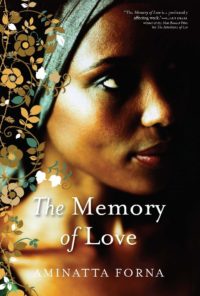
the_memory_of_love_by_aminatta_fornaThe Memory of Love
by Aminatta Forna

I can’t remember how this book made its way onto my TBR, but I picked it up thanks to the Books on the Nightstand Book Bingo, which for me includes the square “Set in Africa”. If not for that I might have avoided this for a long time, expecting a dark, disturbing read. It’s not quite what I expected.

The book has dark, disturbing moments for sure. It is set in Freetown, Sierra Leone’s capital, post civil war, pre Ebola, so approximately when it was written (this book was published in 2010 so presumably written in about 2008). The civil war is a scar for the native characters, creating a distance that can never be breached by the primary non-native character, a white British doctor.

Adrian Lockheart is a psychologist on secondment to Sierra Leone. It is his second assignment to Africa, and he spends much of the novel dwelling on his reasons for being there. He has a wife and daughter back home in England, but his marriage is failing and over the years he has lost the feeling that he is actually helping his patients.

Continue reading “He would name, classify and diagnose every nuance of the human soul”

Kate Gardner Reviews

We miss so much when the assumptions we attach to words are all we snatch

October 15, 2016February 9, 2020

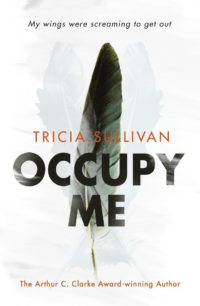
occupy-me-by-tricia-sullivanOccupy Me
by Tricia Sullivan

This is a very strange genre-crossing mindbender of a novel. I thoroughly enjoyed it even though at times I had no idea what was going on.

The plot is difficult to explain. The tale is narrated by Pearl, who wakes up in a fridge in a junkyard with little knowledge of who she is, or indeed what. She has the appearance of a middle-aged tall muscular black woman, but she also has wings in a higher dimension and a strength far beyond human. She might be an angel. In alternate chapters she directly addresses a Dr Kisi Sorle, whose story initially seems to be separate from hers, though they inevitably come together.

Dr Sorle has been experiencing blackouts, after one of which he finds himself in possession of a briefcase. When he arrives at work, where he provides end-of-life care for a billionaire businessman Austen Stevens, whose corporation destroyed his home country, he finds his body taken over again, but this time he remains aware of the other man controlling him. The controlling entity opens the briefcase and the dying Stevens disappears inside it.

Continue reading “We miss so much when the assumptions we attach to words are all we snatch”

Kate Gardner Reviews

Recent reads round-up

October 8, 2016October 8, 2016

I read a few good books in a row and then went on holiday before writing reviews or even notes on them and now it’s two weeks since I finished the last of them. Oops. So here is my attempt to remember what I enjoyed about them. They’re all great!

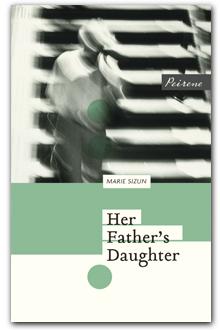
her_fathers_daughterHer Father’s Daughter
by Marie Sizun
translated from French by Adriana Hunter

I loved this book. It is simple and sparse and yet utterly moving. This seems to be a pattern with Peirene books, one that I approve of. The story is told from the perspective of “the child” (she does have a name but it’s rarely used) – a young girl living in Paris during the Second World War. She is the apple of her mother’s eye and despite the Nazi occupation is utterly happy in her little world. Then the father she has never met comes home from the POW camp and the fight for affection begins.

Sizun brilliantly depicts the changing relationships – between mother and child; between father and child; between mother and father; between grandmother and child – against a backdrop of the occupation of Paris ending, and then the war itself ending. Though the child is not the narrator, her perspective filters the story to its essential parts. This at times almost reads like poetry, it’s so distilled. But it isn’t at all abstract in the way that poetry can be. A beautiful, quick read.

Continue reading “Recent reads round-up”

Kate Gardner Reviews

All I see is oppression and hate and suffering

September 20, 2016

alone-in-berlinAlone in Berlin
by Hans Fallada
translated from German by Michael Hofmann

Our next holiday will be in Berlin so a colleague recommended I read this novel to get to know the city a little. It’s fiction, but it’s also pretty close to being a first-hand account of life for ordinary Berliners in the city under Nazi rule. Hans Fallada was a successful author before the Nazis came to power and during their rule he tried to tread the fine line between avoiding trouble and collusion with politics and people he didn’t agree with. Those experiences, plus a real-life case of anti-Nazi propaganda, form the basis of this book.

The story opens in 1940. Postwoman Eva Kluge is bringing a telegram to older couple Otto and Anna Quangel with news of the death of their son, fighting at the front. Their upstairs neighbour, Frau Rosenthal, lives in fear of the Nazi thugs on the 1st floor, the Persicke family, since her husband was arrested. But perhaps she should be more afraid of Emil Borkhausen in the basement, who figures he can get away with robbing an old Jewish woman, and might even be rewarded for it by the Party.

“But even though her eyes are now very close to his, she keeps them shut tight, she won’t look at him. Her face is a sickly yellow, her usual healthy colour is gone. The flesh over the bones seems to have melted away – it’s like looking at a skull. Only her cheeks and mouth continue to tremble, as her whole body trembles, caught up in some mysterious inner quake.”

Continue reading “All I see is oppression and hate and suffering”

Kate Gardner Reviews

I began to wonder why Man had evolved at all

September 13, 2016

letters-from-menabillyLetters from Menabilly: Portrait of a Friendship
by Daphne du Maurier and Oriel Malet

I bought this book while we were on holiday in Fowey back in July. It’s described on the cover as written by Daphne du Maurier, edited by Oriel Malet, but Malet’s contribution is far more than editing du Maurier’s letters.

Malet was in some ways du Maurier’s opposite: a fellow writer, she was critically lauded but never sold well; where du Maurier was such a homebody she even resisted trips to London to do research, Malet moved to Paris to live out the dream of being a true artist. They first met at a publishing party in the early 1950s, when du Maurier was in her 40s and Malet in her 20s. Du Maurier took the younger author under her wing, inviting her to stay at Menabilly when she became unwell and needed to get out of London.

The book opens with a glossary of Daphne du Maurier “codewords” and the letters are indeed riddled with them, from “Tell-Him” for a long boring story, to “Silly Values” for anything selfish, superficial or materialistic, and most notably “Peg” for a person in real life who inspires a fictional character. Malet provides a fairly lengthy introduction to their friendship, including a detailed description of her first visit to Menabilly, but that isn’t her only interjection.

Continue reading “I began to wonder why Man had evolved at all”

Kate Gardner Reviews

Darkness held a vague terror for these people

September 8, 2016 1 Comment

things-fall-apartThings Fall Apart
by Chinua Achebe

I first read this Nigerian classic for my A-level English. It was probably the first book I had read by an African author. Back then I didn’t have much to compare it to but I’m grateful to Linda, my English teacher, for introducing me to it.

I remembered this as the story of the arrival of the white man in Africa, and the effect of Western religion and imposed rule, but that’s really only the end of the book and not the main thrust at all. This is primarily the tragedy of Okonkwo, a great and celebrated hunter and wrestler, whose obsessive need to not fail like his father sows the seeds of his destruction.

Okonkwo’s father was lazy and died in debt. So Okonkwo makes a point of opposing everything his father enjoyed, such as music and arts, and becoming great at the things his father did not do well: farming, fighting, war. He has three wives and several children and is an elder in his village, Umuofia. Everything is on track to him earning all the great titles of his tribe. But his determination to succeed is his own downfall.

“When he walked, his heels hardly touched the ground and he seemed to walk on springs, as if he was going to pounce on somebody. And he did pounce on people quite often. He had a slight stammer and whenever he was angry and could not get his words out quickly enough, he would use his fists.”

Continue reading “Darkness held a vague terror for these people”

Kate Gardner Reviews

A wild and unstoppable song of triumph

September 3, 2016September 4, 2016

zennor in darknessZennor in Darkness
by Helen Dunmore

I picked this off the TBR because while on holiday in Cornwall I’d spotted a signpost to Zennor and remembered I had this book. Plus I like Helen Dunmore’s writing. This was actually her debut novel, which also intrigued me.

Zennor is a small village near St Ives. It’s 1917 and the Great War is at its height. Clare Coyne has always felt like an outsider in her home town, having been raised by her outsider father after her mother’s death. She has cousins, aunts and uncles just a few streets away, and counts some of her best friends among them, but she is still very much separate from them.

“Better not think about it. It’s like a bruise, and the day is magnificent. You could sing aloud, glorying in it. You could understand that the Magnificat was once a wild and unstoppable song of triumph, not a delicate lacework of church voices. Little complicated fields glitter…On her right the sea shines like shield.”

Continue reading “A wild and unstoppable song of triumph”

Kate Gardner Reviews

The early summer sky was the colour of cat vomit

August 27, 2016

ugliesUglies
by Scott Westerfeld

This is the first part of a sci-fi young-adult trilogy – not my usual fare, but having sampled and quite liked The Hunger Games earlier this year, when my book club picked this title I figured it couldn’t hurt. It got a similar reaction from me: quick easy read, engaging, characters I cared about the fates of, but occasionally clunky and/or predictable.

The Uglies of the title are all the people born in the City from the age of 10 (I think) to 15, between being a Littlie (i.e. a child) and a Pretty. On their 16th birthday, everyone has the operation – a kind of extreme plastic surgery with the aim of making everyone look, while not identical, an identical degree of beautiful. (As the operation is so extreme I was a little bothered at the lack of detail about how it could possibly be done in a single day and with zero recovery time, but I guess I can let that go.) New Pretties live a life of drinking and partying, indulging in clothes and other superficial delights for a few years until they choose whether they want to return to studying.

“The early summer sky was the colour of cat vomit. Of course, Tally thought, you’d have to feed your cat only salmon-flavoured cat food for a while, to get the pinks right. The scudding clouds did look a bit fishy, rippled into scales by a high-altitude wind. As the light faded, deep blue gaps of night peered through like an upside-down ocean, bottomless and cold”

Continue reading “The early summer sky was the colour of cat vomit”

Kate Gardner Reviews

The white sea-mists of early summer turn the hill to fantasy

August 18, 2016

TheKingsGeneralThe King’s General
by Daphne du Maurier

I picked this book to read while on holiday in Fowey. Du Maurier wrote this historical novel while living at Menabilly, and loosely based it on the house’s occupants during the English Civil War. In her author’s note she calls it a “blend of fact and fiction” – as far as I can tell, the names of people and outcomes of battles are correct, their personalities and feelings about each other are presumably invented.

It’s a slightly uneven novel, weaving a questionable romance into what is otherwise a fascinating mix of characters and events. The narrator is Honor, who structures her story around the Grenviles, a pair of siblings who came into her life when she was a young child. Richard Grenvile is dashing but pretty much a bastard. For the first part of the book he doesn’t even come across as the roguish antihero he later becomes, he’s just nasty and it’s a little hard to see how Honor could, as she does, fall in love with him. Then again, she’s very young and nice girls falling for bad boys is a classic trope for a reason, right?

Richard’s sister Gartred Grenvile is similarly beautiful and treats people like dirt. She is an interesting baddie, always acting out of self-interest rather than any inherent evil. This puts her at times in an uneven truce with Honor, while at others they are clear enemies.

Continue reading “The white sea-mists of early summer turn the hill to fantasy”

Kate Gardner Reviews

The numbness didn’t happen all at once

August 10, 2016

monsters-daughterThe Monster’s Daughter
by Michelle Pretorius

My knowledge of the history of South Africa is a little sketchy, or at least it was before reading this book. But it’s so much more than a historical novel. This is genre-bending fare, combining crime, science fiction, social and political history – and it works.

The book opens with the discovery of a murder in a small town called Unie in 2010. The head of the police investigation, Sergeant Johannes Mathebe, is a straight player and he’s not getting on well with his recently appointed assistant Constable Alet Berg. She drinks, she swears and she resents being in this small town – a punishment for having an affair with one of the senior officers during her training.

The next chapter opens in 1901, in the midst of the Boer War. British troops are clearing out the Dutch farms, taking the people they find – mostly women and children – to concentration camps. A young woman called Anna is picked out from the Bloemfontein camp for something else, something worse, something that will echo through the next 109 years in its awfulness.

Continue reading “The numbness didn’t happen all at once”

Kate Gardner Reviews

Posts pagination

1 … 27 28 29 … 70

Archives

RSS Nose in a book

  • 2025 reading stats and top reads
  • December 2025 reading round-up
  • Book review: The Galaxy and the Ground Within by Becky Chambers

Me on the internets

  • @kate_in_a_book@mas.to (Mastodon)
  • Flickr/noseinabook
  • Instagram/kate_in_a_book
  • StoryGraph/kate_in_a_book

Categories

  • Blog
  • Reviews
  • Uncategorized
Proudly powered by WordPress | Theme: Dream by vsFish.