Nose in a book

Reviews and other ramblings

  • Home
  • Reviews archive
    • Book reviews
    • TV reviews
    • Theatre reviews
  • TBR
  • Challenges
    • The Classics Club
    • 2014 Popular-Science Reading Challenge
    • Cookery challenge
    • The Gilmore Girls Reading Challenge
    • 2013 TBR Pile Challenge
    • 2013 Translation Challenge
    • Crime and Punishment read-a-long
  • About
    • Cookie legal stuff
  • Home
  • Reviews archive
    • Book reviews
    • TV reviews
    • Theatre reviews
  • TBR
  • Challenges
    • The Classics Club
    • 2014 Popular-Science Reading Challenge
    • Cookery challenge
    • The Gilmore Girls Reading Challenge
    • 2013 TBR Pile Challenge
    • 2013 Translation Challenge
    • Crime and Punishment read-a-long
  • About
    • Cookie legal stuff

Category: Blog

Sunday Salon: Guess it’s autumn now

September 15, 2013 5 Comments

The Sunday Salon

I have so many things to write about today! This should probably be four different blog posts but I am too busy/rubbish for that, so here we go.

First up, Tim went on a work trip away for two weeks, which is the longest we’ve been apart in years. Rubbish. But he’s home again now and he brought me back some very lovely book-related gifts. And an opossum finger puppet. Because, well, why not? And yes, there is a Kindle in that little pile of goodies. I haven’t really used it much yet so we’ll come back to that another time.
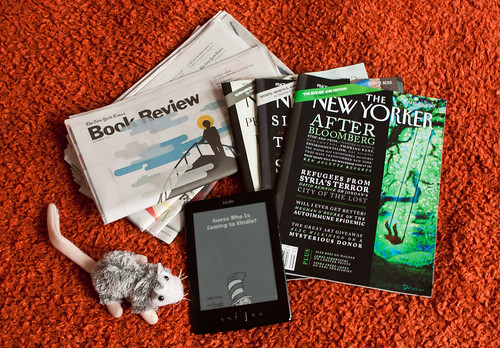
Presents from that Tim

Yesterday was the launch of the Books Are My Bag campaign, which aims to encourage people to go to their local bookshop. Tim and I joined in the fun by going to each of our favourite Bristol bookshops. For Tim, that would be Excelsior! Comics, for me it’s Foyles. Interestingly, the comic shop wasn’t decked out with orange bunting and Books Are My Bag posters, which made me wonder whether this is a general comic bookshop thing, that they don’t consider themselves, or don’t think other people consider them, to be bookshops? I’m a customer of both but perhaps I’m unusual in that?

Anyway, Foyles was indeed decked out with Books Are My Bag bunting and posters aplenty. And the campaign gave me a great excuse to buy a couple of books I’ve wanted for ages, plus I got a free tote bag and entry into a prize draw to win cool book stuff. I do hope the campaign drew in some new or more occasional customers and not just regulars like me.
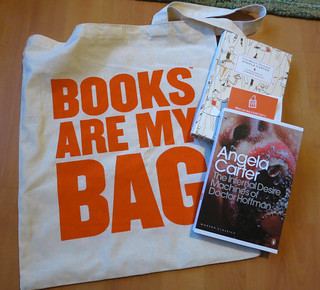
Books are my bag

Today we went to the zoo. The temperature seems to have dropped quite a bit this week, which is fine by me (I’m not the best with hot weather) and can actually make the zoo more fun too. For one thing there’s fewer people there. But also, for every animal that curls up and hides from the cold…

Keep warm

…there’s another that loves the cooler weather and is suddenly way more active.
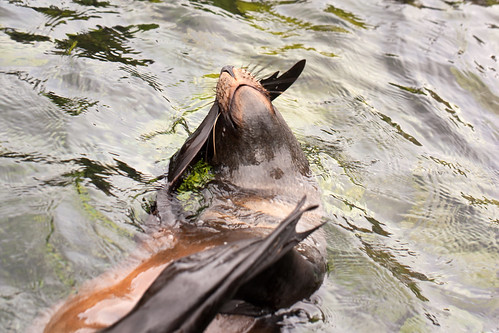
At play

And I do love me a penguin.

How have your weeks been? Did you join the bookshop party for Books Are My Bag yesterday?

Kate Gardner Blog

Chris Brookmyre at Bristol Festival of Ideas

September 11, 2013September 11, 2013 2 Comments

Flesh Wounds
Foyles, Bristol, 11 September

I really like Christopher Brookmyre, or Chris Brookmyre, as he’s branded these days. His books (or at least the ones I’ve read, which is quite a few) are funny, clever, insightful, satirical, sharply observed and just plain well written. But I tend to forget him when listing authors I admire (sorry, Chris) and that’s a shame because I really do. So big thanks to my friend L for asking me to go tonight’s talk with her. A quick glance at the number of his books I own gives some indication of the love I have for him.

Brookmyre books

The first Brookmyre book I read was A Big Boy Did It and Ran Away, which Tim borrowed from his friend (actually, the same friend who originally helped me to set up this website) and then told me I should read it as well because it would apparently explain to me why computer games, especially Quake, are so great. As well as being a good crime novel. And also funny. I very bravely (I’m shy, remember) put up my hand and asked Chris about this book tonight and he confirmed that he was indeed a lover of the Quake games, and he felt that those early days of online gaming made a really interesting subject for a book, though sadly he doesn’t play much these days.

But I’m getting ahead of myself. Chris Brookmyre was interviewed (in front of a surprisingly small audience – I feel I should reassure Chris that he is loved, though I’m sure his sales figures attest to that) by Julian Baggini about his new book Flesh Wounds and his career to date. Baggini asked some really interesting questions about the sociological and psychological insights into crime that Brookmyre excels at. I did enjoy Brookmyre’s insistence that he couldn’t pull off the perfect crime because he’s no good at standing up to authority (which is a little surprising considering how many of his books satirise major establishments) and in real life you can’t predict what the police will do, the way you can when you’re the novelist controlling them (fair point).

Brookmyre was refreshingly down to earth and accessible. He enjoys language, especially dialect, which I think clearly shows in his work. And he’s very self aware. He says that the violence in his books is deliberately slightly cartoonish because he wants to distance the reader from the reality of that side of things, because it’s never central to the story. I hadn’t really noticed that but on reflection it’s obviously true. As he said, there’s one book in which he contrives to have a character cut off their own head!

Brookmyre is also honorary president of the Humanist Society of Scotland and apparently has written some articles on the subject, which perhaps isn’t surprising having read some of his earlier books that talk about the Catholic Church. Interestingly he said tonight that back when he wrote those books he felt frustrated and angry that there wasn’t a voice for non-believers and that there was an unquestioned respect for organised religion, but now he feels that in many ways the war has been won – religion no longer has a free pass and atheism is widely accepted. Certainly, I’d agree that huge progress has been made but I definitely wouldn’t say the fight is over, even here in the UK, let alone elsewhere in the world. If I wasn’t so uselessly shy we could probably have had a good chat about that afterwards.

As it was, I got two books signed (including an embarrassingly dog-eared and tea-stained copy of The Sacred Art of Stealing that I had to reassure him was in that state because it’s “well loved”, which it absolutely is) and, possibly more importantly, was reminded that I greatly enjoy and admire this author and should read more of his work.

This event was part of the Bristol Festival of Ideas.

Kate Gardner Blog

Who doesn’t love penguins?

September 4, 2013September 4, 2013

Penguins on Film
Public lecture at Wills Memorial Building, University of Bristol, 4 September

Tim and I (mostly Tim) have a small obsession with Antartica. When we went to Cambridge last year a visit to the Scott Polar Museum was a must, higher even than the Wren Library (only just). We have amassed a small collection of books about the continent and record every TV programme about it.

Some books about Antarctica

I can’t speak for Tim, but for me one of the attractions of Antarctica is undoubtedly penguins. (Yes yes, I know they live elsewhere in the Southern Hemisphere too, even hot places. You can blame film for the association of penguins only with the extreme cold. Apparently.) They are brilliantly characterful animals. However hard you try not to anthropomorphise, watching them waddle along is unfailingly funny. Yet in water they are hypnotically elegant.

Clearly I am not alone in this love. Tonight’s lecture “Penguins on Film” was actually part of the 8th International Penguin Conference but was open to the general public and between the two interest groups the (pretty magnificent) Great Hall at the Wills Building was crammed full. The panellists gave five short talks about some very different experiences of penguins.

emperor penguin
Image source

The main presenter was Lloyd Davis, a world authority on penguins and engaging speaker to boot. He talked about how some misconceptions and misinformation about penguins stem from and are perpetuated by film, from the earliest footage 100 years ago by Frank Hurley (comedic, unnatural behaviour) to March of the Penguins (models of family values? Penguins don’t mate for life, they pick a new partner every season and aren’t necessarily faithful to that one) and many a cartoon in-between (inaccurate habitats or mixes of species).

While this was all a lot of fun, I kinda already knew all this and there’s an extent to which the portrayal of penguins as comedic does some good in engaging public interest. As the rest of the presenters proved, you can use penguins as a starting point to talk about climate change, how science is done, filming techniques and even new robotics technology.

Elizabeth White from the BBC Natural History Unit talked about some of the challenges of filming penguins for the TV series Frozen Planet. It was fantastic to see some clips from that show on a cinema-sized screen and in retrospect it showed the real contrast between BBC footage and basically anyone else!

The tough job of following that fell to Sue Murray of the Yellow-eyed Penguin Trust who showcased a video made in 1939 by amateur ornithologist Lance Richdale of an endangered penguin species that led both to the charity that works to protect the birds and also to a tourism industry that generates millions of dollars for a remote part of New Zealand. Sadly it’s a more interesting story than film, though it was fun to see Richdale’s wife weighing penguin chicks like you might a human baby.

Phil Trathan from the British Antarctic Survey spoke about how he and a colleague used satellite imagery and aerial photography to identify penguin colonies and to track changes in those colonies over the last five years. It was interesting to hear that, while initially his work led to a doubling of the estimated number of emperor penguins (because satellites can see areas basically inaccessible by land), it has also revealed the loss of whole colonies where sea ice is drastically reduced year on year as a result of climate change.

Finally, Bristol University’s very own Peter Barham and Tilo Burghardt demonstrated how the spycams embedded in penguin robots created for the TV series The Spy in the Huddle have been adapted for scientific research uses such as identifying what species of penguin it is looking at or even recognising individual African penguins by the pattern of spots on their chests. Sadly they didn’t have time to explain why this is useful (here’s a video Peter Barham made earlier), though they did find time for a fun demo of the robot’s new ability to recognise human emotions by getting a volunteer up on stage to pull faces at the spycam. No doubt this too will have extrapolations for biological research. If only there had been more than an hour!

Kate Gardner Blog

August reading round-up

August 31, 2013September 2, 2013 2 Comments

Doesn’t summer speed by? Though I’m hoping for a few more weeks of sunshine, and though it’s many many years since I left school, I still tend to think of 31 August as the last day of summer. I will be picking out some autumnal reads for September, whatever the weather. Maybe a murder mystery.

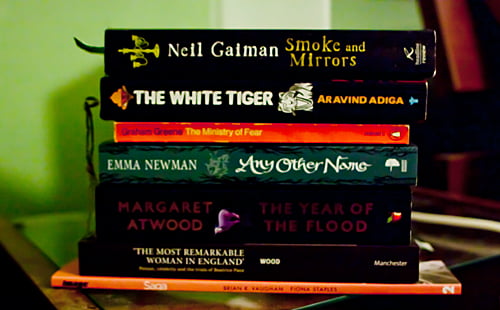
This month I got back on track with short stories, though I didn’t finish all the novels I’d planned to. I saw Margaret Atwood talking about her new book, which was pretty darned great. And Tim and I celebrated 11 years together. A third of our lives. That’s kinda crazy. We were so young back then!

2002 was a long time ago

Books read

White Tiger by Aravind Adiga (review here)

The Ministry of Fear by Graham Greene (review here)

The Year of the Flood by Margaret Atwood (review here)

All Dogs Are Blue by Rodrigo de Souza Leão (review here)

Smoke and Mirrors by Neil Gaiman (review to follow)

Short stories read

“An inch and a half of glory” by Dashiell Hammett (New Yorker, June 10 & 17, 2013)

“From the diaries of pussy-cake” by Gary Shteyngart (New Yorker, June 10 & 17, 2013)

“Twisted” by George Pelecanos (New Yorker, June 10 & 17, 2013)

“Rough deeds” by Annie Proulx (New Yorker, June 10 & 17, 2013)

“Slide to unlock” by Ed Park (New Yorker, June 10 & 17, 2013)

“A & P” by John Updike (New Yorker Fiction Podcast)

“The twain” by Fabian Acker (Popshot Magazine, Issue 9)

“How to be a writer” by Kirsty Logan (Popshot Magazine, Issue 9)

“Together and parting” by Elahzar Rao (Popshot Magazine, Issue 9)

“Spine” by Patrick Griffiths (Popshot Magazine, Issue 9)

“The ingenium” by Kirstie Smith (Popshot Magazine, Issue 9)


So how has your August been? Any plans for September?

Kate Gardner Blog

Margaret Atwood at Bristol Festival of Ideas

August 29, 2013September 4, 2013 2 Comments

Maddaddam
St George’s Hall, Bristol, 28 August

It seems whenever I book tickets for something months in advance, life conspires to try to spoil it for me. Like last night. Once again, Tim wasn’t able to come with me (thankfully some friends from work also had tickets so I wasn’t alone for the journey there at least) and my knee was randomly super painful, particularly on steps. And St George’s Hall has a lot of steps (it is very pretty though). But on the plus side I got to see Margaret Atwood in real life and hear her speak and get her to sign not one but two books for me! So that part was pretty good.

I met Margaret Atwood today

The event was primarily about the Oryx and Crake trilogy, and in particular the third book Maddaddam, which was published in the UK yesterday. So obviously I bought the brand new hardback and got it signed even though I have the other two books in paperback and now they won’t match or even fit on the same shelf. Oops. But it seemed like it would be silly not to, while I was there and she was there. Right?

The interview started with the influences on the trilogy, which is perhaps an easy list to guess for anyone who’s read any of the books, but Atwood embellished with interesting facts and plenty of dry wit. There really are glowing green rabbits (created by splicing jellyfish genes with rabbit), which she says were originally developed for a magician, and spider-goats, developed to create bulletproof silk – “people have opened the genetic toybox and they’re mixing and matching”. When asked if she sees herself as a critic, observer, satirist or optimist of issues such as gene-splicing, Atwood replied that she’s all of those things (which is interesting as I thought the books came down firmly against, but perhaps I misread the tone). She went on to say that people are afraid of what they don’t understand and we’re right to be afraid of our own power but wrong to be scared every time.

Anthropology and psychology seem to be big influences on Atwood (indeed, she subscribes to New Scientist and devours all the popular science, especially biology and epidemiology, she can). When asked about how she was able to describe people living after the, ahem, event of this trilogy, she made the acute observation that basic human traits, “our essential smorgasbord”, have not changed since the days of the caveman – we’re all susceptible to love, rage, jealousy, etc, therefore no changes in technology – or loss thereof – are going to change human emotions.

Talking more generally about storytelling, Atwood said “the reader is the violinist of the text…I’m just the originator”. She also touched on a subject that fascinates me: the link between memory, language, storytelling and religion. Memory evolved to allow us to anticipate the future. And once a language has a past and future tense, we start telling stories, and an important part of that is a theology of where we came from. And that brings us back to Maddaddam, which apparently develops the religion of Crake’s children.

There were many more highlights that I scribbled down but I’ll finish with the story that Atwood seemed most eager to tell: the cover design. The first cover she was sent was flowers and a bee: totally girly and not at all reflecting the content of the book. Inspired by Maureen Johnson’s excellent Coverflip challenge Atwood asked for something different, something dynamic and maybe even scary. It took a lot of revisions but you have to admit that the new cover may have pink on it but it sure isn’t girly. Freaky, unnerving and intriguing, yes.

This event was part of the Bristol Festival of Ideas.

Kate Gardner Blog

Book spine poetry

August 20, 2013 2 Comments

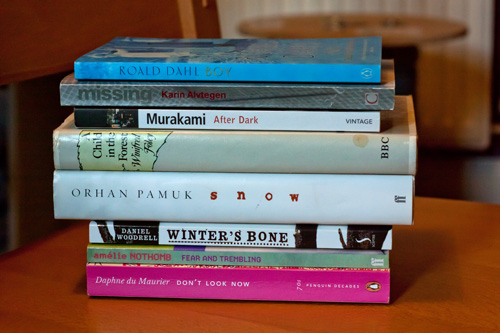
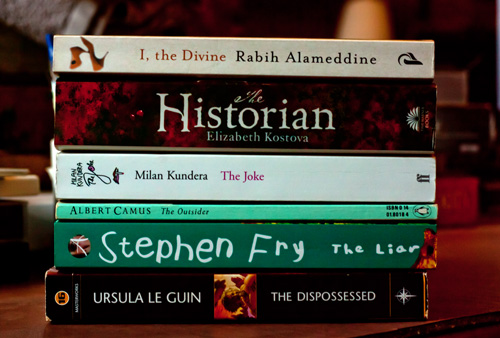
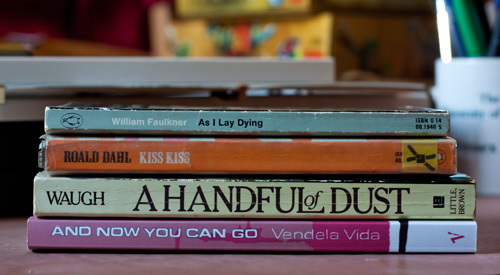
I know, I know, book spine poetry was big back in 2011. But I didn’t get round to it back then and I had a sudden urge to have a go, so here are my rudimentary attempts.

Poem one

Boy missing, after dark
A child in the forest
Snow, winter’s bone
Fear and trembling
Don’t look now

Poem two

I, the divine,
The historian, the joke,
The outsider, the liar,
The dispossessed

Poem three

As I lay dying
Kiss kiss
A handful of dust
And now you can go

So have you ever tried creating poetry from book titles? Please do share links to yours or your favourites from other people.

Kate Gardner Blog

Sunday Salon: Mooching

August 11, 2013 8 Comments

The Sunday Salon

I don’t know about you, but some weekends I just need to switch off and relax. But how I relax might mean different things at different times. For instance, I had planned to spend this weekend reading solidly, maybe even treat it like a read-a-thon with goals and a little stack of pre-selected books. But when the weekend rolled around I found that I needed something else. So I have read for maybe an hour or two total, but I have slept a lot, eaten good food, watched TV and films, listened to music, sat outside in the sunshine, laughed with friends and with Tim. And now I feel rejuvenated.

How do you relax? Do you need different types of down time?

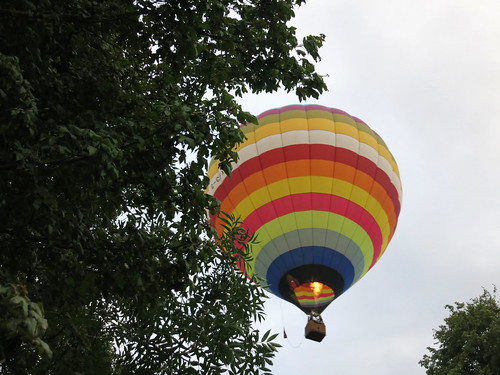
Incidentally, this week is Bristol International Balloon Fiesta, so there’s been a lot of this:

Untitled

Plus the roar of various stunt planes overhead, the pounding bass of the music every evening, fireworks that we can just about see over the rooftops. It’s one of the things I love about this city.

And now that my brain is back online, I have a backlog of reviews to write, not to mention another Graham Greene book to read for Simon of Savidge Reads’ wonderful challenge Greene for Gran, in which he encouraged us all to read some Graham Greene in honour of his recently departed grandmother, as Greene was her favourite author. It’s such a lovely idea and great to be reminded how brilliant Greene was.

What are you up to this weekend? Have you rediscovered any authors lately?

Kate Gardner Blog

July reading round-up

July 31, 2013July 31, 2013 5 Comments

Is it this time again already? The month started so well, with our lovely lovely holiday in Cornwall where I did a whole lotta reading. But since then I have finished just one more book. One. In two and a half weeks. It’s like I overindulged on holiday and needed to lay off for a while! And I’ve not got through many short stories either because I usually listen to them at the gym and, well, I’ve not been to the gym a whole lot this month. Truly, I am disappointed with myself. I’ve also been a bit rubbish at posting reviews.

Clearly I need to buck up for August. My stack of books for next month’s reading is pretty big already, but on the plus side I’m looking forward to every single one. (And I’m already partway through two of them, which may help my goals a tiny bit.)

August book stack

Books read

The Wine of Solitude by Irène Némirovsky (review here)

Mrs de Winter by Susan Hill (review here)

Ashes by Sergios Gakas (review here)

Between Two Thorns by Emma Newman (review to follow)

The Snow Child by Eowyn Ivey (review to follow)

Short stories read

“The children’s grandmother” by Sylvia Townsend Warner (New Yorker fiction podcast)

“Cryptology” by Leonard Michaels (New Yorker fiction podcast)

“Special delivery” by Emma Newman (read by the author here)

“A fair exchange” by Emma Newman (read by the author here)

“The quiet librarian by Emma Newman (available online here)

“Wilderness” by Sarah Hall (online here)

Kate Gardner Blog

Sunday Salon: Women on banknotes? Oh my.

July 28, 2013 2 Comments

The Sunday Salon

So there’s been a bit of controversy lately about women on UK banknotes, or rather the lack of them. It began in April when the Bank of England announced that from 2016, Winston Churchill will replace Elizabeth Fry on the £5 note. This caused a bit of an upset because Fry is currently the only woman on any of the four UK banknotes. In fact, the announcement led people to take a look at the full list of figures ever featured on our banknotes and notice that women have always had pretty low representation. Which started a whole equal representation campaign.

Following this campaign, this week the Bank of England announced that the next £10 note will feature Jane Austen (also in 2016). So that’s alright then, isn’t it? They’ve picked a historically significant woman, and a writer to boot. I should be thrilled!

The thing is, Jane Austen is not the woman I would have chosen. She’s not even the writer I would have chosen and I’d probably have leaned toward woman scientist over woman writer, to be honest. Rosalind Franklin, Ada Lovelace, Dorothy Hodgkin – they all have a much stronger case for how much they contributed to the betterment of society and as role models than Jane Austen, surely?

But that’s not to say that literature can’t contribute to society. Clearly I don’t believe that. Perhaps it’s because I’m not an Austen fan, but she’s just never seemed particularly revolutionary to me. She was a woman, yes, and that in itself was unusual for the time. But that can’t be enough to make her an admirable figure. She wrote about a very narrow section of society. I hate to repeat the trope that she only wrote about money and marriage, but there is something in that accusation.

So which woman writer would I choose? Obviously she must be British and meet the other Bank of England criteria (which are currently under review, following the whole Churchill debacle). Well, I’m not the biggest George Eliot fan either (I loved Silas Marner, was less thrilled with Silly Novels by Lady Novelists and gave up on The Mill on the Floss – but that was a long time ago so please don’t judge me!) but she certainly seems to have covered a lot more of British society than Austen. I am a fan of Virginia Woolf and she was central to an artistic movement (Modernism), co-founded a publishing house (Hogarth Press) and contributed a lot to the growth of feminism. However, she might be considered too controversial for the Bank of England, between her bisexuality, depression and suicide. I hope not.

Which British female historical figures do you think deserve to be honoured on our banknotes? Do any novelists rank up there for you? Do you think this is even a debate that needs to happen or do you shy away from positive discrimination? I’d love to hear your thoughts.

Kate Gardner Blog

Holiday in pictures

July 20, 2013July 20, 2013

I have been meaning to blog about our very lovely holiday in Cornwall for a week now, but getting back to real life has been super busy. So here are a few nuggets and some photos. Hope you’re all enjoying lovely weather wherever you are.

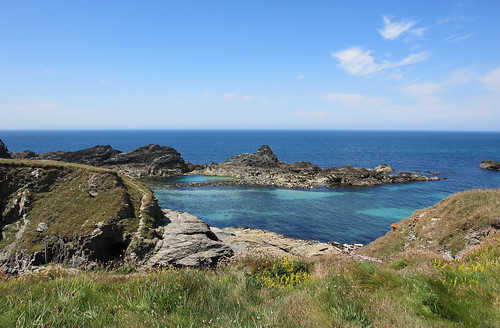
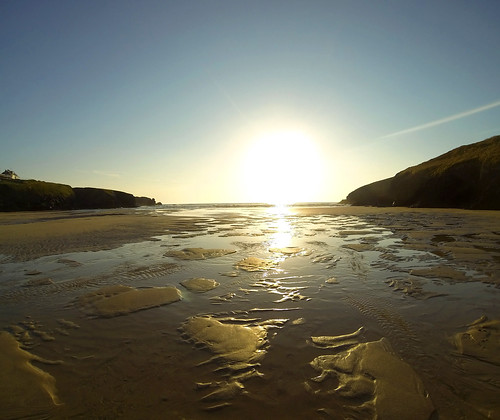
The colours of sea and sky were impressive. The British seaside rarely looks this…tropical.
Holiday seas

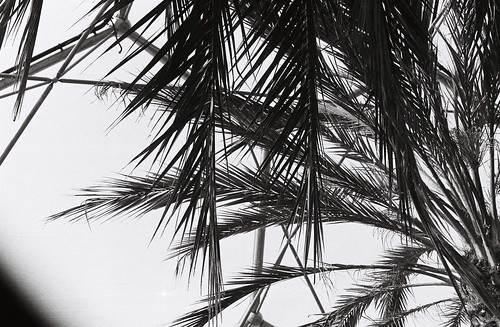
Typically, I had black and white film in my camera, but I got some nice shots with it.
Throwing shapes

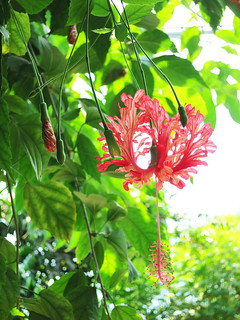
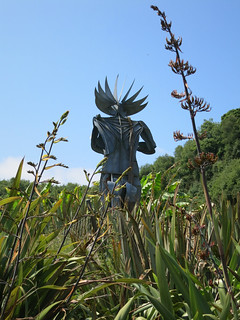
We finally made it to the Eden Project, which is brilliant.
Bright flower Untitled

Untitled

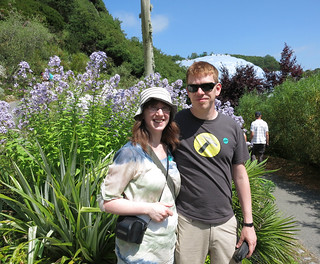
And we generally chilled out with good friends and a great location.
Oh yeah

Astonishingly I didn’t entirely melt in the heat and I managed to read four books in a week! Which totally justifies my packing five books, even if one of the books I read was borrowed from the holiday home, right?

If you want to see more of my holiday photos, they are in a set on Flickr.

Happy July, folks.

Kate Gardner Blog

Posts pagination

1 … 35 36 37 … 54

Archives

RSS Nose in a book

  • February 2026 reading round-up
  • Book review: The Stories of English by David Crystal
  • Book review: Monkey Grip by Helen Garner

Me on the internets

  • @kate_in_a_book@mas.to (Mastodon)
  • Flickr/noseinabook
  • Instagram/kate_in_a_book
  • StoryGraph/kate_in_a_book

Categories

  • Blog
  • Reviews
  • Uncategorized
Proudly powered by WordPress | Theme: Dream by vsFish.