Nose in a book

Reviews and other ramblings

  • Home
  • Reviews archive
    • Book reviews
    • TV reviews
    • Theatre reviews
  • TBR
  • Challenges
    • The Classics Club
    • 2014 Popular-Science Reading Challenge
    • Cookery challenge
    • The Gilmore Girls Reading Challenge
    • 2013 TBR Pile Challenge
    • 2013 Translation Challenge
    • Crime and Punishment read-a-long
  • About
    • Cookie legal stuff
  • Home
  • Reviews archive
    • Book reviews
    • TV reviews
    • Theatre reviews
  • TBR
  • Challenges
    • The Classics Club
    • 2014 Popular-Science Reading Challenge
    • Cookery challenge
    • The Gilmore Girls Reading Challenge
    • 2013 TBR Pile Challenge
    • 2013 Translation Challenge
    • Crime and Punishment read-a-long
  • About
    • Cookie legal stuff

Author: Kate Gardner

I live in Bristol and I like to read books and share what I thought about them here. I read mostly general or literary fiction, with pretty much every genre making an appearance from time to time. I love to receive comments, whether you've read the same books or not!

The 2014 Popular-Science Reading Challenge

December 8, 2013December 8, 2013 5 Comments

2014-pop-sci-reading-challengeAs I briefly mentioned a couple of weeks ago, I have set myself the goal of reading more popular science in 2014. It’s a genre I have enjoyed on the very few occasions I have dipped into it, so I’m not really sure what has been holding me back. To spur me on, I thought I’d make into a challenge, so here we go.

I think the aim will be to read one popular-science book per month (though I’ll still count it as a success if I manage to read 10 in a year). I’ve put together a list of titles recommended to me by people I trust (below), but this is just a starting point (and also a much longer list than I’ll get through in a year). Any popular science (including biographies or other forms of science history) will count.

I’ll create a page to keep track of how I’m doing in this challenge shortly. Does anyone fancy joining me? If so, feel free to use the button I have created (with huge thanks to Doublecompile for making the line drawing available through Creative Commons) and let me know how you get on!

Without further ado, here’s the list I’ll be starting from:

A Hole at the Bottom of the Sea: the Race to Kill the BP Oil Gusher by Joel Achenbach
The Edge of Physics: Dispatches from the Frontiers of Cosmology by Anil Ananthaswamy
Silent Spring by Rachel Carson
Why Does e=mc2? by Brian Cox
Smile or Die by Barbara Ehrenreich
Measure of the Earth: the Enlightenment Expedition that Reshaped the World by Laurie Ferreiro
How the Hippies Saved Physics: Science, Counterculture and the Quantum Revival by David Kaiser
The 4% Universe: Dark Matter, Dark Energy, and the Race to Discover the Rest of Reality by Richard Panek
Packing for Mars by Mary Roach
Stiff by Mary Roach
Fermat’s Enigma by Simon Singh
The Immortal Life of Henrietta Lacks by Rebecca Skloot
Backroom Boys by Francis Spufford
The Double Helix by James Watson

I’ll add to this list any further recommendations that take my fancy. So who’s with me?

Kate Gardner Blog

Dark suggestions of extramarital affairs, hidden wealth and poisoning

December 6, 2013

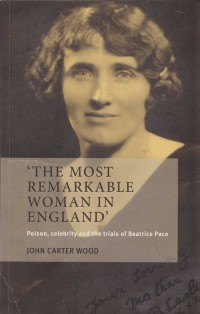
The Most Remarkable Woman in England

The Most Remarkable Woman in England:
Poison, celebrity and the trials of Beatrice Pace

by John Carter Wood

I think I first heard about this book in the Guardian, which goes to show that I do still occasionally read newspaper review pages and like something I see there. Now, I mostly liked the sound of this book because it’s about a historical event (okay, a death that may or may not have been murder) in the Forest of Dean, but it’s about so much more than that, tapping into issues around celebrity, poverty, gender equality, domestic violence and depression.

The history being recounted here is that of Harry Pace, a quarryman and sheep farmer who died in 1928 slowly and painfully, aged just 36, and his wife Beatrice Pace who was accused of murdering her husband by poisoning him. The long-drawn-out inquest and subsequent trial were the sensational news story of their day, not just locally in the Forest of Dean but also nationally, with details both revealed and (amazingly) kept hidden about infidelities, domestic violence and other dark secrets.

“[Harry Pace’s death might have] remained as obscure as that of any other working-class person. But investigations by the local police were soon accompanied by dark suggestions of extramarital affairs, hidden wealth and poisoning. The local coroner’s decision to postpone the funeral and order an urgent post-mortem suddenly made Harry’s demise newsworthy, especially when it was later proven that he had died from a large dose of arsenic. Precisely how it had gotten into his body was anything but clear, but there were only three obvious possibilities – accident, suicide or murder – and, at first, no way of deciding among them.”

You might think that a book about a mysterious death in (or very near to) my hometown back in the 1920s sounds a bit gruesome and/or specialised. But while the setting was certainly the reason for my initial interest, it was the way the story was told that kept me hooked.

Because this is a really well written book. Wood, a historian, acknowledges himself on his blog that he was trying to write for both a general audience and an academic one, and I think that shows, but not at all in a bad way. I have tried to read a few historical books written for a popular audience and generally I’ve struggled. Even the super successful The Suspicions of Mr Whicher, which it’s hard not to compare this to, didn’t entirely get it right in my view.

The way in which Wood does get it right is, to begin with, his identifying what it was about the case that made its players instantly famous. He has some very smart things to say about celebrity culture being tied to social and political changes, such as women’s liberation or distrust of the police force. Wood quotes extensively from original sources, which serves two purposes: you are left in no doubt as to where each fact/opinions comes from, and you get a real flavour of the time and place. Papers quoted Beatrice and other key witnesses extensively (and indeed both Beatrice and her oldest daughter had their stories serialised in the national press) so there’s lots of material to be drawn from and Wood has done an admirable job picking out the right lines to tell his story.

“The ‘seemingly interminable’ inquest stretched through April and May, attracting ever more attention. By mid-May, the World’s Pictorial News observed: ‘Throughout all these months of inquiries, throughout all the ten hearings before the Coroner, the widow has been called upon to face the gaze of curious eyes. Crowds flocked into Coleford from villages for miles around to see the woman who had become such a figure of public interest.'”

Because this is after all Wood’s story above all. He works at the Institute of European History in Germany, specialising in the history of crime, policing, violence and media; and those interests are very much at the fore. Which is in many ways what makes this book interesting – it doesn’t just lay out the facts and then have a stab at “solving the case”, instead it uses the case as a detailed case study. And they’re all fascinating subjects that are still relevant now.

I know that this book worked in a narrative sense because for most of the time I was reading it I felt a prickling at the back of my neck that I only get from a good crime book, whether true or fictional. It really is a very readable book, despite its extensive references. I’ll keep an eye out with interest for the next research interest Wood decides to expand into a whole book. I’d also like to thank Wood for e-mailing me with the genuinely interesting fact that the journalist most involved in covering the Pace case, Bernard O’Donnell, was the father of Peter O’Donnell, who created (and wrote the many many stories about) the character Modesty Blaise, who I really like. That’s a good fact.

Published 2012 by Manchester University Press.

Source: Christmas present from my Mum.

Kate Gardner Reviews

If nothing comes near, I’ll be here, still

December 2, 2013

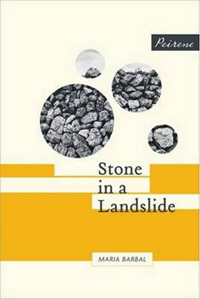
Stone in a Landslide

Stone in a Landslide
by Maria Barbal
translated from Catalan by Laura McGloughlin and Paul Mitchell

This book takes a whole life and tells it in less than 120 pages, which is both its strength and its weakness. There is some beautiful writing, but there’s also a lot of speeding past things that another writer might have taken a whole novel to explore. It feels like a bit of a missed opportunity.

The life told is that of Conxa, a poor Catalan woman whose story begins when she is a child in the early 20th century. There are three major things that happen in her life that each could have been central to a chunky novel but here are dealt with in 10 or 15 pages. First, she is from a large rural family that can’t easily support all the children, while her aunt and uncle are childless and need help to manage their house and land, so at 13 Conxa is sent on a day’s journey, the furthest she has ever travelled, to begin a new life at her aunt’s house. She has gone from countryside to small town, from familiar to unfamiliar and it takes years for her to settle in.

“My mother was a woman who knew only two things: how to work and how to save…She was always the last to go to bed and sometimes she’d say a rosary. But for all her devotion, I’m sure she didn’t even get to half a mystery. Her tiredness must have held her trapped, like a sparrow in a snare.”

Perhaps the biggest thing, from Conxa’s perspective, is her falling in love with Jaume. He’s a builder and carpenter who travels a lot for his work, and consequently is much more worldly and politically aware then Conxa, who shies away from such things. I found it difficult to sympathise with Conxa’s lack of interest in the wider world, even though the story is narrated by her voice, so we hear her reasons first hand. It keeps the story very narrow, telling just her life rather than the history of the world or Spain or even just Catalonia at that time, which I can see has its advantages, but it’s not the perspective I would prefer to read.

The final major event for Conxa is the Spanish Civil War. While the First World War appears to have happened without even a hint of it in Conxa’s narrative, the Spanish Civil War is unavoidable. Jaume’s interest in politics makes his absences from home suspicious and it’s little surprise when terror comes to their doorstep. But still Conxa never offers explanation or her own opinion, only fear.

“I feel like a stone after a landslide. If someone or something stirs it, I’ll come tumbling down with the others. If nothing comes near, I’ll be here, still, for days and days.”

Weaving between and around these three is the everyday life of sustenance farming and village gossip. And none of these are things that lack interest, or told badly, only too briefly to really make me feel involved. I usually like spare prose but I think this was too much of an extreme and I just wanted there to be more to it.

Pedra de Tartera published 1985 by Columna Edicions.
This translation published 2010 by Peirene Press.

Source: Bought direct from the publisher.

Kate Gardner Reviews

November reading round-up

November 30, 2013November 30, 2013 1 Comment

This month has felt full and busy yet I’m not sure I could tell you what I filled it with. I definitely seem to be over my reading hump, though I’ve still not finished that book of Orhan Pamuk essays I started back in September. I did finish the Little House series, which was surprisingly emotional for me. I certainly got sucked into that world by the end!

I also started thinking about my 2014 reading goals (it’s the Christmas planning that did for me, I think), which I’ll post more about soon. But mostly everything seems to be about Christmas already. There’s presents to buy, travel to arrange, outfits to plan and goodness knows what else I’ve forgotten. I was going to say I remember when Christmas was just about the one special day, but I don’t think that’s true. When I was little there was the school nativity play, the church nativity play, the Christingle service, the church carol service, the school carol service, Santa coming to switch on the lights in our town, Santa coming to switch on the lights in the next town over (where my Dad’s from), the day we put up the tree and other Christmas decorations, and last but not least Boxing Day at my grandparents’, which was like a second Christmas Day. So maybe these days I get off lightly!

But 2013 isn’t over yet. I have one month left to work on this year’s reading goals. Now I just need to figure which books to save for that week off work over Christmas…


Books read

The Long Winter by Laura Ingalls Wilder (review here)

A Handful of Sand by Marinko Koščec (review here)

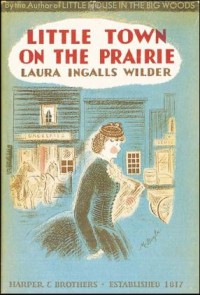
Little Town on the Prairie by Laura Ingalls Wilder (review here)

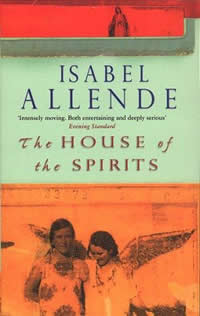
The House of the Spirits by Isabel Allende (review here)

Stone in a Landslide by Maria Barbal

The Most Remarkable Woman in England by John Carter Wood

These Happy Golden Years by Laura Ingalls Wilder


Short stories read

“Cathedral” by Raymond Carver (Selected Shorts podcast)

“Dating Jane Austen” by T C Boyle (Selected Shorts podcast)

“You were perfectly fine” by Dorothy Parker (Selected Shorts podcast)

“Unprotected” by Simon Rich (Selected Shorts podcast)

“The day the dam broke” by James Thurber (Selected Shorts podcast)

“Center of the universe” by Simon Rich (Selected Shorts podcast)

“The Tablecloth of Turin,” by Ron Carlson (Selected Shorts podcast)

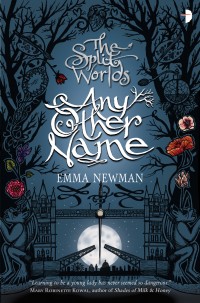
“The lesson” by Emma Newman (available online here)

“Tourists” by Emma Newman (read by the author here)

“The letter” by Emma Newman (read by the author here)

“The verdigris set” by Emma Newman (read by the author here)

“Escapism” by Emma Newman (read by the author here)

“The business of art” by Emma Newman (read by the author here)

“Overdue” by Emma Newman (read by the author here)

How has your reading month been? Are you hastily trying to tick off your 2013 goals? Or are you done with all that now and enjoying some relaxing reading before the new resolutions kick in in January?

Kate Gardner Blog

The wind had a desolate sound

November 27, 2013 1 Comment

Little Town On The Prairie

Little Town on the Prairie
by Laura Ingalls Wilder

I read a couple of other books in-between, but now I’m back with the Little House series. Not many left to go now. This is book 7 in the series, so this review may contain spoilers for the previous titles.

I have mixed feelings on this one. After three great books in a row, this one just didn’t maintain the standard. I mean, obviously I am now hooked and want to find out how things turn out for everyone, so I’ll keep reading the series, but there was something missing here.

This book follows on from the terrible winter of 1880–1881 and shows the Ingalls family finally back on their feet, getting the land producing and getting used to the town of De Smet as well. Certainly, plenty of things happen – Mary finally leaves for the blind college in Iowa, Laura has some trouble with a teacher at school, Carrie has some health troubles, Almanzo Wilder starts showing an interest in Laura, though she doesn’t seem to have figured out why yet – but I suppose after the genuine fear-for-their-lives stuff of the last few books – a plague of locusts! wild fires, wild gangs of men, seven long months of blizzards – it all feels a bit tame.

Pa is becoming a bit of a town elder. And Ma now has a church social group, though she doesn’t like the priest. Until the last few pages of the book, it’s all got very settled, but I’m not even sure that’s what bothered me. Several times, there would be a major plotline about something negative, and then with the very beginnings of a possible solution, the subject wouldn’t be mentioned again.

It’s not that I disliked this book. It still had charm and great characters. I guess now the family’s settled there’s not a lot of historical stuff here for me to learn, but there are still anecdotes that stuck with me enough that I found myself recounting them to people who ask me about my reading.

“The wind had a desolate sound. The sun was small and the sky was empty of birds. On the endless dull prairie the grasses lay worn-out and dead. The schoolhouse looked old and gray.”

First published 1941.

Source: Google Books.

Kate Gardner Reviews

Sunday Salon: Reading plans for 2014

November 24, 2013 3 Comments

The Sunday Salon

It’s probably foolish to make any 2014 reading plans, considering I’ve not been great at the challenges I set myself this year and work is only getting busier. And yet, I keep having ideas for my 2014 reading that really excite me, so I thought I’d share them with you.

First, what did I set myself to do in 2013 and how, with five weeks of the year left, am I doing against those goals?

Well, this year I signed up to two challenges and a read-a-long, plus I set myself a challenge. The read-a-long of Crime and Punishment was run by Wallace of Unputdownables and was a great success. I (and many others) managed to get through a book I had previously given up on and I’m really glad that I did persevere. The 2013 Translation Challenge is run by Ellie of Curiosity Killed the Bookworm with the goal to read one translated book per month. I’ve actually not achieved that every month, but on the other hand in several months I’ve read more than one translated book. I think translated fiction has become a bigger part of what I read and I hope to continue that without needing a specific challenge.

The 2013 TBR Pile Challenge is run by Roof Beam Reader and it’s probably the goal I needed the most. I have so many books that have sat on my shelves unread for years. I have read eight and a half of the 14 I listed for myself, plus I tried and discarded one. I could have done better and I probably need to have a think about what’s putting me off picking up those books. Certainly it hasn’t helped reduce the size of my TBR, which is almost exactly the same number of books now as at the start of the year. I just love books too much to not buy new ones! But my biggest failure by far is the challenge I set myself – the Cookery Challenge. I said I would make more use of my many cookbooks and blog about them one by one. So far I have blogged about just two of my cookbooks. It’s a poor show.

So that’s 2013 so far. But what are these grand ideas I’ve had for 2014? Well, there are three and if anyone is running a challenge related to any of these I’d be interested to see it, so let me know!

Set

Science fiction
As a teenager I read some classic science fiction along with everything else I could get my hands on to read. But as an adult I haven’t read that much of it. I tried a few years back to get better at this, with some guidance from Tim, whose reading is about 90% SF. But this year I notice I have been especially bad at including any SF in the mix, so I’m going to make it a specific goal for 2014. But what form should that goal take? One random SF book per month? Read my way through the Gollancz SF Masterworks series à la Gavin back in his Gav Reads days? I’d quite like to find some good SF by women, so if anyone has any suggestions I’m all ears.

Popular science
I don’t read a whole lot of non-fiction, but I do like a good essay and I like to learn things. As an English graduate who works with mostly science graduates, I am finding that the scientists tend to be open to and enjoy the arts but a lot of my arts friends shy away from science. There’s a lot of fear of science as something hard or “other”. I think science is fascinating and an important part of understanding the world around us and I’d like to know more, hence this goal. I asked a few people for recommendations of really good popular-science books and the plan is to create a list and read my way through it. I’ll publish the list in December and am open to further ideas on this.

Untitled

Re-reads
I own thousands of books, the majority of which I have read and kept because I thought I’d like to read them again some day. But since university I have done very little re-reading and what little I have done has largely been provoked by book clubs choosing something I’d previously read, rather than my own overwhelming urge. Partly this is because I am aware of just how many great books are out there, more than I will ever be able to get to. And partly it’s a fear that a book I loved first time round won’t seem so great on a re-read. But there are so many books I have put down thinking how I would get even more from it on a second read. And so many I read 10 years ago that I have mostly forgotten but know I loved. I think it’s about time I stopped being scared and made time to re-read, even if it’s just four or five books per year. I’m not sure if this should be a challenge per se or just something to keep in the back of my mind.

Have you starting thinking about goals for 2014 yet, reading or otherwise? Do you like to be involved in lots of challenges and projects?

Kate Gardner Blog

The reality of the present was a kaleidoscope of jumbled mirrors

November 19, 2013November 19, 2013

The House of the Spirits

The House of the Spirits
by Isabel Allende
translated from Spanish by Magda Bogin

I had been meaning to read Isabel Allende for years, so I heartily encouraged this book-club choice. I knew absolutely nothing about it going in but I did know a little about the author and it was interesting how that coloured my reading, especially toward the end of the book.

This is both a family saga and the tale of a country over the span of 70 or so years, beginning at the start of the 20th century. The country is clearly Chile though it’s never named. The characters – beginning with Clara del Valle as the youngest child of a large, wealthy family – and their lives are described by two narrators, one of whose identity becomes clear early on and another whose identity is not revealed until the epilogue. The longest-lived character – and therefore in some ways the largest presence in the book – is Esteban Trueba, whom I found inscrutable. He’s not hugely likeable but he’s also not 100% bad; he has genuine complexity that makes him difficult to write off or ignore.

In fact, that’s true of all the characters, despite the many stories packed in here and the sometimes extreme views depicted, they remain believably human. The family is not a metaphor – they’re well-drawn characters with shades of grey and sometimes confused loyalties – but they do represent types of people in Chile to an extent – rich landowner, activist student, charitable middle class, etc.

“She was one of those people who are born for the greatness of a single love, for exaggerated hatred, for apocalyptic vengeance, and for the most sublime forms of heroism, but she was unable to shape her fate to the dimensions of her amorous vocation, so it was lived out as something flat and gray trapped between her mother’s sick room walls.”

In the beginning I found this book funny, charming and lovely, but then we get some shocking scenes – such as Esteban Trueba mistreating his farm tenants – that remind you that this is a book with a political agenda. Not that it’s rammed home at the cost of good storytelling, by any means, but I did find that the novel moved a little uneasily from family story with politics in the background to an overtly political story with the few remaining family members directly involved in the politics.

“She felt that everything was made of glass, as fragile as a sigh, and that the machine-gun fire and bombs of that unforgettable Tuesday had destroyed most of what she knew, and that all the rest had been smashed to pieces and spattered with blood.”

This book is an often-cited example of magical realism and it certainly starts with lots of magical/fantasy elements but they fade away until they’re only a memory of the surviving characters. Which I suppose forms part of the political message getting darker and more overt as the book goes on. But perhaps the magic is also part of the old way of life, which has been lost irretrievably.

“Childhood came to an end and she entered her youth within the walls of her house in a world of terrifying stories and calm silences. It was a world in which time was not marked by calendars or watches and objects had a life of their own, in which apparitions sat at the table and conversed with human beings, the past and future formed part of a single unit, and the reality of the present was a kaleidoscope of jumbled mirrors where everything and anything could happen.”

I did feel that the earlier politics was dealt with more subtly, with distance, whereas the later politics felt much more angry and personal. This reflects to some extent the characters who are the two narrators, but it also seemed a lot like Allende’s own anger, which would certainly be understandable. And the end section of the book is certainly gripping – probably the only section that truly is – but it felt like a very different novel, at times hardly even a novel but more an account of Chile in the 1970s.

We all agreed at book group that this novel is very readable, though it’s not one to rush through. And it is perhaps a little overlong – it could easily have been trimmed. But overall it’s enjoyable, and I am interested in reading more Allende.

La casa de los espíritus published 1982 by Plaza & Janés.
This translation published 1985 by Jonathan Cape/Alfred A Knopf.

Source: Waterstones Bristol.

Challenges: This counts towards the Rory Gilmore Reading Challenge.

Kate Gardner Reviews

A thick, pulsating silence gushed from the walls

November 16, 2013 1 Comment

A Handful of Sand

A Handful of Sand
by Marinko Koščec
translated from Croatian by Will Firth

I ordered this book after Tony of Tony’s Reading List blogged about new publisher Istros Books, who specialise in fiction translated from Eastern Europe. They have lots of authors who have won big literary prizes in the Balkans but somehow have not previously been translated into English, so I am glad that they exist. However, I must admit I was not entirely won over.

The writing is very lyrical. The story is about two lonely people (narrated by them alternately) who are heading towards romance, and how all-consuming and overwhelming passion can be. It takes its time, examining more than a decade of their lives and how they come to be the people they are with the attitudes to love that they have. But it’s not just a love story, it’s also a story about parents and children and how that relationship changes as the children become adults and the parents are the ones who need support.

“A thick, pulsating silence gushed from the walls, filling the whole space and burning my throat. I went to bed around midnight; Mother lay directly below, down on the ground floor. Needles stabbed from the depths of the night. At around four, the birds began to call with their inexhaustible joy at the breaking of a new day.”

I learned a lot about the atmosphere of modern Croatia, from this book. And while it’s a simple story, it felt very real, with people and emotions brought completely alive. Sometimes it verged on heartbreaking, and it certainly delved thoroughly and believably into different types of loneliness.

There were some passages that felt almost like set pieces – a mini rant on a given topic. But this is forgiveable because they tended to be well written and often funny.

“I came to hate that house with which we lived in symbiosis. We were vitally addicted to it, and it mirrored our inner states and limitations, never hesitating to show its disdain for all our efforts to retard its ageing. As restless as it was thankless, it added fresh cracks to the collection on the walls, rescrawled its mouldy graffiti in corners only just repainted, left rust on metal, and heralded each spring with clogged drains, peeling woodwork and a leaking roof. Selfish and ungrateful like a pre-pubescent child, it demanded constant attention to restrain even just the outward signs of decay.”

However, the two narrative voices were very similar, in fact two very different fonts had been used to distinguish between them, which is not a sign of faith in the writing or the readers. And I was not hugely impressed with the technical quality of this book – the paper and print quality, design, typesetting and proof-reading could all have done with more care. In the final chapter at least half a dozen times a sentence didn’t make any sense – I’m not sure if words were missing or lines transposed, but it jolted me out of the book at a critical juncture. I hope Ipsos Books is able to invest a little more in the production of future books so that good writing isn’t let down by such mundane and yet very important matters.

To malo pijeska na dlanu published 2005 by Profil International.
This translation published 2013 by Ipsos Books.

Source: Waterstones.com. (I tried to order direct from the publisher but their online store didn’t seem to want to sell me anything!)

Challenges: This counts towards the 2013 Translation Challenge.

Kate Gardner Reviews

Literary Giveaway Blog Hop – the winner

November 14, 2013November 14, 2013

Literary Giveaway Blog Hop

And the winner is…

Ikkinlala

Congratulations Ikkinlala! I’ve dropped you an e-mail and a copy of The White Tiger will be on its way to you shortly.

I want to thank Judith again for hosting the blog hop. As always, she has done a stellar job organising us lot! And thank you to everyone who entered.

Kate Gardner Blog

The silence was as terrible as cold is

November 10, 2013 3 Comments

The Long Winter

The Long Winter
by Laura Ingalls Wilder

Appropriately, I read the majority of this book on a cold, windy November day, feeling increasingly grateful for central heating and a cupboard well stocked with teabags. Before I carry on, this is book 6 in the Little House series, so this may contain spoilers for the previous titles.

No sooner have the Ingalls family installed themselves in their claim shanty (their littlest house yet) on their brand new Dakota farm that they hope will be their last home, than what should come along but a prediction (and early signs of) a seven-month extra-harsh winter. The shanty is far from weather-proof and they haven’t been able to grow themselves a winter store of supplies yet, so there’s nothing for it but to move into the nearby new town (De Smet) where Pa owns a store building they can live in. The store building is weather-proof and just over the road from shops that can sell them supplies as they need them. And there’s a school in town, so Laura and not-so-little-anymore sister Carrie can go to school and make new friends.

The bulk of the story to this book is: really bad winter, poor family barely scrapes through. But it’s actually pretty gripping. Wilder tells us how monotonous it got eating nothing but potatoes and brown bread and desperately trying to eke out the kerosene by using the lamplight as little as possible, but she doesn’t repeat these details more often than needed.

One way that she manages to bulk out the narrative is by adding in the Wilder brothers as new characters. Obviously we all know that Almanzo Wilder is going to wind up marrying Laura Ingalls – it’s right there in her name on the cover of the book, after all! But I still found it odd that after four books written from the perspective of Laura, we now have scenes following Almanzo’s story, scenes Laura isn’t in at all. The thing is, the narrative is third person, not first, but it’s most definitely not omniscient. We only ever, before this book at least, experience events as Laura experienced them. So, for instance, when Pa meets an Indian when he’s out hunting the panther in Little House on the Prairie, we only hear that story as Pa recounts it to the family when he gets home. But now we get scenes of Almanzo and his brother Royal cooking pancakes and making plans for their own homestead, next door to the Ingalls’ new land. Perhaps if I hadn’t skipped book 2, Farmer Boy, which is about Almanzo’s childhood, this would have been less strange. I’ll probably go back to it.

Incidentally, much is made in this book of Almanzo being 19 years old, which means that he has lied to the officials to make a land claim because the rules say he’d have to be 21. But in real life Almanzo was 24 at this point. Wikipedia suggests this change was made so that the age gap between Laura and Almanzo is only 5 years, which would be more palatable to 20th-century readers than the true gap of 10 years once their romance gets going in later books. Personally I think knowing they were happily married for several decades, until Almanzo’s death, negates any question about the age gap being inappropriate, but I wouldn’t be surprised if the same concern would be raised by a publisher today.

“Everything was still. No wind stirred the grey-bleached grass and no birds were on the water or in the sky. The lake faintly lapped at the rim of that stillness. Laura looked at Pa and she knew he was listening too. The silence was as terrible as cold is. It was stronger than any sound. It could stop the water’s lapping and the thin, faint ringing in Laura’s ears. The silence was no sound, no movement, no thing; that was its terror.”

Published 1940 by Harper & Brothers.

Source: Google Books.

Kate Gardner Reviews

Posts pagination

1 … 77 78 79 … 124

Archives

RSS Nose in a book

  • February 2026 reading round-up
  • Book review: The Stories of English by David Crystal
  • Book review: Monkey Grip by Helen Garner

Me on the internets

  • @kate_in_a_book@mas.to (Mastodon)
  • Flickr/noseinabook
  • Instagram/kate_in_a_book
  • StoryGraph/kate_in_a_book

Categories

  • Blog
  • Reviews
  • Uncategorized
Proudly powered by WordPress | Theme: Dream by vsFish.