Nose in a book

Reviews and other ramblings

  • Home
  • Reviews archive
    • Book reviews
    • TV reviews
    • Theatre reviews
  • TBR
  • Challenges
    • The Classics Club
    • 2014 Popular-Science Reading Challenge
    • Cookery challenge
    • The Gilmore Girls Reading Challenge
    • 2013 TBR Pile Challenge
    • 2013 Translation Challenge
    • Crime and Punishment read-a-long
  • About
    • Cookie legal stuff
  • Home
  • Reviews archive
    • Book reviews
    • TV reviews
    • Theatre reviews
  • TBR
  • Challenges
    • The Classics Club
    • 2014 Popular-Science Reading Challenge
    • Cookery challenge
    • The Gilmore Girls Reading Challenge
    • 2013 TBR Pile Challenge
    • 2013 Translation Challenge
    • Crime and Punishment read-a-long
  • About
    • Cookie legal stuff

Author: Kate Gardner

I live in Bristol and I like to read books and share what I thought about them here. I read mostly general or literary fiction, with pretty much every genre making an appearance from time to time. I love to receive comments, whether you've read the same books or not!

It’s Bloggiesta time!

March 29, 2014March 30, 2014 4 Comments

Bloggiesta Spring 2014

Okay, the fact that Bloggiesta started on Thursday and I am only just posting about it on Saturday evening shows that I don’t have a whole four days of intensive blog updating planned, but I do have some goals for the next 24 hours and have already been hopping around looking at other people’s Bloggiesta plans and challenges.

So: what is Bloggiesta? It’s essentially a collaborative spring clean for book bloggers (except that there’s more than one per year, so they’re not all in spring, but this one is, so the analogy works this time). Some people do a complete redesign or overhaul of their site, others post useful hints and tips about blogging, most of us just tidy up a bit and have a natter on Twitter. Whatever way you use it, if you’re a blogger it’s a super useful reminder to get round to those mundane tasks or small changes you’ve been putting off or just to gather info/opinions from fellow bloggers.

Here is my to do list for this weekend, which is probably massively overambitious, as this is largely a brain dump!

1. Update my TBR with all my guilty new books I’ve bought (shame face).

2. Update my About Me page as part of the Bloggiesta Mini-Challenge: Are About Me Pages Necessary?

3. Investigate a new theme for the blog that can actually handle threaded comments and replies properly.

4. Write some notes for a review of the book I finished this morning.

5. Sort through the rest of the photos I took on holiday and process those relevant to (a) a post about Amsterdam and (b) a post about Anne Frank.

6. Write posts about Amsterdam and Anne Frank.

7. Join in at least one Bloggiesta chat on Twitter – well, I didn’t join in any official chats due to timezone difference but I did chat with other Bloggiesta folk on Twitter, which basically counts, right?

8. Back up blog (I almost forgot to include this – thank you Whitney for the reminder!) – this caused me great hassle as my blog host had changed some settings and our internet connection has been flaky this weekend, but I got there in the end! Possibly at the expense of ticking off some other things on this list, and also a little part of my sanity.

9. Update my Popular Science Reading Challenge page.

10. Read!

Sorry to non-bloggers if this is all boring. It’ll be back to business as usual come Monday, don’t worry! For fellow bloggers who haven’t yet joined in Bloggiesta, it’s not too late, see?!

Kate Gardner Blog

Summer was departing with reluctant feet

March 28, 2014March 29, 2014 1 Comment

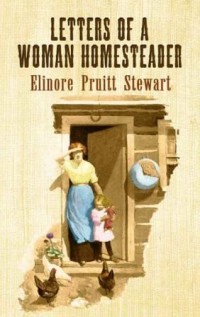
Letters of a Woman Homesteader

Letters of a Woman Homesteader
by Elinore Pruitt Stewart

This is something a bit unusual, and not a book I’d heard of a year ago, or one that there’s a whole lot of information about on the Internet, but it was recommended in the comments to one of my Little House reviews and it sounded like a very appropriate follow-up read, so I downloaded it to my Kindle. But then I spent a few months trying to catch up just a little bit on the teetering towers of unread (physical) books (not very successfully, I might add). It wasn’t until this month, with a few weekends away and a holiday, that I finally dusted off the Kindle and spotted this at the top of the list.

This book is essentially a memoir in the form of letters written, as the title suggests, by a woman homesteader in Wyoming in the early 20th century. Elinore, a widow, started writing to her friend and former employer, a Mrs Coney, in 1909 about the new life she was forging for herself and her daughter Jerrine in Burnt Fork. Coney started reading the letters out at social gatherings and, recognising their popular appeal, suggested she could get them a publisher. A publisher’s note at the start of the book states that little has been changed from the originals and I think this comes over in the tone.

“I am ashamed of my long letters to you, but I am such a murderer of language that I have to use it all to tell anything.”

Which makes this a perhaps not unique but certainly unusual and intriguing historical record, as well as a very well written account of an interesting life led by an intrepid woman who seems to define “can-do spirit”.

“Summer was departing with reluctant feet, unafraid of winter’s messengers, the chill winds.”

Because this is a collection of letters, details and events aren’t necessarily recounted in a logical start-to-finish way. For one thing, the relationship between the two women writing (though only Elinore’s half of the correspondence was published) clearly changes from a largely polite one to a much closer and trusting one, so a lot of the things that are more personal appear towards the end of the book, out of sequence. There also seem to be lots of questions in Coney’s letters that Elinore tries to address, and these sometimes hark back to earlier events.

(I should clarify that I am breaking my self-imposed rule of referring to authors by their surname because Elinore’s surname changes during the course of the book and also because she is a lead character as much as an author, which I think gives me some leeway.)

But what is the story? Well, Elinore says that she felt a yearning to get away from the city and live off the land and when she saw an advert about claiming land in Wyoming she knew that was for her. She initially worked as a cook and housekeeper out in Burnt Fork but filed her own claim for land and got working on it within days of her arrival, determined to prove herself. She quickly befriends the homesteading community and other “locals” and her letters are alive with social gatherings, visits and gossip. Which is no mean feat considering many of her new friends live more than a day’s ride away. There’s also some romance for Elinore (in the strictest matter-of-fact tone, unlike her accounts of others’ romances) but above all there’s adventure.

“I got sunburned, and my hands were hard, rough, and stained with machine oil, and I used to wonder how any Prince Charming could overlook all that in any girl he came to. For all I had ever read of the prince had to do with him ‘reverently kissing her lily-white hand,’ or doing some other fool trick with a hand as white as a snowflake.”

Just as I found with the Little House books, it’s sometimes hard to believe that the USA had large areas that were wild and dangerous as recently as the 20th century. Elinore, for all her common sense and practicality, is a bit of a thrill-seeker and loves to go along for the ride (or even lead the way) when there’s someone new to visit, or something new to do. She goes hunting, visits a Mormon bishop out of sheer nosiness (Burnt Fork is very near the state line with Utah) and even follows a police chase.

In some ways I feel I shouldn’t like Elinore. She’s so “just get on with it”, she’s gossipy and she shows no interest in art, books or music that I recall. She also replicates people’s accents in a slightly racist manner and I’m pretty sure she used the “n” word about a black man at one point. And yet I’d suggest it is impossible not to like her. She sees beauty in the world and in people, and proves herself a thoughtful, generous friend time and again.

“It seemed as if we were driving through a golden haze. The violet shadows were creeping up between the hills, while away back of us the snow-capped peaks were catching the sun’s last rays. On every side of us stretched the poor, hopeless desert, the sage, grim and determined to live in spite of starvation, and the great, bare, desolate buttes.”

She is also a great writer. Apparently she had supplemented her income before going out west by writing occasional newspaper articles and I wish more of her writing survived. I believe there is one further collection of letters to Mrs Coney that was published after this and I will certainly hunt that down, even though it was apparently far less successful than this first volume.

Published 1914 by Houghton Mifflin.

Source: Project Gutenberg.

Kate Gardner Reviews

I’m back and Amsterdam was pretty great

March 25, 2014

Locked

I have neglected the blog this month and my excuses are slim. But in my defence this past week I was having too much fun in the land of canals and bicycles. From our first hour in Amsterdam, the city had won my heart (it helps that we arrived in glorious sunshine, which was sadly not continually present for our whole trip). It has a great atmosphere, good food, very few cars and, in the parts we saw at least, feels very well looked after.

I’ve barely started the process of going through my photos so more will follow, but for now I will leave you with this note I made during our first afternoon in the city.

Amsterdam: guy clutching an Orhan Pamuk paperback while cycling ahead of a Spliff smoking accessories van.

Kate Gardner Blog

The Veronica Mars Movie

March 18, 2014

Veronica Mars movie poster

I know: it’s not a book, or an author event, or even a play, but I’ve noticed over the last year that I’m far from the only V Mars fan, so I thought those who haven’t caught the film yet might be interested to hear what I thought of it. And those who have seen it, please weigh in in the comments!

Disclaimer: I am not only a fan of the series, I am also a Kickstarter backer of the film. But then, who isn’t?! You probably already know the storyline from the countless news articles but here’s my summary.

The film is set several years after series three ended. Veronica “I got a PI licence for my 18th birthday” Mars has left her home town of Neptune, California to study law in New York and is about to sit the bar exam. She’s interviewing for a job at a top law firm, she has a steady boyfriend in Piz (her college boyfriend from series three, but interestingly they have only been back together for a year, they’ve not been together the whole time) and she’s still in touch with best friend from high school Wallace. The world is her oyster. So of course this is the precise moment for Logan “trouble follows me everywhere I go” Echolls (her high school ex-boyfriend) to call Veronica and ask her for help as he’s the number one suspect for the murder of his pop star girlfriend. Veronica heads back to Neptune, coincidentally arriving in time for her 10-year high school reunion.

The film is packed with nods and winks to fans and all (or very nearly all) the beloved old characters from the TV show not only make an appearance, but for the most part are intrinsic to the plot. It’s a typical Veronica Mars plot with three or four storylines overlapping, including the stark divide between rich and poor that preoccupied much of the TV show. There’s also the familiar sense of humour, the snappy dialogue, the indie music track and my favourite fictional father–daughter relationship (because Keith Mars is the best).

Does it look and feel like a film rather than a feature-length episode of the TV show? Honestly, I’m not sure. Personally I think the TV show was quite visually stylish anyway, and it certainly didn’t look out of place on the big screen on Friday night. I also don’t agree with Mark Kermode’s complaint that the plot is labyrinthine – yes there’s a few different things going on but it’s not hugely complicated. Then again, am I saying that because I have years’ worth of background information going in?

All told, I loved it. And I was relieved when at the Friday night showing of this in Bristol the (busy but not full) audience applauded when the credits rolled. (Incidentally, do make sure you watch to the end of the credits; the second easter egg is a particular gift to fans.)

I don’t think it was flawless. Mac was criminally under-used. There were some plot holes, or at least things that I didn’t think entirely made sense. But for the most part it was exactly what I, as a fan, wanted and I look forward to watching it again just as soon as we have figured out this digital download business.

Have you watched the film yet? What do you think of it?

Kate Gardner Reviews

I had no memory any more, only a puzzle of images

March 13, 2014 2 Comments

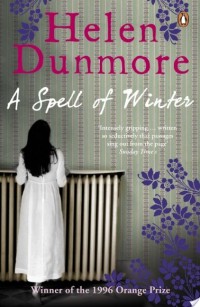
A Spell of Winter

A Spell of Winter
by Helen Dunmore

Dunmore is one of those authors I’ve been hearing good things about for years but hadn’t got round to reading, despite her being local and exactly suited to my taste. Which perhaps gives away what I feel about this book!

The story is narrated by Cathy and in a slightly dreamlike nonlinear fashion she tells us how she went from happy child playing endlessly with her brother Rob, to depressed 20-something seemingly living alone in a big old house that’s falling apart. The setting is the early 20th century (in fact, the First World War acts as a big dividing line in the narrative) and a country house estate owned by Cathy’s grandfather. The facts of her life come together slowly, so although we learn early on that her grandfather, parents and brother are no longer around, the when and why take some time to be revealed. And because she, especially at first, jumps around in time, sometimes I missed whopping great clues to something that happened later and it was only with hindsight I realised I should have seen it coming.

“I had no memory any more, only a puzzle of images, each one so bright I had to believe it as it burnt up in my mind.”

The slow reveal is a recurring trope in this novel. But it never gets annoying, even when I realised after finishing the book how many mysteries are actually never resolved. The basic facts, of a small family living largely in isolation from the world and everything falling apart, are recognisable as a classic storyline, and rightly so. But Dunmore does bring something new to it, and I don’t just mean the inappropriate closeness of Cathy and Rob (after all, that’s been done before too).

“My winter excitement quickened each year with the approach of darkness. I wanted the temperature to drop lower and lower until not even a trace of mercury showed against the figures. I wanted us to wake to a kingdom of ice where our breath would turn to icicles as it left our lips and we would walk through tunnels of snow to the outhouses and find birds fallen dead from the air. I willed the snow to lie for ever, and buried my head under the pillow so as not to hear the chuckle and drip of thaw.”

For a start, the writing is beautiful. Dunmore somehow combines really vivid descriptions and gripping story with an ethereal quality, with the first chapter and epilogue feeling particularly trance-like. This, along with the first-person narrative, plants the question of how much of what we are told is real, or how much is solely in Cathy’s imagination. It certainly seems at times that she is not told things – she is after all the younger child of a (relatively) well-off family with guilty secrets at a time when women were far from equal. But this means she snatches at servant gossip or inferences to build her own ideas, not all of which are wholly proved or disproved. For instance, her grandfather is “the man from another place” and she at one point refers to herself as “half English”, but this is never fully explained.

“I ought to have made sure I knew more. He’d had a past, a geography of silence. None of us had ever mapped it.”

I feel I would be doing a disservice to the book if I didn’t say something about the big unavoidable subject at its centre but for readers like me who don’t read blurbs it will count as a spoiler so…don’t read on unless you’ve read the book or don’t mind!

*** SPOILERS BEGIN ***

So – incest. This is a tough subject for a lot of people and I was both disturbed and impressed by Dunmore that she doesn’t just imply it and leave it oblique. She has Cathy describe fully and sensually her teenage sexual awakening and it is completely sympathetic and in many ways inevitable. Cathy and Rob are entirely each other’s world, rarely seeing others their own age. But they are also both completely aware of what they are doing and both the social implications and the moral position of it.

This very much ties in to another major subject in the book – mental health. There are two occasions when characters have breakdowns in their mental health following something traumatic happening, and the story poses the question of whether this is a natural reaction to what has happened, or something that was always lingering inside them, perhaps something hereditary. Cathy wonders if her unhealthy relationship with her brother proves right all those whispers about how she is so like her mother, who ran away.

I did start to worry that Cathy’s situation had got too dark and that there was no good way out for her, but bizarrely the First World War came at just the right time for her. She has complained all along that she is too sturdily built to be a beauty but with all the men gone and a farm to run she discovers how capable she is. I loved this transformation. Though it doesn’t make her happy, it made me like her again as a person, which isn’t necessary for me to like a book but usually makes it a more pleasant read.

*** SPOILERS END ***

I really enjoyed this book. The writing style and the story, with its period setting and sensationalist angle, reminded me a lot of Daphne du Maurier, which is high praise indeed! I will definitely have to read more by Dunmore. Anyone have any recommendations?

Published in 1995 by Viking.
Winner of the 1996 Orange Prize.

Source: Topping Bookshop, Bath.

Kate Gardner Reviews

Musical interlude: McAlmont & Butler

March 10, 2014April 9, 2014

We spent last weekend with friends and one of our recurring conversations was favourite songs. I am terrible at favourite lists and tend to swap and change, but there’s a small number of songs that will always stand out for me – “Baba O’Reilly” by The Who, “Opus 40” by Mercury Rev and “Yes” by McAlmont & Butler.

What are your favourite songs? Or do you hate that question and wish everyone would stop demanding lists?!

Anyway, enjoy the song.

Kate Gardner Blog

Being completely and utterly stuck can be a good thing

March 5, 2014

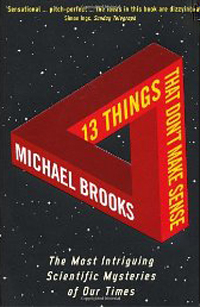
13 Things That Don't Make Sense

13 Things That Don’t Make Sense: the Most Intriguing Scientific Mysteries of Our Time
by Michael Brooks

This is my second read in my 2014 Popular-Science Reading Challenge. It deals with quite a disparate range of areas of science. I enjoyed reading it but little of the science has stayed with me.

To be fair, while reading it I was impressed by how well it explained some areas of science I had previously found hard to grasp, such as redshift. And I enjoyed interesting random titbits with Tim. But I did have reservations as well.

“I like to think of scientists as on top of things, able to explain the world we live in, masters of their universe. But maybe that’s just a comforting delusion…In science, being completely and utterly stuck can be a good thing; it often means a revolution is coming.”

The scientific mysteries covered range from ones I already knew something about, such as dark matter and free will, to ones I hadn’t heard of, or didn’t know were mysteries – a freaky giant virus that redefined what we consider to be “alive”, or the Pioneer anomaly.

What the chapters actually contain is also very varied. Some are very linear, following the story of one fairly specific topic from start to controversy to present, such as cold fusion (which is one of those things I’d heard of but didn’t realise had some basis in reality). Others are much wider ranging, taking massive topics – life, death and sex – and explaining in what way they are scientific mysteries. For instance, is life just the result of chemical reactions? The very simplest forms of life may be no more than that, but complex life has so far defied chemical explanation.

“Why do living things die? Obviously, things kill each other – that’s part of the natural order. But what causes ‘natural’ death? It is a question that splits biologists. It has become like a game of ping-pong; over the years, theories have been batted back and forth [but] none of the theories fit all of the available evidence.”

One other tack that Brooks takes is to start with a relatively small scientific anomaly that gives food for big discussion. For instance, the Wow! signal leads to explaining the SETI project and from there the prospects for alien life. Actually that’s one chapter I found a bit disappointing, perhaps because I don’t think I learned anything new from it.

But my main reservation is how often Brooks takes the side of the “underdog”, defending many scientific topics – and indeed scientists – that have been widely maligned. While I accept that it’s good journalism – and more interesting for the reader – to present both sides of the story, I can’t help thinking there’s probably good reason these are considered fringe topics. But perhaps I shouldn’t have been surprised – the last chapter does after all deal with homeopathy and it felt a little like the author was having to try way too hard to find justification for including it in the book.

I’ll continue with the challenge but I think perhaps I’d like a science book with a storyline next. Perhaps A Hole at the Bottom of the Sea: the Race to Kill the BP Oil Gusher by Joel Achenbach.

Published 2009 by Doubleday/Profile Books.

Source: Borrowed from a friend.

Challenges: This counts towards the 2014 Popular-Science Reading Challenge.

Kate Gardner Reviews

February reading round-up

February 28, 2014February 27, 2014 1 Comment
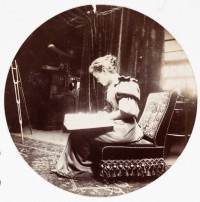
Woman reading c.1890
UK National Media Museum (c. 1890) via Wikimedia Commons.

I feel like I have done a lot and also very little this month. That doesn’t make much sense but it’s a pretty accurate summary of how I feel about the past four weeks! I’ve managed to read a decent amount, and I’d say my favourite read this month was The Ship Who Sang by Anne McCaffrey.

I also realised that I am terrible at giving book recommendations. I’m pretty good at knowing what I’m going to like but I’m also aware how much taste varies and it’s a rare book indeed that I would say no-one could like or that everyone would like. And yet people always ask me for advice, which is perfectly reasonable because I not only read a lot but I have this book blog thing…

How do you feel about recommending books? Do you have special favourites that you always recommend? How did you come to select those? I seek advice!


Books read

The Year of Magical Thinking by Joan Didion (review here)

The Ship Who Sang by Anne McCaffrey (review here)

Where’d You Go, Bernadette by Maria Semple (review here)

Code Monkey Save World by Greg Pak (I haven’t reviewed this comic because it was just a quick read for fun but do check it out if you can)

Maddaddam by Margaret Atwood (review here)

13 Things That Don’t Make Sense by Michael Brooks (review to follow)


Short stories read

“Break it down” by Lydia Davis (Guardian Books podcast)

“Meet the president!” by Ali Smith (New Yorker, available online)

“The heron” by Dorthe Nors (New Yorker, Sep 9, 2013)

“Concerning the bodyguard” by Donald Barthelme (New Yorker Fiction podcast)

“A village after dark” by Kazuo Ishiguro (New Yorker Fiction podcast)

“Bluebell meadow” by Benedict Kiely (New Yorker Fiction podcast)

“A different kind of imperfection” by Thomas Beller (New Yorker Fiction podcast)

“I see you” by Harry Harrison (from his short story collection 50 in 50)

“The mistake” by Martín Kohan, translated by Nick Caistor (Guardian, available online)


How was your February? Has it finally sunk in that it’s 2014 now?

Kate Gardner Blog

Most stories about the past have an element of pain

February 24, 2014 2 Comments

Maddaddam

Maddaddam
by Margaret Atwood

This is the third instalment in Atwood’s Maddaddam trilogy, following on from Oryx and Crake and The Year of the Flood, so this may review contain spoilers for the previous two books. Once again we are in a post-apocalyptic future that feels at once entirely alien and all too possible.

Like the previous two books, this novel looks back to a pre-“flood” story, while also dealing with the post-flood present, but there is more of the present than there has been previously, because really here that’s the emphasis – is this the new way of things? Can humanity survive and if so, how?

The pre-flood story that is slotted into the narrative is mostly about Zeb, who was a fairly minor character in The Year of the Flood but turns out to be an important link between everyone and everything else. However, this wasn’t clear at first and it seemed strange that the flashbacks should linger for so long on him. In particular, there’s an early episode about him having killed a bear that frankly dragged a bit. But once the pace of his back story picked up and some of the links to the wider story became clear, I did enjoy getting to see all the same events again from yet another fresh perspective.

“Will this be a painful story? It’s likely: most stories about the past have an element of pain in them, now that the past has been ruptured so violently, so irreparably. But not, surely, for the first time in human history. How many others have stood in this place? Left behind, with all gone, all swept away.”

The post-flood story is less contemplative than it had been in the previous two books; in fact there’s quite a bit of action. The plague-surviving humans (a mix of God’s Gardeners and Maddaddamites) and the Crakers are learning to understand each other and co-exist, and this raises a lot of issues. Are the Crakers human – and indeed, what is the nature of humanity? Are culture and storytelling innate or taught? Can/should the humans protect the Crakers from bad stuff and teach them knowledge, or should their innocence be maintained as Crake intended? Are the Crakers the only hope for the future?

“He could sense words rising from him, burning away in the sun. Soon he’d be wordless, and then would he still be able to think? No and yes, yes and no. He’d be up against it, up against everything that filled the space he was moving through, with no glass pane of language coming between him and not-him.”

One of the recurring scenes in this book is the Crakers’ story time. The Crakers insist on the daily ritual that Jimmy/Snowman began in Oryx and Crake, and though the storyteller now varies, the style is the same – a somewhat stilted, sanitised version of the truth. These sections are at first odd, irritating even, but gradually become familiar and often humorous, and finally they become the backbone of the whole novel.

“In the beginning, you lived inside the Egg. That is where Crake made you. Yes, good, kind Crake. Please stop singing or I can’t go on with the story…All around the Egg was the chaos, with many, many people who were not like you. Because they had an extra skin. That skin is called clothes.”

This was a satisfying end to the trilogy but it didn’t quite match up to the high point of The Year of the Flood for me.

Published 2013 by Bloomsbury.

Source: Bought at an author event run as part of Bristol Festival of Ideas.

Kate Gardner Reviews

The truth is complicated

February 20, 2014 2 Comments

Where'd You Go, Bernadette

Where’d You Go, Bernadette
by Maria Semple

I picked up this comedy for a quick read when I was struggling to get into another book and it turned out to be much better than I had expected: funny but also original and compelling.

The story is told from the perspective of 15-year-old Seattle-resident Bee (short for Balakrishna), whose mother Bernadette has gone missing. Who Bernadette really is and why she disappeared is gradually pieced together and it’s both an odder story and a more relatable one than it at first appears.

“The first annoying thing is when I ask Dad what he thinks happened to Mom, he always says, ‘What’s most important is for you to understand it’s not your fault.’ You’ll notice that wasn’t even the question. When I press him, he says the second annoying thing, ‘The truth is complicated. There’s no way one person can ever know everything about another person.’ “

Semple rips into Seattle culture, but it’s humour with an edge of fondness. She satirizes the dominance of Microsoft and its influence over the city, the difficulty of being a retiring artistic type in a social group that puts pressure on to get involved at your child’s school. But she also acknowledges that, unlike in California (where Bernadette and her husband Elgie moved from), people in Seattle (including teenage children) aren’t obsessed with fashion or the latest gizmos.

The story is mostly told through e-mails and letters, with some being brief notes and others much longer storytelling affairs. This meant there were not only lots of voices, but some characters were depicted in multiple facets of their life and I thought this was handled well. It was a nice update to the epistolary style without feeling like it was trying too hard to be modern (except where mocking modernity).

“Your mission statement says Galer Street [School] is based on global ‘connectitude’. (You people don’t just think outside the box, you think outside the dictionary!)…you must emancipate yourselves from what I am calling Subaru Parent mentality and start thinking more like Mercedes Parents…Grab your crampons because we have an uphill climb. But fear not: I do underdog.”

I liked the combination of themes dealt with – there’s career versus family (for men and women) and how everyone, even your nearest and dearest, is a mystery to everyone but themselves. The book also touches on technological developments (through the character of Elgie) and the fight to balance societal and commercial pressures. And without giving anything away, I loved the final section, which could have felt like it just wrapped everything up neatly, but managed to steer clear of that, just as it managed to get emotional without seeming mawkish.

Semple’s is the comedy of everyday irritations and she judges well the point when something stops being funny or when it stops being acceptable to get annoyed. Not that that line is never crossed, but the character in question stops being sympathetic, which is such a realistic means of showing up character flaws.

I must admit that, more than a week later, this book hasn’t particularly stayed with me, but as you can tell I enjoyed it while it lasted.

Published 2012 by Weidenfeld & Nicolson.

Source: Amazon.

Kate Gardner Reviews

Posts pagination

1 … 74 75 76 … 124

Archives

RSS Nose in a book

  • February 2026 reading round-up
  • Book review: The Stories of English by David Crystal
  • Book review: Monkey Grip by Helen Garner

Me on the internets

  • @kate_in_a_book@mas.to (Mastodon)
  • Flickr/noseinabook
  • Instagram/kate_in_a_book
  • StoryGraph/kate_in_a_book

Categories

  • Blog
  • Reviews
  • Uncategorized
Proudly powered by WordPress | Theme: Dream by vsFish.