Nose in a book

Reviews and other ramblings

  • Home
  • Reviews archive
    • Book reviews
    • TV reviews
    • Theatre reviews
  • TBR
  • Challenges
    • The Classics Club
    • 2014 Popular-Science Reading Challenge
    • Cookery challenge
    • The Gilmore Girls Reading Challenge
    • 2013 TBR Pile Challenge
    • 2013 Translation Challenge
    • Crime and Punishment read-a-long
  • About
    • Cookie legal stuff
  • Home
  • Reviews archive
    • Book reviews
    • TV reviews
    • Theatre reviews
  • TBR
  • Challenges
    • The Classics Club
    • 2014 Popular-Science Reading Challenge
    • Cookery challenge
    • The Gilmore Girls Reading Challenge
    • 2013 TBR Pile Challenge
    • 2013 Translation Challenge
    • Crime and Punishment read-a-long
  • About
    • Cookie legal stuff

Author: Kate Gardner

I live in Bristol and I like to read books and share what I thought about them here. I read mostly general or literary fiction, with pretty much every genre making an appearance from time to time. I love to receive comments, whether you've read the same books or not!

August reading round-up

September 2, 2014
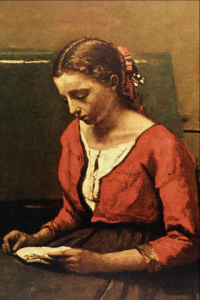
Girl Reading by Jean-Baptiste-Camille Corot.

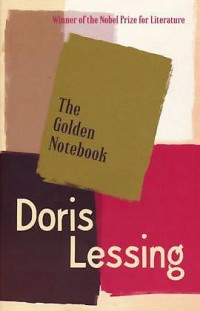
I’m posting this a few days late as I’m on holiday, which unusually has so far decreased my reading, not increased it. I think I may be discouraged as I’ve been reading The Golden Notebook by Doris Lessing for book club for about three weeks and it’s a huge book so I’m still barely a third of the way through. I wonder how many of us will have made it to the end when book club meets next week? Also, Tim recommended one of his books for me to read on holiday so I’m about a third of the way through that as well. Between them I’m sure I read at least as much as one normal-length book last week!

Still, this week is a quiet one with the in-laws, so I’m hoping to get plenty of uninterrupted reading time. As long as I don’t get too distracted by photographing wildlife! More on that next week once we’re home again.

 
Books read

Sun Alley by Cecilia Ştefanescu (review here)

The Uncommon Reader by Alan Bennett (re-read for book club)

Sex, Drugs and Rock’n’Roll: the Science of Hedonism and the Hedonism of Science by Zoe Cormier (review over at For Books’ Sake)

Faces of Love and the Poets of Shiraz by Hafez, Jahan Malek Khatun and Obayd-e Zakani (review here)

Fighting on the Home Front by Kate Adie (review here)

 
Short stories read

“Yesterday” by Haruki Murakami (New Yorker, available online here)

“Picasso” by César Aria (New Yorker, available online here)

“Last meal at Whole Foods” by Saïd Sayrafiezadeh (New Yorker, available online here)

“Apple cake” by Allegra Goodman (New Yorker, available online here)

“You can find love now” by Ramona Ausubel (New Yorker, available online here)

“The waitress” by Robert Coover (New Yorker, available online here)

“The fugitive” by Lyudmila Ulitskaya (New Yorker, available online here)

“The man in the woods” by Shirley Jackson (New Yorker, available online here)

“Box sets” by Roddy Doyle (New Yorker, available online here)

“Pending vegan” by Jonathan Lethem (New Yorker, available online here)

 
Happy September!

Kate Gardner Blog

Sunday Salon: En vacances

August 31, 2014August 30, 2014

The Sunday Salon

This week we’ve been on holiday in Normandy with friends. Weather’s been, er, iffy but we managed to grab a couple of afternoons in the pool/on the trampoline (I love that the gîte has a trampoline!) in-between road trips. I have somehow read only half a book, despite plenty of suitable reading weather, but with 13 other people providing distractions I suppose I shouldn’t be too surprised.

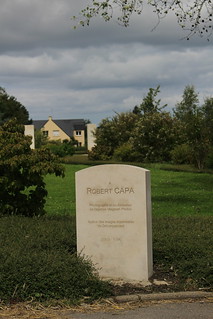
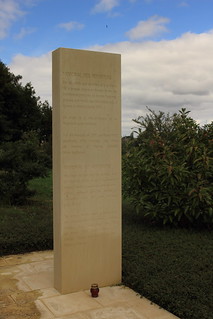
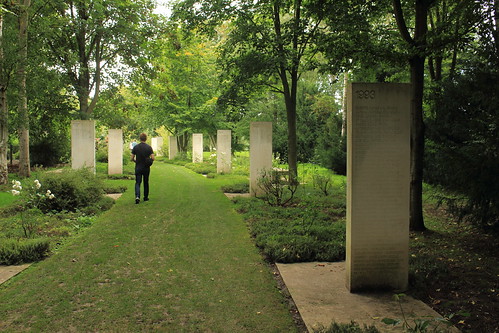
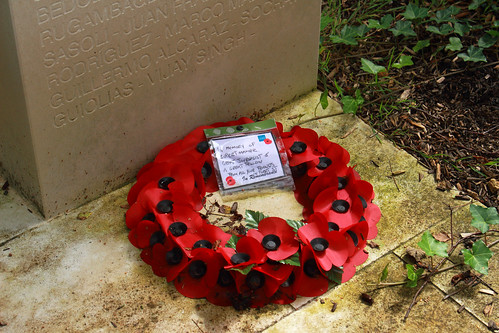
We figured we couldn’t come to Normandy without taking in some of the World War Two sites. We stopped by Omaha Beach and the war cemetery at Bayeux, which was on reflection a bit sad and serious for the hottest day of the week and I was near tears many times during the day, but I’m glad I went.

We also visited Fougères, which boasts the largest medieval castle in Europe and also has links to many famous writers. I really enjoyed the Circuit Litteraire. I’m not sure I enjoyed the climb to the top of the bell tower – the staircase was tall, steep and open so you could see how far there was to fall!

There have been plenty of other visits, plus barbecues, drinking, playing pool, playing in the pool and just generally having fun with friends we don’t get to see nearly enough of the rest of the year.

Also, yesterday Tim and I celebrated 12 years together. In many ways it felt appropriate to celebrate while on holiday with friends who have known us since the start of our relationship. I wonder where we’ll celebrate 24 years?

Kate Gardner Blog

Unsung women kept the wheels of the war machine turning

August 23, 2014August 23, 2014

fighting-on-the-home-front

Fighting on the Home Front: the Legacy of Women in World War One
by Kate Adie

This is a book that needed to be written, and Kate Adie seems like a good choice for it – a journalist whose own career blazed a trail for women to follow, but who is nevertheless rarely if ever controversial, not radically feminist and famously matter of fact. And arguably that’s exactly the book you get: competently written, comprehensive and factual. But is it the book I was hoping for?

This is the story of British women in World War One, from encouraging men to enlist, to stepping up to fill men’s jobs left vacant, to political campaigns for the vote and equal pay, to supporting the armed forces on the battlefields. It was a time of radical change throughout the world, but for women in Britain especially so. Adie takes a different war-time role per chapter and looks at it overall (including pre-war history where relevant) as well as showcasing specific examples of women in that field. She acknowledges that most of these are upper or middle class women, because even war did not erode class boundaries and generally the women creating new charities and organisations, from knitting drives to army hospitals, were those who had money and social clout. However, she does also include excerpts from interviews with many women from lower down the social ladder who can testify as to the reality of work in munitions factories, felling trees, delivering post, driving trams and dozens of other roles previously male-only.

It’s certainly an interesting read, with plenty of fascinating snippets and some surprising facts. There was real resistance maintained to women filling certain roles right up to the end of the war (they could clean, build, engineer and signal trains but never drive them, for instance) but also to the way women dressed when they took on these jobs – skirts 10 inches above the ground, or even trousers! Adie has clear admiration for all these women, from the ambulance drivers who went to war zones without official permission because they knew they were needed, to the maids who joined the Women’s Land Army and worked long hard days in mud for little money because they knew there was a food shortage. She depicts the good and the bad – explosions in munitions factories and the beginnings of women’s football; women working longer hours for less pay than the men they replaced and their winning the (restricted) right to vote in early 1918.

“However vital the [munitions] work was, it wasn’t glamorous – it was hard, undertaken in unpleasant conditions, boring and relentless…The press were not inclined to print stories about the downside of this vast industry. Physical stress, unhealthy conditions and increasing arguments about wages from those who could see they were doing the same as men was not the image that was projected: these were fit, patriotic workers.”

Suffrage features heavily because most suffragettes and suffragists (previous to reading this book I had no idea there was a difference) abandoned, or appeared to abandon, their political campaigns in favour of helping the war effort. In some cases this was itself a political act – by exercising their skills of organisation, marketing and fundraising in a field no-one could disapprove of, they proved their capability, not to mention that many of the organisations created by suffragettes were formed wholly of women doing “men’s work”, or filling traditional women’s roles but in dangerous territory so that the armed forces didn’t need to “waste” able men feeding, cleaning uniforms for and providing first aid to their troops.

There were many victories won, small and large, by British women between 1914 and 1918, but many were only temporary. The post-war section of the book is fairly short, but in general women were kicked out of their new jobs, often at the worst possible time for them to lose their income, as men’s deaths and injuries resulting from war left many women as the principal wage earners for their household. I would have liked a few case studies here, for Adie to have followed up with some of the women interviewed earlier to see how their lives progressed.

“The time and energy spent in travelling, acquiring supplies, sorting, packing and transporting them abroad are hardly recorded. It represents the most enormous amount of daily effort by an unsung and huge amount of women…Garnering no medals and mostly ignored by the official historians, it was small beer compared to the horrifying statistics of the military campaign; but every last little bandage and bar of soap kept the wheels of the war machine turning.”

In fact, this would be my overriding criticism – the narrative descends into generalisation a little too often. I wanted more facts – how many women did this job before, during and after the war? – and more first-hand accounts. I also didn’t like all the subjects Adie chose to concentrate on. There’s a whole chapter about women’s struggle to be allowed to read in church, which actually formed an amusing anecdote in the speech Adie gave about this book in Bath last year, but didn’t really have the substance for a whole chapter, and as a result it was an especially woolly chapter. I suppose as a feminist and occasional radical myself, I wanted more of those trailblazing women – Flora Sandes who joined the Serbian army as a soldier, Louisa Garrett Anderson who qualified as a doctor and ran hospitals near the front line so that she could get to injured men early enough to operate. And I also would have liked some personal accounts of men’s reactions, rather than just what was published in the papers.

Adie throws in her own family history during the war, which is fine, but there is also a very obvious slant to her home town of Sunderland. At one point I wondered if she’d bothered to do research anywhere else! She also throws in her own experience as a war reporter, which is sometimes perfectly appropriate and sometimes jarring.

I think “uneven” would be my one-word summary, but even so this is a very readable, enlightening book about many many amazing women.

Published 2013 by Hodder & Stoughton.

Source: I bought this at a Toppings author event in Bath.

Kate Gardner Reviews

Sex, Drugs and Rock’n’Roll

August 21, 2014

Today, if you hop on over to For Books’ Sake, you can read my review of Sex, Drugs and Rock’n’Roll: the Science of Hedonism and the Hedonism of Science by Zoe Cormier, a scientist and writer/communicator for Guerilla Science. I think it’s a fascinating topic…but please do go take a look to find out what I thought of the book!

Kate Gardner Blog

Order will come to your distracted mind again

August 17, 2014 2 Comments

Faces of Love

Faces of Love and the Poets of Shiraz
by Hafez, Jahan Malek Khatun and Obayd-e Zakani
translated from Persian by Dick Davis

This book was a bit of a serendipitous find. I was in West Hampstead to meet friends and had arrived early, so I thought I’d pop into West End Lane Books. I wasn’t looking for anything particular, just enjoying a good browse, and I spotted this book on a shelf of beautiful books. Clearly, I don’t need more books right now, but this was poetry, in translation and beautiful, all of which are things I’d like to have more of! Not only is it well designed (like all Penguin Classics Deluxe Editions) but the pages have been roughly cut in an old-fashioned style – I can’t tell if this is deliberate or a binding error, but I like it either way!

However, that’s not enough for me to consider it truly serendipitous. On the train home, I was reading this book (not that I hadn’t brought any with me, but new book often trumps old, let’s face it) and the guy sat next to me asked if I was reading Persian, as he recognised the style of art used on the cover. He seemed to know a thing or two about Iran and we had a really nice conversation about the book, even reading a couple of the poems together and discussing the oddness of Hafez’s style. Which was rather lovely.

“O sorrow-stricken heart, your fortunes will revive,
Order will come to your distracted mind again
– do not despair

And if the heavens turn against us for two days
They turn, and will not stay forever in one place
– do not despair

Sweet singing bird, survive until the spring, and then
You’ll tread on grass again, deep in the flowers’ shade
– do not despair”
—Hafez

As for the book itself, there’s a chance it was more educational than a discovery of a new favourite poet, but I’m not averse to a little learning. Hafez, Jahan Malek Khatun and Obayd-e Zakani were mid-to-late 14th century court poets from the city of Shiraz in Persia (now Iran). Shiraz is near Persepolis and at that time was not especially important politically but was home to some of Persia’s most famous poets – despite the spread of Islam, which then as now discouraged the music and wine that tended to accompany court poets (indeed much of their verse would have been sung). Most of the 14th century rulers of Shiraz generously patronised artists, including poets, so it was a safe haven for them.

Hafez is the most famous of three poets featured. His work is still studied today and many an academic has tried to unravel the layers of meaning in his work. In his time he was famous and well respected. Jahan Malek Khatun was a princess of Shiraz – her father and later her uncle ruled the city. While not the only female poet whose work has survived, it is likely that she had an easier time of being a female poet because of her royalty. Obayd-e Zakani wrote much more satirical work than the other two, often political, and though he enjoyed fame in his lifetime, he also made great enemies.

“How long will Heaven’s heartless tyranny
Which keeps both rich and poor in agony

Go on? The dreadful happenings of these times
Have torn up by the roots Hope’s noble tree,

And in the garden of the world you’d say
They’ve stripped the leaves as far as one can see.”
—Jahan Malek Khatun

As you can tell from my ability to give you these summaries, Davis has written a good (extensive but not dull) introduction to the history and the poets, as well as the poetry. There are also end notes giving plenty of further analysis of the poems without interrupting the reading of the poems themselves.

I especially appreciated Davis’ notes on his translation, with explanations of the challenges (such as recreating the ancient styles of verse used), the things he was able to recreate in English and the things that are lost. I also enjoyed the appendix of three tongue-in-cheek poems Davis wrote about the difficulty of translating Hafez! I learned a lot, for instance that Persian pronouns do not distinguish between male and female, so most of the time it isn’t clear whether the subject of a poem is male or female. (From historical records and those poems that do make it clear – by referencing body parts, for example – we know that it was common for poets of the time to write admiringly of attractive youths of both genders.) It was also common (as with some western poets of a similar era) for references to a person to mean both a flesh-and-blood person and God, or to switch between the two.

“Here with our souls’ companions, bored to death
With hypocrites and all they claim they’ve done,

No pompous pride disturbs our minds, no thoughts
Of purity – no, not a single one!

We’ve drunk the poison of our indigence
And don’t want antidotes from anyone.”
—Obayd-e Zakani

And my reaction to the poetry? Some I loved, some was okay, some I disliked. Hafez was my favourite – I see why he is the most famous of these three by some way. I wanted to like Jahan Khatun more, as the one woman featured, but there was a single-notedness to her verse, mostly talking about unhappiness in love, though that’s not to say I disliked it. Obayd I liked politically but not his sexual stuff (which there’s quite a lot of). I’m not a prude, I just didn’t find the verses sensual or sexy at all, instead they were distasteful – this might be the translation but as Davis did such a good job elsewhere I tend to think it was the original that I disliked.

I’m really glad I followed my whim and picked up this book. I’ll certainly re-read the Hafez, and maybe if I give the others a chance I’ll get something more from them as well.

First published in the US in 2012 by Mage Publishers.
This edition published in the UK in 2013 by Penguin Books.

Source: West End Lane Books.

Kate Gardner Reviews

Musical interlude: the White Stripes

August 13, 2014August 13, 2014 4 Comments

“The hardest button to button” is not just a great song that reminds me of university and the friends I made there, it’s also a great video by one of the masters of music-video directing: Michel Gondry. I’m really pleased he’s come back to music videos this year (for Metronomy’s “Love letters”) after a few years’ hiatus. His creative genius works so well in this format.

But it’s also a really good song.

Kate Gardner Blog

Mere effort of the mind produced an earthquake

August 9, 2014

Sun Alley

Sun Alley
by Cecilia Ştefanescu
translated from Romanian by Alexandra Coliban and Andreea Höfer

I seem to have had this reading experience a few times this year: I get to the end of the book and I’m still not sure whether or not I liked it. I can say that the writing was, for the most part, great, but I have real reservations. I’m fairly sure it’s the books and not me, but who knows?!

Cecilia Ştefanescu is a bestselling writer in Romania but pretty much unknown over here. I have always had an inexplicable yearning to go to Romania (I even started learning Romanian, briefly) but haven’t yet made it there, so I thought reading a Romanian book might be a start. I’m not sure I have learned anything particular about Romania from this book, aside from that I’m impressed such an unashamedly literary work was a bestseller there.

“After the whirlpool drags you for an angstrom or so, you remain nailed because the attraction of the fractions is so strong. Each growing part, in ceaseless expansion, hangs down with the weight of death. You go back in your mind to see your point of departure, but once the image has vanished, its memory disappears as well. You are suspended between spaces, and time flows disproportionately.”

This novel starts as the story of a boy and girl (their age isn’t given but I guessed about 12), Sal and Emi, who are hiding their fledgling romance from friends and family. On his way to visit Emi one afternoon, Sal discovers a dead body. What does this mean? Is it somehow symbolic of the rest of his life? And where do this adult couple who keep popping up fit into Sal and Emi’s story?

It’s odd, which isn’t necessarily a bad thing, but this certainly requires some work of its reader – all is not always clear. The writing is beautiful but the melancholic tone, disjointed timeline and slow pace took me a while to get into. And figuring out that you can’t take it all at face value took me even longer.

“The loneliness felt in dreams was tremendous, more dreadful than all he had been through in Harry’s basement, uglier than the mole-crickets crawling undisturbed in his grandmother’s house, more shocking than Emi’s long silences she hoped to impress him with. That loneliness contained something overwhelming that would crush him, as if the mere effort of the mind produced an earthquake that crumbled down the whole stone-made edifice of his enforced and self-inflicted enclosure.”

Effectively, the novel is told from Sal’s point of view, though it isn’t first person, and like all individual perspectives, his is not entirely reliable. He’s clearly aware that he’s different from other children, but not in what way he’s different. One early clue is that he makes friends by telling good stories. Despite this perspective, I never really felt I got to know or understand Sal, or indeed Emi. What was the attraction of this strange boy who holds himself apart one day, then throws himself into the boys club the next day? And why do Sal’s parents disapprove so strongly of Emi?

I definitely want to read more Romanian literature but I’m not sure I’ll be rushing back to Ştefanescu.

Intrarea soarelui published 2008 by Editura Polirom.
This translation published 2013 by Istros Books.

Source: Waterstones.

Kate Gardner Reviews

Bristol Proms

August 7, 2014August 7, 2014

Avi and Mahan
Bristol Old Vic, 1 August

Avi and Mahan


Guest post by Tushna Commissariat

From the outset, the Avi Avital and Mahan Esfahani concert at the Bristol Proms was presented as a “unique meeting” of minds and musical geniuses, as it were. But I don’t think the audience (or I!) was quite prepared for the sheer chemistry and musical exuberance that these two lovers of Bach shared on stage. Israeli Avi Avital, mad mandolin maestro, and Iranian Mahan Esfahani, wild harpsichord virtuoso, didn’t really perform a concert for your average classical music buff. Instead, the two – who it later transpired had met for the very first time that morning and had precisely one rehearsal in the day – had the kind of chat that childhood friends of old would have after many years apart, interspersed with playing music with and at each other, while inviting the bemused audience to listen, if they liked.

Both Avital and Esfahani’s love for Bach, who featured heavily that evening, emerged early in the concert, with Esfahani recalling the first time he heard Bach, as a young child in the car with his father. “Bach is a universal language…” said Esfahani, “but he is always difficult”, as Avital concurred. Apart from the wonderful Bach and Vivaldi the duo played, I particularly enjoyed the Scarlatti sonata.

Both artists also decided to play a “gift” for each other – a song that was not a planned part of the programme and one that the other was not aware of. Both of these pieces were amazing – Esfahani played a tune, which for the life of me I cannot recall the composer of, that he described as a “party piece” that he would play on the piano for his father and friends when younger. It was indeed a grand, over-the-top show-off of a work, but quite possibly the best harpsichord piece I have ever heard. It made me want to search out more pieces written for the harpsichord, which was new for me!

Avital decided to play a folk song that he learned from a Bulgarian accordion player at a large international festival. Slow and easy in the beginning, the song built up until Avital was nearly folded in half over his mandolin and strumming for all he was worth. It was the best song I have ever heard played on a mandolin.

So undoubtedly the music played in that one and half hour concert was wonderful, but I would be lying if I didn’t say that it was watching Avital and Esfahani interact and get to know each other, as musicians and as people, that made the evening especially enjoyable.

*****

My thanks to Tushna for this review, and for persuading me to step out of my comfort zone and go to the concert with her. It was a lot of fun.

Disclaimer: Tickets were kindly supplied to us by the theatre in return for an honest review.

Kate Gardner Reviews

July reading round-up

July 31, 2014August 9, 2014
(Leon Kaufman, 1892-1933)

Aren’t we having a lovely summer? Well we are here in Bristol and I hope that you are too. Not that I’ve had a lot of free time to enjoy it properly, but it’s still nice to have long sunny days. I’ve been busy helping my Mum celebrate her 60th birthday, visiting Oxford with my friend H, redecorating the living room (still a work in progress) and I even squeezed in writing an article for For Books’ Sake. Not to mention, y’know, doing my job.

Somehow, I also managed to get through several books this month (I’m halfway through two more as well), though I notice I only read three short stories. Three! This despite the New Yorker opening up its content free to all for the summer, including their wonderful short stories. I must make time to read some of them before they’re locked down to subscribers only again.

Here’s to continued summer loveliness, with added free time to enjoy it.


Untitled

Books read

Weyr Search by Anne McCaffrey (review here)

Parasites Like Us by Adam Johnson (review here)

The Extraordinary Journey of the Fakir who got Trapped in an IKEA Wardrobe by Romain Puértolas (review here)

Gold by Dan Rhodes (review here)

Paintwork by Tim Maughan

Silent Spring by Rachel Carson (review here)

Short stories read

“How many miles to Babylon?” by Megan Arkenberg (Lightspeed Magazine, issue 20)

“Gene wars” by Paul McAuley (Lightspeed Magazine, issue 20)

“Always true to thee, in my fashion” by Nancy Kress (Lightspeed Magazine, issue 20)

Happy summer everyone!

Kate Gardner Blog

A Who’s Who of pesticides is of concern to us all

July 28, 2014 1 Comment

Silent SpringSilent Spring
by Rachel Carson

This is a book that changed the world and brought hideous criticism on its author, and I’m loath to add to or ratify any of that criticism but this book took me six weeks to read and honestly it often felt like a slog. And yet I still think Carson was a good writer, or capable of good writing.

For those who don’t know the book, this now-legendary tract is a polemic against the widespread of use of pesticides such as DDT, on the grounds that they are dangerous poisons that kill far more than the target insects or fungi. Carson gathered together evidence that the supposedly safe pesticides that were widely sprayed from aeroplanes onto thousands of acres of land were killing fish, birds, pets, livestock, even people. A lot of this evidence came from scientific journals, so it’s not as though the problem was unheard of before she got interested, but she brought it to a wider audience and as a direct result, President Kennedy ordered an investigation into pesticide misuse.

“A Who’s Who of pesticides is therefore of concern to us all. If we are going to live so intimately with these chemicals – eating and drinking them, taking them into the very marrow of our bones – we had better know something about their nature and their power.”

With my long history of interest in environmental issues, I am curious why this book didn’t engage me. I think there are several reasons, but they should be cast against the plain fact that this book was a bestseller and has remained in print for decades – obviously others had a better experience than me!

To begin with, I found the tone very uneven. The book starts with a long emotive intro completely devoid of facts, then launches into super technical explanations. This pattern continues, though the balance overall tends to be of more technical language interspersed with poetic sections. The references are all hidden at the back of the book so it’s near impossible to tell what’s scientific fact and what’s speculation in some places – but then elsewhere it’s perfectly clear so obviously Carson was capable of achieving that balance.

“In Greek mythology the sorceress Medea, enraged at being supplanted by a rival for the affections of her husband Jason, presented the new bride with a robe possessing magic properties. The wearer of the robe immediately suffered a violent death. This death-by-indirection now finds its counterpart in what are known as ‘systemic insecticides’. These are chemicals with extraordinary properties which are used to convert plants or animals into a sort of Medea’s robe by making them actually poisonous.”

Another issue I had was that, although we still face many similar problems, the specifics are different. I struggled with the current-day relevance of the endless facts and found myself wishing for an up-to-date equivalent. Of course, the difference is that these days that information is available to me if I go looking for it (in fact a quick scan of the petitions I’ve signed on Change.org is a good start).

On the other hand, this book also had the presumably desired effect of making me furious at the ignorance and deliberate misinformation that led to Carson writing this book – partly because I know that governments continue to side with big business against scientific advice, even when the advice is a cautious “let us do a couple of tests”.

“Soil is in part a creation of life, born of a marvellous interaction of life and non-life long aeons ago. The parent materials were gathered together as volcanoes poured them out in fiery streams, as waters running over the bare rocks of the continents wore away even the hardest granite, and as the chisels of frost and ice split and shattered the rocks. Then living things began to work their creative magic and little by little these inert materials become soil.”

Overall, I’m glad I’ve read it but can’t say it holds a candle to more recent examples of popular science – the science itself is explained clearly but isn’t made interesting and isn’t presented in a logical order (to my mind) and varied wildly in how engaging it was. Clearly this was an early example of a genre that has since been refined and practised much more.

Sections of this book were first published as a series of articles in the New Yorker.
First published 1962 by Houghton Mifflin.

Source: Borrowed from the library.

Challenges: This counts towards the 2014 Popular-Science Reading Challenge.
Kate Gardner Reviews

Posts pagination

1 … 69 70 71 … 123

Archives

RSS Nose in a book

  • 2025 reading stats and top reads
  • December 2025 reading round-up
  • Book review: The Galaxy and the Ground Within by Becky Chambers

Me on the internets

  • @kate_in_a_book@mas.to (Mastodon)
  • Flickr/noseinabook
  • Instagram/kate_in_a_book
  • StoryGraph/kate_in_a_book

Categories

  • Blog
  • Reviews
  • Uncategorized
Proudly powered by WordPress | Theme: Dream by vsFish.